ImmoMulti — a direct buyer of North Shore multiplexes — regularly sees sales stall or fall through over an incomplete fire safety file. Once an income building passes a certain size, it is no longer just about smoke alarms: Québec's Building Chapter of the Safety Code requires a genuine fire alarm system, annual verifications by a specialized firm, sometimes sprinklers, an evacuation plan, and emergency lighting. These duties fall on the owner, not the tenant — and a savvy buyer will scrutinize them. Here is what the Code and municipalities actually require for larger income buildings, and how it shapes the value and sale of your plex or multiplex.
> 8 units
Which income buildings are covered by the Safety Code?
Québec's Building Chapter of the Safety Code covers, among others, residential buildings of more than 2 storeys and more than 8 dwelling units, as well as rooming houses and seniors' residences. Below that threshold, a plex remains bound by the Building Code smoke alarm rules and municipal by-laws, but not by the full fire alarm verification regime.
The first question for any multiplex owner is simple: is my building subject to the Building Chapter of the Safety Code? Administered by the Régie du bâtiment du Québec (RBQ), this chapter governs the preventive maintenance and safety of existing buildings. According to the RBQ, it applies notably to residential buildings of more than 2 storeys and more than 8 dwelling units, as well as residential co-ownerships of that size, rooming houses, hotels, motels, and seniors' residences.
In practice, a two-storey duplex, triplex, or quadruplex is generally not covered by this chapter. But as soon as a building crosses both thresholds — more than 2 storeys AND more than 8 units — the owner enters a markedly more demanding regime for fire alarm systems and preventive maintenance. This is the nuance many owners of larger plex buildings overlook when buying or expanding.
Source: Régie du bâtiment du Québec — Building Chapter. Exact thresholds and their application depend on your situation; confirm with the RBQ.
How does a fire alarm system differ from a smoke alarm?
A smoke alarm is a stand-alone device that sounds locally within a unit. A fire alarm system is a centralized network (control panel, detectors, audible signals, sometimes a link to the fire department) required in larger buildings and subject to standardized periodic verifications.
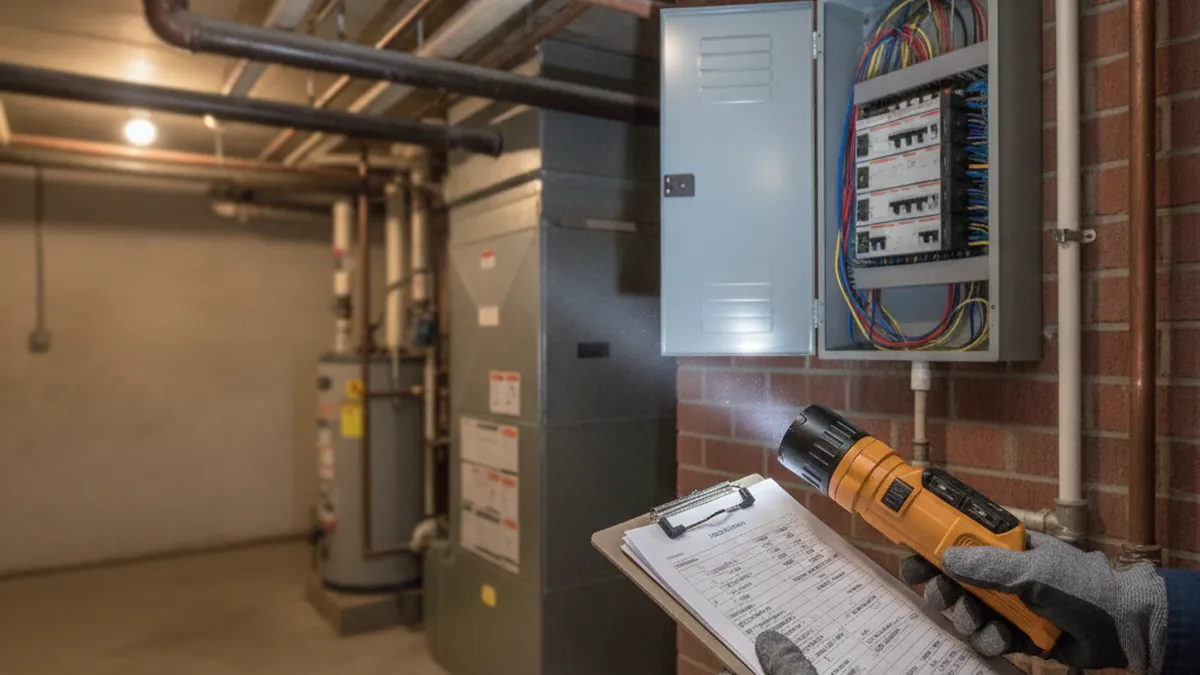
The most common confusion is between a smoke alarm and a fire alarm system. These are two different obligations, and mixing them up can be costly at sale time.
A smoke alarm is a stand-alone device — battery or wired — installed in each unit. Under the Code, it must be functional and replaced 10 years after its manufacturing date shown on the casing; if the date is illegible or missing, it must be replaced immediately. This minimum requirement applies to all units, including small plexes. We cover these residential duties in detail in our guide to smoke and carbon monoxide alarms.
The fire alarm system, by contrast, is a network: a central control panel, smoke and heat detectors, manual pull stations, audible and visual signals throughout the building, and sometimes a transmission link to the municipal fire department. This is the system the Building Chapter of the Safety Code requires you to verify and maintain in larger income buildings.
| Element | Smoke alarm | Fire alarm system |
|---|---|---|
| Scope | Local, within the unit | Centralized network, whole building |
| Buildings covered | All units | Buildings > 2 storeys and > 8 units |
| Verification | Functional; replaced after 10 years | Daily, monthly, annual (CAN/ULC-S536) |
| Who does the annual | Owner / tenant | Specialized firm with report |
Source: RBQ — Residential occupancies (Building Chapter).
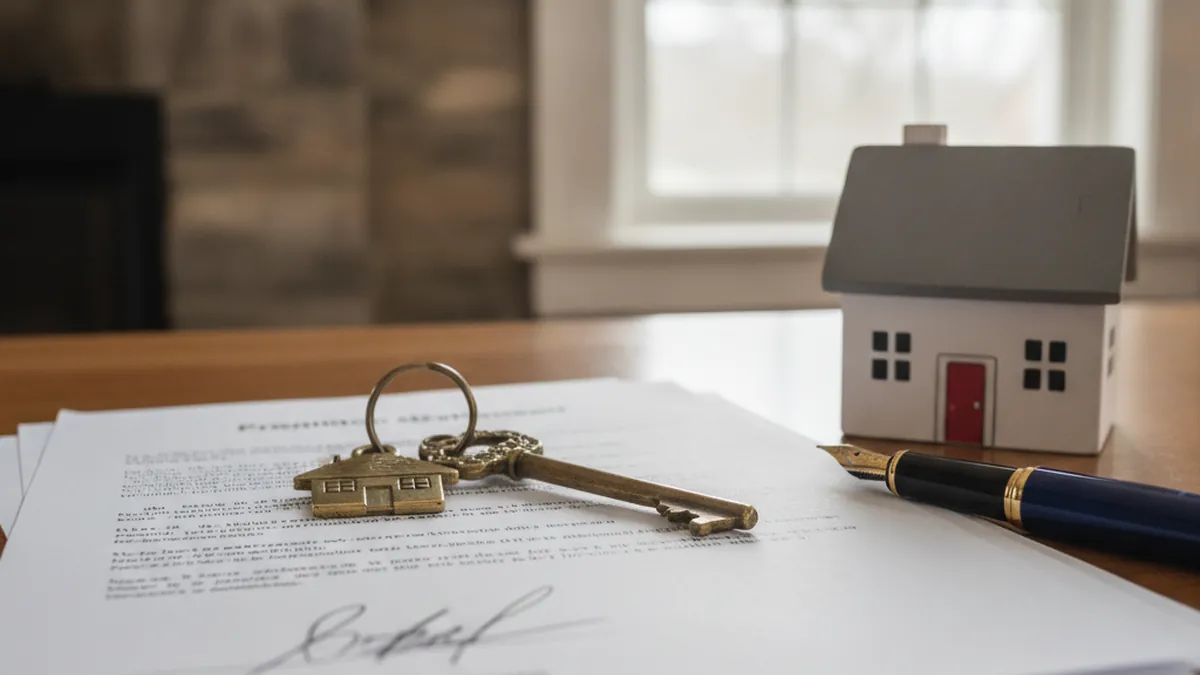
Why is the annual CAN/ULC-S536 verification mandatory?
The RBQ requires that covered fire alarm and detection systems be verified under standard CAN/ULC-S536: daily and monthly checks (by the owner or their representative) and a thorough annual verification of every device, performed by a specialized firm that issues an inspection report.
The heart of the maintenance duty lies in standard CAN/ULC-S536, "Inspection and Testing of Fire Alarm Systems." The RBQ sets out three verification frequencies for systems covered by the Building Chapter of the Safety Code:
- Daily — confirm each day that the system is functional and that no trouble is signalled on the fire alarm panel. May be done by the owner or their representative.
- Monthly — test certain network elements to confirm proper operation. May be done by the owner, their representative, or a specialized firm.
- Annual — in-depth inspections and tests of every device, mandatorily performed by a specialized firm, which issues a complete inspection report.
This annual report is a key document: it is the proof that your multiplex complies with the Code. Keep it carefully, along with prior years' records. For an owner of a larger plex on the North Shore, this report belongs in the building file alongside the location certificate and the leases.
Your verification schedule at a glance
- Every day: visual check of the fire alarm panel
- Every month: tests of the network components
- Every year: full inspection by a specialized firm + CAN/ULC-S536 report
- Ongoing: keep the reports for the RBQ, your insurer, and a future buyer
Source: RBQ — Verification of fire alarm and detection systems.
When do sprinklers, exits, and evacuation plans become mandatory?
For new construction, Québec's Construction Code requires sprinklers in residential buildings of more than 2 storeys and more than 8 units. The Building Chapter also requires the owner to maintain sprinklers, door closers, and emergency equipment, prepare an evacuation plan, hold an annual drill, and ensure emergency lighting for at least 30 minutes.
Beyond the alarm system, several other measures apply to larger income buildings.
Sprinklers (automatic extinguishing systems). For new construction, Québec's Construction Code requires a sprinkler system in residential buildings of more than 2 storeys and more than 8 dwelling units. An existing building constructed before these requirements took effect is generally not required to retrofit sprinklers — except upon a major transformation or change of use. The Société d'habitation du Québec notes that the addition obligation depends on the work undertaken; when in doubt, a professional assessment is warranted.
Exits and the evacuation plan. The Building Chapter requires the owner to keep the sprinkler systems, alarm systems, door closers, and emergency equipment in good working order, to prepare an evacuation plan and procedure, to inform occupants of the safety measures, and to hold a fire evacuation drill at least once a year. Emergency lighting must function for at least 30 minutes during a power failure.
Watch out for sprinklers in existing buildings
A major transformation or change of use can trigger the obligation to install sprinklers in an existing building — a cost item that can exceed tens of thousands of dollars. Before undertaking significant work on your multiplex, have the RBQ and your municipality confirm whether adding sprinklers becomes required.
Sources: RBQ — Building Chapter obligations / National Fire Code; Société d'habitation du Québec — Adding sprinklers: an obligation?
What does an annual CAN/ULC-S536 verification involve, step by step?
An annual CAN/ULC-S536 verification follows a set sequence: reviewing the system, testing the control panel and power supplies, testing every initiating device (detectors, manual pull stations), testing the audible and visual signals, checking the transmission links, then writing an inspection report listing anomalies and required corrections. The specialized firm coordinates with the owner to avoid false alarms.

Many multiplex owners sign the annual verification contract for their fire alarm system each year without ever knowing what the technician actually does in the building. Understanding how the annual verification unfolds lets you choose your firm more wisely, read the report intelligently, and anticipate the corrections that could weigh on the value of your plex. Here is the typical sequence of an inspection compliant with standard CAN/ULC-S536.
Step 1 — Review and preparation
Before touching the panel, the specialized firm inventories the network components: number of smoke and heat detectors, manual pull stations (the red boxes near exits), audible signals (bells, sirens), visual signals (strobes), and any transmission link to the fire department or a monitoring station. This step relies on the system drawings and the prior year's report. A prudent owner hands the technician the full history — the same history a future buyer will demand.
Preparation includes an often-overlooked aspect: notifying occupants and the fire department. Since the test will trigger the audible signals and, where applicable, a signal to the monitoring station, the firm coordinates a notice to tenants and places the transmission line in "test mode" to avoid an unnecessary fire department response. In some North Shore municipalities, an unannounced false alarm can result in fees.
Step 2 — Testing the control panel and power supplies
The heart of the fire alarm system is its control panel. The technician checks the display, the indicator lights, the alarm activation, and the return to normal. They then test the two power sources: the primary supply (mains) and the backup supply (batteries). Batteries are measured under load; weak or end-of-life batteries are the most common anomaly from one year to the next, because they degrade slowly and silently.
Step 3 — Testing the initiating devices
This is the longest portion. Each smoke detector is tested (test smoke or an approved aerosol), each heat detector is checked, and each manual pull station is activated to confirm it transmits the signal to the panel. In a multi-storey building this means moving through every unit and common space — hence the importance of access coordinated with tenants. A device that is inaccessible on the day becomes a "not verified" line in the report, which weakens the file.
Step 4 — Testing the signals and links
The firm confirms that the audible and visual signals activate everywhere and that the sound level is sufficient in the units, with doors closed. It also checks the auxiliary functions: ventilation shutdown, door unlocking, elevator recall, and above all the transmission link to the fire department or monitoring station, confirming that both the alarm signal and the trouble signal get through.
Step 5 — The inspection report and corrections
At the end, the firm issues a verification report attesting the network's compliance and listing, where applicable, the components to repair or replace. This dated, signed document is the proof that the owner has met the maintenance obligation. Keep it: it must be produced to the competent authorities on request and will form part of the file handed to the buyer.
| Step | What is checked | Common anomaly |
|---|---|---|
| 1. Preparation | Device inventory, occupant notice, test mode | Missing drawings, occupants not notified |
| 2. Panel & power | Panel, mains, backup batteries | End-of-life batteries |
| 3. Initiating devices | Smoke/heat detectors, manual pull stations | Inaccessible device "not verified" |
| 4. Signals & links | Bells, strobes, transmission to fire department | Insufficient sound level, faulty link |
| 5. Report | Attestation, list of corrections | Lost report, corrections not followed up |
Framework: standard CAN/ULC-S536 as referenced by the RBQ — Verification of fire alarm and detection systems. The exact sequence varies by system; entrust the verification to a specialized firm.
How much do verification, maintenance, and a possible fire safety upgrade cost?
The fire safety costs of an apartment building fall into three buckets: the annual CAN/ULC-S536 verification by a specialized firm (recurring), corrections and routine maintenance (variable), and major upgrades such as adding sprinklers (one-time but heavy). These costs are the owner's responsibility and belong in the plex's operating budget.
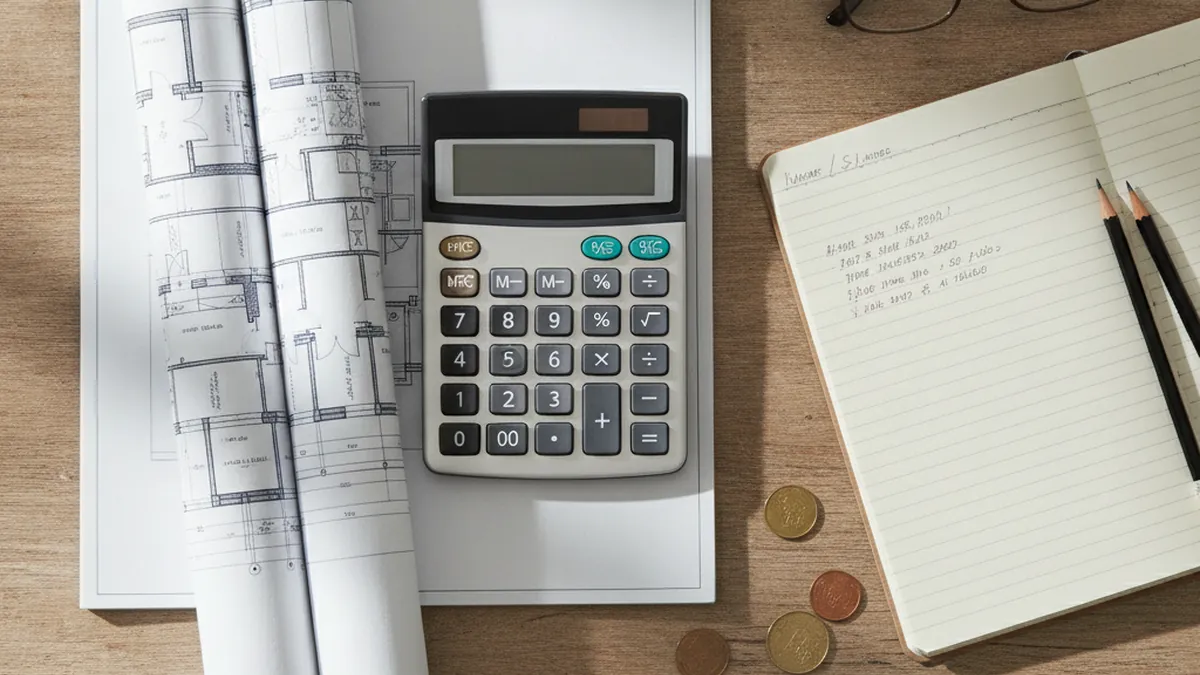
Fire safety is not merely a regulatory constraint: it is a recurring — and sometimes unpredictable — line of expense in a multiplex budget. Understanding how these costs are structured helps distinguish a normal expense from a red flag, and helps gauge the impact of a non-compliant building on the sale price.
The recurring cost: the annual verification
The annual verification by a specialized firm is the most predictable item. Its price depends directly on the number of devices to test, the size of the building, and the complexity of the network (presence of sprinklers, transmission links, elevators). A small covered building with a simple network costs far less than a large complex with multiple detection. Since the exact price is set by quote, we do not put a figure on it here: request two or three quotes from reputable firms and compare the scope covered, not just the amount. Beware an abnormally low quote: it often excludes corrections, billed later as extras.
The variable cost: corrections and routine maintenance
Each verification report can generate a list of corrections: replacing batteries, end-of-life detectors, an obsolete panel, repairing a strobe or a transmission link. Add to this the routine maintenance of portable extinguishers, emergency lighting (whose batteries run down), and fire-rated door closers. These items are variable but unavoidable: a well-kept building smooths them over time; a neglected one accumulates them into a large bill.
The three buckets of the fire safety budget
- Recurring: annual CAN/ULC-S536 verification by a specialized firm
- Variable: corrections, extinguishers, emergency lighting, door closers
- One-time heavy: adding sprinklers, replacing the panel, major overhaul
The one-time heavy cost: the major upgrade
The most dreaded item is the major upgrade: adding a sprinkler system, fully replacing an obsolete alarm panel, or an overhaul triggered by a transformation. As the Société d'habitation du Québec notes, adding sprinklers to an existing building can be triggered by significant work or a change of use — and its cost can reach tens of thousands of dollars. This is the kind of expense that reshapes the return calculation of a renovation project. Our renovation calculator helps fold this item into the overall budget before you commit.
The most common budgeting mistake
Many plex buyers forget to enter fire safety in their operating budget, then discover after the purchase an obsolete panel, missing reports, and a compliance bill. Before buying or expanding a larger income building, request the CAN/ULC-S536 reports for the past several years: their absence is itself a sign of hidden costs to come.
Source on what triggers adding sprinklers: Société d'habitation du Québec — Adding sprinklers: an obligation?. Verification and work prices vary; obtain current quotes.
Who is responsible, and what role do North Shore cities play?
The owner (or operator) is responsible for maintaining fire safety systems and keeping the reports. In addition to the RBQ's provincial regime, each municipality adopts its own fire prevention by-law, which may impose additional visits and requirements — notably on the North Shore (Terrebonne, Mascouche, Blainville, Boisbriand).
Responsibility for fire safety rests with the building owner, not the tenants. The owner funds the verifications, corrects non-compliance, holds the evacuation drills, and keeps the documentation. In the event of a fire, a documented lack of maintenance can trigger civil liability and jeopardize insurance coverage — a direct link to the issues covered in our article on North Shore plex insurance.
On top of this provincial regime sits a municipal layer. Each city adopts its own fire prevention by-law, often based on the National Fire Code, which may be stricter than the provincial minimum. On the North Shore of Montréal, fire departments in cities such as Terrebonne, Mascouche, Blainville, Boisbriand, Saint-Jérôme, or Saint-Eustache may carry out prevention visits and require corrective action. A prudent multiplex owner therefore checks both the RBQ requirements and their municipality's.
"The owner or operator must keep the sprinkler systems, alarm systems, door closers and emergency equipment in good working order, and prepare an evacuation plan and procedure."
— Summary of the Building Chapter of the Safety Code obligations, Régie du bâtiment du QuébecWhat can the owner do themselves, and what must be left to a firm?
The owner or their representative can perform the daily and monthly checks — visually inspecting the panel, testing certain network components, checking emergency lighting and extinguisher gauges. The annual CAN/ULC-S536 verification, however, must be performed by a specialized firm that issues a report. Knowing this split lets an owner stay compliant between annual visits without over-relying on outside contractors.
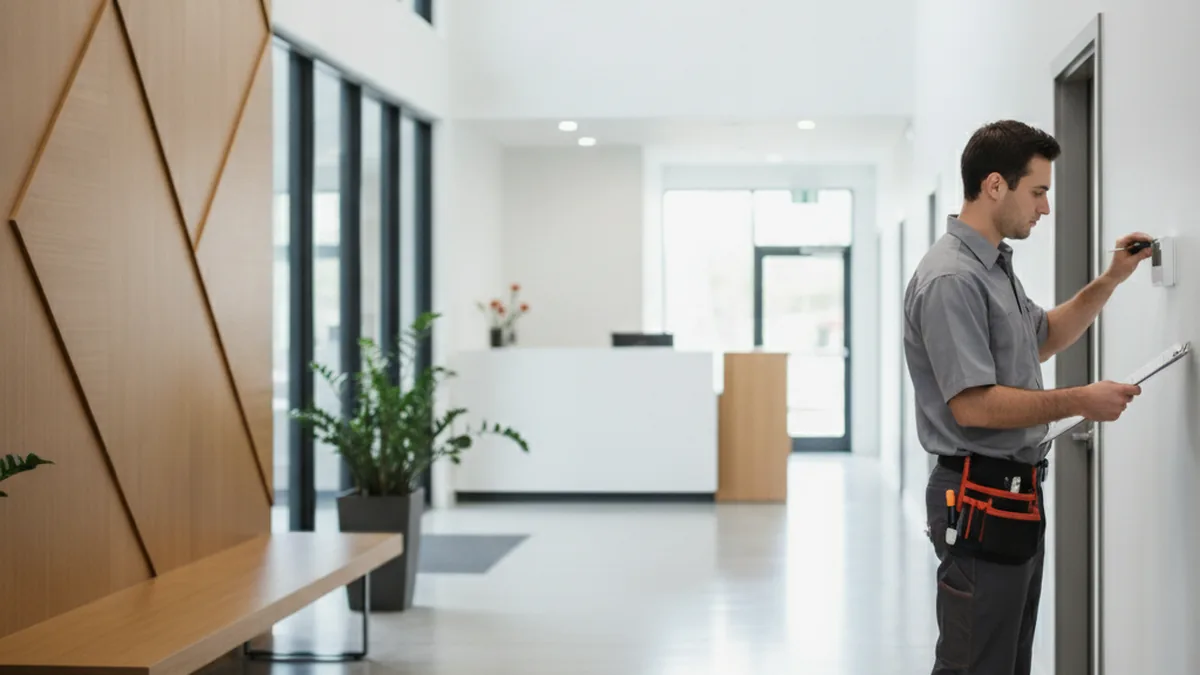
Compliance is not only about the once-a-year visit. Between annual verifications, the owner carries real responsibilities they can handle themselves — provided they know where the line falls between self-checks and work reserved for a specialized firm.
What the owner can do
The RBQ allows the owner or their representative to perform the daily and monthly checks. In practice, this means a daily visual check of the fire alarm panel to confirm no trouble is signalled, and monthly tests of certain network components. Alongside this, a prudent owner regularly eyeballs the emergency lighting, confirms that portable extinguishers are in place with gauges in the green, and checks that fire-rated doors close properly. None of this requires a contractor; it requires a routine and a logbook.
What must be left to a specialized firm
The annual CAN/ULC-S536 verification is the dividing line: it must be performed by a specialized firm that issues a formal report. So too are the corrections that flow from it — replacing a panel, rewiring a link, adding devices. These are not do-it-yourself tasks, both for compliance and for the liability that attaches to the work. The owner's job here is to hire a reputable firm, follow up on the corrections, and file the report.
The split at a glance
- Owner: daily panel check, monthly component tests, emergency lighting and extinguisher eyeballing, logbook
- Specialized firm: annual CAN/ULC-S536 verification, formal report, corrective work
How do obligations vary by building type and size?
A two-storey duplex or triplex is mainly governed by smoke alarms and the municipal by-law. Once a building exceeds 2 storeys AND 8 units, it enters the Building Chapter: a verified alarm system, an evacuation plan, emergency lighting. Rooming houses and seniors' residences are covered even at smaller scale. Covered new construction requires sprinklers.
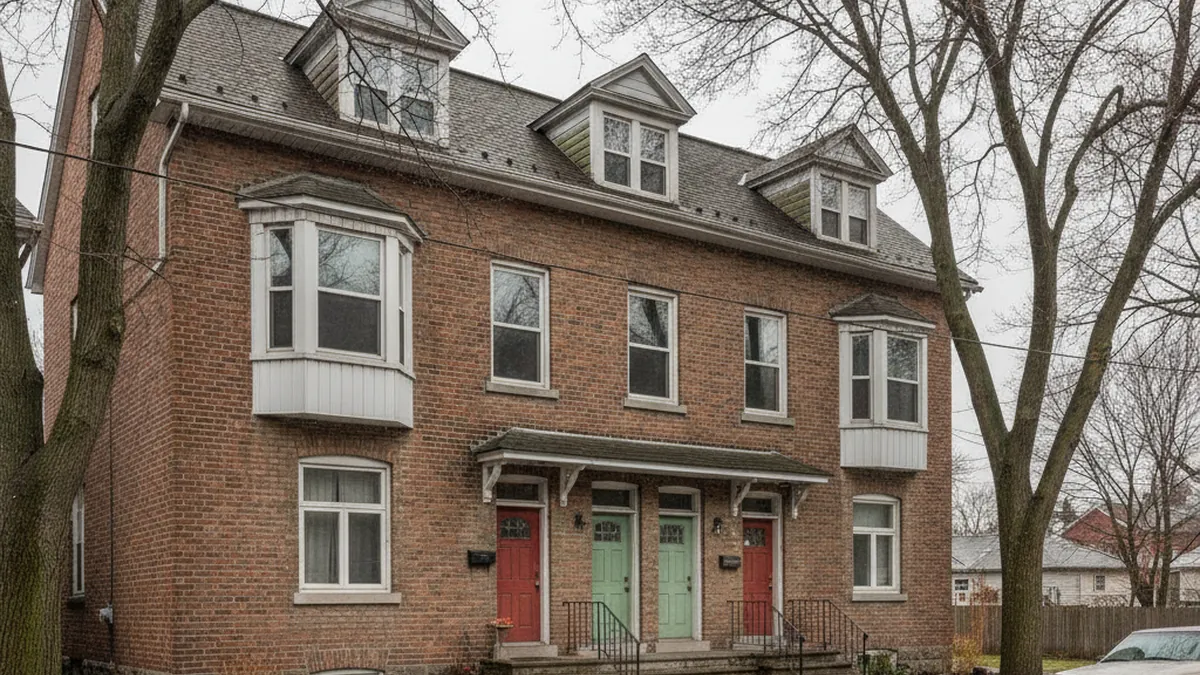
Fire safety does not follow a single rule: it scales its requirements to the building's size and use. A plex owner should locate their building precisely on this ladder before buying, expanding, or selling.
The small plex (duplex, triplex, quadruplex, 2 storeys)
These buildings are generally not covered by the Building Chapter of the Safety Code. Their main obligations concern functional smoke alarms in each unit (replaced 10 years after manufacture) and compliance with the municipal by-law. That does not mean "no obligations": the city may require carbon monoxide alarms, prevention visits, and other measures. But the full regime of alarm system verification does not apply.
The larger building (more than 2 storeys and more than 8 units)
This is the threshold that tips into the heavy regime. A centralized fire alarm system, daily, monthly, and annual CAN/ULC-S536 verifications, an evacuation plan and drill, 30-minute emergency lighting, and maintenance of door closers and emergency equipment. This is the typical profile of the North Shore multiplex for which a complete compliance file is decisive at sale.
Special uses: rooming houses and seniors' residences
Certain uses are covered by the Building Chapter even at smaller scale, because of occupant vulnerability or the layout. Rooming houses, hotels, motels, and seniors' residences are among the categories regulated by the RBQ. An owner who converts a plex into a rooming house, for instance, can tip the building into a more demanding regime of obligations — a point to confirm before any change of use.
Covered new construction
Finally, for new construction of more than 2 storeys and more than 8 units, Québec's Construction Code requires a sprinkler system from the outset. This is a design requirement, distinct from the maintenance regime for existing buildings, but one that weighs heavily on the cost of a new project.
| Building type | Verified alarm system | Evacuation plan / drill | Sprinklers |
|---|---|---|---|
| Duplex / triplex, 2 storeys | No (smoke alarms) | No | No |
| > 2 storeys and > 8 units (existing) | Yes (CAN/ULC-S536) | Yes | Depends on origin / work |
| Rooming house / seniors' residence | Often yes | Often yes | Case by case |
| Covered new construction | Yes | Yes | Yes (required at construction) |
This table is an indicative summary; the exact coverage depends on your building. Source: RBQ — Description of the Building Chapter. Confirm with the RBQ and your municipality.
What fire safety vocabulary should every owner know?
Control panel, initiating device, audible signal, CAN/ULC-S536, correction notice, fire-rated door closer, emergency lighting, fire separation: mastering this vocabulary lets you read a verification report, talk with a specialized firm, and understand what a buyer will examine in your plex.
Fire safety jargon discourages many owners. Here are the essential terms, explained simply, so you can read a report and follow a technical conversation without getting lost.
Alarm system terms
- Control panel — the brain of the alarm system: it receives signals from the detectors and triggers the signals. This is what you check daily.
- Initiating device — anything that triggers the alarm: smoke detector, heat detector, manual pull station (the red box to pull).
- Audible and visual signal — the bells, sirens, and strobes that alert occupants.
- Transmission link — the connection that sends the alarm to the fire department or a monitoring station.
Maintenance and compliance terms
- CAN/ULC-S536 — the standard for inspection and testing of fire alarm systems; the framework for the annual verification.
- Correction notice — the document by which an inspector flags deficiencies and sets a correction deadline.
- Fire-rated door closer — the mechanism that automatically closes a door to contain a fire; the owner must keep it functional.
- Fire separation — the walls, floors, and doors designed to limit the spread of fire and smoke between units.
- Emergency lighting — the self-contained units that light the exits during a power failure, with a required runtime of at least 30 minutes.
"The National Fire Code specifies requirements regarding the maintenance and periodic verification of various fire protection systems."
— Summary of maintenance obligations, Régie du bâtiment du QuébecWhat are the consequences of non-compliance: fines, correction notices, and liability?
An owner who contravenes the Safety Code commits an infraction and is liable to a fine of $1,090 to $5,446 for an individual, and $3,268 to $16,339 for a legal person, according to the RBQ. Before the fine, the inspector generally issues a correction notice with a deadline. A documented lack of maintenance can also trigger civil liability in the event of a fire and jeopardize insurance coverage.

Fire safety non-compliance is not an abstract risk. It materializes as a chain of concrete consequences, from the correction notice to the fine, all the way to civil liability in the event of a loss. Understanding this mechanism helps a multiplex owner gauge the real stakes of an incomplete file.
The correction notice: the first signal
When an inspector — from the RBQ or the municipal fire department — finds one or more deficiencies in a building under your responsibility, they issue a correction notice. According to the RBQ, this notice is mailed a few days after the inspection and sets a deadline to correct the shortcomings. It is a pivotal step: the owner who corrects within the deadline generally avoids escalation. The one who ignores it faces what comes next.
If the corrections are not made within the prescribed time, the RBQ can transfer the file to the Bureau of Infractions and Fines of the Ministry of Justice, which can then issue an infraction notice. In other words, the fine is not the first step: it sanctions inaction after a formal warning.
The fine schedule
The amounts are not symbolic. According to the RBQ, a person who contravenes a provision of the Safety Code commits an infraction and is liable to a fine whose range differs depending on whether the offender is an individual or a legal person.
| Offender | Minimum fine | Maximum fine |
|---|---|---|
| Individual (natural person) | $1,090 | $5,446 |
| Legal person (company, e.g. property held in a corporation) | $3,268 | $16,339 |
These amounts apply per infraction. An owner who holds their income property through a corporation — a common structure for larger plexes — falls into the higher range. And the fine does not erase the duty to correct: the compliance work still has to be done on top of the penalty.
Source: RBQ — Fines and RBQ — Inspection and correction notice. Amounts in force at the time of writing; confirm current schedules with the RBQ.
Civil liability and insurance
Beyond the regulatory penalty, the heaviest risk is civil liability in the event of a fire. If a loss causes damage — or worse, injuries — and a lack of maintenance of the safety systems is shown, the owner can be held liable. An unverified alarm system, out-of-service emergency lighting, or a non-existent evacuation plan then become damning evidence. It is also an insurance issue: an insurer who finds documented negligence may reduce a claim or refuse a renewal, a topic we explore in our guide to North Shore plex insurance.
What are owners' most common fire safety mistakes?
The most common mistakes are: confusing a smoke alarm with a fire alarm system, skipping or spacing out the annual verification, failing to keep the CAN/ULC-S536 reports, ignoring the municipal by-law on top of the provincial Code, letting a panel or batteries age, forgetting the evacuation plan and annual drill, and discovering non-compliance only at sale time. Each can be costly when selling a plex.

Most non-compliance we see when buying a North Shore multiplex results not from bad faith but from repeated, avoidable mistakes. Knowing them is already halfway to correcting them.
Mistake 1 — Confusing the two regimes
Believing that a functional smoke alarm is enough in a building covered by the Building Chapter is the founding mistake. The two obligations coexist: the alarm in each unit and the verified centralized alarm system. Neglecting the second because you handled the first leaves the building exposed.
Mistake 2 — Spacing out or skipping the annual verification
The annual CAN/ULC-S536 verification is not optional for covered buildings. Skipping a year, or doing it "when you remember," creates a gap in the history that jumps out at an inspector and a buyer alike. Regularity is the proof.
Mistake 3 — Not keeping the reports
A verification report that is not filed and kept is, at sale time, equivalent to a verification that never happened. The building file should contain several years of reports, extinguisher certificates, the evacuation plan, and proof of drills. We detail this list in our guide to due diligence documents to sell a plex.
Mistake 4 — Ignoring the municipal layer
Complying with the RBQ does not exempt you from the municipal prevention by-law, sometimes stricter. An owner who has never read their city's by-law — Terrebonne, Mascouche, Blainville, Boisbriand — can be in default without knowing it.
Mistake 5 — Letting the equipment age
An obsolete alarm panel, end-of-life backup batteries, emergency lighting that no longer lasts 30 minutes: these slow degradations eventually trigger costly corrections and lower the building's perceived value.
Mistake 6 — Forgetting the evacuation plan and annual drill
The evacuation plan and annual drill are obligations owners forget because they do not "sound" like a system. Yet their absence is verifiable and documented by the fire department.
Mistake 7 — Discovering non-compliance at sale time
The worst mistake is one of timing: waiting for the purchase offer to discover that the fire file is incomplete. At that stage, the upgrade happens under pressure from the buyer and often costs a sale price. Anticipating is always cheaper than fixing under condition.
Best practice in one line
- An alarm system verified every year, reports kept, plan and drill up to date, municipal by-law checked — that is the file that protects the value of your plex.
How does fire safety compliance affect the sale of your plex?
At sale time, the buyer and their inspector check the CAN/ULC-S536 reports, the condition of the sprinklers, exits, and emergency lighting. Non-compliance can reduce the price, lengthen the sale, or cause conditions to fail. A complete file, conversely, reassures the buyer and helps with financing.
For an owner considering selling a North Shore multiplex, fire safety is not an administrative detail: it is a central part of due diligence. A serious buyer — and especially their lender — will want proof the building complies.
What the buyer will examine
- The annual verification reports for the fire alarm system (CAN/ULC-S536), ideally over several years;
- The inspection certificates for the sprinklers and portable extinguishers, where applicable;
- The evacuation plan and proof of annual drills;
- The condition of the emergency lighting and exits;
- Any correspondence with the municipal fire department and any correction notices.
A patchy file acts as a red flag: the buyer will suspect other neglect, demand a price reduction or a holdback, or refuse to waive their conditions. Conversely, a complete, up-to-date fire safety file smooths the transaction and supports value. It is one of the documents we recommend preparing in our guide to due diligence documents to sell a plex.
ImmoMulti: direct buyer of North Shore multiplexes
Does your building have fire safety upgrades looming? We buy plexes and multiplexes as-is, without requiring you to fix the non-compliance first, with no broker and no commission. Get a proposal within 48 hours.
The fire safety of a larger income building is a technical field that evolves. The facts presented here reflect the requirements published by the RBQ and the Société d'habitation du Québec at the time of writing, but your specific situation depends on the building's exact size, year of construction, and your municipal by-law. For any decision, consult the RBQ, your fire department, and, if needed, a fire protection professional.
Informational content only. Fire safety provisions are subject to change by the Régie du bâtiment du Québec and the Québec government. Consult the RBQ, your municipal fire department, or a fire protection professional for advice specific to your building.