In this article
ImmoMulti — a direct buyer of income properties on the North Shore — helps you see clearly: when you sell your plex, the type of buyer changes everything. An institutional real estate fund and an individual buyer do not value the same things, do not attach the same conditions and do not treat tenants the same way. The first thinks in terms of yield and scale; the second, often an owner-occupant, buys a place to live as much as an investment. For an owner-seller, understanding this difference means choosing the right buyer for your building — and avoiding leaving money, time or peace of mind on the table.
Fund or individual buyer: what's the difference for the seller?
A fund or institutional investor buys a plex as a yield asset: it looks at the numbers (net income, cap rate, GRM, upside potential). An individual buyer, often an owner-occupant, buys a place to live and values location, condition and unit quality. This difference in logic flows through to price, conditions, the fate of tenants and closing reliability.
When you list your multi-unit building for sale on the North Shore, you do not attract a single type of buyer. At one end, the real estate fund or institutional investor: an organization that buys buildings to extract a return, often across several assets. At the other, the individual buyer: a private person, frequently an owner-occupant who plans to live in one unit while renting the others, or a small investor buying their first or second plex.
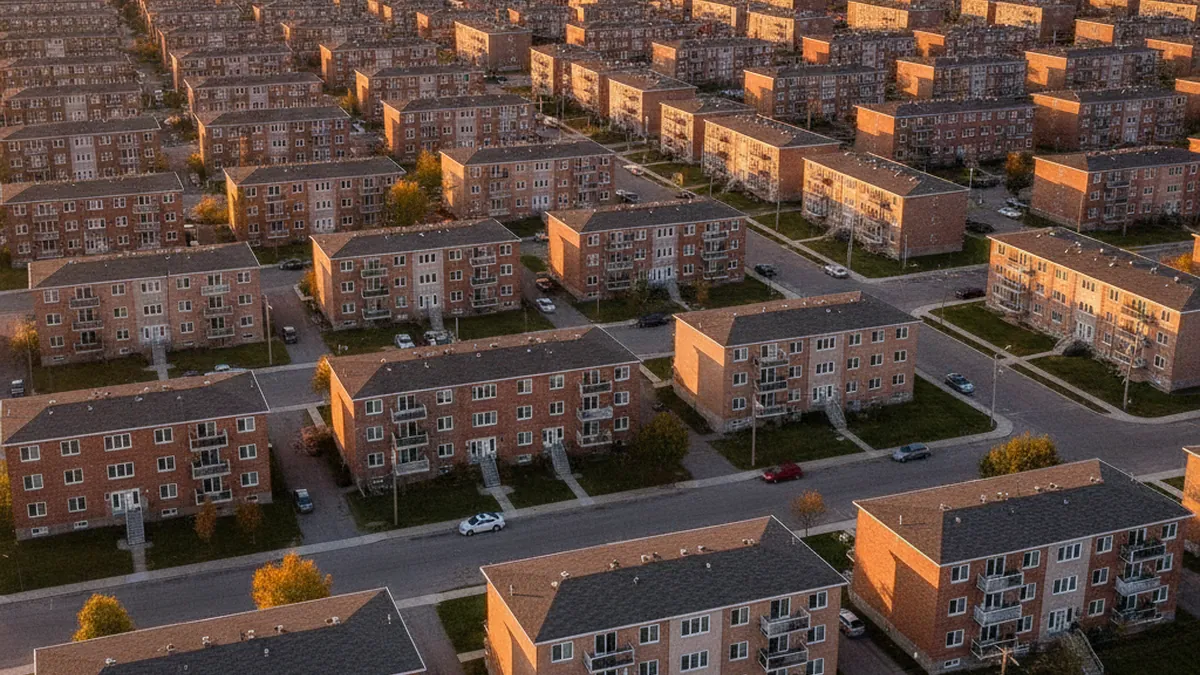
Québec stands out precisely for this "human-scale" model. According to the Aviseo Conseil portrait commissioned by CORPIQ and reported by La Presse, 61% of Québec's rental supply is concentrated in buildings of 1 to 5 units, and 39% of plex owners live in their building (up to 54.3% in Montreal). It is this fabric of small landlords that CORPIQ says it wants to protect against the rise of large funds.
Source: La Presse — "Immeubles à logements : le modèle québécois à risque?" (June 17, 2026), based on the Aviseo Conseil portrait commissioned by CORPIQ.
Who pays more for a plex: a fund or an individual?
It depends on the building. The owner-occupant individual buyer often pays full market price for a well-located, well-maintained small plex, because they are buying a place to live. The fund pays based on yield: it may go high on an under-rented building with strong optimization potential, but will stay cautious on a building already at full rental value.

Price is not set the same way depending on the buyer. An individual buyer who will live in your duplex or triplex factors in emotional and practical value: proximity to work, neighbourhood quality, the idea of reducing their housing cost by renting the other units. In a seller's market, this buyer often pushes to full market price, or even above if there are multiple offers.
A fund or institutional investor, by contrast, reasons coldly: it calculates net operating income, applies a capitalization rate (cap rate) and a gross rent multiplier (GRM), and sets a price that guarantees its target return. As a result, on a building whose rents are already at market and expenses optimized, the fund will rarely offer more than a motivated individual. But on an under-rented building with strong rent-increase or expansion potential, the fund may in fact outbid everyone because it values that future upside.
The market context works in your favour in 2026. According to APCIQ, half of all plexes sold for more than $675,000 in the first quarter of 2026, an 8% increase year over year, and the median plex price jumped 14% in the Montreal metropolitan area. Conditions remain clearly favourable to sellers.
Does a fund buy faster, and on what conditions?
A fund or institutional investor often has financing in place or buys cash, which speeds up and secures the transaction, but it runs rigorous due diligence (financial statements, leases, inspection) and may adjust its price after verification. An individual buyer more often depends on a mortgage, but generally attaches fewer yield-related conditions.
| Criterion | Fund / institutional investor | Individual buyer |
|---|---|---|
| Price basis | Yield (cap rate, GRM, net income, upside) | Location, condition, lifestyle value, cash flow |
| Financing | Often in place or cash | Mortgage to obtain (down payment) |
| Due diligence | Deep: financials, leases, inspection, environmental | Focused: physical condition, inspection, livability |
| Typical conditions | Income verification, possible price adjustment | Financing condition, inspection |
| Existing tenants | Possible optimization (increases, renovations) | Occupant: often keeps other tenants |
Speed comes mainly from financing. A fund that buys cash or has its credit lines in place can close quickly and with no financing condition. An individual must obtain a loan, which adds delay and risk. But note: the plex market is already very fast in Québec. According to APCIQ, it took an average of 30 days to sell a plex in the Greater Montreal area in the first quarter of 2026, and 39 days on average for a small income property province-wide. Speed is therefore not the exclusive preserve of funds.
On the conditions side, the fund offsets its financial strength with heavier due diligence. It will want your financial statements, your rent roll, your invoices, an inspection, sometimes an environmental audit — and it will not hesitate to renegotiate if the numbers do not add up. A complete, documented sale file sharply reduces that renegotiation risk, regardless of the buyer.
How does each buyer treat the existing tenants?
A fund buys to maximize yield, which can mean permitted rent increases, renovations or pressure on tenants. An owner-occupant individual buyer often keeps the other tenants in place. The seller does not control what the buyer does after the sale, but their obligations (leases, notices) apply until closing.
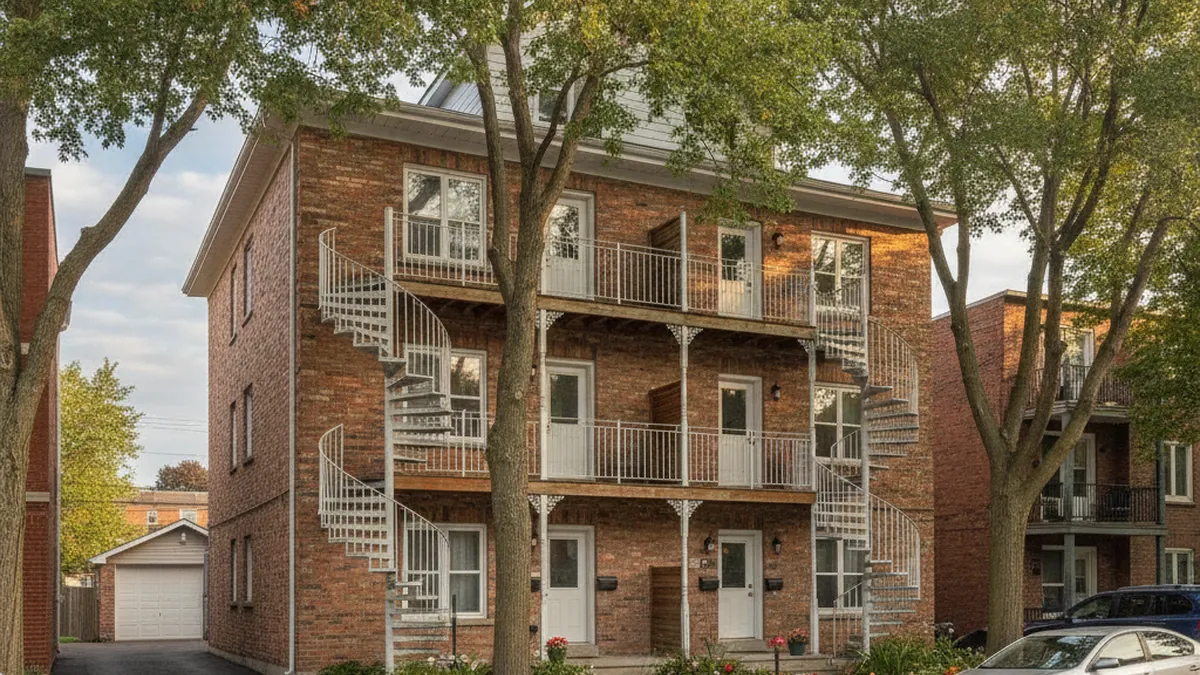
This is a fundamental difference, and it matters to many sellers. The fund or institutional investor buys to make the building profitable: where rents are below market, it will apply the permitted increases, undertake renovations and seek to reposition the property. In some cases, this puts pressure on the existing tenants. That is precisely the risk CORPIQ raises.
"If we don't intervene, the small human landlord — we will see them gradually replaced by large real estate funds."
— Éric Sansoucy, spokesperson for CORPIQ, quoted by La Presse (June 17, 2026)The individual buyer who occupies has a different relationship with tenants: since they will live in the building, they frequently keep the other tenants as-is and favour stability. For a seller attached to their tenants' well-being — or simply concerned about a smooth transition — this profile can be reassuring. Remember, though, that after closing the buyer becomes free to exercise their rights within the law, and that your own obligations (respecting leases, notices, handing over the rental documents) run until the sale.
Which buyer offers the most reliable closing?
Closing reliability depends mainly on the financing and the strength of the purchase promise, not on the buyer type alone. A well-capitalized fund or a professional buyer paying cash presents a lower risk of walking away than an individual whose mortgage can be refused. An offer with no financing condition, a serious deposit and a clear timeline is the best guarantee of reliability.

Closing reliability — the probability that the sale goes all the way, at the notary, at the agreed price — is often underestimated by sellers who look only at the headline price. Yet a high but fragile purchase promise is worth less than a firm, slightly lower offer.
A fund or a well-capitalized professional buyer, buying cash or with financing already approved, in principle presents a low risk of walking away for financing reasons. An individual buyer who depends on a pre-approval can see their loan refused at the last minute — especially if the bank's appraisal comes in below the offered price. That said, a fund is not infallible: it can withdraw if its due diligence reveals a problem (non-compliant rents, a defect, overstated income).
What actually makes an offer reliable
- No financing condition (or financing already approved)
- Serious deposit, held in trust
- Clear, realistic closing timeline
- Due diligence framed within a short window
- Solvent, verifiable buyer
Beware the misleading headline price
A higher offer laden with a long list of conditions, a small deposit and uncertain financing can collapse along the way and cost you weeks. Always compare the NET price and the firmness of the offer, not just the number at the top of the purchase promise.
How to choose the right buyer for your North Shore plex?
Do not compare only the price: look at the NET price in your pocket, the firmness of the offer, the deposit, the timeline and the buyer's strength. On the North Shore, where plexes are small and the market favours sellers, the individual buyer is often the highest bidder for a well-maintained building; a fund may win on a larger building with strong optimization potential.
The right choice depends on your building and your priorities. Ask yourself three questions: is your plex already at full rental value, or does it hold rent-increase potential? Are you looking first for the maximum price, speed or simplicity? Does the fate of your tenants weigh in your decision?
- Well-maintained small plex, rents at market: the owner-occupant individual buyer is often the highest bidder, especially in a seller's market.
- Under-rented building or strong upside: a fund or investor may offer more by valuing the future potential.
- Priority on speed and certainty: aim for an offer with no financing condition, cash or already approved.
- Concern for your tenants: an occupant buyer or a respectful direct buyer can ensure a smoother transition.
Before negotiating, estimate what your building is worth using the right metrics (net income, cap rate, GRM). Our tools give you a solid basis, and for the specific clauses of the purchase promise, have it reviewed by your notary.
ImmoMulti Deal AnalyzerEstimate your plex's yield and value before comparing offers →You can also avoid the fund-vs-individual dilemma by selling directly to a specialized buyer. ImmoMulti buys your North Shore income property with no broker, no commission, and a written offer within 48 hours — the reliability of a professional buyer, with respectful treatment of your tenants. You then compare our net offer to those of a fund or an individual, and choose with full information. Learn about our approach to selling a multiplex on the North Shore or get a confidential offer.
Who are the "real estate funds" that actually buy plexes in Québec?
The word "fund" covers several realities: real estate asset managers, pension funds, family offices, private investment companies, investor syndicates and large incorporated private investors. What unites them is not their size, but their logic: they buy a plex as a line in a yield portfolio, not as a place to live. For the North Shore owner-seller, understanding which type of institutional buyer you are dealing with changes how you negotiate.

When a seller hears "a fund wants to buy my plex," they often imagine a large, anonymous institution. The reality is more nuanced. In the Québec multi-unit market — and particularly on the North Shore, where buildings are smaller than the large Montreal towers — the "institutional" buyer takes many forms, each with its own priorities, decision speed and risk tolerance.
The main families of institutional buyers
Here are the profiles you are most likely to encounter when your building attracts professional buyers, from smallest to largest:
| Buyer type | What it seeks | Decision speed | Target plex size |
|---|---|---|---|
| Incorporated private investor | Cash flow, appreciation, rent-increase potential | Fast (days) | 2 to 12 units |
| Investor syndicate / club | Pooled yield, value-add buildings | Medium (weeks) | 6 to 40 units |
| Private investment company | Stabilized yield, scale, building portfolios | Medium to slow | 12 units and up |
| Family office | Capital preservation, long-term income | Slow and cautious | Variable, often high-end |
| Pension fund / asset manager | Institutional portfolios, large assets | Very slow, very structured | Rarely small plexes |
This table reveals a key nuance for the North Shore seller: the true "big funds" (pension funds, institutional asset managers) rarely buy a duplex, a triplex or even a 6-unit building. They target multi-million-dollar assets or entire portfolios. So the "institutional" buyer knocking on your door for a small plex is far more often an incorporated private investor or an investor syndicate — a player who thinks in yield, yes, but with agility comparable to a well-prepared individual.
Why this distinction changes your selling strategy
If the buyer interested in your building is an agile incorporated investor, you are dealing with someone who can decide fast, finance solidly and close without the friction of an investment committee. Conversely, a true institutional asset manager brings financial certainty, but imposes long due-diligence timelines and a multi-level decision process. A seller who confuses the two risks either underestimating the possible speed or overestimating the strength of a signature.
CORPIQ, in its analysis of the Québec rental stock relayed by La Presse, stresses that the multi-unit fabric in Québec remains dominated by "human-scale" owners. This means that in practice, even when you sell to an "investor," you are often selling to an individual or a small incorporated family business, not a multinational. This reality works in your favour: you keep a human negotiating relationship, and the buyer remains sensitive to ground-level arguments (quality of upkeep, tenant stability, building history).
How to identify who you are really dealing with
- Ask who makes the final purchase decision (one person or a committee?)
- Check whether financing is in place or subject to a third party's approval
- Find out how many buildings the buyer already owns
- Establish who your contact will be from start to closing
- Clarify whether the buyer will self-manage or use a property manager
Context: CORPIQ — "Mon premier plex: quoi savoir avant d'acheter en 2026", on the profile of small-building buyers in Québec.
How to compare a fund offer and an individual offer, step by step
Comparing two offers on a plex is not about lining up two numbers. You must break down each purchase promise in six steps: bring the price back to NET, isolate the conditions, assess the deposit and timeline, measure the walk-away risk, cost the time, and finally weigh it against your personal priorities. An individual and a fund only compare fairly once all these variables are on the same scale.

Many plex sellers on the North Shore make the same mistake: they pick the highest-number offer without looking at what lies behind it. Yet a fund offer and an individual offer are almost never comparable "as is." Here is the method we recommend, step by step, to decide with full information.
Step 1 — Bring each offer back to the NET price in your pocket
The headline price is not what you cash. From each offer, subtract: any brokerage commission (often 4 to 6 % + taxes with a traditional broker), the mortgage balance to repay, prepayment penalties, tax and rent adjustments prorated, and capital-gains tax. An individual offer of $700,000 through a broker may leave you less than a fund offer of $680,000 with no commission.
Step 2 — Isolate and weigh the conditions
List side by side the conditions of each purchase promise: financing condition, inspection, income verification, lease review, environmental audit. Each condition is an exit door for the buyer. A "bare" offer (condition-free) is structurally worth more than an offer riddled with reservations, even at a lower price.
Step 3 — Assess the seriousness of the deposit and timeline
A substantial deposit held in trust signals a committed buyer. A short, realistic timeline reduces your exposure. Beware of a long closing delay paired with a small deposit: it often signals a buyer who has not yet secured financing.
Step 4 — Estimate the walk-away risk
Assign each offer a realistic probability of reaching the notary. A well-capitalized fund or a cash investor often sits at 90 % or more. An individual dependent on a bank pre-approval, in a context where the bank's appraisal may differ from the offered price, may fall below 75 %.
Step 5 — Cost the time
Each extra week of delay has a cost: mortgage interest, taxes, insurance, management, risk of vacancy or damage. If a higher offer requires 90 days and heavy due diligence, compare that carrying cost to the price gain.
Step 6 — Weigh against your priorities
Finally, come back to yourself. Are you seeking the absolute maximum price, closing certainty, speed, or peace of mind for your tenants? No objective grid replaces this personal weighting.
| Comparison step | Typical "fund" offer | Typical "individual" offer |
|---|---|---|
| 1. NET price | Often no broker (higher net at equal price) | Often via broker (commission to deduct) |
| 2. Conditions | Income verification, deep due diligence | Financing + inspection |
| 3. Deposit / timeline | Solid deposit, sometimes flexible closing | Variable deposit, closing tied to the loan |
| 4. Walk-away risk | Low if cash / financing in place | Higher if loan still to obtain |
| 5. Cost of time | Due diligence sometimes longer | Delay tied to mortgage approval |
| 6. Seller's priorities | Fits if certainty > maximum price | Fits if maximum price > speed |
The fragile "highest bidder" trap
An individual offer $20,000 higher, but with a financing condition, a small deposit and a 75-day delay, can collapse in the final week — forcing you to relist the building, often at a lower price after that false start. The headline price is worthless until closing is secured.
Three worked examples: fund vs individual on a North Shore plex
Principles make full sense on numbers. Here are three realistic scenarios for a North Shore triplex — rents at market, rents below market, and a building to optimize — that show when the individual wins, when the fund outbids, and why the headline price misleads. The numbers are illustrative; always validate your situation with an appraiser and your notary.

To make the comparison concrete, take a fictional but representative triplex from the 2026 North Shore market. Recall the price context: according to APCIQ, half of Greater Montreal plexes sold for more than $675,000 in the first quarter of 2026, up 8 % year over year, and property prices jumped 67 % over five years across Québec. The three scenarios below show how the same building attracts very different offers depending on its income profile.
Scenario A — Well-maintained triplex, rents at market
A triplex in Terrebonne, impeccable upkeep, three units rented at market price (gross income of $42,000/year, net operating income of about $30,000). The owner-occupant who plans to live in one unit values location, quality and the reduction of their housing cost.
- Owner-occupant offer: $690,000, financing condition, $25,000 deposit, 60-day closing.
- Fund offer (cap-rate valuation): at a target cap rate of 5 %, $30,000 ÷ 0.05 = $600,000. The fund won't go much higher, since rents are already at market.
- Verdict: the individual clearly wins (+$90,000). On a building at full rental value, emotion and use beat yield.
Scenario B — Triplex with below-market rents
Same building, but long-term tenants pay 25 % below market (gross income of $32,000, net income of $21,000). The occupant hesitates, because short-term cash flow is thin. The fund, however, sees the potential for permitted increases as units turn over.
- Owner-occupant offer: $640,000, cautious given the low immediate yield.
- Fund offer: it capitalizes the normalized income (market potential). At market rents, net income would rise toward $30,000; at a 4.75 % cap rate, that justifies an offer around $660,000 to $670,000.
- Verdict: the fund can match or beat the individual, because it pays for the potential the occupant discounts with caution.
Scenario C — 6-unit building to optimize
A larger building in Saint-Jérôme, with below-market rents, a convertible basement and underused parking. This "value-add" profile is the favourite territory of investors and small funds.
- Individual offer: rare at this size; an occupant rarely targets 6 units, and the price stays capped by their personal borrowing capacity.
- Fund / investor offer: it prices the stabilized net income after optimization and can offer noticeably more, because it has the expertise and capital to execute the value plan.
- Verdict: the fund almost always wins on larger buildings to optimize.
"The smaller, better-maintained and closer to market price your building is, the more likely the owner-occupant individual buyer is the highest bidder. The larger, more under-rented or optimizable it is, the more the fund takes the advantage."
— ImmoMulti synthesis, based on yield metrics (cap rate, GRM, net income)Price context: La Presse — "Property prices exploded by 67 % over five years" (APCIQ report, January 14, 2026). Scenario amounts are illustrative.
A fund's due diligence: what to expect and how to prepare
A fund or institutional investor runs far deeper due diligence than an owner-occupant. It examines your financial statements, rent roll, leases, invoices, inspection and sometimes an environmental audit. Every gap between what you declared and what it finds becomes a renegotiation lever. A complete, documented sale file is your best protection against a last-minute price adjustment.

The most concrete difference between selling to a fund and selling to an owner-occupant individual lies in the intensity of the verification. The occupant mainly looks at physical condition: the roof, structure, wiring, the livability of "their" unit. The fund buys numbers — and verifies them line by line. Understanding its process lets you anticipate its questions and neutralize its renegotiation grounds in advance.
What the fund will really dig into
On a multi-unit building, an institutional buyer's due diligence generally covers four document families:
- The financial layer: actual income and expense statements over 2 to 3 years, rent roll, account statements, proof of collection.
- The rental layer: all leases in force, modification notices, special agreements, increase history, any deposits.
- The physical layer: inspection report, maintenance history, major-work invoices (roof, windows, plumbing), compliance certificates.
- The regulatory and environmental layer: municipal and school taxes, insurance, regulatory compliance, sometimes a Phase I environmental assessment.
The typical timeline of an institutional due diligence
| Phase | What happens | Indicative delay |
|---|---|---|
| Conditional offer | Purchase promise signed, subject to due diligence | Day 0 |
| Document delivery | Seller provides financials, leases, invoices | Days 1 to 7 |
| Financial analysis | Income and expense verification, normalization | Days 7 to 20 |
| Physical inspection | Inspection, sometimes environmental audit | Days 10 to 25 |
| Lifting conditions | Confirmation, or price-adjustment request | Days 20 to 30 |
| Closing at the notary | Signing of the deed of sale | Days 30 to 60 |
This timeline explains why the "fund is always faster" myth needs nuance. The fund may buy with no financing condition, but its documentary due diligence can stretch where an occupant settles for a standard inspection. Recall that the plex market is already fast: APCIQ measures an average selling time of 30 days in Greater Montreal in the first quarter of 2026, and about 39 days for small buildings province-wide.
Prepare your file before you even receive an offer
The best defence against renegotiation is a flawless file, ready in advance. Gather your financial statements, up-to-date rent roll, signed leases, work invoices and maintenance history. A seller who hands over a complete file within 48 hours projects seriousness and leaves the buyer little leverage to lower the price. This preparation benefits a sale to a fund as much as to an individual.
The prudent seller's due-diligence kit
- Income and expense statements for the past 2-3 years
- Up-to-date rent roll and copies of all leases
- Major-work invoices and warranties
- Tax accounts, insurance policies, service contracts
- Pre-sale inspection report (optional but reassuring)
Seven common seller mistakes when facing a fund or an individual
Plex sellers most often lose money not because of the market, but because of avoidable mistakes: trusting the headline price, neglecting file preparation, misjudging an offer's firmness, underestimating the cost of time, or ignoring their obligations toward tenants until closing. Knowing these traps in advance is often worth several thousand dollars.

After price, the second cause of disappointment among plex sellers on the North Shore is process mistakes. They cost dearly because they are paid in money, time and peace of mind. Here are the seven most common — and how to avoid them.
Mistake 1 — Choosing the highest-number offer
The headline price is not the net price, and a high but fragile offer can collapse. Always compare the net and the firmness before the number at the top of the purchase promise.
Mistake 2 — Not preparing your due-diligence file
A seller who improvises their documents gives the buyer — especially a fund — a thousand reasons to renegotiate. Upstream preparation neutralizes most price adjustments.
Mistake 3 — Underestimating your building's optimization value
An owner who sells a below-market-rent building without understanding its potential may undersell it to a fund that knows exactly what that future-increase margin is worth.
Mistake 4 — Ignoring the cost of time
Accepting a higher offer with a heavy 90-day delay can cost more, in carrying and risk, than the small price gain. Time is a real cost.
Mistake 5 — Neglecting your obligations toward tenants
Until closing, your obligations (respecting leases, notices, handing over rental documents) apply. Neglecting them can delay the sale or create a dispute. What the buyer does afterward is no longer yours, but your compliance until signing is.
Mistake 6 — Relying on a single offer
Without comparison, you cannot know whether you are leaving money on the table. Solicit several profiles (occupant, investor, direct buyer) to build a real market benchmark.
Mistake 7 — Skipping the notary step
A purchase promise's clauses — conditions, adjustments, warranties — carry legal consequences. Having the promise reviewed by your notary before signing avoids costly surprises.
| Mistake | Typical consequence | Fix |
|---|---|---|
| Following the headline price | Failed sale, wasted time | Compare net and firmness |
| Unprepared file | Downward renegotiation | Due-diligence kit ready in advance |
| Potential ignored | Building sold below value | Estimate with cap rate, GRM, net income |
| Cost of time neglected | Unpriced carrying and risk | Factor the delay into the net |
| Tenant obligations forgotten | Delay or dispute | Respect leases and notices until closing |
The North Shore market in 2026: why the buyer profile is unusual here
The North Shore — Terrebonne, Mascouche, Blainville, Boisbriand, Sainte-Thérèse, Saint-Eustache, Deux-Montagnes, Saint-Jérôme — stands out for its stock of small 2- to 5-unit plexes and its high owner-occupancy rate. This fabric attracts individual buyers and private investors first, more than large funds. In a seller's market like 2026, this profile works in favour of the owner selling a well-maintained building.

The most likely buyer for your building depends heavily on its location. On the North Shore, the structure of the multi-unit stock naturally steers demand toward certain profiles. Understanding this geography of demand helps you target the right buyer and set a realistic pricing strategy.
A stock dominated by small plexes
Unlike the large rental complexes of the island of Montreal, the North Shore is made of duplexes, triplexes and small 4- to 6-unit buildings, often built for owner-occupants. Recall the structuring figure reported by La Presse from the Aviseo portrait commissioned by CORPIQ: 61 % of Québec's rental supply is in buildings of 1 to 5 units, and 39 % of plex owners live in their building. On the North Shore, this owner-occupancy share is particularly high, fuelling strong, competitive individual-buyer demand.
A seller's market in 2026
The context remains favourable to the seller. According to APCIQ, plex prices rose 8 % year over year in the first quarter of 2026 in Greater Montreal, with an average selling time of just 30 days, and property prices climbed 67 % over five years across Québec. When demand outstrips supply and buyers compete for the few available buildings, the motivated owner-occupant often pushes to full price, or above in multiple-offer situations.
| North Shore area | Dominant stock profile | Most likely buyer |
|---|---|---|
| Terrebonne / Mascouche | Family duplexes and triplexes | Occupant + private investor |
| Blainville / Boisbriand | Recent small plexes | Occupant |
| Sainte-Thérèse / Rosemère | Established plexes, mature neighbourhoods | Occupant + small investor |
| Saint-Jérôme | Larger buildings, to optimize | Investor / fund |
| Saint-Eustache / Deux-Montagnes | Mix of duplexes and 4-6 units | Occupant + investor |
The underlying debate: small owners versus big funds
The rise of institutional buyers fuels a public debate in Québec. CORPIQ warns against the erosion of the "human-scale" model if large funds gradually absorb the small-owner stock. This debate directly concerns the seller: it reminds you that by selling to an occupant or a local investor, you often help maintain this human fabric — whereas by selling to a large fund, you cede to a player whose logic is purely financial.
"If we do nothing, the small human landlord will gradually be replaced by large real estate funds."
— Éric Sansoucy, CORPIQ, quoted by La Presse (June 17, 2026)Source: La Presse — "Rental buildings: is the Québec model at risk?" (June 17, 2026).
A seller's mini-glossary: terms funds and individuals use differently
Selling to a fund or to an individual also means speaking two languages. The fund thinks in cap rate, GRM, normalized net income and value-add; the individual talks about location, emotional appeal and housing cost. Mastering this vocabulary puts you on equal footing at the negotiating table.

To negotiate on equal terms with a fund, you must understand its metrics. Here are the key terms every savvy plex seller should master before comparing offers.
- Cap rate (capitalization rate): the ratio of net operating income to price. A lower cap rate means a higher price for the same income — the fund's central tool.
- GRM (gross rent multiplier): the price divided by annual gross income. A quick valuation shortcut, useful for comparing similar buildings.
- Net operating income: income minus operating expenses (excluding financing). It is the raw material of value for a fund.
- Normalized income: net income recalculated at market rents, as if the building were fully optimized. This is what the fund capitalizes on an under-rented building.
- Value-add: a building whose yield can be improved through rent increases or renovations. The investors' favourite playground.
- Seller's net price: what you actually cash after commission, mortgage balance, adjustments and tax. The only number that truly matters.
The winning seller's reflex
- Translate each offer into the other side's language (net for the occupant, cap rate for the fund)
- Estimate your value upfront with the right yield metrics
- Never negotiate without knowing your target net price
- Have the clauses reviewed by a notary before signing
Informational content only. Does not constitute legal or tax advice. Purchase-promise clauses and specific situations should be reviewed with your notary or legal advisor.