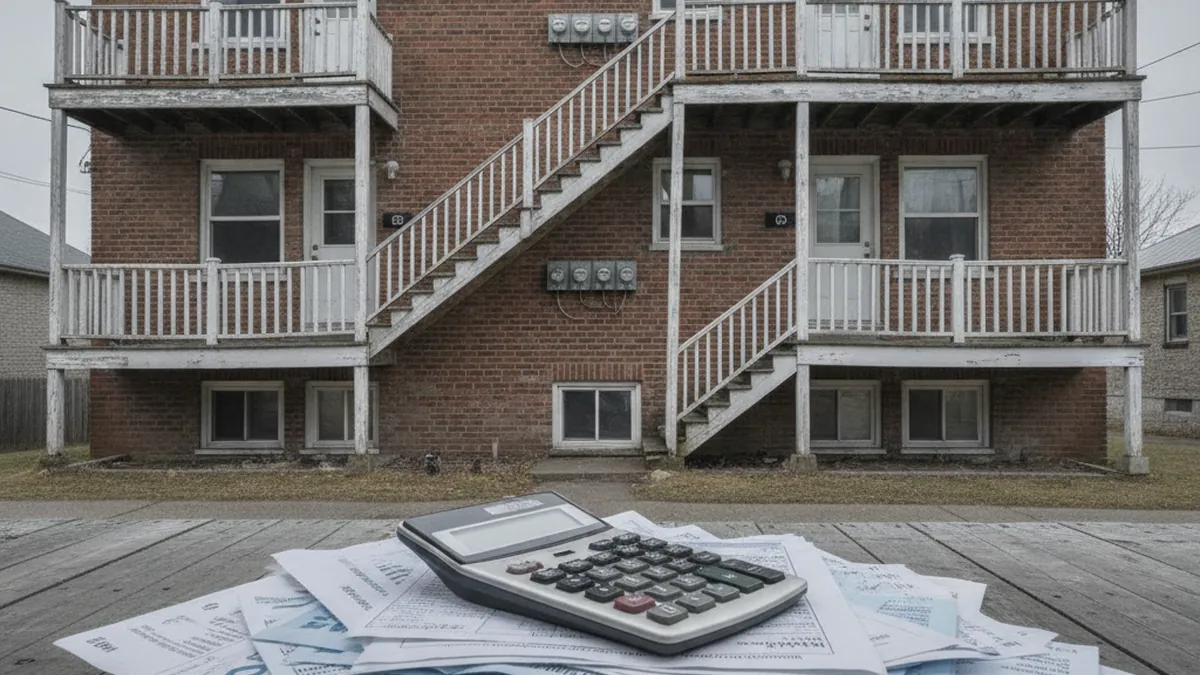
ImmoMulti — direct buyer of income properties on the North Shore — is closely tracking data from the CORPIQ 2026 report: more than one in four plex is currently unprofitable in Quebec, according to the Aviseo Conseil study commissioned by the Corporation des propriétaires immobiliers du Québec (CORPIQ) and reported by La Presse on June 17, 2026. These income-property owners must subsidize their building out of their own personal income. Meanwhile, construction costs have surged 49% between 2017 and 2025, while overall inflation reached only 17%. The situation is particularly concerning on the North Shore, where property reassessments in 2024-2026 have increased the tax burden on triplex and income-property owners. This report raises an urgent question: how far can this pressure go before the small Quebec landlord model gives way to the rise of large real estate investment funds?
What does the CORPIQ 2026 report reveal about Quebec's rental housing stock?
The CORPIQ/Aviseo 2026 report reveals that 94% of Quebec rental buildings have only 1–5 units, owned mostly by individuals — and more than 1 in 4 of these properties is now running a deficit, with owners subsidizing operations out of personal income.
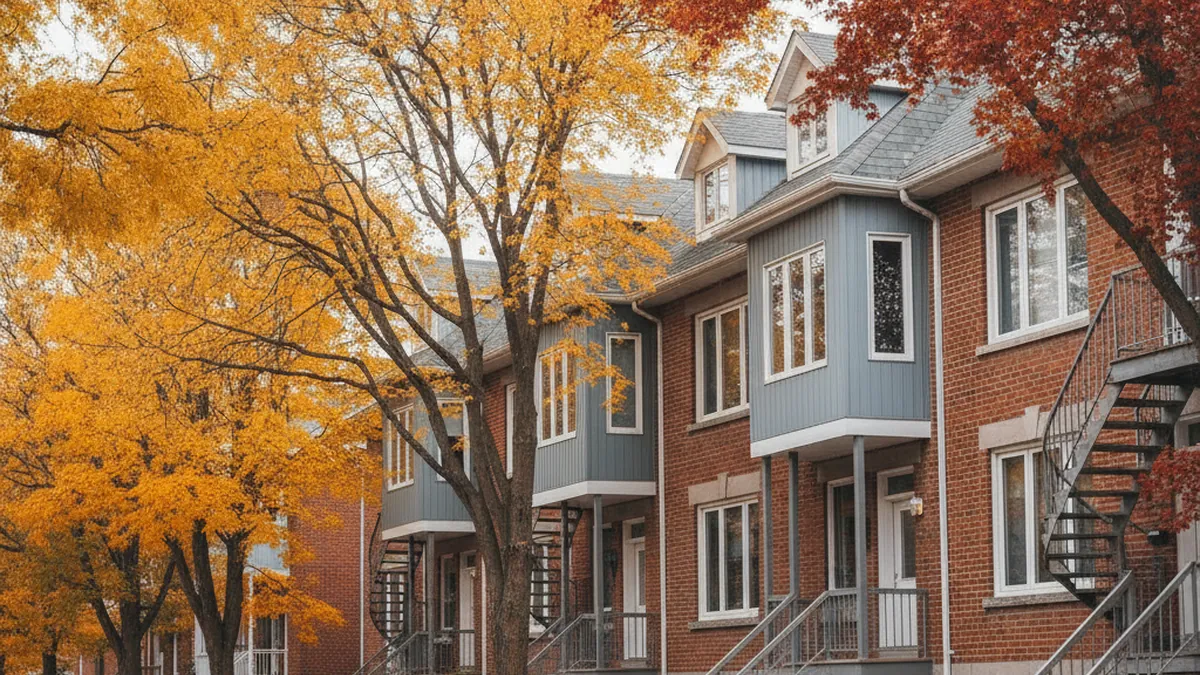
Quebec stands radically apart from the rest of Canada in the structure of its rental housing stock. According to the Aviseo/CORPIQ report, 94% of Quebec rental buildings have only one to five units — and the vast majority are owned by individuals, not companies or investment funds. This unique model, often described as "human-scale," is now under threat.
Another key data point: 61% of Quebec's rental supply is concentrated in buildings with 1 to 5 units. These are not condo towers or institutional complexes — they are duplexes, triplexes, and quadruplexes that Quebec families have acquired over the decades, often as a retirement investment or to live in one unit while renting out the others.
The report highlights another revealing fact: 39% of plex owners live in their building, a proportion that rises to 54.3% on the island of Montréal. This owner-occupant — investor and neighbour at once — devotes considerable time to managing their building — a total of 48 million hours per year across all small Quebec landlords, according to Aviseo's data.
This is the model that CORPIQ spokesperson Éric Sansoucy is urgently defending. But its survival is far from guaranteed.
Source: La Presse — "Immeubles à logements : le modèle québécois à risque?" (June 17, 2026), based on the Aviseo Conseil study commissioned by CORPIQ.
Why is more than one in four plex running a deficit in Quebec in 2026?
Construction costs rose 49% between 2017 and 2025 (vs. 17% overall inflation), renovation investment jumped 186%, and TAL-controlled rent increases lag actual cost growth — leaving tens of thousands of small Quebec landlords covering building deficits out of their personal income.
The central figure in the report is stark: more than one in four plex is currently unprofitable in Quebec. These income-property owners — on the North Shore and across Quebec — must make up their building's deficit out of their employment income or savings. They are not making a profit on their real estate investment: they are injecting money into it.
This is not a marginal phenomenon. In a rental housing stock where 94% of buildings are small and owned by individuals, 1 in 4 plex in the red means tens of thousands of Quebec landlords — owners of duplexes, triplexes, quadruplexes, and larger income properties — operating at a loss.
"We just want the building to be well maintained so that rents stay good over the long term. But if due to the current rules it isn't profitable in the long run, then I'll sell my buildings to someone who wants them to be profitable in the short term."
— Alicia Gravel, owner of two small rental buildings in Montréal, quoted by La Presse, June 17, 2026This quote perfectly illustrates the dynamic at play: when a plex's profitability collapses, the individual landlord often does not have the financial resources to absorb losses indefinitely. Selling then becomes a serious option — and the question that arises is: to whom?
Source: La Presse — Vincent Larin, June 17, 2026
Why have construction costs jumped 49% between 2017 and 2025?
Higher material costs, skilled-labour scarcity and tighter regulatory requirements drove Quebec construction costs up 49% (2017–2025) — nearly 3× faster than general inflation — while renovation investment in the aging rental stock (73% of plex built before 1990) surged 186% over the same period.
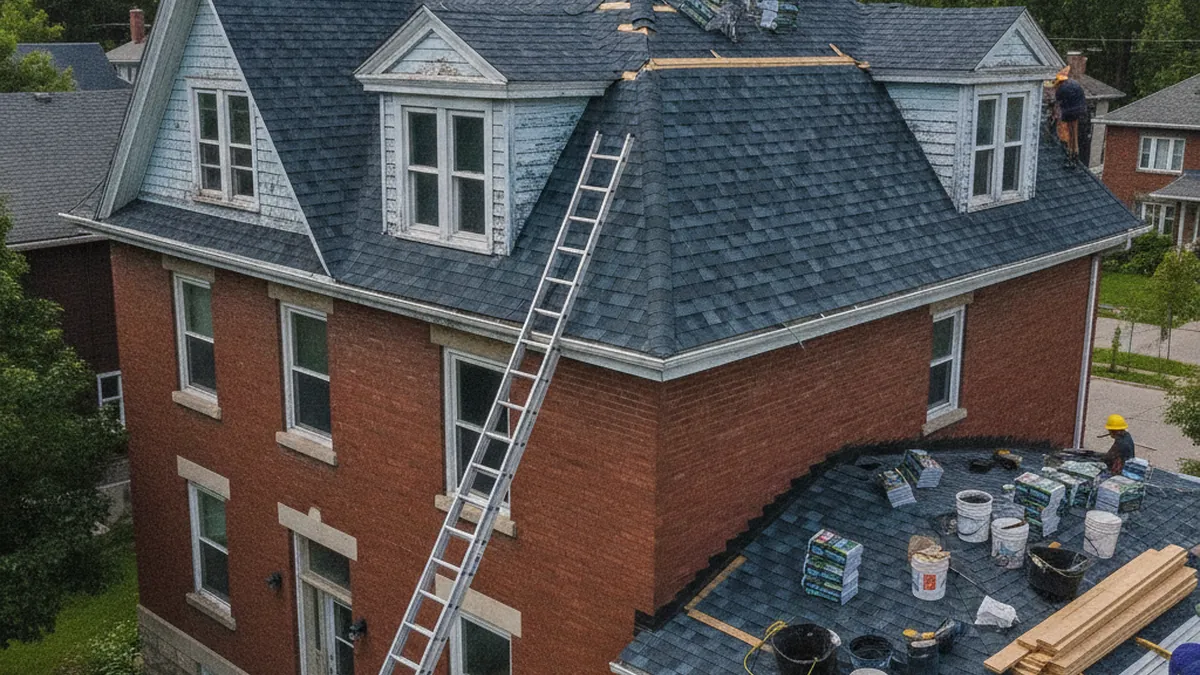
The pressure on plex and income-property owners in Quebec comes not just from revenue — it comes mainly from expenses. The Aviseo report quantifies the scale of the shock:
| Indicator | Change 2017–2025 | For comparison |
|---|---|---|
| Construction costs in Quebec | + 49% | Overall inflation: + 17% |
| Monthly renovation investment (rental stock) | + 186% | — |
| Proportion of plex built before 1990 | 73% of stock | Growing maintenance needs |
These three figures, taken together, describe a devastating squeeze effect for income-property owners: renovation costs have nearly tripled in trend, while the aging rental stock demands ever more interventions. With 73% of Quebec plex built before the 1990s, needs for roof replacement, plumbing, heating systems, and insulation only keep growing.
On the North Shore of Montréal — Terrebonne, Mascouche, Blainville, Boisbriand, Saint-Jérôme — this pressure is amplified by significant property reassessments in recent years that caused municipal taxes to spike, as well as by the broad rise in property insurance premiums. The result: the plex or income-property owner on the North Shore finds themselves squeezed between rental income controlled by the Rental Housing Tribunal (TAL) and expenses that are spiralling out of control.
The squeeze effect in numbers
Construction costs rose 2.9 times faster than general inflation between 2017 and 2025. For a triplex owner on the North Shore who needs to replace a roof or heating system, this is not an abstraction: it is a bill that can exceed $30,000 to $60,000, where the same work would have cost $20,000 to $40,000 ten years ago.
Source: Aviseo Conseil for CORPIQ, cited by La Presse, June 17, 2026
What regulations are making it harder for small plex landlords to stay profitable in Quebec?
CCQ trade jurisdiction rules require certified tradespeople for many tasks in rental buildings, creating costly ambiguity for owners of small duplexes and triplexes — the CORPIQ/Aviseo report recommends exempting small rental buildings from these rules to reduce maintenance costs.
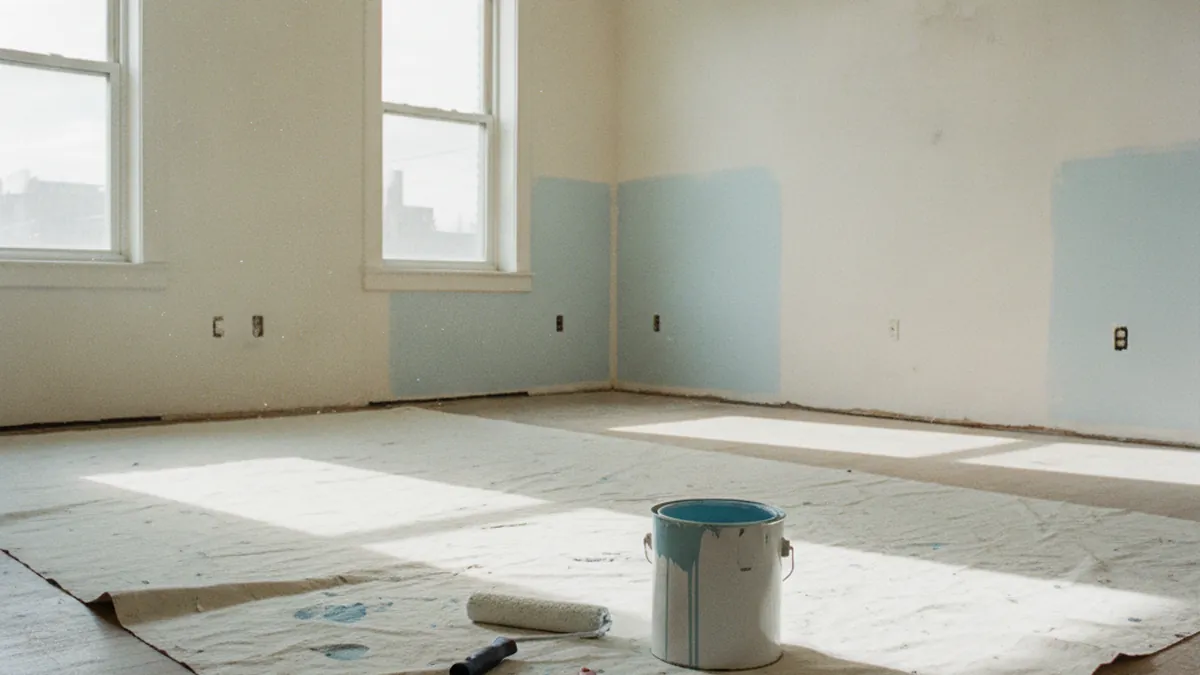
Beyond construction costs, the CORPIQ/Aviseo report points to a second source of pressure: the regulations surrounding work in rental buildings. The trade jurisdiction rules of the Commission de la construction du Québec (CCQ) require that certain tasks be carried out by workers holding the appropriate trade certification cards — a rule designed for large job sites but that also applies to small duplexes and triplexes.
The example illustrated in the La Presse article is telling. Alicia Gravel, owner of two Montréal rental buildings, wanted to have a unit painted between tenants. Her reading of the rules led her to believe she had to hire a painter with CCQ certification cards. Yet a contractor willing to paint "three walls" is extremely rare — and expensive.
The CCQ clarified that in this specific case, a volunteer, an employee, or the owner herself could perform this work. But this is precisely the problem the report denounces: the rules lack clarity for small income-property owners, who have neither legal departments nor HR teams to navigate this complex regulatory landscape.
The Aviseo/CORPIQ report recommends exempting small rental buildings from trade jurisdiction rules, or at the very least unambiguously clarifying which tasks are or are not subject to them. This clarification would allow owners of duplexes, triplexes, and other income properties to manage their buildings more efficiently and at lower cost.
Why have 72.9% of landlords never used the available assistance programs?
Lack of awareness and complexity are the main barriers: 72.9% of Quebec landlords have never used MLI Select, RénoClimat, or Logisvert — programs that could substantially reduce renovation costs and improve long-term profitability for North Shore income properties.
One of the most striking findings in the Aviseo/CORPIQ report is that the majority of plex and income-property owners in Quebec do not use the government assistance programs that could reduce their costs. According to a survey of landlords: 72.9% of them have never taken advantage of existing programs.
Available but underused programs
Three programs are specifically cited in the report:
- MLI Select / APH Select (CMHC) — Mortgage loan insurance for major renovation projects targeting energy efficiency in rental buildings. Preferential rates, access to long-term financing.
- RénoClimat — Quebec government program offering subsidies for energy-efficiency improvement work (insulation, windows, heating systems).
- Logisvert — Program specifically for rental building owners for energy-efficiency work. Can cover a significant portion of costs for income properties on the North Shore and elsewhere in Quebec.
The report also recommends expanding and easing access to the Rent Supplement Program (RSL — Programme de supplément au loyer), which partially subsidizes the rent of low-income tenants so they spend no more than 25% of their income on housing. By stabilizing the ability of vulnerable tenants to pay their rent, the RSL also contributes to the financial stability of the small landlords who house them.
To check for your plex or income property on the North Shore
- MLI Select / APH Select (CMHC) for major renovations with preferential financing
- RénoClimat for subsidized energy-efficiency work
- Logisvert for energy improvements in rental buildings
- Rent Supplement Program (RSL) to stabilize your low-income tenants
Source: Aviseo Conseil for CORPIQ, cited by La Presse, June 17, 2026
What are the concrete consequences for plex owners on the North Shore?
North Shore plex owners face a triple squeeze: 2024–2026 property reassessments drove municipal taxes sharply higher, property insurance premiums have risen double-digits since 2022, and renovation costs have nearly tripled in trend — all while TAL-permitted rent increases remain below actual cost inflation.
The CORPIQ/Aviseo report's findings are not limited to Montréal. On the North Shore of Montréal — Terrebonne, Mascouche, Blainville, Boisbriand, Saint-Jérôme, Saint-Eustache, Deux-Montagnes, Mirabel — plex and income-property owners are experiencing the same pressures, sometimes even more acutely.
Sharply rising property taxes on the North Shore

The 2024-2026 property reassessments caused significant municipal tax increases in several North Shore cities. For a triplex or income-property owner whose rental income is regulated by the Rental Housing Tribunal (TAL) calculation method, this increase in tax expenses directly compresses profitability — especially when rents in place have fallen behind the market.
Property insurance premiums taking off
The rise in property insurance premiums for income properties on the North Shore is another factor worsening the situation. Since 2022, plex and income-property owners have faced policy renewals with double-digit increases in some cases — an expense component over which they have little control.
Large real estate funds: a very real threat
CORPIQ's Éric Sansoucy's warning about the gradual replacement of small landlords by large investment firms is not hypothetical. It is already the reality in other Canadian provinces. For a deeper analysis of the public policies that led to this situation, read our opinion piece: Housing policy is strangling the small plex landlord.
"If we don't act, the small individual landlord will gradually be replaced by large real estate funds."
— Éric Sansoucy, spokesperson for CORPIQ, quoted by La Presse, June 17, 2026These institutional buyers — developers or renovictors — acquire buildings to maximize short-term returns. For North Shore tenants, this often translates into aggressive rent increases, renovations forcing departures, or changes in use. For the community, it is a loss of affordable housing.
Your options in 2026 if your income property is losing profitability
If your plex or income property on the North Shore falls in the 1 in 4 unprofitable group — or is approaching it — several avenues are open to you:
- Optimize revenue: rigorously apply the rent increases permitted under the new Rental Housing Tribunal (TAL) calculation method, documenting your actual expenses (taxes, insurance, major work) to justify an increase above the 3.1% reference rate.
- Access assistance programs: MLI Select, RénoClimat, and Logisvert can substantially reduce your renovation costs over the long term. 72.9% of landlords don't use them — that's an opportunity to seize.
- Assess your building's current value: in a context where North Shore plex are still appreciating, the window to sell under good conditions remains open. Waiting for profitability to deteriorate further can reduce resale value.
- Sell directly to a specialized buyer: ImmoMulti buys income properties across the entire North Shore, with no broker, no commission, and an offer within 48 hours. Unlike a large fund, we buy to maintain housing within the local community.
ImmoMulti: direct buyer of income properties on the North Shore
If your plex or income property is no longer performing as you hoped, we can submit a direct offer — no commission, fully confidential. No public listing, no broker, no obligation. Receive a proposal within 48 hours.
To assess the impact of a change in your rental income on the overall value of your income property, our income property yield calculation guide explains the mechanics of GRM and cap rate — two key indicators that every North Shore plex owner should master.


