
For owners of multi-unit properties on the North Shore, ImmoMulti explains the historic change that came into effect on January 1, 2026: Quebec's Rental Housing Tribunal (TAL) has completely overhauled its rent increase calculation method for the first time in over 40 years. The complex grid of more than a dozen components has been replaced by five clear, predictable criteria. The 2026 CPI reference rate is set at 3.1% for the period from April 2, 2026 to April 1, 2027 — but that number is just a starting point. Property taxes, insurance, major works, and new services can all push that total higher. For an owner of a plex, duplex, triplex, or multi-unit building on the North Shore — Laval, Terrebonne, Repentigny, Blainville, Saint-Jérôme — understanding this new mechanism is essential to protecting the profitability of your rental portfolio, fully within the law.
Why was the TAL rent calculation reform decades in the making?
Quebec's rent increase calculation method dated back to the years when the Civil Code and residential lease rules were first put in place. The old grid contained about a dozen distinct components: annual CPI variation, administration and management costs, mortgage rates, heating costs, maintenance, and more. This complexity made the process difficult to understand for both landlords and tenants, and was often cited as a source of unnecessary disputes at the TAL. For owners of plex properties on the North Shore — Terrebonne, Mascouche, Saint-Jérôme, Boisbriand, Blainville — this opacity brought a steady stream of uncertainty and avoidable conflicts every year.
The Regulation respecting the criteria for fixing rent adopted by the Quebec government came into force progressively, applying fully to lease modification notices given as of January 1, 2026. The stated objective: to simplify the process, improve predictability, and encourage more direct dialogue between landlords and tenants before resorting to the tribunal.
The result: a method based on just five components, easier to document and explain — a radical simplification that concretely changes how a rent increase is calculated.
Sources: TAL — Rent adjustment calculation in 2026 · Éducaloi — Rent increase: what should you check?
What are the 5 criteria of the new TAL rent calculation method?

Here are the five components that now form the basis of the new TAL rent calculation method for any rent increase in Quebec. These criteria apply to all private-market dwellings — duplexes, triplexes, quadruplexes, and multi-unit buildings — whether you own property in Laval, Terrebonne, Mascouche, or anywhere else on the North Shore. Source: TAL and Éducaloi:
1. The 3-year average CPI — the main component
The heart of the reform is the use of the 3-year average of Quebec's general Consumer Price Index (CPI). This choice aims to smooth out extreme fluctuations: rather than reflecting the sharp variation of a single year (as in 2022 when inflation exceeded 7% in Quebec), the method uses a three-year average that absorbs shocks.
For leases renewing between April 2, 2026 and April 1, 2027, this three-year average stands at 3.1%, according to data published by the TAL in January 2026. This is the figure most widely reported in the media — but it represents only one of the five components.
Source: Radio-Canada — The TAL proposes a 3.1% rent increase in 2026
2. Municipal and school taxes
The actual changes in municipal and school property taxes for the property in question are factored into the calculation. If your taxes went up 5% this year — which is common on the North Shore in 2025–2026 due to property reassessments — that increase is incorporated into the justifiable rent increase calculation. Conversely, a slight tax decrease would moderate the calculated amount.
3. Property insurance premiums
Changes in property insurance premiums — fire and civil liability — tied to the income property are taken into account. With the significant rise in insurance premiums for multi-unit buildings and plex properties in Quebec since 2022, this component can represent a meaningful addition to the allowable rent increase for North Shore property owners.
4. New services or additions to dwellings
If you have added a service that benefits tenants in your plex or multi-unit building — installing a shared laundry room, building a parking space, adding an intercom system, etc. — the annualized cost of that investment can be incorporated into the calculation of the allowable rent increase.
5. Major works (maximum 5% of costs)
This is the component that draws the most attention from income property owners. The new method allows adding up to a maximum of 5% of the cost of major works carried out on the building to the rent. To qualify, the work must be major in nature — roof replacement, heating system replacement, main plumbing overhaul, window replacement — and well documented with invoices. Routine maintenance repairs (painting, minor fixes) do not qualify.
Source: Éducaloi — Rent increase: what should you check? (2026)
Key takeaways — The new method in 5 points
- The new method replaces a grid that was over 40 years old
- 5 criteria replace the dozen or so components of the old method
- The 2026 CPI reference rate is 3.1% — but it is not a ceiling
- Major works allow adding up to 5% of their cost to rent
- The new method only applies to lease notices sent as of January 1, 2026
Is the TAL's 3.1% a ceiling, a floor, or simply a reference?
A common misunderstanding: the 3.1% published by the TAL is often presented as "the recommended increase" or even "the maximum allowed." That is incorrect. This rate corresponds only to the CPI component — the 3-year average of inflation. Your actual increase can be:
- Higher than 3.1% if your property taxes have risen significantly, if your insurance premiums have gone up, or if you have completed documented major works.
- Lower than 3.1% if your actual expenses have changed little this year, or if your building had no additional justifiable costs.
- Equal to 3.1% if you apply only the CPI component and none of the other criteria apply to your situation.
The 3.1% is the starting point, and the four other criteria can push that figure up or down depending on the reality of each building.
What is the difference between the old TAL method and the new method?

| Feature | Old method (before 2026) | New method (as of Jan. 1, 2026) |
|---|---|---|
| Number of criteria | About a dozen distinct components | 5 simplified criteria |
| Main criterion | Annual CPI (1-year variation) | 3-year CPI average (3.1% for 2026) |
| Renovation works | Variable based on costs and rates | Maximum 5% of major works costs |
| Taxes and insurance | Separate, complex components | Actual variations incorporated directly |
| Predictability | Low — many annual variables | Higher — smoothed over 3 years |
| Application | Notices given before Jan. 1, 2026 | Notices given as of Jan. 1, 2026 |
Who does the new method apply to, and when?
The question of the effective date is critical. The TAL is clear: the new method applies to lease modification notices given as of January 1, 2026. Here are the possible situations:
- If you sent a rent increase notice before December 31, 2025: the old method continues to apply to that renewal.
- If you send a notice in 2026 or later: the new method applies.
- If your tenant refuses the increase and you apply for a rent-setting hearing at the TAL: the tribunal will apply the method corresponding to the date of the notice.
Reminder on notice timelines
For a one-year lease, the lease modification notice (rent increase) must be sent 3 to 6 months before the end of the lease. A notice sent too early or too late may be invalidated, and the lease will automatically be renewed on the same terms. Reference: Civil Code of Quebec, art. 1941–1942.
A concrete example: a typical triplex on the North Shore
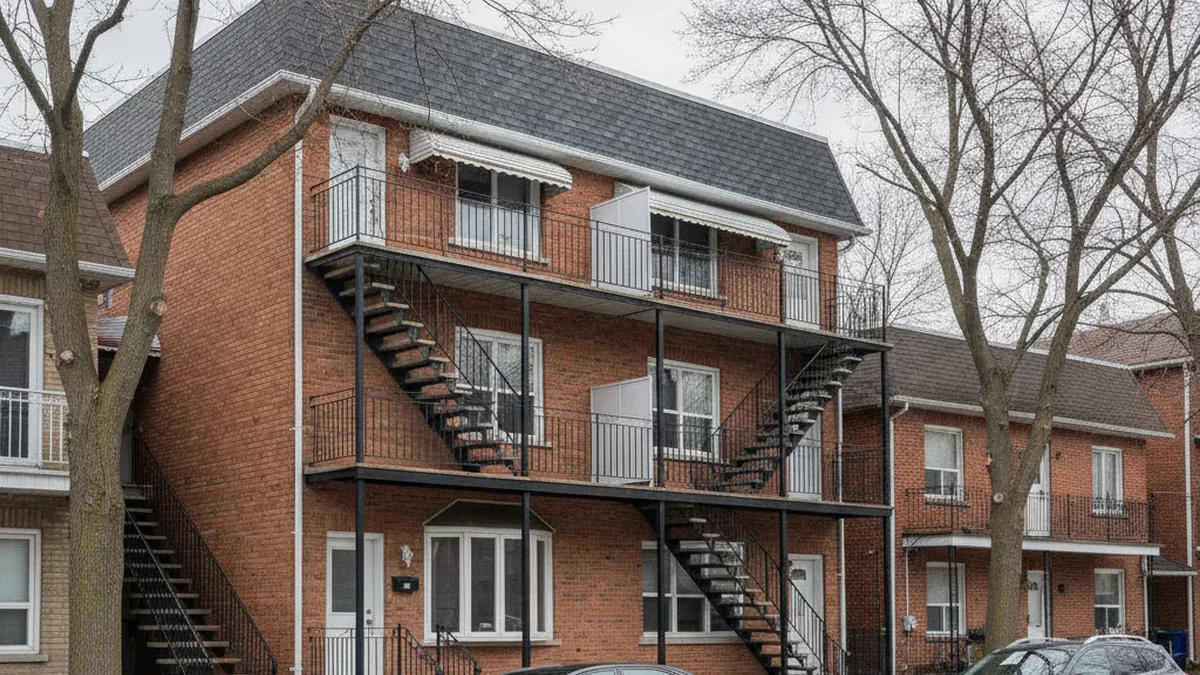
To illustrate the real-world impact, here is a simplified calculation for a triplex where all three units rent at $1,000 per month and the owner wants to apply the increase at the next renewal:
| Component | Building data | Monthly impact / unit |
|---|---|---|
| 3-year CPI average | 3.1% of current rent ($1,000) | + $31.00 |
| Property taxes | 5% increase on $2,400/year/unit | + $10.00 |
| Insurance premiums | 8% increase on $1,200/year/unit | + $8.00 |
| Major works | None in 2025–2026 | $0.00 |
| New services | None | $0.00 |
| Total justifiable increase | — | + $49.00 (~4.9%) |
In this example, the justifiable increase is 4.9% — higher than the 3.1% reference — because taxes and insurance also went up. This reflects the reality of many triplex and multi-unit building owners in 2026 on the North Shore, where property reassessments have been significant in cities like Terrebonne, Mascouche, Blainville, and Saint-Jérôme.
Important disclaimer
This example is for illustration purposes only. Actual amounts vary depending on your building, your municipality, and your insurance contracts. Always use the TAL's official calculation tool for your own figures, and consult a professional if in doubt.
Why is the TAL in the spotlight in June 2026?
The TAL has been drawing increased attention in the early summer of 2026. According to an article published on June 16, 2026 in Droit-inc, the Commission d'accès à l'information (CAI — Quebec's access to information watchdog) issued a decision in March 2026 regarding a request for access to the tribunal's administrative data. A doctoral researcher sought to analyze performance indicators of the TAL — hearing schedules, productivity, workload.
The TAL had invoked its judicial independence to block access to these databases. The CAI rejected that constitutional argument, reaffirming that the administrative tribunal remains subject to transparency and access-to-information rules, even though the specific request was ultimately denied on technical grounds of confidentiality.
For property owners, this episode illustrates a broader trend: the TAL's decisions and practices are increasingly scrutinized, by researchers and landlord associations alike, including CORPIQ. In this context, knowing the rules in force — such as the new calculation method — is more than ever a form of protection.
Source: Droit-inc — Access to information: the TAL wins on procedure, but fails on principle (June 16, 2026)
How does the new TAL method change the strategy of multi-unit property owners?
For an income property owner, the new TAL calculation method has direct implications for management and profitability:
1. Document all your income property expenses
For any plex owner on the North Shore, property taxes, property insurance premiums, and invoices for major works — everything must be kept and organized by building. Without documentation, you cannot justify a rent increase above 3.1% under the TAL method. A well-kept file also protects you if your tenant contests the rent increase at the tribunal.
2. Plan ahead for renewal cycles
If your multi-unit building or plex underwent major works or if your taxes rose significantly this year, it is strategically sound to factor this into your rent calculation at the next renewal. Every missed cycle represents a lost increase that is difficult to recover in subsequent years. To assess how a change in rental income affects the value of your income property on the North Shore, our guide to multiplex yield calculation explains the mechanics.
3. Use the TAL's official tool
The tribunal offers an online calculator that guides both landlords and tenants through the five criteria. It is the mandatory starting point before any negotiation. Available at tal.gouv.qc.ca — free, accessible to all.
4. Plan major works as a rent-increase lever
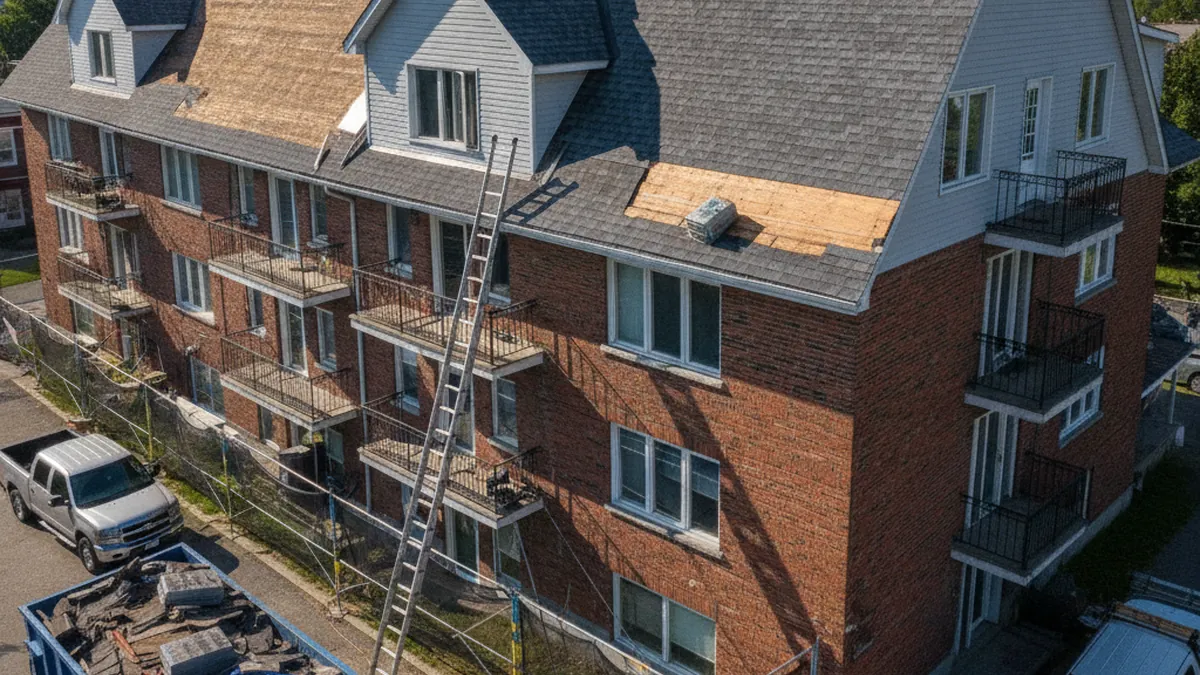
The "major works" component creates a direct incentive to maintain and improve your building. A well-documented investment in qualifying works can be passed on directly into the allowable rent increase for subsequent years. To evaluate the return on investment before committing, our renovation calculator can help you quantify the impact.
5. Understand the impact on your overall return
A well-calculated rent increase helps maintain — or even improve — your net operating income (NOI) in the face of rising operating costs. In a context where operating costs (taxes, insurance, maintenance) continue to climb on the North Shore, not applying a justified annual increase means silently accepting an erosion of your return. To see the impact on a specific building, the GRM calculator is a useful first screening tool.
Thinking about selling your property?
Current rents directly influence the value of an income property. A rental portfolio with well-managed and documented rents sells under better terms. At ImmoMulti, we buy properties directly on the North Shore — no commission, complete confidentiality. Offer within 48 hours. Get a proposal.


