- In Quebec, any electrical work on a building requires an RBQ-licensed master electrician in the appropriate trade subcategory.
- For a plex, the most common jobs are panel upgrades, unit rewiring, and 3-phase service for larger buildings.
- Always ask for the licence number, verify it is current on the RBQ website, and get a detailed written quote.
- If electrical upgrades feel too costly or complex, ImmoMulti buys income properties as-is on the North Shore — offer within 48 h, no commission.
What does a master electrician do?
A master electrician (maître électricien) is a licensed professional authorized to plan, execute, and supervise all electrical work on buildings in Quebec — panel upgrades, unit rewiring, 3-phase service, and code compliance. They hold an RBQ licence in their own name, obtain permits, and bear full responsibility for the work.
A master electrician (maître électricien) is a licensed professional authorized to plan, execute, and supervise electrical work on buildings in Quebec. For an income property owner, they are the go-to expert for any work that touches the electrical system: service entrance, main panel, sub-panels, wiring of individual units, electrical heating systems, and code compliance upgrades.
Unlike a journeyman electrician who works under supervision, a master electrician holds an RBQ licence in their own name, takes responsibility for the work, obtains the necessary permits, and can coordinate with hydro utilities for service upgrades. For a plex or multiplex, this distinction matters: the master electrician ensures the work is done to code, inspected, and insurable.
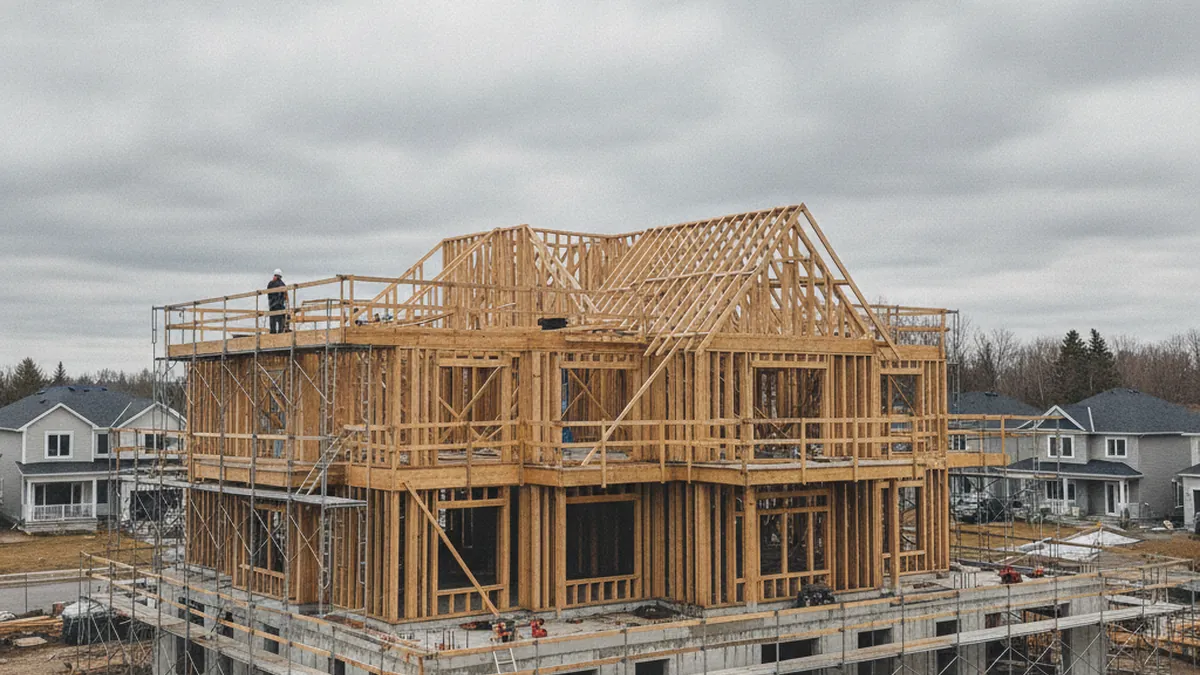
RBQ licence and the CMEQ
In Quebec, performing or having someone perform electrical construction work on a building for another party generally requires an appropriate RBQ licence (Régie du bâtiment du Québec) in the correct subcategory. Before signing any contract, ask the contractor for their licence number and verify it is active and covers your type of project on the RBQ website.
The CMEQ (Corporation des maîtres électriciens du Québec) is the professional body representing master electricians. While membership is voluntary, it signals that the contractor meets professional training standards and subscribes to a code of ethics. Many property owners use the CMEQ's online directory as a first step when searching for a qualified electrician in their area.
A valid RBQ licence is also typically a condition for coverage under a warranty plan. Without it, you may have limited recourse if work is defective or incomplete.
Electrical panel upgrades for plexes
Panel upgrades are one of the most common electrical projects on older income properties. Buildings constructed before the 1990s often have panels that are too small for modern electrical loads — electric heating, dishwashers, electric dryers, EV chargers — or that simply no longer meet current code requirements.
For a plex, a panel upgrade typically involves increasing the amperage at the main service entrance (often from 100A to 200A per unit, or higher for large buildings) and replacing or upgrading individual sub-panels in each unit. The scope — and cost — varies significantly depending on:
- Current panel age and condition
- Target amperage per unit
- Number of units and accessibility
- Whether the work triggers additional code compliance (e.g., arc-fault protection)
Practical note: always get two or three detailed written quotes before committing. Prices for the same scope of work can vary considerably. A quote that seems low may not include permit fees, hydro coordination costs, or the cost of bringing adjacent wiring up to code.
3-phase service for large buildings
Most plexes (2–12 units) operate on single-phase electrical service, which is sufficient for residential loads. However, larger multifamily buildings or those with heavy commercial or industrial equipment may require 3-phase service.
3-phase is typically considered when the building has large central HVAC systems, high-capacity elevators, or when total electrical demand exceeds what single-phase service can economically deliver. Converting from single-phase to 3-phase involves coordinating with the utility (Hydro-Québec), upgrading the service entrance, and potentially rewiring common areas and mechanical rooms.
A master electrician experienced with commercial and multifamily buildings can assess whether 3-phase is warranted for your property and what the full cost and timeline would involve.
Unit rewiring
Rewiring individual units is often necessary in buildings from the 1950s–1970s that still have knob-and-tube or aluminum wiring. Beyond the code compliance issue, older wiring increases fire risk and may make the building difficult or expensive to insure.
A full unit rewire replaces the wiring from the sub-panel to all outlets, switches, fixtures, and appliances. On occupied buildings, this usually requires coordinating with tenants for access and scheduling. On a larger building, unit rewires are often done one unit at a time as they turn over.
Electrical work with tenants in place
For most electrical projects, work must be done inside occupied units. In Quebec, landlords must give tenants reasonable advance notice before accessing their unit, except in an emergency. For planned work, coordinate the schedule with your electrician and provide written notice to each tenant.
For major projects affecting multiple units simultaneously — such as a full panel upgrade — plan the access schedule carefully. Consider whether temporary alternative accommodation or compensation may be appropriate for significant disruptions. The Rental Housing Tribunal (TAL) publishes guidance on landlord access rights and tenant notification requirements.
Upgrade or sell the building as-is?
If the cost of electrical upgrades exceeds what the market will reward — or if you want to avoid months of coordination and tenant disruption — selling the building as-is to a direct buyer like ImmoMulti is a concrete alternative: offer within 48 h, no commission, no repairs required.
Not every electrical upgrade makes financial sense. Before committing to a major electrical project, consider the return: will the investment translate into higher rents, lower insurance costs, or a meaningfully higher sale price? On some older buildings, the cost of bringing the electrical system fully up to standard — combined with the disruption to tenants — exceeds what the market will reward.
In that case, an alternative exists: sell the building as-is, in its current condition, without undertaking the work. You transfer the project and its risk to the buyer, typically in exchange for a price that reflects the building's current state — but you avoid months of coordination and the uncertainty of cost overruns.
Direct sale — no broker. ImmoMulti is a direct buyer of income properties on the North Shore (not a broker). We buy buildings that need electrical work as-is — no repairs required: offer within 48 h, zero commission. Reach out through our contact page.
An electrical project slowing you down?
Take the quiz to find the right master electrician for your situation. Or, if you'd rather sell your building as-is on the North Shore instead of doing the work, get a direct offer.
Which electrician do I need? (quiz) →