ImmoMulti — a direct buyer of income properties on the North Shore — follows the regulatory debates that affect owners. On July 1, 2026, moving day in Québec, protesters gathered in Montréal, Québec City, and Rouyn-Noranda to demand, among other things, that the right to housing be added to the Charter of Human Rights and Freedoms. Carried by the Coalition contre le logement cher (COLOC), which brings together nearly 120 organizations, the demand revives an old debate: the right to housing versus the right to property. Let us be clear from the outset: this is a demand, not a law. Nothing has been adopted. This article lays out the facts neutrally and explains, without taking sides, what the proposal could concretely mean for a plex or multiplex owner.
What exactly are the July 1, 2026 protesters asking for?
The Coalition contre le logement cher (COLOC), launched in April 2026 and nearly 120 organizations strong, carries three demands: real rent control, the development of social housing, and adding the right to housing to Québec's Charter of Human Rights and Freedoms. On July 1, simultaneous protests were held in Montréal, Québec City, and Rouyn-Noranda.
July 1, the traditional moving day in Québec, has become a symbol of tensions in the rental market. In 2026, the Coalition contre le logement cher (COLOC) chose that date for its first protest-action. According to La Presse, around 600 people gathered in Montréal, with parallel protests in Québec City and Rouyn-Noranda.
The coalition, launched in April 2026, brings together nearly 120 organizations — community, union, student, and feminist groups. It puts three demands to the government:
- Real rent control, more binding than the current framework;
- The development of social housing to meet needs;
- Recognition of the right to housing in the Charter of Human Rights and Freedoms of Québec.
It is this third demand that concerns us here, as it is the most structurally significant over the long term for any income-property owner.
Sources: Radio-Canada, July 1, 2026 and La Presse, July 1, 2026.
Is the right to housing now part of the Charter?
No. As of July 1, 2026, this is only a demand. The right to housing is not part of Québec's Charter of Human Rights and Freedoms, and no law has adopted it. Québec solidaire has already proposed such an addition, but the measure has no force of law. Nothing changes in the current rights and obligations of owners.
It is essential to distinguish the facts clearly. As of today, the right to housing is not in the Québec Charter. What the media report is a demand carried by protesters and a coalition of groups — not a legislative amendment voted by the National Assembly.
The idea is not new on the political scene: Québec solidaire has already proposed adding the right to housing to the Québec Charter. But a party proposal or a citizen demand has no legal value until it is adopted. For an owner, this means one simple thing: today, none of your obligations change.
The context fuelling this mobilization is nonetheless very real. According to CMHC (SCHL), the average rent in Québec has jumped by roughly 60% since 2018, from around $760 per month to about $1,232 in 2025. It is this pressure on tenants' purchasing power that feeds the demand for a constitutional right to housing, ahead of the next elections.
Key point: nothing has been adopted
Do not make hasty decisions based on a headline. Adding a right to housing to the Charter is, as of July 1, 2026, a demand. No bill has been tabled or voted. Your rights as an owner — repossession, eviction, rent-setting through the TAL — remain exactly as before.
What is the 'right to housing versus right to property' debate?
The right to property is already protected by the Civil Code and by Article 6 of the Québec Charter (peaceful enjoyment and free disposition of one's property). Adding a right to housing would create a right potentially in tension with it. The real scope would depend entirely on the wording adopted: a mere interpretive principle does not have the same effect as a directly enforceable right before the courts.
The heart of the debate pits two rights against each other. On one side, the right to property, already recognized: Article 6 of the Charter of Human Rights and Freedoms guarantees every person "the peaceful enjoyment and free disposition of their property." On the other, a possible right to housing, which would enshrine access to adequate housing as a protected right.
These two perspectives are not necessarily irreconcilable, but they can come into tension. Here, neutrally, is how each side frames the issue:
| Perspective | Main argument | Concern voiced |
|---|---|---|
| Supporters of a right to housing | Housing is a basic need that should be protected like other rights. | That the market leaves too many households in a precarious position. |
| Defenders of the right to property | Free disposition of one's property is already guaranteed by the Charter and the Civil Code. | That a new right would restrict the ability to manage, repossess, or sell one's building. |
The key legal question would be the scope of the text. A right to housing drafted as an interpretive principle (guiding how laws are read) would have far more modest effects than a directly enforceable right that a tenant could invoke before a court against an owner's decision. Until a text is written, no one can say with certainty what form it would take — hence the importance of not confusing the demand with its consequences.
Would a right to housing in the Charter change repossessions and evictions?
Not automatically. Repossessions and evictions remain governed by the Civil Code and the Tribunal administratif du logement (TAL). A right to housing could, over time, serve as an interpretive argument favouring tenants staying in place, and prompt the legislature to tighten repossession grounds or raise indemnities. But until a law is passed, the procedures remain identical.
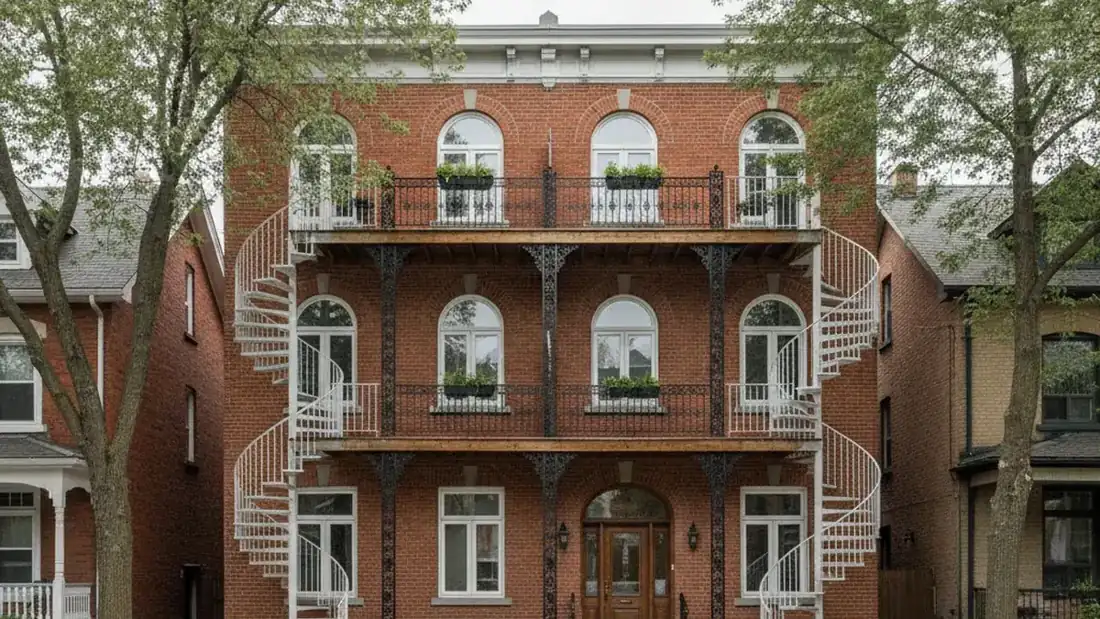
For a plex owner on the North Shore, the most concrete question is that of repossessions (to house yourself or a relative) and evictions (for subdivision, enlargement, or change of use). These mechanisms are currently governed by the Civil Code of Québec and adjudicated by the Tribunal administratif du logement (TAL).
A right to housing in the Charter would not mechanically change these rules. Two indirect effects are nonetheless plausible, over the longer term and only if a law made them concrete:
- Greater interpretive weight favouring tenants staying in place: decision-makers could give more value to a tenant's stability when settling a dispute;
- A political incentive to tighten the framework: relying on such a right, the legislature could harden repossession grounds or raise the indemnities owed to evicted tenants.
Once again, these are only scenarios. Today, if you are considering a repossession or an eviction, the applicable rules are exactly those in force. To understand them, see our detailed guide on repossession of a dwelling in Québec.
What effect on rent control, value, and resale of a plex?
The right to housing and rent control are two distinct but linked measures in COLOC's demands. A constitutional right could provide a basis for stricter rent regulation. If that reduced net operating income, the market value of certain multiplexes — especially those with below-market rents — could be affected through capitalization. Nothing has been adopted to date.
COLOC's second demand, real rent control, is the one that would most directly affect owners' wallets. Québec already regulates rent increases through the TAL calculation method, but "real" control — a mandatory rent registry, a stricter cap, regulation between two leases — would go further.
The link with the Charter is this: a constitutional right to housing could, over time, serve as a legal basis to justify such tightening. That is precisely why the two measures appear together in the coalition's platform.
The possible effect on a multiplex's value
The value of an income property is largely calculated by capitalizing its net operating income (NOI). If tighter rent regulation were to compress future revenues — or limit the ability to adjust rents to market when a tenant changes — this could, in theory, reduce the market value of certain multiplexes. The most exposed would be buildings whose in-place rents are already below market.
Conversely, some observers note that a stable, predictable framework can also reassure long-term investors. The net effect would depend entirely on the text actually adopted — and, to repeat, no text exists to date.
"Tenants pay, on average, far more than they did a few years ago. It is this reality that is pushing the coalition to demand that housing become a protected right."
— Context reported by La Presse and Radio-Canada, July 1, 2026 (ImmoMulti summary)For a plex owner on the North Shore, the practical takeaway is to know the current value of your building and understand how your rents sit relative to the market. Our cap rate calculator lets you quickly estimate the effect of a revenue change on a multiplex's value.
Concretely, what does it change for you, the owner?

In the short term: nothing, legally. No law has been adopted. A prudent owner stays informed without overreacting: keeps rigorous accounting, applies the rent increases permitted by the TAL so rents do not fall behind the market, periodically assesses the building, and consults a notary or tax advisor before any major decision.
Here, without alarmism, is what a plex or multiplex owner on the North Shore — Terrebonne, Mascouche, Blainville, Boisbriand, Saint-Jérôme, Saint-Eustache, Deux-Montagnes — can take from this debate:
- Stay informed: follow how the file evolves. A protesters' demand may or may not turn into a bill. What matters is the text adopted, not the headline.
- Document your income and expenses: rigorous accounting is your best protection in any regulatory scenario, and it is essential to justify a rent increase before the TAL.
- Apply the permitted increases: do not let your rents fall significantly behind the market. Below-market rents weaken both your yield and your building's resale value.
- Periodically assess your building: knowing the current value of your plex lets you decide clearly whether to hold, refinance, or sell.
- Consult a professional: before any major decision (repossession, sale, restructuring), speak to a notary or tax advisor. Every situation is unique.
ImmoMulti: direct buyer of income properties on the North Shore
If regulatory uncertainty leads you to consider a sale, we can make you a direct, commission-free, fully confidential offer. No public listing, no broker, no obligation. Get a proposal within 48 h.
The debate over the right to housing in the Charter is part of a broader trend of tighter rules around rental buildings. To understand the other pressures on Québec's small owners, read our analysis: More than one plex in four is unprofitable in Québec. And if you are seriously considering a sale, our guide on selling an income property fast covers each step.