ImmoMulti — direct buyer of income properties on the North Shore — clears up a tax that worries many owners: the federal Underused Housing Tax (UHT). It is an annual 1% tax on value, in effect since January 1, 2022 and administered by the Canada Revenue Agency. Contrary to a common belief, it does not hit the small Canadian owner of a plex: it mainly targets non-residents and non-Canadians, along with certain corporations and trusts holding vacant or underused housing. Since 2023, certain returns are required, and the rules changed in 2024 and again in 2026. Here — with official sources — is what it actually means for your income property in Québec, and the precise trap if you hold your plex through a corporation.
What is the Underused Housing Tax (UHT)?
The UHT is an annual federal 1% tax on the value of a vacant or underused dwelling in Canada, administered by the Canada Revenue Agency. In effect since January 1, 2022, it mainly targets non-resident, non-Canadian owners, along with certain corporations, trusts, and partnerships. It is separate from municipal property taxes and the welcome tax.
The Underused Housing Tax was introduced by the federal government to discourage holding dwellings left vacant in Canada, often by foreign owners. According to the Canada Revenue Agency (CRA), it came into effect on January 1, 2022 and equals 1% of the value of a residential property deemed vacant or underused, calculated annually.
A crucial point for any plex owner in Québec: this tax is federal. It is not administered by Revenu Québec, but by the CRA. The confusion is common because Québec also has its own real-estate taxes — but the UHT falls strictly under canada.ca.
Source: Canada Revenue Agency — Underused Housing Tax (canada.ca)
Who is affected by the UHT — and who is excluded?
According to the CRA, any owner who is not an "excluded owner" on December 31 is an "affected owner." Canadian citizens and permanent residents who own a property in their own name are generally excluded owners: no tax, no return. Non-residents, non-Canadians, and certain entities (corporations, trusts, partnerships) are affected owners.

The Act draws two categories. The excluded owner has no obligations: no tax to pay and no return to file. The affected owner must file an annual return and pay the tax, unless they qualify for an exemption.
According to the CRA, Canadian owners of residential property are generally excluded owners. In other words, if you are a Canadian citizen or permanent resident and you hold your plex or income property on the North Shore in your own name, in the vast majority of cases you have neither tax to pay nor a return to file.
Affected owners are instead: individuals who are neither citizens nor permanent residents of Canada, along with — this is the sensitive point — certain corporations, trusts, and partnerships, even Canadian ones. That is where the real risk lies for many real-estate investors.
Generally excluded (no obligation)
- Canadian citizen owning the property in their own name
- Permanent resident of Canada owning the property in their own name
- Since the 2024 amendments: specified Canadian corporation, specified Canadian partnership, and specified Canadian trust
Source: CRA — Who must file a return and pay the tax (canada.ca)
Is a plex with four or more units subject to the UHT?
No. According to the CRA, a building with four or more dwelling units (such as a quadruplex) is not a "residential property" under the Underused Housing Tax Act. The tax applies to buildings with no more than three dwelling units, plus semi-detached houses, rowhouse units, and condominium units. Larger multi-unit buildings are therefore entirely out of scope.
Here is a critical and often overlooked nuance. The definition of residential property in the Act covers a detached house or similar building with not more than three dwelling units, plus semi-detached houses, rowhouse units, and condominium units. A building with four or more units — a quadruplex, a quintuplex, a six-plex — does not fall within that definition.
Direct consequence for owners of income properties on the North Shore: if your building has four or more units, it is simply out of scope of the UHT. The question of tax and filing does not even arise for that building.
By contrast, a duplex or triplex (two or three units) remains a residential property under the Act — which does not mean you must pay, but that your owner status (excluded or affected) becomes decisive.
Mind the dividing line
The threshold sits between 3 and 4 units. A triplex held through a corporation could trigger a filing obligation; an identical quadruplex would not — because it falls outside the definition of residential property. A detail that changes everything depending on your plex's exact configuration.
Source: CRA — Introduction to the Underused Housing Tax, UHTN1 (canada.ca)
What is the risk for a plex held through a corporation?
The main risk was not the tax itself but the filing obligation. A corporation holding residential property (three units or fewer) was not automatically an excluded owner: it had to file an annual return, even with no tax to pay, on pain of penalties. Since amendments that received royal assent on June 20, 2024, a specified Canadian corporation became an excluded owner, eliminating this obligation for many corporations.
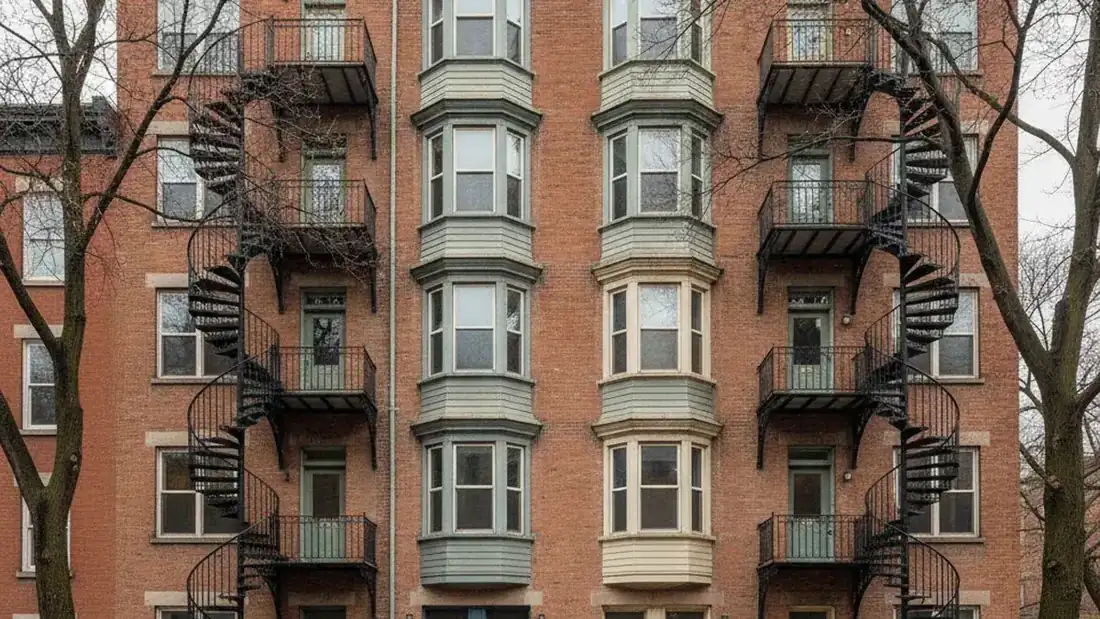
Many investors hold their plex or income property through a corporation, for liability or tax-planning reasons. It is precisely this structure that created the most unpleasant surprises with the UHT.
The trap: a corporation that holds residential property of three units or fewer is not an excluded owner the same way a Canadian individual is. It is an affected owner and had to, for the 2022, 2023, and 2024 years, file an annual return (Form UHT-2900) — even if no tax was ultimately owed thanks to an exemption. The mere failure to file could result in penalties.
The amendments that received royal assent on June 20, 2024 changed the picture: they revised the definitions of excluded owner, specified Canadian corporation, specified Canadian trust, and specified Canadian partnership. As a result, a specified Canadian corporation (with low foreign ownership) became an excluded owner — eliminating the filing obligation for a large number of corporations holding plexes in Québec.
"Excluded owners have no obligations under the Underused Housing Tax Act."
— Canada Revenue Agency, notice UHTN1 (canada.ca)What this means for you: if your plex is held by a Canadian corporation with majority-Canadian ownership, you have likely moved from affected owner (mandatory return) to excluded owner (no obligation) as of recent years. But every structure is different — a corporation with significant foreign shareholders, a family trust, or a partnership may have distinct rules. Have your situation validated by a tax advisor.
Source: CRA — Exemptions for Specified Canadian Partnerships, Trusts and Corporations, UHTN4 (canada.ca)
How is the 1% Underused Housing Tax calculated?
The general rule: 1% × the property's taxable value × your ownership percentage. Taxable value is usually the greater of the assessed value and the purchase price. The owner may instead elect to use fair market value. The official form is UHT-2900, due no later than April 30 of the following year.
When the tax is in fact owed — that is, for an affected owner with no applicable exemption — the calculation follows a simple mechanic. You multiply 1% by the property's taxable value, then by the ownership percentage held.
| Element | Rule according to the CRA |
|---|---|
| Rate | 1% per calendar year |
| Calculation base | Taxable value (often the greater of assessed value and purchase price), or fair market value on the owner's election |
| Adjustment | Multiplied by each owner's ownership percentage |
| Form | UHT-2900, annual return |
| Deadline | No later than April 30 of the following year |
It is worth recalling that many exemptions could cancel the tax even for an affected owner. The most important one for an income property: where the dwelling is occupied in a qualifying manner — for example rented to an occupant for continuous periods of at least one month totalling at least 180 days in the year. An actively rented plex is, by definition, almost never "underused." The return was still required for an affected owner, even one exempt from tax, for the 2022 to 2024 years.
Major change in 2026
According to the CRA, following amendments that received royal assent on March 26, 2026, affected owners no longer have to file a return or pay the tax for 2025 and subsequent years. The obligation to file and pay remains only for 2022, 2023, and 2024. If you missed a return for those years, regularize your situation quickly with a tax advisor.
Source: CRA — Calculating the Underused Housing Tax Payable, UHTN2 (canada.ca)
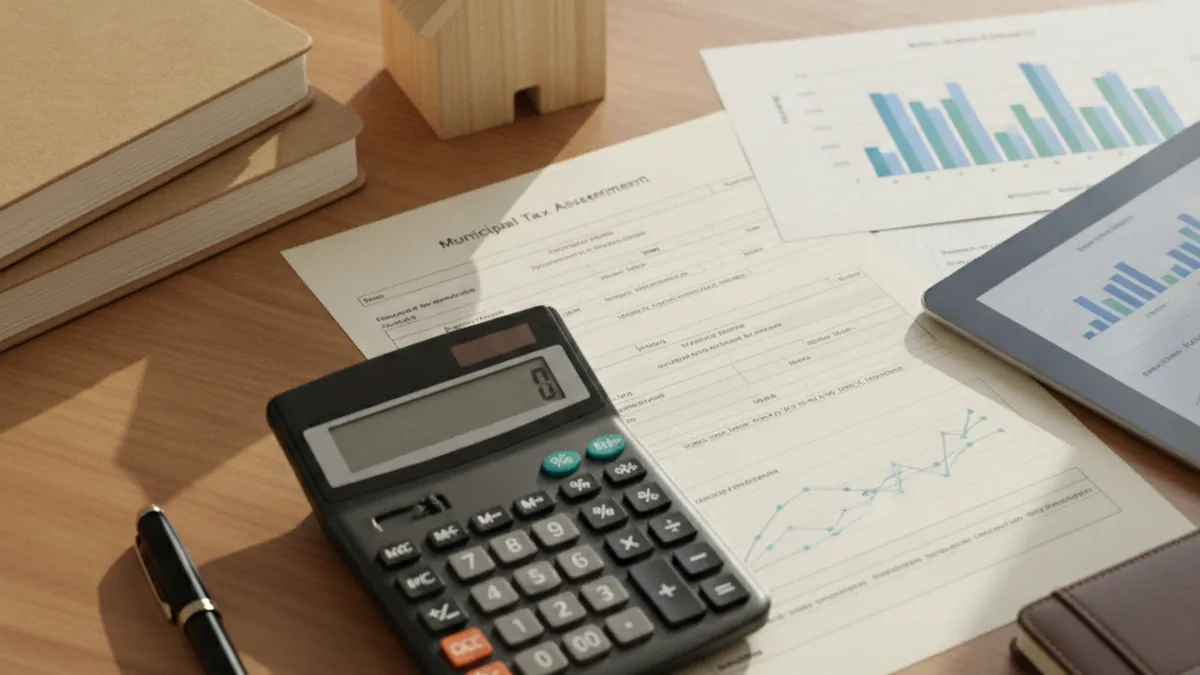
UHT, welcome tax, and property taxes: three taxes not to confuse
The UHT is an annual federal 1% tax (CRA) on vacant housing. The welcome tax (land transfer duties) is a municipal amount paid once at purchase. Property taxes are annual municipal charges based on assessment. Three distinct taxes, three levels of government, three different logics.
Many owners of plexes on the North Shore mix up these three taxes. To be clear:
- Underused Housing Tax (UHT) — federal, annual, 1%, on vacant or underused housing held mainly by non-residents. Administered by the CRA.
- Welcome tax (land transfer duties) — municipal, paid once at the purchase of a property.
- Property taxes — municipal, annual, based on your building's assessment. It is these reassessments that pushed up many North Shore owners' charges in 2024–2026.
This tax clarity is essential when assessing the profitability — and resale value — of your income property. To prepare a sale well, our multiplex yield calculation guide reviews the key indicators every North Shore plex owner should master.
ImmoMulti: direct buyer of income properties on the North Shore
Do you hold a plex — personally or through a corporation — and are thinking of selling? We make a direct offer, commission-free and fully confidential, taking your ownership structure into account. Get a proposal within 48 hours.
The UHT illustrates a broader truth: the taxation of a plex in Québec depends closely on how you hold it. Before selling, it is worth consulting a notary or tax advisor to map out your real obligations — and our analysis of when it makes sense to sell an unprofitable plex usefully complements this reflection.
Informational content only. Does not constitute tax or legal advice. Underused Housing Tax provisions are subject to change by the Government of Canada and the Canada Revenue Agency. Consult a tax advisor or notary for advice specific to your property and ownership structure.


