- An architect designs the project, prepares the plans, and obtains the permit for an expansion, unit addition, or change of use.
- In Québec, the Architects Act requires plans signed by an architect for certain buildings — to be confirmed based on the size and use of your building.
- The architect is a member of the Ordre des architectes du Québec (OAQ); verify their registration, experience with income properties, and insurance coverage.
- A project that doesn't move forward can be sold as-is to a direct buyer like ImmoMulti — offer within 48 h, no commission, on the North Shore.
What does an architect do for an income property?
An architect designs the project, produces the permit drawings, submits the building permit application, and can supervise construction. For a plex or multiplex, they are the key professional for any expansion, unit addition, or change of use project in Québec.
An architect is the professional who transforms a project idea into a buildable, code-compliant structure. For a plex or multiplex owner, the architect steps in whenever the building's structure or use is being altered: adding units, expanding, converting spaces, bringing the property up to code. In practice, their work covers four main areas.
- Design: they envision the layout, optimize floor area, natural light, circulation, and the return on every square foot — all within zoning and Building Code constraints.
- Plans and specifications: they produce the technical (architectural) drawings used both to obtain the permit and to guide construction.
- Permits: they prepare and submit the application to the municipality and liaise with inspectors when adjustments are requested.
- Site supervision: depending on the mandate, they can also monitor the work to ensure it follows the plans and meets code standards.
In Québec, an architect must be a member of the Ordre des architectes du Québec (OAQ). Verifying their registration and relevant experience is a good first step — especially for an income property project where compliance and profitability are determined from the very first sketches.
When is an architect required in Québec?
In Québec, the Architects Act requires plans signed by an OAQ member architect for certain buildings based on size, use, and work type. For a plex or multiplex with an expansion, unit addition, or change of use, assume a professional is required and confirm the threshold with the municipality when applying for a permit.
The question comes up often: "Am I required to use an architect?" In Québec, the Architects Act states that plans and specifications for certain buildings must be prepared and signed by an architect who is a member of the OAQ. The requirement depends on the size, intended use, and type of work involved.
There are specific exceptions and thresholds: some small buildings or certain types of work may not require an architect's signature, and a professional technologist may sometimes be able to step in. Rather than relying on a general rule that may not apply to your situation, the right reflex is to validate your specific project: for your plex or multiplex, based on the size and use of your building and the nature of the work, confirm whether plans signed by an architect are required.
Practical rule of thumb: whenever a project touches the structure, adds units, or changes the building's use, assume that a professional (architect or technologist) will be needed for the plans — then confirm which one based on your building's size and use. The municipality will also specify its requirements when you apply for a permit.
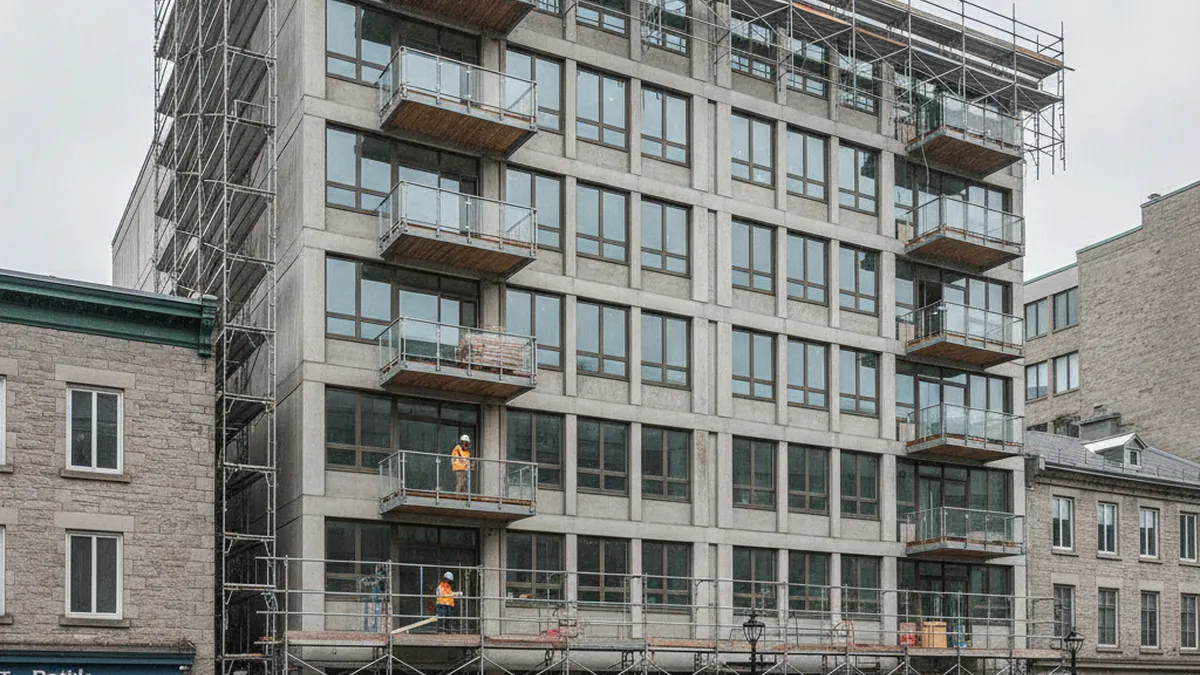
Architect, professional technologist, engineer, or contractor: who does what?
The architect (OAQ) designs and signs plans for covered buildings; the professional technologist handles smaller projects within their scope; the engineer validates structure and systems; the general contractor executes the work on site once plans and permits are in place.
On an income property project, several professionals may be involved. Understanding their roles clearly helps you avoid hiring the wrong person — or overlooking someone important. Here is how responsibilities are typically divided.
| Professional | What they do | When they're involved |
|---|---|---|
| Architect (OAQ) | Designs the project and signs the plans for buildings covered by the Architects Act | Expansion, unit addition, change of use, larger or more complex projects |
| Professional technologist | Prepares plans for smaller-scale projects within their scope of practice | Small buildings and work not subject to the architect requirement |
| Engineer | Designs and validates the structure, mechanical systems, electrical, or plumbing | When the building's structural integrity or systems are at stake |
| General contractor | Carries out the work based on the plans, coordinates trades | Once plans and permit are in place, on the job site |
In practice, the architect and the general contractor often work in tandem: one designs and obtains the permit, the other builds. For land and property boundary questions, a land surveyor may also be needed.
Typical projects for a property owner
Here are the most common mandates that lead a plex or multiplex owner to consult an architect:
- Expansion: adding square footage to the existing building to gain units or enlarge current ones.
- Adding units or storeys: densifying the building by adding doors — sometimes by raising the structure — within zoning limits.
- Change of use: converting an existing space into housing — for example turning offices or a commercial unit into residential units.
- Major reconfiguration: redesigning interior spaces to optimize floor area, circulation, and rental value.
- Code compliance and accessibility: bringing the building up to code and improving accessibility.
- Feasibility study: before investing, verifying what is permitted and realistic for the building — often the single most valuable first step.
Each of these projects comes with its own zoning, Building Code, and permit constraints. An architect can quickly identify what is achievable — and what isn't — saving you from investing in an idea that would never survive the permit stage.
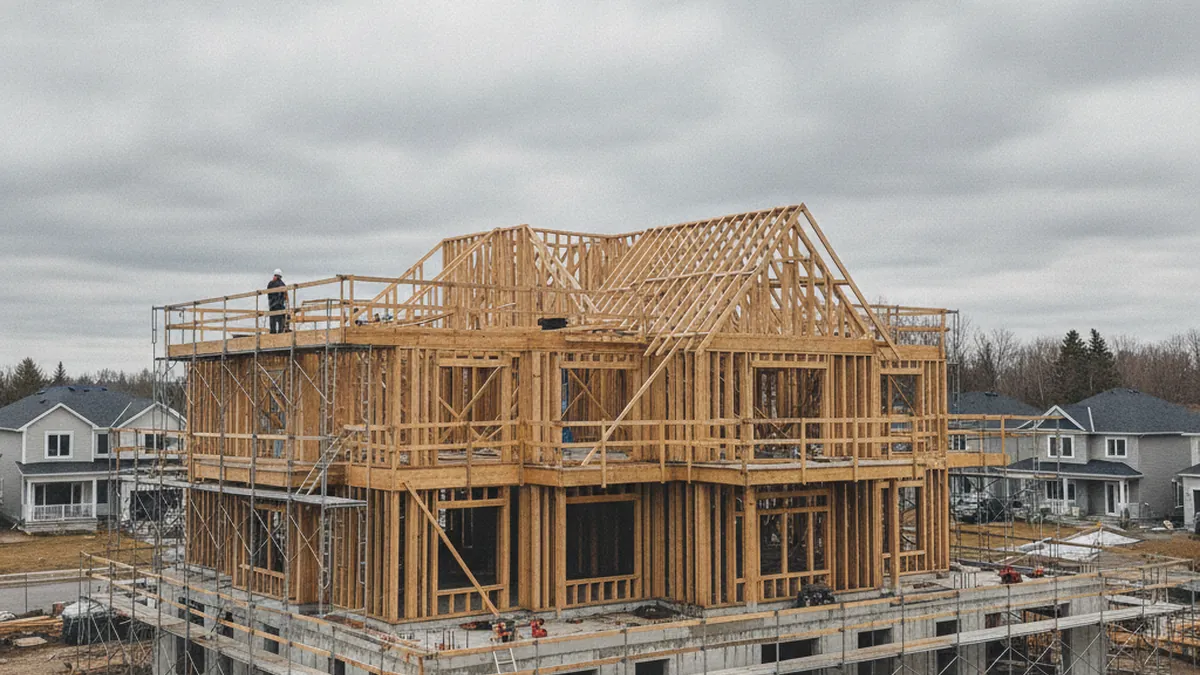
The process, step by step
A well-managed project generally follows a logical sequence. Knowing it helps you understand where you stand and what lies ahead:
- Feasibility: the architect validates zoning, the Building Code, and the real potential of the property. This is the step that tells you whether your idea is viable.
- Concept: they propose one or more layout scenarios, with sketches and key design directions.
- Plans and specifications: they produce the detailed drawings to be used for the permit application and for construction.
- Permit: they prepare and submit the application to the municipality and respond to questions from inspectors.
- Site supervision: depending on the mandate, they monitor construction to verify compliance with the plans.
Not all steps are always necessary: for a small mandate, some can be condensed. But for an expansion or conversion, following the sequence is strongly recommended — skipping the feasibility step, for example, can lead to unpleasant surprises at the permit stage.
How much does an architect cost for a property project?
Architect fees vary by project scope: a flat fee for a defined mandate (e.g., feasibility study or permit drawings) or a percentage of construction costs for a full mandate. Amounts vary widely — request a written agreement specifying all included services and compare OAQ member architects.
The cost varies depending on the scope and complexity of the project, the building, and the location. Two main fee models exist in architecture.
Percentage of construction costs
For a full mandate (design, plans, permit, sometimes site supervision), fees are often set as a percentage of construction costs. The larger the project, the higher the total amount — but the percentage tends to decrease on larger contracts. This model works well when the project scope may evolve over time.
Flat fee for a defined mandate
For a clearly scoped mandate — a feasibility study or a set of permit drawings, for example — an architect may offer a flat fee: a fixed price agreed upon upfront. The advantage is predictability; make sure you understand what the fee covers and what it excludes (revisions, site supervision, additional phases).
In either case, request a written agreement specifying the included services (concept, plans, permit submission, site supervision) and compare a few architects. Since amounts vary widely, the best approach remains the same: clarify the scope and billing method before signing.
How to choose your architect
Not all architects are alike. For an income property, a few criteria make a real difference:
- OAQ member: the architect must be registered with the Ordre des architectes du Québec. That's the baseline — verify their registration.
- Experience with income properties: a professional who regularly works on plex and multiplex buildings understands the specific constraints (density, zoning, return on investment).
- References and past projects: ask to see comparable projects and to speak with former clients.
- Insurance: verify that they carry appropriate coverage (particularly professional liability).
- Clear communication and written mandate: a good architect explains their choices and formalizes the scope of the mandate in writing.
If you're unsure which professional to consult, our quiz to find a specialist points you to the right profile for your project.
A project that doesn't happen: sell as-is
Not every expansion or conversion project comes to fruition. Sometimes zoning blocks it, costs spiral, or time and energy run short. In that case, you don't have to see the project through before moving on: a building with an unrealized project can be sold just as it is.
You have two main options. The first: complete the project (or at least bring it to a stage that reassures a buyer) to support the price. The second: sell the property in its current state, with or without plans, to a buyer who will take on the potential themselves. This is often the fastest route when you're ready to move on.
Direct sale — no broker. ImmoMulti is a direct buyer of plex and income properties on the North Shore (not a broker). We buy buildings as-is, including with an unrealized expansion or conversion project: offer within 48 h, zero commission. Let's talk — no obligation — via our contact page.
An expansion or conversion project?
Take the quiz to find the right architect for your project. Or, if you'd rather sell as-is on the North Shore, get a direct offer.
Which architect do I need? →