Quick answer
The Quebec government invested $79M to convert an office building into 222 social and affordable units (fall 2028 delivery). For North Shore plex owners, this is not a direct competitive threat — those units target households ineligible for private-market rents. The real risks to your return remain lease regulation, rising municipal taxes, and maintenance costs. ImmoMulti buys income properties directly — confidential offer in 48 h.
ImmoMulti buys income properties directly on the North Shore — and government announcements on affordable housing come up often in conversations with owners considering a sale. On June 15, 2026, the governments of Quebec and Canada confirmed an investment of 79 million dollars to transform the Catherine-de-Longpré building in Quebec City into 222 social and affordable housing units — approximately $355,000 per unit. For any plex owner in 2026, this kind of announcement raises a direct question: is the government setting itself up as a competitor in your market, or is it filling a gap that the private sector structurally cannot fill? The answer — drawn from CORPIQ, CMHC, and RCLALQ data — is neither alarming nor reassuring. It is nuanced. Here is the analysis a North Shore plex owner should be doing before adjusting their strategy.
What does the June 15, 2026 announcement about the Catherine-de-Longpré building change for private investors?
It changes little for private North Shore plex owners directly. The project is in Quebec City, targets low-income households on multi-year wait lists, and will not deliver until fall 2028. It signals government intent to multiply conversion projects, but does not compete with standard private rental supply.
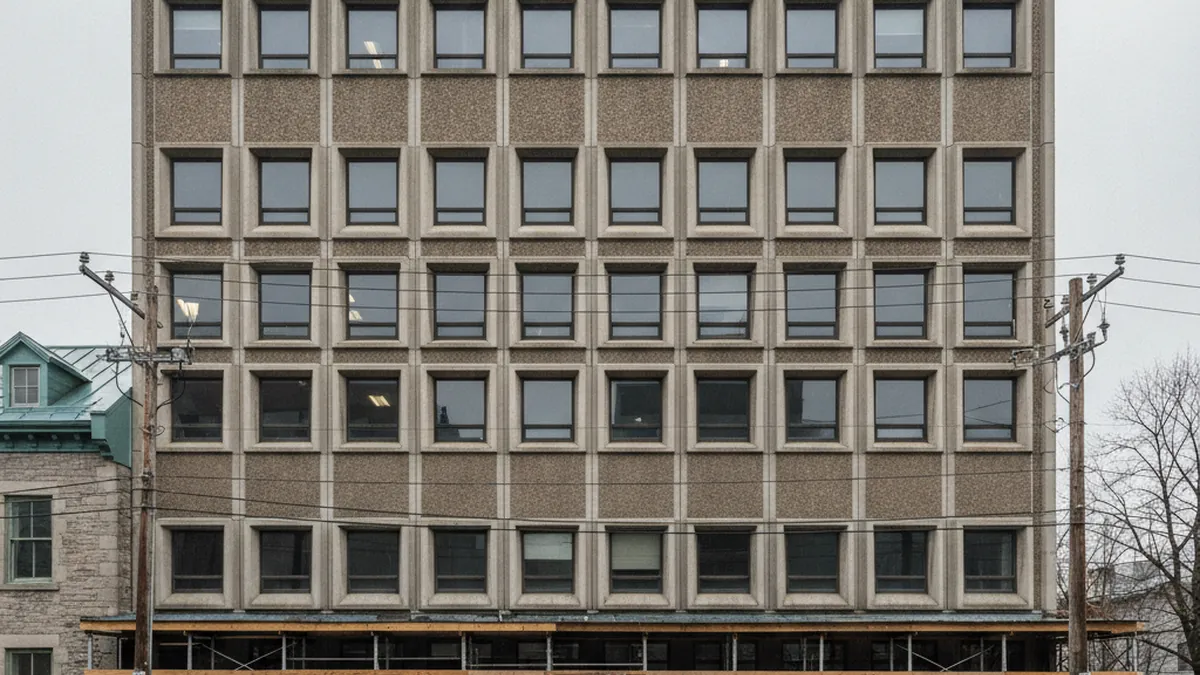
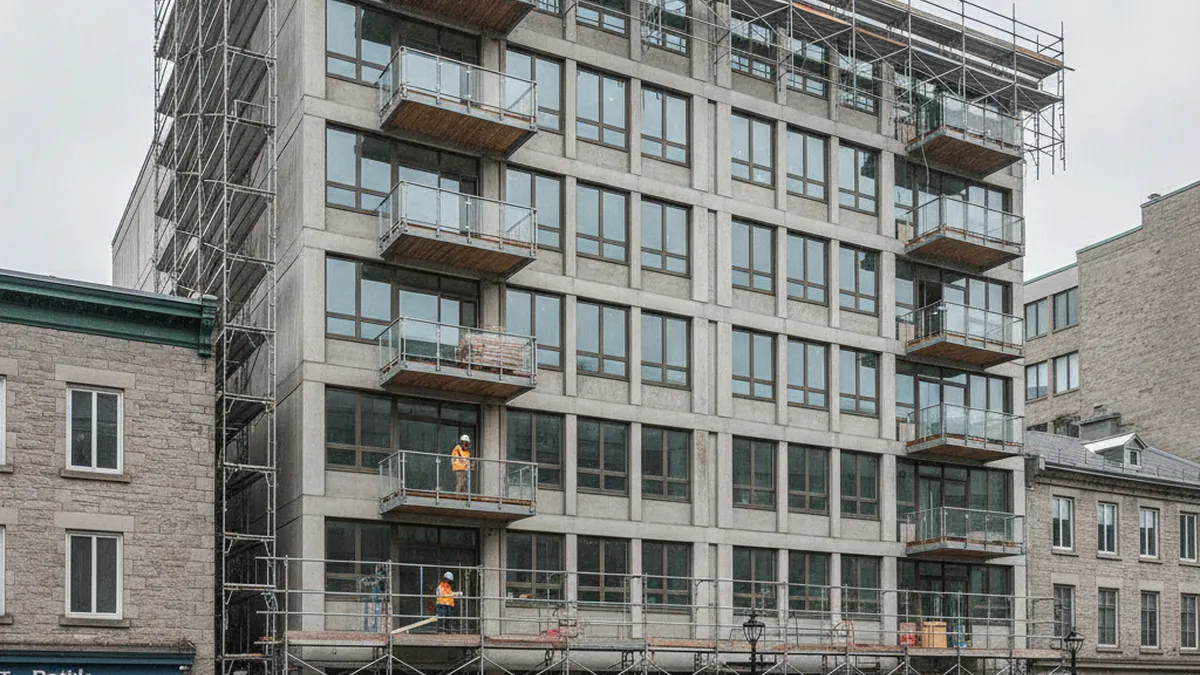
1075 chemin Sainte-Foy, Quebec City — that is the address of the Catherine-de-Longpré building, an office building that will be fully converted into residential units. On June 15, 2026, the provincial and federal governments, with the participation of the City of Quebec and the organization Socialim, made the project official.
This is not a statement of intent. The partners are identified, the financing is structured, and the delivery date is targeted: fall 2028. This is one of the most significant social housing projects announced in Quebec in 2026, both in terms of volume and financial structure.
"This off-market rental complex illustrates the evolution of programs, partnerships, and development models that are now creating new opportunities to increase the supply of social and affordable housing."
— Karine Boivin Roy, Minister Responsible for Housing, Government of Quebec"Every project like this one brings us closer to the country we want to build — a country where everyone has access to safe and affordable housing."
— Jean-Yves Duclos, federal MP"This project demonstrates that access to affordable housing is a constant priority for the City of Quebec."
— Marie-Pierre Boucher, Housing Chair, City of QuebecSource: Government of Quebec — Official Press Release, June 15, 2026
How much does the Catherine-de-Longpré project cost and how is it structured financially?
Total cost: $79M for 222 units (~$355,000/unit). Funded by Quebec (SHQ/FACL, $14.5M), Canada, the City of Quebec ($7.5M), patient capital loans ($14.3M), and mortgage financing. Operated by non-profit Socialim. Delivery: fall 2028.
Here is the complete project structure as presented in the official Government of Quebec press release:
| Parameter | Official data |
|---|---|
| Address | 1075 chemin Sainte-Foy, Quebec City |
| Total project cost | 79 million dollars |
| Total number of units | 222 units |
| 1-bedroom units | 105 units |
| 2-bedroom units | 68 units |
| 3-bedroom units | 49 units |
| SHQ subsidy (FACL program) | $14.5M |
| City of Quebec contribution | $7.5M |
| Patient capital loans | $14.3M |
| Mortgage financing | Project balance |
| Operating partner | Socialim |
| Planned delivery | Fall 2028 |
| Type of housing | Off-market (social and affordable) |
Key takeaways on the Catherine-de-Longpré project
- $79M total investment for 222 units — approximately $355,000 per unit
- Breakdown: 105 x 1 bed., 68 x 2 bed., 49 x 3 bed. — a mix oriented toward families and singles
- "Off-market" units — they do not target the same tenants as your private units
- Delivery fall 2028 — this supply is not hitting the market tomorrow
- Public-NPO partnership: it is Socialim, a non-profit organization (NPO/OBNL), that manages — not a direct competing Crown corporation
How severe is the affordable housing shortage in Quebec in 2026?
Extremely severe. Only 1.6% of units under $1,300/month are vacant. One in five Quebec tenants struggled to pay rent in the past year. Average rent is $1,232/month, requiring $49,240 annual income to stay within the 30% affordability threshold. The private market structurally cannot fill this gap.
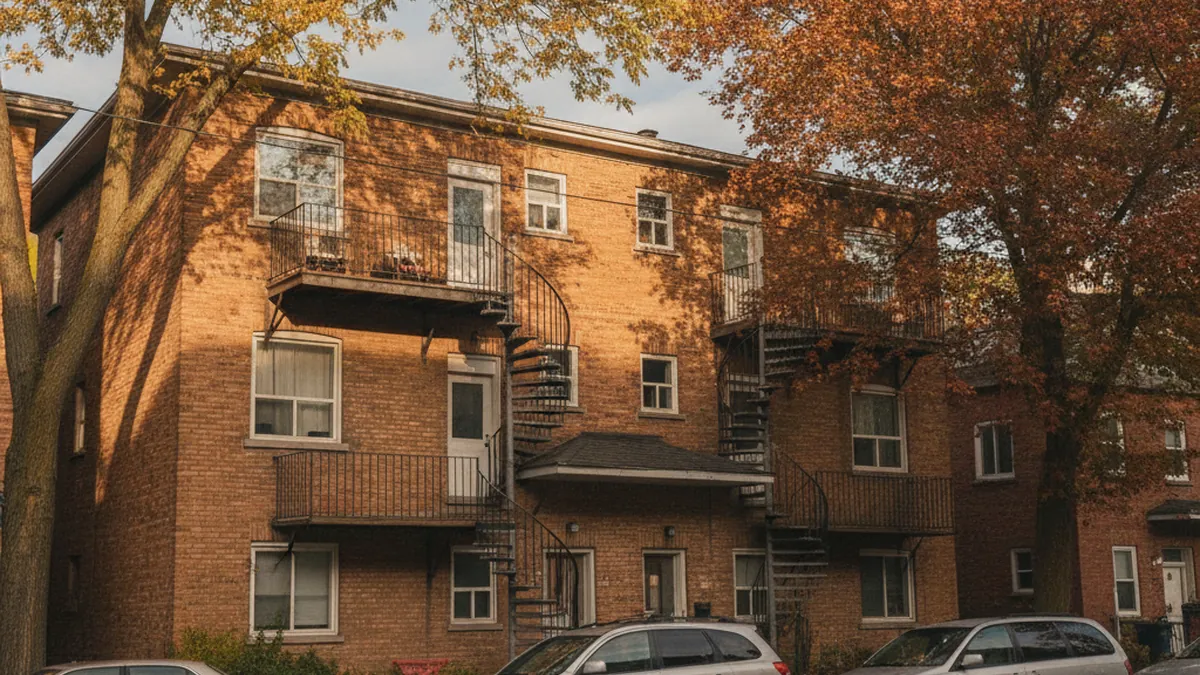
To understand why this type of announcement exists, you need to look at Quebec rental market data. The shortage is documented, deep, and affects primarily the affordable segment — the one the private sector structurally cannot serve profitably.
The data available for 2026 are unambiguous:
- Only 1.6% of units renting for less than $1,300 per month are vacant — an extremely tight market.
- By contrast, 5.9% of units over $1,900 per month are available — the premium segment is relatively better supplied.
- The average monthly rent in Quebec is $1,232, requiring an annual income of at least $49,240 to stay within the standard 30% housing cost threshold.
- One in five Quebec tenants had difficulty paying rent in the past year — more than 700,000 people.
- In every metropolitan area in Quebec, rents increased between 34% and 53% between 2021 and 2025.
These statistics explain why governments continue to invest in social housing. The private market cannot profitably offer units at $700 or $900 per month for low-income households. This is not a matter of unwillingness — it is an economic reality.
Sources: Quebec Habitation — Study on the rental market crisis · RCLALQ — CMHC data on the housing crisis
Is office-to-housing conversion a lasting trend — and what are its limits?
Yes — it is a growing, government-supported trend under Quebec's Rénovation Québec Program. But it is costly: office buildings require near-complete reconstruction for residential use, explaining the ~$355,000/unit price tag. This makes private conversion unprofitable without large subsidies, limiting competition with standard rental supply.
The Catherine-de-Longpré project is not an isolated case. It is part of a structural trend gaining ground in Quebec and across North America: the conversion of vacant office buildings into residential housing.
Since the pandemic, hybrid work has emptied millions of square feet of office space in Quebec city centres. These spaces represent a considerable land reserve. The Government of Quebec has factored this into its Rénovation Québec Program, which explicitly includes the transformation of non-residential buildings into housing among its eligible components.
Why it is more complicated than it looks
Office-to-housing conversions face considerable technical obstacles. The mechanical systems, plumbing, ventilation systems, and floor-plate dimensions of office buildings do not match residential building requirements. Each project is in practice a partial reconstruction, which partly explains the high per-unit cost — approximately $355,000 per unit in the case of the Catherine-de-Longpré project.
For a private investor, these technical constraints make converting office buildings into private rental housing generally unprofitable without substantial subsidies. This is precisely why the government and non-profit organizations (NPOs/OBNLs) occupy this niche.
What this means for the private rental stock
Each converted office building represents units arriving in the rental market as off-market housing — they are not targeting your tenants. They target households that, without these units, would be drifting through the private rental market unable to find adequate housing, or ending up in substandard units. Indirectly, a more abundant social supply eases pressure on the affordable private rental segment, the one ranging from $1,100 to $1,600 per month.
Government in the market: competitor or complement to the private sector?

This is the question every plex owner should ask with clear-headed analysis, not emotional reaction. Here is the cold-eyed breakdown.
The competition argument
The government creates housing units that compete with the private market for tenants. With 222 new off-market units in Quebec City, some tenants who might have rented your unit at $1,200 could find subsidized housing at $700. Market logic says: less demand, downward pressure on your rents.
This reasoning has limited validity. Wait lists for social housing in Quebec are measured in years. Access is not immediate, and it is conditional on income criteria.
The complementarity argument
The government houses households that could not pay your rents to begin with. It therefore frees your target market — modest- to middle-income households — from competing for the few available affordable units. With less pressure on the $900–$1,200 segment, tenants who can afford your units have more choice without you losing your tenant pool.
The real risk for private investors
The real threat does not come from social housing built at great cost — it comes from lease regulation, disguised rent controls, lengthening eviction timelines, and heavier property taxation. These are the levers that erode your return, not Socialim's 222 units. For concrete tools to manage your return, see our rent calculator.
What are CORPIQ, APCHQ, and IDU saying about government intervention in housing?
They support a complementary public-private approach. CORPIQ documents that Quebec's rental sector generates $32.1B/year (5.6% of GDP) and 135,000 jobs. ACQ, APCHQ, CORPIQ, and IDU collectively call for government investment in blocking infrastructure (water/sewer deficits), not substitution for the private sector.
CORPIQ — Corporation des propriétaires immobiliers du Québec, Quebec's landlord association — has published a clear statement on the nature of Quebec's rental housing stock. Its spokesperson Éric Sansoucy points out that the Quebec model has its own value that is worth defending:
"When a property owner invests in their building, they hire contractors, buy materials, and put local businesses to work."
— Éric Sansoucy, CORPIQ spokespersonCORPIQ points out that Quebec's private rental sector generates $32.1 billion in added value per year, representing 5.6% of Quebec's GDP, and supports approximately 135,000 direct and indirect jobs. This is not a marginal sector that the government can simply replace.
In their joint pre-budget briefs, ACQ, APCHQ, CORPIQ, and IDU adopted a position that can be summarized as: the government must invest in the infrastructure that blocks private development — notably water and sewer infrastructure deficits — not substitute itself for the private sector. These four organizations called for the creation of a government and municipal infrastructure fund, noting that the water infrastructure deficit represents a barrier of approximately 45 billion dollars across the country.
This position implicitly acknowledges that government intervention in the social housing segment is necessary and even desirable, provided it does not come with regulatory frameworks that penalize the private sector in the standard rental market.
Sources: CORPIQ — Corporation des propriétaires immobiliers du Québec · ACQ/APCHQ/CORPIQ/IDU — Pre-budget brief 2025-2026
What opportunities does this dynamic create for private income-property investors?
Three main opportunities: (1) reposition toward the $1,300–$1,800/month middle segment where demand is most sustained; (2) renovate low-rent units to exit the vulnerable segment using the new TAL major-renovation lever; (3) identify motivated sellers spooked by government intervention and acquire at favourable prices.

Here, in order of their potential impact, are the concrete opportunities generated by the trend of large government interventions in social housing:
1. Repositioning toward the middle segment
If the government is increasingly covering the low end of the market (social housing) and the premium end is structurally better supplied, the middle segment from $1,300 to $1,800 per month becomes the most interesting niche for a private investor in 2026. This is where demand is most sustained, vacancy rates are lowest, and tenants have stable incomes without necessarily being able to access the premium segment.
2. Targeted renovation to exit the vulnerable segment
Units at the bottom of the market that could eventually compete indirectly with social housing supply are units whose value appreciation has stalled. If you have deteriorated 2 or 3½ units at very low rents on the North Shore, renovating them to position in the middle segment is more relevant than ever. The new TAL method allowing major renovation costs to be factored into rent increases also provides a lever for this — see our article on the TAL 2026 new calculation method.
3. Identifying poorly positioned buildings to acquire
Plex owners worried by the trend toward government intervention may want to sell in a context they perceive as unfavourable. For an informed buyer, this sentiment of panic — often unwarranted — creates acquisition opportunities at more favourable prices. If you are looking to grow your portfolio on the North Shore, now is the time to keep your antennae up.
4. CMHC financing for private rental projects
Federal programs supporting affordable housing — such as CMHC's MLI Select — are also accessible to the private sector for rental projects that meet certain affordability or universal accessibility criteria. These programs offer advantageous financing terms that few private investors are fully leveraging. For more details, our article on CMHC MLI Select 2026 financing covers it in full.
How should a North Shore plex owner reposition their strategy in light of this new supply?
Focus on your real indicators: local vacancy rate, gross income per unit, actual expenses, and market value. Document your NOI, optimise rent increases using the TAL formula (insurance + taxes + major work), and assess your holding horizon. If approaching a liquidity phase, current conditions remain favourable for a direct, confidential sale.
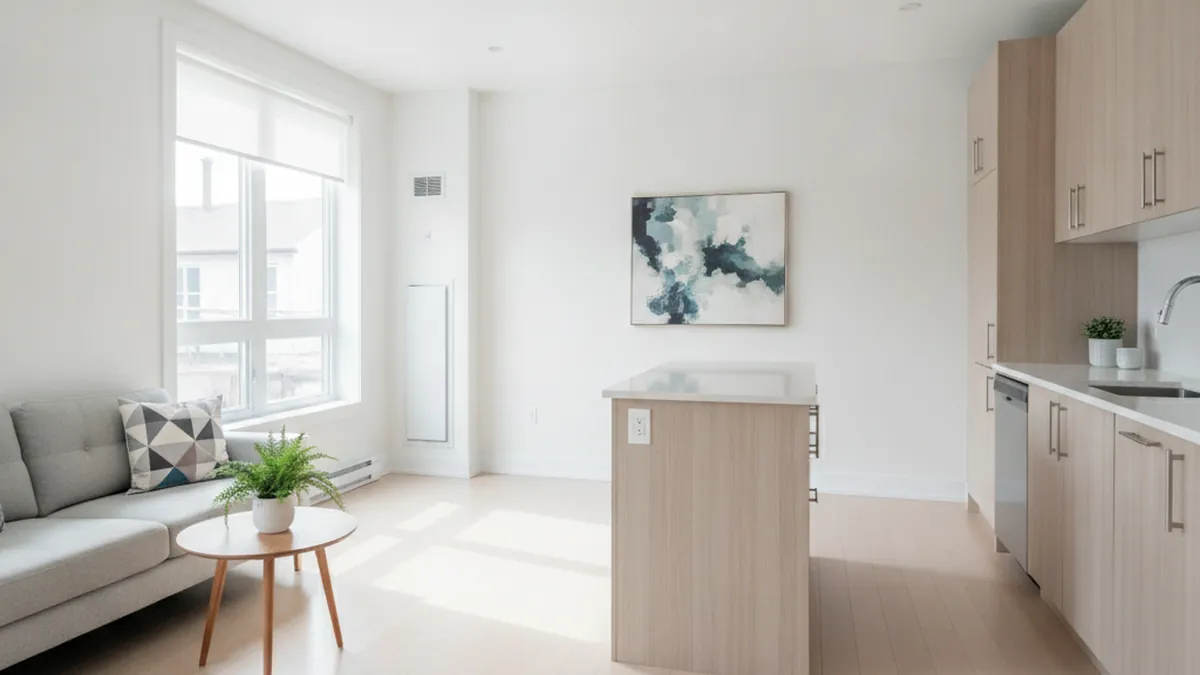
Faced with massive government intervention in social housing, here is how an informed North Shore property owner should frame their strategic thinking for 2026-2028.
Document and optimize your current return
Before reacting to macro trends, make sure your building is performing at its full potential. Do your rents reflect the market? Are your expenses well documented to maximize justifiable rent increases? A simple audit of your net operating income (NOI) is the starting point. Our rent calculator can help you compare your current rents against market benchmarks.
Do not confuse political signals with operational reality
Government announcements on social housing generate media noise that can be anxiety-inducing for property owners. But between the announcement of a $79M project and the delivery of 222 units in fall 2028, more than two years go by. And these units are not targeting your tenants. Keep your compass fixed on your real indicators: local vacancy rate, gross income per unit, actual expenses, market value.
Think about your holding horizon
If you are approaching a liquidation phase of your real estate portfolio, current conditions — still-strong prices, high rental demand — represent a window worth considering. If you are in an accumulation phase, market dynamics remain in your favour. We buy income properties directly on the North Shore, with no intermediary — contact us for a confidential assessment.
The reality of the private rental market in 2026
- The vacancy rate for affordable units is 1.6% — your building is not at risk of sitting empty
- Rents have increased 34% to 53% over four years in every Quebec metropolitan area
- The government is housing households you could not profitably house anyway
- The real threat: regulation, property taxes, and eviction timelines — not NPOs
- CMHC programs remain accessible to private investors with the right projects

