Direct buyer, flipper or fund: who actually pays the most?
Three buyers knock on your door. The highest on paper is almost never the one who leaves you the most net. We break down the listed price versus the amount actually received.
Quick answer
A local long-term direct buyer (like ImmoMulti) typically leaves you the most net: no flip margin, no renegotiation after inspection, closing in 30–45 days. A flipper's higher opening offer is often revised downward; a fund's process takes 90–120 days. The only number that matters is what is deposited with the notary.
Net price · Timelines · Renegotiation · Certainty
When a solid income property hits the radar, three buyer profiles tend to appear: the flipper (who renovates and resells), the institutional fund (who acquires at scale), and the local long-term direct buyer like ImmoMulti (who holds the property). All three can quote an attractive price. But their business model determines what you actually receive.
The key is to distinguish the listed price from the net amount deposited with the notary. An inflated offer that gets renegotiated, or delayed by conditions, can leave far less in your pocket than a firm offer that's slightly lower. Here is how each buyer operates, presented honestly. If you haven't yet decided whether to go through a multi-unit broker or directly to a buyer, our guide which broker to choose for a plex covers the different profiles of brokers who specialize in income properties.
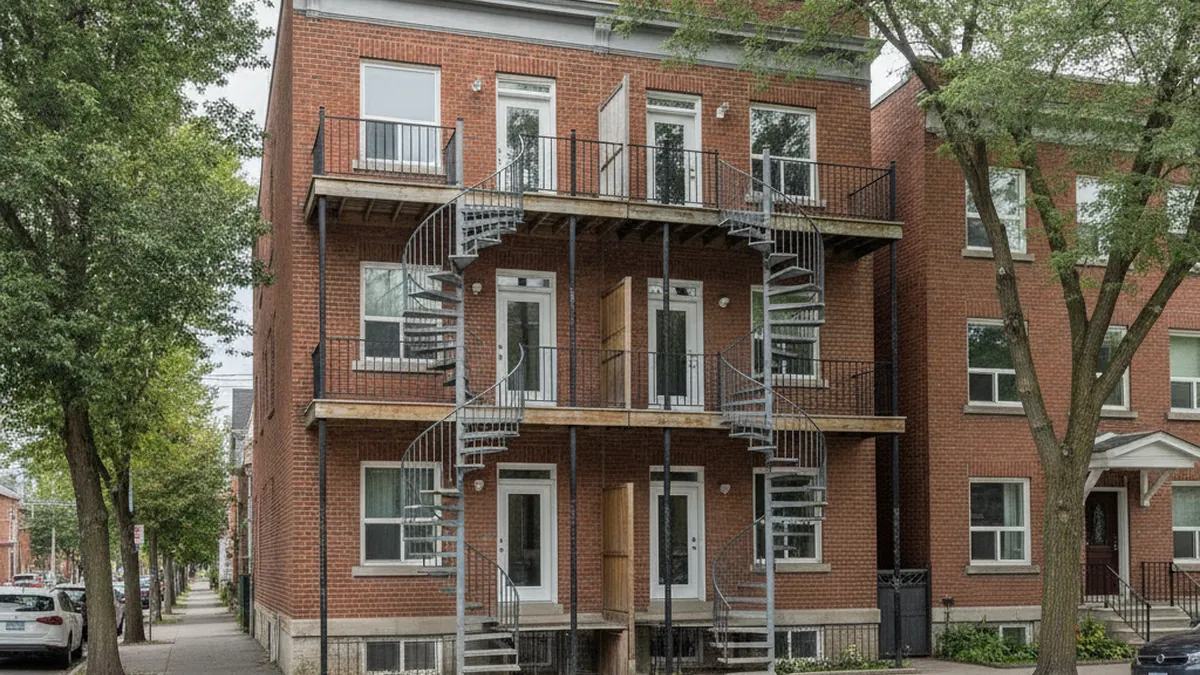
Local direct buyer vs flipper vs institutional fund
Comparison of the three buyer profiles for income properties.
| Criterion | Flipper | Institutional fund | Local direct buyer (ImmoMulti) |
|---|---|---|---|
| Business model | Renovate and resell quickly | Acquire at scale | Hold for 10–20 years |
| Initial offer | Often inflated | Tied to their appraisal | Fair, based on net income |
| Renegotiation after inspection | Frequent | Possible | None |
| Time to closing | Fast | 90 to 120 days | 30 to 45 days |
| Financing conditions | Variable | Often revocable | Confirmed capacity |
| Point of contact | Variable | Multiple | Single & local |
| Purchase with tenants in place | Often wants vacant to renovate | Yes | Preferred |
| Creative structures (vendor take-back, etc.) | Rare | Rare | Possible |
| Real net price for you | Often eroded after renegotiation | Market rate, subject to conditions | Stable and predictable |
Comparison of typical business models as of June 17, 2026. Practices vary by buyer; always request a written offer and compare the net after inspection, conditions, and timelines.
The flipper draws you in with a high price that tends to get revised downward; the fund has the capital but imposes slowness and conditions; the local direct buyer offers a fair, firm, and fast price because they keep the property and have no resale margin to finance. To maximize the net amount actually received, always compare written offers — not verbal promises.
The same 12-unit building, three buyers
An illustrative scenario: who leaves the most in your pocket?
- Inflated opening offer (~$2,050,000), lowered after inspection
- Must finance renovations and resale margin
- Aggressive negotiation up until signing
- 90 to 120 day timeline, price tied to their appraisal
- Heavy process, multiple points of contact
- Revocable financing conditions
- We hold the property 10–20 years: no flip margin to finance
- Stable offer, no renegotiation after signing
- Fast closing = fewer carrying costs, more in your pocket
Illustrative example based on typical gaps (≈ 8% more than a flipper, ≈ 3% more than a fund). The actual price depends on your property's income, expenses, and condition.
Flipper, fund or local buyer: your answers

A flipper often leads with a high offer to secure the contract, then revises it downward after the inspection, because they need to finance their renovations and resale margin. A long-term buyer like ImmoMulti has no flip margin to generate: their offer is generally more stable and the net amount received is often higher, even if the flipper's nominal offer looks higher at first.
An institutional fund has large buying capacity but often imposes a lengthy process (90 to 120 days), multiple points of contact, and a price tied to their own appraisal, sometimes with revocable conditions. A local buyer provides a firm offer within 48 hours, closes in 30 to 45 days, and remains a single local point of contact. For speed and certainty, the local buyer is often the better option.
Because the listed price is not the price you receive. An inflated offer can be renegotiated downward after the inspection, delayed by financing conditions, or eaten away by months of carrying costs. The only number that matters is the net amount actually deposited with the notary, on a certain date.
It is a buyer who acquires the property to hold and operate it for 10 to 20 years, rather than reselling it quickly. Since they are not looking for a resale margin, they can offer a fair price based on the actual net income, with no aggressive renegotiation. ImmoMulti is a long-term direct buyer of multi-unit properties on the North Shore and in the Laurentians.
Ask each buyer for a written, itemized offer, then compare the net after inspection, conditions, and timelines — not just the listed price. Our offer calculator gives you a reference point based on your property's net income to evaluate each proposal.
Related comparisons
Compare offers with a reference number
Before accepting an offer from a flipper or fund, get a firm direct offer from ImmoMulti — free, confidential, no commitment. You will know exactly where you stand.
Send us a message — we'll get back to you quickly within 48 hrs, no commitment.
Confidential · No commitment · No fees
Before accepting an offer, compare the net
Receive a direct, firm purchase offer within 48 hours, with no commission or surprise renegotiation.
Get my free offer →