
ImmoMulti — a direct buyer of multi-unit buildings on the North Shore — increasingly sees owners of plexes located in a flood zone asking the same question: how do I sell without surprises? Since the modernized flood-zone regulatory framework came into force on March 1, 2026, the rules have changed. New cartographies expand risk zones, insurance becomes hard to get or expensive, and your disclosure obligation as a seller is scrutinized more than ever. This guide explains, from the owner-seller's point of view, what concretely affects the sale of your income property — maps, restrictions, insurance, financing and price.
The new Quebec flood-zone framework reshapes the calculus for anyone selling a plex near water. For owners on the North Shore — where spring floods have repeatedly hit riverside communities — understanding maps, insurance and disclosure before listing is now essential to protecting both your price and the sale itself.
What changes with the new flood zone maps in Quebec?
The modernized regulatory framework for water body management came into force on March 1, 2026. New-generation cartographies, published progressively, classify the territory by risk level (from low to very high, plus protected zones with residual risk) and could expand flood zones by roughly 30%. A plex that was not in a flood zone may become one.
The Government of Quebec adopted a new regulatory framework on flood zones, which came into force on March 1, 2026, replacing the transitional regime that applied before. This framework modernizes the management of water bodies and flood-protection structures, and it comes with new-generation cartographies published progressively.
The most consequential change for a plex owner: these new maps are no longer limited to a couple of categories. They now classify the territory by several risk levels — low, moderate, high, very high, plus protected zones with residual risk. According to published analyses, applying these maps could expand the area of flood zones by roughly 30% across Quebec, catching thousands of owners who did not think they were affected.
In practical terms, a multi-unit building on the North Shore that was not mapped in a flood zone yesterday can find itself classified tomorrow, with all the restrictions and value effects that follow. Verifying the exact situation of your building before listing is no longer optional.
Sources: Government of Quebec — Regulatory framework for water body management and Protégez-Vous — "The new flood zone map traps thousands of owners".
Can you still build or renovate a plex in a flood zone?
It depends on the risk level and the municipal by-law. In high or very high intensity zones, new construction and rebuilding are heavily restricted or prohibited, and conditions or financial contributions may apply. The municipal by-law specifies permitted activities, prohibited activities, and the conditions to respect.
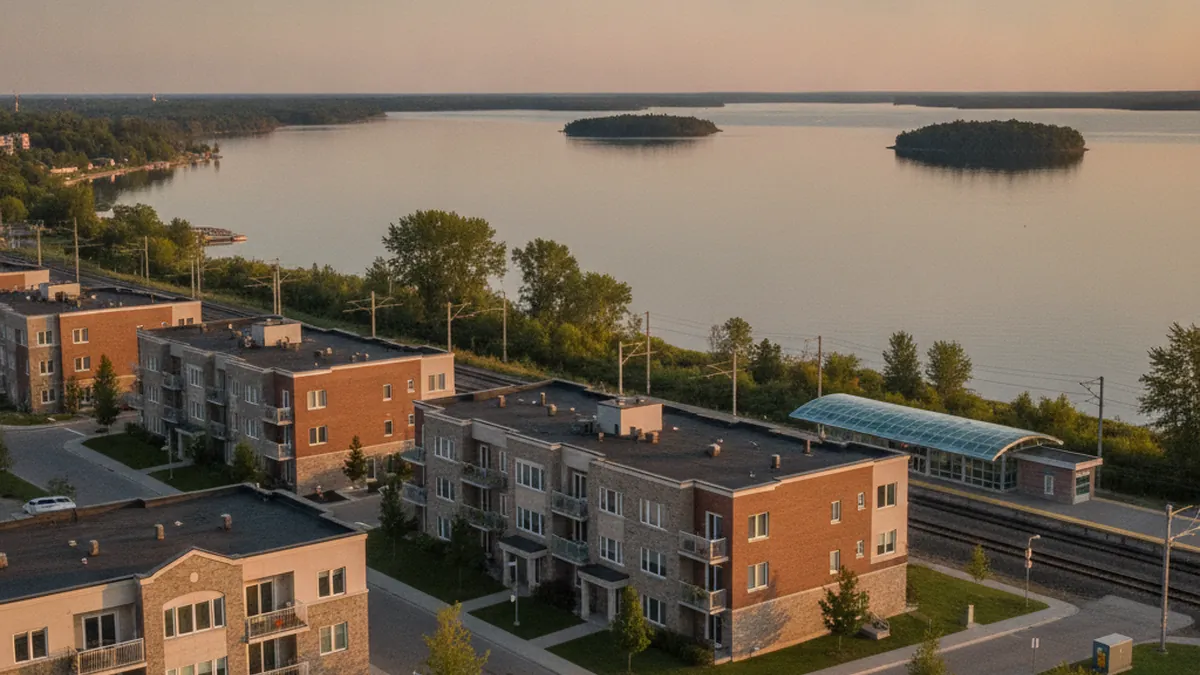
The new framework ties each risk level to specific construction and renovation rules. The higher the risk, the fewer the possibilities for intervening on the building. In high or very high intensity zones, new construction and the rebuilding of a destroyed residence can be heavily restricted or outright prohibited, and conditions or financial contributions may apply to the work that remains authorized.
For a plex owner, the stakes are twofold. First, a building damaged or destroyed by a flood might not be rebuilt in certain zones — a major risk for an income property. Second, any expansion or major renovation project becomes more uncertain, which limits the value-add potential that many buyers seek.
The municipal by-law remains the reference: it specifies, under the applicable mapping, the cases where a permit is required, the prohibited activities, and the conditions to respect. Before selling, have your municipality confirm what is permitted for your building — a savvy buyer will ask exactly these questions.
The rebuilding-prohibited trap
In a very high zone (more than 70% risk of flooding at least once over 25 years, according to published analyses), an owner might not have the right to build a new residence or rebuild a destroyed one. For a plex, this radically transforms a buyer's risk calculation.
Source: Government of Quebec — "New regulation to better protect citizens and their property against floods".
Is flood insurance available for an income property?
Coverage against watercourse overflow is offered by some private insurers as an optional endorsement. According to the Insurance Bureau of Canada, it is not always available in flood zones, or its cost can be prohibitive there — the insurer can refuse or restrict coverage. Criteria and prices vary from one insurer to another.
Insurance is one of the most sensitive points when selling a plex in a flood zone. In Quebec, flooding is partly insurable through the private sector, in the form of an optional endorsement against the overflow of a watercourse. But according to the Insurance Bureau of Canada, this protection is not mandatory for the insurer: it can refuse or restrict the scope of coverage, and where it is available in a risk zone, the premium — proportional to the risk — can be prohibitive.
What complicates the sale: insurance is often a condition of the buyer's mortgage financing. If a plex turns out to be hard to insure, the buyer's loan may be jeopardized — and the transaction can collapse. Documenting your building's insurability in advance (existing endorsement, claims history, current cost) reassures the buyer and smooths the sale.
Where private insurance is lacking, government assistance has its limits. The General Disaster Financial Assistance Program of the Ministry of Public Security primarily targets owners and tenants of a principal residence, with assistance of up to 90% of eligible expenses, not exceeding a maximum of $385,000. An income property where no unit is occupied by the owner does not necessarily benefit from the same protections.
"Flood insurance is generally not available to citizens living in flood zones or, when it is available, since the premium is proportional to the risk, its cost is prohibitive."
— Insurance Bureau of Canada, "Floods" fileSources: Insurance Bureau of Canada — "Floods" and Government of Quebec — Financial assistance for owners and tenants affected by a disaster.
Do I have to disclose that my plex is in a flood zone?
Yes. The seller must communicate all known unfavourable factors, including a flood-zone location and any past flooding. With a broker, this information is recorded on the OACIQ's mandatory "Declarations by the seller of the immovable" form. Failing to disclose a fact influencing the buyer's decision may make you liable.
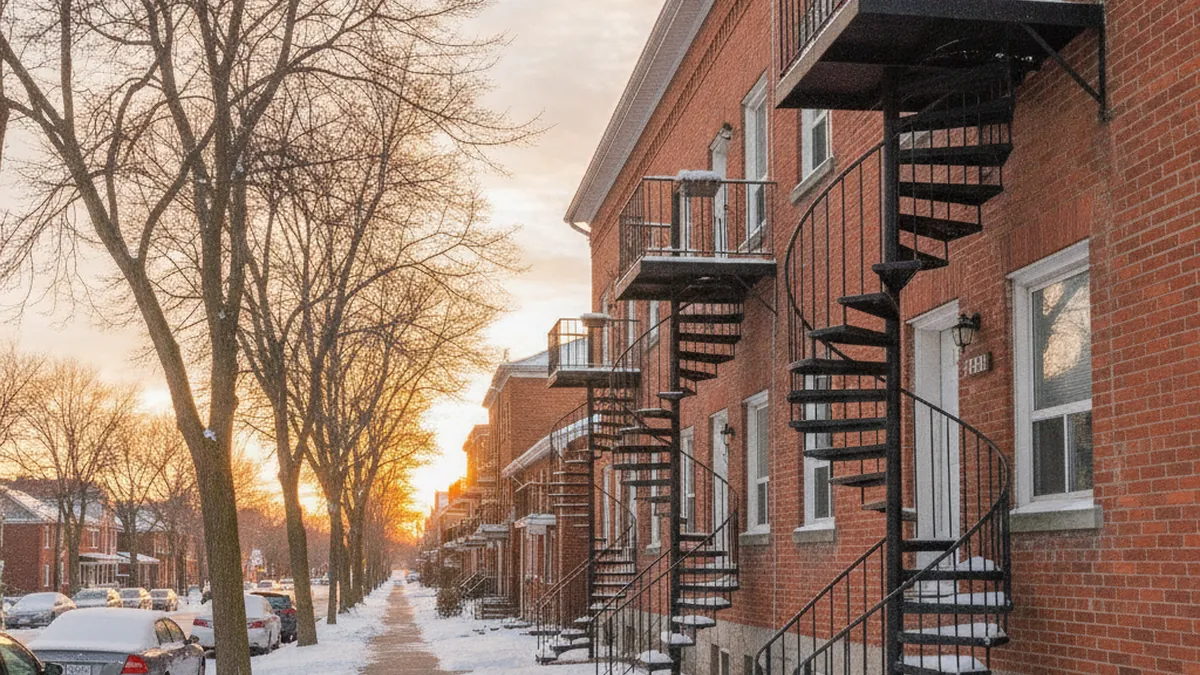
Disclosure is a legal obligation, not a courtesy. When the sale goes through a broker, the seller completes with them the mandatory "Declarations by the seller of the immovable" form from the OACIQ, which must reflect all unfavourable factors — including that the building has already been flooded or that it sits in a flood zone under the applicable mapping (recurrence zone, behind a protection structure, etc.).
The broker must ensure their client has verified the building's situation with the municipality and the land register, and the notary performs their own verification so that the buyer is duly informed. In case of non-disclosure of essential information — the kind that could have influenced the buyer's decision — the seller can be held liable and face legal action.
For a plex owner, the conclusion is simple: it is better to disclose clearly and document than to play the silence card. Transparent disclosure, backed by municipal verifications, protects the sale against a later challenge. Consult a notary for your specific situation.
Sources: OACIQ / Protégez-Vous — "Sellers, what are your disclosure obligations?" and Éducaloi — "Flooding: beware of still water".
How does a flood zone affect financing and price?
A plex in a flood zone reduces the buyer pool, makes insurance harder and more expensive, limits renovation potential, and can complicate financing. These factors often translate into a resale discount and a longer time on market. A lender may require a larger down payment or reduce the loan amount.
The market prices in the risk. A flood-zone location acts on price through several channels at once, summarized in the table below.
| Factor | Effect on the plex sale |
|---|---|
| Buyer pool | Reduced: some buyers and investors exclude risk-zone buildings outright. |
| Insurance | Often refused or costly; can jeopardize the buyer's financing. |
| Renovation / expansion potential | Restricted in high-risk zones; limited value-add. |
| Rebuilding after a loss | Prohibited or conditional in very high zones — major loss risk. |
| Mortgage financing | Larger down payment, reduced loan, or additional conditions possible. |
| Price and time on market | Frequent resale discount and longer sale than an equivalent building outside the zone. |
On the financing side, lenders factor flood risk into the assessment of an income property. A plex that is hard to insure or has restricted rebuilding potential may lead a lender to require a larger down payment, reduce the loan amount, or impose conditions. Since insurance is often a loan condition, a refused flood coverage can, on its own, cause the buyer's financing to fail.
To anticipate the effect on value, our analysis of when an unprofitable plex is worth selling shows how rising operating costs — insurance included — press directly on profitability, and therefore on what a buyer will pay.
How do you sell a waterfront plex on the North Shore?
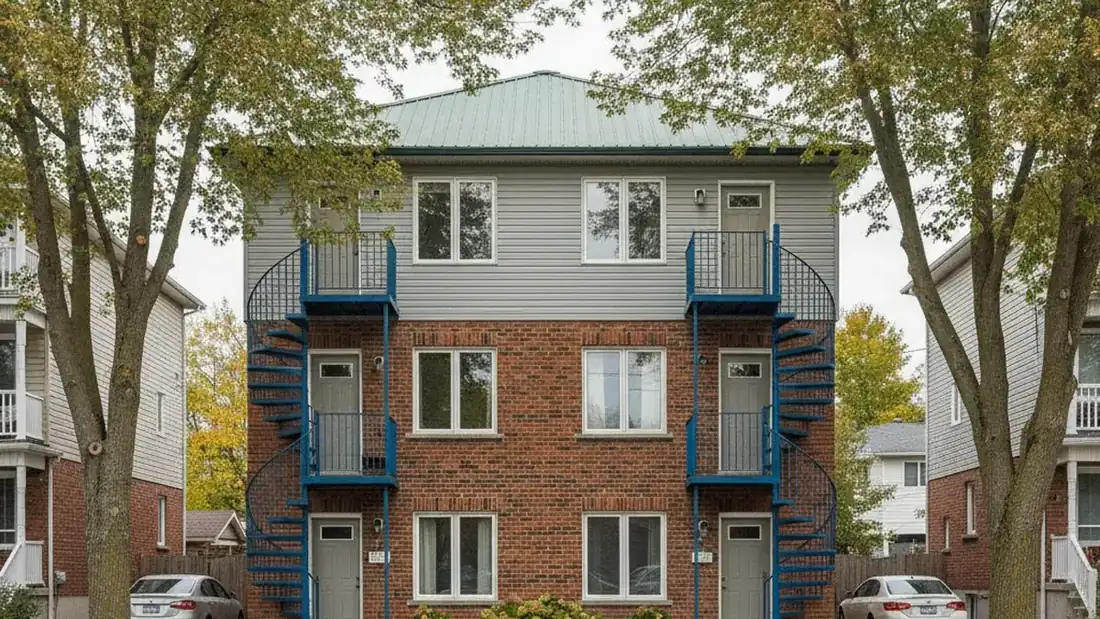
On the North Shore of Montreal and in the Deux-Montagnes region, several waterfront sectors — along the Mille Îles River, the Lake of Two Mountains, or the Rivière du Nord — contain plexes and multi-unit buildings now affected by the new cartographies. The spring floods of the past decade marked the region and heightened awareness among buyers and insurers alike.
If your plex is in a flood zone or risks becoming one under the new-generation maps, a few principles maximize your chances of selling at the right price:
- Document everything: exact mapping situation, flooding history, insurance endorsement and cost, municipal verifications on permitted work.
- Disclose clearly: a transparent declaration protects the sale and reassures the buyer as much as the lender.
- Set a realistic price: build in the discount tied to insurability and restrictions, rather than absorbing lowball offers after negotiation.
- Consider a direct sale: to a buyer who knows the flood-zone file and does not need to obtain conventional financing themselves.
ImmoMulti: direct buyer of multi-unit buildings on the North Shore
We buy plexes and income properties across the North Shore, including in waterfront areas and flood zones. No broker, no commission, in full confidentiality. Get an offer within 48 hours.
The sale window for a plex in a flood zone narrows as the new-generation maps are published and insurability deteriorates. Waiting exposes you to tightening regulation. To understand the other regulatory costs weighing on a plex's value, see also our analysis of the 2027 building code and plex value on the North Shore.
How to read the new mapping and your plex's risk level
Before setting a price or drafting a disclosure, a plex owner must understand exactly what the map says for their building. The new-generation cartographies do not read like the old "0–20 year / 20–100 year" maps. They now rest on intensity classes defined by experts, combining two parameters: the probability of flooding — from 100% down to 7% chance the zone floods at least once over 25 years — and the water depth that could be reached from ground level during a flood.

The four intensity classes
The Government of Quebec now breaks flood zones into four intensity classes — low, moderate, high and very high — plus protected zones with residual risk (behind a protection structure). The higher the class, the more severe the construction and renovation restrictions, and the more your plex's insurability deteriorates. Here is how those classes translate from a seller's point of view.
| Intensity class | What it means | Stake when selling the plex |
|---|---|---|
| Low | More modest probability and water depth. | Limited impact, but disclosure still required; the insurer may adjust the premium. |
| Moderate | Intermediate risk by probability and water height. | Slightly reduced buyer pool; insurance more scrutinized. |
| High | Significant probability and/or water depth. | Serious work restrictions; insurance often costly or refused. |
| Very high | Probability up to 100% over 25 years, high water depth. | New construction and rebuilding heavily limited; steepest discount. |
These maps will be reassessed at least every 10 years to reflect evolving knowledge and climate hazards. In other words, the class assigned to your plex today is not fixed: a moderate-class building could migrate to a high class at the next revision. For a seller, that strengthens the case for acting while the map is still favourable.
High-current, low-current and mobility zones
Two notions carried over from the previous regime remain useful. The high-current flood zone corresponds to the part associated with a 20-year recurrence flood (statistically, a one-in-20 chance each year), while the low-current zone corresponds to a 100-year recurrence flood. Added to these are watercourse mobility zones, where the bank itself can shift through erosion. A plex may be affected by several of these designations at once — a point the buyer and their notary will check systematically.
Where to verify your plex's exact situation
Check the Government of Quebec mapping portal (quebec.ca/zonesinondables), where in-force maps are published progressively; your municipality's zoning by-law and planning department; and the land register — with a land surveyor if you need the exact flood elevation at the building.
Sources: Government of Quebec — Interpreting the new-generation cartographies and Government of Quebec — Cartographies in force.
The owner's pre-listing checklist
A plex in a flood zone does not sell "blind." Failed transactions almost always fail for the same reason: an unfavourable fact discovered after the promise to purchase, which scares off the buyer or their lender. The countermeasure is to build a complete file before listing. Here is the step-by-step process savvy sellers follow on the North Shore.

Step 1 — Confirm the mapping status
Obtain the exact designation of your building: intensity class, high or low current, mobility zone, presence of a protection structure. Print the in-force map excerpt and note the publication date. This is the centrepiece of the file.
Step 2 — Document the water history
Gather everything water-related: past flooding or infiltration, sewer backups, a backwater valve, a sump pump, a recent French drain. A clean, documented history reassures; a hidden one kills trust.
Step 3 — Validate insurability
Have your broker or insurer confirm whether the building carries an endorsement against watercourse overflow, at what cost, with which exclusions and deductible. A buyer who knows a policy already exists moves far faster.
Step 4 — Verify what is permitted
Ask the planning department which activities are permitted, prohibited or conditional for your risk class: expansion, rebuilding after a loss, change of use. This often determines the residual value of the land.
Step 5 — Draft a transparent disclosure
Consolidate everything into a clear declaration, consistent with the OACIQ form if you use a broker. A complete upfront disclosure beats a forced revelation mid-negotiation.
The most expensive mistake
Listing the plex without knowing your own mapping status. You then expose yourself to offers revised downward once the buyer discovers the information — the worst negotiating scenario for a seller. Know before you sell; don't learn it from the buyer.
Quantifying the discount: three concrete North Shore examples
"How much does a flood zone lower my price?" The honest answer: it depends on the risk class, insurability and the local buyer pool — there is no official percentage. But we can model the effect from the mechanisms described above. The examples below are illustrative (not an appraisal) and start from a hypothetical triplex worth $750,000 outside a flood zone, on the North Shore.

Scenario A — Low zone, insurable plex
The triplex is in the low class, with an active flood insurance endorsement and no loss on file. The buyer pool stays broad; the effect is limited to a slightly higher premium. The observed discount is modest — often a few percentage points — because the risk is documented and covered. The seller can target a price close to the out-of-zone value, provided the full file is supplied.
Scenario B — High zone, costly insurance
Same building, but in the high class, with a clearly heavier flood premium and expansion work now restricted. The buyer pool shrinks, the time on market lengthens, and the buyer's lender may require a larger down payment. The discount widens: the buyer prices in both the annual insurance surcharge and the lost value-add potential.
Scenario C — Very high zone, limited rebuilding
The triplex is in the very high class: rebuilding after a loss potentially prohibited, insurance refused or prohibitive, conventional financing difficult. Here it is no longer a simple percentage discount — it is a change of buyer category. Conventional lenders step back; what remains are cash or specialized buyers, who price the risk aggressively.
| Scenario | Class | Dominant factor | Effect on the sale |
|---|---|---|---|
| A | Low | Insurable, documented | Modest discount, near-normal sale. |
| B | High | Costly insurance + restricted work | Noticeable discount, longer time on market. |
| C | Very high | Limited rebuilding, refused insurance | Buyer pool narrowed to cash buyers. |
The cross-cutting lesson: it is not "the flood zone" itself that sets the discount, but insurability and rebuilding potential. Two plexes on the same street can sell very differently depending on whether one has an insurance endorsement and the other does not — hence the value of documenting before pricing. To estimate your building's base value before applying a discount, our cap-rate and GRM calculators give an objective starting point.
How the buyer's financing can sink your sale
Many sellers focus on their price and overlook the weak link in a flood-zone transaction: the buyer's financing. A promise to purchase conditional on financing can collapse at the very end if the lender stumbles on insurance or flood risk. Understanding this mechanism helps you choose the right buyer — and sometimes to favour a buyer who does not need conventional financing.

The insurance → financing chain
For most income-property loans, the lender requires proof of insurance before disbursing. If flood insurance is refused or deemed insufficient, the condition is not met and the financing falls through. In a flood zone, this chain becomes the main break point: a perfectly qualified buyer can fail not because of their credit file, but because the building is not insurable on acceptable terms.
The lender's levers
Facing flood risk, a lender has several levers, all of which weigh on your transaction:
- Larger down payment: the lender reduces exposure, excluding some buyers.
- Reduced loan amount: the loan-to-value falls, widening the gap the buyer must cover.
- Additional conditions: specialized inspection, reinforced proof of insurance, contingency reserve.
- Outright refusal in a very high zone or for an already-flooded building.
Why a direct sale simplifies things
A direct buyer like ImmoMulti knows the flood-zone file and does not have to clear a conventional financing condition at the last minute. That removes the most fragile link in the transaction — and gives the seller certainty the promise will reach the notary's signature.
Our financing comparison tool shows how the down payment and loan amount shift purchasing power — a useful reminder of why a hard-to-finance plex attracts fewer offers.
Government assistance after a loss: what a plex owner must know
One poorly understood point weighs heavily on buyers' minds — and therefore on your price: what happens if the plex floods? Many assume "the government will pay." The reality is more nuanced, especially for an income property as opposed to a principal residence.

A last-resort program aimed at principal residences
Quebec's General Disaster Financial Assistance Program (Ministry of Public Security) is last-resort assistance: it targets damage not covered by usual insurance policies. It primarily targets owners and tenants of a principal residence. When assistance equals 90% of eligible expenses, the disaster victim assumes the remaining 10% — the "financial participation."
The limit for rental property
For a plex, the nuance is decisive: the unit the owner occupies may qualify as a principal residence, but the rented units and a fully rental building do not necessarily benefit from the same protections. In other words, an investor who occupies no unit cannot rely on this program as a safety net. It is precisely this gap that makes private insurance — and therefore your plex's insurability — so important to the buyer.
The takeaway for the sale
Never present government assistance as a guarantee covering your rental plex in the event of a flood. A savvy buyer (or their lawyer) will know, and an overly optimistic claim can backfire. Better to rely on a solid insurance file and honest disclosure.
Sources: Government of Quebec — Amounts granted to disaster victims and Government of Quebec — Financial assistance for owners and tenants affected by a disaster.
Common mistakes when selling a flood-zone plex
After seeing many waterfront multi-unit files, certain missteps recur constantly. Avoiding them is often the difference between a sale that reaches the target price and a transaction that stalls.

- Minimizing or hiding a flooding episode. This is the gravest error: it exposes you to legal action and the sale's annulment. Transparency protects; silence destroys.
- Ignoring the new map. Relying on "the building has never flooded" when the new-generation mapping has reclassified it. It is the official risk class that matters to the buyer and their insurer.
- Pricing as if the building were out of zone. The result: few offers, then successive cuts that make it look like a "problem" building.
- Not verifying insurability before listing. Discovering mid-transaction that the endorsement is refused sinks the buyer's financing at the worst moment.
- Neglecting planning rules. Promising an "expansion potential" that no longer exists in a high-risk zone undermines your credibility.
- Waiting for "the market to settle." In a flood zone, time works against the seller: maps expand and insurability deteriorates.
"A high-current flood zone corresponds to a 20-year recurrence flood; a low-current zone, to a 100-year recurrence flood."
— Government of Quebec, water body managementDirect sale or broker: which channel for a flood-zone plex?
The sales channel matters more for a risk-zone plex than for an ordinary building, because the issue is not just the listed price but the likelihood the transaction reaches the notary. Here is how the two main routes compare from an owner-seller's point of view.

| Criterion | Sale with a broker | Direct sale (specialized buyer) |
|---|---|---|
| Disclosure | Mandatory, framed OACIQ form. | Direct disclosure; the buyer already knows the flood-zone file. |
| Buyer pool | Broad, but many withdraw over risk and insurance. | Narrow but qualified: the buyer wants this type of building. |
| Financing | Often conditional; break risk on insurance. | Often cash or without a conventional loan condition. |
| Timeline | Can lengthen if offers fall after verification. | Generally faster and more predictable. |
| Fees | Brokerage commission. | No commission. |
| Closing certainty | Variable by final buyer. | High: the buyer knowingly assumes the risk. |
No channel is "better" in the absolute: a low-class, well-insured plex may sell at full price via a broker. But the higher the risk and the more uncertain the insurability, the more a direct sale to a buyer who knows the file reduces closing uncertainty. To objectively compare the net proceeds you keep in each case, read our detailed analysis on deciding to sell an unprofitable plex.
Informational content only. Does not constitute legal or tax advice. Flood-zone mapping and regulatory provisions are subject to change by the Government of Quebec and municipalities. Consult a notary, insurance broker, or municipal permit officer for advice specific to your building.


