- Standard home insurance does not cover a rented property: you need an income property (landlord) policy.
- Four types of coverage structure the policy: building, liability, rental income loss, and equipment.
- A property and casualty insurance broker, regulated by the AMF (Autorité des marchés financiers — Québec's financial markets regulator), shops multiple insurers — an agent is tied to a single company.
- Require in the lease that each tenant maintains their own insurance, and review your policy after every major change.
Why standard home insurance isn't enough
This is the most costly mistake new income property owners make: keeping — or taking out — a standard home insurance policy for a property they are renting out. This type of contract is designed for a very specific situation — the owner who occupies their own house or condo. Its pricing, guarantees, and exclusions are built entirely around that assumption.
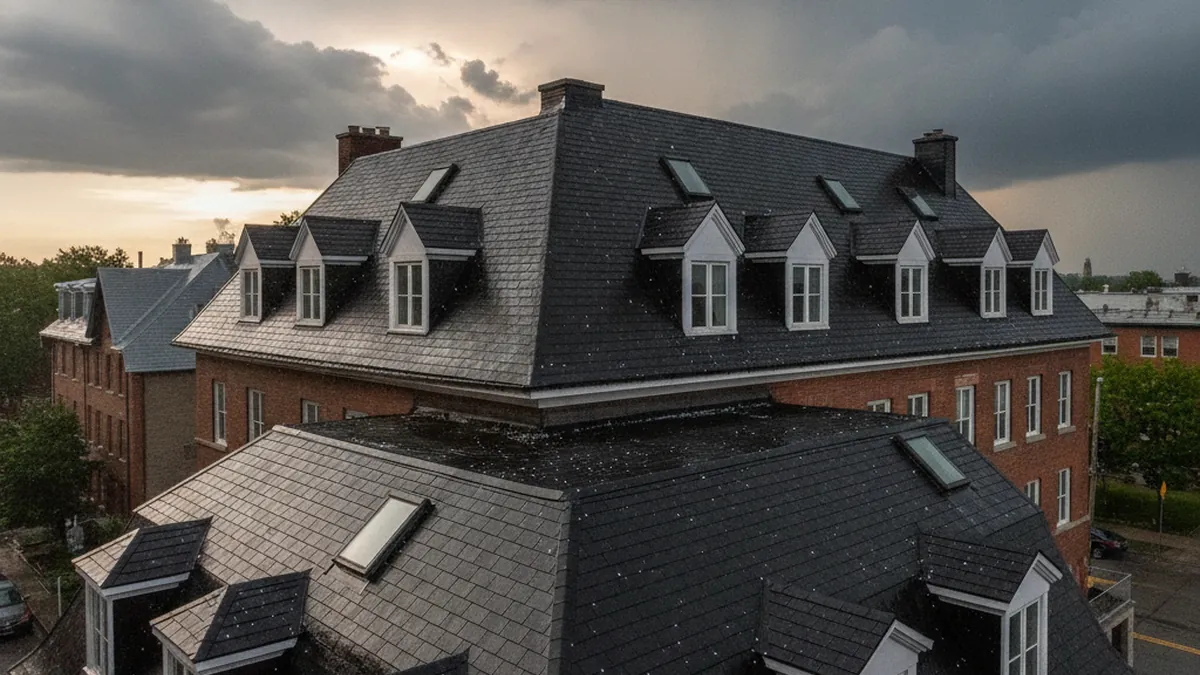
As soon as a unit is rented out, several realities not covered by a home policy come into play. The presence of tenants you cannot fully control multiplies the sources of loss (cooking accidents, negligence, plumbing, electrical overload). Your rents become business income that a claim can interrupt. Your liability as a landlord extends to common areas, stairwells, balconies, and snow removal. None of these elements are properly handled by a policy designed for an owner-occupant.
The danger isn't just being underinsured — it's being deemed uninsured. If you declare that you occupy a property you are actually renting out, the insurer can invoke a material misrepresentation of risk and deny your claim at the moment you need it most. In Québec, the Autorité des marchés financiers (AMF) — the province's financial markets regulator — oversees insurers and damage insurance representatives. This framework protects consumers, but only if the risk was honestly declared from the outset.
Rental use: how the risk changes
Standard home insurance is designed for an owner who occupies their own home or condo. As soon as you rent out one or more units, the insurer considers the property to have rental use: the nature of the risk changes. This calls for income property insurance, sometimes referred to as landlord insurance (or "non-owner-occupant" insurance).
The difference is not just a matter of terminology. With tenants, your liability exposure increases, your rents represent income to protect, and the reconstruction value of a plex or multi-unit building bears no resemblance to that of a single-family home. Insuring a rented property with a basic home policy exposes the owner to a denied claim, because the actual risk was never declared.
Essential coverage (in detail)
Beyond the broad principles, it's worth understanding exactly what each coverage in an income property policy covers. Wording and limits vary by insurer — here are the protections most commonly found and what they are designed for:
- Building insurance: covers the structure and its components against losses listed in the policy (fire, sudden water damage, vandalism, wind, etc.). The insured amount must reflect the cost of rebuilding from scratch, not the market value or the municipal assessment.
- Liability: applies when a third party (tenant, visitor, passerby) suffers bodily injury or property damage for which you could be held responsible as a landlord — a fall on a poorly maintained common staircase, for example. This is coverage you should never underestimate when tenants are present.
- Rental income loss: compensates you for rent you stop collecting when a covered loss makes units uninhabitable during repairs. Check the reimbursement period and the cap, as they vary by contract.
- Equipment and machinery breakdown: protects installations you own (boiler, central heating system, elevator, appliances supplied to tenants) against sudden mechanical or electrical failure — a risk that building insurance alone does not always absorb.
- Water damage and sewer backup: often offered as separate endorsements, with their own limits and deductibles. In a multi-unit building, water damage risk (plumbing, seepage, backup) is frequent: it deserves special attention when building the policy.
None of these protections are universal: each carries its own limits, deductibles, and exclusions. It's precisely a broker's job to tailor these parameters to your specific property rather than selling you a one-size-fits-all package.
The four pillars in summary
Coverage varies by insurer, but a solid income property policy generally revolves around four pillars:
- The building: the structure and its components against covered losses (fire, water damage, vandalism, etc.). The insured amount must reflect the reconstruction cost, not the market value or the municipal assessment.
- Liability: essential whenever tenants are present. It protects you if a third party (tenant, visitor, passerby) suffers bodily injury or property damage for which your responsibility as an owner could be engaged — a fall on a common staircase, for example.
- Rental income loss: if a covered loss makes units uninhabitable, this coverage compensates the rent you would have collected during repairs. Without it, your expenses and mortgage keep running while rental income stops.
- Owner-supplied equipment: heating systems, appliances provided to tenants, common area furnishings, and installations you own.
Each coverage carries its own limits, deductibles, and exclusions. It's precisely a broker's job to tailor these parameters to your property rather than selling you a generic package.
Property and casualty insurance broker or agent: what's the difference?
A property and casualty insurance broker (regulated by the AMF) shops your file across multiple insurers and compares coverage and premiums — they work for you. An agent is typically tied to a single insurer and can only offer that company's products. For an income property, a broker usually provides better market access and more suitable coverage.
In Québec, the distribution of property and casualty insurance is regulated by the Autorité des marchés financiers (AMF). Two types of professionals can assist you, and the distinction matters for an income property:
- A property and casualty insurance broker is not tied to a single insurer. They shop your file with multiple companies, compare coverage and premiums, and advocate for your interests at renewal or when a claim arises.
- A property and casualty insurance agent is generally affiliated with a single company and only offers that company's products.

| Criterion | Property & casualty insurance broker | Property & casualty insurance agent |
|---|---|---|
| Relationship with insurers | Independent: represents multiple companies | Generally tied to a single company |
| Market shopping | Compares coverage and premiums from multiple insurers | Only offers their company's products |
| Coverage options | Broad: can tailor the policy to a rental portfolio | Limited to the insurer's catalogue |
| At renewal | Can re-shop the market to defend your interest | Renews the contract with the same company |
| Oversight | Both are regulated and registered with the AMF (Autorité des marchés financiers) | |
For a rental portfolio, using a broker to create competition among insurers often yields better-suited coverage and a stronger value-for-money ratio. In all cases, verify that your representative holds a valid licence with the AMF.
ImmoMulti is a direct buyer — not a broker. If, rather than insuring and managing your property, you are considering selling, ImmoMulti is a direct buyer of multi-unit buildings on the North Shore: a written offer within 48 hours, 0 commission, confidential transaction. Get an offer →
Factors that affect your premium
There is no "standard" premium for an income property: the amount varies depending on the specific profile of the building and the coverage selected. Rather than looking for a ballpark figure, it's more useful to understand the factors the insurer examines — because these are the ones you can, in part, influence.
- Age of the building: an older property, especially one with original installations, is generally perceived as a higher risk. The premium varies accordingly.
- Number of units: the more units and tenants, the greater the risk exposure — and the higher the premium tends to be.
- The roof: its age, material, and condition determine the risk of infiltration and water damage — a point insurers scrutinize closely.
- The electrical system: an outdated panel or aging wiring (for example, older knob-and-tube style) can push the premium up or even complicate obtaining coverage.
- Location: where the property is situated affects exposure to risk (proximity to a fire station, flood zone, neighbourhood) and therefore pricing.
- Claims history: a heavy claims record weighs on the premium, while a clean history works in your favour.
Plumbing, the presence of particular heating systems, and the chosen deductible level also factor in. Be wary of generic estimates: only a broker who examines your actual file can provide a reliable quote.
Loss caused by a tenant: recourse and subrogation
What happens when the loss originates from inside — water damage from a unit, a fire caused by a tenant's negligence? In practice, your insurer pays your covered building damages first, then exercises a right of subrogation: the insurer steps into your shoes to recover the amounts paid from the responsible party — that is, the at-fault tenant (or their own insurer).
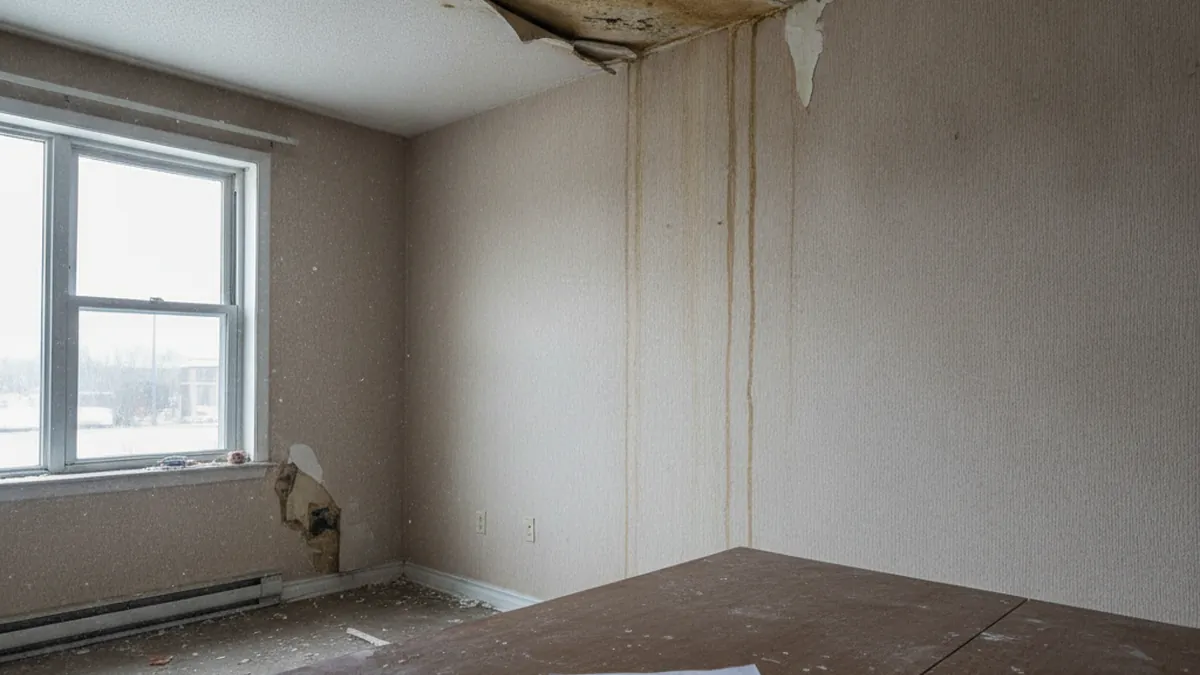
This is where the whole ecosystem of protections makes sense. Your liability coverage protects you if a third party holds you responsible, your rental income loss coverage compensates rent during repairs, and subrogation allows costs to be recovered from the responsible party. But subrogation works much better when the tenant has their own insurance: their insurer can then step up, rather than pursuing an individual who is often insolvent. For the detailed process, see our guide on tenant-caused damage and insurance recourse.
Why your tenants also need to be insured
Your landlord policy covers the building and your liability, but not tenants' personal belongings or their own liability. If a tenant causes water damage that affects a neighbour's unit, or if their personal property is destroyed in a fire, it is their tenant's home insurance — not yours — that must respond.
It is therefore strongly recommended to require in the lease that each tenant maintain their own tenant's home insurance. This protects their belongings, limits claims directed at you, and simplifies the handling of a loss — in particular by supporting the subrogation recourse described above.
When to review your insurance policy
An income property policy is not a document you sign once and forget. Several events warrant a review with your broker:
- At the purchase of the property — to start with the right coverage from day one.
- After major renovations that increase the reconstruction value.
- In the event of a rise in value or construction costs, to avoid underinsurance.
- Upon a change in use (adding a commercial space, converting units, short-term rental).
An annual review, even without major changes, lets you verify that the insured amount keeps pace with the actual cost of reconstruction. Before a purchase, a thorough inspection of the property also helps identify the risks the insurer will assess — a reflex shared by good managers and inspectors who specialize in multi-unit buildings.
Properly insuring your property is one piece of a larger puzzle: risk assessment, management, and maintenance go hand in hand. A solid insurance file starts with a thorough knowledge of your building's condition and your tenants.
Which professional do you really need?
Insurance broker, property manager, building inspector: our one-minute quiz points you to the right specialist for your income property on the North Shore. And if you're thinking about selling instead, get a direct offer with no commission.
Find my specialist →