When a tenant causes damage to a unit in your plex on the North Shore, the path to compensation is not always obvious. Between the Administrative Housing Tribunal (TAL), your building insurer, the tenant's renters insurance (if they have any), and the rules on normal wear, the process involves several moving parts. This article walks through each one clearly — who pays what, how to document and claim, and how to protect your future insurance premiums.
Quick answer
When a tenant damages your plex, compensation flows through the TAL (send a written formal demand, then file an application) or through insurance subrogation. Quebec prohibits security deposits. Your best protection: require renters insurance in the lease. More than 1 in 3 Quebec tenants has none — an uninsured tenant's damage claims against your building policy, raising your premiums for the whole building.
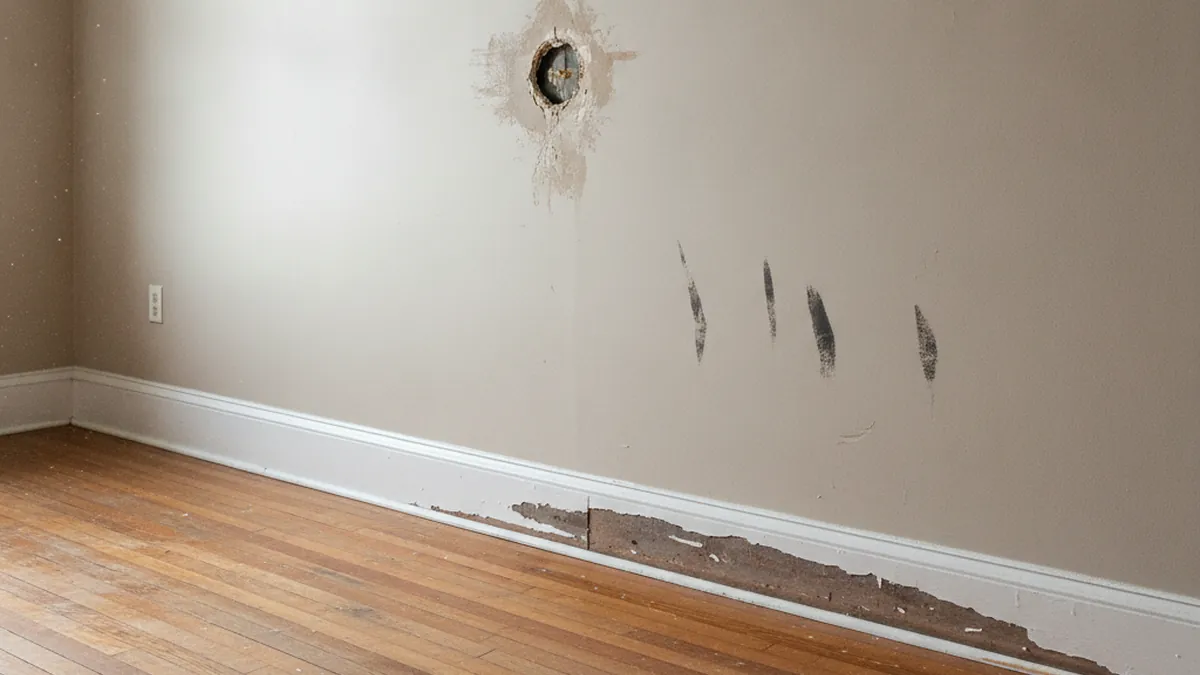
Who is responsible for what — the liability framework
In Québec, the tenant is legally responsible for damage they cause — or fail to prevent — under their duty to maintain the unit in good condition. This obligation flows from the Civil Code of Québec and applies regardless of whether the tenant has insurance.
For the owner, the key distinction is between damage to the building (your insurer's territory) and damage to the tenant's personal property (the tenant's insurer's territory, if they have coverage).
| Type of loss | Who covers it initially | Who is ultimately liable |
|---|---|---|
| Building damage (walls, floors, structure) | Owner's building insurer | Tenant (if fault is established) |
| Tenant's personal property | Tenant's renters insurance (if any) | Tenant bears their own loss if uninsured |
| Water damage — tenant fault (e.g., overflowed bathtub) | Owner's insurer (for building); tenant's insurer (for contents) | Tenant is liable for building damage caused by their fault |
| Damage by uninsured tenant | Owner's insurer (building) — then subrogation claim against tenant | Tenant remains liable — insurer may pursue them |
4-step TAL recourse process for tenant damage
The Administrative Housing Tribunal is the competent body in Québec for landlord-tenant disputes, including damage compensation claims. Here is the standard process:
Document the damage immediately
Take dated photos and video of all damage. Obtain contractor quotes and repair invoices. Compare against your move-in condition report — if you have one. The more specific your documentation, the stronger your TAL application.
Send a formal demand (mise en demeure)
Before filing at the TAL, send the tenant a written formal demand by registered mail. Describe the damage, the repair costs, and set a clear payment deadline (typically 10 to 15 days). This step is generally required before a TAL application and demonstrates good faith.
File an application at the TAL
If the tenant refuses or does not respond, file a compensation application at the TAL. The application fee is modest. Attach all evidence: photos, invoices, the move-in report, the formal demand, and any written communications with the tenant.
Attend the hearing and receive the decision
The TAL schedules a hearing where both parties present their evidence. The TAL adjudicator issues a binding decision. If the tenant is ordered to pay and does not, the decision can be enforced like any court judgment — including via the collection of wages or bank accounts.
The security deposit trap
Unlike most Canadian provinces, Québec prohibits any form of security deposit in a residential lease. You cannot require first and last month's rent, a damage deposit, or any other advance payment beyond the first month. Any such amount collected must be returned with interest. The only financial cushion against tenant damage is the TAL process and — most effectively — a requirement for renters insurance.
Tenant renters insurance — your best financial protection
The most effective tool for protecting your plex from tenant damage is not a legal process — it is a lease clause. Requiring renters insurance (assurance habitation locataire) as a condition of the lease places a financial buffer between the tenant's potential negligence and your building's insurance record.
When a tenant with renters insurance causes damage:
- Their insurer covers their liability for damage to the building;
- Your building insurer does not have to pay — no claim on your record;
- Your premiums stay stable;
- You can require proof of insurance at signing and annually.
"More than one in three Québec tenants has no renters insurance. When an uninsured tenant causes a loss, the landlord's building insurer pays — and the claim follows the landlord's file for years. CORPIQ recommends systematically requiring renters insurance in new leases."
— CORPIQ / La Presse, June 16, 2026
What to include in the lease insurance clause
- Minimum liability coverage amount (typically $1,000,000);
- Obligation to provide proof of insurance at signing and annually;
- Obligation to notify the landlord if coverage lapses;
- Specify that coverage must remain active for the full term of the lease.
How to introduce the clause without friction
You can require renters insurance in any new lease, and CORPIQ confirms a landlord may demand proof of valid civil-liability coverage for the full term. The practical moment to introduce it is at signing or, for existing tenants, at renewal — the notice of renewal can add the requirement in line with applicable rules. Frame it as standard practice, because it is: a good tenant already carries coverage, and the annual cost is modest compared with the protection it provides both sides. Ask for the certificate at signing, then again at each renewal, and keep a copy in the unit's file next to the condition report. If a tenant lets coverage lapse, a lease term requiring notice of any lapse gives you a chance to react before a loss occurs.
Think of the clause as the single highest-leverage line in your lease. It costs you nothing, shifts a real slice of risk off your policy, and — as the worked examples below show — is often the difference between a neutralized claim and a loss that follows your building for years. For the full premium picture on the North Shore, see our 2026 plex insurance analysis.
Source: CORPIQ — requiring proof of tenant insurance.
How damage history affects your plex's value at sale
A plex with a heavy insurance claims history — multiple water damage files, fire claims, tenant-caused losses — is harder to insure and harder to sell at a good price on the North Shore. A prospective buyer's due diligence will include a review of your insurance history. A long claims record signals management problems and drives the price down.
Conversely, a well-managed plex with leases that require renters insurance and a clean claims file is a more attractive acquisition — both to investors who plan to hold and to buyers who plan to finance with commercial lenders who scrutinize loss histories.
If your plex has accumulated a difficult claims history and you are weighing a sale, ImmoMulti buys income properties as-is — including those with complicated tenant situations. Confidential offer within 48 hours, no inspection conditions, no broker commissions.
See also: Plex insurance on the North Shore 2026 — why premiums are rising and Tenants and plex value at sale — what changes.
Which Civil Code of Québec articles actually back your claim against a tenant?
As a plex owner on the North Shore, you gain real leverage by knowing the exact text your claim rests on. This is not lawyer trivia: when you write a formal demand or appear before the Administrative Housing Tribunal (TAL), citing the right article shows that your claim is grounded in law, not just frustration. Three articles carry the weight.

Article 1855 — the duty of prudent and diligent use
Article 1855 requires the tenant, throughout the lease, to pay the rent and to "use the property with prudence and diligence." This is the cornerstone. A tenant who lets a bathtub overflow, drills a dozen holes in a load-bearing wall, or fails to report a leak breaches that duty. Negligence — doing nothing about a problem you should have flagged — is just as much a fault as an act of destruction.
Article 1862 — the reversed burden of proof
Article 1862 is your strongest ally, and many owners overlook it. It provides that the tenant must repair the prejudice suffered by the landlord because of losses to the leased property, unless the tenant proves the losses are not due to their fault or to that of the people they allow to use or access the unit. In other words, once the damage is established, you do not have to prove the tenant's fault — the tenant must prove their innocence. That reversal reshapes the whole dispute.
One important nuance applies to fire: when the leased property is an immovable, the tenant is liable for fire damage only if it is proven that the fire is due to their fault (or that of people they gave access to). For fire, the burden shifts back to the owner — which is why fire-department reports and the loss adjuster's findings are decisive there.
Source: Légis Québec — art. 1862 C.c.Q. and art. 1855 C.c.Q.
Article 1864 — routine upkeep vs. major repairs
Article 1864 splits the repairs: the landlord must make all necessary repairs during the lease, except minor maintenance repairs, which fall on the tenant — unless they result from the ageing (vétusté) of the property or force majeure. Changing a light bulb, a faucet washer, or a detector battery is on the tenant; repairing an aged roof, foundation, or plumbing is on you. The grey zone — a damaged floor, a broken-in door — is decided by cause: wear and ageing for you, fault and negligence for the tenant.
| Civil Code article | What it says | The leverage it gives you |
|---|---|---|
| Art. 1855 | Tenant must use the property with prudence and diligence. | Grounds fault and negligence (unreported leak, abnormal use). |
| Art. 1862 | Tenant repairs the prejudice unless they prove no fault. | Reverses the burden of proof in your favour (except fire). |
| Art. 1864 | Routine upkeep on the tenant; major repairs on the owner. | Draws the line between ageing (you) and damage (tenant). |
| Art. 1890 / 1911 | Return the unit in the condition received, less normal wear. | Justifies move-in and move-out condition reports as evidence. |
The guiding principle: the tenant answers for the losses they cause, but never for normal wear or ageing. Your entire job as an owner is to document the line between the two — the focus of the sections below.
Source: Légis Québec — art. 1864 C.c.Q. and Éducaloi — Tenant obligations.
Normal wear or real damage — where does the TAL draw the line, room by room?
This is the question that decides most disputes. A tenant moves out leaving marked walls, a scratched floor, a damaged door: how much can you claim? The Administrative Housing Tribunal reasons along two principles every multi-unit owner should master.

The normal-wear principle
The tenant must return the unit in the condition they received it, allowing for normal wear. Faded paint after five years, light furniture marks on a floor, yellowed caulking: all part of a unit's normal life, and on your account. You cannot bill the tenant for the mere passage of time.
The useful-life principle (depreciation)
The second principle is subtler and often decisive. Every component has a useful life. A mid-grade carpet lasts about 10 years; paint, 4 to 7; a laminate countertop, roughly 15. If a tenant damages a carpet that was already 9 years old, its residual value is nearly nil — the TAL will award only a fraction of replacement cost, since you would have replaced it soon anyway. Conversely, a six-month-old countertop that gets burned is claimable almost in full. This depreciation math is why the installation date of each element deserves a spot in your file.
| Situation | Normal wear (your account) | Damage (tenant's account) |
|---|---|---|
| Walls | Faded paint, small frame holes, furniture marks | Large holes, caved-in walls, graffiti, pet damage |
| Floors | Light scratches from use, sun fading | Burns, deep stains, torn planks, unreported water damage |
| Kitchen / bath | Yellowed caulking, time-worn fixtures | Burned or cracked counter, split sink, mould from poor ventilation |
| Doors & windows | Worn hardware, slight hinge play | Broken-in door, cracked pane, fractured frame |
| Cleanliness | Normal end-of-lease cleaning | Unsanitary unit, debris, mess left behind |
Two reflexes follow. First, never claim new-for-old: a skeptical TAL will reject an inflated claim and dent your credibility for the rest of the hearing. Second, keep a register of installation dates for your finishes and equipment, building by building. That register turns a vague estimate into a defensible calculation — exactly the rigour a serious buyer will value if you ever decide to sell your North Shore plex.
Source: Administrative Housing Tribunal — tenant obligations and return of the unit.
How do you build an airtight evidence file, from condition report to formal demand?
Before the Administrative Housing Tribunal, the owner who loses is almost never wrong on the merits — they simply documented poorly. Here is the full method for turning damage into a winnable claim.
The condition report — the document that wins the case
Québec does not legally require a condition report, but it is your best insurance. At every tenant turnover, produce a dated document describing the unit room by room, backed by time-stamped photos or a short video. Have the incoming tenant sign it. Without that starting point, a tenant can always argue a hole or a stain predated them — and on that specific point the burden of proof will tilt against you.
- Dated photos and video of every room, close-ups on sensitive surfaces (counters, floors, walls, bathroom).
- Written description signed by the tenant at move-in, noting any pre-existing defect.
- Equipment inventory (appliances provided, models, condition) and their installation dates.
- Copy of the insurance clause and the tenant's proof of coverage on file.
Quantifying the damage — quotes and invoices
A credible claim rests on verifiable numbers, not an eyeball estimate. Get at least one — ideally two — contractor quotes for significant work; keep every material and labour invoice. If you do the repairs yourself, document material costs and a reasonable hourly rate. Remember depreciation: claim the residual value of the damaged component, not the full price of new.
The formal demand (mise en demeure) — structure of an effective letter
The formal demand is the pivot. Often, a clear and firm letter is enough to secure payment without going to the tribunal. Send it by a method that leaves a trace (registered mail or any delivery with proof of receipt). An effective formal demand contains:
| Element | Expected content |
|---|---|
| Identification | Your details, the tenant's, the exact unit address. |
| Statement of facts | Nature of the damage, dates, reference to the move-in condition report. |
| Amount claimed | A precise sum, backed by attached quotes or invoices. |
| Payment deadline | A clear, reasonable window (often 10 to 15 days). |
| Stated consequence | Failing payment, a TAL application will follow with no further notice. |
The prescription deadline you cannot miss
A point many owners discover too late: you generally have three years to file a TAL application after damage. That prescription period runs from when you become aware of the loss. It is comfortable, but not unlimited — a file that drags on weakens as evidence scatters and witnesses forget. Act early.
The documentation kit to keep for every unit
- Signed move-in condition report + dated photos/video;
- Proof of renters insurance (at signing and each renewal);
- Register of installation dates for finishes and equipment;
- All written communication (emails, texts) with the tenant;
- Quotes, invoices, and the move-out condition report.
Source: Éducaloi — recourse and evidence and TAL — deadlines and procedures.
Why is water damage the trickiest case in a plex?
In a plex, water is enemy number one. A bathtub overflowing upstairs comes through the ceiling below; a poorly connected dishwasher swells a floor; a washing-machine hose that lets go floods two units overnight. Water damage combines everything that makes a dispute complicated: several victims, a sometimes ambiguous cause, and the question of reporting.
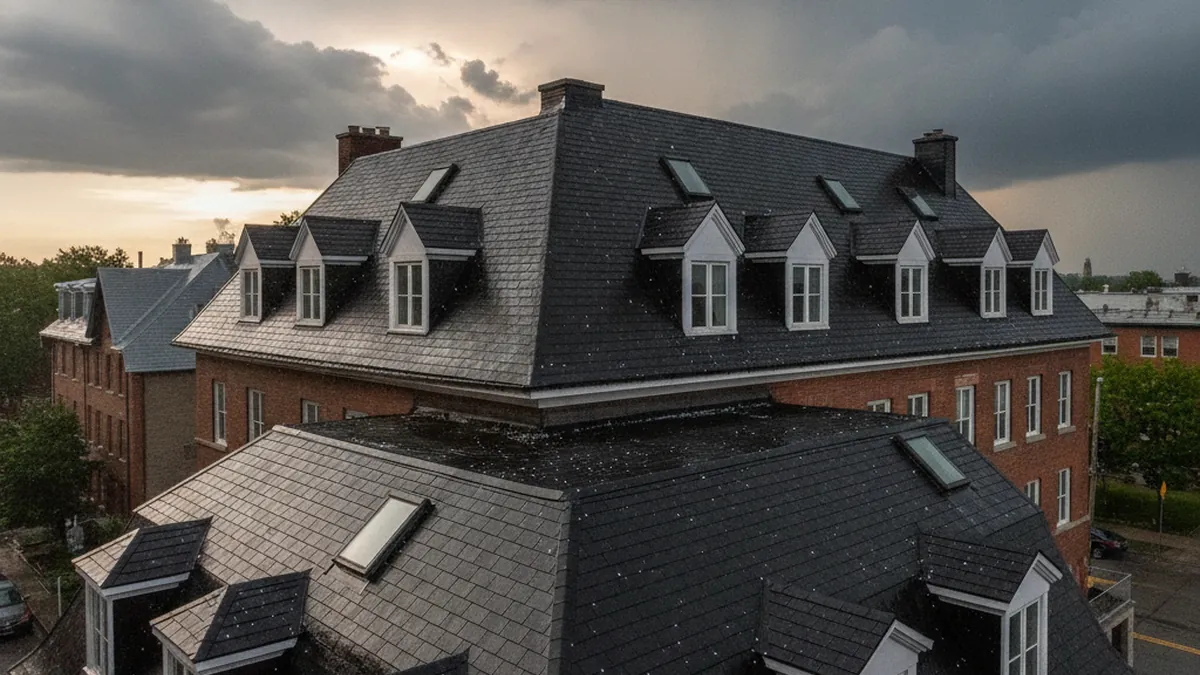
The central question — who caused it, and was it reported in time?
Liability turns on cause. If the tenant let a bathtub overflow or misconnected an appliance, their fault is engaged under Article 1862. If old plumbing failed without warning, that is ageing — your responsibility as owner. Between the two sits the most common case: a small leak the tenant noticed but did not report, letting minor damage become major. That failure to report is a negligence that engages their liability, even if they did not cause the original leak.
| Cause of water damage | Likely liability | Evidence to gather |
|---|---|---|
| Overflowed bathtub or sink | Tenant (fault) | Photos, report, absence of defect |
| Appliance misconnected by the tenant | Tenant (fault) | Plumber's report on the connection |
| Leak seen but not reported | Tenant (negligence) | Proof of delay, emails, avoidable extent |
| Aged pipe bursting without warning | Owner (ageing) | Age of plumbing, expert report |
| Sewer backup, weather event | Per policy / force majeure | Municipal report, loss adjuster |
The domino effect on your premiums
Water damage hitting two or three units of the same plex generates a heavy claim on your policy — especially if the at-fault tenant is uninsured. Water damage has become the leading home-insurance claim category, and insurers are highly sensitive to it: two or three water losses in short order can raise your premiums, increase your deductible, even complicate renewal for the entire building.
The defence is twofold: require renters insurance (whose liability coverage absorbs part of a tenant-caused loss) and act fast on every reported leak. For the full mechanics of rising premiums, see our report on plex insurance on the North Shore in 2026.
Source: La Presse — "Tout savoir sur l'assurance habitation," June 16, 2026.
Deductible, subrogation and liability — how does the money really move after a loss?
Understanding how money flows after a loss helps you decide when to claim on your policy and when to pursue the tenant directly. Let us break down the mechanism, deductible by deductible.
The deductible — your first loss
Every claim on your policy carries a deductible — the share you absorb before the insurer pays. On income properties it often sits between $1,000 and $5,000, sometimes more on water damage. For a small loss, the deductible alone can exceed the repair cost: claiming makes no sense, since you would pay it all yourself and weigh down your claims record. Rule of thumb: below the deductible, settle directly with the tenant (agreement or TAL); above it, an insurance claim becomes worthwhile.
Subrogation — the insurer recovers on your behalf
When your insurer pays for damage caused by a third party — here, the at-fault tenant — it acquires the right to pursue that party to recover its outlay: this is subrogation. In practice, if the tenant holds liability insurance, the owner's insurer deals with the tenant's insurer, and the matter is settled between professionals. You may even recover your deductible in the process. But if the tenant has no insurance, subrogation targets an often-insolvent individual: recovery is slow, costly, and uncertain. Once again, this is the whole point of requiring renters insurance.
A worked example
Take water damage repaired for $8,000 in a unit of your triplex, caused by a tenant's negligence. Two scenarios:
| Step | Insured tenant (liability) | Uninsured tenant |
|---|---|---|
| Repair cost | $8,000 | $8,000 |
| Your deductible | $2,000 (advanced) | $2,000 (advanced) |
| Paid by owner's insurer | $6,000 | $6,000 |
| Subrogation | Against tenant's insurer — deductible often recovered | Against the tenant personally — often unrecoverable |
| Impact on your record | Claim potentially neutralized | Loss on file → premiums rise |
The difference is not trivial: in the first case your claims record stays clean and your deductible comes back; in the second you advance $2,000 you will likely never see again, and your policy now carries the mark of a loss. Compounded over a building's lifetime, the gap runs into thousands of dollars in premiums.
Note: the deductible and repair figures above are illustrative orders of magnitude; your real numbers depend on your policy — confirm with your broker. Source: La Presse, June 16, 2026.
What are the 7 mistakes that lose a TAL claim?
After dozens of files, one pattern stands out: plex owners who lose before the Administrative Housing Tribunal repeat the same mistakes. Here they are, each with its fix.
- No move-in condition report. Without proof of the initial state, you cannot show damage appeared during the tenancy. Fix: a signed, photographed condition report at every new lease.
- Claiming new-for-old. Demanding a new carpet for a ten-year-old one discredits the whole claim. Fix: apply depreciation and claim residual value.
- Confusing normal wear with damage. Billing for faded paint or furniture marks is lost before you start. Fix: claim only damage beyond reasonable use.
- Skipping the formal demand. Appearing at the TAL without a formal demand weakens the file. Fix: a written, costed letter with a deadline and proof of sending.
- Illegally withholding a sum. Confiscating a "deposit" or last month's rent to cover damage is prohibited by Article 1904 and backfires. Fix: go through a written agreement or the TAL.
- A weak or undated photo file. Three blurry photos do not equal a complete, time-stamped record. Fix: dated photos and video, before/after, room by room.
- Letting the file drag on. Waiting years scatters the evidence and fades witness memory. Fix: act quickly, well before the three-year deadline.
The costliest mistake — the DIY security deposit
Many owners think they are protected by demanding a "damage deposit" or a last month up front. It is illegal: Article 1904 of the Civil Code forbids requiring more than the first term of rent. Not only must that sum be returned (with interest), it weakens your position before the TAL. Your only real financial cushion is the combination of a condition report and required renters insurance in the lease.
Source: Éducaloi — "The security deposit: illegal but widespread" and art. 1904 C.c.Q.
Three worked examples — what does tenant damage really cost your plex?
Nothing clarifies the stakes like putting numbers to it. Here are three realistic situations on a North Shore plex. The amounts are illustrative orders of magnitude — your real figures depend on your market, your policy, and the scale of the work — but the logic is universal.
Scenario 1 — the small loss settled amicably
A tenant leaves a caved-in wall and a broken-in interior door. Repair estimated at $900. The deductible (say $2,000) exceeds the cost: no reason to claim on insurance. You send a formal demand for $900, backed by the move-in condition report and photos. The tenant, insured, passes it to their liability coverage, and you are reimbursed without a TAL hearing.
| Item | Insured tenant | Uninsured tenant |
|---|---|---|
| Repair | $900 | $900 |
| Insurance | Not used (below deductible) | Not used |
| Recovery | Via tenant's liability coverage | Formal demand + TAL if refused |
| Likely net cost to you | ≈ $0 | $0 to $900 depending on recovery |
Scenario 2 — the water loss hitting two units
An overflowed bathtub comes through the floor and damages the ceiling below. Total repair: $8,000. You claim on your insurer, who pays $6,000 after your $2,000 deductible. If the at-fault tenant is insured, subrogation recovers the share — deductible included — and your record stays clean. If not, you advance $2,000 you will likely lose, and the loss goes on your policy.
| Item | Insured tenant | Uninsured tenant |
|---|---|---|
| Repair | $8,000 | $8,000 |
| Deductible advanced | $2,000 | $2,000 |
| Recovered by subrogation | Yes (often) | Unlikely |
| Loss on file | Neutralizable | Yes → premium increase |
| Estimated net cost | ≈ $0 to $2,000 | $2,000 + future premiums |
Scenario 3 — the claims record that weighs at resale
Over five years, two water losses and a fire claim pile up, often tied to uninsured tenants. Individually, each seems manageable. But when you sell your plex, the buyer — and their lender — examine the claims history. A heavy file signals elevated tenant risk, complicates financing, and invites a lower offer. The discount can, on its own, exceed the total of every deductible you paid.
The lesson of the three scenarios
- The true cost of damage exceeds the invoice: deductible, premiums, time, resale discount;
- Requiring renters insurance is an owner's best "return on investment";
- A light claims record translates directly into a better sale price.
This is exactly what ImmoMulti weighs when we buy a North Shore income property: the quality of the tenant file and claims history as much as the income. A well-kept building earns a stronger offer. If yours carries a complicated past and you would rather turn the page, get a direct offer within 48 hours — no broker, no commission.
How does a TAL hearing actually unfold, and what should you bring?
Filing an application is only half the battle; the hearing is where a claim is won or lost. Knowing how the Administrative Housing Tribunal conducts a hearing lets you prepare like a professional rather than improvise like a frustrated landlord.

Before the hearing — assemble and organize
Bring your evidence organized and duplicated. Adjudicators weigh clear, chronological files far more favourably than a shoebox of receipts. Prepare a short written summary: the timeline of events, the amount claimed, and how you arrived at it after depreciation. Attach the move-in condition report, dated photos (before and after), quotes and invoices, the formal demand with proof of sending, and any written exchanges with the tenant. Number your exhibits so you can refer to them quickly.
At the hearing — how the adjudicator weighs evidence
Both parties present their version and their documents; the adjudicator may ask questions. The decision turns on the balance of probabilities — whose account, backed by evidence, is more likely true. This is where the reversed burden of Article 1862 helps you: once the damage and its extent are established, the tenant must show it was not their fault. A calm, factual, well-documented presentation almost always outperforms an emotional one. Stick to what the photos, invoices, and dates prove.
After the decision — interest, costs and enforcement
If the tribunal rules in your favour, the tenant may be ordered to pay the awarded amount, plus interest and, potentially, certain costs. The decision carries the force of a judgment: if the tenant does not pay voluntarily, you can move to enforce it, including by seizure. Keep in mind, though, that a judgment against an insolvent former tenant can be difficult to collect — one more reason the renters-insurance route, where a liability insurer pays directly, is so much more reliable than chasing an individual.
Your hearing checklist
- A one-page timeline and a clear breakdown of the amount claimed;
- Move-in condition report + dated before/after photos and video;
- Contractor quotes and paid invoices, with depreciation applied;
- The formal demand and proof it was sent and received;
- All written communications with the tenant, numbered as exhibits.
Source: Administrative Housing Tribunal — proceedings and decisions.
What habits prevent damage and best protect your multi-unit building?
Preventing a loss beats claiming it at the TAL. On the North Shore, the plex owners who keep losses lowest apply a few simple, consistent habits. None of them cost much; together they change your risk exposure — and your insurance record — dramatically.
- A systematic condition report at the move-in and move-out of every tenant, with dated photos kept in the unit's file.
- A renters insurance clause in every new lease, with proof of coverage on file — your best protection against premium hikes.
- Reasonable, scheduled periodic inspections to catch plumbing, humidity, or maintenance problems early.
- Written communication: keep emails and messages, which become valuable evidence in a dispute.
- Fast response to reports: a leak fixed quickly avoids a major water loss across a multi-unit building.
The reporting playbook that keeps small problems small
Most catastrophic water losses in a plex begin as minor, reportable problems. Make it easy — and expected — for tenants to report early. State in the lease that tenants must promptly report any leak, water infiltration, or defect; give them a simple channel (a phone number or email) and acknowledge every report in writing. That paper trail does double duty: it shortens response time, and it documents exactly when a problem was — or was not — reported, which is decisive if negligence later becomes an issue.
| Habit | What it prevents | What it protects at resale |
|---|---|---|
| Condition report at every turnover | Disputes over pre-existing damage | A clean, documented unit history |
| Renters insurance clause + proof | Uninsured losses on your policy | A light claims record |
| Scheduled inspections | Small issues becoming major | A visibly well-maintained building |
| Written reporting channel | Unreported leaks worsening | Evidence of proactive management |
ImmoMulti — direct buyer of North Shore multi-unit buildings
Repeated damage, difficult tenants, or a claims record that has grown too heavy wear down even the best owners. If you are ready to turn the page, ImmoMulti can make you a direct offer on your plex — no broker, no commission, in full confidentiality. Get a proposal within 48 hours.
And if managing an income property becomes too heavy despite every effort, a quick, direct sale remains an option to recover your capital without exposing your plex on the open market. See also how tenants shape a plex's value at sale.

Informational content only. Does not constitute legal advice. TAL procedures and Civil Code of Québec rules may evolve. Consult a notary or housing lawyer for advice tailored to your specific situation and lease terms.


