
Two identical plex properties on the North Shore — same size, same area, same physical condition — can sell with a gap of CA$80,000 based solely on the quality of the lease file. ImmoMulti, a direct buyer of multi-unit properties on the North Shore, observes this at every appraisal: below-market rents, problematic leases and uncooperative tenants mechanically depress the value of an income property — sometimes by 10 to 20% compared to a comparable property with a solid lease file. This is a reality that owners planning to sell their income property in the next 6 to 18 months must understand right now. The impact of tenants on sale price is one of the least well understood value levers — and yet one of the most powerful. This guide analyzes the five lease factors that influence appraisal, illustrates their impact with real numbers, and explains how to prepare your lease file to maximize your sale price.
What Lease Factors Most Affect the Sale Price of Your Plex?
Five factors matter most: tenant payment history, current rents vs. market, cooperation during showings, lease seniority, and historical turnover rate — together they can account for a 10–20% swing in your plex's sale price.

When a professional buyer or appraiser examines an income property on the North Shore, they don't just look at brick and roof. They scrutinize the lease file with as much attention as the structure. Here are the five dimensions that directly affect the perceived and calculated value of your plex.
1. Tenant Payment History
This is the first criterion examined. An impeccable 24 to 36-month payment history is a documentable asset that reduces buyer risk perception. Conversely, even a single recent non-payment file at the Tribunal administratif du logement will be visible during due diligence and will systematically trigger a downward negotiation.
2. Current Rents vs. Market
The ratio between rents in place and current market rents is probably the factor with the most direct impact on calculated value. On the North Shore in 2026, a quality 4½-room apartment generally rents between CA$1,200 and CA$1,500/month depending on the area. A tenant paying CA$875/month since 2015 represents a significant shortfall — and that shortfall will be capitalized into the offer of any informed buyer.
3. Cooperation During Showings
Under article 1930 of the Civil Code of Quebec explained by Éducaloi, the tenant is required to provide access to the unit for sale showings under reasonable conditions. In practice, an uncooperative tenant can make showings unpleasant — poorly presented unit, negative comments, refusal to allow access at convenient times. These behaviours have no direct monetary value, but they extend sale timelines and reduce the number of competing offers.
4. Lease Seniority and Stability
A multi-unit property with tenants stable for several years offers two advantages to the buyer: certainty of immediate income at possession, and reduced short-term vacancy risk. However, this stability has a counterpart: the longer the tenants have been there, the more likely their rents are below the current market.
5. Historical Turnover Rate
A high turnover rate over the past five years — multiple tenant changes in the same unit — is a red flag for buyers. It may indicate issues with unit quality, difficult rental management, or simply that the property attracts unstable profiles. The CORPIQ recommends maintaining a register of leases and tenant changes precisely to document the stability of your property portfolio.
Duplex A vs. Duplex B: A CA$83,000 Gap for Identical Buildings
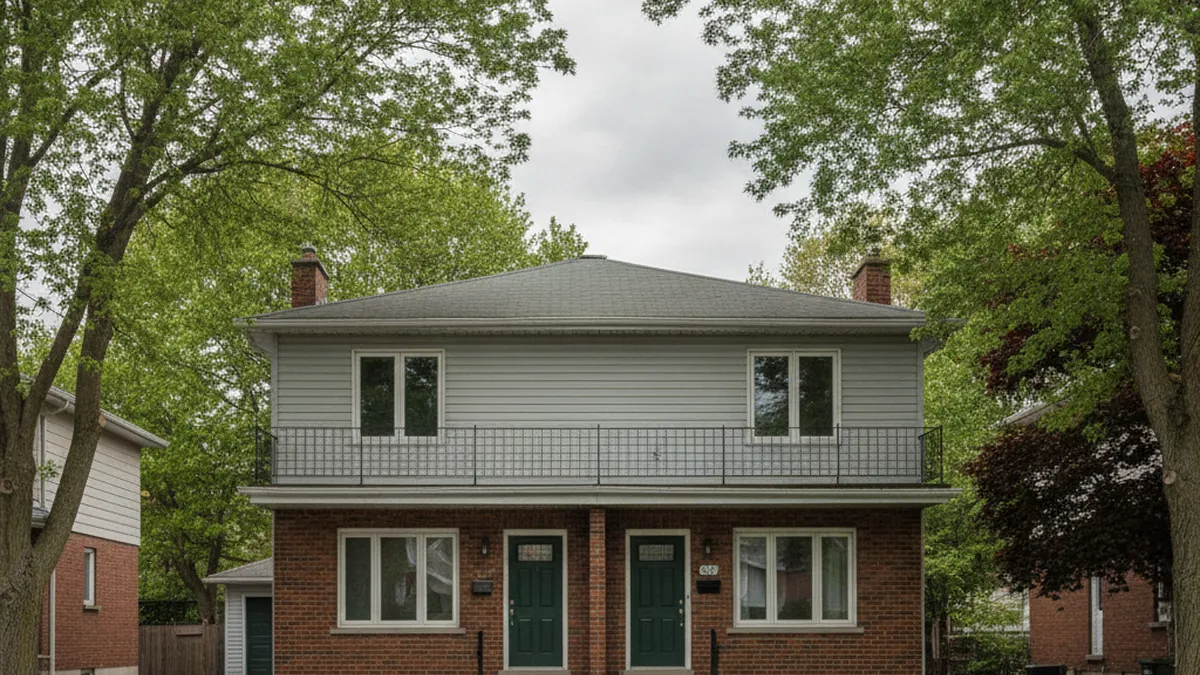
Let's take two comparable duplexes on the North Shore — say in the Blainville or Rosemère area — built in the same decade, same liveable area, same general condition. The only significant difference: the quality of the lease file.
Duplex A — The Solid Lease File
- Unit 1: tenant in place for 3 years, rent at CA$1,350/month (close to market at CA$1,400), no payment delays
- Unit 2: tenant in place for 2 years, rent at CA$1,250/month (market at CA$1,300), one minor delay resolved amicably
- Effective annual gross income: CA$31,200
- Cooperation during showings: excellent, well-maintained unit
- Market cap rate for the area: 5.2%
- Estimated capitalized value: ~CA$530,000
Duplex B — The Problematic Lease File
- Unit 1: tenant in place for 9 years, rent frozen at CA$875/month (market at CA$1,400), payment delay file 18 months ago
- Unit 2: tenant in place for only 6 months (3rd tenant in 5 years), rent at CA$1,250/month, situation to monitor
- Effective annual gross income: CA$25,500 (including 1 month vacancy at turnover)
- Cooperation during showings: passive, unit 1 poorly presentable
- Market cap rate (risk-adjusted): 5.7%
- Estimated capitalized value: ~CA$447,000
Value gap between the two duplexes: CA$83,000 — for physically identical properties in the same area. The entire gap comes from the lease file.
"In my experience as a direct buyer on the North Shore, the lease file is as important as the physical condition of the building — sometimes more so. A roof to replace costs CA$15,000. A tenant at CA$875/month in a CA$1,400 market represents a capitalized liability of CA$85,000. Most owners fixate on the brickwork and ignore their biggest hidden asset or liability: their rent register."
— ImmoMulti Team, Multi-unit Investor, North Shore
Tenant Impact Table on Plex Value
| Factor | Positive profile | Negative profile |
|---|---|---|
| Payment history (24 months) | +3% to +5% (reliability premium) | −5% to −10% (management risk) |
| Rents vs. current market | ±0% to +4% if rents at or slightly above market | −8% to −15% if rents 20%+ below market |
| Cooperation during showings | Smooth showings → more offers → better price | Difficult showings → fewer offers → price negotiated down |
| Stability (lease seniority) | +2% to +4% (short-term guaranteed income) | −2% to −5% (post-sale vacancy risk) |
| Turnover rate (5 years) | 0 to 1 change: premium profile | 3+ changes: red flag, −3% to −7% |
| Active TAL file | None: maximum buyer pool | Active file: difficult institutional financing, −8% to −15% |
| Overall impact on value | +10% to +20% vs. problem property | −10% to −20% vs. property with good file |
How Do Below-Market Rents Silently Reduce the Value of Your Plex?
A rent CA$400/month below market translates into a CA$4,800 annual shortfall, which at a 5.5% cap rate reduces your plex's capitalized value by approximately CA$87,000 — a loss mechanically baked into every informed buyer's offer.

The phenomenon of below-market rents is particularly widespread on the North Shore, where rental market prices have risen steadily since 2018. Owners who renewed leases with modest increases over several years now find rents that can be 30 to 50% below current market.
The mechanism of capitalized discount
The formula is straightforward. Take a rent of CA$900/month for a unit whose market rent is CA$1,300/month. The annual shortfall is CA$4,800. Capitalized at a cap rate of 5.5% (North Shore, intermediate area), the theoretical value reduction is CA$87,272. That is the exact amount a rational buyer will deduct from their offer to compensate for the years they will need to wait before bringing this unit to market — with the increases permitted by the TAL.
TAL-permitted increases don't catch up to market
The TAL's rent increase calculation method is based on changes in building costs (taxes, heating, insurance, maintenance), not on rental market prices. In practice, this method can generate permitted increases below real rental market growth, creating a cumulative gap that is difficult to close. For owners planning a sale, this means time works against them if their rents are already significantly below market.
Exception: reliable tenant at moderate rent
Not all below-market rents are pure liabilities. An exceptional tenant — perfect payments for 10 years, impeccable unit upkeep, complete discretion — represents real value that is difficult to quantify. Some buyers will accept paying a slight premium to take over a quality rental relationship, even with a slightly below-market rent. This is an argument to prepare and document in your sale file.
What Are Tenant Rights During Property Showings for Sale?
Under article 1930 of the Civil Code of Quebec, tenants must allow showings under reasonable conditions (24 h notice, reasonable hours) — they cannot refuse entirely, but an uncooperative tenant can still extend timelines and reduce competing offers in practice.

Listing your plex for sale involves showings — and tenants have specific rights that you must respect. Understanding this framework lets you anticipate situations and prevent showings from becoming an obstacle to the sale.
What the law allows the owner
Article 1930 C.c.Q. grants the owner the right to show the unit for sale purposes, provided reasonable notice is given to the tenant (generally 24 hours) and showings are held at reasonable hours. The tenant cannot refuse all showings — systematic refusal constitutes an interference with a legal right of the owner.
Consult the TAL's guide on unit showings for the exact terms and remedies available if a tenant refuses access without justification.
The practical reality: cooperation vs. legal obligation
Even if the tenant is legally required to cooperate, obtaining enthusiastic cooperation is another matter entirely. A tenant who lives in a clean, tidy unit and welcomes visitors positively can perceptibly increase the chances of receiving a good-price offer. Conversely, a cluttered, poorly lit unit where the occupant makes negative comments during the showing will concretely harm your result.
That is why, for situations involving difficult tenants, avoiding the multiple-showing phase entirely through a direct sale can be the simplest solution — and often the most economical once all costs are considered.
How to Prepare Your Plex Sale 6 to 18 Months Ahead to Maximize Price

If you own a plex on the North Shore and are planning to sell within the next 6 to 18 months, here are the concrete actions that can maximize your sale price by improving your lease file.
High-value actions
- Document payment history: prepare a summary table for the last 24 months for each tenant. A structured page is worth more than a pile of bank statements.
- Apply TAL-permitted increases: if you've missed increase cycles, it may still be possible to partially close the gap before the sale. Every additional dollar of monthly rent is worth approximately CA$218 in resale value (capitalized at 5.5%).
- Sign fixed-term leases with cooperative tenants: a term lease with a good tenant gives the buyer appreciated visibility into future income.
- Fix minor maintenance issues: tenants who live in a well-maintained unit are generally more cooperative during showings.
- Build a complete sale file: copies of leases, tax statements, maintenance invoices for the last five years, and property income declarations. This file reduces due diligence conditions and speeds up the transaction.
If your situation is more complex — active unpaid rent, uncooperative tenant, or active TAL file — see our detailed analysis on unpaid rent: sell your plex or wait to calculate which option is financially rational in your case.
To avoid common costly mistakes when listing your property, see our guide on classic mistakes when selling an income property.
And if your goal is to understand how your property appraisal works in depth, our page on the cap rate calculator explains the income capitalization mechanics used by all professional buyers on the North Shore.
Informational content only. Does not constitute legal, tax or financial advice. Value estimates are provided for illustrative purposes based on market parameters observed on the North Shore as of June 18, 2026. The actual value of your property depends on multiple factors. Consult a certified appraiser for a formal evaluation.
Frequently Asked Questions


