Selling an Income Property Without an Agent in Québec: The Complete Guide
Is it legal? How much do you really save? How do you price your property and maximize your net proceeds? This guide explains the three ways to sell a multi-unit building in Québec, the brokerage commission you avoid, and how to sell directly to a buyer — no sign, no mass showings.
Duplex · Triplex · Quadruplex · Plex · Multi-unit buildings 5 to 80+ units · North Shore of Québec
Is it legal and possible to sell an income property without an agent in Québec?
Yes, it is perfectly legal — and more common than you might think. In Québec, no law requires an owner to use a real estate broker to sell a property they own.
The Real Estate Brokerage Act governs brokers and agencies, but it targets intermediaries who transact on behalf of others. An individual — or a company — selling their own property is acting for themselves: they need no licence and are not subject to that obligation. Selling "without an agent" simply means you are not mandating anyone to represent the sale and you pay no brokerage commission.
One step remains unavoidable: the notary. In Québec, every real estate title transfer must be completed by notarial deed. The notary prepares the deed of sale, verifies title, calculates adjustments (municipal taxes, rents, tenant deposits) and disburses payment. Their fees are modest compared to a 4% to 7% commission. You can therefore sell on your own while still having the legal security of a properly structured transaction.
Selling without an agent does not mean selling without help or selling at a discount. It means choosing who you deal with: a private buyer you find yourself, or a direct buyer specialised in income properties — like ImmoMulti — who formulates an offer on your property directly.
Informational, not personal advice
This guide is provided for general informational purposes. Legal, tax and municipal rules evolve and every property is unique. The figures presented are illustrative examples, not promises. Before selling, consult a notary, accountant or tax specialist to validate your specific situation.
The three ways to sell a multi-unit building in Québec
Before deciding to sell without an agent, it is useful to compare the three main routes available to an income property owner. None is "best" in absolute terms: it all depends on your priority — maximum price, speed, or confidentiality.
1. Sell through a real estate broker
The broker lists your property, distributes it (Centris and other platforms), organises showings and negotiates offers. This is the traditional route. In return, you pay a commission of 4% to 7% of the sale price, plus taxes on that commission. Marketing is public: a sign, an online listing, multiple showings. The full process often stretches over several months. If you are considering this route, our guide choosing a broker for your income property explains how to find a specialist in multi-unit buildings.
2. Sell yourself through public marketing (FSBO)
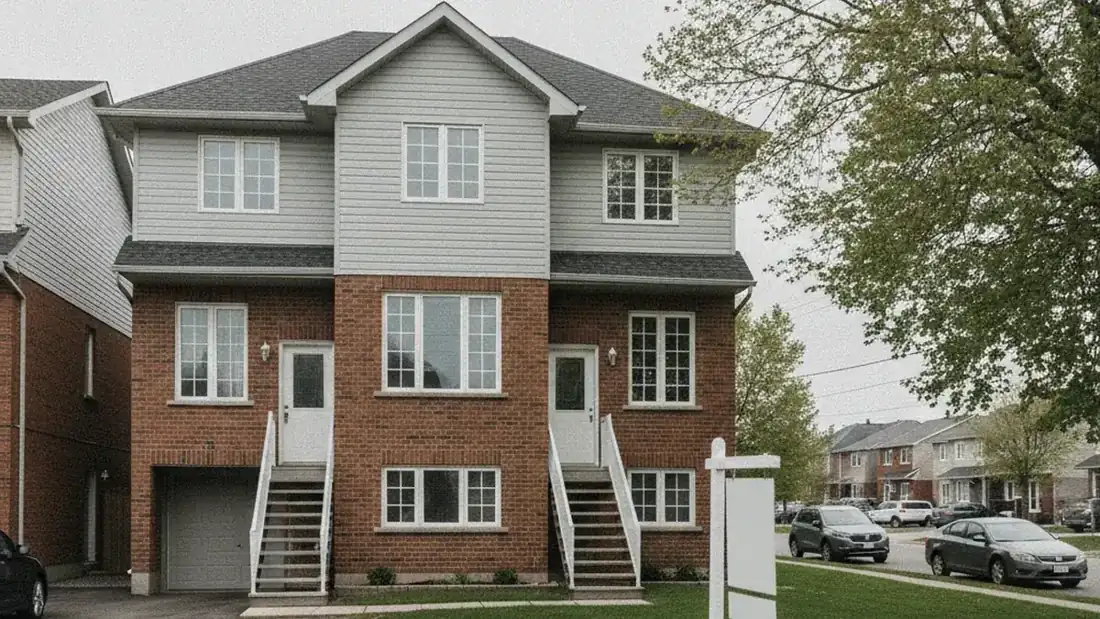
"For Sale By Owner" means selling without an agent but marketing publicly: listing sites, a sign, social media. You save the commission, but you manage calls, showings, negotiations and buyer qualification yourself. Confidentiality is limited and the timeline depends on market interest.
3. Sell directly to a buyer (off-market)
Here, you deal with a direct buyer who purchases for their own account, without a public listing. No advertising, no sign, no mass showings. The buyer evaluates your property based on its income and presents you with an offer. This is the fastest and most confidential route — ideal when you want to avoid disturbing your tenants or broadcasting the sale.
| Criteria | With an agent | FSBO (yourself) | Direct buyer |
|---|---|---|---|
| Commission | 4% to 7% + taxes | 0% | 0% |
| Confidentiality | Low (public) | Low (public) | High (off-market) |
| Typical timeline | 2 to 6 months | Variable | Offer within 48 h |
| Showings | Multiple | Managed by you | No mass showings |
| Effort for you | Low | High | Low |
To go further on this choice, see our detailed comparison broker vs direct buyer.
How much do you save by selling without an agent?
The most obvious saving is the brokerage commission. In Québec, it generally ranges from 4% to 7% of the sale price. On top of that, GST and QST apply to the commission (approximately 14.975% combined) — a detail often overlooked that inflates the real cost.
Take a concrete example. Suppose a property sold for $900,000 at a 5% commission:
- Brokerage commission: $900,000 × 5% = $45,000
- GST + QST on commission (≈ 14.975%): ≈ $6,739
- Total brokerage cost: ≈ $51,739
In this example, selling without an agent keeps nearly $51,700 more in your pocket. The table below shows the scale of the commission at different sale prices and rates. These are estimates — the actual rate is negotiated and taxes may vary.
| Sale price | At 4% | At 5% | At 6% |
|---|---|---|---|
| $500,000 | ≈ $22,995 | ≈ $28,744 | ≈ $34,493 |
| $900,000 | ≈ $41,391 | ≈ $51,739 | ≈ $62,087 |
| $1,500,000 | ≈ $68,985 | ≈ $86,231 | ≈ $103,478 |
| $2,500,000 | ≈ $114,975 | ≈ $143,719 | ≈ $172,463 |
Beyond the commission, selling without an agent also avoids indirect costs: marketing fees, professional photography, and especially the price renegotiations that frequently occur after inspections in a traditional sale. You can quickly estimate your situation with our purchase offer calculator.
Direct buyer vs agent: your real net proceeds

Many sellers compare listed prices. But what really matters is the net amount in your pocket after all deductions. A direct buyer's offer may look lower at first, but without commission or renegotiation, the net is often comparable — sometimes higher.
Take a property whose market value is around $900,000. Here is an illustrative example comparing both scenarios. Amounts are indicative.
| Item | Sale through an agent | Sale to a direct buyer |
|---|---|---|
| Listed price / offer | $910,000 | $895,000 |
| Renegotiation after inspection | − $12,000 | $0 |
| Final sale price | $898,000 | $895,000 |
| 5% commission + taxes | − $51,622 | $0 |
| Marketing costs | − $1,500 | $0 |
| Estimated net proceeds | ≈ $844,878 | ≈ $895,000 |
In this example, the direct buyer's offer — $15,000 lower on paper — leaves the seller with roughly $50,000 more. Of course every transaction is different: the right reflex is always to think in terms of net after fees and delays, not listed price. Our page broker vs direct buyer goes deeper on this comparison.
How to price your income property
An income property is not valued like a single-family home. Its value depends primarily on what it earns — not square footage or curb appeal. Three indicators come up constantly in the industry.
Net operating income (NOI)
NOI is the property's income once operating expenses are paid (taxes, insurance, maintenance, management, common-area utilities), but before mortgage financing. It is the basis of almost every value calculation. The higher and more stable the NOI, the more the property is worth.
Cap rate (capitalization rate)
The cap rate expresses the expected return on the property. The basic formula is: value = NOI ÷ cap rate. For example, a NOI of $60,000 with a market cap rate of 5% suggests a value of roughly $1,200,000. The cap rate varies by area, property type and market conditions. Our cap rate guide details how to calculate and interpret it.
Gross rent multiplier (GRM)
The GRM is a shortcut: it multiplies annual gross revenue (before expenses) by a factor observed on the market. It is less precise than NOI/cap rate, but useful for a quick initial estimate. Caution: a GRM alone can be misleading if the property's expenses are unusually high or low.
| Method | Simplified formula | Use |
|---|---|---|
| NOI ÷ Cap rate | Value = NOI ÷ rate | Most reliable for a rental building |
| GRM | Value = gross revenue × factor | Quick estimate, to be verified |
| Comparables | Recent similar sales | Cross-check and market validation |
A direct buyer like ImmoMulti evaluates your property based on its actual income. You do not need to guess the right price: just provide your leases and a summary of revenue and expenses.
Steps to selling without an agent
Selling directly to a buyer follows a simple path — much shorter than a traditional listed sale:
- Gather your documents. Current leases, a summary of the past 12 months' revenue and expenses, tax bills. These figures determine the value.
- Get an offer. You send the information to the direct buyer, who analyses the numbers and submits a priced offer — within 48 h in the case of ImmoMulti.
- Accept and sign the promise to purchase. If the offer suits you, you sign a promise to purchase that sets the price and conditions.
- Due diligence and notary preparation. The notary verifies title and prepares the deed of sale.
- Deed signing and payment. Closing takes place at the notary's office, generally in 30 to 45 days, or later if you prefer.
No mass showings, no sign, no commission. Your tenants are not disturbed and the transaction remains confidential from start to finish.
Pitfalls to avoid when selling without an agent
Selling on your own gives you more control — but also more responsibility. Here are the most common mistakes and how to avoid them:
- Mispricing the property. Setting a price based on "feel" or square footage rather than actual income leads to leaving money on the table or scaring buyers away. Base your price on NOI, cap rate and comparables.
- Accepting an overly conditional offer. A high offer loaded with conditions can be renegotiated downward after inspection. A firm offer from a serious buyer is often worth more than a higher listed price.
- Underestimating documentation. Disorganised leases or approximate revenue and expense figures slow down the transaction and weaken your price.
- Overlooking tax implications. The capital gain and CCA recapture can be surprising. Validate the impact with a tax specialist before signing.
- Forgetting the notary. Mandatory in Québec — engage one early to avoid delays.
A word on taxes
Selling a rental property mainly triggers tax on the capital gain and recapture of CCA (Capital Cost Allowance) previously deducted. The welcome tax (transfer duty) is paid by the buyer, not the seller. These rules evolve and depend on your situation — this information is general and does not replace advice from an accountant or tax specialist.
Sell without an agent in your city
ImmoMulti buys income properties directly, without commission, throughout the North Shore of Québec. Choose your area for a dedicated page:
Sell based on your situation
Every sale has its context. Whether you're in a hurry, dealing with an estate, going through a separation, or managing difficult tenants, here are tailored guides:
To estimate your property, try the offer calculator or the cap rate calculator. Prefer to speak with someone? Contact ImmoMulti.
Selling without an agent: your questions answered
Yes. In Québec, no law requires an owner to use a real estate broker to sell their own property. The Real Estate Brokerage Act governs brokers, but an individual selling their own property needs no licence. You can sell directly to a buyer, provided the transaction is signed before a notary, who remains mandatory to officially register any property transfer.
Brokerage commission generally ranges from 4% to 7% of the sale price, plus GST and QST on that commission (approximately 14.975% combined). On a property sold for $900,000 at 5%, that's roughly $45,000 in commission, or about $51,700 with taxes. Selling without an agent keeps that amount in your pocket.
A direct buyer is a person or company that purchases the property for its own account, without an intermediary and without flipping it quickly. ImmoMulti is a direct buyer: we acquire and hold multi-unit properties on the North Shore. You deal directly with the final buyer, which eliminates commission and multiple showings.
There are three main routes: listing with a real estate broker (4% to 7% commission), selling yourself through public marketing (FSBO — no agent but with public listing) or selling directly to a buyer off-market, without a listing or sign. Each option has advantages depending on your priority: maximum price, speed, or confidentiality.
Not necessarily. The nominal offer may look lower, but the net amount you actually receive is often comparable or higher, because there is no 4% to 7% commission, no renegotiation after inspection, and no marketing costs. What matters is your net proceeds after all fees — not the listed price.
An income property is valued primarily on its revenue, not square footage. The three common approaches are net operating income (NOI) divided by the cap rate, and the gross rent multiplier (GRM). For example, a NOI of $60,000 with a cap rate of 5% suggests a value of roughly $1,200,000. These methods are indicative — each property must be analysed individually.
Yes. In Québec, a notary is mandatory to officially register any real estate transfer, whether or not you use an agent. Their fees are modest compared to a 4% to 7% brokerage commission. The notary prepares the deed of sale, verifies title and disburses payment.
Yes. The sale of an income property does not cancel existing leases: the buyer takes over the tenants and their leases. You do not need to take back possession, give notice, or disturb your tenants. For a buyer holding the property long-term, a fully rented building is generally an asset.
Selling a rental property mainly triggers tax on the capital gain and the recapture of CCA (Capital Cost Allowance) previously deducted. The welcome tax (transfer duty) is paid by the buyer, not the seller. Tax rules change and every situation is different — this information is general and does not replace advice from an accountant or tax specialist.
A direct sale to a buyer like ImmoMulti lets you receive a priced offer within 48 h. If it suits you, closing with the notary typically happens in 30 to 45 days. That is faster than a traditional listed sale, which can stretch from 2 to 6 months between listing, showings and buyer financing.
The main pitfalls are: mispricing the property, accepting a conditional offer that gets renegotiated after inspection, underestimating the documents required (leases, revenue and expense records), and overlooking tax implications. Working with a serious buyer and a competent notary greatly reduces these risks.
Not with a direct buyer. ImmoMulti buys as-is: no renovation, no staging, no mass showings. You simply need to gather leases and a summary of the past 12 months' revenue and expenses to receive an offer based on the property's actual income.
ImmoMulti is a direct buyer of plex and multi-unit buildings in Laval, Terrebonne, Repentigny, Saint-Jérôme and throughout the North Shore of Québec. You sell directly to the buyer — no intermediary, no agent, no commission. Describe your property and receive an offer within 48 h.
Receive an offer on your property — no agent, no commission
Tell us about your income property and receive a priced purchase proposal within 48 h. Free, confidential and with no obligation, throughout the North Shore of Québec.
Send us a message — we'll get back to you quickly within 48 h, with no obligation.
Confidential · No obligation · No fees
Ready to sell without an agent and keep the commission?
Receive a priced purchase proposal within 48 h. No brokerage fees, no obligation, complete confidentiality — throughout the North Shore of Québec.
Get my free offer →