
ImmoMulti — direct buyer of multiplex properties on the North Shore — says it plainly: the triennial property assessment roll 2026-2028 is dramatically inflating the assessed value of your plex. And a higher roll value most often means a higher tax bill. The trap is that this gets presented to you as good news — "your property is worth more!" — when for a multiplex owner, it is first and foremost a recurring bill that gets heavier.
The 2026-2028 triennial assessment roll on the North Shore shows dramatic value increases (Blainville +50%, Saint-Jérôme +27.7%). A higher assessment does not automatically mean proportionally higher taxes — cities lower their rate — but if your plex rose faster than the local average, your tax bill rises more than average. Contest before April 30, 2026, if your assessed value exceeds your property's actual income-based market value. A successful contest reduces taxes for the entire 2026-2028 cycle.
Opinion column by the ImmoMulti Team. Facts are sourced; opinions are our own. This article does not constitute tax or legal advice.
🔥 Our take
An exploding property assessment is not a gift to the plex owner: it is an expense disguised as a compliment. As long as you do not sell, that "value" on the roll puts not a single dollar in your pocket — but it costs you every year, across the entire triennial cycle. Our position: look at your new assessment notice as a bill, not a trophy, and contest it aggressively when the numbers do not hold up. This is one of the few expense items of a multiplex over which you still have real control — and too many North Shore owners let the window close without doing anything.
The mechanism cities don't shout from the rooftops
Let's start with the fact that everyone confuses: a rise in assessed value does not mechanically translate into an equivalent tax increase. Your bill depends on two things: the value on the roll and the tax rate the municipality sets each year. When the roll jumps, cities usually lower the rate to avoid collecting a massive windfall in one go. This is explained clearly by the Quebec government.
But here is the trap that few plex owners grasp: what matters is your position relative to the average for your property category. If your property's value rises faster than the average, your bill goes up more than average. Saint-Jérôme illustrates this perfectly: the 2026 roll reflects an average value increase of 27.71%, the city lowered its rate, and the average tax bill increase was brought down to 2.95% despite 3.4% inflation.
The word "average" is the trap. The "average" is reassuring in a press release. It means nothing for your triplex if that property was reassessed well above the average.
Sources: Infos Laurentides — Saint-Jérôme 2026 budget and Ville de Saint-Jérôme.
On the North Shore, the jumps are brutal
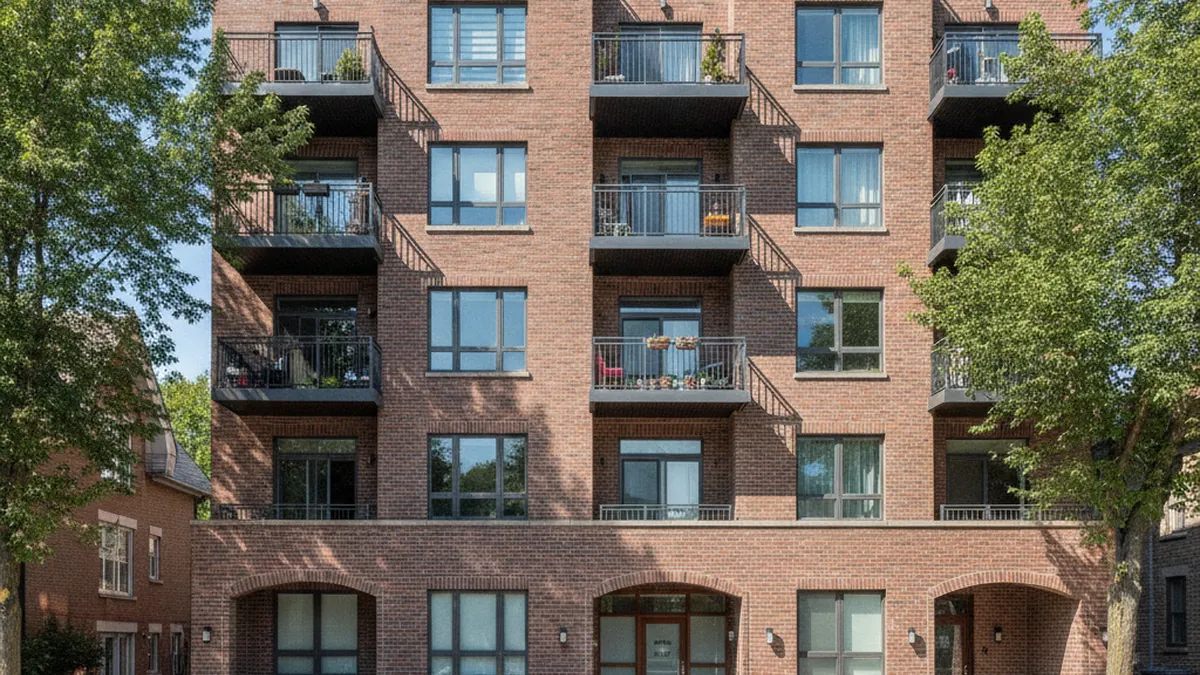
The problem is that on the North Shore, recent rolls are not showing moderate increases: they are showing jumps. In Blainville, the latest roll filed reflects an increase of approximately 50% in value, according to the public notice from the City of Blainville. In Terrebonne, the new roll confirmed a strong increase in built heritage value, spread over three years according to the City of Terrebonne. In Mascouche, even in a 2026 budget presented as prudent, the average tax bill rises by 2.63%, or approximately $128 more for the average property.
For a multiplex owner, these "average" figures hide a harsher reality: income property values often jumped more than single-family homes because the plex market was overheated at the roll's reference date. You are therefore inheriting an assessment established at the peak of a cycle — while your rents remain regulated by the Rental Housing Tribunal (TAL). That same inflated assessed value also raises the entry cost for new buyers, since the welcome tax on a North Shore plex — a one-time purchase cost, not to be confused with your recurring property taxes — is calculated from the municipal assessment.
Sources: City of Blainville, City of Terrebonne, La Revue — Mascouche 2026 budget.
Contesting is not a whim: it's property management
Here is the heart of our position. Too many plex owners treat the assessment notice as an inevitable fact of life. That is wrong. The roll was established at an earlier reference date — often July 1, 2024, right at the market peak. If you believe the value attributed to your property exceeds its true value, you have a remedy and a precise timeline to exercise it.
For an income property, the case is even stronger than for a house. The Quebec government confirms that the assessor uses notably the income method for rental properties. So if your actual in-place rents are lower than those used by the assessor, or if your net operating income is lower than assumed, you have a numbers-based argument — not just a gut feeling.
Steps to contest (roll filed fall 2025)
- General deadline: April 30, 2026, throughout Quebec
- File a review application with the municipal assessment body on the prescribed form
- Fees by value: approximately $75 (under $500,000) up to approximately $1,000 (over $5M)
- If rejected: appeal to the Quebec Administrative Tribunal within 31 days
- Prepare your evidence: current leases, income and expense statements, recent comparable sales
The effect is recurring: a corrected assessment does not lower your taxes for just one year, it reduces them across the entire 2026-2028 cycle and serves as the base for future rolls. For modest filing fees, the return on a successful contest is one of the best a multiplex owner can achieve without lifting a finger on the property itself.
Sources: Quebec government — requesting a roll review and FHCQ — Property Assessment: new 2026-2028 rolls.
🎭 Devil's advocate
Let's be honest: our thesis has limits, and we need to face them directly.
First, a rising assessment is not a municipal conspiracy. The roll is supposed to reflect true market value, and if your plex is genuinely worth much more than in 2021, the assessment is simply accurate. Contesting an accurate assessment goes nowhere — you lose your filing fees and your time. As the Quebec government reminds us, the assessor relies on recognized methods and market analysis; it is not a random number.
Next, the cities' position has merit. The 2026 municipal budgets are under pressure: aging infrastructure, inflation-driven contracts, services to maintain. In Mascouche, the city actually presents its budget as an effort to control taxes despite these pressures, with a contained average increase. Property taxes fund water, waste collection, snow removal — services that you and your tenants benefit from directly. Demonizing property taxes means forgetting that they pay for the city where your property sits. That said, added to everything else, they reinforce our broader thesis about how housing policy is strangling the small plex owner.
Finally, from a tenant or citizen perspective, the argument "the landlord pays higher taxes" generates little sympathy when the same landlord's property value has also risen sharply. From a pure fiscal-equity standpoint, taxing more highly assets that are worth more is not unreasonable.
Source: City of Mascouche — 2026 budget.
The verdict
After weighing both sides, here is where we land. Yes, the roll can be accurate; yes, cities have budgets to balance. But that changes nothing about the management rule: verify your assessment before paying it for three years. If it honestly reflects the market value and income of your plex, absorb it and move on. If it was inflated by a reference date at the market peak and by assumed rents above your actual rents, contest before April 30 — the return is unbeatable.
And keep one thing in mind: a large assessment does not help at resale. An income-property buyer looks at net income, GRM and cap rate, not the roll figure. Heavier taxes compress your net income — and can therefore reduce the economic value of your multiplex. If, after calculating, the combined weight of taxes, insurance and rent regulation makes your plex structurally unprofitable, the real question is no longer "how do I contest" but "how much longer am I going to subsidize this property out of my own pocket." And if selling becomes the chosen option, first find out about the impact of the municipal right of first refusal on the sale of a plex, which can complicate a transfer on the North Shore.
ImmoMulti: direct buyer of multiplex properties on the North Shore
If the tax bill has tipped the profitability of your plex, we can submit a direct offer, with no commission and in complete confidence — no public listing, no broker, no obligation. Receive a proposal within 48 h.
To concretely measure the effect of a tax increase on the value of your property, our guide on calculating multiplex returns details the mechanics of GRM and cap rate. And if you are torn between contesting and moving on, our analysis contest or sell your North Shore plex weighs both options with numbers in hand.
