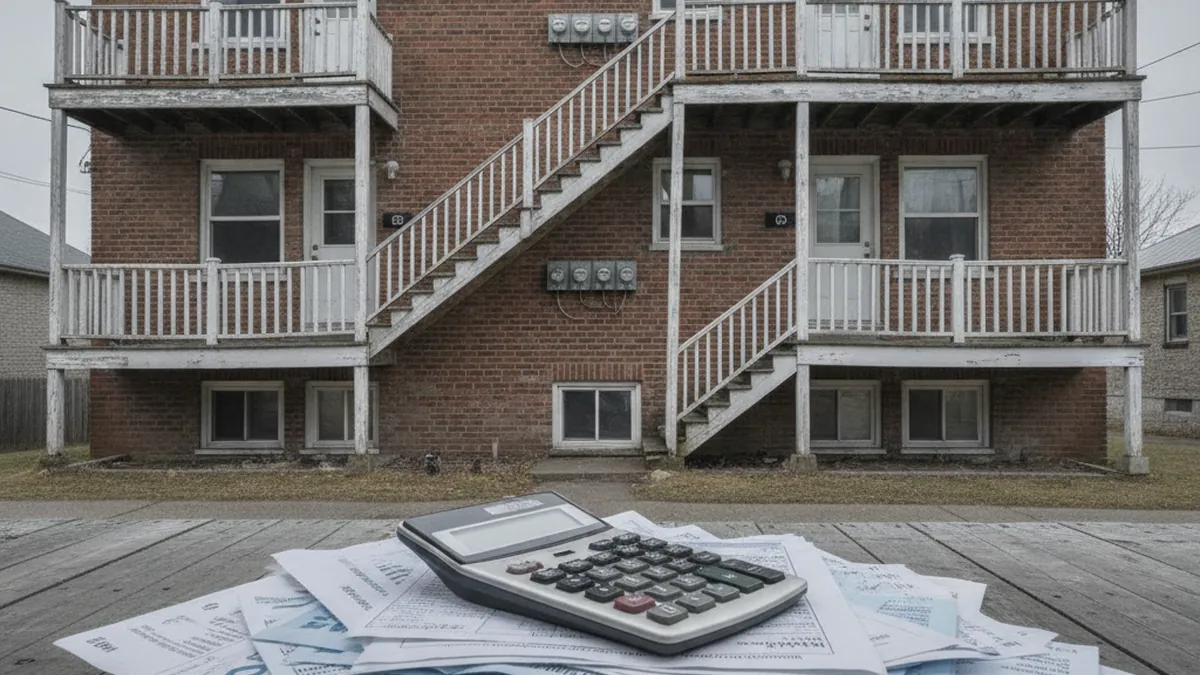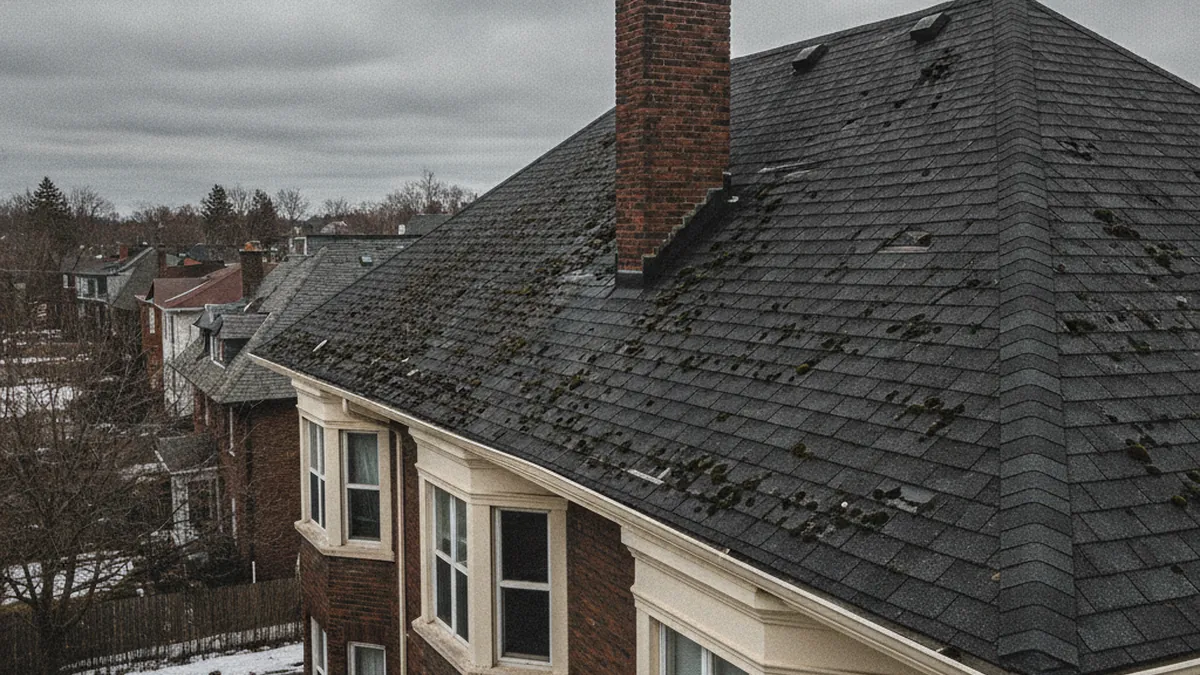
ImmoMulti — direct buyer of income properties on the North Shore — sees a lot of plexes whose roof reaches the end of its life at the worst possible moment: right before the sale. The recurring question: should you replace the roof before selling your plex, or sell as-is and let the buyer deal with it? The answer hinges on three things: the covering's remaining lifespan, the roof's effect on financing and inspection, and the real return of the work on the price. Asphalt shingles around 15 to 25 years, elastomeric membrane on the order of 20 to 30 years: here is how to decide without leaving money on the table.
How long does a plex roof last in Québec?
Asphalt shingles last 15 to 25 years in theory, but often 15 to 20 years in practice in Québec because of freeze-thaw, UV and snow. A two-ply elastomeric membrane on a flat roof generally lasts 20 to 30 years; TPO membrane on the order of 25 to 30 years. These are orders of magnitude — maintenance and installation quality matter as much as age.
Before deciding whether to replace the roof on your plex, you need to know where the covering sits in its life cycle. The roof type is decisive, and a multiplex often combines sections (a sloped roof on one part, a flat roof on the other).
- Asphalt shingles — the most common on sloped roofs. Theoretical lifespan of 15 to 25 years, but Québec roofers observe that in practice, the freeze-thaw climate, UV rays and snow often bring it down to around 15 to 20 years.
- Two-ply elastomeric membrane — the standard on flat roofs of plexes and multiplexes. Lifespan generally 20 to 30 years, sometimes more with good maintenance.
- TPO membrane — a single-ply heat-welded membrane increasingly used on commercial and multi-unit roofs, with a lifespan on the order of 25 to 30 years.
These figures come from Québec roofers and estimators; they are orders of magnitude. Attic ventilation, installation quality and exposure all move the real lifespan. For a reliable number on your building, have the roof assessed by a roofer who is a member of the Association des Maîtres Couvreurs du Québec (AMCQ).
Sources: Duro Toit — Real lifespan of shingles in Québec; Association des Maîtres Couvreurs du Québec (AMCQ).
How to recognize a plex roof at the end of its life
On a shingle roof: curling, cracked or missing shingles, granules building up in the gutters, moss and lifting flashing. On a flat membrane roof: blisters, wrinkles, open seams, ponding water and water stains on the top-floor ceiling. The AMCQ recommends an inspection every 3 to 5 years and consulting a roofer as soon as the roof approaches 20 years old.
You don't need to be a roofer to spot the first warning signs on your plex. A visual check from the ground, binoculars in hand, often reveals the essentials.
On an asphalt-shingle roof
- Shingles that curl, crack, lift, or are missing altogether;
- Granules accumulating in the gutters and downspouts — a sign the shingles are wearing and losing their protective layer;
- Moss or fungus, an indicator of stagnant moisture;
- Flashing lifting or cracking around chimneys and vents.
On a flat elastomeric or TPO roof
- Blisters, wrinkles or bubbling in the membrane;
- Cracks and open seams, especially at upstands and drains;
- Persistent ponding water after rain;
- Water or infiltration stains on the top-floor units' ceilings — the most expensive signal, because it already reaches the interior.
The reflex to adopt before selling
- Have the roof inspected by an AMCQ-member roofer every 3 to 5 years
- Consult a certified roofer as soon as the covering approaches 20 years
- Keep invoices, installation dates and inspection reports for the sale
- Address any active leak before it damages the interior
Sources: Protectoit — Recognizing the signs of roof wear; AMCQ.
How does a worn roof hurt financing and inspection?
Lenders and appraisers look at the roof's remaining useful life, not just its age: a roof at the end of its life or with infiltration can lower the appraisal or trigger a repair requirement. Many insurers surcharge or decline to insure a building whose roof is over 15 to 20 years without proof of good condition — and without insurance, no loan. A questionable roof can therefore block or delay the sale.
This is the point many multiplex sellers underestimate: a worn roof doesn't just "look bad." It directly affects the buyer's ability to finance and insure the building.
On the lender and appraiser side
Lenders and appraisers focus on the remaining useful life of the roof rather than its age alone. A roof at the end of its life, with curling shingles or active leaks, can lead the appraiser to revise the value downward to reflect upcoming work, or to condition the loan on repairs. As a general rule, many lenders want a roof to keep at least two years of useful life and be free of active leaks.
On the insurance side
The often-forgotten link is insurance. Many insurers surcharge the premium or outright decline to insure a building whose roof is over 15 to 20 years old without an inspection demonstrating good condition. But without an active insurance policy, the lender will not fund the loan: no insurance often means no loan. A questionable roof can thus derail a transaction that seemed done.
The domino effect of an end-of-life roof
Worn roof → insurer surcharges or declines → lender demands work or revises value → buyer renegotiates or walks away. On a plex, this is not a cosmetic detail: it is a factor that can decide whether the sale closes at all.
General sources: Canada Mortgage and Housing Corporation (CMHC) on insured mortgage financing; lender appraisal and underwriting practices. Confirm exact requirements with your lender and insurer.
What is the effect of a worn roof on a plex's sale price?
A new roof does not increase rental income, so it does not mechanically raise a multiplex's income-based value (GRM, cap rate). Its effect is defensive: it avoids a discount and a negotiating point. Conversely, an end-of-life roof becomes a downward lever for the buyer, who deducts the cost of the work — often tens of thousands of dollars — from the offered price.
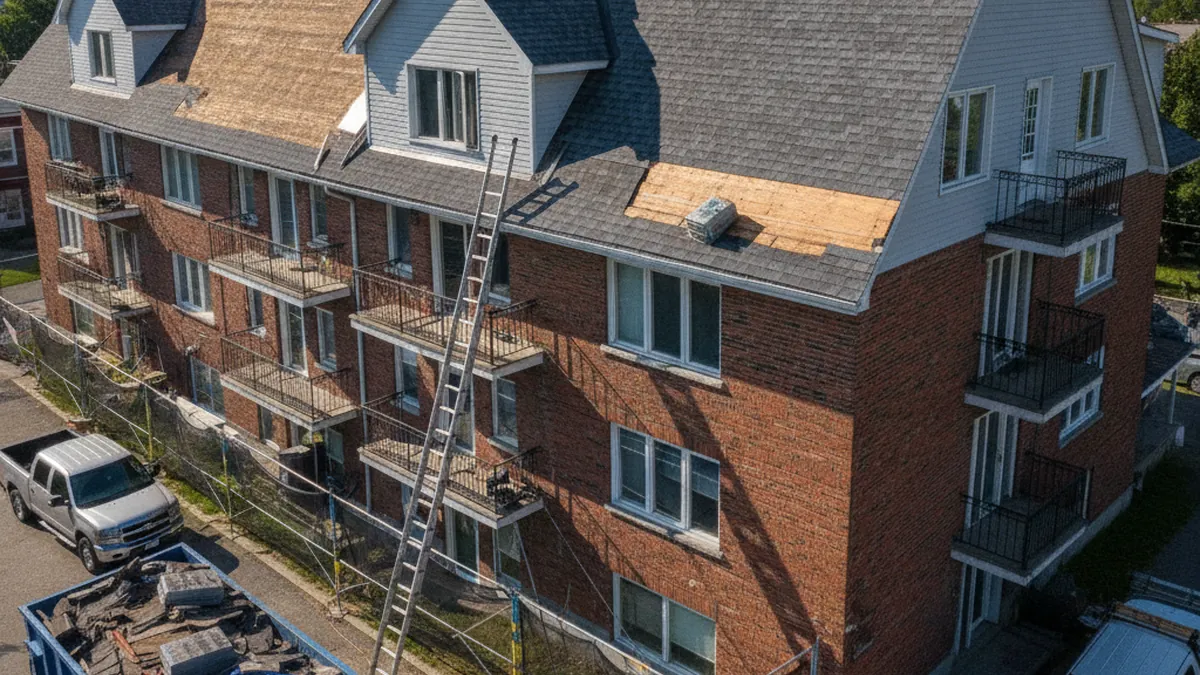
The value of a plex or multiplex is calculated mainly from rental income, through metrics like the GRM (gross rent multiplier) and cap rate. A new roof does not change that income: it therefore adds no direct value in the sense of the income approach.
Its role lies elsewhere. A roof in good condition protects value: it prevents the buyer from deducting the cost of an upcoming replacement and widens the pool of buyers who can finance and insure the building. Conversely, a visibly end-of-life roof becomes a downward negotiating argument. A savvy buyer — and their inspector — will price the work and want it subtracted from the price.
| Roof type | 2026 replacement cost (order of magnitude) | Context |
|---|---|---|
| Asphalt shingles (sloped roof) | ≈ $6 to $12 / sq ft installed | Most common on plexes with a sloped roof |
| Elastomeric membrane (flat multi-unit roof) | ≈ $11 to $21 / sq ft | Standard on flat multiplex roofs |
On a plex, these ranges easily translate into a bill of tens of thousands of dollars. That is exactly the figure the buyer will want to subtract if the roof needs redoing — which is why it pays to anticipate the question before the building even hits the market.
Cost sources (orders of magnitude, 2026): Soumission Rénovation — 2026 roof pricing; Soumissions Québec — 2026 roofing work pricing. Always get quotes for your building.
Should you replace the roof or sell the plex as-is?
Replacing the roof is mainly justified when it is at the end of its life and risks blocking financing, insurance, or scaring off buyers. But the seller rarely recovers 100% of the cost: the replacement serves to unlock the sale, not to create a profit. Selling as-is to a buyer who purchases in current condition avoids the down payment, the job site and the delays, at the cost of a price adjustment reflecting the roof to be redone.
There is no single answer: the trade-off depends on the roof's condition, your liquidity and your selling horizon. Here are the two logics.
Replace the roof before selling
- Pros: widens the pool of financeable and insurable buyers, removes a downward negotiating lever, often speeds up the transaction and reassures at inspection.
- Cons: requires an immediate down payment, a job site and delays; the seller rarely recovers the full cost in the price — major work like a roof is generally better valued as "value defense" than as "profit."
Sell as-is, in current condition
- Pros: no down payment, no job site to manage, a fast sale; the as-is buyer — such as a specialized multiplex buyer — takes on the roof.
- Cons: the price reflects the roof to be redone; you have to accept an adjustment rather than hope for full price "as if" the roof were new.
"An end-of-life roof can't be half-fixed for a sale: either you replace it fully to reassure, or you carry it in the price. Patching in between fools neither the inspector nor the buyer."
— Principle commonly echoed by Québec building inspectors and roofersThe right choice also depends on disclosure. In Québec, the seller has a duty of good faith and must disclose known defects: concealing a leak or an end-of-life roof exposes the seller to latent-defect claims. For your specific situation, consult a notary before drafting the seller's declaration.
What this changes for your plex on the North Shore
On the North Shore — Terrebonne, Mascouche, Blainville, Boisbriand, Saint-Jérôme, Saint-Eustache — a large share of the plex stock was built before 1990: many roofs reach end of cycle at the same time. In a market where buyers are sensitive to upcoming major work, a recent roof is a selling point, while a worn roof becomes a predictable negotiating point.
The North Shore of Montréal has a stock of plexes and multiplexes often built in the 1970s to 1990s. The result: many shingles and membranes now reach the end of their life, precisely when renovation costs are high. For an owner considering a sale in Terrebonne, Mascouche, Blainville or Saint-Jérôme, the roof is no longer a detail — it is one of the first items a buyer will examine.
If your plex on the North Shore has a roof near the end of its cycle, two paths open up: invest in a replacement to sell at the best possible price on the traditional market, or sell directly as-is to a specialized buyer who takes on the roof. Our analysis of deferred maintenance and its impact on the sale price details how buyers price this kind of item.
ImmoMulti: direct buyer of multiplexes on the North Shore
End-of-life roof, upcoming work? We buy plexes and multiplexes as-is, no broker, no commission and no job site on your side. Get a confidential offer within 48 hours.
To understand how a roof-related adjustment influences the overall value of your building, our guide to multiplex yield calculation explains the mechanics of GRM and cap rate — two useful reference points when pricing a plex that has work to plan.
Why two roofs the same age don't age alike: ventilation, insulation and maintenance
Two neighbouring plexes, two roofs installed the same year, can be in radically different condition after fifteen years. The most underestimated variable isn't the shingle brand — it's attic ventilation and routine maintenance. Poor ventilation traps moisture, causes condensation under the sheathing and can cut a roof's lifespan by 30 to 50%. For a seller, that means a "20-year-old" roof isn't necessarily a roof to replace — and a poorly ventilated "12-year-old" roof may already be in trouble.
When a buyer or their inspector assesses your plex, they don't just read the installation year off an invoice. They look at how the roof has aged, and that aging depends on three factors the owner largely controls: ventilation, insulation and maintenance. Understanding them lets you defend the real condition of your roof rather than absorb a discount based on age alone.
Attic ventilation: the invisible factor that decides everything
On a sloped roof, air must flow freely between the ceiling insulation and the wood sheathing. This flow evacuates heat in summer and, above all, moisture in winter. When ventilation is deficient, water vapour produced by the units (cooking, showers, drying) rises, meets the cold face of the sheathing and condenses there. The result: warping wood, mould, soaked insulation that loses its effectiveness, and shingles lifting from underneath. In Québec, the code requires a minimum ratio of roughly 1 square foot of net ventilation per 150 square feet of attic ceiling area; many older plexes fall short of this, which explains prematurely worn roofs.
Sources: RénoAssistance — Roof ventilation; Ventilation Maximum — Understanding attic ventilation.
Routine maintenance: what extends (or shortens) useful life
A maintained roof lasts longer than a neglected one, and the gap is large: according to Québec roofers, a lack of maintenance can shorten a roof's useful life by 30 to 50%. The moves that make the difference are modest but regular:
- Visual inspection twice a year — in spring after winter and in fall before the first snow, to spot lifted, cracked or missing shingles;
- Cleaning gutters and drains — a clogged flat-roof drain creates ponding water that attacks the membrane and seeks out any crack;
- Removing moss and debris — moss holds moisture against the shingles and accelerates their decay;
- Immediate repair of small leaks — a one-off leak fixed for $300 beats a rotted sheathing costing thousands to replace.
| Factor | Effect on lifespan | What the buyer observes |
|---|---|---|
| Adequate attic ventilation | Protects sheathing, limits condensation | No stains, dry insulation, sound wood |
| Deficient ventilation | Can cut 30 to 50% of useful life | Mould, lifted shingles, ceiling stains |
| Documented regular maintenance | Extends the covering, prevents leaks | Invoices, clean gutters, clear drains |
| Neglected roof | Accelerated aging, recurring leaks | Debris, moss, ponding water, tired flashing |
The lesson for a multiplex seller is clear: a thick maintenance file — invoices, inspection dates, proof of code-compliant ventilation — is a tangible argument to defend the price. It turns the conversation from "your roof is 18 years old, so I'll deduct $25,000" into "your roof is 18 but it's well ventilated, maintained and leak-free, so it has useful life left."
The move that pays off before selling
- Have a roofer check the attic ventilation: a ventilation fix is cheap and pays back in credibility
- Gather every maintenance and repair invoice from recent years
- Photograph the roof and attic in good condition to support your declaration
- Treat moss and clear drains before showings

The pre-purchase inspection: how the inspector judges your roof (and what it costs)
During a pre-purchase inspection of an income property in Québec, the roof is one of the very first items examined — often the one that triggers renegotiations. A plex pre-purchase inspection generally costs between $750 and $1,250 for a duplex, and frequently tops $2,500 for a triplex or quadruplex. When a roof problem is found, the repair often falls in a $12,000 to $25,000 range, an order of magnitude the buyer will try to subtract from the price. Anticipating the inspector's eye defuses the negotiation before it starts.
Many plex sellers discover the real condition of their roof on the day of the buyer's inspection — at the worst moment, when the report becomes a negotiating lever. A savvy seller does the opposite: they know what the inspector will look at and prepare their file accordingly.
What the inspector examines on the roof
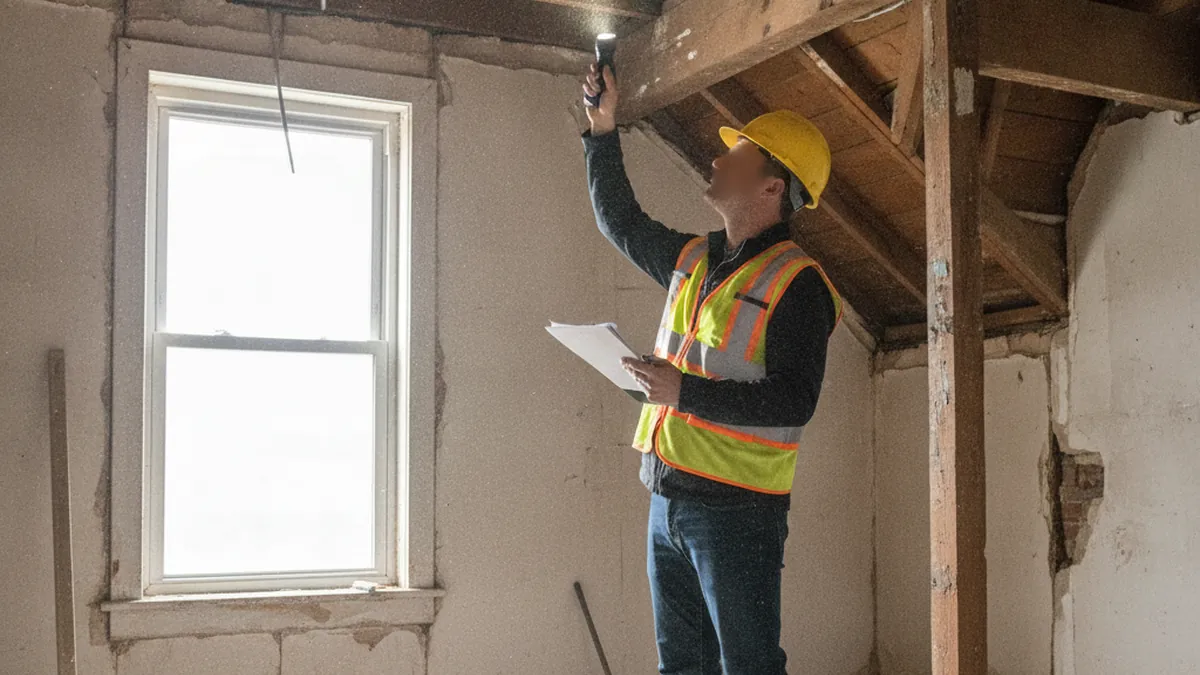
The building inspector assesses accessible, visible components. On the roof, they look from the ground (or the roof if access is safe) at the covering, flashing, gutters and vents, and they hunt for signs of infiltration inside, especially on top-floor ceilings. They demolish nothing: the report describes what is observable and estimates the probable remaining life. This remaining-life estimate carries the most weight in negotiation, because it translates directly into dollars of upcoming work.
What a plex pre-purchase inspection costs in 2026
| Building type | Pre-purchase inspection cost (order of magnitude, 2026) |
|---|---|
| Duplex | ≈ $750 to $1,250 (often $1,000 to $1,500) |
| Triplex / quadruplex and up | often tops $2,500 |
| Roof repair discovered | average spend often $12,000 to $25,000 |
Sources: Soumissions Courtiers — 2026 pre-purchase inspection pricing; XpertSource — 2026 building-inspector pricing.
The pre-listing inspection strategy
For a seller, commissioning your own inspection before listing the plex changes the dynamic. You discover surprises privately, you can fix or document them, and you come to the table with a report you control. It doesn't replace the buyer's inspection, but it reduces the shock effect: instead of enduring an unfavourable report, you lead with an honest picture backed by your maintenance file. Our guide to the pre-listing inspection of a North Shore plex details this approach.
The classic mistake: hiding rather than documenting
Repainting a stained ceiling to hide a leak doesn't fool an experienced inspector — and, if the defect is known and concealed, it exposes the seller to a latent-defect claim. Documented transparency always protects better than camouflage.
Warranties, invoices and transferability: the argument that reassures the buyer
A recent roof only has sale value if it's documented. In Québec, a serious roofer generally offers a labour warranty of 5 to 10 years (sometimes more with certified firms), on top of the manufacturer's warranty on materials, often 25 to 50 years depending on shingle quality. Crucial point for a seller: these warranties are only useful to the buyer if they're transferable. Get in writing what's covered, the duration and the claim procedure, and confirm transferability on resale.
If you replaced your plex roof — recently or a few years ago — the warranty becomes a concrete sale asset, provided you can present it and transfer it. Conversely, a replacement with no paperwork loses much of its value to a cautious buyer.
The two warranties to distinguish
- Manufacturer's warranty (materials) — covers the shingle or membrane against manufacturing defects. It typically runs from 20 years to "limited lifetime" depending on the line; mid- and high-end shingles often show 25, 30 or 50 years.
- Labour warranty (installation) — covers the install, where most real problems occur. A serious roofer offers at least 5 to 10 years; some certified firms or an AMCQ warranty offer residential coverage on the order of 10 years.
Sources: La Boîte C — Shingles and warranty; Roof warranties (shingles and flat roof); AMCQ.
The "lifetime warranty" transferability trap
Watch a detail many owners miss: some "limited lifetime" warranties are only valid as long as the original owner stays in the building. This is the case for several high-end shingle lines. In other words, the "lifetime warranty" you were sold can expire at the very moment it would become useful to your buyer — the resale. Hence the importance of checking, in the warranty text, the transferability clause and its conditions (often a single transfer, within a set deadline, sometimes for a fee).
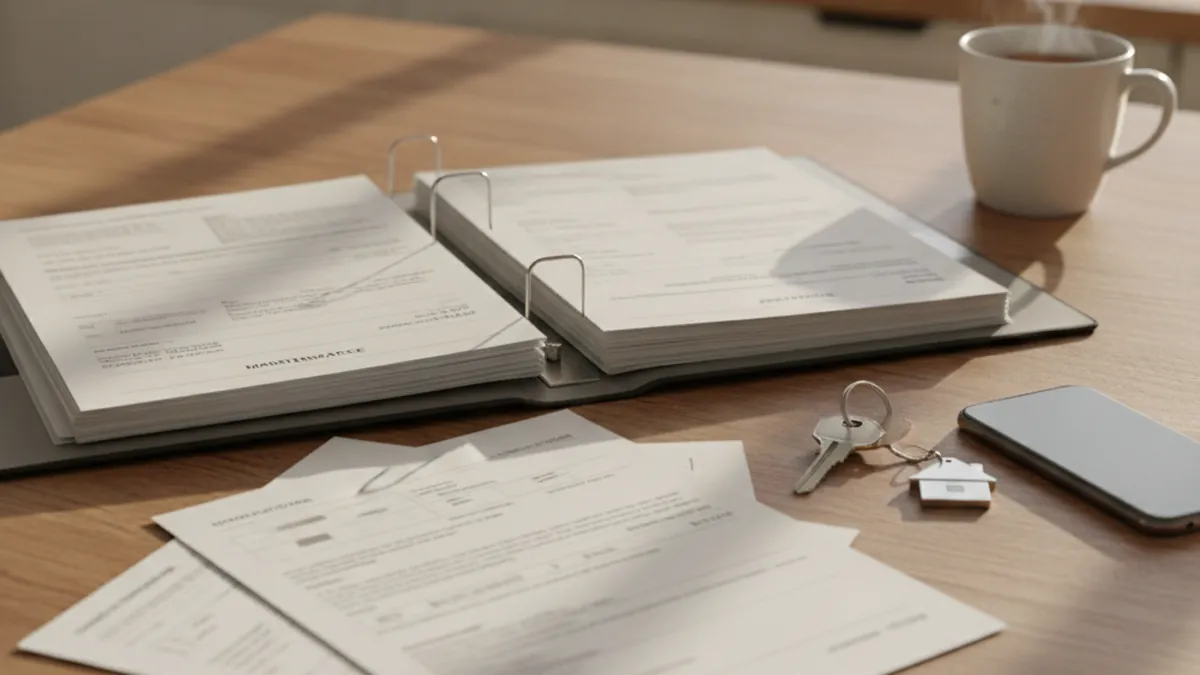
The ideal roof file to hand the buyer
- Detailed roofer invoice (materials, labour, installation date)
- Text of the materials and labour warranties, with transferability clause
- Proof the roofer is an AMCQ member or manufacturer-certified
- Inspection reports and subsequent maintenance invoices
- Photos of the attic and ventilation in good condition
Such a file does more than reassure: it removes the buyer's "we don't know what was done" argument. On a multiplex, where every uncertainty translates into a discount request, this documentation is often worth several thousand dollars at the negotiating table.
Running the numbers: three concrete scenarios for a North Shore plex
Replace or sell as-is isn't a matter of principle, but of numbers. The real calculation compares the net cost of the replacement, the widening of the buyer pool, and the discount the buyer would demand anyway. In most cases, a replacement serves to unlock the sale and protect the price, not to generate a profit: the seller rarely recovers 100% of the spend. Here are three costed scenarios — illustrative — to see the mechanics.
The amounts below are teaching examples built from the orders of magnitude cited earlier (asphalt shingles ≈ $6 to $12/sq ft, elastomeric membrane ≈ $11 to $21/sq ft). They don't replace real quotes or an appraisal, but they show how to reason.
Scenario A — 8-year-old roof, documented good condition
Your plex has a roof installed eight years ago, well ventilated, with a transferable warranty and a complete maintenance file. Here the answer is simple: do nothing. The roof isn't an issue; you simply present the file to keep the buyer from overestimating wear. A replacement would be a needless expense that wouldn't pay back.
Scenario B — 22-year-old roof, end of life, no leaks
The covering is visibly nearing end of life, but there's no active leak yet. Two paths:
- Replace before selling — you spend, say, $30,000. You widen the pool of financeable and insurable buyers and remove the negotiating lever. But you probably won't resell for $30,000 more: part of the spend simply "defends" the price you'd have gotten with a new roof.
- Sell as-is — you accept up front an adjustment reflecting the coming $30,000. You avoid the job site, the down payment and the delays, but you sell to a narrower pool (those able to finance and take on the work), or to an as-is buyer.
The right choice depends on your liquidity, your tolerance for a job site and the urgency to sell. If the buyer's financing and insurance aren't blocked, the as-is sale is often the fastest route.
Scenario C — 25-year-old roof with an active leak
This is the riskiest scenario for a seller. An active leak can block insurance, hence financing, and scare off traditional buyers. Two realistic options here: fix the leak at minimum to allow the transaction, or sell to an as-is buyer who takes on the roof knowingly. Patching a cosmetic repair is the worst choice: it doesn't fool the inspector and exposes you to a latent-defect claim.
| Scenario | Recommended move | Pricing logic |
|---|---|---|
| A — 8-yr roof, documented | Do nothing, present the file | Full price, protected by documentation |
| B — 22-yr roof, no leak | Weigh replace vs sell as-is | Replacement = price defense; as-is = adjustment |
| C — 25-yr roof + leak | Fix the leak or sell as-is | Adjustment + mandatory transparency |
"On an income property, the value of future work is brought back into today's dollars. A roof to redo in two years isn't deducted like a roof to redo tomorrow: it's a present value, not a simple gross subtraction."
— Valuation principle echoed by investor networks and appraisers (income approach)Methodological reference: MREX — Cap rate and present value of upcoming renovations. Scenario figures: illustrative examples, not quotes.

Shingles, elastomeric, TPO, metal: which covering for a plex you want to sell?
If you choose to replace the roof before selling, the covering type influences cost, lifespan and the selling argument. On a sloped roof, asphalt shingles remain the default (economical, ~15 to 25 years). On a flat multiplex roof, two-ply elastomeric membrane dominates (~20 to 30 years), single-ply TPO is gaining ground (~25 to 30 years), and metal offers superior longevity (often 40 to 50 years and up) at a higher upfront cost. For a seller, the best choice is rarely the priciest: it's the one that unlocks the sale at the best cost-to-reassurance ratio.
A seller replacing a roof isn't building for thirty years of occupancy: they're building to reassure a buyer and close a deal. The logic differs from an owner-occupant's. Here's how the main covering families compare for a plex or multiplex.
| Covering | Lifespan (order of magnitude) | Typical use | Relative cost |
|---|---|---|---|
| Asphalt shingles | ≈ 15 to 25 years | Sloped plex roofs | Most economical |
| Two-ply elastomeric membrane | ≈ 20 to 30 years | Flat multiplex roofs | Mid to high |
| Single-ply TPO membrane | ≈ 25 to 30 years | Commercial and multi-unit flat roofs | Mid |
| Metal roofing | often 40 to 50 years and up | Sloped roofs, maximum longevity | Highest upfront |
Sources: Soumissions Toiture — Roof lifespan in Québec; RénoAssistance — All about roofs.
The "I'll install the most durable" reflex isn't always right
On a building you keep, a long-life metal roof can be an excellent investment. On a building you sell, the question changes: will the buyer pay the metal premium, or do they treat any recent roof in good condition as "a solved problem" regardless of material? In practice, on a plex valued by the income approach, a well-installed new roof — of any reasonable material — does its job: it removes the negotiating argument. Overpaying for a high-end material rarely comes back in the sale price. The right calculation is to choose a covering suited to the roof type (sloped vs flat), installed by an AMCQ roofer, with a transferable warranty — not necessarily the most expensive.
Combining sections: the common mixed-plex case
Many North Shore plexes combine a sloped section (front) and a flat section (rear or annex). The two don't age at the same rate and don't cost the same to redo. It's common for only one section to be end-of-life: redoing just the problem area, with careful flashing at the junction, is often cheaper and enough to reassure. An AMCQ roofer can say whether the two sections should be treated together or separately.
Common seller mistakes when facing a worn roof
Most roof-related money lost at sale time doesn't come from the roof itself, but from how the seller handles it: a cosmetic repair that hides a defect, missing documentation, needless overspending, or refusing to acknowledge the real condition. Avoiding these five classic mistakes protects both the price and the seller's legal safety.
After seeing many multiplexes change hands, the same missteps recur. Knowing them is already avoiding them.
Mistake 1 — Concealing a leak
Repainting a stained ceiling or superficially caulking a leak just before showings is tempting, but it's the worst decision. An inspector spots the signs, and above all, concealing a known defect exposes you to a latent-defect claim that can cost far more than the discount avoided. The right approach is to document and, if possible, actually fix.
Mistake 2 — Selling with no documentation on the roof
"The roof? I think it was redone about ten years ago." That vague answer costs money. With no invoice, no date, no warranty, the buyer assumes the worst and negotiates accordingly. A complete file, by contrast, turns uncertainty into confidence.
Mistake 3 — Overspending on a high-end replacement
Installing the priciest covering hoping to "get your money's worth" at resale is a frequent miscalculation. On a building valued by income, the new roof defends the price but doesn't multiply it. A suitable, well-installed covering is enough; the high-end premium rarely comes back.
Mistake 4 — Ignoring the buyer's insurance and financing
A seller may find their roof "still fine" while the buyer's insurer declines to cover it beyond 15 to 20 years without proof of condition. The seller who ignores this reality sees the sale derail at the last minute. Anticipating the insurer's requirement (inspection, proof of condition) avoids the nasty surprise.
Mistake 5 — Waiting for full end of life before acting
Deferring all maintenance until the roof leaks turns a moderate expense (cleaning, ventilation fix, spot repair) into a major one (rotted sheathing, interior damage). Preventive maintenance is almost always cheaper than curative repair, and it preserves value at sale time.
The thread running through these five mistakes
They all come back to the same temptation: treating the roof as a problem to hide rather than to document. On a plex, controlled transparency always beats camouflage — legally and financially.
The seller's timeline: when to decide, from 6 months out to sale day
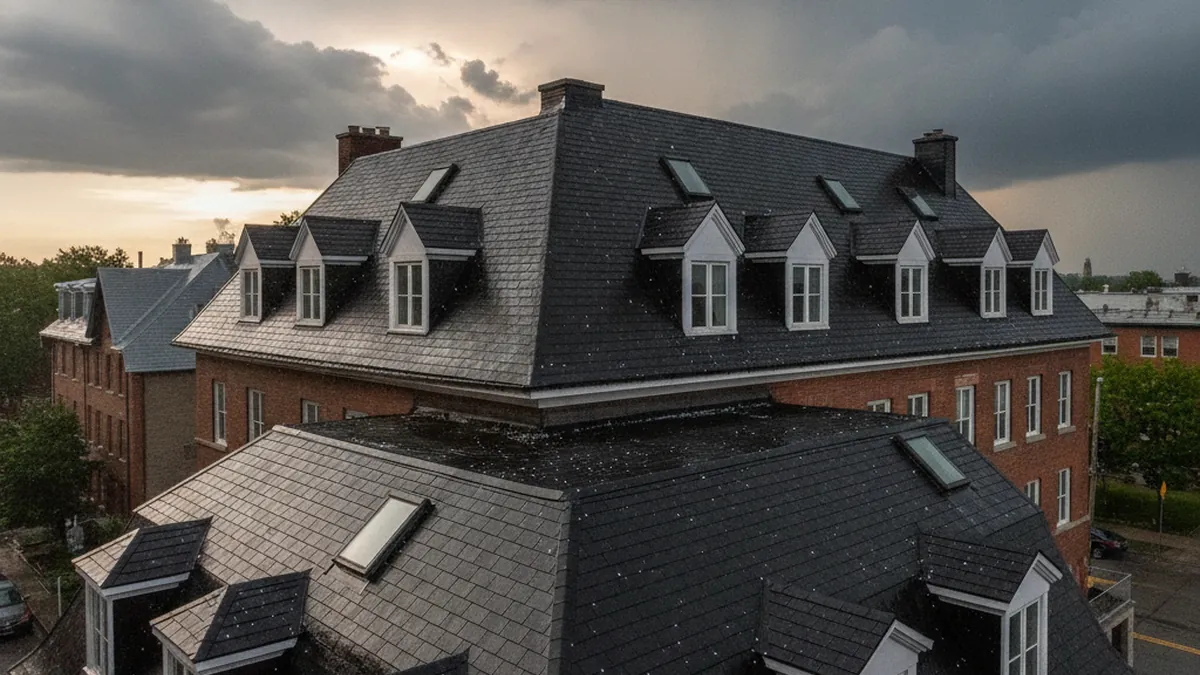
The decision to replace the roof or not is best made several months before listing, not the day before. A good timeline leaves time to inspect, get quotes, fix ventilation, gather documentation, and — if you choose to replace — plan the job outside the deep-winter season. A rushed seller, by contrast, ends up negotiating under the pressure of an unfavourable inspection report.
The seller's worst enemy is running out of time. Here's a realistic timeline to handle the roof question without haste, whether you replace or sell as-is.
| Horizon | Recommended action |
|---|---|
| 6 months out | Roof inspection by an AMCQ roofer; ventilation diagnosis; gather invoices |
| 4 to 5 months out | Decide: replace, fix the minimum, or sell as-is; get 2-3 quotes if replacing |
| 2 to 3 months out | Do the work (ideally above freezing) or prepare the "as-is" file |
| Listing | Present the full roof file from the listing; anticipate the buyer's inspection |
| Negotiation | Answer the report with facts and documents rather than under pressure |
A word on season: in Québec, shingle and membrane installation is best done outside deep cold, since material adhesion is temperature-sensitive. A seller who decides in January to replace for a spring sale has time to do it right; one who decides in November for an immediate sale often has no realistic option other than an as-is sale.
If time is short: the as-is sale
When the timeline allows neither a calm inspection nor quality work, selling directly to a buyer who takes on the roof — like ImmoMulti on the North Shore — avoids improvising a last-minute replacement. Get a confidential offer within 48 hours.

Informational content only. Roof lifespans and cost figures are orders of magnitude and vary by building, climate and installation. This does not constitute legal or tax advice. Consult a roofer (AMCQ member), a building inspector, your lender, your insurer and a notary for advice specific to your property.