ImmoMulti — a direct buyer of income properties on the North Shore — works with owners who discover, often late in the process, that their building is cited, classified or located in a heritage site. This status does not prevent a sale, but it imposes precise rules: prior authorization for certain work, a maintenance obligation, and — for a classified property — a notice of sale to be sent 60 days in advance that opens a right of first refusal for the Government of Québec. In return, restoration aid of up to 70% of eligible costs exists. Written from the owner-seller's point of view, this guide covers the real constraints and their concrete effect on your buyer pool and your price.
Classified, cited, in a heritage site: what is your exact status?
In Québec, a 'classified' building is protected by the Minister of Culture and Communications under the Cultural Heritage Act — control rests with the Government of Québec. A 'cited' building is protected by a municipality through a by-law — control rests with that municipality. A building may also sit within a heritage site or protection area, which triggers similar obligations.
The very first thing to do before listing an old building is to confirm its status. According to the Government of Québec, a building can be protected in several ways: by classification (a decision of the Minister), by citation (a by-law of a municipality or an Indigenous community), or because it lies within a heritage site or a protection area. It may also simply be inventoried or "old" without being formally protected — in which case the obligations differ.
To verify, consult the official Government of Québec guidance on protected buildings as well as your municipality, which keeps the register of cited buildings on its territory. This distinction is far from theoretical: it determines which authority you must deal with for any work and, in some cases, for the sale itself.
Source: Government of Québec — "Finding out whether a building is protected, inventoried or old."
What are the maintenance and work-authorization obligations?
For a classified building or one located in a classified heritage site, you must obtain the Minister's authorization before certain work (restoration, alteration, demolition, relocation). For a cited building or one in a cited heritage site, these authorizations fall to the municipality. In every case, the owner has a general duty to preserve the property.

The heart of heritage constraints is prior authorization. According to the Government of Québec, it is mandatory to obtain the Minister's authorization before intervening on a classified property or a building located in a classified heritage site or a protection area — for example, restoration, alteration or demolition. For a cited building or one located in a cited heritage site, control measures fall to the municipality that cited it: that is where authorization must be obtained.
These rules have a direct impact for a seller who wants to "freshen up" a plex before listing. Replacing original windows, redoing cladding, altering a roofline or even changing the colour of architectural elements may require authorization. Undertaking such work without a green light exposes you to penalties and can complicate the sale.
On top of this comes a general maintenance duty. The owner must take reasonable steps to prevent the property from deteriorating. In other words, heritage status is not only about prohibitions: it involves an active duty of preservation, whether or not you carry out work.
Before any sale-preparation project
- Confirm the exact status of the building (classified, cited, heritage site, protection area).
- Deal with the right authority: the Ministry's regional office (classified) or the municipality (cited).
- Obtain written authorization BEFORE starting work, not after.
- Keep the authorizations: a savvy buyer (or their notary) will ask for them.

Must you notify the government before selling? The 60-day notice
Yes, for a classified property. The owner must send a prior notice of sale to their regional office at least 60 days before selling a classified building or a building located in a classified heritage site. This period lets the government exercise a right of first refusal: acquiring the property before any other buyer, at an equal price.
This is the constraint sellers most often overlook. According to the Government of Québec, to sell, give, bequeath or transfer a classified property — including a building — the owner must send a prior notice to their regional office, 60 days before the sale. This notice has two aims: to let the government exercise its right of first refusal (acquiring the property before any other buyer, at an equal price) and to ensure the transaction does not diminish the property's heritage value.
In practice, a seller who wants to close quickly must build this delay into their timeline. A promise to purchase on a classified building cannot close in a few days as it might for an ordinary plex: the notice-and-first-refusal mechanism must be respected. Your notary is the key contact to orchestrate this step correctly.
"These steps allow the government to exercise its right of first refusal, that is, to acquire, before any other buyer and at an equal price, the property put up for sale."
— Government of Québec, "Selling, giving or transferring a classified heritage building"
Mind the calendar
For a classified property, do not sign a short-deadline promise to purchase without accounting for the 60-day prior notice. Failing to meet this obligation can invalidate or delay the transaction. Have your timeline validated by a notary from the outset.
What financial aid exists to restore a heritage building?
The Government of Québec offers, among others, the Program to support municipalities in built heritage, where the Ministry of Culture and Communications' contribution can reach 70% of eligible costs. Aid generally flows through the municipality or RCM, which can financially support owners of heritage buildings.
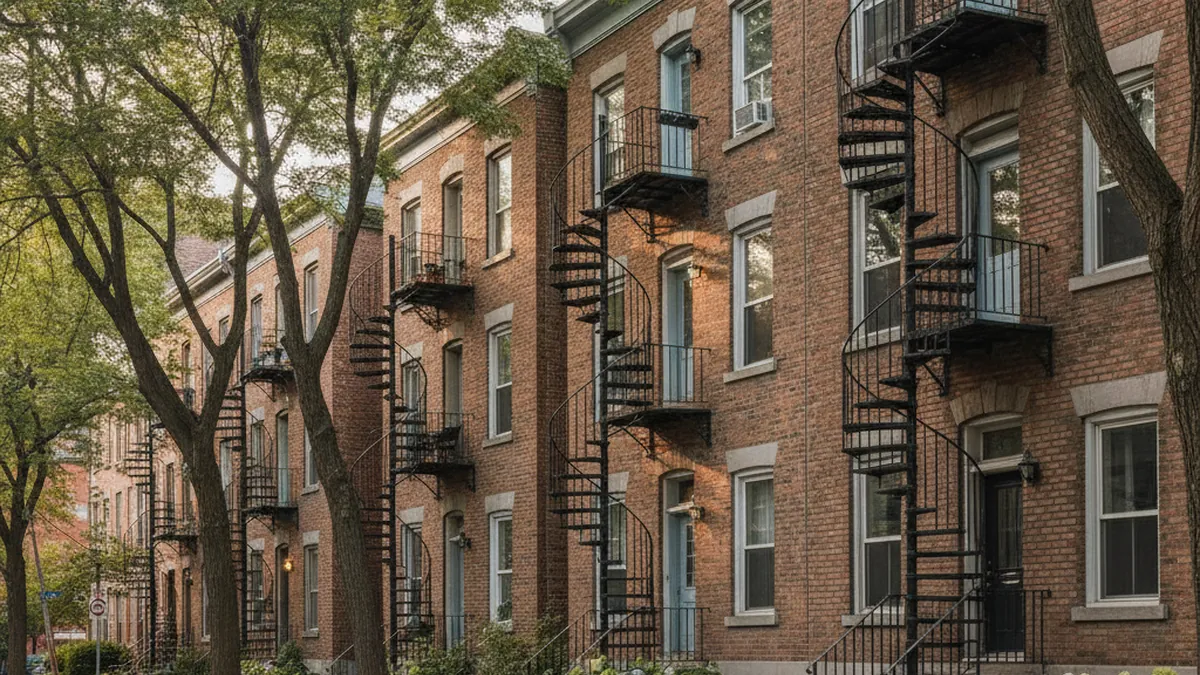
The constraints have an upside: built heritage gives access to public aid. Among these, the Government of Québec cites the Program to support municipalities in built heritage, where the Ministry's contribution can reach 70% of eligible restoration costs. Aid generally passes through the participating municipality or RCM, which then redistributes direct support to owners.
For a seller, these programs are a double-edged argument. On one hand, carrying out a restoration supported by public aid can raise the building's condition and appeal before listing. On the other, mere eligibility for aid can become a selling point for a buyer who is themselves considering work. Check with your municipality to learn which envelopes are active in your area.
- Purpose: restoration of buildings of heritage interest (exterior and, in some cases, protected interior elements).
- Contribution: up to 70% of eligible costs depending on the program.
- Access route: generally via the participating municipality or RCM.
- To verify: availability and terms vary from one territory to another and over time.
Source: Government of Québec — "Support for municipalities in built heritage."
How does heritage status affect the buyer pool and the price?
Heritage status generally narrows the buyer pool: investors who want to quickly transform or densify are slowed by the required authorizations. Conversely, a well-maintained building, full of character and eligible for aid, attracts buyers who value the built fabric. The net effect on price depends on location and the extent of the restrictions.
| Factor | Effect on selling a heritage income property |
|---|---|
| Work authorizations | Deter "value-add" buyers who want to renovate fast; lengthen timelines. |
| 60-day sale notice (classified) | Extends the process; incompatible with an express closing. |
| Right of first refusal (classified) | Uncertainty until the delay lapses; explain it clearly to the buyer. |
| Restoration aid | A positive argument: lowers the real cost of work for the buyer. |
| Character and rarity | Can support the price with buyers who value heritage. |
There is no universal rule: a well-maintained heritage building in a sought-after area can sell at a strong price because its rarity and character appeal to buyers. A run-down heritage building in a market where buyers mainly seek transformation potential will see its buyer pool shrink, which weighs on the price. The key is to present the status transparently and to document the authorizations and the condition of the building.
Selling a heritage plex or multiplex on the North Shore

On the North Shore — from Terrebonne to Saint-Eustache, through Blainville, Boisbriand, Mascouche, Saint-Jérôme and Deux-Montagnes — the old village cores hold many plexes and multiplexes that may be cited or located within a heritage site. For an owner-seller, the path is clear: confirm the status, gather past authorizations, plan the 60-day notice if it is a classified property, and position restoration aid as an asset.
Selling directly, with no broker and no commission, remains possible for a heritage building. ImmoMulti buys income properties on the North Shore and can work with heritage status, provided the legal obligations are respected. A notary and, where needed, a tax advisor will support you to secure the transaction and clarify the tax consequences of the sale.
Selling a heritage building on the North Shore?Get a direct offer from ImmoMulti — no broker, no commission. →How to confirm your building's heritage status, step by step

Many owner-sellers assume that "my house is old, therefore it's heritage" — or, conversely, that old-world character triggers no obligations at all. Both instincts are risky. The only reliable starting point is a formal status check, because the legal consequences (authorizations, the 60-day notice, the right of first refusal) apply only to buildings that are actually protected: classified, cited, located in a heritage site, or within a protection area. A merely "inventoried" or "old" building is not necessarily protected by a legal status, as the Government of Québec points out.
Step 1 — Search the Quebec Cultural Heritage Directory (RPCQ)
The Répertoire du patrimoine culturel du Québec (RPCQ) is a public online tool listing thousands of heritage elements in the Cultural Heritage Register. Search for your building by address or municipality, then open its record: the "Status" section tells you whether the building is classified, cited, declared, or located in a heritage site or a protection area. Beware: a record in the directory does not always mean a protection status — a building may appear because it is inventoried, without being protected.
Step 2 — Ask your municipality and the Ministry's regional office
The RPCQ does not replace the local source. Cited buildings and cited heritage sites stem from a municipal by-law: your municipality keeps the official register of those citations. For a potentially classified building or one in a protection area, the contact is the regional office of the Ministry of Culture and Communications. Contact both: it is the only way to rule out the risk that a recent (or in-progress) status is not yet reflected in the public tools.
Step 3 — Get the answer in writing
Request written confirmation of the status and keep it in your sale file. On the day of the promise to purchase, the buyer's notary will want clear title: being able to show that you checked the status and met the resulting obligations avoids last-minute surprises. A well-built file — confirmed status, past authorizations, maintenance invoices — speeds up the transaction and strengthens your negotiating position.
| Possible status | Controlling authority | Where to check |
|---|---|---|
| Classified | Minister of Culture (Government of Québec) | RPCQ + Ministry regional office |
| Cited | Municipality (by-law) | Municipal register of citations |
| Classified / declared heritage site | Government of Québec | RPCQ ("Status" section) |
| Cited heritage site | Municipality | Municipality |
| Protection area | Government of Québec | RPCQ + regional office |
| Inventoried / old (not protected) | None (no legal status) | RPCQ — "inventoried" mention |
Source: Government of Québec — "Finding out whether a building is protected, inventoried or old" and Quebec Cultural Heritage Directory (RPCQ).
Unauthorized work: the real penalties and the hidden financial risk
The most underestimated constraint is not administrative — it is financial. On a protected building, carrying out work without the required authorization, or failing to respect the conditions of an authorization obtained, exposes the owner to real, non-symbolic penalties.
Fines that can exceed one million dollars
According to the Government of Québec, anyone who contravenes the Cultural Heritage Act is liable to a fine, and the fines provided for by the Act range from $500 to $1,140,000, depending on the severity of the infraction and the nature of the offender. For an owner-seller, this is not an abstraction: undertaking a "simple" replacement of original windows or redoing cladding without authorization can, in theory, trigger a proceeding. The practical message is simple: never assume a job is minor enough to escape control.
The restoration order and the legal mortgage
Beyond the fine, the authority can require restoration of the property — that is, undoing or correcting the non-compliant work, at your expense. The Government of Québec specifies that restoration costs are secured by a legal mortgage on the building. In other words, unauthorized work can become a charge on your title, which would block the sale until it is regularized. A savvy buyer — or their notary — will refuse to close until such a situation is resolved.
The "I'll regularize later" trap
An "after-the-fact" authorization request form exists, but relying on it is risky: if, after review, the work performed is not deemed acceptable, you find yourself in violation and penalties apply (fine or obligation to restore). On a building you intend to sell, the only prudent strategy is authorization upfront.
Why it matters at the exact moment of sale
A rushed seller sometimes thinks undeclared work "will go unnoticed." In practice, the sale is precisely the moment when everything surfaces: title review, the notary's questions, sometimes a pre-purchase inspection. Non-compliance discovered at this stage ends, at best, in a price cut, at worst in a failed transaction. Documenting every authorization and avoiding all unauthorized work directly protects your net price.
Source: Government of Québec — "Carrying out work on a heritage property".
Insurance, rebuilding and loss: an issue specific to heritage buildings

An aspect few sellers anticipate: the insurability of an old or heritage building. A buyer who must finance the purchase will need an insurance policy; if insurance is hard to obtain or costly, it weighs on the sale. Understanding the state of the file lets you reassure the buyer rather than face the objection at the last moment.
The "you must rebuild identically" myth
A persistent misconception holds that a heritage building must, after a major loss, be rebuilt identically — hence prohibitive premiums. The Government of Québec is explicit on this point: in the case of a total loss, the Ministry does not require the building to be rebuilt identically. This nuance is important to know, because it defuses the most common argument used to devalue a heritage building at sale.
Resources exist for owners in difficulty
Since 2021, the Insurance Bureau of Canada (IBC) and the organization Amis et propriétaires de maisons anciennes du Québec (APMAQ) have produced tools — guides, brochures, information sessions — to better inform insurers and owners about rehabilitation requirements after a loss. If you, or a potential buyer, run into difficulty insuring the building, these partners support owners, whether or not the building is protected under the Cultural Heritage Act.
Seller's talking points on insurance
- Gather your current policy and claims history: a clean file reassures the buyer.
- Remind buyers that identical rebuilding is not required after a total loss.
- Point a worried buyer toward the IBC and APMAQ resources.
- Mention the estimated rebuilding value, not only market value.
Source: Government of Québec — "Insuring an old or heritage house".
Three worked scenarios for a heritage plex on the North Shore

The figures below are illustrative, not appraisals: each building has its own market. They mainly show how heritage status translates into dollars and timelines for an owner-seller preparing to list. Always have your real figures validated by a chartered appraiser and a notary.
Scenario A — Cited triplex, well maintained, sought-after area
A triplex in an old village core, cited by the municipality, in good condition. The cited status requires municipal authorizations to alter the façade, but the building is already compliant and needs no work. Here, character and rarity support the price: the pool of heritage-minded buyers offsets the loss of "value-add" buyers. The seller relies on transparency (documented past authorizations) and a normal timeline.
Scenario B — Classified duplex needing work
A duplex classified by the Minister, with an original roof and windows to redo. Two constraints stack: the 60-day sale notice (with the government's right of first refusal) and the Minister's authorization for any work. The seller is best served by NOT starting the work themselves without authorization, but rather documenting eligibility for aid (up to 70% of eligible costs) as a selling point. The timeline is longer; the target buyer is a patient investor, not a "flipper."
Scenario C — Building in a protection area, to sell quickly
A multiplex located in the protection area of a neighbouring classified building. The owner wants to sell fast. The trap: signing a short-deadline promise to purchase without checking whether work the buyer envisions would require authorization, which would delay closing. The right strategy: sell "as is" to a buyer who knows the constraints, such as a direct buyer of income properties, rather than promising an unrealistic express closing.
| Scenario | Dominant constraint | Effect on timeline / price |
|---|---|---|
| A — Maintained cited triplex | Municipal authorizations (façade) | Normal timeline; price supported by character |
| B — Classified duplex to renovate | 60-day notice + Minister's authorization | Long timeline; restoration aid as leverage |
| C — Protection area, quick sale | Authorization for future work | Sell "as is" rather than promise express |
"The truth of a heritage building always comes out at the moment of sale. Better to know it before the buyer does."
— Practical principle for the owner-seller
The common mistakes of heritage-building sellers

Most difficulties faced by heritage-building sellers come not from the status itself, but from avoidable mistakes made upstream. Here are the most common ones, from the point of view of an owner-seller who wants to protect their price and timeline.
Mistake 1 — Renovating before checking the status
This is the costliest mistake. An owner "refreshes" their plex for listing — new windows, cladding, colours — without knowing the building is cited or classified. The result: potentially non-compliant work, risk of a fine (up to $1,140,000) and a restoration order. Always check the status before the first swing of the hammer.
Mistake 2 — Ignoring the 60-day notice for a classified property
Signing a short-deadline promise to purchase on a classified property, without factoring in the 60-day prior notice, exposes you to delay or even invalidation. The government's right of first refusal must be able to operate. This step is planned as soon as you decide to sell, not when you sign.
Mistake 3 — Hiding the status from the buyer
Some sellers, fearing they will scare buyers off, minimize or conceal the heritage status. Bad bet: the buyer's notary will find it in the title, and a late disclosure destroys trust and can sink the sale. Transparency, backed by a documented file, is always the best strategy.
Mistake 4 — Neglecting aid as a selling point
Eligibility for aid reaching up to 70% of eligible restoration costs is an asset for a buyer considering work. Not mentioning it leaves value on the table. Check with your municipality or RCM about active envelopes.
Mistake 5 — Promising an unrealistic express closing
A classified heritage building does not close in a few days. Promising the impossible to attract a buyer leads to tension, postponements and sometimes cancellation. Better to announce a realistic timeline upfront that accounts for notices and authorizations.
Heritage-building seller's checklist
- Status confirmed in writing (RPCQ + municipality / regional office).
- No renovation started without prior authorization.
- 60-day notice planned if the building is classified.
- File of past authorizations and maintenance invoices assembled.
- Restoration aid identified and presented as an asset.
- Notary engaged from the start to validate the timeline.
Selling directly or through a broker: what heritage status changes

Nothing requires using a broker to sell a heritage building. The choice between a direct sale and brokerage depends mainly on your tolerance for complexity and the type of buyer you target. Heritage status adds a layer of legal constraints that both routes must manage.
| Criterion | Direct sale (direct buyer) | Through a broker |
|---|---|---|
| Commission | No brokerage commission | Generally a percentage of the price |
| Handling heritage status | Buyer used to constraints; "as is" possible | Depends on the broker's heritage experience |
| Speed | Often fast (except unavoidable legal delays) | Variable with market and listing |
| Buyer pool | Targeted (income-property investors) | Broader but status-sensitive |
| Legal obligations | Must be respected (60-day notice, authorizations) | Must be respected too |
For a heritage building that needs work or whose status scares off part of the market, a direct buyer of income properties offers an advantage: they buy "as is," know the constraints and do not need reassurance about character or authorizations. The seller avoids the commission and gains predictability. In every case, the notary remains the central actor to secure the transaction's compliance.
Glossary: the heritage terms to know before selling

Cultural-heritage vocabulary invites confusion. Here are the definitions useful to the owner-seller, aligned with the Government of Québec's terminology.
- Classification: status granted by the Minister of Culture and Communications; control rests with the Government of Québec.
- Citation: status granted by a municipality (or an Indigenous community) through a by-law; control rests with that municipality.
- Heritage site: a territory (classified, declared or cited) recognized for its heritage interest; obligations apply to buildings within it.
- Protection area: a zone delimited around a classified building to preserve its heritage value; construction or work there may require authorization.
- Inventoried building: a building recognized for its heritage value, but not necessarily protected by a legal status.
- Right of first refusal: the government's right to acquire, before any other buyer and at an equal price, a classified property put up for sale.
- Prior notice of sale: a notice to send 60 days before selling a classified property, which opens the first-refusal window.
- Duty of preservation: a general obligation to maintain a protected building to prevent its deterioration, even absent any work.
Where do you find heritage buildings on the North Shore?
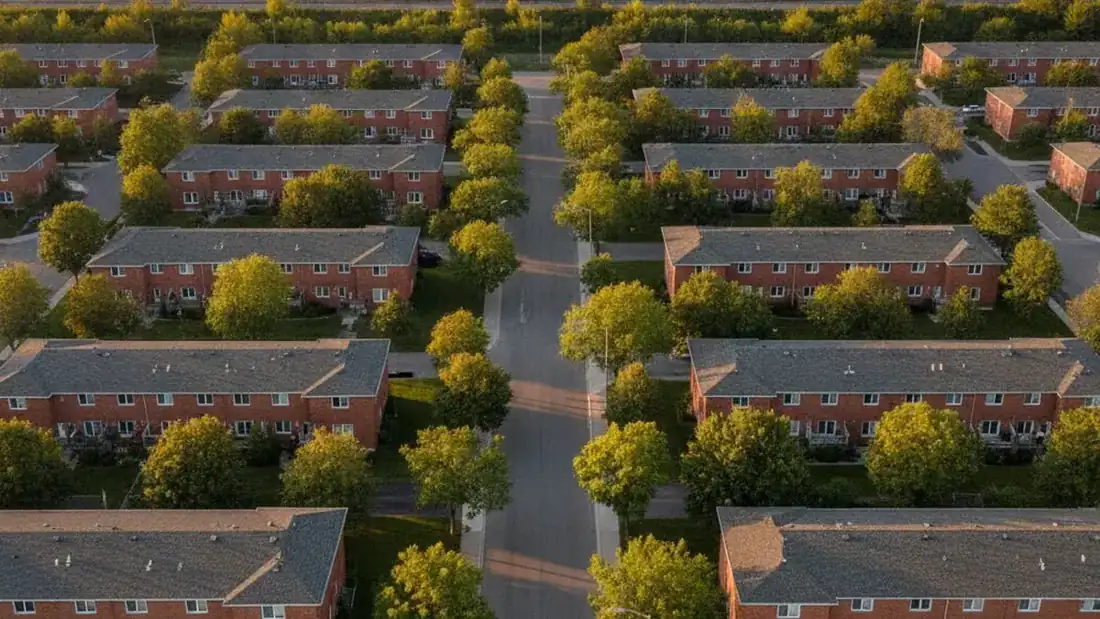
The North Shore of Montréal and the Laurentians hold several old village cores where plexes and multiplexes that may be cited or located in a heritage site are concentrated. Knowing these areas helps an owner-seller anticipate the status check before listing.
The old village cores
Old Terrebonne, with Île-des-Moulins, is the best-known example: several buildings there are protected and the area carries heritage provisions. Old Saint-Eustache, marked by its history, and the old core of Saint-Jérôme also hold old buildings. Municipalities such as Blainville, Boisbriand, Sainte-Thérèse, Rosemère, Deux-Montagnes and Mascouche have sectors or buildings of heritage value.
Why status varies from one town to another
Because citation stems from a municipal by-law, the presence and extent of protections vary greatly with each municipality's will. Two similar buildings on either side of a municipal boundary can have different statuses. That is why the check must always be done case by case, with the municipality concerned — a "regional" status does not exist.
Old-sector reflex
- Building in an old village or near a historic church/mill: check the status first.
- Consult the municipality's citation by-law, often available online.
- A protected neighbouring building can place yours in a protection area.
For a North Shore owner, the message is consistent: the old-world character that appeals to buyers is also what triggers heritage obligations. Well prepared, this status becomes an argument; poorly managed, it turns into a last-minute obstacle.


