
Most owners of plex properties on the North Shore believe that $80,000 in deferred maintenance removes $80,000 from the sale price. ImmoMulti, a direct buyer of multi-unit properties on the North Shore, sees it every week: the real impact is $1.50 to $3 in losses per dollar. Why? A plex is valued by income, not by comparables. Deferred maintenance pushes buyers to demand a higher cap rate, compressing value beyond the raw cost of the work: on an $800,000 property, moving from a 5.0% to 5.5% cap rate alone represents roughly $73,000 in lost value. Add to this a CMHC financing block — end-of-life roof, knob-and-tube wiring, cracked foundation — which eliminates most buyers and forces an additional discount. This guide quantifies the impact by type of deferred maintenance, illustrates three real cases, and presents three strategies to sell without giving it away.
Why does $1 of deferred maintenance cost $1.50 to $3 at the sale price of your plex?
Because income properties are valued by capitalized net income, not by comparables. Deferred maintenance pushes buyers to demand a higher cap rate — each 0.5% increase on an $800,000 property erases ~$73,000 in value — while simultaneously triggering CMHC financing blockage that eliminates most buyers and forces an additional risk-premium discount.
The residential real estate market operates on comparable market value. In that market, an outdated kitchen or an aging roof may slightly reduce a buyer's offer. But an income property works differently: it is valued by income. And that is where the amplification effect comes in.
The cap rate effect: the multiplier sellers overlook

On the North Shore, a plex is valued using the capitalization rate (cap rate): property value = net operating income ÷ cap rate. In 2026, the average cap rate on the North Shore sits between 5.0% and 6.0% depending on the area, based on available market data.
When a buyer sees significant deferred maintenance, two things happen simultaneously:
- They reduce the net income used in the calculation — upcoming work means potentially vacant units or increased operating expenses during renovation.
- They raise the cap rate they require — the higher perceived risk pushes the cap rate from 5.0% to 5.5% or 6.0%, which mechanically compresses value by 9% to 17%.
On an $800,000 multi-unit property, this shift from a 5.0% to 5.5% cap rate represents a value compression of roughly 9%, or close to $73,000 in lost value. And the buyer hasn't yet deducted the actual cost of the work.
The financing blockage: the buyer who disappears
The second mechanism is less intuitive but equally devastating. CMHC (Canada Mortgage and Housing Corporation) and the vast majority of financial institutions refuse to finance a plex whose physical condition presents significant deficiencies: end-of-life roof, cracked foundation, knob-and-tube wiring, fuse panel electrical systems, active mould issues. The result: the buyer most likely interested in your property simply cannot obtain the necessary financing. The pool of potential buyers shrinks to a fraction — primarily equity-backed investors — who demand a substantial risk premium in exchange for their ability to purchase without a financing condition.
Key takeaway: The classic mistake is believing the discount exactly equals the cost of the work. In reality, the market penalizes the perception of risk, not just the actual cost. Two properties each with $60,000 in deferred maintenance can have very different discounts depending on whether the work is visible (deteriorated roof) or hidden (aging plumbing).
What is the quantified impact of each type of deferred maintenance on the sale price of a North Shore plex?
Loss/cost ratios range from ×1.2–1.5 for cosmetic work (windows) to ×2.5–3.0 for active water damage or mould — which blocks conventional financing entirely. Structural issues (foundation, knob-and-tube wiring) typically cost ×2.0–2.8 at sale, far exceeding the raw repair estimate.
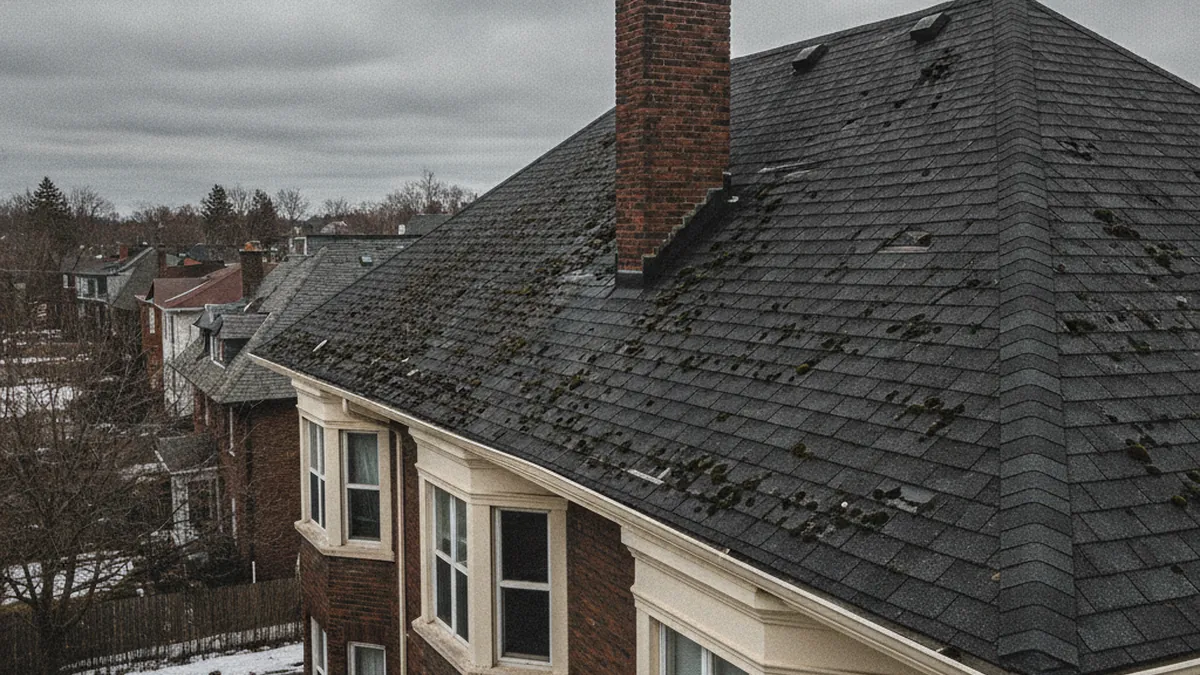
The table below compares the actual cost of deferred maintenance and its impact on the sale price of a typical North Shore triplex valued at $700,000 in good condition. Cost data is based on market estimates for the region in 2026. For your personalized estimate, use our ImmoMulti renovation calculator.
| Type of deferred maintenance | Estimated cost (2026) | Impact on sale price | Loss/cost ratio |
|---|---|---|---|
| Roof (asphalt shingles, 2,500 sq ft) | $18,000 – $28,000 | $35,000 – $55,000 | ×1.8 – ×2.2 |
| Electrical upgrade (knob-and-tube) | $25,000 – $45,000 | $60,000 – $100,000 | ×2.0 – ×2.5 |
| Foundation / perimeter drainage | $30,000 – $80,000 | $70,000 – $200,000 | ×2.2 – ×2.8 |
| Plumbing (cast iron / galvanized) | $20,000 – $40,000 | $40,000 – $90,000 | ×1.8 – ×2.5 |
| Active water damage / mould | $15,000 – $50,000 | $45,000 – $150,000 | ×2.5 – ×3.0 |
| Single-pane windows (all units) | $20,000 – $35,000 | $25,000 – $45,000 | ×1.2 – ×1.5 |
| Dated units (3 unrenovated units) | $45,000 – $90,000 | $50,000 – $80,000 | ×0.9 – ×1.2 |
Note: The loss/cost ratio is higher for structural work that blocks conventional financing (foundation, electrical, active mould). It is lower for cosmetic work that does not prevent the buyer from obtaining a mortgage.
"A plex with knob-and-tube wiring is not just cheaper to buy — it is often uninsurable and therefore unfinanceable by a bank. The seller doesn't lose $30,000 in upgrade costs: they often lose $80,000 or more on the sale price, because only cash investors can make the purchase."
— ImmoMulti Team, multi-unit investor, North Shore, June 2026
How does deferred maintenance concretely affect the sale price? 3 real cases on the North Shore
Here are three representative scenarios from situations encountered on the North Shore plex market in 2025–2026. The figures are illustrative and based on current market parameters.
Case 1 — Triplex in Terrebonne, end-of-life roof
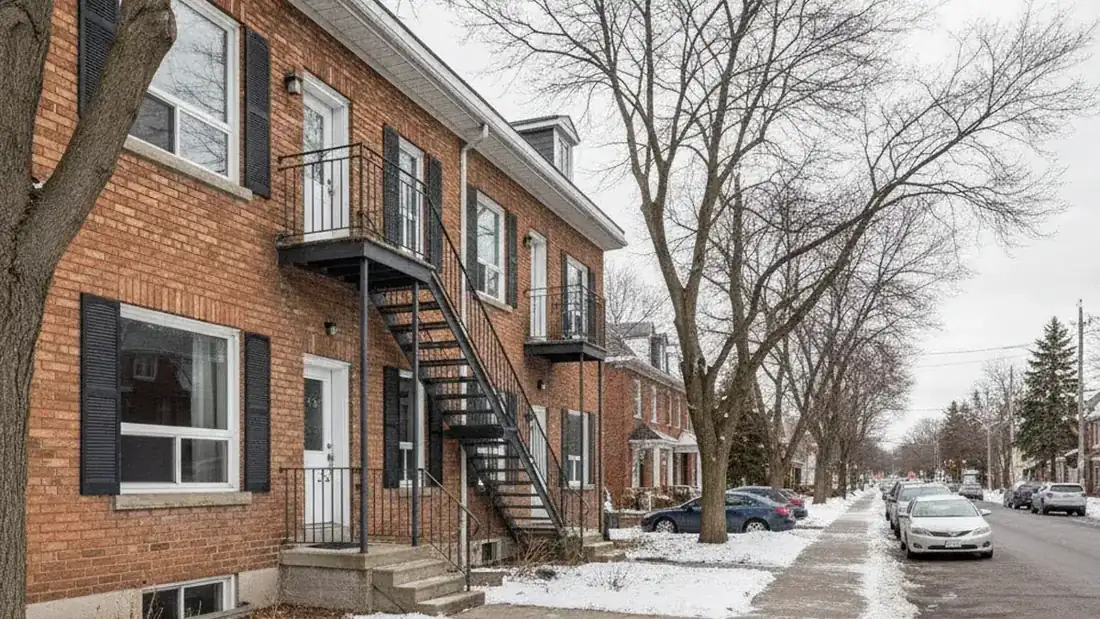
A triplex generating $42,000 in annual gross revenues (below-market rents), with net expenses of $22,000 — net operating income: $20,000. Valued at $400,000 based on a 5.0% cap rate. The 26-year-old roof requires replacement estimated at $22,000.
- Traditional listing: the buyer demands a 5.5% cap rate (roof risk) and deducts $22,000 for the work → perceived value: $20,000 ÷ 5.5% − $22,000 = $341,818. Total loss: $58,182 for $22,000 in actual work (×2.6 ratio).
- Direct sale to ImmoMulti: 5.0% cap rate maintained (professional buyer, risk absorption capacity), transparent deduction of $22,000 → offer of $378,000. Savings versus traditional sale: ~$36,000.
Case 2 — Quadruplex in Saint-Jérôme, outdated electrical and dated units
A quadruplex with $56,000 in gross revenues, $29,000 in expenses — net income: $27,000. Potential value at 5.5% cap rate: $490,909. Issue: fuse panel electrical on two units (upgrade estimated at $14,000) and three units not renovated in over 20 years (renovation estimated at $65,000).
- Traditional listing: partial financing blockage (fuse panels), demanded cap rate of 6.2%, deduction of both repair items → perceived value: $354,839. Total loss: $136,070 for $79,000 in work.
- Direct sale: valuation based on stabilized rental potential (once units are repositioned, rents move to $7,400 in monthly gross revenues vs. $4,667 currently) → offer of $440,000. Net to seller: ~$85,000 more than the traditional sale, with no brokerage commission.
Case 3 — Duplex in Laval, chronic water infiltration
A duplex estimated at $560,000 in good condition. Documented issue: recurring basement water infiltration for three years, source unconfirmed. Estimated repair cost between $25,000 and $55,000. The wide range is itself a red flag for the conventional buyer.
- Listed on market: uncertainty about the actual repair cost scares financed buyers. Only two of seven buyers submit an offer, all below $460,000 (a $100,000 discount for $25,000 to $55,000 in work — ×2.5 to ×4 ratio).
- Direct sale: the professional buyer has the expertise to estimate the actual cost and absorb the uncertainty. Firm offer of $510,000, no financing condition, closing in 30 days. Net to seller: $50,000 more than the best offer on the traditional market.
Is it really worth doing the work before selling your plex?
Rarely for major structural work. Budget overruns average 25–40% on pre-1980 buildings, rental vacancy during work erases $14,000–$18,000 per 6 months per unit, and investors do not value a new roof at cost — they value net income. Only electrical upgrades (financing unlock) and leasing vacant units at market rates typically return above their cost.
Faced with these numbers, many owners' instinctive reaction is: "I'll do the work myself before selling, to recover full value." This calculation deserves a cold-eyed look.
The real cost of pre-sale work: 4 hidden factors
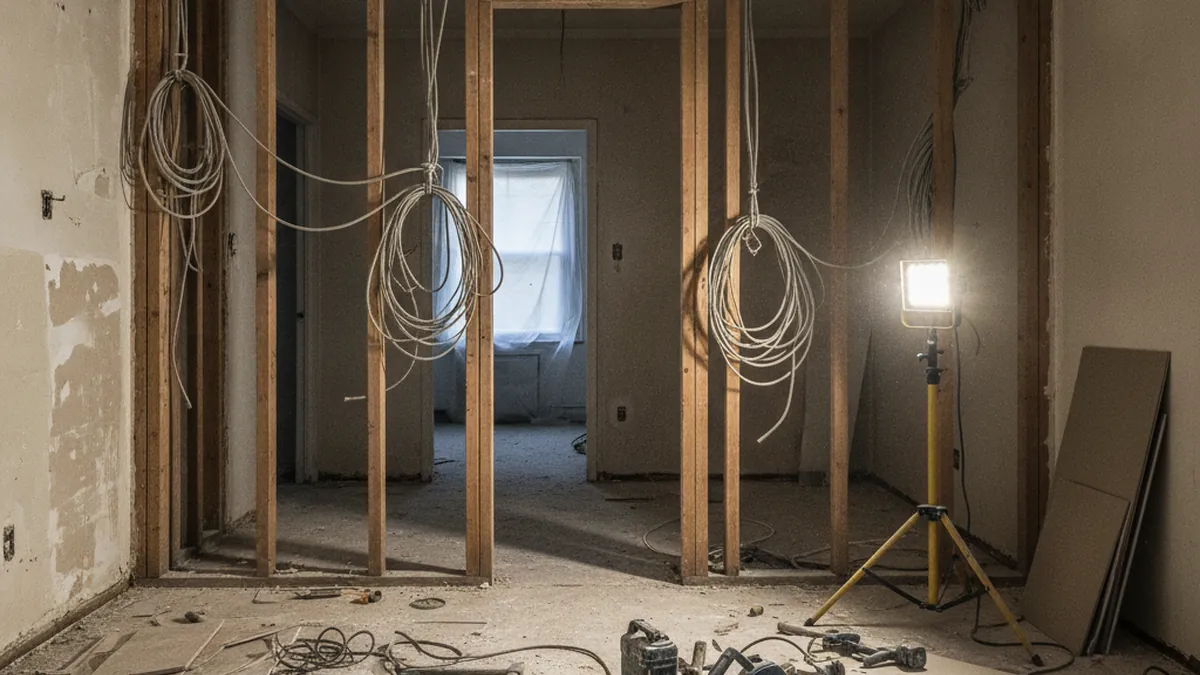
- Cost overruns: On plex and multi-unit properties built before 1980 — which is 60% of Quebec's rental stock according to CORPIQ — work exceeds its initial budget by 25% to 40% on average. A roof estimated at $22,000 can become $32,000 once rotted roof boards are discovered.
- Rental vacancy: Major work (electrical, plumbing, foundation) often requires vacating one or more units. At $1,200 to $1,500 per month per unit on the North Shore, 6 months of vacancy on 2 units represents $14,400 to $18,000 in lost revenue — non-recoverable at sale.
- Post-work selling delay: Even once renovated, the work must fit into the listing schedule. On the North Shore, a well-prepared listing takes 8 to 12 weeks before serious showings. During this delay, your holding costs continue.
- Recovery at sale is never 100%: Investors and income property buyers do not value a new $28,000 roof at $28,000 — they value net income. If your rents don't go up after the work, the property's value doesn't go up either, regardless of renovation quality.
The conclusion is not "never renovate" — it's "only renovate what directly increases net income or unlocks conventional financing." For purely structural or maintenance work, a direct sale to a buyer who takes on the work is often the most advantageous net path.
The high-seller-return work rule
Work that increases sale value: rental repositioning (vacant units converted to market-rate income), electrical upgrade if it unlocks conventional financing. Work to avoid just before selling: complete cosmetic renovations of occupied units, replacement of functioning mechanical systems, work in areas not visible to buyers.
What are the 3 strategies to sell your plex with deferred maintenance without giving it away?
Strategy 1 (recommended): direct sale to a professional buyer — one transparent deduction, no renegotiation after inspection. Strategy 2: targeted off-market sale to qualified investors, avoiding public exposure. Strategy 3: only if capital and 3–6 months are available — electrical upgrade or leasing vacant units at market rates, which directly improve the cap-rate calculation.
Here are the three realistic avenues for a multi-unit property owner on the North Shore who wants to sell despite significant deferred maintenance.
Strategy 1 — Direct sale to a professional buyer (recommended)

A direct buyer like ImmoMulti evaluates the property based on its stabilized potential, not its current state. They have the financing and expertise to absorb the uncertainty of deferred work — something a first-time buyer or inexperienced investor cannot do. The discount is negotiated once, transparently, in the initial offer. No renegotiation after inspection. For a plex needing renovation on the North Shore, this is often the shortest path between the decision to sell and money in your pocket. See our page on selling an income property that needs renovation or as-is to understand how we evaluate your specific situation.
Strategy 2 — Targeted off-market sale
Listing an income property with deferred maintenance on the public market (Centris, DuProprio) attracts the buyers least qualified to acquire it — those who can't get financing — and alerts your tenants to your intention to sell. An off-market and discreet sale directly targets professional buyers who understand the potential value of a property to be repositioned, without public pressure or a flood of low offers.
Strategy 3 — Targeted high-return work (if capital is available)
If you have the capital and the time (minimum 3 to 6 months), two types of work generate a seller return above their cost on the North Shore: (1) full electrical upgrade (unlocks conventional financing, eliminates the most costly risk premium) and (2) leasing vacant units at market rates (directly increases net income in the cap rate calculation). For other items, the return at sale generally doesn't justify the investment. Read our full analysis of mistakes to avoid when selling an income property to complement this strategy.
In all cases, before deciding which path to take, first calculate your position: what is the likely sale price in each scenario, net of commissions, work, delays, and carrying costs? Contact ImmoMulti for a direct, no-obligation, and confidential evaluation. On the North Shore, we buy plex and multi-unit properties within 48 hours, from Laval to Saint-Jérôme, from Terrebonne to Mirabel.
Informational content only. Does not constitute legal, tax, or financial advice. Cost and value estimates are illustrative and based on market conditions observed in 2026 on the North Shore of Quebec. Consult a certified appraiser, notary, or tax advisor for your personal situation.
Frequently asked questions


