
Opinion column by the ImmoMulti Team. Facts are sourced; opinions are our own.
Before signing a promise to purchase, many investors judge a neighborhood by its "feel": a rumor they heard, an anecdote, an impression. Yet the real indicators of a neighborhood — vacancy rate, housing starts, taxes, demographics — tell a far more reliable story than its reputation. Here is why a serious plex investor on the North Shore should trade perception for series of measurable data.
🔥 The blunt opinion: reputation lies, data does not
Let's say it plainly: a neighborhood's "reputation" is the least reliable indicator there is for a multi-unit investor. It is built on biases — a memory, a hallway conversation, an impression dating back ten years — and it warps with every retelling. A neighborhood can carry a bad reputation while posting rock-solid rental demand; another can look "safe" while hiding demographic stagnation that will weigh on your rents five years from now.
Our position: a plex owner who wants to protect their capital must make neighborhood due diligence a cold, quantified and repeatable exercise. Not an intuition. A method.
A news story is not a trend
The most common cognitive trap: confusing an isolated event with a trend. A single occurrence is one data point; a trend is a series pointing in the same direction across several periods. Statistically, judging a neighborhood on a single incident is like drawing a line from a single point — mathematically impossible.
The distinction is documented: Statistics Canada clearly separates point-in-time data from time series, the latter being the only kind that lets you "observe and analyze" change over time (see the Statistics Canada guide to time series). A rational investor applies exactly the same principle to a neighborhood: they don't look at a moment, they look at a curve.
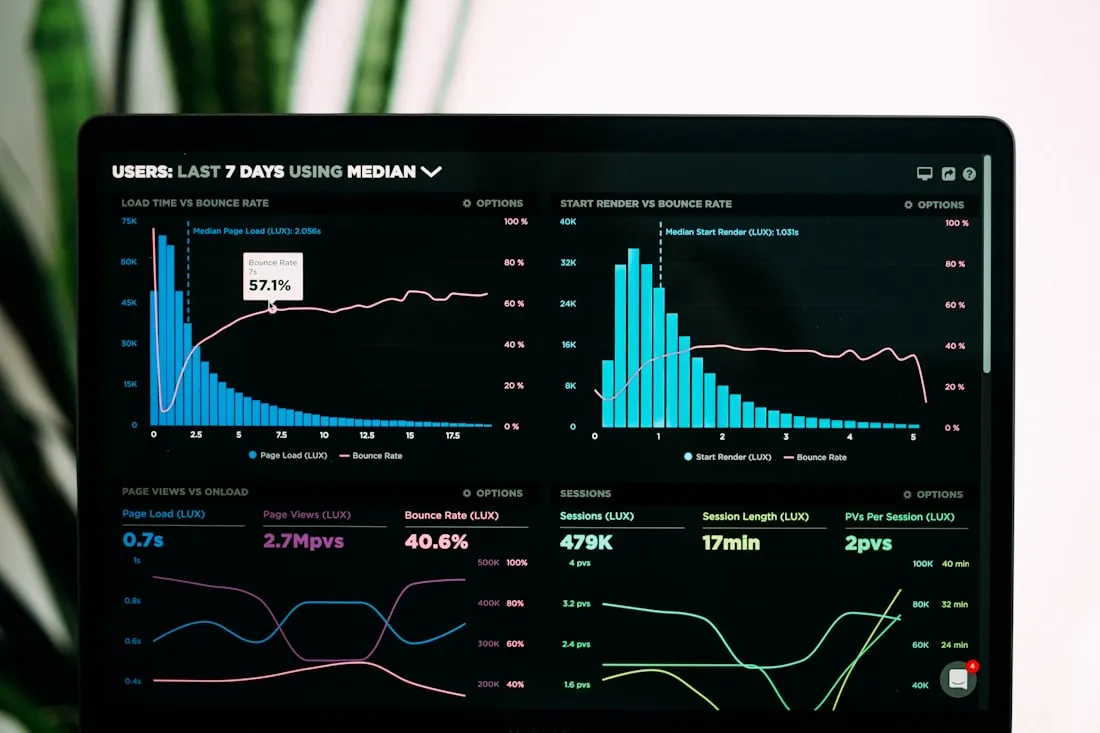
The six indicators that truly count
Here is the grid we apply, with each indicator tied to a recognized public authority. It is this framework, not rumor, that should underpin your decision on the North Shore.
| Indicator | What it reveals | Source |
|---|---|---|
| Vacancy rate | Tension between rental supply and demand; a low and stable rate = sustained rents | CMHC — Rental Market Report |
| Housing starts | Future supply of housing; too many new units can weigh on rents | CMHC — construction data |
| Municipal taxes | Tax burden and its trajectory via the assessment roll; direct impact on net return | Municipal assessment roll |
| Demographics and income | Depth and solvency of long-term demand | Statistics Canada — census |
| Median prices and days on market | Market liquidity and the trajectory of values | QPAREB — market statistics |
| Infrastructure projects | Catalysts of future demand (transit, schools, services) | Public municipal and regional plans |
Vacancy and housing starts: CMHC, not rumor
The CMHC Housing Data Portal publishes the vacancy rate and housing starts by zone every year, including the Montreal region and its suburbs. A low and stable vacancy rate in a North Shore area says infinitely more about the rental strength of a plex than any perception of it.
Demographics and prices: Statistics Canada and QPAREB
Population growth, median age and median household income — available through the Statistics Canada census — measure underlying demand. On the transaction side, QPAREB market statistics provide median prices and days on market: a lengthening sale time or sliding prices are objective signals, not impressions.
And the trajectory of municipal taxes? It deserves an analysis of its own, because a property reassessment can quietly eat into a net return — a topic we covered in our column on the assessment roll that sends North Shore plex taxes soaring.
🎭 Devil's advocate: perception still moves prices
Let's be honest: ignoring a neighborhood's perception entirely would be naive. Reputation is not just a ghost — it genuinely influences the pool of buyers and tenants, and therefore, indirectly, liquidity and prices. An area perceived as "less desirable" can show longer days on market and a risk premium demanded by lenders, even if its demographic fundamentals are sound.
Indeed, the perception of a neighborhood ranks among the recognized factors in a property's value. The OACIQ notes that location and the immediate environment are among the determinants of value — which includes a share of collective perception. So the skeptic has a point: an investor who entirely ignored the perceptual dimension of the market risks overpaying for an asset's liquidity.
The verdict
The synthesis is nuanced but clear. A neighborhood's perception deserves to be known — because it affects liquidity — but it must never underpin a buying decision. The right reflex for a plex owner on the North Shore: start with the six objective indicators (CMHC vacancy and housing starts, taxes via the assessment roll, Statistics Canada demographics, QPAREB prices and days on market, infrastructure projects), then use reputation only as a liquidity variable — never as a verdict.
An isolated news story has no predictive value; a trend measured over several years has a great deal. That is exactly the line between speculating on a rumor and investing on data. For anyone who wants to protect real-estate capital, this isn't a matter of style — it's a matter of method.
Also worth reading in our opinion cluster: how large funds are buying up North Shore plexes and our analysis on gentle densification, zoning and the value of your plex.
ImmoMulti: a cold reading of your market
Before buying a multi-unit building, we systematically cross-reference public indicators with the financial analysis of the property — never reputation alone. Selling a plex on the North Shore? Get a direct offer within 48 hours, with no broker and no commission.


