ImmoMulti — direct buyer of multi-unit properties on the North Shore — regularly sees radon surface during pre-purchase inspections. This naturally occurring radioactive gas, invisible and odourless, is the second leading cause of lung cancer in Canada after smoking, according to Health Canada. For a plex or income property owner, radon is not an abstraction: it is a measurable factor affecting your tenants' health, your liability as a seller and, indirectly, your building's value. The good news: testing is simple and inexpensive, and mitigation, when needed, is well understood. Here is what every multi-unit owner should know before selling.
What is radon — and why does it concern your plex?
Radon is a naturally occurring radioactive gas produced by the breakdown of uranium in the soil. Invisible and odourless, it seeps in through foundations and accumulates in basements and ground floors. According to Health Canada, it causes about 16% of lung cancers in Canada — over 3,000 deaths a year — and is the second leading cause of the disease after smoking.
Radon comes from uranium naturally present in the Earth's crust. As it decays, it releases a gas that migrates to the surface and enters buildings through foundation cracks, drains, slab joints and crawl spaces. In a plex, it is therefore the occupied basement and the lower units that are most exposed — often units rented to families.
The danger is real and well documented. According to Health Canada, radon exposure is linked to about 16% of lung cancers in Canada, or more than 3,000 deaths per year. The Government of Québec adds that radon is also the leading cause of lung cancer among non-smokers and is responsible for more than 1,000 deaths a year in the province.
Sources: Health Canada — Radon gas causes lung cancer; Government of Québec — Residential radon.
What is Health Canada's radon intervention guideline?
The Canadian guideline is 200 becquerels per cubic metre (Bq/m³). Above it, Health Canada recommends lowering the level within one year. In Québec, mitigation work must be done within the year following a result above 200 Bq/m³. No level of radon is deemed completely risk-free.
The Canadian radon guideline sets an intervention threshold of 200 Bq/m³. In practical terms, if your building's test shows a concentration above this level, Health Canada recommends taking corrective action within one year. The higher the concentration, the sooner you should act.
The Government of Québec follows the same guideline: when concentrations exceed 200 Bq/m³, mitigation work must be carried out within the year following the result. One key point: Health Canada stresses that no level of radon is considered completely risk-free — the goal is to reduce exposure as low as reasonably achievable, even below the threshold.
200 Bq/m³ is not "zero risk"
The 200 Bq/m³ level is an action threshold, not an absolute safety threshold. Risk decreases with concentration, but there is no perfectly safe level. For a plex owner concerned about tenant health, aiming as low as possible is the right approach.
Sources: Health Canada — Government of Canada radon guideline; Government of Québec — Residential radon.
How do you test for radon in your income property?
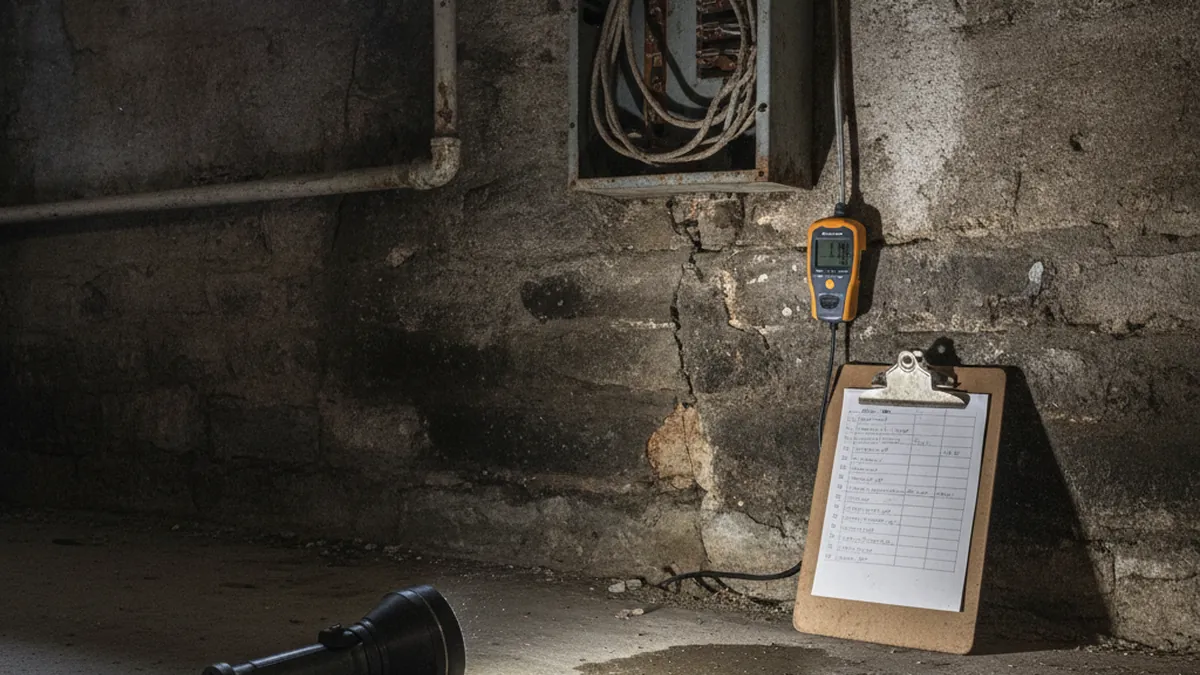
Place a passive detector in the basement about one metre from the floor (or on the ground floor if the basement is unoccupied). Health Canada recommends a test of at least 91 days, ideally during the heating season. In Québec, measure at least one month, ideally three months between October and April — when radon is most concentrated.
Good news for owners: measuring radon is simple and inexpensive. You use a small passive detector left in place for several weeks. Health Canada recommends placing the device in the basement about one metre from the floor, or on the ground floor if the basement is unoccupied — which, in a plex, often corresponds to the lower unit.
Duration and season: why winter?
Duration matters. Health Canada recommends a test of at least 91 days for a valid estimate of the annual average, ensuring the measurement covers the heating season. The Government of Québec specifies measuring at least one month, ideally three months in winter (October to April).
Why winter? Because radon concentrations are generally higher in the cold season: windows stay closed, ventilation drops and the stack effect draws more soil gas indoors. A summer test reading below 200 Bq/m³ should in fact be repeated in winter to be reliable.
| Parameter | Recommendation | Why |
|---|---|---|
| Location | Basement, ~1 m from floor (or ground floor) | Lowest occupied level |
| Duration | Min. 91 days (Health Canada) | Valid annual-average estimate |
| Season | Winter, October to April (Québec) | Highest concentrations |
| Action threshold | 200 Bq/m³ | Canadian guideline |
Sources: Health Canada — Testing your home for radon; Government of Québec — Residential radon.
How to reduce radon: active soil depressurization
The standard method is active soil depressurization (ASD): a pipe runs through the concrete slab and a fan draws radon-laden gas from under the building and vents it outside. According to Health Canada, ASD can reduce radon by roughly 90%. The system should be installed by a certified professional.
If your plex exceeds the threshold, mitigation is effective and proven. The most common technique is active soil depressurization (ASD). The principle is simple: a pipe is installed through the concrete slab and connected to a fan that continuously draws radon-laden soil gas from under the building and vents it outside, above the roof.
The effectiveness is remarkable: according to Health Canada, active soil depressurization can reduce radon concentrations by roughly 90%. For a multi-unit owner, it is a targeted intervention that durably resolves the problem without transforming the building. It should, however, be entrusted to a certified radon mitigation professional to ensure a properly sized system and a compliant follow-up result.
"The most common mitigation measure, known as active soil depressurization, involves installing a pipe through the floor slab and attaching a fan that draws radon-laden soil gas from beneath the house and vents it outside."
— Health Canada, Radon Reduction GuideSource: Health Canada — Radon Reduction Guide for Canadians.
Do you have to disclose radon when selling your plex?
In Québec, the seller must disclose known factors affecting the value or use of the building. A high test result, or completed mitigation work, should be declared in writing. An undisclosed latent defect can expose you to liability after the sale. Conversely, a tested and corrected building, with documentation, is a reassuring selling point.
This is where the topic becomes strategic for a selling owner. In Québec, the seller has a good-faith obligation to disclose known factors that may influence the buyer's decision, the value or the use of the property. A high radon test result, or conversely mitigation work already completed, are elements best recorded in writing in the seller's declaration.
The risk of omitting is concrete: a known and undisclosed problem can be treated as a latent defect and expose you to liability even after closing. For an income property, where the buyer almost always conducts an inspection, hiding a problem is a poor strategy — it often surfaces at the worst moment of the negotiation.
The better strategy is the opposite: test early, correct if needed, document. A plex accompanied by a compliant test result (or a mitigation system installed with a follow-up test) is a reassuring building for the buyer — a differentiator, not a burden. For your specific situation, consult a notary, who will properly frame the seller's declaration.
Keep in your sale file
- The radon test report (duration, season, location, concentration in Bq/m³)
- The mitigation invoice and report, if applicable (system type, certified contractor)
- The follow-up test confirming the return below 200 Bq/m³ after the work
- The corresponding mention in the seller's declaration, validated by your notary
Radon: the winning strategy for a multi-unit selling owner
A high radon test is not a reason to undersell your income property. It is a known, measurable and correctable problem — three qualities that, in real estate, are worth far more than uncertainty. Here is how to approach it if you are considering selling your plex on the North Shore:
- Test in winter, before going to market: you know your situation before the buyer and keep control of the timeline.
- Correct if needed: active soil depressurization installed by a certified professional durably resolves the problem, with a follow-up test to back it up.
- Document and disclose: a complete file turns a potential objection into a point of trust.
- Sell directly: ImmoMulti buys multi-unit properties across the North Shore — no broker, no commission, offer within 48 hours. A tested and corrected building trades more smoothly.
ImmoMulti: direct buyer of multi-unit properties on the North Shore
Wondering about the state of your plex before a sale? We assess your building as-is and can make you a direct, confidential offer — no commission, no public listing. Get a proposal within 48 hours.
To prepare your building for a transaction under the best conditions, see also our guide to the pre-purchase inspection of an income property and our article on latent defects in an income property in Québec. If you would rather explore a direct sale, learn how to sell your income property fast on the North Shore.
Radon and tenant health: what the real risk means for your plex
Radon risk is cumulative and long-term: the longer the exposure and the higher the concentration, the greater the lung-cancer risk. According to Health Canada, a non-smoker exposed to a high radon level over a lifetime has about a 1-in-20 chance of developing lung cancer; for a smoker exposed to the same level, that risk rises to about 1 in 3. For a multi-unit owner, this turns a $40 detector into a matter of liability and peace of mind.
Many plex owners treat radon as one more administrative box to tick. That framing is a mistake. Radon is not a "cosmetic" issue like peeling paint, nor a "one-off" issue like a water leak: it is a chronic health risk that acts over years, silently, in the lowest units of your building — often the ones rented to households that spend the most time there. Understanding how the risk works helps you make the right decisions at the right time.
A risk that depends on duration and concentration
Health Canada is clear: radon risk is long-term, not immediate. No one gets sick after a weekend in the basement. The danger comes from the accumulation of exposure: the more you (or your tenants) breathe high-concentration radon over years, the greater the lung-cancer risk. That is why a lower unit occupied continuously by the same family for ten years represents a very different exposure than a storage basement where no one sleeps.
To give orders of magnitude, Health Canada frames lifetime risk as follows:
| Occupant profile | Lifetime exposure to a high radon level | Lifetime exposure at 200 Bq/m³ |
|---|---|---|
| Non-smoker | ≈ 1-in-20 lung-cancer risk | ≈ 2% lifetime risk |
| Smoker | ≈ 1-in-3 lung-cancer risk | ≈ 17% lifetime risk |
The reading is striking: at equal concentration, smoking multiplies the risk. Radon and cigarette smoke combine, each amplifying the other's effect. You obviously have no control over your tenants' habits, but you do control one lever: the radon concentration in the units you rent. Lowering that factor lowers the risk for everyone — smokers and non-smokers alike.
Source: Health Canada — Radon causes lung cancer.
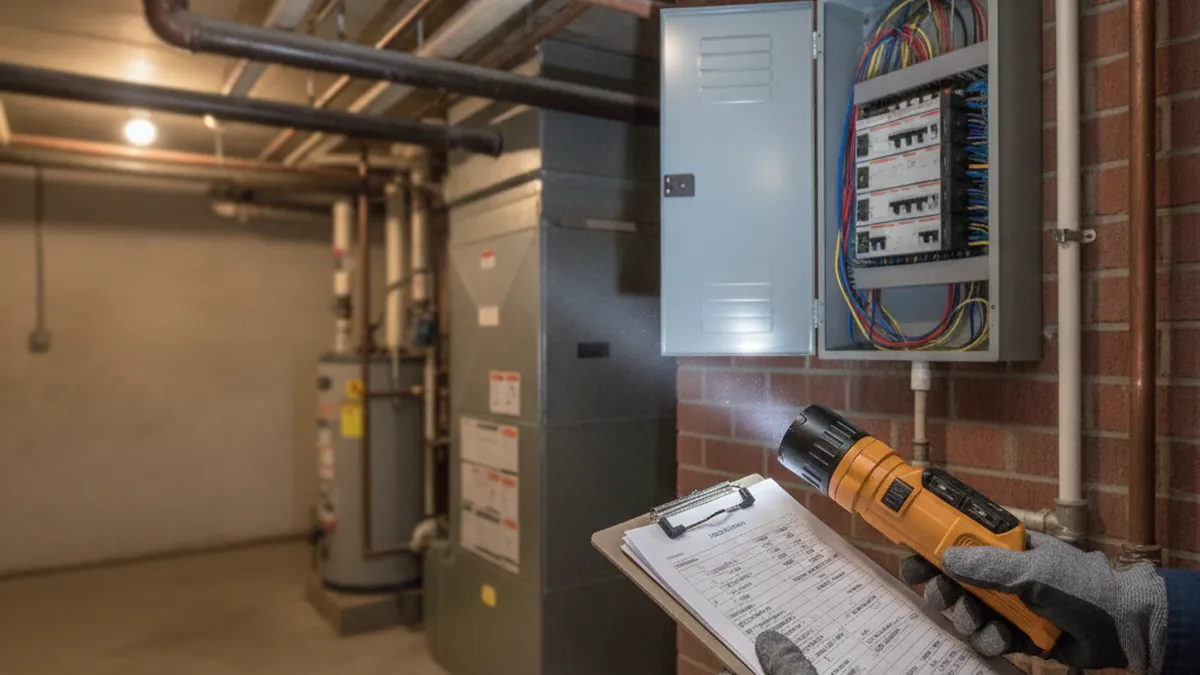
Why multi-unit changes things compared with a single-family home
An owner-occupant of a house manages a single household: their own. The owner of an income property manages the air breathed by several households, some with children, seniors or vulnerable people. This multiplication of occupants has three concrete consequences:
- Several exposure zones — each lower unit or half-basement is a potential contact point with the soil; a building may show a high result in one unit and an acceptable one in another.
- Broader responsibility — your tenants' health is not an abstraction; a documented problem left unaddressed is hard to defend morally and, at sale, legally.
- A management argument — a building that is "radon-tested, below the guideline" is a rental-quality argument, just like a recent roof or new windows.
For an owner eyeing an eventual sale, this logic becomes an advantage: dealing with radon proactively protects your tenants and builds a file that reassures the future buyer. Both goals point in the same direction.
The right owner reflex
- Test the lowest occupied level(s) first (lower unit, lived-in half-basement).
- Treat each soil-contact unit as a distinct measurement point.
- Document results for your building file, even if everything is compliant.
- Aim for the lowest possible concentration, not just "below 200".
Radon testing in a plex: the step-by-step procedure
For a reliable result, use a long-term detector (at least 91 days, ideally 3 months in winter) placed in the lowest occupied area, away from drafts, then send it to the lab. Short-term tests (2 to 7 days) serve only to verify a mitigation system, never to decide whether your building exceeds the Canadian guideline. A test done to Health Canada's protocol, or by a C-NRPP-certified professional, produces evidence usable in your sale file.
The test principle is simple, but the rigour of the protocol makes all the difference between a reliable number and a misleading one. Here is how to proceed concretely in an income property, following Health Canada's recommendations.
Step 1 — Choose the right detector type
Two main families of detectors are accepted by Health Canada, with different uses. It is essential not to confuse them: the wrong detector at the wrong time gives an unusable number.
| Detector type | Measurement duration | What it is for |
|---|---|---|
| Alpha-track detector | Long-term (≥ 91 days, often 3 to 12 months) | Estimate the annual average and decide if you exceed 200 Bq/m³ |
| Activated charcoal | Short-term (2 to 7 days) | Quick verification measurement, never to decide on mitigation |
| Continuous electronic monitor | Short or long term depending on the device | Continuous tracking; long-term for a valid estimate |
Health Canada is categorical on this point: a short-term measurement of two to seven days must never be used to determine whether a building exceeds the Canadian guideline or to decide the need for corrective work. It is useful only for a quick check — for example, testing that a mitigation system is working after installation. For anything touching your plex's value and your seller's duty, the long-term test is what counts.
Source: Health Canada — Guide for radon measurements in homes.
Step 2 — Position the detector correctly
The detector's location determines how representative the result is. The basic rules:
- The lowest occupied level — a lived-in basement, a finished half-basement, or the ground-floor unit if the basement is not habitable. In a plex, that is almost always the lower unit.
- About one metre from the floor, in a normally occupied room (bedroom, living room), not in a closet or mechanical room.
- Away from direct drafts — avoid the immediate vicinity of a window, an exterior door, a fan or a heat source, which would skew the measurement.
- Without moving it for the full test duration; note the placement and retrieval dates.
In a building with several soil-contact units, prudence calls for testing each lower unit separately. Two neighbouring apartments can show very different concentrations depending on slab cracks, a drain or a crawl space under part of the building.
Step 3 — Respect duration and season
This is the step most often neglected. Health Canada recommends a measurement of at least 91 days, ideally during the heating season (fall-winter), when the building is most closed up and radon concentrations are highest. In Québec, the preferred window runs from October to April. A summer test below the guideline is not reassuring: it must be repeated in winter to settle the matter.
Step 4 — Analyze, interpret, archive
At the end of the test, you seal the detector and send it to the lab, which returns a concentration in Bq/m³. From there:
- Below 200 Bq/m³ — compliant with the Canadian guideline. Archive the report and consider periodic re-testing, especially after work touching the slab or ventilation.
- Above 200 Bq/m³ — plan mitigation within the year, prioritizing by concentration: the higher it is, the faster you act.
For a building headed for sale, having the test done (or validated) by a C-NRPP-certified professional — the Canadian National Radon Proficiency Program — adds credibility to the file. The report then becomes solid evidence the buyer and their inspector can take seriously.
Source: Health Canada — Long-term test instructions.
The classic mistake: testing too short, too fast
Many owners rushed by a sale deadline run a 48-hour test and conclude "all is well" below 200 Bq/m³. That is a false assurance: Health Canada does not recognize short tests to decide on mitigation. If the buyer then demands a compliant long test that reveals an exceedance, your "reassurance" backfires. Test long, test in winter, test early.
Mitigation methods in detail: what works, what helps, what falls short
Active soil depressurization (ASD) is the reference method: it captures radon under the slab before it enters and vents it above the roof, reducing concentrations by more than 80%, often around 90%. Sealing cracks and increasing ventilation (including HRVs) are supporting measures of limited effectiveness, reserved for modest reductions. A Health Canada field study of 52 professionally mitigated homes brought concentrations of several thousand Bq/m³ well below the guideline.
Not all radon-reduction techniques are equal. Some attack the source (keeping radon out), others the symptom (diluting radon already inside). For a multi-unit owner, understanding this distinction avoids spending on a half-measure that leaves the building above the guideline.
Active soil depressurization (ASD): the reference solution
Already introduced above, ASD deserves a closer look. The soil under your building is slightly under positive pressure relative to the heated interior, which pushes radon up through the slab. ASD reverses this dynamic: a pipe runs through the concrete slab, a quiet fan creates suction under the foundation, and radon-laden gas is drawn out and vented above the roof, away from windows and air intakes. Radon no longer gets the chance to enter.
The effectiveness is demonstrated at scale. A Health Canada field study followed 52 homes in the Ottawa-Gatineau area, recruited after being professionally mitigated for high levels. Long-term tests conducted over at least three months during the heating season showed that the ASD geometry used brought concentrations well below the guideline value, even for starting levels in the thousands of Bq/m³. That robustness is why ASD is the first choice.
Source: Health Canada — Summary report on the ASD field study.
Supporting measures: sealing and ventilation
Other approaches exist, but Health Canada notes they have limited effectiveness and suit only modest reductions:
- Sealing entry routes — caulking slab and foundation cracks, joints, pipe penetrations and sump pits. Useful as a complement, but rarely enough alone: a building always has residual entry paths.
- Increasing ventilation — bringing in more outdoor air to dilute radon. The effect is modest and depends heavily on how airtight the building is.
- Heat recovery ventilator (HRV) — an HRV increases ventilation while recovering heat from exhaust air. It can help, but only for modest reductions, and intake and exhaust flows must be balanced: a poorly set system that depressurizes the unit can draw more radon from the soil and worsen the situation.
Ventilation works best in very airtight buildings with low natural air-change rates. In most cases of a clear exceedance, these measures do not replace ASD; they accompany it.
Source: Health Canada — Reducing radon levels in your home.
| Method | Target | Effectiveness | Typical role |
|---|---|---|---|
| Active soil depressurization | Source (before entry) | High — > 80% reduction, often ~90% | Primary solution for an exceedance |
| Crack sealing | Source (partial) | Limited alone | Complement to ASD |
| Ventilation / HRV | Symptom (dilution) | Modest, light situations | Modest reductions, airtight buildings |
What it costs, in perspective
The exact cost of an installation depends on the building — foundation layout, number of suction points, duct length — so it is better to get quotes from certified professionals than to rely on a single figure. Health Canada does, however, put the scale of the expense in perspective: radon levels can be reduced by more than 80% for about the same cost as other common home repairs, such as replacing a furnace or air conditioner. In other words, this is not an extraordinary project: it is an ordinary major-maintenance expense, to be budgeted as such.
For an owner preparing a sale, this framing is valuable. A buyer's radon objection does not "cost" the value of the building: it costs the equivalent of a heating-appliance replacement — an amount you can quantify, budget and often absorb without giving up your price.
Source: Health Canada — Radon reduction techniques.
DIY measurement, professional mitigation
A useful rule of thumb separates the two phases. Measuring radon is something an owner can do reliably with an inexpensive long-term test kit, provided the protocol is respected: right detector, right location, right season, full duration. There is no need to hire anyone simply to place an alpha-track detector and mail it to a lab.
Mitigation, on the other hand, is not a place for improvisation. A poorly designed system — an undersized fan, a suction point in the wrong spot, an exhaust too close to a window — can fail to lower the concentration, or worse, redistribute radon inside the building. This is why the work should go to a C-NRPP-certified mitigation professional, who sizes the system, installs it to standard and confirms the result with a follow-up long-term test. For a multi-unit building, where several households depend on that air, the certification is not a luxury: it is what makes the corrected result defensible in your sale file. When in doubt, measure yourself, then bring in a certified professional to fix and verify.
Radon and selling: three owner scenarios and how to play them
Facing radon, the selling owner of a plex is better off controlling the timeline than being caught by it. Testing early, before going to market, lets you choose among three scenarios: (1) result below 200 Bq/m³, you document and showcase it; (2) high result, you correct and resell reassured; (3) high result with no time to correct, you disclose and adjust. The worst scenario remains the one where the buyer discovers the problem at inspection without the seller having anticipated it.
The disclosure principle is clear: in Québec, the seller must declare known factors affecting the value or use of the building, and a hidden problem can be treated as a latent defect. What remains is translating this principle into concrete decisions based on what your test reveals. Here are the three typical cases for a North Shore plex owner.
Scenario 1 — The test comes back below 200 Bq/m³
This is the simplest and most common case. You hold proof of compliance: a long-term test report, done in winter, below the Canadian guideline. What to do?
- Archive the dated report in your building file.
- Mention it in the seller's declaration as a documented positive.
- Use it as an argument: "building radon-tested, below Health Canada's guideline" reassures a methodical buyer and heads off a potential objection.
A compliant test turns an unknown into a documented certainty — exactly what an income-property buyer is looking for.
Scenario 2 — The test exceeds the guideline and you have time to correct
High result, but you are not rushed to sell in the coming weeks. This is the ideal situation to regain control:
- Have an ASD installed by a C-NRPP-certified professional.
- Run a long-term follow-up test confirming the return below 200 Bq/m³.
- Assemble the full file: initial report, mitigation invoice and quote, compliant follow-up report.
You then sell a building that is not "suspect" but corrected and proven. Paradoxically, a plex that had a radon problem treated and documented can inspire more confidence than a plex never tested: the buyer knows where they stand.
Scenario 3 — High result, no time to correct before the sale
You must sell fast (estate, relocation, separation) and the test reveals an exceedance. The temptation is to hide it — that is precisely the wrong decision. The right strategy:
- Disclose the result in writing in the seller's declaration, with your notary's support.
- Quantify the mitigation (roughly a furnace replacement) to frame the buyer's objection.
- Consider selling to a direct buyer who purchases the building as-is, fully informed, without radon derailing the transaction.
"A problem that is known, measured and correctable can be negotiated; a hidden problem, discovered by the other side at the worst moment, is paid for twice — in price and in trust."
— Negotiation principle applied to radonThe worst scenario: doing nothing
In every case, the costliest option is inaction. If you do not test and the buyer commissions their own radon test during the pre-purchase inspection, you lose control: the result lands in the middle of the negotiation, the buyer discovers the number at the same time as you, and you end up defending a position from weakness. Testing first means keeping the initiative.
Disclosure: do not improvise
The seller's declaration is a legal document. The exact wording of a radon test or mitigation mention must be validated by your notary, based on your specific situation. This article is informational and does not replace legal advice.
Radon: common mistakes by multi-unit owners
The most common mistakes: believing a "safe" neighbourhood removes the need to test, relying on a short test, measuring only one unit, testing only in summer, confusing mitigation with simple airing, and above all hiding a high result rather than correcting it. Each of these mistakes costs time, money or credibility when it comes time to sell.
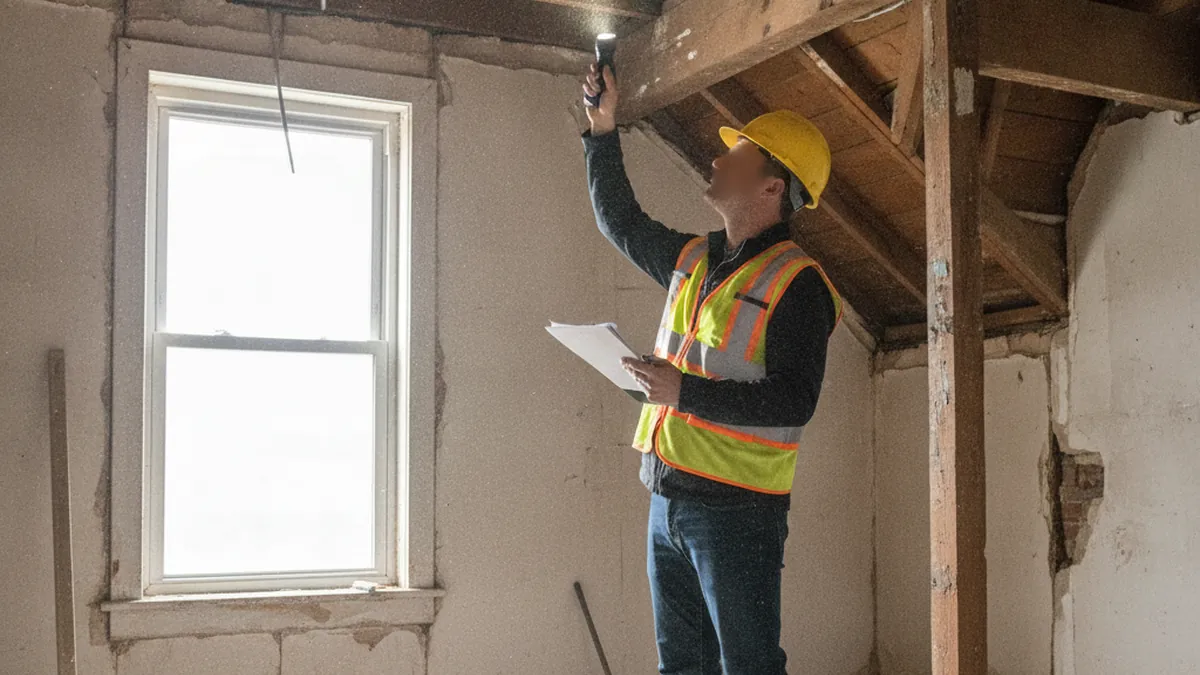
Having seen radon come up repeatedly during pre-purchase inspections, the same misunderstandings recur. Here is the list, with the fix to apply.
| Common mistake | Why it is a problem | The right reflex |
|---|---|---|
| "My neighbourhood is safe, no need to test" | Radon depends on local geology, not the postal code — neighbouring buildings differ | Always measure the building directly |
| Relying on a 2-to-7-day test | Not recognized by Health Canada to decide on mitigation | Long-term test ≥ 91 days, in winter |
| Testing only one lower unit | Other soil-contact units may differ | Test each soil-contact unit |
| Testing only in summer | Underestimated concentrations, windows open | Measure between October and April |
| Confusing airing with mitigation | Ventilation alone is of limited effectiveness | ASD for a clear exceedance |
| Hiding a high result | Risk of latent defect and loss of trust | Correct and/or disclose in writing |
The thread behind these mistakes: wanting to "settle fast" an issue that calls for a little method. Yet the method here is simple and inexpensive. An owner who tests properly, corrects when needed and documents will never be caught off guard at sale.
Sources: Health Canada — Radon, what you need to know; Government of Québec — Residential radon.
A radon glossary for the income-property owner
Radon comes with technical vocabulary that can be intimidating. Here are the essential terms, explained simply, so you can read a test report or talk to a professional without getting lost.
| Term | Definition |
|---|---|
| Radon | Naturally occurring radioactive gas, colourless and odourless, from the breakdown of uranium in the soil. |
| Becquerel per cubic metre (Bq/m³) | Unit measuring radon concentration in air. One becquerel equals one radioactive decay per second. |
| Canadian guideline (200 Bq/m³) | Intervention threshold set by Health Canada. Above it, correction within one year is recommended. |
| Long-term test | Measurement of at least 91 days (ideally 3 months in winter) used to estimate the annual average and decide on mitigation. |
| Short-term test | Measurement of 2 to 7 days, reserved for a quick check, never for the decision to correct. |
| Active soil depressurization (ASD) | Reference mitigation technique: a pipe and fan capture radon under the slab and vent it above the roof. |
| Stack effect | Phenomenon where warm air rising in a building creates suction at the base, drawing more soil gas in. |
| C-NRPP | Canadian National Radon Proficiency Program, which certifies measurement and mitigation professionals in Canada. |
| Seller's declaration | Document where the seller records known facts about the building; a radon result or work belongs there. |
Radon and the building code: new construction is not immune
A stubborn myth holds that a recent building is safe. It is false: radon comes from the soil, not from the building's age. A new plex built on a high-emanation lot can show a high concentration, just as a century-old building can be compliant. Modern construction increasingly integrates "radon-ready" rough-in measures, but they never remove the need to measure once the building is occupied and heated. For an owner, the conclusion is invariable: the only reliable verdict is the test's.
The one-sentence takeaway
Radon is an invisible but measurable, correctable and documentable risk: three qualities that, for a selling plex owner, turn a source of anxiety into a simple step in preparing for the sale.