
At ImmoMulti — a direct buyer of multiplexes on the North Shore — we regularly see sales of income properties delayed by an administrative detail: an expired certificate of location, an encroachment to document, a title irregularity raised at the last minute. Title insurance is a tool too many plex sellers overlook. For a one-time premium, it protects against title defects, undisclosed encroachments, fraud, and certain problems an expired certificate might have revealed — and it often lets the notary close on the scheduled date instead of postponing. Here, with sources, is what it covers, what it does not, who pays, and how it can unlock the sale of your property.
What is title insurance when selling an income property?
Title insurance is a policy that protects the owner against real losses arising from problems affecting the property title: title defects, undisclosed charges, encroachments, fraud. Unlike home insurance renewed annually, it is paid only once and lasts as long as you own the property (FCT).
The transfer of a title from one owner to another can contain defects that affect the property title. According to FCT, one of Canada's leading title insurers, title insurance protects against these defects and covers certain irregularities: non-compliance with zoning regulations, municipal tax arrears, encroachments of structures onto neighbouring land, and structures built without permits.
For a seller of a plex or multiplex, the logic is simple: instead of physically or legally correcting a title problem before the sale — which costs time and money — you transfer the risk to the insurer, who covers the costs if the problem materializes. Québec legal commentary describes title insurance as a "reassuring presence" in a real estate transaction.
Source: FCT — "What every property owner should know about title insurance" and Réseau juridique du Québec.
What does title insurance actually cover?
According to FCT, title insurance covers: title defects (charges, liens), encroachments of structures onto a neighbour, municipal non-compliance, structures built without permits, tax arrears, errors in public records, and title fraud. It can cover tens of thousands of dollars in costs to restore the title.

Here are the main families of covered risks, according to FCT:
| Risk | What title insurance covers |
|---|---|
| Title defects | Charges, liens, errors in public records or government responses, non-compliance with municipal agreements. |
| Undisclosed encroachment | When a structure has been unintentionally built onto neighbouring land and must be moved, the policy can help cover the associated costs. |
| Title fraud | Identity theft to change the name on the title or register a fraudulent mortgage: legal costs and defence of the title covered. |
| Problems an expired certificate could have revealed | Location irregularities, subject to the policy conditions — the insurer may allow closing despite the problem. |
On the fraud front, the stakes are real for a plex owner. According to FCT, if someone steals your identity and tries to "steal" your property by changing the name on the title, title insurance covers your legal costs and helps defend your title. A fraudulent mortgage registered without your knowledge can keep you from selling or remortgaging and cost tens of thousands of dollars in investigative and legal fees.
Source: FCT — Protection against title fraud and FCT — "What title insurance covers".
What title insurance does NOT cover
Title insurance has important limits. According to the sources consulted, problems with fences, walls and hedges, non-compliance with environmental protection laws, and environmental risks such as soil contamination or flooding are notably excluded from available policies. It also does not cover latent physical defects of the building (roof, plumbing, structure): those fall under a pre-purchase inspection. Title insurance protects the title, not the physical condition of the property.
Does title insurance replace an up-to-date certificate of location?
Not in an ordinary residential transaction. Title insurance can be taken as a replacement for a certificate of location in some cases and represent appreciable savings — but it in no way releases the seller from the obligation to provide an up-to-date certificate, and some lenders refuse this alternative.
This is the most important nuance to grasp. A certificate of location remains valid until the first of two events: a change to the property, to municipal regulations or to the lot number in Québec's Cadastre, or the passing of 10 years since its preparation. After that — or after a cadastral renovation — the certificate is expired, and a well-advised buyer will require a new one.
Title insurance can be taken as a replacement for a certificate of location, which can represent considerable cost savings. However, as the sources emphasize, obtaining title insurance in no way releases the seller from the obligation to provide an up-to-date certificate of location, whether or not the purchase is financed by a mortgage-secured loan. In most ordinary residential transactions it therefore does not replace the certificate, and some lenders refuse this solution.
Watch for another point raised by Éducaloi: if you encounter a problem that a certificate of location could have revealed, title insurance will not necessarily help you. It is a complement, not a universal substitute.
Sources: Éducaloi — "Buyers: why demand a certificate of location?" and OACIQ — The importance of an up-to-date certificate of location.
How can title insurance facilitate and speed up your sale?
Title insurance allows the transaction to be signed within the initially scheduled deadlines despite a problem raised by the title examiner: the seller receives the money on the agreed date and the buyer takes possession. For a property with an expired certificate or a minor irregularity still to be corrected, it avoids postponing closing.

This is where title insurance becomes a genuine selling tool. According to the Réseau juridique du Québec, it allows a transaction to be signed within the initially scheduled deadlines despite problems raised by the title examiner: the broker's work is not in vain, the seller receives the money on the expected date, and the buyer can move in. For the sale of an income property, this mechanism is valuable.
A common example: preparing a new certificate of location takes time, and the notary must have enough time to review it before the deed of sale. If that certificate is not ready by the closing date, rather than pushing the signing back by several weeks, some notaries propose title insurance — notably when not all verifications will be completed in time, or when an encroachment on a servitude remains to be resolved.
For a plex seller, the benefit is twofold: you avoid the sale "falling through" because an administrative document is late, and you don't pay the extra interest and carrying costs on a property you already intended to have sold. This is especially useful when the buyer has a firm possession date or financing with a deadline.
"Title insurance allows a transaction to be signed within the initially scheduled deadlines despite problems raised by the title examiner: the seller receives the money on the expected date, and the buyer can move into their new home."
— Réseau juridique du Québec, "Title insurance… a reassuring presence!"Source: Réseau juridique du Québec — title insurance.
How much does title insurance cost, and who pays?
According to FCT, the premium is low and payable only once: the protection lasts as long as you own the property. The cost of the owner's policy is calculated based on the property value and varies by province. Who pays is a matter of negotiation between the parties and of the notary's practice.
The financial argument is direct. FCT describes a low premium, payable only once, that provides protection as long as you own the property. The cost of the owner's policy is calculated based on the property value and varies by province. Unlike a property-damage policy that renews and whose premium climbs each year, title insurance is a single outlay.
Who pays: seller or buyer?
The question of who pays is not fixed by law: it is a matter of negotiation between the parties and of the practice of the instrumenting notary. In many cases, the owner's policy is taken for the buyer's benefit, who assumes the cost. But a seller may choose to offer it to facilitate and secure closing — a strategic move when the title has a minor irregularity or the certificate is expired.
The notary's fees, for their part, are not set by the Chambre des notaires du Québec: they depend on the time, the complexity of the transaction, and the notary's expertise. The title insurance premium is therefore added to those fees, but generally remains a limited amount relative to the value of an income property. Ask your notary for a firm quote based on your plex's value.
Points to confirm with your notary
- Is your plex's certificate of location more than 10 years old, or has the cadastre been renovated?
- Does a servitude or encroachment remain to be documented or resolved?
- Does the buyer have financing whose lender accepts title insurance?
- Who — seller or buyer — will bear the one-time premium?
Sources: FCT — Ultimate guide to title insurance for property owners and Chambre des notaires du Québec — notary's fees.
Title insurance and selling a plex on the North Shore
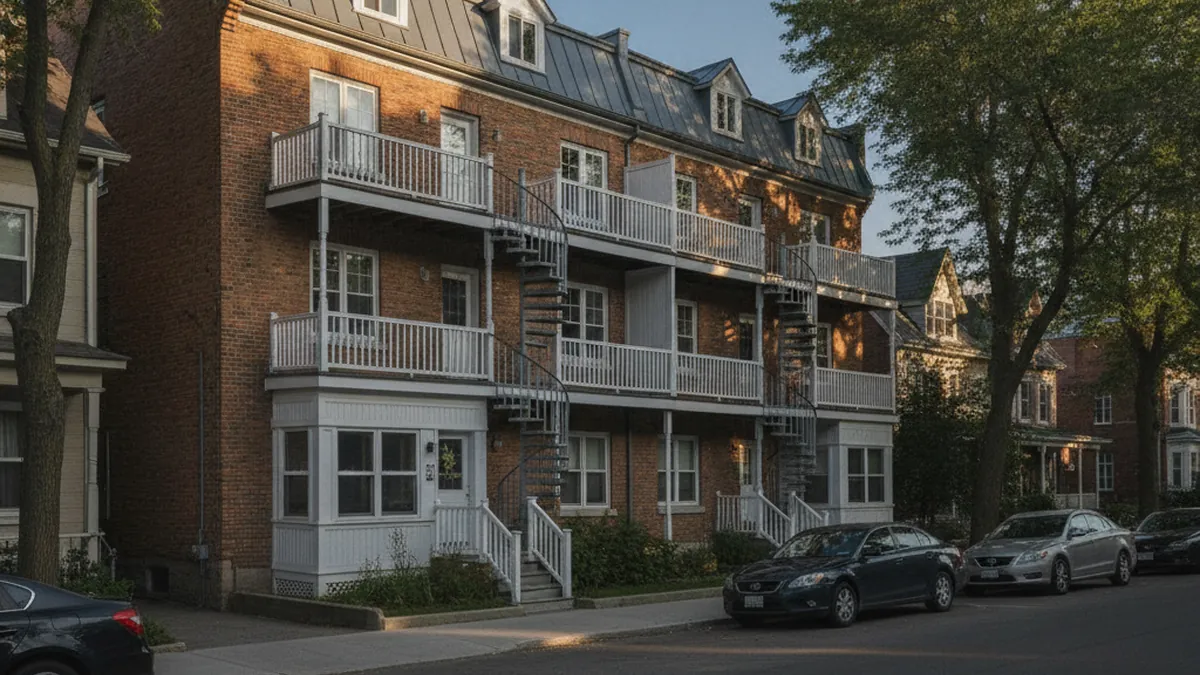
On the North Shore, a plex whose certificate of location is more than 10 years old, whose cadastre has been renovated, or where a servitude remains to be documented, is a good candidate for title insurance. It gives the notary a way to close on the agreed date — but it remains a complement, not a substitute for an up-to-date certificate.
On the North Shore of Montréal — Terrebonne, Mascouche, Blainville, Boisbriand, Saint-Jérôme, Saint-Eustache, Deux-Montagnes, Mirabel — many plexes and multiplexes were acquired more than a decade ago. Their certificate of location is often expired, and successive cadastral renovations may have changed the property's description. In these situations, title insurance gives the notary room to close the sale on the agreed date.
To clearly distinguish the respective roles of title insurance and the survey document, read our dedicated guide: when does it make sense to sell an unprofitable plex. And if servitudes or encroachments complicate your land, title insurance can be part of the solution — without ever replacing a rigorous verification.
That said, title insurance does not make a sale "magical." It protects the title; it settles neither latent physical defects, nor tenancy issues, nor price. For those aspects, a specialized direct buyer simplifies everything: we know the local multiplex market, we buy the property as-is, and we handle the closing mechanics with your notary.
ImmoMulti: direct buyer of multiplexes on the North Shore
An expired certificate or a title irregularity should not stop you from selling. We buy your plex or income property as-is, without a broker, without commission, and we work with your notary to close cleanly — title insurance if needed. Get a proposal within 48 hours.
To situate title insurance among the other disposal costs, see also our analysis of the North Shore real estate market in 2026. A well-prepared transaction is a transaction that closes on the scheduled date.
Informational content only. Does not constitute legal or tax advice. Title insurance coverage, exclusions and conditions vary by insurer and policy. Consult a notary to assess whether title insurance is appropriate for your specific situation.


