Informational guide by the ImmoMulti Team. Technical facts are sourced; this content is not legal or engineering advice.
Before you rent a basement unit in your plex, the first question isn't "what rent can I charge?" but "is this unit compliant?". Ceiling height, egress window, natural light and occupancy permit: these four points decide whether your basement unit in a North Shore multi-unit building can legally house a tenant. As a direct buyer of plexes and multi-unit properties, ImmoMulti regularly sees basement units rented without clearing these checks — and the consequences land at the worst possible moment: a claim, a complaint or a sale.
The 4 conditions to validate before renting a basement
- Adequate clear height in the habitable rooms.
- A compliant means of escape (egress window or exterior door) for every bedroom.
- A minimum glazed area for natural light.
- Zoning that allows the unit, plus the municipal occupancy permit/certificate.
Ceiling Height: The First Filter for a Basement Unit
Clear height is often what sinks a basement unit project. Quebec's Construction Code requires a minimum height for a room to be habitable. For a basement living room, you generally aim for at least 1.95 m of clear height, measured under the lowest obstacles — beams, ventilation ducts, pipes. Many municipalities require more (often around 2.1 m) to recognize the space as a complete dwelling unit.
The classic trap: a basement that "looks" tall enough in the middle of the room, but where a beam or a duct drops the height below the standard at a key spot. It's the height under the lowest projection that counts, not the average. Have the actual height measured and confirm the applicable requirement with your planning department before committing to work or a lease. The technical references are published by the Régie du bâtiment du Québec (RBQ), which administers the Construction Code.
Egress Window and Means of Escape
This is the most critical safety point. Every bedroom in a basement unit must have a means of escape in case of fire: either a door leading directly outside, or an egress window whose clear opening meets the Code's minimum dimensions (clear area, height and width) and that opens from the inside without a key or tool.
Because the window is often below grade, a sufficiently clear window well is generally needed to allow escape. A bedroom without compliant egress simply cannot be rented as a bedroom — no matter the rest. Escape and prevention principles are explained by Quebec's Ministère de la Sécurité publique (fire safety).
Natural Light and Minimum Glazed Area
The Construction Code requires a minimum glazed area per habitable room, expressed as a percentage of the room's floor area. This requirement is about natural light in bedrooms and the living room. In a basement, it's frequently the second sticking point after height: enlarging a below-grade opening means non-trivial excavation and structural work.
The practical consequence: a room that doesn't meet the required glazed area cannot be counted as a bedroom, even if it's otherwise spacious. Before advertising a room as a "bedroom to rent", validate its glazed area — a unit advertised as a "2-bedroom" that doesn't hold up on compliance exposes the owner to recourse.
| Criterion | Benchmark to check | Authority |
|---|---|---|
| Clear height | ≈ 1.95 m under the lowest projection (often ≈ 2.1 m required in cities) | Construction Code / municipality |
| Egress | Egress window or exterior door per bedroom + clear window well | Construction Code (RBQ) |
| Glazed area | Minimum % of the room's floor area | Construction Code (RBQ) |
| Permitted use | Number of dwellings allowed by zoning | Municipality (planning) |
| Occupancy | Alteration permit + occupancy certificate | Municipality |
Indicative benchmarks to confirm with your municipality and the Code in force; requirements vary by construction date and city.
Zoning, Permits and Occupancy Certificate
Administratively, adding a basement unit isn't a simple finishing job: it's often a change of use or an added unit. Before the work, three municipal checks are essential: zoning (how many dwellings your lot actually allows), the construction or alteration permit, and, in many cities, an occupancy permit or certificate confirming the unit can be lived in.
General procedures and rules for owners are available through Québec.ca — Housing and territory, but it's your city's planning department that decides case by case. On the North Shore, requirements differ from one municipality to the next (Terrebonne, Blainville, Boisbriand, Saint-Eustache, Saint-Jérôme): never assume that a rented basement at a neighbor's place means yours is compliant. This permit-and-timeline logic mirrors what we cover in our guide on selling an income property that needs renovation.
Fire Safety: Alarms and Installations
Quebec's Safety Code requires smoke alarms in every dwelling, with at least one per floor — basement included. A carbon monoxide alarm is mandatory where there is a combustion appliance (furnace, gas water heater) or an attached garage. This equipment must be functional before occupancy.
Beyond alarms, watch the fire separation between the basement unit and the rest of the building, the condition of the electrical panel, and ventilation. A poorly ventilated, damp basement becomes a habitability problem — and a potential dispute before the Administrative Housing Tribunal, which can review the dwelling's compliance and condition. The same inspection rigor applies to any sale: see our pre-sale inspection guide for an income property.
Common Owner Mistakes
Three mistakes come up constantly among plex owners who rent a basement:
- Rent first, regularize later. An undeclared unit can be discovered during a claim, a tenant complaint or a sale — at the most expensive moment.
- Confusing "livable" with "compliant". A finished, cozy, furnished basement can still fail the height, egress or glazed-area criteria.
- Ignoring insurance. An undeclared or non-compliant unit can lead to a denied claim; tell your insurer about any additional basement unit.
If bringing the unit up to code costs more than the basement rent will return, compliance may tip the balance toward a direct sale of your building rather than heavy work. The right decision is made on numbers, not on a hunch.
The Code's Exact Numbers: Height, Egress and Glazed Area
So far we've talked in benchmarks. Now for the precise figures the municipal inspector or your contractor will measure, tape in hand, before your basement unit can legally house a tenant. These values come from the Construction Code (Building chapter, which adopts the National Building Code) and from technical sheets published by major cities. Note: the version of the Code in force varies from one North Shore municipality to the next, and some require more. Treat these as the minimum threshold — always confirmed with your planning department.
Clear height: 2.1 m targeted, 1.95 m tolerated under projections
For a habitable room — bedroom, living room, dining room — the target clear height is generally 2.1 m over most of the room's required area. Under localized obstacles (beams, ventilation ducts, pipes), a reduction is tolerated, often down to 1.95 m, sometimes 1.85 m for certain accessory rooms depending on the Code version. What matters is never the height at the center of the room, but the height under the lowest point of the finished ceiling. A poorly placed duct can disqualify a bedroom on its own. The aménagement sheets published by the City of Québec and the qccodes.ca reference detail these thresholds.
Egress window: 0.35 m² clear opening, 380 mm minimum
This is the strictest and most-checked measurement. To serve as egress in a bedroom, a window must provide a clear opening of at least 0.35 m², with no dimension (clear height or width) less than 380 mm (15 in). The bottom of the opening (the sill) must sit no more than 1.5 m above the floor, otherwise a permanent means of access is required. The window must open from the inside, without a key, tool or special knowledge. When it's below grade, the window well must be clear enough (on the order of 760 mm / 30 in deep) for a person to climb out and for the sash to open fully. These requirements are set out in the "Windows or doors for evacuation" technical sheet from the Association de la construction du Québec (ACQ).
Glazed area: 5% for a bedroom, 10% for a living room
Natural light is non-negotiable for a habitable room. The total glazed area must reach at least 5% of the floor area for a bedroom and 10% for a living room, dining room or combined living space. The percentage can be distributed among rooms, but the whole dwelling must meet the required total. In a basement this is often the second cutoff after height: enlarging a below-grade opening means excavation, a lintel and sometimes structural changes. The City of Montreal's "basement dwellings and habitable rooms" sheet confirms these percentages.
| Requirement | Minimum value (to confirm) | Source |
|---|---|---|
| Clear height — habitable room | ≈ 2.1 m; down to 1.95 m under beams/ducts | Construction Code / City of Québec |
| Egress window clear opening | 0.35 m², no dimension < 380 mm | Code / ACQ sheet |
| Sill height | ≤ 1.5 m above the floor | Code / ACQ sheet |
| Window well (below-grade window) | ≈ 760 mm clearance in front of the window | ACQ sheet / municipalities |
| Glazed area — bedroom | 5% of floor area | City of Montreal / City of Québec |
| Glazed area — living / dining room | 10% of floor area | City of Montreal / City of Québec |
Indicative values; the Code version and municipal by-laws vary. Confirm each requirement with the planning department before committing to work or a lease.
A worked example, room by room
Take a basement bedroom of 3.0 m × 3.5 m, i.e. 10.5 m² of floor. The required glazed area is 5%, so 0.525 m² of glazing. But for a bedroom, that same window must also serve as egress: its clear opening (sash open, frame deducted) must reach 0.35 m². In practice, a window with 0.55 m² of raw glazing may offer only 0.3 m² of clear opening once the sash and hardware are deducted — so it fails the egress test while passing the light test. The two criteria are checked separately. This is exactly the kind of detail that turns a "2-bedroom basement" advertised in good faith into a two-habitable-room unit at inspection.
One more subtlety that trips up owners: the Code your city enforces may not be the newest one. Because municipalities choose which version of the Construction Code they adopt, two neighbouring North Shore towns can apply slightly different height tolerances or egress details on the same day. A basement that a friend legalized in one municipality three years ago may not clear the bar in yours today. Never rely on a neighbour's outcome, a contractor's memory, or an online figure — including the ones in this guide. Treat every number here as a starting point to confirm, in writing, with the planning department that will actually inspect your building. That confirmation is free, and it's the only figure that binds.
Step-by-Step Diagnosis: Measure Your Basement Before You Rent
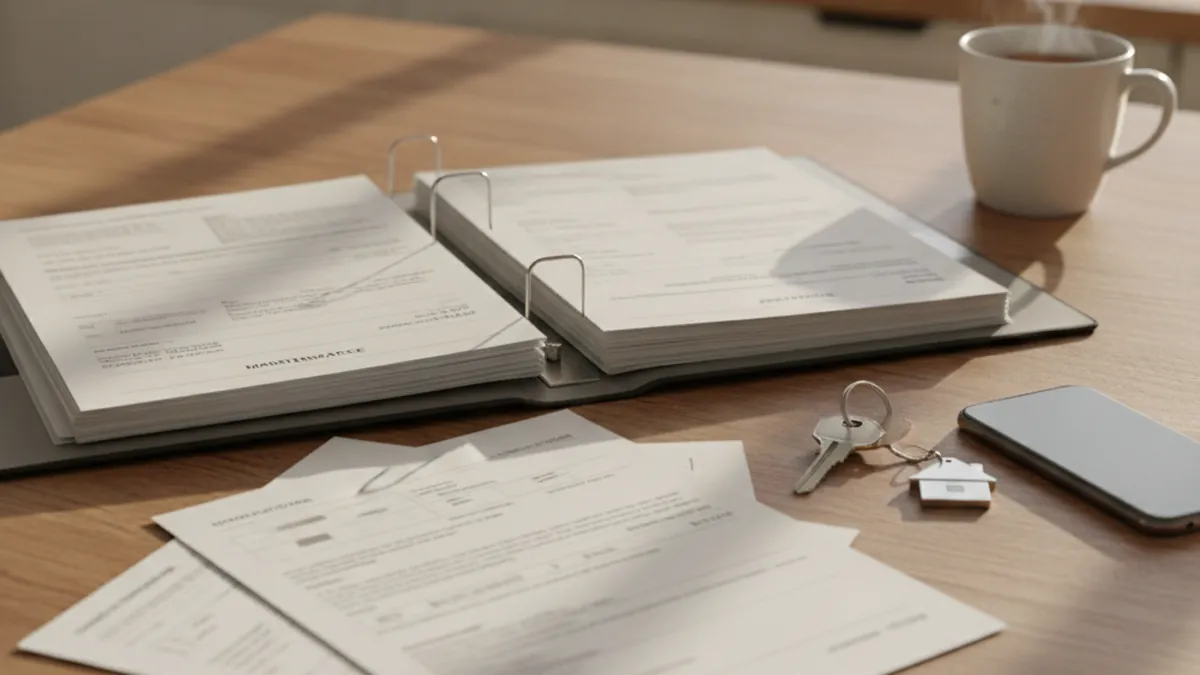
Before paying a professional, a plex owner can run a pre-diagnosis in an hour, with a laser tape measure, a notebook and a phone camera. The goal isn't to replace planning staff or a building technologist, but to know whether the project is worth investing in — or whether to stop before spending on quotes. Here's the sequence, in order.
Step 1 — Map the height
Measure the clear height at several spots in each room, focusing under beams, ducts and pipes. Record the lowest value per room: that's what decides. If the low point of a future bedroom falls under 1.95 m, the only fix is heavy — lowering the slab — and completely changes the financial equation.
Step 2 — Check each bedroom's egress
For every room you plan to rent as a bedroom, measure the window's clear opening (sash open), the sill height from the floor, and the window-well clearance. A bedroom without compliant egress isn't a bedroom: at best it becomes storage or an office that can't be counted in the listing.
Step 3 — Calculate the glazed area
Measure each room's floor area and its actual glazing area. Divide: you get the percentage. Compare to 5% (bedroom) or 10% (living room). Any shortfall immediately reveals whether an opening will have to be enlarged — a major expense in a basement.
Step 4 — Fire-safety and mechanical inventory
Locate the smoke alarms (at least one per floor, basement included), the carbon monoxide alarm if there's combustion or an attached garage, the state of the electrical panel, the fire separation and ventilation. Photograph everything: this file will serve both planning staff and your insurer.
Step 5 — Validate the use with planning
Before any work, call the planning department and ask whether the number of dwellings is permitted in your zone. No code upgrade makes legal a unit that zoning prohibits. This single check stops the most projects — and it's the cheapest one to do.
Step 6 — Document and cost it out
Turn your measurements into a one-page summary: for each room, the low-point height, the window's clear opening, the glazed-area percentage, and a pass/fail note. Then map each "fail" to a rough fix — replace a window, enlarge an opening, lower the slab — and flag which fixes need a permit or an engineer. This is the document you'll hand to a contractor for a quote and to your insurer for a proper policy. A dated photo record of every room, panel and window well makes the whole file credible and protects you if a dispute ever arises. Ten minutes of organization here saves days of back-and-forth later, and it turns a vague "maybe" into a decision you can actually price.
Basement pre-diagnosis checklist
- Clear height under the lowest point of each room.
- Clear opening, sill and window well of each bedroom window.
- Glazed area in % for each habitable room.
- Functional smoke and CO alarms, one per floor.
- Number of dwellings allowed by municipal zoning.
- Dated photo record of the premises.
What Does Bringing a Basement Up to Code Cost? Worked Examples
The question that decides everything: will the basement rent pay for the work within a reasonable time? Real costs depend on your building, the contractor and the extent of structural work — always get several quotes. What follows are reasoning examples (hypothetical figures) to illustrate the return-on-investment method, not guaranteed market prices.
The typical cost items
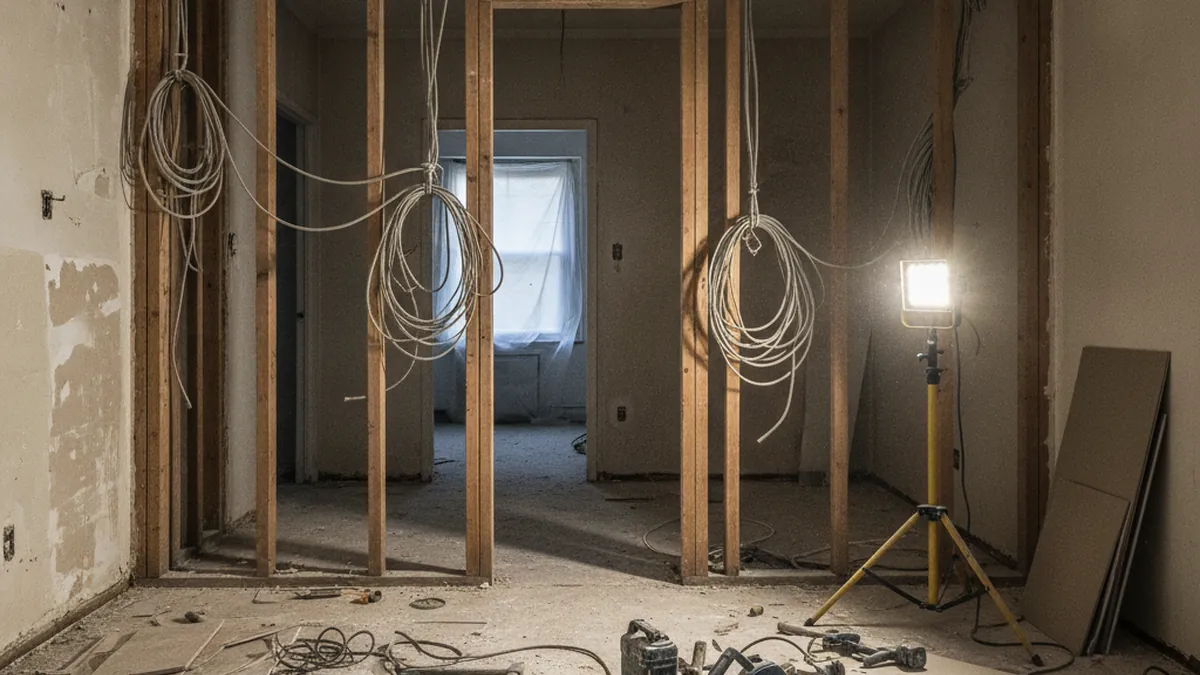
Three categories dominate a basement budget: light work (finishing, partitions, plumbing, electrical, alarms), opening work (cutting and enlarging a window, building a window well, installing an egress window) and structural work (lowering the slab to gain height, underpinning the foundation). The further down this list you go, the higher the cost and the more permits and engineering become unavoidable.
A profitability calculation, step by step
Suppose — as an example — an owner is weighing the conversion of a triplex basement into a rental unit. They get a total budget of $60,000 (two egress windows opened, partial slab lowering, finishing, mechanical, permits). They estimate a net additional rent of $1,100/month, i.e. $13,200 a year. The gross payback is therefore 60,000 ÷ 13,200 ≈ 4.5 years. If, instead, only $750/month is realistic in their area, the return stretches to about 6.7 years — before maintenance, vacancy and tax on the rental income. The decision isn't made on a feeling: it's calculated.
| Scenario (hypothetical) | Work budget | Net additional rent | Gross payback |
|---|---|---|---|
| Light finishing, windows already compliant | $25,000 | $1,100/mo | ≈ 1.9 yr |
| Opening windows + finishing | $45,000 | $1,000/mo | ≈ 3.8 yr |
| Slab lowering + windows + finishing | $90,000 | $1,100/mo | ≈ 6.8 yr |
Illustrative figures to show the method; they don't represent market costs or rents. Get your own quotes and tax advice.
Don't forget grants and tax rebates
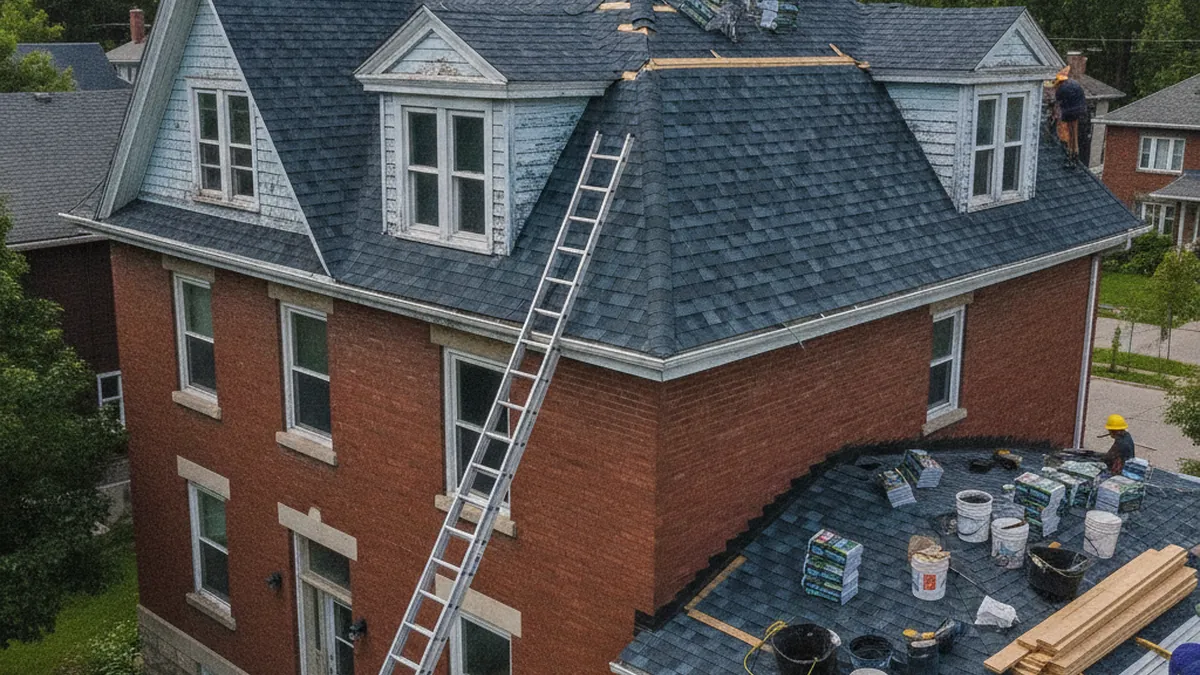
Two levers sometimes reduce the bill. First, certain energy-efficiency measures (insulation, high-performance windows, ventilation) may qualify for grant programs; check the programs in force before ordering materials. Second, on the tax side, the construction or substantial renovation of a rental dwelling may open the door to a partial GST/QST rebate for new residential rental property — an item many owners leave on the table for lack of awareness. These mechanisms have strict conditions: confirm your eligibility with Revenu Québec and a tax specialist before building your budget. Factored in, they can meaningfully shorten the payback of a basement brought up to code.
The most common blind spot: forgetting that the additional rent is taxable income and that structural work may, depending on its nature, be capitalized rather than deducted the same year. A slab lowering that "seems" to pay back in five years can, after tax and surprises, take eight. When the code upgrade exceeds what the basement will return for a long time, a direct sale of the plex as-is becomes a perfectly rational option. Our renovation calculator helps put these numbers side by side.
Damp, Ventilation and Habitability: The Basement Under Close Watch
A basement can meet the height, egress and glazed-area rules and still be unfit for habitation. Habitability — no excess moisture, mould or contaminants — is a separate obligation, and it's often what triggers tenant complaints and disputes at the Administrative Housing Tribunal. The owner must deliver and maintain a dwelling in good habitable condition (articles 1910 and following of the Civil Code of Québec): in a basement, that duty is fought mainly over water and air.
Water: drainage, cracks and infiltration
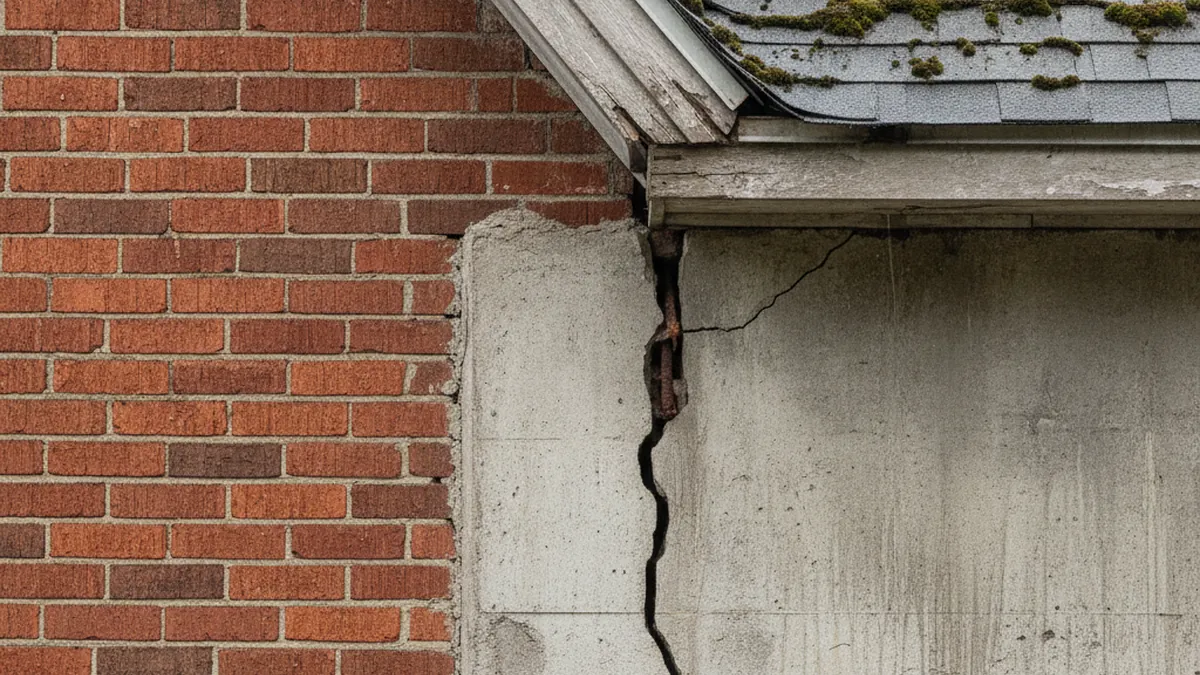
Before finishing a basement, you have to fix the source. A clogged French drain, a foundation crack, ground sloping toward the building or a window well that holds water all end up in the same place: the new drywall you just installed. Recurring infiltration makes the unit unsanitary, damages your work and exposes you to a rent reduction or lease termination. The golden rule: you waterproof before you finish, never the other way around.
Air: ventilation, condensation and mould
A basement is naturally colder and damper than the upper floors. Without fresh-air supply and extraction (bathroom, kitchen), moisture condenses on cold surfaces and mould appears — first behind furniture, then in the walls. The Code requires adequate ventilation of habitable rooms; in practice, a year-round basement unit needs a system that renews the air, not just a spot dehumidifier. Visible mould is one of the most frequent complaint grounds and one of the most expensive to fix once the tenant is in.
Quebec winters make the problem worse, not better. Warm indoor air meets cold below-grade walls and single-glazed basement windows, and the moisture it carries condenses exactly where you can't see it — behind baseboards, inside wall cavities, under a finished floor laid too soon. A basement that feels dry in July can bloom with mould by February. That's why a genuine ventilation strategy — mechanical extraction plus makeup air, and often a heat-recovery ventilator — beats any number of portable dehumidifiers. Building the moisture solution into the unit before you finish it is far cheaper than tearing out finished walls once a tenant reports a musty smell and a rent-reduction application lands at the Tribunal.
Radon: the contaminant you can't see
Radon, a natural radioactive gas from the soil, accumulates mostly in the lower levels of buildings. You can't see or smell it: only a long-term test measures it. Since a basement unit is, by definition, in direct contact with the soil, it's the most exposed type of space. Health Canada publishes how to test for and reduce radon in a home. A test before the first rental is a cheap precaution against the risk.
Warning signs of an unsanitary basement
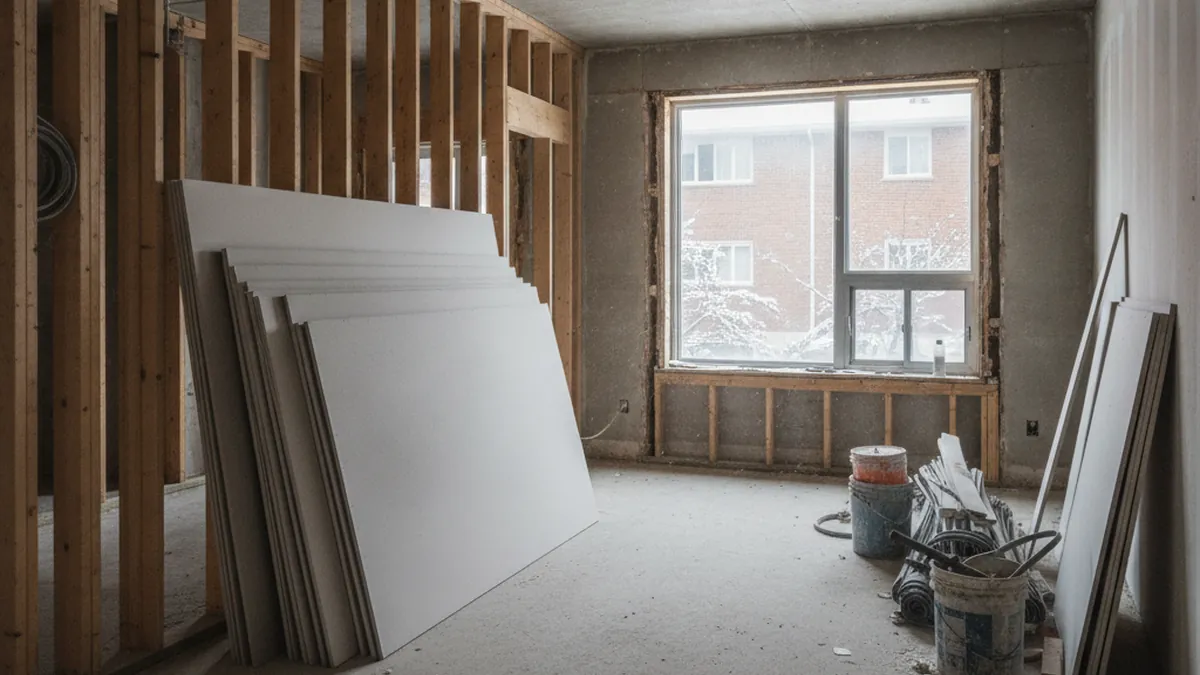
- Persistent earthy or musty smell.
- Water marks, efflorescence or blistered paint at the base of walls.
- Condensation on windows and cold pipes.
- No extraction in the bathroom or kitchen.
- No radon test ever performed.
Zoning and Permits on the North Shore: The Municipal Process, City by City
We've said it, but it's the check owners underestimate most: technical compliance is useless if zoning prohibits the unit. A basement can tick every Code box and still be illegal because your lot only allows a duplex where you want a triplex. On the North Shore, each municipality has its own zoning by-law, use grid and timelines.
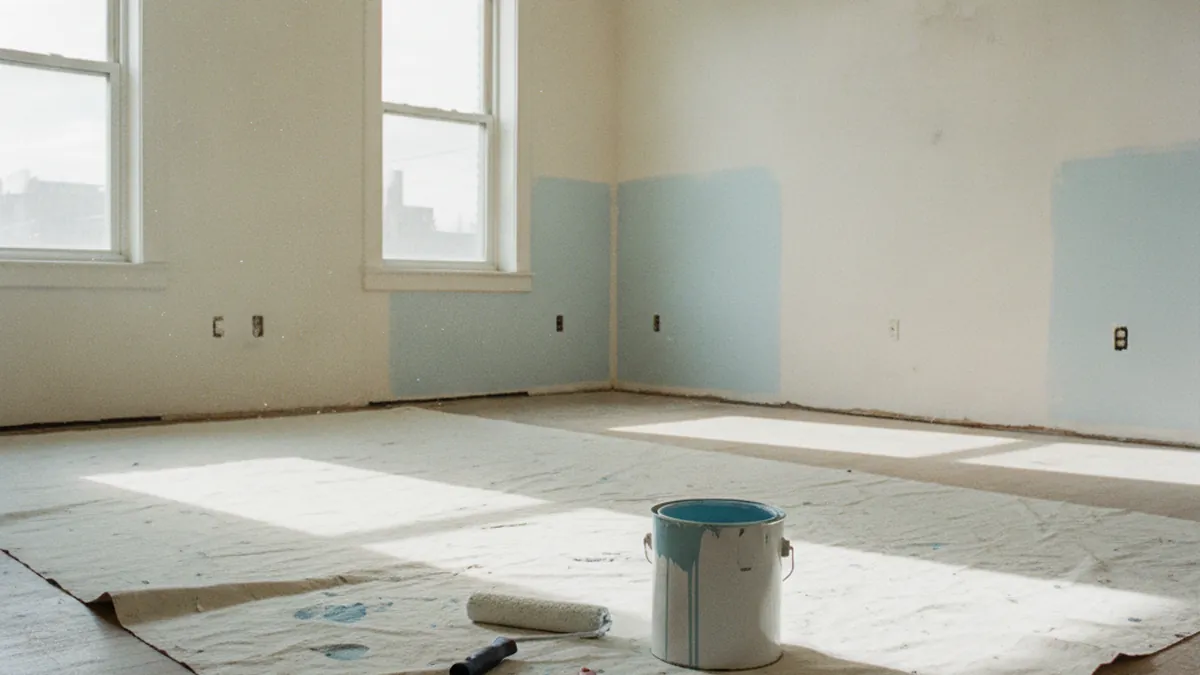
Step 1 — Your zone's use grid
The zoning by-law divides the city into zones and assigns each permitted uses: single-family, two-family, three-family, multi-family. Many suburban residential sectors on the North Shore (bungalow neighbourhoods in Terrebonne, Blainville, Boisbriand, Mascouche, Repentigny) cap the number of dwellings. Adding a basement unit in a zone limited to two-family is simply refused, no matter the quality of the work.
Step 2 — The alteration permit
If the use is permitted, you file an application for a construction or alteration permit with plans, a description of the work and sometimes a professional's opinion. The city checks compliance with the Code and its by-laws. General procedures for owners are gathered on Québec.ca — Housing and territory, but it's the local planning department that issues the permit.
Step 3 — The occupancy certificate
Many cities require, once the work is finished and inspected, an occupancy permit or certificate confirming the unit can be lived in. It's the document that "makes the unit official." Without it, your rented basement remains an undeclared unit in the municipality's eyes — with all the risk that entails.
| Municipal step | What the city checks | Risk if you skip it |
|---|---|---|
| Use grid / zoning | Number of dwellings permitted in the zone | Illegal unit, demolition order |
| Alteration permit | Plans, Code compliance, required professionals | Fine, stop-work order, restoration |
| Work inspection | Egress, height, mechanical, fire safety | Occupancy certificate refused |
| Occupancy certificate | Habitable and declared dwelling | Undeclared rental, resale trouble |
The steps and their names vary from one North Shore city to the next. Confirm the exact sequence with your planning department.
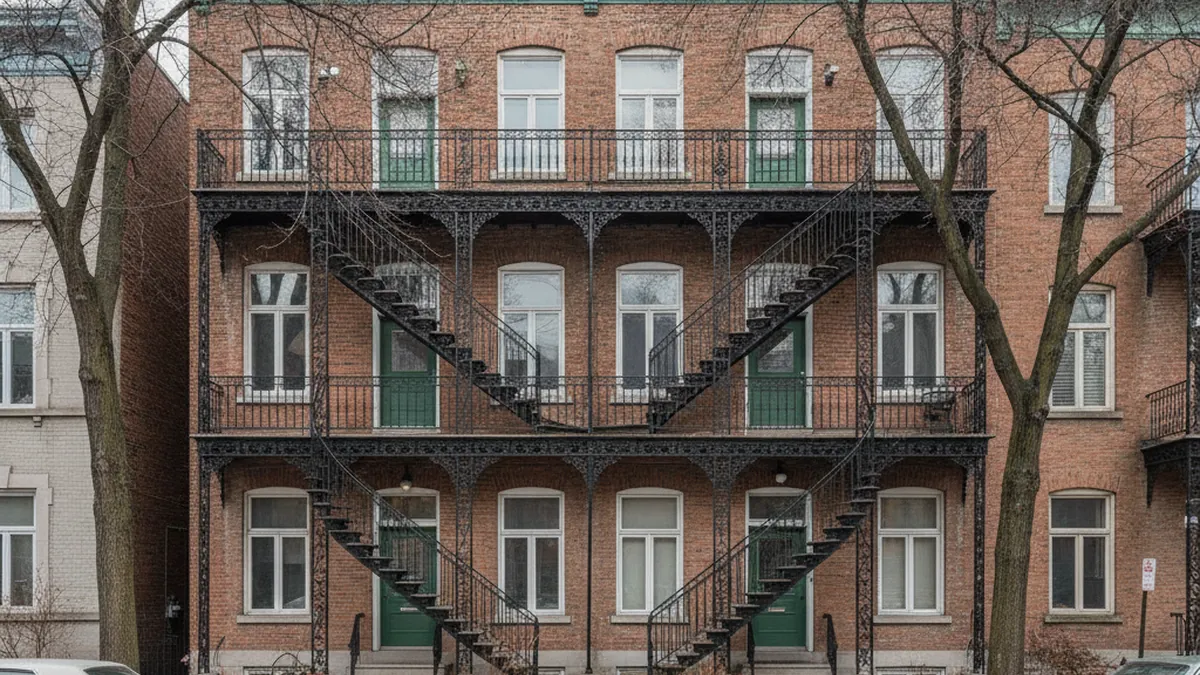
This logic of permits, inspections and timelines is the same one that governs any plex project: we detail it in our guide on selling an income property that needs renovation. The message stays constant: validate the use before you spend.
Insurance, Taxes and the Lease: The Blind Spots of a Rented Basement
A compliant basement unit is also a unit that's properly insured, declared to the tax authorities and governed by a lease. These three administrative pieces are the classic blind spots: you discover them at the worst moment, when a claim happens or when a buyer combs through your documents.
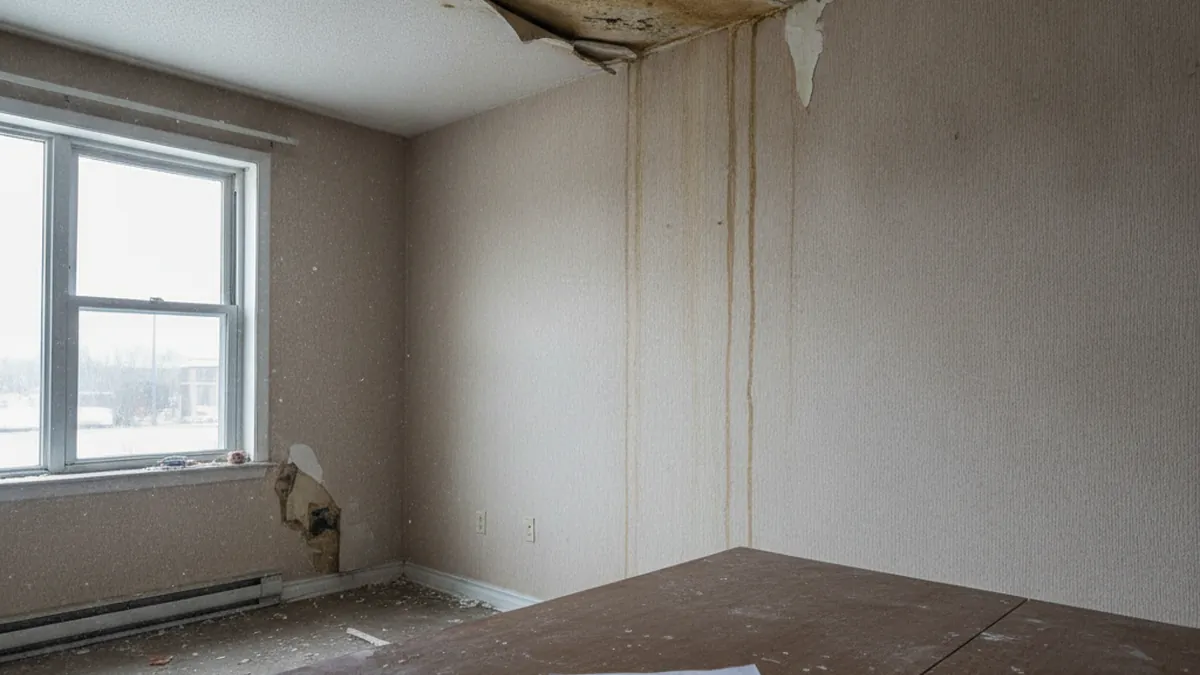
Insurance: declare every unit
Your home or income-property policy is set according to the declared number of dwellings. Adding a basement unit without telling your insurer means risking a reduced or void coverage in a claim: fire, water damage, liability if a tenant is injured in a non-compliant egress. Notify your insurer as soon as you add or finish a unit, and keep the written confirmation. A non-compliant unit can also lead the insurer to refuse renewal.
Think through the liability chain, because it's the part owners rarely price. Say a tenant in an undeclared basement bedroom can't get out through a window that's too small during a fire. The consequences aren't only tragic — they're financial and legal: your insurer may deny the claim on the ground that the unit was never declared, and you can be held personally liable for a dwelling the Code says should never have been rented as a bedroom. The few thousand dollars saved by skipping a proper egress window are trivial next to that exposure. Declaring the unit and making it compliant isn't red tape; it's the cheapest liability insurance you'll ever buy.
Taxes: taxable rent and work to classify
The basement rent is taxable rental income, to be reported to Revenu Québec and the Canada Revenue Agency. Expenses split between current (deductible the same year: maintenance, interest, insurance) and capital (depreciated over several years: enlargement, slab lowering). Converting a space into a rental unit can also trigger a partial change of use with tax consequences on resale. For these questions, consult a tax specialist; our calculators give an order of magnitude, not advice.
Lease: first rental and rent setting
The unit must be rented with the mandatory Tribunal lease, which describes the dwelling and its accessories. For a first rental, the owner must give the tenant the notice (section G of the lease) stating the lowest rent of the last twelve months — a formality often forgotten when a basement unit is "improvised." A sloppy lease weakens your rights as much as a non-compliant unit.
The administrative trio of a rented basement
- Insurer informed in writing of the additional unit.
- Rental income declared; work classified current/capital.
- Compliant Tribunal lease, with the first-rental notice.
A Non-Compliant Basement and Resale Value: What the Buyer Sees
From the owner-seller's point of view, this is where it all converges. A rented but non-compliant basement doesn't inflate your plex's value — it weakens it. A savvy buyer, a chartered appraiser and a lender all look at the same thing: the legitimate, compliant income, not the rent collected under the table.
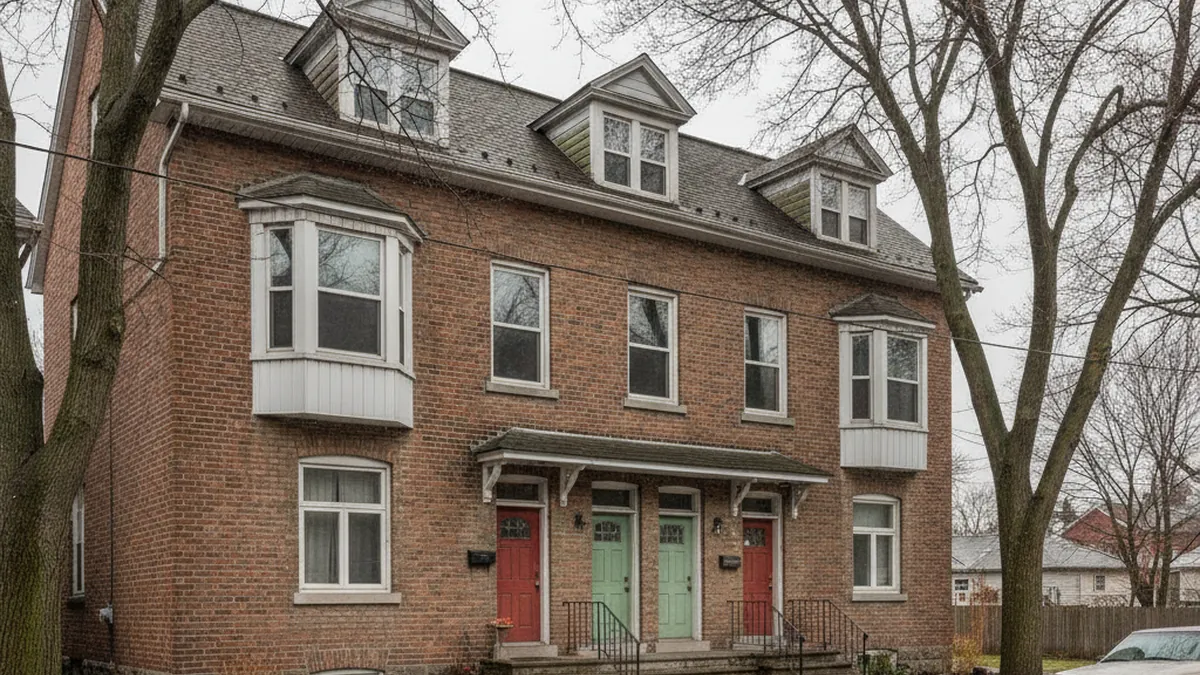
The seller's declaration and latent defects
At the sale, you fill out a seller's declaration that asks, among other things, whether all units are compliant and declared. Hiding an unauthorized basement unit exposes you to a latent-defect claim (article 1726 of the Civil Code) after the sale. A non-compliant unit discovered by the buyer can lead to a negotiated price cut, cancellation of the transaction, or damages claimed later.
Economic value excludes non-compliant income
A plex is priced on its income, capitalized by the overall capitalization rate (cap rate). But an undeclared or non-compliant basement income is set aside by the appraiser and the lender: it doesn't "count" in economic value, and it can even become a liability (cost to bring up to code or restore). In other words, you carry the risk of the grey unit without reaping its value when you sell. Our cap-rate calculator shows how income removed from the calculation drops the value.
Selling as-is rather than regularizing
When the code upgrade is heavy — slab lowering, windows to create, zoning to amend — regularizing can cost more and take longer than the basement will return. For an owner who wants out, a direct sale of the plex as-is to a buyer who takes on compliance is often the cleanest path: no worksite, no permit delay, no latent-defect risk. ImmoMulti buys North Shore multi-unit buildings in exactly this condition, and you can also explore our off-market transfers. The point is simple: run the numbers first, then choose the exit that keeps the most value in your pocket with the least risk on your name.
Three Plex-Owner Scenarios (Worked Cases)
Nothing clarifies the decision like concrete cases. Here are three illustrative scenarios — built for teaching, with hypothetical figures — showing how the same basement leads to very different outcomes depending on compliance, zoning and budget.
Case 1 — The nearly-ready basement
A duplex owner in Terrebonne has a basement 2.2 m high, two already-wide windows and zoning that allows three-family. The pre-diagnosis reveals just one gap: the bedroom windows don't quite offer 0.35 m² of clear opening. They replace two windows, add a window well, update the alarms and file their permit. Estimated budget: $25,000; targeted net additional rent: $1,100/month. Payback of about two years. Decision: regularize. The basement becomes a compliant, declared unit that adds real value at resale.
Case 2 — The too-low basement
A triplex owner in Saint-Eustache wants to add a unit, but the height drops to 1.8 m under a main beam. Gaining height requires slab lowering with underpinning — heavy structural work, engineering, permits. Estimated budget: $90,000; realistic rent: $1,000/month. Payback of more than seven years, before tax and surprises. Decision: don't regularize. They keep the basement as common space and deploy their capital elsewhere — or consider selling to redeploy.
Case 3 — The basement zoning forbids
A converted-bungalow owner in Boisbriand already rents, unknowingly, a basement unit created by the previous owner. But the zone is limited to two-family: the unit is illegal, regardless of its quality. The municipality, alerted by a complaint, orders the kitchen removed. The insurer, once informed, adjusts the policy. At resale, the basement income is set aside from the value calculation and becomes a liability. Decision: sell as-is. They opt for a direct sale to a buyer who will handle the restoration, with no worksite or latent-defect risk on their side.
| Scenario | Main obstacle | Rational outcome |
|---|---|---|
| Case 1 — nearly ready | Egress windows to replace | Regularize (payback ≈ 2 yr) |
| Case 2 — too low | Height under 1.95 m, slab to lower | Don't regularize / redeploy |
| Case 3 — adverse zoning | Unit forbidden in the zone | Sell as-is |
Teaching scenarios with hypothetical figures; they illustrate a decision method, not real prices. Validate your case with planning, a contractor and a tax specialist.
The takeaway
A finished basement is not a compliant unit. Height, egress, glazed area and occupancy permit are validated before the first lease — otherwise the risk (fines, insurance, safety) falls entirely on the owner.