
You inherited a triplex on the North Shore and want to resell it quickly? Or you're considering repositioning your portfolio this year? ImmoMulti regularly meets owners wondering whether selling a property held for less than a year triggers a special tax treatment. The answer is yes — and it's significant. Since January 1, 2023, a residential property sold within 365 consecutive days of its purchase is presumed to have been bought with the intent to resell, and 100% of the profit is taxed as ordinary business income, both at the federal level (CRA) and at the provincial level (Revenu Québec). No capital gains rate. No principal residence exemption. No CCA shelter. This guide explains the rule, the recognized exceptions, and the strategy to adopt before deciding.
Quick answer
Since January 1, 2023 (federal CRA + Revenu Québec simultaneously), selling a plex or any residential property within 365 consecutive days of purchase triggers the rushed resale rule: 100% of the profit is taxed as ordinary business income — no capital gains rate, no principal residence exemption, no CCA shelter. Nine life events (death, separation, job loss, illness, etc.) can cancel the presumption, but all require documentation. A $200,000 profit taxed under this rule can cost $30,000–$50,000 more in tax than an ordinary capital gain.
The rushed resale rule: what exactly does the Income Tax Act say since January 1, 2023?
Since January 1, 2023, both the Income Tax Act (federal, CRA) and Revenu Québec apply the same rule: a residential property — including a plex, duplex, triplex, or multi-unit rental property — sold within 365 consecutive days of purchase is deemed to have been bought with intent to resell, and 100% of the profit is taxed as ordinary business income. No capital gains partial-inclusion rate applies. No principal residence exemption. No CCA shelter.

The rushed resale rule is defined by Revenu Québec as the sale of a residential property — including a rental property or a purchase right — that the owner held in Canada for fewer than 365 consecutive days, without a recognized life event justifying the quick sale.
This rule is not limited to single-family homes or condos. It explicitly applies to rental properties — which includes your plexes, duplexes, triplexes, quadruplexes, and any other multi-unit property on the North Shore or anywhere else in Québec. If you purchased an income property on January 15, 2026, and sell it on December 1, 2026, you are within the under-365-day window — and the rule applies, unless an exception covers you.
No shelter via principal residence exemption or CCA
In a rushed resale, the profit is treated as business income. Result: neither the principal residence exemption nor CCA deductions allow you to reduce the taxable amount. You start from zero shelter. The only way out is one of the recognized exceptions — and you must be able to document it rigorously.
Source: Revenu Québec — "Revente précipitée de votre propriété" (rule in force since January 1, 2023).
When does the 365-day clock start — and stop — for a Québec property?
The clock starts on the date of your notarial deed of purchase (date of legal transfer of title) and stops on the date of your notarial deed of sale. Both federal and provincial rules count consecutive calendar days. If fewer than 365 full consecutive days have elapsed between those two dates, the rushed resale presumption applies — unless you can document a recognized life event exception.

For a plex owner on the North Shore, understanding the difference between these two tax regimes can be worth tens of thousands of dollars in savings — or unforeseen expenses.
| Situation | Tax treatment | Effective inclusion rate |
|---|---|---|
| Ordinary capital gain (held > 365 days) | Capital gain | 50% or 66.67% of gain (depending on threshold) |
| Rushed resale (held < 365 days) | 100% of profit — ordinary income | 100% of profit |
| Principal residence exemption | Available if applicable | Refused |
| Effective marginal rate | Reduced (partial inclusion) | Full marginal rate |
| Applies to multi-unit properties | Yes (held ≥ 365 days) | Yes (held < 365 days) |
In concrete terms: on a $200,000 profit realized on the sale of a plex after ordinary holding, only $100,000 (50%) would be included in your taxable income. Under the rushed resale rule, the full $200,000 is added to your income for the year — potentially at the highest marginal rate. The difference can easily reach $30,000 to $50,000 in additional tax depending on your tax bracket.
"In the case of a rushed resale of a property, the seller is considered to be carrying on a business, and the profit realized on the resale is considered to be fully taxable business income."
— Revenu Québec, rule in force since January 1, 2023This rule was designed to curb short-term speculation — quick buy-and-sell transactions known as "flipping." But it applies to all owners who sell too quickly, regardless of intent: even if you owner-occupied a unit in a triplex on the North Shore and unforeseen circumstances push you to sell quickly, you may be subject to it.
Source: Revenu Québec — "Revente précipitée"; Canada Revenue Agency — "Tax effects of buying real estate to sell for a profit".
Calculating the tax impact: what is the concrete difference between rushed resale and capital gain?
On a $200,000 profit from selling a North Shore plex: under an ordinary capital gain (held ≥ 365 days), only $100,000–$133,340 is included in taxable income (50% or 66.67% inclusion rate). Under the rushed resale rule, the full $200,000 is taxed as business income at your full marginal rate. The difference in tax payable can easily reach $30,000–$50,000, as both the federal CRA and Revenu Québec apply their rules simultaneously.
One of the most important particularities for North Shore multi-unit property owners: the rushed resale rule exists simultaneously at the Québec and federal levels. Both came into force on January 1, 2023.
For a Québec resident who sells a plex within a year:
- The Canada Revenue Agency (CRA) treats the profit as business income on the federal return
- Revenu Québec applies the same rule on the provincial return
Combining both levels — federal and provincial — the marginal tax rates on ordinary income in Québec can exceed 50% in the upper brackets. This is a significant tax reality for a multi-unit property owner who sells quickly without adequate planning.
By comparison, for an ordinary sale of a plex held for more than a year, only a fraction of the gain (50% or 66.67% depending on the amount) is taxable, and the actual effective rates are much lower. The difference between the two scenarios can represent several tens of thousands of dollars in tax on a single real estate transaction on the North Shore.
What are the recognized exceptions that cancel the rushed resale presumption?
Revenu Québec recognizes nine life events that exempt you from the 365-day rule even if the sale occurs before that threshold: (1) death of owner or related person; (2) birth or adoption of a child; (3) relationship breakdown (separation or divorce after ≥ 90 days of separate living); (4) involuntary job loss; (5) credible safety threat; (6) serious illness or disability; (7) job relocation ≥ 100 km away; (8) insolvency; (9) involuntary destruction (fire, disaster). All require documentation — Revenu Québec places the burden of proof on the owner.
The rushed resale rule provides exceptions for situations where the quick sale is driven by life circumstances, not speculation. According to Revenu Québec, the following life events exempt the owner from the rule even if the sale occurs within 365 days:
| Recognized exception | Minimum condition to prove |
|---|---|
| Death of owner or co-owner | Death of the owner or a related person |
| Birth or adoption of child | Addition of a household member (birth, adoption, care of a relative) |
| Relationship breakdown | Separation or divorce after at least 90 days of separate living |
| Involuntary job loss | Involuntary job loss of the owner or their spouse |
| Credible safety threat | Threat to the personal safety of the owner or a household member |
| Serious illness or disability | Serious illness or disability affecting the owner or a related person |
| Job relocation | Relocation more than 100 km from current home for employment reasons |
| Insolvency | Insolvency or risk of insolvency of the owner |
| Involuntary destruction | Involuntary destruction of the property (fire, natural disaster) |
Key points on the rushed resale rule
- In force since January 1, 2023 — both CRA and Revenu Québec
- Applies to all residential properties, including plexes and rental properties
- 100% of profit taxed as ordinary business income (not capital gains)
- No principal residence exemption, no CCA shelter
- Nine recognized life event exceptions — all require documentation
- Both federal and provincial levels can apply simultaneously
It is important to note that the list above reflects the exceptions published by Revenu Québec — always verify the most recent version on their official website and consult a tax specialist before concluding a quick sale.
Renovators and flippers: which purchase scenarios are most at risk?
Three profiles are most directly targeted by the rushed resale rule: (1) buy-and-flip investors who renovate and resell a plex within a year; (2) owners forced to sell quickly due to partnership disputes, financing issues, or property management difficulties; (3) heirs who inherit a plex and want to liquidate quickly without realizing the 365-day clock resets at the date of notarial transfer to the estate. On the North Shore, a plex bought for $400,000 in 2022–2023 may now be worth $480,000 — meaning a $80,000 profit fully taxable as business income if sold within 365 days.

On the North Shore of Montréal — Terrebonne, Mascouche, Blainville, Boisbriand, Saint-Jérôme, Saint-Eustache, Deux-Montagnes, Repentigny, Mirabel — the values of plexes and multi-unit properties have appreciated significantly in recent years. Duplexes purchased for $400,000 in 2022 or 2023 may today be worth $480,000 or more, depending on their condition and location.
This phenomenon creates a potentially dangerous situation: a North Shore plex owner who purchases an income property as an investment and must resell quickly — for financial, personal, or property management reasons — may end up with a $60,000 to $100,000 profit that is fully taxable as business income, if fewer than 365 days have elapsed since purchase.
That is why the rushed resale rule is particularly important for investors operating in the North Shore multi-unit property market: it severely penalizes quick buy-and-sell transactions, whether intentional or forced by circumstances.
Source: Revenu Québec — "Revente précipitée"; Canada Revenue Agency — "Tax effects of buying real estate to sell for a profit".
Rushed resale rule and your North Shore plex: what strategy to adopt before selling?
Four strategic steps before selling your North Shore plex: (1) calculate the exact number of days between your notarial deed of purchase and the planned sale date — if under 365, wait if possible; (2) if a life event exception applies, gather all documentation immediately; (3) consult a chartered accountant who specializes in real estate before signing anything — the rushed resale rule interacts with CCA recapture, rental deductions, and capital gains rules; (4) if selling quickly is unavoidable, a direct sale to ImmoMulti (offer in 48 h, no broker, no commission) minimizes transaction costs and lets you maximize net proceeds within your tax constraints.
If you are a North Shore plex owner and are considering selling, here are the broad strokes of a fiscally responsible approach. This information is general and does not replace personalized tax advice.

When the 365-day rule doesn't apply...
The rule does not apply when a recognized life event can be documented. Beyond that, owning the property for at least 365 consecutive days is the clearest path to capital gains treatment — and the lower tax burden that comes with it. If you are near the threshold, waiting a few additional weeks can make a major difference on the final tax bill for your multi-unit property.
When owning more than 365 days before selling is still the right strategy
For investors who renovate and reposition plexes, the temptation to sell quickly after a renovation is understandable — but the 365-day rule means the entire gain is taxed as business income. Waiting past the 365-day mark converts that treatment to a capital gain, with only 50% (or 66.67% for larger gains) included in taxable income. On a $150,000 gain, that difference alone can exceed $30,000 in tax savings.
1. Check the acquisition date before anything else
Calculate precisely the number of days between your notarial deed of purchase and the planned sale date. If you are approaching 365 days, waiting a few extra weeks can make a major tax difference on your multi-unit property.
2. Document life events if they apply
If a personal situation forces you to sell your plex quickly — illness, job loss, separation — gather all relevant documents immediately: doctors' letters, birth certificates, separation orders, employer letters, etc. In the event of an audit by Revenu Québec or the CRA, the burden of proving that the exception applies falls on you.
3. Consult a real estate tax specialist before selling
The rushed resale rule interacts with other tax rules: CCA recapture, rental property deductions, possible exemptions. A chartered accountant or tax specialist who focuses on real estate can help you plan the sale of your income property on the North Shore so as to minimize your overall tax burden.
4. Evaluate the direct-sale option with a specialized buyer
If you want to sell your North Shore plex quickly while maximizing your net proceeds, a direct sale to a specialized buyer like ImmoMulti offers a clear advantage: no commission (3 to 5% saved), no listing delays (30 to 90 days saved), and a firm offer within 48 hours. The tax treatment of the sale remains your concern — but the net proceeds can be optimized on the transaction side.
ImmoMulti: direct buyer of multiplexes on the North Shore
ImmoMulti purchases multi-unit properties and plexes throughout the North Shore of Montréal, regardless of your holding period or tax situation. We submit a direct offer within 48 hours — no broker, no commission, no obligation. The tax treatment of your sale is between you and your tax advisor. Our role is to offer you a fair and fast price, whatever the circumstances.
How your plex shifts from "capital property" to "inventory property"
The moment a rushed resale is established, Revenu Québec reclassifies the building: it stops being capital property and becomes business inventory. This shift removes the 50% inclusion rate, the principal residence exemption, and even turns a loss on the sale into a "deemed nil" loss — meaning it cannot be deducted at all.

To understand why the rule is so harsh, you need to grasp a technical concept few owners know about: the tax nature of the property. Normally, a plex or multi-unit property held as an investment is what the tax authorities call capital property. It is this status that grants access to the favourable capital gains regime: only a fraction of the profit is taxed, and any losses can be applied against other capital gains.
The rushed resale rule does exactly the opposite. According to Revenu Québec, "the property is considered to be part of the inventory of that business." In other words, in the eyes of the tax authorities, you are no longer an investor selling an asset: you are a merchant selling a product. A triplex on the North Shore becomes, for tax purposes, the equivalent of merchandise in a warehouse.
Three direct consequences of the inventory reclassification
- Loss of the 50% inclusion rate. The reduced inclusion rate applies only to capital property. Once the property is reclassified as inventory, this mechanism disappears: 100% of the profit is taxable.
- Loss of the principal residence exemption. Even if you occupied a unit of your plex, the exemption is reserved for capital property. Reclassification cancels it.
- A loss becomes "deemed nil." This is the least known and most counter-intuitive consequence.
On this last point, the mechanics are worth pausing on. Normally, if an investment is sold at a loss, that loss has tax value: it can reduce other taxable income. But under the rushed resale rule, a loss on disposition is deemed nil. As the firm Miller Thomson explains, a loss on the disposition of a targeted property "will be refused (i.e., deemed to be nil)." The result: the rule taxes you at 100% if you make a profit but grants you nothing if you incur a loss. It is an asymmetry that consistently works against the rushed seller.
The deemed-nil loss trap
An owner who buys a quadruplex on the North Shore, invests $40,000 in renovations, then has to resell it in a hurry at a price below total cost might expect to deduct that loss. Under the rushed resale rule, that loss is deemed nil: it reduces neither business income, nor employment income, nor other gains. The bad scenario is therefore doubly penalizing.
Sources: Revenu Québec — "Revente précipitée de votre propriété"; Miller Thomson — "Federal rule on rushed resales of property".
This reclassification also explains why the rule is independent of your intent. Many plex owners believe they will escape the rule by showing they "had no intent to speculate." That is a mistake: the rule is deterministic. Below the 365-day threshold and without a recognized life event, the inventory reclassification is automatic, regardless of your original purchase motives. Intent only becomes relevant in cases beyond 365 days, where the tax authorities can still recharacterize a profit as business income if they establish a commercial nature — but that is a separate debate, with a reversed burden of proof.
Three worked examples: what the rule actually costs on a North Shore triplex
On a $150,000 profit from reselling a triplex, holding for more than 365 days includes only $75,000 in taxable income (50% inclusion rate). In a rushed resale, the full $150,000 is taxed at the full marginal rate — a tax gap that can exceed $35,000 depending on the seller's bracket.

Abstract concepts speak less clearly than numbers. Take a case representative of the North Shore multi-unit market: a triplex bought for $600,000 and resold for $780,000, for a gross profit of $180,000 before costs. After deducting selling and acquisition costs (say $30,000 total), the net taxable profit reaches $150,000. The tax rates below are general illustrations based on the combined Québec–federal marginal brackets applicable to high incomes; your actual situation depends on your total income for the year and must be validated by a tax specialist.
| Scenario | Held ≥ 365 days (capital gain) | Rushed resale (< 365 days) |
|---|---|---|
| Net profit | $150,000 | $150,000 |
| Taxable portion | $75,000 (50%) | $150,000 (100%) |
| Estimated tax (~53% marginal) | ≈ $39,750 | ≈ $79,500 |
| Net proceeds after tax | ≈ $110,250 | ≈ $70,500 |
| Tax gap | ≈ $39,750 more under a rushed resale | |
In other words, on the same $150,000 profit, the rushed resale rule can eat up nearly $40,000 more in tax. That is the equivalent of several months of gross rent from a triplex — evaporated simply because the sale happened on day 340 rather than day 370.
Scenario A — Selling on day 340 (the worst timing)
An investor buys a duplex in Terrebonne in February, completes repairs, and receives an attractive offer the following January — 11 months later. By selling then, they fall under 365 days: 100% of the profit becomes business income. Had they waited about 5 more weeks, they would have shifted into the capital gains regime. Timing, here, is literally worth tens of thousands of dollars.
Scenario B — Selling on day 366 (threshold crossed)
The same investor, by waiting to cross 365 consecutive days, regains access to the 50% inclusion rate. Caution: the count is done in consecutive days between the notarial deed of purchase and the notarial deed of sale, not in "calendar years." A gap of a few days can be enough to change regime — hence the importance of a precise calendar check.
Scenario C — Selling with a recognized life event
If the sale within a year is triggered by a recognized life event — a separation, serious illness, job loss — the rule does not apply, even on day 200. The profit then falls back into the capital gains regime. But the burden of proof rests entirely on the seller: without solid documentation, the tax authorities will presume a rushed resale.
Key takeaways on the numbers
- The same profit can be taxed at double the rate depending on the sale date.
- The count runs in consecutive days from notarial deed to notarial deed.
- These figures are illustrative: only a tax specialist can quantify your exact case.
Rushed resale AND CCA recapture: the double tax hit on a multi-unit property
If you claimed capital cost allowance (CCA) on your plex, the sale triggers a CCA recapture taxed at 100% — even in an ordinary sale. Combined with the rushed resale rule, the tax bill can stack up: business profit at 100% plus CCA recapture at 100%.

One aspect often overlooked by multi-unit property owners: capital cost allowance (CCA). During the years you hold your plex as a rental property, you may deduct each year a portion of the building's value (not the land) against your rental income. It is a real advantage that reduces current tax. But this advantage has a counterpart at the time of sale: CCA recapture.
When you sell a building for a price higher than its depreciated book value, the CRA and Revenu Québec "recapture" the depreciation you claimed over the years. This recapture is added to your income and taxed at 100% — and this applies even in an ordinary sale with a capital gain. CCA recapture has nothing to do with the holding period: it applies as soon as you claimed CCA and the sale price exceeds the residual value.
Why the combination is particularly heavy
Imagine a quadruplex on the North Shore held for 8 months, on which you nonetheless claimed part of the CCA during the first year of rental operation. On a sale within 365 days, two mechanisms overlap:
- The rushed resale rule taxes 100% of the profit as business income.
- CCA recapture adds back 100% of the depreciation claimed.
In an ordinary sale, at least the "capital gain" portion of the profit benefits from the 50% inclusion rate. In a rushed resale, that relief disappears, and all that remains is fully taxable income, stacked on top of the recapture. This is why a real estate tax specialist is indispensable before any quick sale of an income property: only they can model the interaction between these rules and your overall income for the year.
| Element | Ordinary sale (≥ 365 d) | Rushed resale (< 365 d) |
|---|---|---|
| Profit on appreciation | Capital gain, 50% inclusion | Business income, 100% |
| CCA recapture | Taxed at 100% | Taxed at 100% |
| Principal residence exemption | Possible on occupied portion | Refused |
| Potential loss | Deductible capital loss | Deemed nil |
Sources: Revenu Québec; Canada Revenue Agency. CCA recapture applies regardless of the holding period.
The 50% inclusion rate kept in 2026: what changed for long-term holding
The announced increase of the capital gains inclusion rate to 66.67% was cancelled by the federal government on March 21, 2025. The inclusion rate therefore stays at 50% in 2026 — which reinforces the advantage of holding a plex beyond 365 days rather than falling under the rushed resale rule.

An important reminder for any plex owner comparing sale scenarios. In 2024, the federal government announced an increase in the capital gains inclusion rate, which was to rise from 50% to 66.67% for the portion of gains exceeding $250,000 per year for individuals. This measure was first deferred, then cancelled: on March 21, 2025, the government confirmed the full cancellation of the proposed increase.
In practical terms, in 2026, the capital gains inclusion rate remains at 50% — exactly where it had been for years. For a North Shore multi-unit property seller, this means the capital gains regime remains as advantageous as before: holding beyond 365 days retains all its tax appeal. The gap between "waiting for the 365-day threshold" and "selling too fast" has therefore not shrunk; on the contrary, it remains fully relevant.
"The Government of Canada will cancel the proposed increase to the capital gains inclusion rate."
— Office of the Prime Minister of Canada, March 21, 2025Be careful not to confuse two things: this cancellation concerns only the capital gains inclusion rate, applicable to sales under the capital property regime. It does not change the rushed resale rule, which remains fully in force since January 1, 2023. A plex sold within 365 days without a recognized life event remains taxed at 100% as business income — the 50% inclusion rate simply does not apply, since the property is reclassified as inventory.
Sources: Office of the Prime Minister of Canada (March 21, 2025); Department of Finance Canada.
The North Shore plex market in 2026: why the temptation to sell fast is real
Plex prices kept rising in 2026: according to the APCIQ, half of all plex transactions in Québec exceeded $675,000, up roughly 8% year over year. This rapid appreciation pushes some owners to cash in quickly — precisely the behaviour the rushed resale rule penalizes.
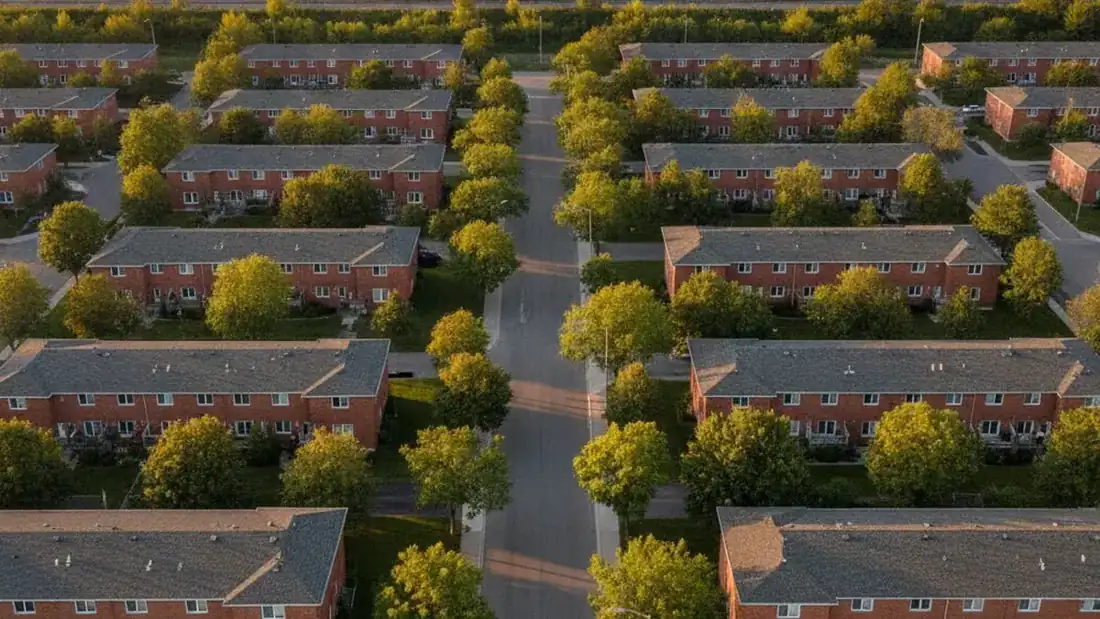
Why do so many North Shore plex owners find themselves tempted to sell within a year? Because the market has been particularly dynamic. According to data from the Quebec Professional Association of Real Estate Brokers (APCIQ), plex values continued to climb in early 2026, with roughly an 8% increase in the provincial median price year over year. In the sought-after markets of the Laurentians and Lanaudière, the increases were sometimes even sharper.
This appreciation creates a clear psychological effect: an owner who sees the value of their duplex or triplex jump in a few months is tempted to "take the profit" quickly. Yet this is exactly the behaviour the rushed resale rule aims to discourage. The paradox is cruel: the faster the market rises, the stronger the temptation to sell early, and the higher the tax penalty of a rushed resale in absolute dollars.
The North Shore areas under the most pressure
Across the territory covered by ImmoMulti — Terrebonne, Mascouche, Repentigny, Blainville, Boisbriand, Sainte-Thérèse, Saint-Eustache, Deux-Montagnes, Mirabel, and Saint-Jérôme — demand for multi-unit properties remains strong. Investors seek yield, families seek an owner-occupied plex, and supply stays limited. This imbalance fuels price increases and, with them, the rapid turnover of certain buildings.
| 2026 market factor | Effect on the plex owner |
|---|---|
| Rising median plex price (~8% in Québec) | Rapid appreciation, temptation to cash in early |
| Limited supply of North Shore multi-unit properties | Unsolicited offers received before 12 months of holding |
| Borrowing costs and mortgage renewals | Financial pressure pushing toward a quick sale |
| Demanding property management | Urge to offload a "problem" building quickly |
The message for a North Shore plex owner is therefore twofold: yes, the market may justify a nice appreciation; but no, that appreciation is not worth cashing in at any tax cost. Before giving in to an offer received in the 10th month of holding, you must precisely quantify what the rushed resale rule would remove from your net proceeds.
Source: APCIQ — Residential market statistics, Q1 2026. Local figures cited are indicative and vary by area and property type.
The 7 most common mistakes rushed plex sellers make
Confusing "calendar year" with "365 consecutive days," forgetting CCA recapture, failing to document a life event, believing intent protects you, ignoring the dual Québec–federal levels: here are the traps that cost multi-unit property owners the most when they sell too fast.

Across the inquiries received from North Shore multi-unit property owners, certain mistakes recur constantly. Knowing them already avoids half the bad tax surprises.
1. Confusing "calendar year" with "365 consecutive days"
Many owners think buying in 2025 and selling in 2026 shelters them. False: the count runs in consecutive days between the two notarial deeds, not in calendar years. A purchase in November and a sale the following June represents about 240 days — well below the threshold.
2. Not verifying the exact notarial deed date
The date that counts is the signing of the notarial deed of sale, not the accepted offer nor the purchase promise. A seller who calculates from the wrong date may believe they are beyond 365 days when they are not yet.
3. Believing purchase intent protects you
"I had no intent to speculate" is not an argument under the rule. Below 365 days and without a recognized life event, the reclassification as inventory property is automatic. Intent is only argued beyond the threshold.
4. Forgetting CCA recapture
A seller who claimed CCA during their rental period may be surprised by a CCA recapture taxed at 100%, which adds to the rushed resale bill. This interaction must be modelled in advance.
5. Not documenting the life event
An undocumented exception is, in practice, a nonexistent exception. The burden of proof belongs to the seller: medical letters, separation judgments, employment termination notices must be kept from the start.
6. Ignoring the dual Québec–federal levels
The rule exists simultaneously at Revenu Québec and the CRA. A seller who plans for only one level badly underestimates their actual bill. The combined marginal rate can exceed 50% in the upper brackets.
7. Signing before consulting a tax specialist
The costliest mistake of all: signing the deed of sale before quantifying the tax impact. Once the deed is signed, the disposition date is fixed. A few hundred dollars in tax-specialist fees can save tens of thousands.
The golden rule
Never sign a deed of sale for a plex held less than a year without first obtaining a written opinion from a tax specialist on how the rushed resale rule applies to your precise situation.
Five alternatives to a rushed resale for your North Shore multi-unit property
Wait to cross the 365-day threshold, refinance to free up liquidity without selling, structure a vendor take-back, document an eligible life event, or sell directly to a specialized buyer after the threshold: five paths to keep the rule from eating into your net proceeds.

Faced with the rule, a North Shore plex owner is not without options. Here are five paths to explore with your advisors before concluding a quick sale. Each must be validated for your situation by a notary, accountant, or tax specialist.
1. Wait to cross the 365-day threshold
This is often the simplest and most profitable solution. If nothing forces you to sell immediately, waiting until the 366th day of consecutive holding shifts the sale into the capital gains regime, with its 50% inclusion rate. On a large profit, the saving far exceeds a few months of carrying costs.
2. Refinance rather than sell
If your goal is to free up liquidity, a mortgage refinancing can give you access to accumulated equity without triggering a tax disposition. You keep your multi-unit property, its rental income, and its appreciation potential, while avoiding the rushed resale rule. Compare, however, the current borrowing cost against the expected benefit.
3. Structure a vendor take-back
In some transactions, a vendor take-back (balance of sale price) allows the receipt of the price to be spread out. This tool does not cancel the rushed resale rule, but it can fit into a broader tax strategy — to be discussed carefully with a tax specialist, as its treatment depends on the nature of the income.
4. Verify eligibility for an exception
If your quick sale is genuinely caused by a recognized life event, the rule does not apply. Gather the documentation from day one: it is what will make the difference in the event of an audit. Never assume a situation "speaks for itself" in the eyes of the tax authorities.
5. Sell directly to a specialized buyer after the threshold
Once the 365-day threshold is crossed — or if a life event applies — a direct sale to a buyer like ImmoMulti maximizes your net proceeds: no brokerage commission (3 to 5% saved), no listing delay, and a firm offer within 48 hours. The tax calendar and the transaction calendar then combine to your advantage.
The right order of operations
- First, verify the exact number of holding days.
- Consult a tax specialist to quantify the impact of both levels.
- Then choose between waiting, refinancing, or selling.
- Optimize the transaction itself once the tax strategy is set.


