
Quick answer
When selling your plex FSBO on the North Shore, expect 7 critical questions from serious buyers: proof of financing pre-approval, copies of all active leases, deposit and condition terms, inspection access with tenants, a seller's declaration, verified cap rate and NOI, and your stance on post-inspection renegotiation. About 40% of FSBO multiplex deals fail at the conditions stage — prepare your answers before listing.
You're selling your plex on DuProprio on the North Shore — the listing is live and showings have started. About 40% of FSBO multiplex transactions fail at the conditions stage, often because the seller wasn't prepared for buyers' financial and legal questions. A serious income property buyer thinks like an investor: they assess real profitability, the soundness of leases and hidden risks — and they have no broker filtering their questions for you. ImmoMulti buys multiplexes directly on the North Shore and knows exactly the 7 questions that make or break an FSBO deal. This guide gives you response scripts for each one, so you're never caught off guard when a qualified buyer contacts you.
This article addresses a specific stage: you've already chosen the FSBO route and are now managing buyers. If you haven't yet decided how to sell, first read our FSBO vs. direct buyer comparison to weigh your options. And if you want to avoid preparation pitfalls before listing, our guide to the 9 costly mistakes to avoid will be useful.
Why are questions from a plex buyer so different from those of a residential buyer?
A plex buyer is an investor, not a homeowner: they evaluate yield (cap rate, NOI, leases) alongside physical condition. In an FSBO sale, you carry the full informational burden — no broker to filter questions. If a buyer uses a buyer's broker, OACIQ rules require you to pay the buyer's agent commission. About 40% of FSBO plex deals on the North Shore fail at the conditions stage because sellers aren't prepared for investor-level scrutiny.
A plex or multiplex buyer thinks like an investor, not someone looking for a home. They evaluate your income property on two simultaneous axes: use value (building quality, location on the North Shore) and yield value (net income, tenancy risks, future potential). These two axes generate questions that most FSBO sellers never anticipate.
The fundamental difference from a broker: when you sell FSBO, you are simultaneously the seller, representative, negotiator and technical resource. The buyer, meanwhile, will often have their own buyer's broker, whose commission is paid by you at the standard rate — under OACIQ (the real estate brokerage self-regulatory authority in Québec) rules. You therefore carry the entire informational burden of the transaction.
According to APCIQ (the professional association of real estate brokers of Québec) data, about 40% of FSBO plex transactions on the North Shore in 2025 fell through at the conditions or due-diligence stage — often because the seller wasn't prepared to answer financial and legal questions with precision.
Question 1: how does the buyer finance the purchase of your plex?
For a plex, the bank appraises independently using the market cap rate applied to your declared income — not your asking price. If your NOI is $50,000 at a 5.5% market cap, the bank's value is ~$909,000 regardless of your listing price. Ask buyers for a pre-approval letter before accepting conditional offers. Buyers without pre-approval are the #1 cause of failed conditions.

The first real question from a serious buyer isn't the price — it's whether their financing is feasible. For a plex or multiplex, bank financing works differently from a residential property, and many buyers don't even realize it.
What the buyer is really after
They want to understand whether your income property can be financed at the asking price. The bank won't finance 80% of a price if its own appraisal comes in lower. And for a plex, the bank recalculates using the market cap rate applied to the declared income — not your listed price.
"Here is the actual income and expense statement for the past 12 months. Net operating income is $X. At the current market cap rate on the North Shore (approximately 5.2% to 5.8%), that corresponds to a value of $Y. I expect a buyer to provide a pre-approval letter confirming they qualify for that amount before we proceed."
Being transparent about your figures from the first enquiry qualifies the buyer and eliminates those who can't secure financing. To learn more about how banks assess the down payment and cap rate, see our guide to selling an income property without a broker in Québec.
Question 2: what does a buyer ask about leases and the tenancy situation of your plex?
All active leases transfer automatically to the buyer under the Quebec Civil Code. Buyers want: signed copies of all leases, rent amounts and history, expiry dates, any atypical clauses (pets, parking), open TAL files, and rent arrears. Below-market rents and atypical clauses reduce perceived value — document everything proactively to avoid surprises during due diligence.

Every active lease is a contract that transfers to the buyer at the signing of the notarial deed. The buyer wants to know exactly what they're buying — not just the building, but the contractual relationships with each tenant.
What the buyer is really after
They want to identify risks: below-market rents, tenants with open-ended leases that are difficult to modify, atypical clauses, ongoing disputes before the Rental Housing Tribunal (TAL), rent arrears files.
"I will provide a copy of all active leases, their expiry dates and the renewal history. No tenant has an active file before the Rental Housing Tribunal (TAL). The current rents are [$X, $Y, $Z] per month. I will also include all renewal notices from the past 3 years."
A savvy buyer will have their notary review the leases. Under Québec's Civil Code — summarized clearly by Éducaloi in their article on leases and property sales — all leases transfer to the new owner, who must fully honour their terms.
Question 3: what deposit and conditions can a buyer require in their offer?
Standard North Shore plex offer: 5% deposit at signing, 10-business-day financing condition, 7-business-day inspection condition. Additional conditions may include lease review and environmental assessment for larger properties. Know your firm boundaries (minimum deposit, maximum condition periods) before an offer arrives — clarity here signals a prepared seller and discourages low-ball tactics.
The financial and conditional structure of a purchase offer for a plex is more complex than for a house. Multiple conditions can coexist: financing, inspection, lease review, preliminary environmental review. And the deposit signals the buyer's seriousness.
What the buyer is really after
They're testing your flexibility on condition timelines — and watching how you respond to complex requests. An experienced buyer will propose structured conditions; a less-prepared buyer will propose vague conditions that can stall the transaction.
"I am comfortable with a 10-business-day financing condition and a 7-business-day inspection condition. For a property of this size, a 5% deposit at the signing of the conditional offer is standard on the North Shore. I would like all conditions to be waived or cancelled by [date]."
Question 4: how do you manage inspection access when tenants occupy the plex?
Quebec's Civil Code requires 24-hour written notice to tenants before an inspection visit. Organize one single inspection day to minimize disruption and build goodwill. Be present to facilitate access. If a tenant refuses or is absent, commit to alternative access within 5 days. North Shore plex sales with occupied units take 30–45 days longer on average — price this into your condition timelines.
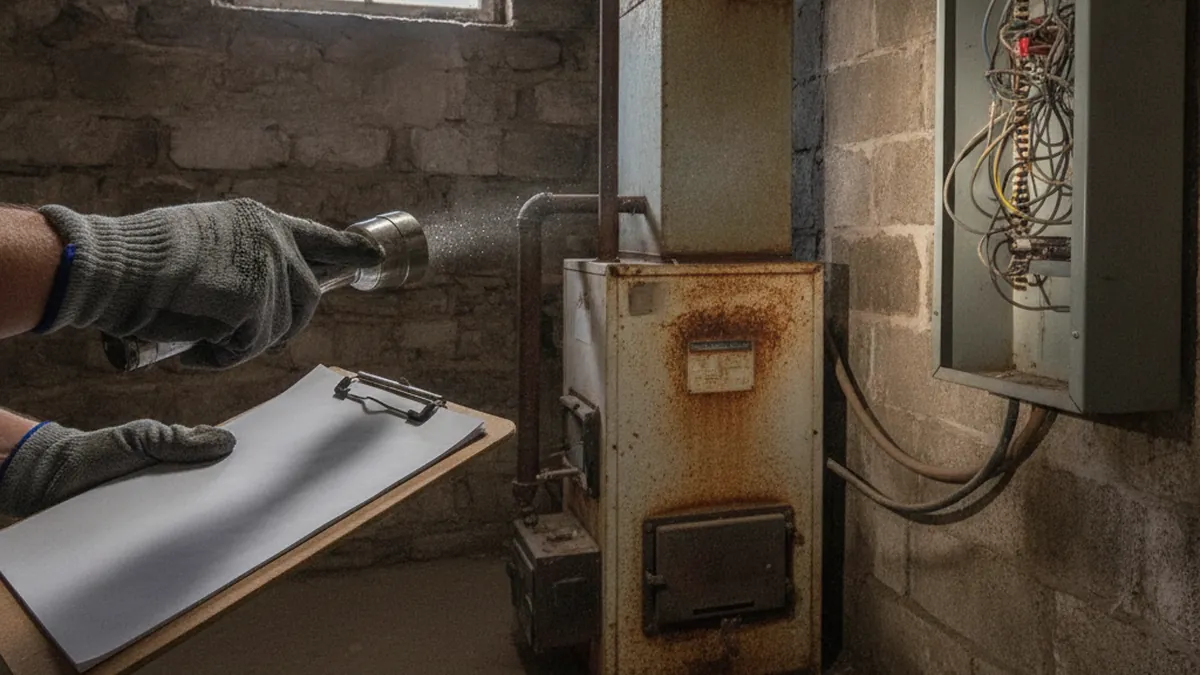
Inspecting an occupied plex is one of the trickiest steps in an FSBO sale. You must balance the buyer's right to inspect against your tenants' right to peaceful enjoyment of their unit.
What the buyer is really after
They want full access to all units, the basement, the roof and mechanical systems. They also want to observe the general condition of the units — tenant upkeep, unauthorized modifications, visible problems.
"I will contact each tenant at least 24 hours before the inspection to give them notice as required under the Civil Code. I will organize a single inspection day to minimize disruption. I will be present to facilitate access. If a tenant is absent that day, I commit to arranging a replacement access within 5 days."
On the North Shore, plex sales with tenants in place take an average of 30 to 45 days longer than vacant property sales, based on local market data. Factoring this into condition timeline negotiations is essential. Also see our analysis of costly mistakes in income property sales to avoid common tenant-related pitfalls.
Question 5: what must the seller's declaration disclose in an FSBO sale?
The formal Seller's Declaration (OACIQ form) is legally required only in broker transactions for residential properties with 4 or fewer units. For FSBO sales or buildings with 5+ units, it is not mandatory — but strongly recommended. Disclose all known issues: past work, unresolved defects, insurance claims, renovation permits. Failure to disclose can result in civil liability for latent defects after closing.
The seller's declaration is the most important — and most underestimated — document in an FSBO transaction. It establishes your civil liability for known defects you failed to disclose, even after the sale.
What the buyer is really after
They want to understand what you know and what you're disclosing. A buyer with a broker will compare your declaration against inspection results and information from municipal permit records. Any discrepancy can lead to a civil lawsuit after the sale.
"Here is my seller's declaration, completed honestly. I am disclosing [list of work performed, known issues resolved and unresolved, insurance claims]. I am not aware of any latent defects I have not disclosed. If any additional information comes to mind before signing, I will inform you in writing."
The Seller's Declaration form is only legally required in a specific scenario: a transaction involving an OACIQ-member broker for a primarily residential building with fewer than 5 units (4 or fewer) sold by an individual — per OACIQ's seller's declaration requirements. It is therefore not required for buildings with 5 or more units or in an FSBO sale. That said, not completing a seller's declaration increases your risk exposure in a latent defect claim: it remains strongly recommended even for a plex sold without a broker.
Question 6: how does a buyer verify the actual cap rate and net income of your plex?
Buyers request 24 months of income and expense statements, compare declared rents to actual deposits received, and check property tax, insurance and utility bills. The cap rate = NOI ÷ asking price. On the North Shore in 2026, market cap rates range from ~5.2%–6.0%. Any gap between your declared NOI and verifiable receipts will trigger a price reduction request or deal collapse — prepare your documentation file before listing.
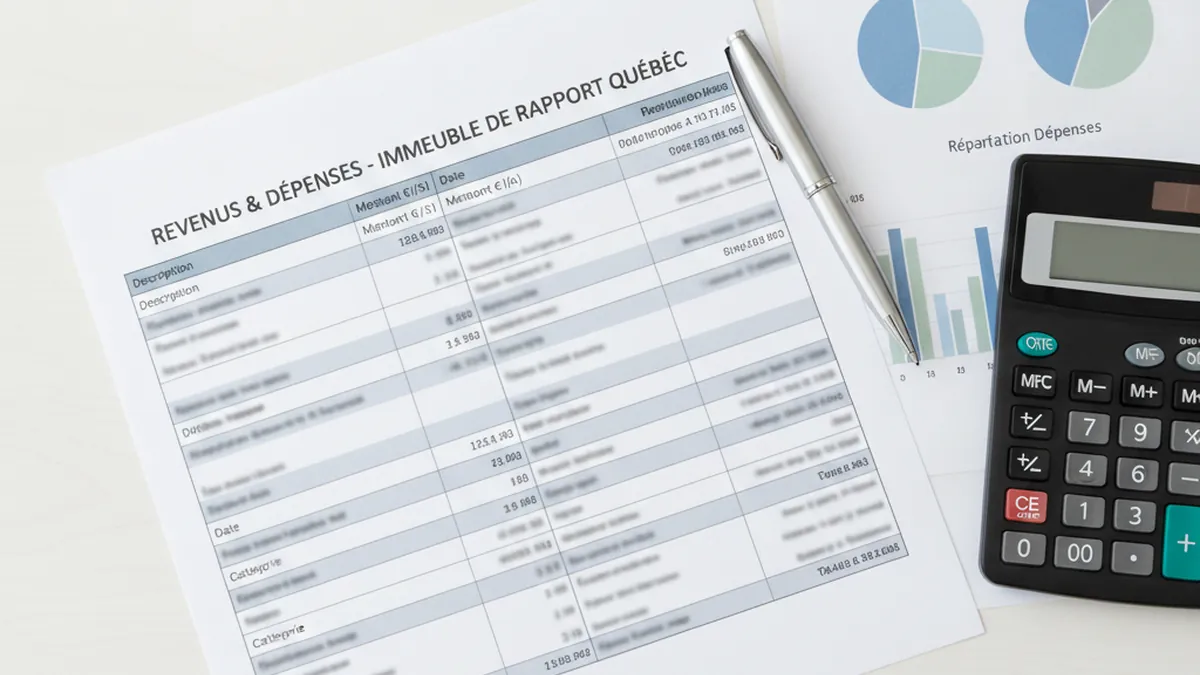
The cap rate is the common language between any seller and buyer of a multiplex or income property on the North Shore. It's the measure that determines whether your price is justified — or too high.
What the buyer is really after
They want to confirm that the declared income is the actual collected income — not potential income or the rents you're charging tenants without always receiving. They also want to understand the expense structure: expenses you pay (heating, hot water, maintenance) versus those paid by tenants.
"Here are the income and expense statements for the past 24 months. Gross annual income: $X. Operating expenses (taxes, insurance, maintenance, shared costs): $Y. Net operating income (NOI): $Z. At the asking price of $W, the cap rate is Z/W = [X%]. This figure is comparable to the average cap rate in [city] on the North Shore, which ranges from 5.2% to 6.0% in 2026."
Use our offer calculator to validate your cap rate before presenting your figures to a buyer. A well-documented cap rate significantly reduces post-inspection renegotiations.
Question 7: how do you respond to a renegotiation request after inspecting your plex?
Post-inspection renegotiation is nearly universal in FSBO plex sales. Respond item by item: pre-disclosed issues are non-negotiable; new findings can be addressed by a documented repair quote or a targeted price adjustment. Sellers who arrive with recent maintenance invoices and renovation permits reduce renegotiation requests by 30–40%. A blanket price reduction with no justification rewards the buyer for a fishing expedition.
Post-inspection renegotiation is nearly universal in FSBO plex sales. The building inspector lists deficiencies — and the buyer uses them to renegotiate the price or request repairs. How do you handle this stage without losing the deal or giving up too much value?
What the buyer is really after
In most cases, they're looking for a symbolic reduction that makes them feel they negotiated well — not necessarily to extract the maximum. They also want assurance that major structural problems weren't hidden.
"I've reviewed the items raised by your inspector. For the items I disclosed [list], there is no renegotiation — they were known. For newly identified items [list], I propose [correction or price adjustment documented by a quote]. I am not in a position to reduce the price globally without specific justification by line item."
Having recent renovation or maintenance quotes on hand before the inspection stage puts you in a position of strength. Based on our experience on the North Shore market, sellers who document their income property before listing — plans, permits, maintenance invoices — reduce renegotiation requests by 30 to 40%.
"On the North Shore, plex sellers who arrive prepared for the 7 buyer questions close their deal 45 days faster than average. Preparation isn't optional — it's what separates a successful sale from an aborted one."
— ImmoMulti Team, multiplex investor, North Shore
Summary table: how to answer the 7 FSBO plex buyer questions
Here is a summary of the 7 critical questions you will encounter when selling your multiplex or plex FSBO on the North Shore, what each question actually reveals and the recommended response.
| # | Buyer's question | What they're really after | Recommended response in brief |
|---|---|---|---|
| 1 | Do you have the revenue figures? | Check whether the price is financeable at their bank | Income/expense statement + calculated cap rate, pre-approval required |
| 2 | Can I see all the leases? | Identify tenancy risks and below-market rents | Copy of all leases + amendments + renewal history |
| 3 | What conditions will you accept? | Test the seller's flexibility and professionalism | Clear timelines, 5% deposit, precisely named conditions |
| 4 | Can we inspect all units? | Full access to assess the actual condition | Notify tenants 24h, dedicated day, seller present |
| 5 | Is there a seller's declaration? | Gauge the legal risks after closing | Complete and honest declaration, disclose all known defects |
| 6 | What is the real cap rate? | Validate that the price holds up in a yield analysis | Cap rate calculated on actual income, compared to North Shore benchmarks |
| 7 | Are you open to negotiating after inspection? | Extract a symbolic reduction or surface real problems | Negotiate by justified line item, refuse blanket reductions without cause |
These 7 questions feel like too much to handle alone: what is the direct alternative?
Sell directly to ImmoMulti. As a specialist buyer of plex and multiplexes on the North Shore, we handle all due diligence ourselves — leases, income verification, inspection — and deliver a firm offer within 48 hours. No commission, no inspection conditions on your end, no tenant coordination. Compare: the 5% broker commission on a $800,000 plex is $40,000+. We keep that in your pocket.
Managing these 7 questions simultaneously — qualifying buyers, preparing documentation, coordinating inspections with tenants, defending your cap rate, negotiating post-inspection — represents a significant workload. This is precisely what brokers charge 4 to 5% commission to handle for you.
If these questions feel overwhelming, there is a third path: ImmoMulti handles all of them for you. As a direct buyer of plex and multiplexes on the North Shore, we ask all these questions ourselves, conduct our own due diligence, and deliver a firm offer within 48 hours — no commission, no inspection conditions, no tenants to coordinate.
Read our FSBO vs. direct buyer comparison to understand exactly what you save in time and stress. For sellers who simply want to know their price with no obligation, our offer calculator gives an instant estimate based on real North Shore cap rates.
Informational content only. Does not constitute legal, tax or financial advice. Consult a notary or legal advisor for your personal situation. Timelines and market data mentioned are indicative and reflect conditions observed on the North Shore at time of publication.
Frequently asked questions — selling your plex FSBO

