
Laval is one of the most active plex markets in Greater Montréal — metro access, low vacancy, limited rental stock. But not all neighbourhoods are equal. This analysis breaks down prices by district, observed cap rates, transit impact and rental trends shaping the Laval plex market in 2026.
Quick answer
The Laval plex market in 2026 has a median price of approximately $920,000. Cap rates range from 4.0%–4.6% in metro-served neighbourhoods (Laval-des-Rapides, Pont-Viau) to 5.0%–5.8% in outlying areas (Fabreville, Vimont). Vacancy stays near 2%, supporting income values. ImmoMulti buys plexes directly in Laval — offer within 48 hours, no commission.
Why the Laval plex market stays active
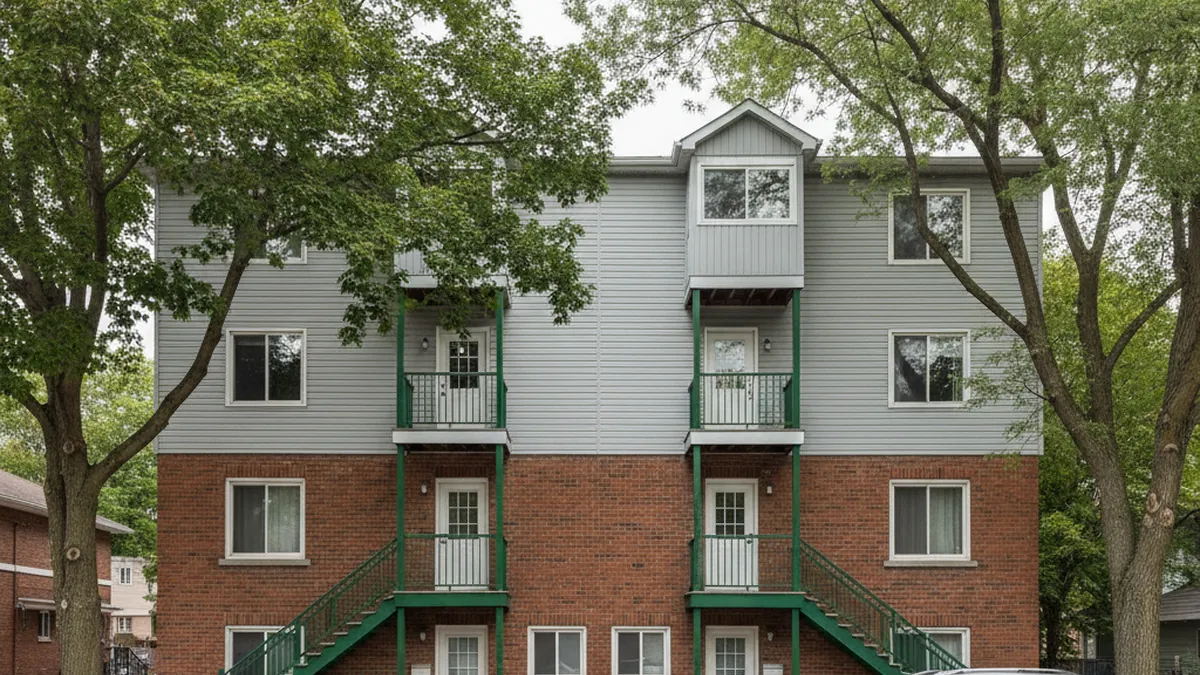
Three structural dynamics sustain investor demand for Laval plexes, independent of interest rate cycles:
Rental stock under pressure
According to CMHC, Laval's rental vacancy rate hovered around 2% in recent years — well below the equilibrium threshold of 3%. This structural scarcity keeps rents rising and reduces vacancy risk, two factors that directly support plex values for investor buyers.
The scarcity of existing stock
Very few new plexes have been built in Laval in recent years: small plex (2 to 4 units) construction starts have given way to condo projects and large rental complexes. This relative scarcity of existing stock creates a price support effect, particularly visible in central neighbourhoods.
A diversified tenant pool
Laval attracts families leaving Montréal, newcomers, Université de Montréal students (Laval campus) and commuters heading to Montréal. This diversity reduces dependence on a single tenant type and stabilizes long-term income.
Metro and transit impact by neighbourhood
Public transit remains the primary location premium driver for Laval plexes. The Orange Line serves the city with three stations:
- Cartier — gateway to Laval-des-Rapides; strong residential demand.
- De la Concorde — major bus transfer hub; attracts car-free tenants.
- Montmorency — terminus, major commercial and residential hub; Sainte-Rose accessible by bus.
Walking distance to stations (under 800 m) creates an observable 8% to 15% price premium compared to equivalent plexes more than 15 minutes away. Laval-des-Rapides and Pont-Viau benefit most directly from this premium.
Major highway corridors (A-15, A-440, A-19, A-13) play a secondary but meaningful role in areas less served by metro — notably Fabreville (A-13/440) and Vimont (A-19). These corridors sustain solid rental demand from car-dependent workers.
Note on the REM
The Réseau express métropolitain (REM) indirectly improves accessibility to certain North Shore areas, but its effect on Laval plex values remains limited in 2026. The Orange Line remains the primary determinant of the Laval location premium.
Prices and cap rates by neighbourhood in 2026
At the start of 2026, the median Laval plex price was around $920,000 according to market reports — but this average masks significant variations between neighbourhoods. The table below shows indicative price ranges and cap rates observed by district. These figures are indicative only and do not replace an analysis based on a specific property's actual income.
| Neighbourhood | Market profile | Indicative price (2–4 unit plex) | Indicative cap rate |
|---|---|---|---|
| Laval-des-Rapides | Cartier/De la Concorde metro, dense, highly sought-after | $750,000 – $1.2M+ | 4.0% – 4.6% |
| Pont-Viau | Near Pont Viau bridge and metro, established rental base | $650,000 – $1.0M | 4.2% – 4.8% |
| Chomedey | Dense, multicultural, high tenant turnover | $700,000 – $1.1M+ | 4.3% – 5.0% |
| Sainte-Rose | Family-oriented, parks, Montmorency metro by bus | $650,000 – $1.0M | 4.5% – 5.2% |
| Vimont | Quiet residential, A-19, commuter rail station | $600,000 – $950,000 | 4.8% – 5.5% |
| Fabreville | Entry-level, growing rental demand, A-13 | $575,000 – $900,000 | 5.0% – 5.8% |
How to read this table: a low cap rate (e.g. 4.0%) means buyers accept a low initial yield in exchange for a prime location and anticipated appreciation. A higher cap rate (e.g. 5.5%) indicates a market where cashflow is more accessible, but value growth is less certain. To explore this ratio further, read our guide on the cap rate calculator.
Duplex, triplex, quadruplex: buyer profile by format
The building format determines both the buyer profile and the valuation method:
- Duplex (2 units) — primarily targets owner-occupants who live in one unit and rent the other. Residential financing accessible, minimum 10% down payment. Median price in Laval: $650,000 – $800,000.
- Triplex (3 units) — the most liquid format in Laval. Attracts both pure investors and owner-occupants. The last category to benefit from residential financing with 5% down for occupants. Median price: $780,000 – $1.05M.
- Quadruplex (4 units) — sought by investors maximizing income while remaining in residential financing. 20% down for non-occupants. Median price: $900,000 – $1.25M.
- Multiplex (5+ units) — shifts to commercial financing. The buyer is almost exclusively an institutional investor or active portfolio. Valuation is strictly income-based (cap rate, GRM).
Liquidity decreases as the format grows: a well-located duplex or triplex finds a buyer quickly; an 8-unit multiplex in Fabreville may sit on the market for months if the price isn't anchored to actual income.
Rental trends and vacancy in 2026

The Laval rental market is shaped by three structural trends in 2026:
Selective rent growth
Rent growth has moderated from the 2022–2023 peak but remains positive in central neighbourhoods. Renewal rents are governed by Rental Housing Tribunal (TAL) guidelines, but reletting rents (new tenants) have risen sharply: in Laval-des-Rapides and Chomedey, the gap between in-place rents and free-market rates sometimes exceeds 30 to 40% for 3½ to 4½-room units (indicative figures).
This gap between historic and market rents is a significant value lever: a buyer who plans to progressively relet units can anticipate a meaningful increase in net income over the medium term.
Structurally low vacancy
Laval's vacancy rate has hovered around 2% for several years (CMHC), placing the city among Québec's tightest rental markets. This is particularly favourable for investors: the risk of income loss from vacancy is low, which buyers factor into their valuation models (lower cap rate).
Demographic pressure
Laval hosts a growing, young population — including recently immigrated households and families leaving the island of Montréal for more affordable rents. This demographic pressure maintains sustained rental demand, including in peripheral areas such as Fabreville and Vimont, which are gradually catching up to central neighbourhoods.
Reading market indicators: cap rate and GRM
To compare plexes across neighbourhoods or assess whether an asking price is justified, two indicators are standard on the Laval market.
The cap rate
The cap rate divides the annual net operating income (NOI) (gross income minus operating expenses, before debt service) by the property's market value. It is the real estate equivalent of an initial yield. A 4.5% cap rate on a $900,000 plex implies NOI of approximately $40,500 per year. To master this ratio in detail, see our cap rate calculator.
The Gross Rent Multiplier (GRM)
The GRM multiplies the annual gross income by a market factor to produce a quick indicative value. In Laval in 2026, observed GRMs range roughly from 12 to 17 depending on the neighbourhood and format. A high GRM (15–17) in an area like Laval-des-Rapides reflects the location premium; a GRM of 12–13 in Fabreville signals more accessible initial yield. Our GRM calculator lets you test different scenarios in seconds. For a complete yield analysis, also see our guide on calculating yield (cap rate, GRM, cashflow, DSCR).
How to set the right asking price for your Laval plex

The question that comes up in almost every sale conversation is the same: "What is my plex actually worth?" In Laval, the answer lies neither in the neighbour's asking price, nor in the municipal assessment, nor in the construction cost. It lies in the net income the building generates, cross-referenced with the cap rates observed in your neighbourhood. Here is a five-step method that income-property buyers follow — and that you can reproduce yourself before you even receive an offer.
Step 1 — Reconstruct the real potential gross income
Add up the rents you actually collect each month (not the ones on a lease signed eight years ago), multiply by twelve, then add ancillary income: parking, laundry, storage, sheds, antennas. In Laval, a backyard parking spot can be worth $40 to $75 per month, and a coin-operated shared laundry a few hundred dollars a year. Clearly distinguish actual income (what you collect today) from market income (what the units would rent for at current rates): the gap between the two is precisely the value lever detailed below.
Step 2 — Establish normalized operating expenses
Net operating income (NOI) is calculated by subtracting all recurring expenses from gross income, excluding debt service (mortgage principal and interest) and tax depreciation. A serious buyer "normalizes" these expenses, meaning they replace your figures with market averages when yours are abnormally low.
| Expense item | Order of magnitude (Laval plex) | Note |
|---|---|---|
| Property and school taxes | Per the assessment roll | Heaviest item; check your Laval tax bill |
| Building insurance | $1,200 – $3,500/yr by size | Sharply higher since 2022 |
| Maintenance and repairs | ~5% to 8% of gross income | A buyer normalizes even if you spend less |
| Management | ~4% to 5% of gross income | Counted even if you self-manage |
| Common-area energy, snow removal, reserves | Variable | Owner-paid heating if applicable |
Watch for the classic trap: an owner who does everything themselves and records no management or maintenance cost presents an artificially inflated NOI. The buyer will correct it downward, and the gap can represent tens of thousands of dollars on the final price.
Step 3 — Apply the neighbourhood cap rate
Divide the NOI by your district's indicative cap rate (see the table in the "Prices and cap rates by neighbourhood" section). The formula is simple: Value = NOI ÷ cap rate. The same building is not worth the same amount depending on the rate applied, and this is exactly where the Laval location premium plays out.
Worked example: a triplex in Laval-des-Rapides
Actual gross income: $54,000/yr. Normalized expenses: $18,500. NOI = $35,500. At a 4.5% cap rate (metro-adjacent, near Cartier station): $35,500 ÷ 0.045 = $789,000. The same NOI capitalized at 5.5% (as in Fabreville) would yield $645,000 — a gap of nearly $145,000 for an identical building, solely because of the neighbourhood.
Step 4 — Cross-check with the GRM and recent comparables
The cap rate is never used alone. Confirm the range with the gross rent multiplier (GRM) and with recent sales of comparable plexes in your area. If your cap-rate value works out to 15 times gross income while neighbourhood comparables trade at 13.5, you need to understand why (superior condition, rents already at market, larger lot) or adjust. Our GRM calculator and cap rate calculator let you quickly cross-reference both methods.

Step 5 — Adjust for condition and potential
The gross value obtained is a starting point, not a verdict. It is then modulated according to the actual condition of the roof, foundation, plumbing and electrical, according to the gap between in-place and market rents, and according to reconfiguration potential (finishable basement, adding a unit). These adjustments are the subject of the next section.
What raises — or lowers — the value of your Laval plex

Two neighbouring triplexes, same number of units, same Chomedey street, can sell $120,000 apart. Why? Because a plex's value depends not only on its floor area, but on a series of factors every experienced buyer assesses on a visit. Knowing them lets you prepare the right arguments — and avoid leaving money on the table.
Factors that raise value
- Rents close to market. A plex whose rents are already aligned with the open market offers the buyer an immediate return, with no reletting work. This is the most value-adding factor in Laval, where the gap between in-place and market rents often reaches 30 to 40%.
- A location within walking distance of the metro. Under 800 m from an Orange Line station adds an observable premium of 8% to 15% on price.
- Recent major components. Roof, windows, electrical entrance, heating: each renewed component reduces the replacement reserve a buyer anticipates and translates directly into price.
- Ancillary income. Compliant parking, paid laundry, rented storage: all income that grows the NOI.
- Potential to add a unit. A basement with sufficient height or a large lot allowing an extension creates a "development" value that some buyers pay for in advance.
Factors that lower value
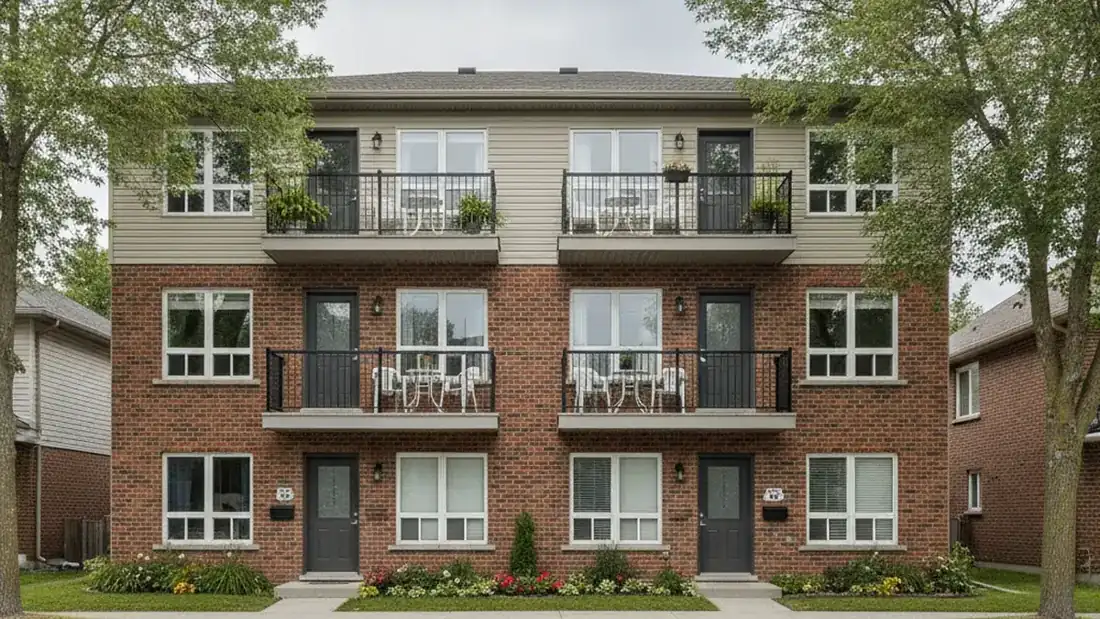
- Rents far below market with long leases. Paradoxically this is also a lever — but a prudent buyer discounts the time and risk required to relet, especially amid tighter restrictions on repossession and eviction.
- Deferred major work. Cracked foundation, end-of-life roof, original plumbing stacks, fuse-based electrical system: each deficiency turns into a negotiated discount, often larger than the actual cost of the work.
- Poorly documented leases or rent arrears. A murky rental file (missing leases, unserved increases, tenants in default) worries the buyer and weighs on price.
- A non-compliant building. Unpermitted basement unit, work done without permits, non-conforming use: all risks a buyer factors into their offer.
- Opaque management. No clear income and expense statements, accounts mixed with other buildings: the harder the file is to verify, the larger the safety margin the buyer applies.
The golden rule: discount ≠ cost of the work
A buyer almost never subtracts the mere cost of a repair. They subtract the cost plus a margin for risk, coordination and tied-up capital. An $18,000 roof can translate into a $25,000 to $30,000 discount at the negotiating table. Hence the value, for a seller, of fixing obvious deficiencies before going to market, or obtaining firm quotes to present to the buyer.
Tax on the sale: capital gain and depreciation recapture

The sale price is not what you actually pocket. Between the headline price and the amount left in your hands sit capital gains tax, depreciation recapture and transaction costs. Understanding these mechanisms avoids nasty surprises and helps you decide on the timing and structure of the sale. This remains a plain-language overview: every situation requires the advice of a tax specialist or accountant.
The capital gain: 50% inclusion rate
The capital gain is, in simplified terms, the difference between the sale price (net of disposition costs) and the property's adjusted cost base (essentially your acquisition cost plus capitalized improvements). In Canada, only part of this gain is taxable: the inclusion rate remains 50% in 2026. The increase to 66.67% that had been proposed for gains above $250,000 was cancelled, and the Canada Revenue Agency applies the 50% rate. In other words, on a $200,000 capital gain, $100,000 is added to your taxable income for the year.
That taxable amount is then taxed at your marginal rate. In Québec, the top combined marginal rate reaches 53.31% for the highest income bracket in 2026. A plex sale can easily push a seller into the upper brackets for the year in question.
Depreciation recapture (CCA): the most common trap
If you claimed depreciation (capital cost allowance, or CCA) on the building over the years to reduce your taxable rental income, the sale triggers a recapture. A rental building generally falls in Class 1, depreciated at 4% per year on a declining balance. All the CCA claimed since acquisition is then added back to income — and, unlike the capital gain, this recapture is taxable at 100%, at your marginal rate.
Worked example: capital gain + recapture
You paid $520,000 for a triplex (of which $380,000 for the building) and sell it for $790,000. You claimed $60,000 of CCA over the years.
• Depreciation recapture: $60,000 taxable at 100%.
• Capital gain: about $270,000 ($790,000 − $520,000), of which 50% taxable, i.e. $135,000.
In total, roughly $195,000 is added to your income for the year, before costs and before any mitigation strategy. Actual figures depend on your exact adjusted cost base and the land/building split — hence the importance of a professional calculation.
Legitimate levers to soften the bill

- The capital gains reserve. When part of the price is payable over several years (for example via a vendor take-back), it is sometimes possible to spread the taxation of the gain over a maximum of five years.
- The vendor take-back (balance of sale). Financing a portion of the price for the buyer can, depending on the structure, spread the gain and generate interest income.
- The land/building split. A documented, defensible allocation influences recapture and gain.
- The timing of the sale. Selling in a year when your other income is lower reduces the marginal rate applied to the gain.
- Corporate ownership. Depending on your situation, the ownership structure changes the tax treatment — a point to validate with your tax specialist before, not after, the transaction.
None of these strategies can be improvised at signing: they are planned upstream. A savvy seller consults their accountant before setting the price and structure of their offer, not after.
Seven mistakes that cost Laval plex sellers dearly

Most value losses at sale come not from the market but from avoidable decisions. Here are the seven most common mistakes we see among Laval plex owner-sellers.
1. Pricing on the municipal assessment or the neighbour's price
Laval's assessment roll is used to calculate taxes, not to set market value. A plex can be worth far more — or far less — than its municipal assessment depending on its actual income. Always anchor your price to NOI and cap rate, never to an administrative figure.
2. Presenting undocumented income
Announcing "$60,000 in income" without leases, deposit records and a tax bill to back it up weakens your position. A buyer who cannot verify applies a caution discount. A quantified, verifiable file is worth several thousand dollars.
3. Hiding deficiencies
An end-of-life roof or a cracked foundation always surfaces at inspection. Discovered late, it becomes a downward renegotiation lever, often harsher than if you had disclosed it upfront with a repair quote.
4. Underestimating the tax impact
Many sellers discover depreciation recapture when filing their return, once the money is already spent. Calculate your after-tax net before accepting an offer.
5. Neglecting the rental file
Verbal leases, increases never served, no deposit register: a disorderly rental file worries the buyer and slows the transaction. Clean it up before going to market.
6. Selling at the wrong point in your personal cycle
Selling under duress — divorce, estate, mortgage difficulty — without preparation always weakens your bargaining position. When possible, allow a few months to prepare the building and the file.
7. Confusing headline price with net proceeds
Broker commission, notary fees, mortgage payout, prepayment penalty, tax: the headline price can shrink by 8 to 15% before it reaches your account. Always reason in terms of net proceeds.
Preparing your plex and your file before going to market
A well-prepared plex sells faster, for more, and with less friction at inspection. Preparation is not just a coat of paint: it is mainly about assembling a file that inspires confidence and fixing irritants before they become price-reduction arguments. Here is the checklist we recommend to Laval owner-sellers.
The financial file
- Income and expense statements for the last two or three years, clear and separate from your other buildings.
- Up-to-date property and school tax bill.
- Invoices for recurring expenses (insurance, energy, snow removal, maintenance).
- Mortgage statement showing the balance and any prepayment penalty.
The rental file
- All leases in force, signed, with schedules (building rules, special clauses).
- Register of collected rents and history of served increases.
- Tenant contact information and status of any deposits.
- Relevant correspondence with the Rental Housing Tribunal (TAL), if applicable.
The technical and legal file
- Up-to-date certificate of location (a certificate that is too old or that does not reflect changes often delays signing at the notary's office).
- Construction or renovation permits for major work completed.
- Invoices and warranties for recent components: roof, windows, heating, electrical entrance.
- Maintenance log: dates of the latest work on plumbing, electrical, roofing.
The repairs that pay off before a sale
Not all renovations are equal at resale. Prioritize deficiencies that would otherwise serve as a renegotiation lever: water infiltration, visible foundation cracks, obsolete electrical panel, rotten windows. Conversely, a high-end cosmetic renovation of a unit whose rent will stay low is only partly recovered. Every dollar spent must either raise income or defuse a discount.
To estimate the cost of priority work before deciding, our renovation calculator gives orders of magnitude by item. The goal is not to redo everything, but to present a building with no bad surprises.
Broker, for-sale-by-owner or direct buyer: comparing your options

There is no "best" way to sell a plex in Laval in the abstract: there is the path that matches your priorities — maximum price, speed, confidentiality or simplicity. Here are the three main options and what they mean concretely for a Laval owner.
| Criterion | Real estate broker | For-sale-by-owner | Direct buyer (ImmoMulti) |
|---|---|---|---|
| Commission | ~4% to 5% + taxes | Flat fee | No commission |
| Typical timeline | Weeks to a few months | Variable, often longer | Offer within 48 h |
| Seller effort | Low to medium | High (showings, negotiation, docs) | Low |
| Confidentiality | Low (public listing) | Low | High (off-market possible) |
| Market exposure | Maximum | Medium | Targeted |
| Closing certainty | Variable (buyer financing) | Variable | High (qualified buyer) |
The broker: maximum exposure, commission attached

A broker lists your plex on public platforms and aims for the highest market price. It is often the right choice when the building is in excellent condition, rents are at market and you are not in a hurry. In exchange, the 4 to 5% commission cuts into net proceeds, and the process stays public.
For-sale-by-owner: save the commission, take on the work
Selling yourself saves the commission but transfers all the work: preparing the file, showings, negotiation, coordinating with the notary. For an income property, the added difficulty is valuing it correctly and filtering serious buyers from the curious.
The direct buyer: speed, confidentiality, no commission
Selling to a plex-specialist direct buyer like ImmoMulti suits situations where speed, simplicity and confidentiality come first. The offer arrives within 48 h, with no commission, from an already-qualified buyer — a real advantage when a conventional purchaser's financing is the main closing risk. It is also the preferred path for an off-market transfer, without publicly listing the building or disturbing the tenants.
When to sell in 2026: reading the Laval market cycle

The "right time" to sell depends first on your personal situation, but a few market benchmarks help choose the window. In 2026, three forces converge on the Laval plex market.
The cost of financing
The level of mortgage rates determines what a buyer can pay: when the cost of financing falls, borrowing capacity rises and income-property prices tend to firm up. Conversely, high rates compress offers. Tracking the trajectory of the policy rate gives a leading read on buyer demand.
The persistent scarcity of supply
With a vacancy rate around 2% (CMHC) and few new plexes built, the supply of income properties remains structurally scarce in Laval. This scarcity supports prices even in periods of higher rates, particularly in central metro-served neighbourhoods.
Seasonality
The plex market sees stronger activity in spring and early fall. Bringing your building to market — or soliciting an offer — in these windows maximizes the number of active buyers. That said, a direct buyer like ImmoMulti makes an offer in any season, which neutralizes the calendar effect for a seller in a hurry.
What to remember about timing
Don't try to perfectly "time" the market top: no one does it reliably. Focus on what you control — file preparation, building condition, rent alignment and calculating your after-tax net. A well-prepared building sells well in almost any market condition.
Thinking about selling your plex in Laval?
ImmoMulti is a direct buyer of plexes in Laval — duplex, triplex, quadruplex and multiplex. You receive a priced offer within 48 hours, with no broker and no commission. Current tenants stay in place; the transaction can remain off-market.
This market analysis gives you benchmarks to position your property in the Laval landscape. If you are considering a transaction — now or in the medium term — our dedicated page explains in detail how ImmoMulti evaluates and acquires plexes on the North Shore, with no broker and no commission: selling an income property in Laval.
In summary
The Laval plex market in 2026 remains active and well-supported, but differentiated by neighbourhood. Laval-des-Rapides and Pont-Viau dominate on the location premium (compressed cap rates); Fabreville and Vimont offer higher initial yields. In every case, the entry key is the same: analyze actual net income, not the listed price per square foot.


