
Selling a plex in Montréal means selling an asset whose value is driven by numbers, not emotion. ImmoMulti buys plexes directly in Montréal — duplex, triplex, quadruplex, 5-plex and above — and delivers a priced offer within 48 hours, no commission and no public listing. In 2025–2026, the median plex price in the Montréal region was rising to approximately $840,000 to $865,000, up 7 to 8% year-over-year according to APCIQ. This 2026 guide covers all plex types: what they're worth by neighbourhood, how to value them using cap rate and GRM, and how to choose between a broker, a direct sale or a specialist buyer to maximize the net in your pocket — whether you're selling with or without sitting tenants.
Quick answer
In Montréal in 2026, plex prices range from around $550,000 (duplex, affordable areas) to over $1.4M (quadruplex, central neighbourhoods). Value is calculated from rental income using the GRM (12–14×) and cap rate. No broker is legally required. ImmoMulti buys directly — offer within 48 hours, $0 commission, tenants in place accepted.
What is a plex and why is it so sought after in Montréal?
A plex is a multi-unit residential building (duplex, triplex, quadruplex, 5-plex+) on a single lot. It is Montréal's most iconic real estate format, sustained by strong rental demand and a vacancy rate near 2.9% — well below equilibrium — in sought-after neighbourhoods like Rosemont, the Plateau and Villeray.
A plex is a residential building that brings together multiple units under one roof on a single lot. The term covers an entire family of properties: duplex, triplex, quadruplex, 5-plex and beyond. It is an architectural signature of Montréal, with its exterior staircases and stacked units.
Why does the plex remain so sought after? Because rental demand stays strong. Despite a slight uptick, the vacancy rate in the Montréal region was around 2.9% in 2025 according to CMHC — still below the equilibrium threshold of 3%, and even tighter for the most affordable units (around 0.8% in the lowest price range, as an indicative figure). Sought-after plex neighbourhoods such as Rosemont–La Petite-Patrie, the Plateau-Mont-Royal, Villeray, Mercier–Hochelaga-Maisonneuve and Verdun attract both investors and owner-occupants. The result: even when the broader market slows, plexes keep trading.
Duplex, triplex, quadruplex, 5-plex: what differences matter when selling?
The number of units determines the buyer pool, financing type and valuation method. Duplex and triplex attract owner-occupants with residential financing; quadruplex is the last tier under residential rules; 5-plex and above shifts to commercial financing and pure income-based valuation.
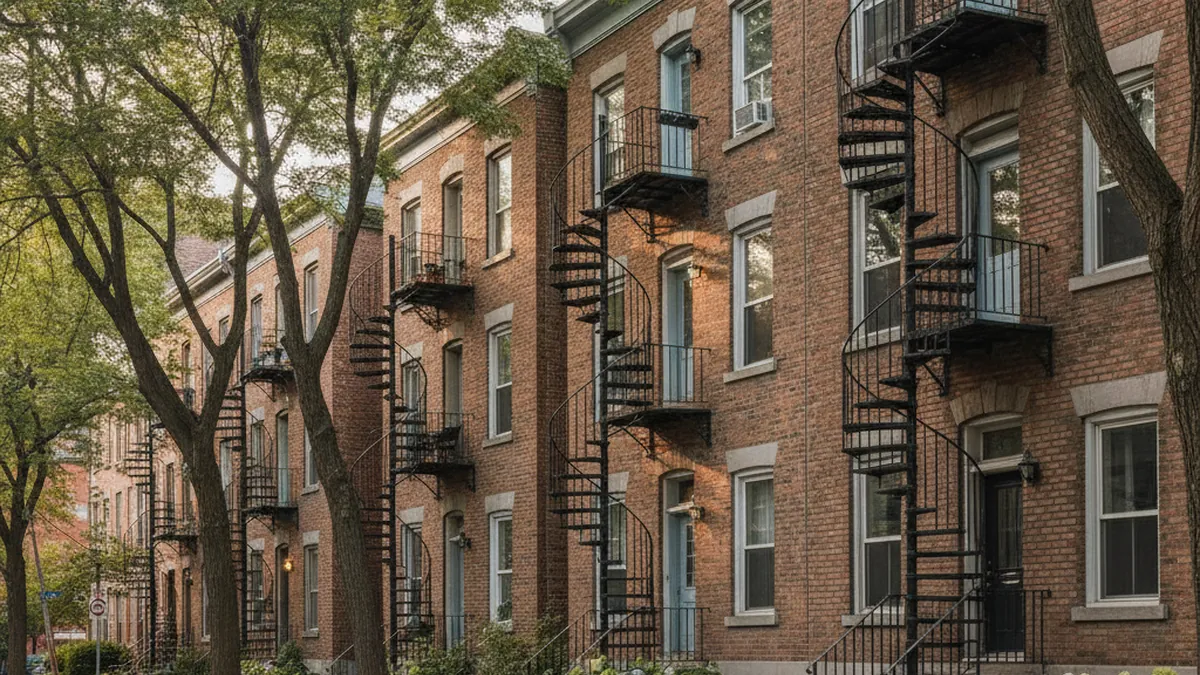
The "plex" varies by number of units. This distinction matters because it influences the buyer pool, financing and the valuation method.
- Duplex (2 units) — often purchased by an owner-occupant who lives in one unit and rents the other. Strong demand, accessible residential financing.
- Triplex (3 units) — the classic Montréal plex. Good balance between income and accessibility; still eligible for residential financing.
- Quadruplex (4 units) — the last tier generally financed as residential. Favoured by investors seeking more income without crossing into commercial financing.
- 5-plex and above — shifts to commercial financing (5 units and up). Valuation becomes almost entirely income-based, and the typical buyer is an investor.
Beyond 5 or 6 units, the term selling an income property is more common than "plex," but the logic remains identical: the higher and better-documented the net income, the higher the value.
How do you value a plex by its rental income: cap rate and GRM in practice?
Use two complementary tools. The GRM (Gross Rent Multiplier) = sale price ÷ annual gross income; in Montréal in 2026 this is typically 12–14×. The cap rate = net operating income (NOI) ÷ price; a lower cap rate means a higher price. Start from your actual income and expenses for the past 12 months.

Unlike a house, a plex is valued by its numbers. Two tools dominate the analysis, and it is wise to cross-check both.
The Gross Rent Multiplier (GRM)
The GRM multiplies annual gross income by a market-observed factor. In Montréal in 2026, this multiplier is often between 12 and 14 (indicative). A plex generating $60,000 in gross income with a GRM of 13 would therefore be worth, as a first approximation, around $780,000. This is quick but approximate: the GRM ignores expenses. To go further, use our GRM calculator.
The cap rate
The cap rate divides the net operating income (NOI) — income minus expenses, before mortgage — by the price. A lower cap rate means a higher price. It is the preferred method of investors and appraisers. To understand the calculation in detail, see our page on the cap rate calculator and our guide on calculating multiplex yield.
Key takeaway
Before setting a price or accepting an offer, start from your actual figures for the past 12 months: current leases, income received, taxes, insurance, utilities, maintenance. Credible net income is worth more than an optimistic listing price.
How much is a plex worth in Montréal by type in 2026?
The median plex price in the Montréal metropolitan area was approximately $840,000–$865,000 (up ~7–8% year-over-year, APCIQ). Indicative ranges: duplex $550K–$850K+; triplex $750K–$1.1M+; quadruplex $900K–$1.4M+; 5-plex and above — priced on NOI and cap rate.
At the start of 2026, the median plex price in the Montréal metropolitan area was around $840,000 to $865,000, up approximately 7 to 8% year-over-year according to APCIQ — even as the broader real estate market was slowing. The plex is an exception, driven by rental demand.
The ranges below are provided for informational purposes only: the actual price of a plex depends on its type, neighbourhood, condition and above all its net income.
| Plex type | Units | Indicative range (Montréal, 2026) |
|---|---|---|
| Duplex | 2 | ≈ $550,000 to $850,000+ |
| Triplex | 3 | ≈ $750,000 to $1,100,000+ |
| Quadruplex | 4 | ≈ $900,000 to $1,400,000+ |
| 5-plex and above | 5+ | Based on NOI and cap rate |
A duplex in a more affordable area (such as Montréal-Nord) can be under $650,000, while a plex in Rosemont or the Plateau often exceeds a million. From the 5-plex onward, the price is calculated almost exclusively by income: forget neighbourhood comparables and focus on net income.
Is it better to sell a plex with or without a broker in Montréal?
No law requires a broker. With a broker you get broad exposure but pay 4–7% commission and wait months. Without a broker you save the commission and can sell directly to a specialist buyer. What matters is the net in your pocket, not the listed price.
No law requires a property owner to use a broker to sell a plex in Québec. You have the choice.
Selling with a broker
- Advantages: broad exposure (typically via Centris), professional marketing, guidance through negotiation and paperwork.
- Disadvantages: a commission often of 4% to 7% of the price (tens of thousands of dollars on a plex), timelines that can stretch into months, and public visibility that not all sellers want.
Selling without a broker
- Advantages: zero commission, savings stay in your pocket; more discretion; a single point of contact if you deal directly with a specialist buyer.
- Disadvantages: you need to build your own income file and validate the value. Hence the importance of a reliable calculator before discussing price.
Selling without a broker doesn't mean selling for less. A serious buyer prices based on net income, not on whether an intermediary is involved. The key is to compare the net in your pocket, not just the listed price.
Net proceeds: how do you compare a broker sale and a direct sale?
Never compare two offers on the listed price alone: compare the net you actually pocket once commission, professional fees and adjustments are deducted. On an $850,000 plex, a 5% commission is $42,500 (plus taxes) — often a full year of net income.

A plex's listed price is only a starting point. What truly matters is the amount you keep once every deduction is made. A higher price paired with a brokerage commission can, in reality, leave less money in your pocket than a slightly lower direct offer with no fees. The only way to decide is to work through the net proceeds for each scenario.
What eats into the sale price
Between the price on the deed and the notary's final cheque, several amounts are deducted. You should anticipate all of them before accepting an offer.
- Brokerage commission: generally 4% to 7% of the price, plus GST and QST (14.975% on the commission in Québec). On a plex, this is the heaviest item.
- Mortgage balance to repay: the remaining principal, plus any prepayment penalty if you break a closed term before maturity.
- Capital gains tax and CCA recapture (see the tax section below).
- Professional fees: up-to-date certificate of location, notarial discharge of the mortgage, accountant for the tax calculation.
- Adjustments: prepaid municipal and school taxes, tenant security deposits, utility accounts.
Worked example: two paths, the same plex
Take a Montréal triplex valued at around $850,000, with a $400,000 mortgage balance. Let's compare a listed sale with a broker and a direct sale with no commission. The figures below are illustrative and rounded.
| Item | Sale with broker | Direct sale (no broker) |
|---|---|---|
| Sale price | $860,000 | $850,000 |
| Commission (5% + taxes) | − $49,445 | $0 |
| Mortgage balance | − $400,000 | − $400,000 |
| Notarial and misc. fees | − $2,500 | − $2,500 |
| Net before tax | ≈ $408,055 | ≈ $447,500 |
In this example, the direct sale leaves nearly $39,000 more in the seller's pocket, even though the listed price is $10,000 lower. That's precisely the commission saved. Of course, a broker can sometimes secure a higher price through broader marketing; but the price gap then has to exceed the full commission for the listed sale to win on net. Always run this calculation before you sign. Our purchase offer calculator helps anchor value, and the financing comparison tool helps visualize the impact of a mortgage penalty.
The right reflex
Always ask to see the estimated net proceeds, not just the price. Two offers identical on the listed price can differ by tens of thousands of dollars depending on fees, penalties and taxes. The notary's cheque is the only number that truly counts.
How do you sell a plex quickly in Montréal without a public listing?
Sell directly to a specialist buyer like ImmoMulti: share your income and expenses, receive a priced written offer within 48 hours, then proceed to a notarial signing within weeks. No public listing, no mass showings, no broker commission — tenants in place are accepted as-is.

The fastest route to sell a plex in Montréal is a direct sale to a specialist buyer, such as ImmoMulti. The principle is simple: you share your income and expenses, the buyer analyzes the figures and delivers a priced offer — sometimes within 48 hours — followed by a notarial signing within a few weeks.
- No brokerage commission.
- Speed: no public listing, no mass showings, no drawn-out financing conditions.
- Discretion: your tenants and neighbours are not alerted. The transaction can remain off-market.
- Sitting tenants: leases follow the property; the buyer takes them over as is.
Before accepting anything, validate the value yourself with the purchase offer calculator. You will know whether the offer properly reflects your plex's net income.
How does a plex sale unfold, from the offer to the notarial deed?
The typical path has six steps: promise to purchase, conditions (inspection, financing, document review), removal of conditions, notarial preparation (title, certificate of location, mortgage discharge), signing of the deed of sale, and remittance of the adjusted proceeds. Expect roughly 30 to 90 days depending on conditions.

Selling a plex isn't just agreeing on a price: it's moving through a sequence of legal steps, the last of which — the notarial deed — is mandatory in Québec. Understanding the flow spares you surprises and lets you keep control of the timeline.
1. The promise to purchase
Everything starts with a promise to purchase (also called an offer): a written document setting the price, the desired signing date, the inclusion or exclusion of property, and above all the buyer's conditions. Once accepted and signed by both parties, it becomes a contract that binds everyone, subject to the conditions being met. Read every clause: an overly long conditions period ties up your building with no guarantee of a sale.
2. The conditions (inspection, financing, documents)
Most promises include three classic conditions: the building inspection, the buyer's financing approval, and the document review (leases, income and expense statements, certificate of location, seller's declaration). For a plex, the buyer will also verify the declared income against the actual leases. That's why a clean file speeds up the removal of conditions. A direct sale to a specialist buyer often carries fewer conditions, since the buyer doesn't depend on an external lender.
3. Removal of conditions
When the buyer is satisfied, they remove their conditions in writing. The sale then becomes firm. This is when the file is sent to the chosen notary (in Québec, the buyer usually chooses the notary since they bear the fees). If a condition is not removed within the deadline, the promise may become null: hence the value of short, realistic deadlines.
4. Notarial preparation
The notary verifies the title, ensures no hidden charge encumbers the building, validates the certificate of location (it must reflect the current state; if it's too old or doesn't show renovations, it will need updating), and prepares the discharge of your mortgage. The notary also calculates the adjustments: prepaid municipal and school taxes, tenant deposits, utility accounts.

5. Signing the deed of sale
On the appointment day, you sign the deed of sale before the notary. Ownership changes hands, the buyer pays the price (directly or through their lender), and the notary repays your mortgage balance out of the proceeds before handing you the net. You turn over the keys, the original leases and the tenant deposits.
6. After the sale
The notary publishes the deed at the Land Registry, obtains the discharge of your mortgage and sends you the final statement. Keep every document: it will serve for your tax return the following year, notably to report the capital gain.
How long does it take?
A listed sale with financing conditions often stretches over 60 to 90 days. A direct sale to a buyer who needs no external financing can close in a few weeks, sometimes under 30 days after the promise is accepted.
How do you sell a plex with sitting tenants without conflict?
In Québec, leases follow the building: the buyer takes over the units under existing terms (art. 1937 C.C.Q.). Tenants must allow showings, but you must give 24 hours' notice and stay within 9 a.m. to 9 p.m. (art. 1931 C.C.Q.). Up-to-date leases increase a plex's value.

Unlike a single-family home, a plex almost always sells occupied. That's actually an asset: rental income is what gives the building its value. But you need to know the Civil Code rules to avoid missteps with your tenants during the process.
Leases follow the building
Under article 1937 of the Civil Code of Québec, the sale of the building does not terminate the leases. The new owner becomes the landlord and takes over the units under the existing terms: same rents, same terms, same clauses. So you have neither to recover possession nor to rehouse anyone before selling. The buyer, in turn, inherits a building with its income — which is precisely what they're after.
Showings: notice and permitted hours
To show a unit to a prospective buyer, the law frames your rights. Under article 1931 of the Civil Code, you must give the tenant 24 hours' notice before a showing. And the tenant may refuse a showing that would take place before 9 a.m. or after 9 p.m., or in the landlord's absence. In short: tenant cooperation greatly facilitates the sale, which is why it pays to keep good relations and communicate clearly. A direct sale, with no parade of visitors, keeps this friction to a minimum.
Good to know
A plex whose leases are current, signed and well documented sells faster and for more than a building with murky income. Gather the leases, renewal notices and rent history before you even list. It reassures the buyer and speeds up the removal of their conditions.
Below-market rents: the effect on price
Many Montréal plex owners have below-market rents, by choice or out of caution before the Administrative Housing Tribunal (TAL). At sale, this weighs on value, since the price is calculated on current net income. A savvy buyer will nonetheless factor in the long-term upside. Documenting the area's market rent (without fabricating it) helps defend a fair price. Our yield calculation guide helps you position your rents.
What taxes should you plan for when selling your plex in Montréal?
Two levies hit the seller: capital gains tax (the 50% inclusion rate remains in 2026, the increase to 66.67% having been cancelled) and recapture of capital cost allowance (CCA) claimed over the years, taxed at 100%. The welcome tax is paid by the buyer. Consult a tax specialist.

Selling a plex can generate a healthy gain, but the tax authorities claim a share. Anticipating the tax bill avoids surprises and lets you compare offers on a true net basis. Here are the main items; for your specific situation, consult a tax accountant or a notary.
The capital gain
The capital gain is the difference between the sale price (net of selling costs) and the adjusted cost base of the building (essentially your acquisition cost plus capital improvements). In Canada, the inclusion rate remains at 50% in 2026: the federal government first deferred, then cancelled the planned increase to 66.67%, as Revenu Québec confirmed by harmonization. Thus only half of your gain is added to your taxable income for the year, then taxed at your marginal rate (federal + provincial).
Recapture of capital cost allowance (CCA)
If you claimed capital cost allowance (CCA) on the building over the years to reduce your rental income, the sale can trigger a recapture. Unlike the capital gain, this recapture is taxed at 100% as ordinary income, up to the amount of cumulative CCA claimed. It's a common trap: a seller sees a modest "gain" on paper, but recapture inflates the tax bill. Our capital gains calculator helps estimate the order of magnitude.
Watch the recapture
A long-held plex on which you've claimed CCA can generate a recapture of tens of thousands of dollars, taxed at 100%. Have your position calculated before accepting an offer: the net you pocket can differ significantly from the listed price.
Principal residence: a partial exemption is possible
If you occupy one of the plex's units, the portion corresponding to your principal residence may benefit from the principal residence exemption, reducing the taxable gain on a pro-rata basis. The rules are technical (calculation of the occupied area, years of occupancy): a tax specialist must validate your situation.
GST/QST and welcome tax
The sale of a purely residential rental building is generally exempt from GST/QST, but exceptions exist (new building, major renovations, commercial portion). As for the welcome tax (transfer duties), it is paid by the buyer, not by you. In Montréal, the 2026 scale climbs to 3% above $1M — a cost the buyer factors into their analysis, which can therefore indirectly influence the price they propose. Our welcome tax calculator lets you estimate it.
"The portion of capital gains exceeding $250,000 in a year was to move to a 66.67% inclusion rate in 2026. With the cancellation, all capital gains remain subject to the 50% inclusion rate." — based on the Department of Finance Canada and Revenu Québec, 2025.
How do you prepare your plex and sale file to maximize the price?
A plex sells first on its numbers: gather current leases, income and expense statements for the past 12 to 24 months, maintenance invoices, the certificate of location and the seller's declaration. A clean file speeds up the sale and defends a higher price.
Preparing a plex for sale differs from preparing a house. "Home staging" matters little; it's your financial documents that raise or sink the buyer's confidence — and therefore the price. An impeccable file turns a tense negotiation into a factual discussion.
The income and expense file
This is the heart of the valuation. Gather, ideally over 12 to 24 months:
- All leases in force, signed, with renewal notices and applied increases.
- An income statement: rents collected per unit, plus ancillary income (parking, laundry, storage).
- A detailed expense statement: municipal and school taxes, insurance, energy (common areas), snow removal, maintenance, management, repairs.
- The list of security deposits or tenant advances, if any.
The building documents
Beyond the numbers, the buyer and their notary will want to see:
- The up-to-date certificate of location (reflecting renovations and the current state of the premises).
- The invoices and warranties for major work: roof, windows, heating, plumbing, electrical.
- The most recent tax bill (municipal and school).
- The seller's declaration on the building, disclosing what you know about its condition.
- Prior inspection reports, if any.
Small fixes, big effect
No need for deep renovations before selling: a plex buyer is buying income, not a new kitchen. On the other hand, fixing visible irritants (a leak, a wobbly staircase, a neglected entrance) and documenting recent maintenance keeps the inspection from becoming a lever to negotiate the price down. Focus your effort where the return is certain: the credibility of the file.
The golden rule
Credible, documented net income is worth more than an optimistic listing price. Each dollar of net income you prove can be worth 15 to 20 dollars of sale price (the inverse of the cap rate). Invest your energy in the clarity of the numbers, not the varnish.
How much is a plex worth by neighbourhood in Montréal?
Neighbourhood can swing the price of the same format from single to double. Central plex areas (Plateau, Rosemont–La Petite-Patrie, Villeray, Verdun) command the highest prices and lowest cap rates; more affordable areas (Montréal-Nord, Mercier-Est, Rivière-des-Prairies) offer more generous yields.
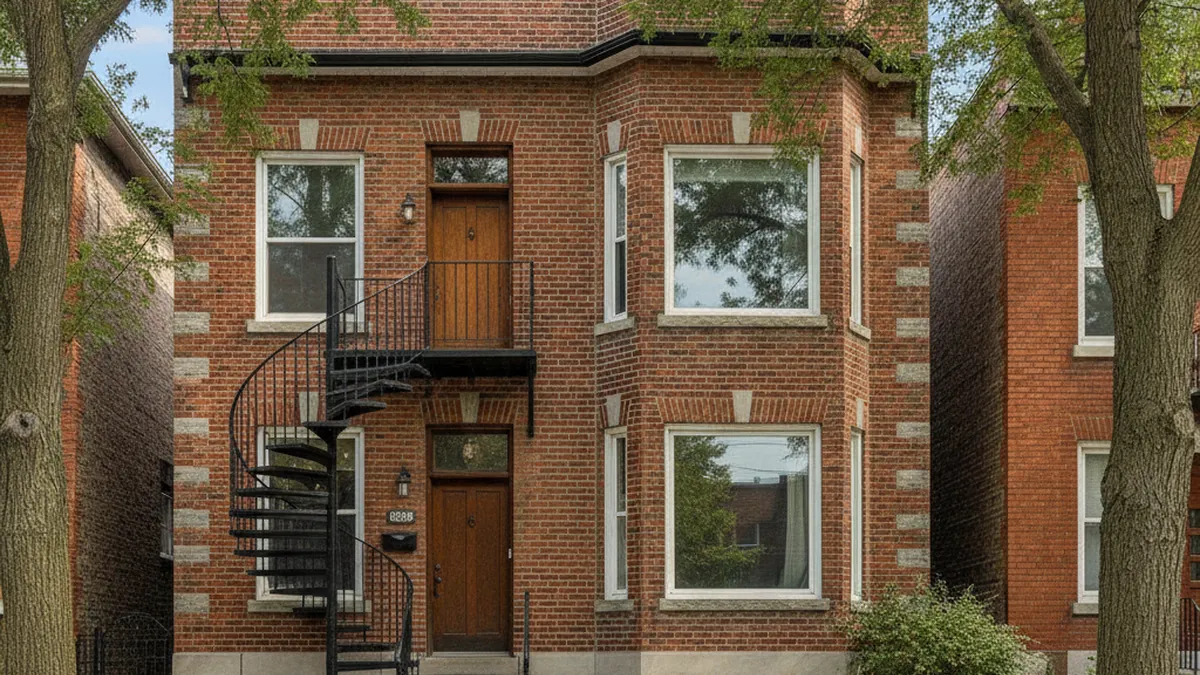
Two triplexes identical on paper can show a price gap of several hundred thousand dollars depending on their address. In Montréal, the neighbourhood determines demand, buyer profile and the reference cap rate — that is, the price an investor is willing to pay per dollar of net income.
The most sought-after plex neighbourhoods
Some areas are historically the heart of the Montréal plex market. Demand there is strong, from both investors and owner-occupants, which compresses cap rates and pushes prices up.
- The Plateau-Mont-Royal: the quintessential Montréal plex, highly sought after, high prices, low cap rates.
- Rosemont–La Petite-Patrie: strong family and rental demand, a neighbourhood of classic triplexes.
- Villeray: central, prized, in sustained demand.
- Verdun: the area's transformation has made it one of the most dynamic plex markets of the past decade.
The more affordable (and more profitable) areas
Conversely, areas such as Montréal-Nord, Mercier-Est or Rivière-des-Prairies show lower entry prices. Rental yield (higher cap rate) is often superior there, which attracts investors focused on cashflow rather than appreciation. A duplex there can trade under $650,000, where the same format on the Plateau comfortably exceeds a million.
| Area profile | Examples | Price characteristic |
|---|---|---|
| Central, prized | Plateau, Rosemont, Villeray, Verdun | High price, low cap rate, appreciation |
| Intermediate | Hochelaga-Maisonneuve, Ahuntsic, Saint-Michel | Balance of price / yield |
| Affordable | Montréal-Nord, Mercier-Est, R.-des-Prairies | Low entry price, higher cap rate |
These groupings are indicative: within the same borough, a street, the building's condition and above all the net income make all the difference. To position your plex, start from your actual figures and cross-check with a market GRM and cap rate.
How does the buyer's financing change your plex sale?
Up to 4 units, the buyer can often obtain residential financing (lower down payment, lower rate). At 5 units and up, it shifts to commercial or CMHC-insured financing, which is more demanding. Your plex's format therefore determines the buyer pool and the speed of the sale.

An aspect sellers often overlook: how the buyer finances your plex directly affects the strength of their offer and the speed of closing. A well-financed buyer means a sale that makes it to the notary; shaky financing means a condition that collapses at the last minute.
Residential financing: 4 units and under
Duplex, triplex and quadruplex can generally be financed as residential. The buyer benefits from more accessible down payments and often more favourable mortgage rates, especially if they plan to occupy a unit. This buyer pool is broad — first-time investors and owner-occupants — which supports demand and value.
Commercial financing: 5 units and up
From 5 units, it shifts to commercial financing: analysis based on the building's income, higher down payment, stricter documentation requirements. The buyer pool narrows to investors, but they are more sophisticated and value on net income. That's why, beyond the 5-plex, an impeccable income file is even more decisive.
CMHC-insured financing
For buildings of 5 units and up, the buyer can turn to a CMHC-insured loan, sometimes via the MLI Select program, which rewards affordability, energy efficiency and accessibility with better terms (extended amortization, relaxed coverage ratio). An eligible building therefore attracts better-financed buyers — an argument in your favour. Our financing comparison tool illustrates these scenarios.
What it means for you
Selling to a buyer who is already financed or needs no external financing (like a direct buyer) eliminates the main risk of a sale falling through: a loan refusal. If certainty of closing matters to you, favour a buyer whose financial capacity is demonstrated right from the promise.
What mistakes should you avoid when selling a plex in Montréal?
The five key mistakes: pricing from gut instinct instead of actual net income; presenting vague or incomplete financials; ignoring tax implications (capital gain, CCA recapture); listing publicly when discretion matters; and accepting the first offer without validating value with a calculator first.
- Pricing by gut instinct based on house comparables rather than net income. Cap rate and GRM anchor your expectations.
- Presenting vague figures. Outdated leases or poorly documented expenses drive away buyers and push the price down.
- Forgetting the tax implications: capital gain and CCA recapture can reduce your net proceeds. Consult a tax accountant.
- Neglecting confidentiality by publicly listing a plex you would prefer to sell discreetly.
- Accepting the first offer without having validated the property's value yourself.
In summary
Selling a plex in Montréal in 2026 remains advantageous: rental demand is strong and median prices are rising. Start from your actual income, value using cap rate and GRM, then choose the selling method that matches your priorities. If speed, zero fees and discretion matter, a direct sale to a buyer deserves serious consideration.


