
The triplex is Montreal's most iconic property — and one of the most sought-after in the market. ImmoMulti buys triplexes directly in Montreal and delivers a written offer within 48 h, with no commission and no public showings. In 2025–2026, a triplex sold for between $700,000 and over $1.3 M depending on the neighbourhood, income and condition — the median plex price in the greater metropolitan area hovering around $865,000. Unlike a single-family home, a triplex's value is calculated first from its income: gross rent multiplier (GRM) between 12x and 14x, cap rate of 5% to 6%. This guide explains how to value your triplex with precision, compare your selling options — with or without a broker — and maximize the net in your pocket, from the Plateau to Hochelaga.
Quick answer
A Montreal triplex sells for $700,000–$1.3M+ in 2026 depending on neighbourhood and income. Value is calculated by GRM (12–14×) and cap rate (5–6%). No broker is required. ImmoMulti buys triplexes directly with a written offer within 48 h, no commission, tenants in place accepted — from the Plateau to Hochelaga.
Why is the Montreal triplex so prized by investors and owner-occupants?
The triplex is an architectural signature of Montreal with sustained rental demand from both owner-investors (live in one unit, rent two) and pure investors. Sought-after neighbourhoods — Plateau-Mont-Royal, Petite-Patrie, Rosemont, Villeray, Hochelaga — combine low vacancy, high walkability and durable income stability, making this format one of the most liquid income properties in the region.
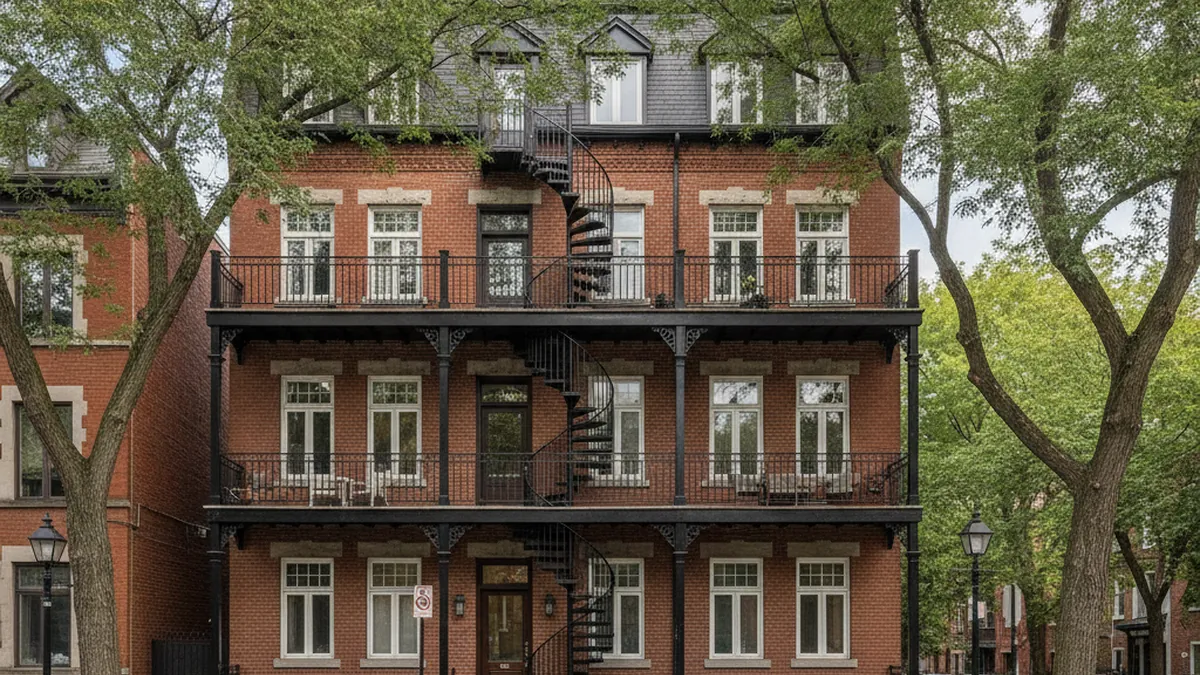
It is hard to picture a Montreal street without its rows of triplexes. Born from the rapid urbanization of the early 20th century, this three-unit format became a signature of the city. For today's seller, that is excellent news: the triplex remains one of the most in-demand assets on the market, sought after by both owner-investors (who live in one unit and rent the other two) and pure investors.
This demand is not uniform; it is concentrated in a handful of central neighbourhoods:
- Plateau-Mont-Royal — the most sought-after and most expensive, driven by its central location, character and a rental demand that never weakens.
- Petite-Patrie and Rosemont — family-friendly, well served by the metro, where renovated triplexes sell quickly.
- Villeray — a diverse and relatively affordable neighbourhood compared to the Plateau, with a good supply of triplexes and rental demand supported by proximity to universities and the metro corridor.
- Hochelaga-Maisonneuve — still more accessible, but rising sharply: a favoured entry point for investors.
What drives the price gap between these areas is rental demand, proximity to services, neighbourhood walkability and tenant profile (higher incomes, low vacancy). The more central and well-located a triplex, the more stable its income — and the higher its value.
How is a Montreal triplex valued: income, cap rate and GRM?
A triplex is valued by income, not square footage. Use the GRM (sale price ÷ annual gross income; typically 12–14× in Montreal 2026) for a quick estimate, then validate with the cap rate (NOI ÷ price; healthy range 5–6%). Start from your actual income and expenses for the last 12 months for the most accurate result.

A triplex does not sell "per square foot" like a condo. Its value derives from what it earns. Two metrics dominate the Montreal market.
The gross rent multiplier (GRM)
This is the most commonly used quick-calculation tool. The formula is simple: sale price ÷ annual gross income. In Montreal in 2026, the GRM typically falls between 12x and 14x depending on the neighbourhood. A triplex generating $60,000 in annual gross income with a market GRM of 13x would be worth, as an indication, around $780,000.
The capitalization rate (cap rate)
More precise, the cap rate divides the net operating income (NOI, after expenses) by the property's value. In the Quebec duplex and triplex market in 2026, a cap rate of roughly 5% to 6% is considered healthy. To estimate it, start from your actual income from the last 12 months, subtract expenses (taxes, insurance, utilities, maintenance), then divide this NOI by the asking price.
Key takeaway
GRM and cap rate give two complementary angles: GRM to quickly position your triplex in the market, cap rate to validate actual profitability. Before setting a price, run both from your own numbers — our free calculators do it in seconds.
How much is a Montreal triplex worth by neighbourhood in 2026?
Indicative ranges: Plateau-Mont-Royal $1.0M–$1.4M+; Petite-Patrie/Rosemont $900K–$1.2M; Villeray $850K–$1.1M; Hochelaga-Maisonneuve $700K–$1.0M. The metropolitan area median is ~$865,000. Actual price depends on income, condition and the specific street — always anchor to your real net income, not a neighbourhood average.
The median plex price in the greater metropolitan area has risen roughly 8% year over year, with half of transactions closing around $865,000. For a triplex, the ranges below are provided as a general indication only: the actual price depends on income, condition, size and the specific street.
| Area | Indicative range (triplex) | Profile |
|---|---|---|
| Plateau-Mont-Royal | $1.0 M to $1.4 M+ | Most expensive, very high demand |
| Petite-Patrie / Rosemont | $900,000 to $1.2 M | Family-friendly, central, sought-after |
| Villeray | $850,000 to $1.1 M | Good supply, sustained demand |
| Hochelaga-Maisonneuve | $700,000 to $1.0 M | More affordable, rising |
These figures do not replace an appraisal specific to your property. A triplex with below-market rents or in need of work will sell below the range; a renovated triplex with optimized income will sell above. The right approach: anchor your price to the real net income, not a neighbourhood average. For an overview of the metropolitan market, see also our guide to selling an income property in Montreal.
Is it better to sell a Montreal triplex with or without a broker?
Nothing in Quebec law requires a broker. With a broker: broad Centris exposure but 4–7% commission and full public visibility (tenants notified). With a direct buyer: zero commission, no public listing, discretion, similar net proceeds. Compare what lands in your pocket after fees — not the listed price alone.
In Quebec, nothing requires you to use a broker to sell your triplex. You have three main options, and each has its own logic.
Traditional brokerage
The broker lists the property on Centris, manages showings and negotiates. In exchange, they charge a commission typically between 4% and 7% of the sale price. On a triplex at $950,000, that is $38,000 to $57,000 plus tax. It offers broad exposure, but longer timelines and full public visibility — tenants and neighbours included.
Direct sale to a specialized buyer
You deal privately with a buyer who knows income properties, without any public listing or commission. The buyer analyzes your numbers, makes a proposal, and if it works for you, you proceed to the notary. This option often maximizes the net in your pocket and the speed of closing.
The question is not "broker or not" in the abstract, but: what matters most to you — maximum listed price, speed, discretion or simplicity? A broker may sometimes achieve a higher sale price; with a direct sale, you save the commission. Always compare the net, not the gross.
How to sell a Montreal triplex quickly and discreetly?
Contact ImmoMulti directly: share your lease income and expenses, receive a written offer within 48 hours based on your net income, then proceed to notarial signing within weeks. No sign, no online listing, no visits, no broker — tenants are not disturbed. The off-market transfer option keeps everything entirely confidential.
If speed and discretion are the priority, selling to a direct buyer like ImmoMulti is designed for that. The process is straightforward:
- You share your numbers — lease income, expenses, general condition.
- You receive a written offer within 48 h, based on your triplex's net income.
- No commission: what you would have paid a broker stays with you.
- Complete discretion: no sign, no online listing, no parade of visitors. Your tenants are not disturbed.
- Tenants in place, no problem: leases follow the property, the buyer takes them over under existing terms.
For owners who want absolute confidentiality, the off-market transfer takes the logic further: the property changes hands without ever being listed. Before accepting anything, validate the value yourself — compare the result of the offer calculator with the GRM calculator to have two reference points.
In practice
A well-documented triplex (up-to-date leases, last 12 months of income and expenses in hand) sells faster and for more, regardless of the selling method. The best "renovation" before selling is often administrative.
What mistakes should you avoid when selling a Montreal triplex?
Key mistakes: pricing from a neighbourhood average instead of your actual net income; confusing sale price with net proceeds (broker commission + mortgage balance + tax impacts reduce your take); publicly listing when tenants or discretion matter; presenting vague financials; and accepting the first offer without validating the value yourself with a GRM or cap rate calculator.
- Guessing the price or basing it on a neighbourhood average rather than your property's actual net income. Use a calculator to anchor your expectations.
- Confusing the sale price with the net you actually receive: the commission, mortgage balance and tax implications (capital gains, CCA recapture) can create a significant gap.
- Neglecting confidentiality and unnecessarily alerting tenants and competitors with a public listing.
- Presenting vague numbers: without up-to-date leases and documented expenses, the buyer applies a prudent discount.
- Accepting the first offer without having validated value yourself. To go further on the calculation method, see our guide calculating multiplex yield.
What taxes apply when you sell a triplex in Montreal?
Three elements dominate: the capital gain (50% of which is taxable, the inclusion rate having stayed at 50% after Ottawa cancelled the proposed increase in 2025), the recapture of capital cost allowance (CCA) claimed over the years, and the possible principal-residence exemption on the unit you occupied. A triplex bought for $500,000 and sold for $1,000,000 can generate a tax bill of tens of thousands of dollars — hence the value of planning before you sign.

Many owners set their price thinking about the notary's cheque, then discover the size of the tax bill the following spring. Selling an income triplex triggers several tax mechanisms you should anticipate. Here are the main principles — without replacing the advice of a tax accountant, essential in your specific case.
The capital gain
The capital gain is the difference between the sale price (less disposition costs such as the notary) and the adjusted cost base (the acquisition cost plus capitalizable improvements). In Canada, only half of this gain is taxable. The inclusion rate stayed at 50%: on March 21, 2025, the federal government cancelled the proposed increase to 66.67% on the portion of gains above $250,000, and Revenu Québec harmonized with that decision, per Revenu Québec and the Canada Revenue Agency.
Concretely: a triplex bought for $500,000 and sold for $1,000,000 generates a gross gain of about $500,000. Half ($250,000) is added to your taxable income for the year, at the combined federal-Quebec brackets. Spreading the sale or using a capital gains reserve (when part of the price is payable over several years) can distribute the burden — a strategy to validate with a tax specialist.
Capital cost allowance (CCA) recapture

If, over the years, you claimed capital cost allowance (CCA) on the building to reduce your taxable rental income, the sale can trigger a recapture. Unlike the capital gain, CCA recapture is taxed at 100% as ordinary income, up to the amount of depreciation claimed. This is often the nasty surprise for long-time sellers: years of CCA "caught up" all at once in the year of sale. Our capital gains calculator helps you visualize the order of magnitude before you sit down with your accountant.
The principal-residence portion
If you lived in one of the three units, the portion of gain attributable to that unit may be partially exempt under the principal-residence exemption, based on the proportion of space occupied and the period of residence. This complex rule depends on your exact situation: assume nothing and have it validated. Conversely, a triplex held purely as a rental property does not qualify.
Key takeaway
The sale price is not the net in your pocket. Between the mortgage balance, the capital gain, CCA recapture and fees, the gap can reach six figures. Run a tax scenario before setting your price, not after signing the offer to purchase.
Which documents should you prepare before selling your triplex?
A well-documented triplex sells faster and for more. The core file: the three up-to-date leases and their schedules, a statement of income and expenses for the last 12 months, the municipal and school tax bills, insurance policies, invoices for recent major work, the certificate of location and the seller's declaration. A buyer who receives a complete file applies a much smaller prudence discount.
On an income property, the buyer is not just buying walls: they are buying a stream of income. The more that stream is documented and verifiable, the more they are willing to pay. Conversely, vague numbers force the buyer to assume the worst and subtract a safety margin. Here is the standard file to assemble before even soliciting an offer.
Financial and rental documents
- The three leases in force, signed, with their schedules (building rules, mandatory notices, former rent stated in section G).
- An income statement for the last 12 months: rent per unit, parking, laundry, storage.
- An expense statement: municipal and school taxes, insurance, common-area utilities, maintenance, snow removal, management.
- The tax bills (municipal and school) most recent, along with the municipal assessment.
- Proof of rent payment or a tenant account statement, useful to reassure on the reliability of the income.
Technical and legal documents
- An up-to-date certificate of location (the buyer and their notary will require it; an expired or non-compliant certificate can delay closing).
- Invoices for major work: roof, windows, plumbing, electrical, foundation, code upgrades. They prove maintenance and justify your price.
- The seller's declaration, which describes the known condition of the property and limits later recourse.
- Insurance policies and claims history, if any.
| Document | Why the buyer wants it | Effect on price |
|---|---|---|
| Up-to-date leases + schedules | Confirm actual income and possible increases | Reduces the prudence discount |
| 12-month income/expenses | Calculate NOI and cap rate | Supports a higher price |
| Major-work invoices | Assess capital already invested | Justifies a "renovated" premium |
| Certificate of location | Avoid encroachment/zoning surprises | Speeds up closing |
A seller who hands over a complete file in one go sends a strong signal: the property is well kept, the income is real, the transaction will be smooth. That is often what makes the difference between a cautious offer and one at the top of the range.
How does the buyer's financing affect the sale of your triplex?
A triplex (three units or fewer) still qualifies for residential financing: a 5% to 20% down payment for a buyer who will occupy a unit, versus 20% or more on the commercial side for buildings of five units and up. This residential status greatly widens the pool of buyers and supports prices. Conversely, a triplex whose bank financing stalls (rents too low, major work needed) attracts fewer conventional buyers.

Sellers often forget this: the price a buyer can offer depends directly on what their bank agrees to finance. Understanding the mechanics of triplex financing helps you anticipate objections and target the right buyers.
The triplex, still in the residential sphere
In Canada, a building of four units or fewer falls under residential financing, which is more flexible than commercial. A buyer who intends to occupy one of the three units can obtain an insured mortgage with a reduced down payment; an investor who does not occupy the property will generally have to put down at least 20%. This residential doorway is a major asset of the triplex: it widens the buyer pool far beyond investors alone, and it is one of the reasons two- and three-unit plexes remain so liquid. Our financing comparison tool illustrates the difference in scenarios.
When financing becomes an obstacle
The buyer's bank does not lend only on market value: it also looks at the economic value (based on income). If your rents are well below market, the economic value used may be lower than the asking price, and the buyer will have to bridge the gap in cash — which cools some offers. Likewise, a triplex needing major work (roof at end of life, foundation, outdated wiring) can be refused standard financing. In these cases, a cash or specialized buyer, who buys as-is, becomes the smoothest option.
In practice
If you know your triplex has a weak point (low rents, work to plan), expect financed buyers to hesitate or negotiate hard. A direct buyer who does not depend on a conventional loan — and imposes no financing condition — removes that deal-falling-through risk.
Do you need an inspection before selling a triplex, and what does it cover?
Most buyers will have the triplex inspected; some sellers order a pre-listing inspection to avoid surprises. The inspector examines the roof, brick masonry and exterior staircases, the foundation, plumbing, electrical (watch for outdated wiring), insulation, and the presence of asbestos or vermiculite in older buildings. Major deficiencies become levers to negotiate the price down.
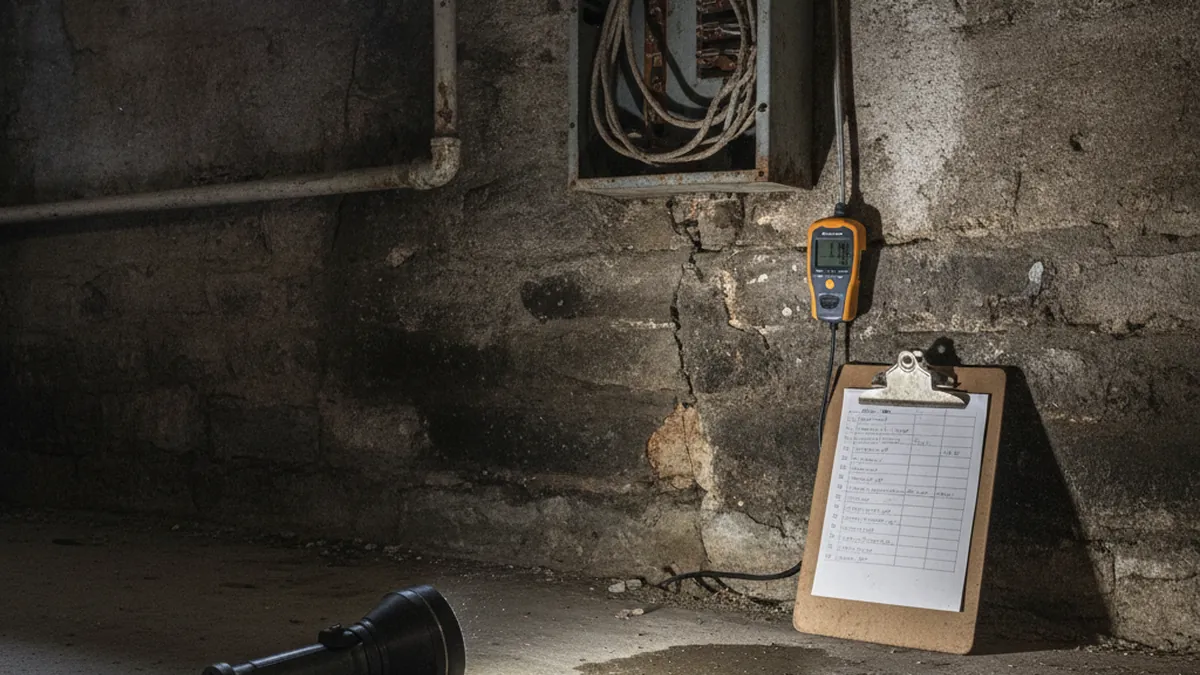
The typical Montreal triplex is often more than a century old. Its brick, spiral exterior staircases and balconies are its whole charm — but also a list of things to watch. A building inspection, almost systematic on the buyer's side, shapes the end of the negotiation. Knowing what it scrutinizes lets you prepare the ground.
The sensitive points of an old triplex
- The roof — flat in many plexes, with a limited lifespan; a membrane at the end of its life is a frequent negotiation item.
- Masonry and exterior staircases — brick to redo (repointing), steel or wooden balconies and stairs to maintain.
- The foundation — cracks, water infiltration, aging French drain in century-old buildings.
- Electrical — outdated wiring (knob-and-tube, aluminum), undersized panels that can hurt financing and insurability.
- Plumbing — old lead or cast-iron pipes, water entry to replace.
- Period materials — asbestos, vermiculite or lead paint possible in buildings constructed before the 1990s.
Pre-listing inspection: worth it or not?
Ordering your own inspection before putting the property on the market has a cost, but two advantages: you discover the problems before the buyer and can either fix them or adjust your price knowingly. You thereby avoid the surprise renegotiation that derails many transactions at the last minute. For a triplex, this reflex is especially useful if you are unsure of the real condition of the roof or the foundation.
Key takeaway
A known and documented deficiency almost always costs less than one discovered by the buyer at the last minute. Transparency, backed by your maintenance invoices, protects your price — and your selling timeline.
Do below-market rents lower the value of my triplex?
Yes, mechanically. Since a triplex is valued on its net income, rents frozen below market directly depress the price calculated by cap rate and GRM. But those rents also represent upside potential that some buyers pay for. The real question: are you selling the current income, or the potential income? The answer depends on the buyer's profile and your horizon.

This is the paradox of well-kept Montreal plexes held for a long time: an attentive owner who never pushed rents to the maximum ends up, at the time of sale, with lower net income — and therefore a lower capitalized value. Understanding this mechanism avoids underselling… or overpricing.
The mathematical effect on price
Let us revisit the cap rate logic. If the market capitalizes at 5.5% and your triplex generates $45,000 in net income, its indicative value is around $818,000 ($45,000 ÷ 0.055). If rents were at market and brought net income to $55,000, the same capitalization would give about $1,000,000. A gap of $10,000 in annual net income translates here into nearly $180,000 in value. That is the full power — and the trap — of income-based valuation.
| Scenario | Annual net income | Market cap rate | Indicative value |
|---|---|---|---|
| Below-market rents | $45,000 | 5.5% | ≈ $818,000 |
| At-market rents | $55,000 | 5.5% | ≈ $1,000,000 |
| Optimized rents | $60,000 | 5.5% | ≈ $1,090,000 |
Be careful, though: in Quebec, you cannot "raise" rents at will. Increases are regulated and the sitting tenant can refuse them, with the matter then decided by the Tribunal administratif du logement. A savvy buyer knows this; they will pay for part of the potential, not all of it. That regulated ceiling is exactly what limits how quickly a buyer can recover the upside, as covered in our multiplex yield guide.
Selling the potential, without overselling it
Two sellers, same building, two strategies. The first documents the potential: comparable rents in the area, a realistic increase margin, renovatable units. They attract investors who buy the future. The second settles for the current income and leaves money on the table. The right positioning is to present both figures honestly — actual income and regulated potential — to let the buyer climb to the right price without feeling shortchanged.
How does the sale of a triplex unfold, step by step?
In a direct sale, the path is short: (1) you share leases, income and expenses; (2) the buyer makes a written offer, often within 48 h; (3) you sign an offer to purchase specifying price, conditions and date; (4) due diligence and title review take place; (5) the notary prepares the deed; (6) signing and handover of keys, generally 21 to 30 days after the agreement. No public listing, no open house.

Many owners put off selling because they imagine a long, intrusive process. In a private sale to a specialized buyer, it is actually fairly structured. Here are the main steps.
From first contact to the offer to purchase
- Sharing the numbers — you share leases, income and expenses for the last 12 months, tax bills. The buyer analyzes the economic value.
- Written offer — you receive a proposal based on net income, often within 48 h.
- Offer to purchase — the key document: price, conditions (or absence of a financing condition), inclusions, desired closing date. A cash buyer can propose an offer with no financing condition, which secures the transaction.
From due diligence to key handover

- Due diligence — the buyer confirms leases, income, condition of the property (inspection if needed), certificate of location.
- Title review — the notary verifies the chain of ownership, registered mortgages, servitudes.
- Deed preparation — apportionment of taxes, adjustment of rents and deposits, discharge of the existing mortgage.
- Signing and closing — at the notary; the balance is paid to you, the keys and leases pass to the buyer. Count on 21 to 30 days after the agreement.
In Quebec, only the notary step is mandatory to finalize the sale of a property: the notary guarantees the legal security of the transaction. Everything else — broker, showings, marketing — is optional.
In practice
The more ready your file is at the offer-to-purchase stage, the faster the closing. Delays almost always come from an expired certificate of location, a missing lease or a mortgage to discharge. Anticipate those three points and you save weeks.
How do you calculate the net actually received on the sale of a triplex?
Net in your pocket = sale price − mortgage balance − fees (notary, discharge, certificate) − any brokerage commission (4% to 7%) − taxes (capital gain and CCA recapture). Always compare selling methods on the final net, not the listed price: a direct sale with no commission can equal or beat a brokered sale at a higher price.

The figure that matters is not the price on the deed, but what remains on your notary statement once everything is paid. It is this net that should guide your choice between broker, direct sale and off-market transfer.
A worked comparative example
Take a triplex sold for $950,000, with a mortgage balance of $400,000 and a taxable gain leading to roughly $60,000 in tax (illustrative — to validate with your tax specialist). Let us compare two paths:
| Item | Sale with broker | Direct sale |
|---|---|---|
| Sale price | $965,000 | $950,000 |
| Commission (5% + taxes) | − $55,500 | $0 |
| Mortgage balance | − $400,000 | − $400,000 |
| Fees (notary, discharge, etc.) | − $3,000 | − $3,000 |
| Taxes (illustrative) | − $60,000 | − $60,000 |
| Estimated net | ≈ $446,500 | ≈ $487,000 |
In this example, even though the broker obtains a listed price $15,000 higher, the direct sale leaves the seller more than $40,000 extra, thanks to the commission savings. This is not a universal rule — a broker can sometimes spark a bidding war that offsets their commission — but it shows why you must think in net terms. Run your own calculation with the offer calculator, then cross-check it with the capital gains calculator to factor in tax.
Key takeaway
Never compare two offers on the gross price. An offer of $950,000 with no commission can beat a brokered offer of $985,000. The only figure that truly belongs to you is the net after commission, mortgage balance and taxes.
In summary
The Montreal triplex remains a highly sought-after asset, especially in central neighbourhoods. Value it first from its income (GRM and cap rate), compare the net by selling method, and if speed and discretion matter, a direct sale to a specialized buyer deserves serious consideration.


