
ImmoMulti — a direct buyer of multi-unit buildings on the North Shore — sees more and more plex owners torn between two models: the trusty 12-month unfurnished lease, or a furnished mid-term rental to workers on assignment, students on internships or corporate clients. Our take is clear: for many North Shore plexes, furnished mid-term is now the more profitable bet — provided you know what you're getting into.
Opinion column by the ImmoMulti Team. The facts are sourced; the opinions are our own.
🔥 The straight take: furnished mid-term pays more
Let's be blunt: if you own a plex on the North Shore and a unit comes free, slapping a 12-month unfurnished lease on it by reflex isn't always the smartest move. A furnished, heated, all-inclusive unit rented in 1-to-6-month stays commands a net premium — because your tenant is paying for flexibility, for having no furniture to buy and for an instant move-in.
This is an investor's calculation, not a fad. The mid-term tenant is not a tourist: it's a nurse on contract, an engineer relocating, a student on an internship, a family rehoused by their insurer after a claim. They need a turnkey roof for a few months, they're willing to pay more for it, and they aren't looking to settle for ten years on a frozen rent. For the plex owner, that recurring premium changes the math.
Why the flexibility premium is real

The first argument is economic. A furnished unit rented by the month compares to a stretched hotel room, not to an empty apartment. The tenant carries nothing, buys nothing, hooks up nothing: they arrive with a suitcase. That added value gets billed, and rightly so — you tie up furniture, absorb the vacancy risk between stays, and offer a flexibility no 12-month lease provides.
The market backdrop reinforces the model's appeal. Per CMHC, the vacancy rate in Quebec rose from 1.7% (end of 2024) to 2.7% a year later, a sign that the long-term market is loosening and that competition among empty units is intensifying — especially in new, expensive buildings, where vacancy climbs the most. In that climate, offering a differentiated product (furnished, flexible, all-inclusive) lets you stand out rather than compete on the price of yet another empty unit.
Source: Radio-Canada — "Vacancy rate climbs in Quebec City" and CMHC — Rental Market Report 2025.
| Criterion | Furnished mid-term (1–6 mo.) | Unfurnished long-term (12 mo.+) |
|---|---|---|
| Monthly rent | Premium (all-inclusive, furnished) | Standard, often frozen for years |
| Turnover | High — vacancy between stays | Low — predictable income |
| Management | Intensive (listings, cleaning, inspections) | Light |
| Furniture | On you (purchase, wear, replacement) | None |
| Legal framework | Residential lease, TAL — legal, no CITQ | Residential lease, TAL |
Why it's legal, unlike Airbnb
Second argument, and it's crucial: furnished mid-term is not tourist accommodation. The red line sits at 31 days. Below that threshold, it's tourist rental, it requires a CITQ registration number and it exposes you to heavy fines. Above it — one month, three months, six months under a residential lease — it's an ordinary residential rental, governed by the Administrative Housing Tribunal, with no tourist permit.
That distinction is huge for the cautious investor. We've already explained why running an illegal Airbnb in your plex is the dumbest bet of 2026: steep fines, systematic inspections, stolen registration numbers. Furnished mid-term captures much of the higher return of short-term, without the regulatory risk. You play by the rules, with a real signed lease.
Be careful, though: "legal" doesn't mean "unregulated". The TAL has full jurisdiction over the rent setting of a residential unit, furnished or not. A new tenant can challenge their rent within 10 days of signing if it exceeds the lowest rent paid in the past 12 months — which is why you must fill in the Section G notice and set a defensible rent properly. Furnished stands apart, but it doesn't escape the rules of the residential lease.
Source: Administrative Housing Tribunal — Mission and jurisdiction and Éducaloi — lease renewal and rent increase.
Why the North Shore has the tenants you need
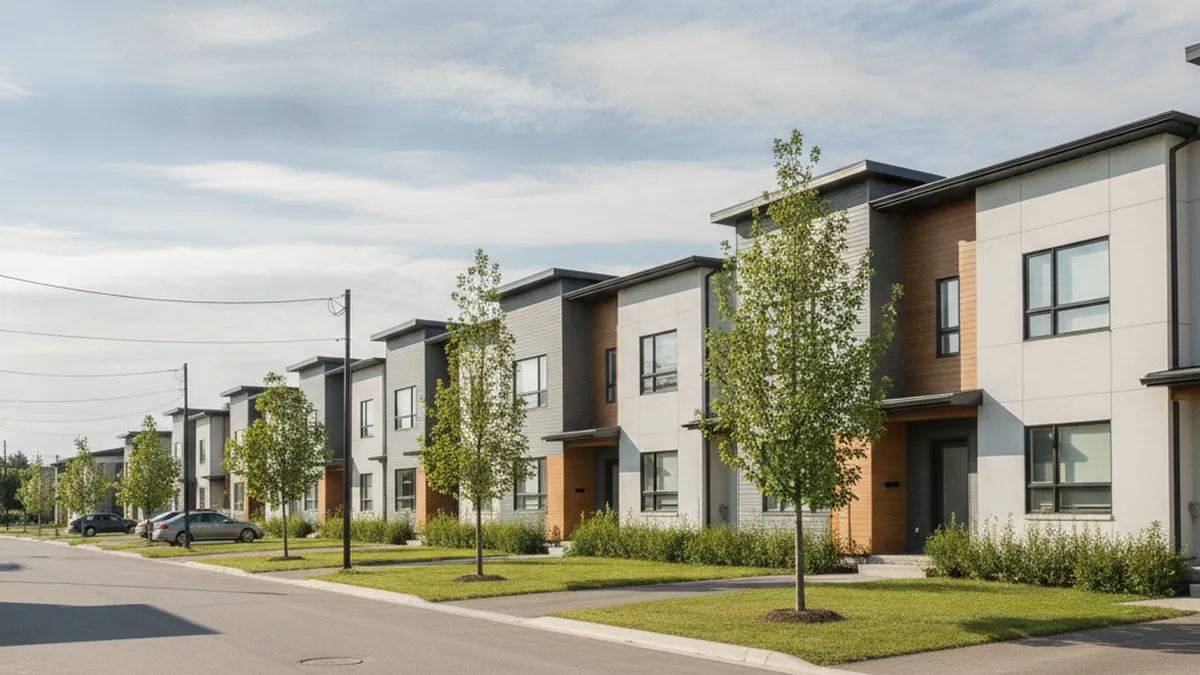
Third argument: the demand really does exist here. Furnished mid-term is often associated with downtown Montreal, but the North Shore — Terrebonne, Mascouche, Blainville, Boisbriand, Saint-Jérôme, Saint-Eustache, Deux-Montagnes — has its own flows: construction workers, employees transferring to the industrial and commercial parks, healthcare professionals on contract, students on internships, and families temporarily rehoused by their insurer after water damage or a fire.
These tenants aren't looking for a ten-year lease. They want a turnkey unit for the length of an assignment, and they're often creditworthy — sometimes paid by an employer or an insurer. For a plex owner well located near a highway, a hospital or an employment hub, serving that demand turns an ordinary unit into a sought-after product. But the location must support a steady flow: that's where the line runs between a profitable model and a string of costly vacancies.
🎭 Devil's advocate: what if long-term is still king?
For many owners, the unfurnished long-term lease remains the safest choice: predictable income, minimal management, no furniture to finance and no repeat vacancy risk. Furnished mid-term only beats long-term when the location supports genuinely steady demand.
Let's be honest: the counter-argument is strong. The furnished premium is no gift — it's paid for in management. Every departure means restoration, cleaning, new listings, showings, an inspection, and often weeks of empty unit between tenants. Multiply that by several rotations a year and the "premium" melts away: a unit that earns 30% more but sits empty one month in four does not necessarily beat a well-filled annual lease.
There's also the furniture: initial purchase, wear accelerated by turnover, regular replacements, plus insurance and appliances. And the market itself counsels caution: with a rising vacancy rate and rent increases finally set to slow after years near 7%, the pressure that made any unit easy to rent is easing. A management-heavy model forgives location mistakes less easily. For an owner who wants peace of mind, cashing a predictable cheque each month with a good long-term tenant remains an excellent choice — and perfectly defensible.
Source: La Presse — "Tenants can breathe: end of average 7% yearly increases" (December 12, 2025)
The verdict for the North Shore plex owner
After weighing both sides, here's where we land: furnished mid-term is a winning bet when the location supports steady demand and you're willing to manage actively; the long-term lease remains the comfort choice for anyone who wants peace of mind. It's not one model against the other everywhere — it's a question of building, location and owner temperament.
Our concrete advice: on a well-located plex near a North Shore employment or healthcare hub, test furnished mid-term on one unit before converting the building, compute the net return (vacancy and management included), and keep at least one unit on a long-term lease as a stable base. Want to push the idea of optimizing an under-rented building further? Our column on below-market rents and the value discount they impose on an old plex to renovate pairs well with this reflection.
Three ways to make a vacant unit pay
- Rent it furnished mid-term if the location supports steady temporary demand
- Put it back on an unfurnished long-term lease for predictable income and light management
- Realize your value another way: sell the building directly, with no broker or commission
Also worth reading
Furnished mid-term fits into a broader debate over the rules that bind the small owner: our column Housing policy is smothering the small plex landlord sets the question in its regulatory context, and our analysis on managing your plex yourself or hiring a property manager is directly relevant if the turnover of furnished renting worries you.
ImmoMulti: direct buyer of multi-unit buildings on the North Shore
If the turnover, furniture and management of mid-term don't appeal — and long-term no longer excites you either — we can make you a direct offer, with no commission and in full confidence. No public listing, no broker, no obligation. Get a proposal within 48 hours.