
Opinion column by the ImmoMulti Team. Facts are sourced; opinions are our own. This is not financial advice — validate your numbers before buying.
"Buy new, you'll have peace of mind." It's the advice you hear in every investor group. But between buying a new-build rental (a condo or a new plex) and an old plex to renovate on the North Shore, which one truly serves the investor? As a direct buyer of multi-unit properties, we have an opinionated take — and it unsettles both camps.
Quick answer
New build costs more per square foot (≈ C$280 to C$340/sq ft for multi-unit construction, before land) but offers peace of mind and a warranty. An old plex sells for less per door and lets you create return through renovation, at the price of real surprises. For the investor who knows how to buy and renovate, a well-located old plex often wins; for those who want zero hassle, new build holds up. Quebec's new construction code (+5 to 8% in costs, delayed to October 2027) widens the price gap further.
🔥 The Opinionated Take
Our position: for most North Shore investors, a well-bought old plex renovated intelligently beats a new-build rental on return — provided you know how to read costs and keep a contingency reserve. New build isn't a bad choice; it's a comfort choice you pay dearly for per square foot. The real value pool in rental real estate isn't the brand-new building — it's the gap between what an old plex costs today and what it's worth once brought up to standard and re-rented at market. That's where appreciation is created, not in the fresh finish.
Price Per Foot: New Build Starts Behind
Let's start with the heart of the matter: cost. Building new in Quebec is no longer cheap. For a wood-frame multi-unit, Quebec cost estimators put construction at roughly C$280 to C$340 per square foot, excluding land. Add the land — scarce and expensive on the North Shore — and the new-build bill quickly climbs above what an equivalent old triplex trades for on the secondary market.
Source: Groupe Héritage — multi-unit construction cost in Quebec (2026); cost estimates cross-checked against Société d'habitation du Québec data (C$280 to C$325/sq ft for affordable housing).
And it will get worse. Quebec's new construction code — stricter seismic standards, greater accessibility, energy-efficiency requirements, EV charging — will push construction costs up by 5 to 8% according to the APCHQ. "It's major, and it contributes to housing unaffordability," sums up Isabelle Demers, vice-president of the APCHQ. The government has just delayed the entry into force by one year, to October 2027, but the effect on new build is inevitable.
Sources: La Presse — "New construction code: your housing will cost (even) more" (May 25, 2026); La Presse — "Jean Boulet to delay the new standards by one year" (May 27, 2026).
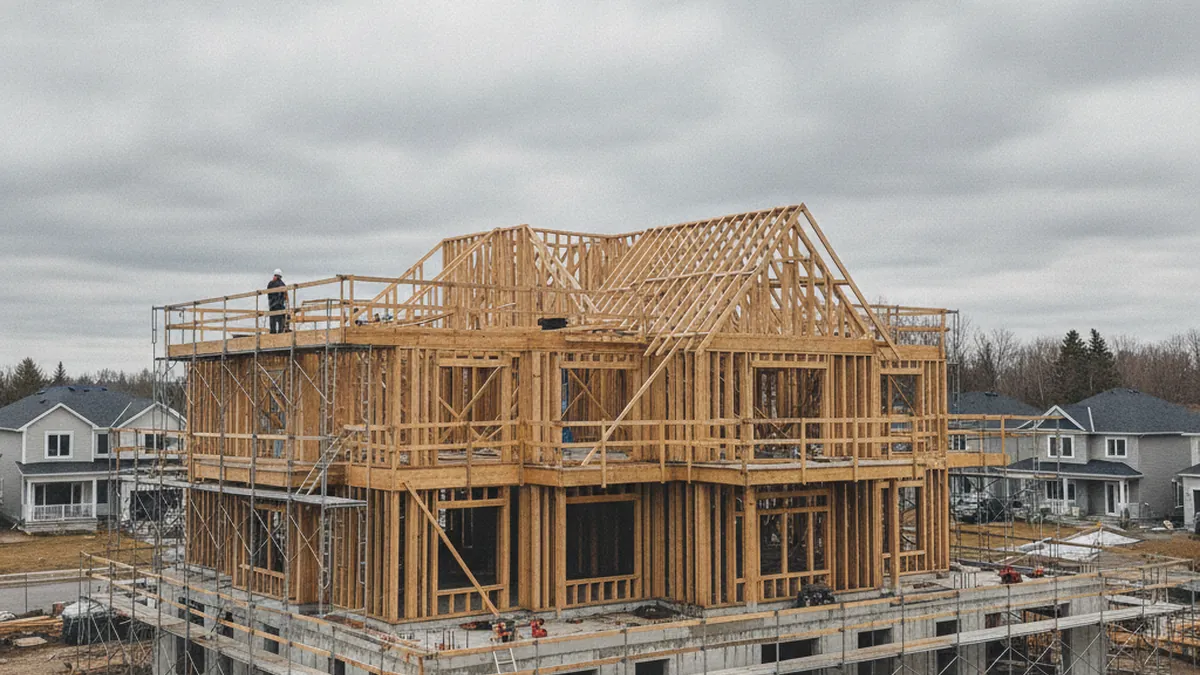
Conclusion of round 1: on pure acquisition cost per square foot, the old plex starts with a head start. You buy an asset that already exists, in an established area, at a price that doesn't include the new-build premium. That's exactly the gap a savvy investor exploits.
Upkeep, Return and Hassle: The Real Trade-off
This is where new build gets its revenge — and where we have to be honest. A new building means little upkeep for years, a warranty (in Quebec, the Garantie de construction résidentielle covers eligible new buildings), code-compliant systems and energy efficiency that lowers operating costs. No roof to redo, no foundation to watch, no surprise in the walls.
The old plex, on the other hand, demands work. A building constructed before 1990 — most of the stock — can hide asbestos, vermiculite, an outdated electrical system, a roof at end of life or a cracked foundation. That's precisely what an old plex inspection must uncover (pyrite, asbestos, vermiculite) before purchase. The hassle is real — but it is the flip side of the reduced price, and it can be managed.
| Criterion | New-build rental | Old plex to renovate |
|---|---|---|
| Price per square foot | High (≈ $280-340/sq ft + land) | Lower (existing asset) |
| Short-term upkeep | Minimal + warranty | Surprises possible |
| Value creation | Limited (follows market) | Strong (work + re-rent) |
| Hassle / time | Low | High up front |
| Hidden risk | Low | Real (asbestos, foundation, roof) |
On return, the edge tilts toward the old plex for a simple reason: an income property's value depends on its net income and on the cap rate the market applies. Buying below value, renovating, raising rents to market and stabilizing operations creates return actively — which new build, sold at full price, doesn't allow. You still have to estimate the work properly: that's where many investors go wrong, underestimating the bill. Related reading on this theme: the real upkeep and habitability burden of a plex owner.
Financing and Appreciation: Closer Than You Think
We often hear that "new build finances better." That deserves nuance. CMHC's MLI Select program can finance up to 95% of the cost with favourable terms (extended amortization, reduced premium) — and it applies to both new construction and major renovation aimed at energy efficiency. In other words, an old plex you renovate to energy targets can also tap this lever. The new build's financing edge is therefore less clear-cut than claimed.
Source: CMHC — MLI Select program (multi-unit financing). Check the current parameters, which change.

On appreciation, the myth says new build appreciates better. Wrong in many cases: new build starts from an already-high price and appreciates mostly at the pace of the market, while the renovated old plex first captures the value created by the work, then market appreciation. The most reliable appreciation engine, new or old, remains the well-located lot — and on the North Shore, the best locations are often already built up… with old plexes.
🎭 Devil's Advocate
Let's be honest: the new-build camp has real arguments, and not just comfort. First, not everyone is a renovator. For an investor without a team, time or cash to absorb a cost overrun, an old plex can turn into a nightmare: a jobsite that runs over, a contractor you can't find, surprises that eat the entire margin. New build eliminates that operational risk in one stroke.
Next, new build meets modern standards (soundproofing, energy efficiency, accessibility) that attract good tenants and lower real operating costs — an advantage that will only sharpen with the coming construction code. And with the labour shortage and rising material costs, heavily renovating an old plex is also getting more expensive: the cost gap between renovating and building narrows in some cases. For a first purchase, or for anyone who wants truly passive income, new build — or a recent plex in excellent condition — is a perfectly defensible choice. This counterargument deserves respect.
The Verdict for the North Shore
Our verdict, after weighing both camps: the choice depends on who you are, not on an absolute truth. If you're an active investor, able to manage a jobsite and keep a contingency reserve, a well-located, well-bought old plex remains the better return vehicle on the North Shore — that's where value is created. If you want peace of mind, simple financing and zero surprises, new build (or a flawless recent plex) justifies its premium.
The bad decision is choosing by reflex — "new build is reassuring" or "old is profitable" — without running the numbers. Bring both scenarios into the same language: all-in price (work and contingencies for the old plex), stabilized net income, cap rate, cash flow after financing. The right choice is the one your spreadsheet confirms, not the one a neighbour praises in a Facebook group. And if you're hesitating between renovating an old plex and selling it, a numbers-based, no-flattery read beats a hunch.


