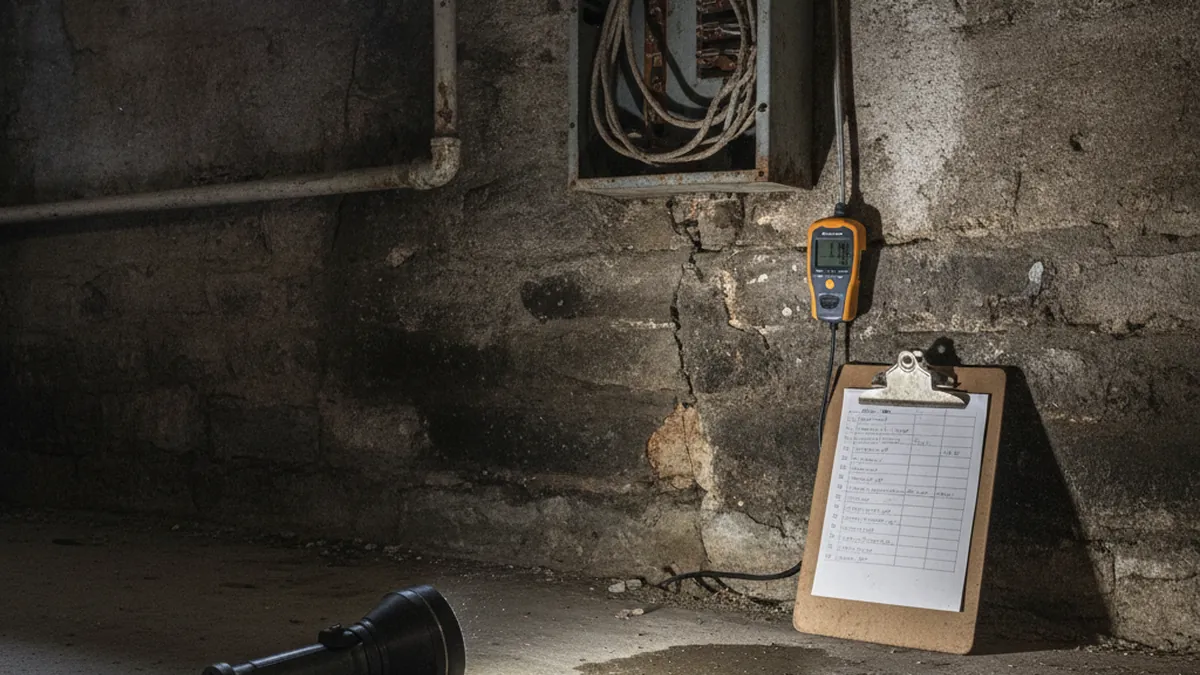
An old plex on Montreal's North Shore can show an attractive return on paper — and hide, under the slab or in the attic, problems that never appear on the listing sheet. Pyrite, asbestos, vermiculite and iron ochre are the four contaminants that most often turn a good deal into a money pit. This guide is written for the buyer-investor: where to find each hidden risk at the pre-purchase inspection of an old plex, which tests to request, how much decontamination costs, and how each one weighs on your building's value and financing.
Important: the presence of these materials does not condemn a building. Many plexes sell and finance with asbestos or vermiculite in place, as long as they are managed properly. A prudent buyer's goal is not to flee every old building, but to price the risk before signing. A defect detected early becomes a negotiating point; the same defect discovered after closing becomes a dead loss. This article complements our guide to the pre-sale inspection of an income property, zooming this time on the specific contaminants.
Pyrite and Pyrrhotite: the Basement Menace
Pyrite (and pyrrhotite) hides in the crushed-stone backfill beneath the concrete slab and in the concrete itself. On contact with air and water it swells, heaving or cracking the slab. The signs: star-shaped cracks, a bulging floor, foundation damage. Only an IPPG laboratory petrographic test confirms the swelling potential.
Pyrite is an iron-sulphide mineral that expands as it oxidizes. When present in the backfill under a basement, it can heave the slab by several centimetres over the years, crack the concrete and, in severe cases, damage the foundation footings. Pyrrhotite, its cousin, has made headlines for compromising entire foundations in some regions of Quebec.
For a buyer, the clues to watch from the very first visit are star-shaped cracks in the basement slab, a floor that is no longer level, sticking doors and visible heaving along the walls. But the eye is not enough: confirmation comes from an IPPG petrographic test run on a core sample of the backfill and analyzed in a laboratory. If the area is known for the problem or the slab shows signs, require this assessment as a condition of your offer. For broader context on soil and backfill quality and the limits of a visual inspection, see the official resources published by CMHC.
Asbestos: Where It Hides in a Pre-1990 Plex
In a plex built before 1990, asbestos is often found in pipe and boiler insulation, 9 x 9 in vinyl floor tiles and their adhesive, textured (stucco) ceilings, drywall joint compound and certain insulation materials. It is only dangerous when disturbed. Sampling by an accredited laboratory is required before any renovation touching these materials.
Unlike pyrite, asbestos does not attack the structure: it threatens health when its fibres become airborne, typically during renovation or demolition. As long as the materials are intact and undisturbed, the risk to occupants stays low. The danger for an investor is mostly financial: any renovation project touching an asbestos-containing material triggers safe-management obligations.
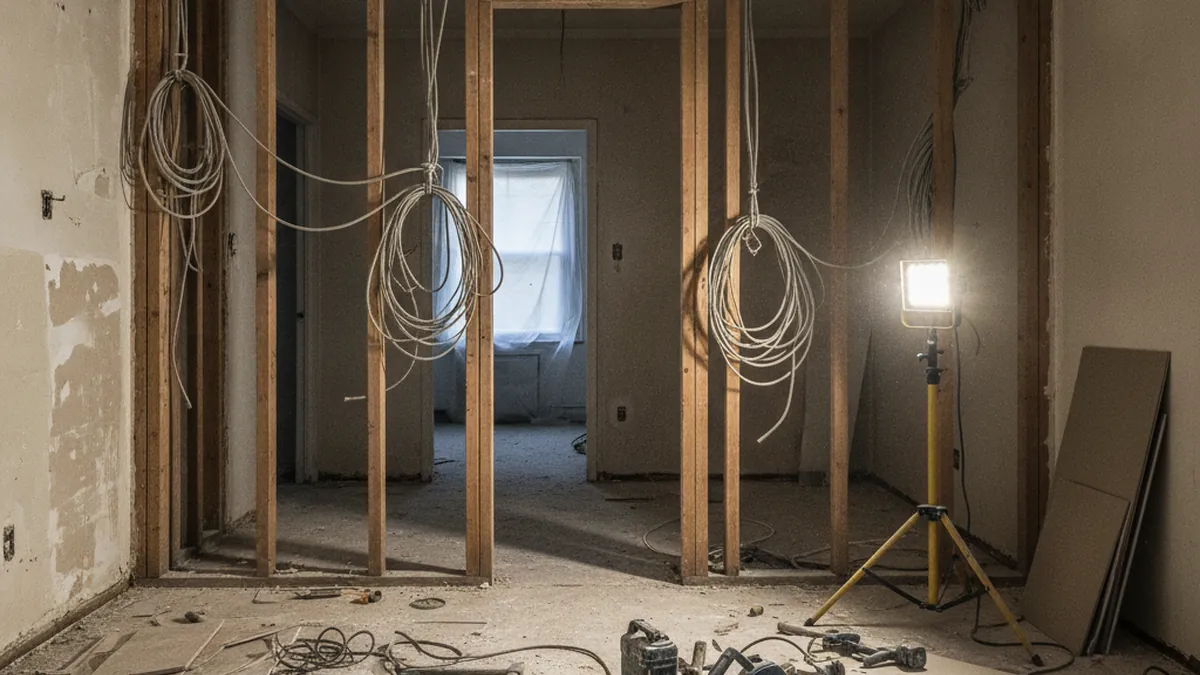
In Quebec, managing asbestos in the workplace — which includes renovation sites — is regulated by the CNESST. Before starting work in an old plex, have suspect materials sampled by a professional and analyzed by an accredited laboratory. If the result is positive, removal must be handled by a specialized firm following containment protocols. Budget this item before setting your purchase price, especially if your business plan relies on repositioning through renovation.
Vermiculite (Zonolite): the Suspect Attic Insulation
Vermiculite is a beige or golden granular insulation often blown into attics and sometimes into walls. The problem: much of what was sold in Canada came from the Libby mine, contaminated with asbestos. Health Canada recommends presuming it contains asbestos until a test proves otherwise.
When you climb into the attic of an old plex and see small beige, greyish-gold or brown granules resembling flakes or light gravel, be careful: it is probably vermiculite. According to Health Canada, vermiculite installed before the 1990s should be presumed to contain asbestos unless a laboratory analysis rules it out.
The good news: as long as it stays in place and is undisturbed (no traffic in the attic, no work), the risk to occupants is low. The bad news: it complicates any project touching the roof, insulation or attic conversion, and can push back buyers and some lenders. Have the vermiculite tested and, if present, fold the management cost (containment, removal by a specialized firm if needed) into your return analysis.
What to remember about vermiculite
- Beige/gold granules in the attic = presumed asbestos until proven otherwise.
- Do not walk on it or disturb it without precautions.
- A laboratory test settles it; it gates any roofing or insulation project.
- Its presence can trigger additional financing conditions.
Iron Ochre: the Drain That Clogs Itself
Iron ochre is a rust-orange, sometimes gelatinous and foul-smelling deposit created by iron bacteria that clog the weeping drain. The drain blocks, water accumulates, the basement risks infiltration. It is detected by orange staining in the sump pit and around the foundation, ideally confirmed by water and soil testing.
Iron ochre is arguably the most insidious of the four, because it develops slowly and recurs. Naturally occurring iron bacteria, in iron-rich water, create an orange deposit that progressively obstructs the weeping (French) drain around the foundation. Once the drain is clogged, water no longer drains away and the basement becomes vulnerable to infiltration.
At the inspection, look for rust-orange staining in the sump pit, at the drain outlet or along the foundation, plus a characteristic iron smell. The defect is costly because the fix — excavating and replacing the drain — is not permanent: the new drain can clog again if the conditions persist. Ask for a maintenance history, a drain check and, if in doubt, a water analysis. Document everything in your plex purchase file and with the notary.
Tests and Costs: Summary Table
Costs vary enormously with scope, region and firm. The orders of magnitude below are meant to structure your due-diligence budget, never to replace a written quote. Always require quotes before setting your price.
| Contaminant | Where to look | Test to request | Correction cost (order of magnitude) |
|---|---|---|---|
| Pyrite / pyrrhotite | Backfill under slab, foundation concrete | IPPG petrographic test (core sample) | Modest test; backfill + slab replacement: high (tens of thousands $) |
| Asbestos | Pipe insulation, 9x9 vinyl tiles, textured ceilings, joints | Sampling + accredited lab analysis | Varies with surface and containment; removal by specialized firm |
| Vermiculite | Attic, sometimes walls | Laboratory test (asbestos presence) | Management/containment; specialized removal for roofing work |
| Iron ochre | Weeping drain, sump pit, foundation perimeter | Drain inspection + water/soil analysis | Excavation and drain replacement: high, and recurring |
Actual costs depend on each situation. Obtain written quotes from specialized firms before setting your offer. Regulatory sources: CNESST (asbestos), Health Canada (vermiculite), CMHC (financing and building quality).
Impact on Value and Financing
A detected contaminant changes two things: the plex's value and its financeability. On value, a correction cost documented by a quote becomes an amount to deduct from your purchase price — the same logic any investor uses when adjusting an offer for upcoming work. On financing, a lender or mortgage insurer like CMHC may require an additional assessment, impose a holdback of funds until the correction, or refuse a file whose major defect is unresolved.
Vermiculite and pyrite are among the items that most often trigger additional conditions. A clear inspection report, paired with correction quotes, therefore works in your favour on two fronts: it reassures the lender and gives you leverage to negotiate the price. Conversely, hiding or ignoring a problem can stall financing at the last minute, just before the notary.
On the legal side, do not forget the legal warranty of quality. A serious, hidden defect that predates the sale and that you could not detect through a prudent, diligent examination may open a remedy for latent defects. But a defect detectable through an inspection is not considered hidden — hence the importance of testing beforehand rather than relying on a remedy afterward. For the legal framework, see Éducaloi on latent defects.
The trap to avoid
Buying on the strength of a "paper" return with no test condition, then discovering after closing a drain clogged by iron ochre or a slab heaved by pyrite. The correction then runs into the tens of thousands of dollars, with no negotiating leverage and an uncertain legal remedy.
Common Buyer Mistakes
- Relying on the visual inspection alone. None of these four contaminants is confirmed by the eye: each requires a targeted laboratory test.
- Not writing the tests in as conditions. Without a condition in the promise to purchase, an unfavourable result gives you no right to withdraw or renegotiate.
- Confusing "presence" with "catastrophe." Undisturbed asbestos or vermiculite is not an automatic reason to walk away; the management cost is what counts.
- Underestimating iron ochre. Because it recurs, it deserves special attention even after a recent drain replacement.
- Forgetting financing. An unresolved defect can derail the mortgage or impose a holdback at the worst moment.
- Trusting a verbal estimate. Only written quotes let you build a solid offer and negotiate the price.


