Selling your plex on the North Shore: how do you avoid being sued for latent defects years after the transaction? The direct answer comes down to three levers: sell without legal warranty, fill out an honest and complete seller's disclosure declaration, and — ideally — have the property inspected before listing. The legal warranty of quality under the Quebec Civil Code automatically protects the buyer against serious non-apparent defects. As a result, nearly one in two properties now sells without legal warranty to reduce this risk, according to Radio-Canada. And if a dispute arises anyway, court delays can reach 5 years before trial. ImmoMulti, a direct buyer of multiplexes on the North Shore, frequently purchases without legal warranty, which simplifies the transaction for the seller and reduces their legal exposure after the sale. This guide explains the 4 criteria for a latent defect, the fraud trap, and the steps to follow to protect yourself as a plex seller.
What is the legal warranty of quality and what does it require of a plex seller?
In Quebec, as soon as a property changes hands, the buyer is protected by the legal warranty of quality — commonly known as the warranty against latent defects. This is an automatic protection: it applies even if nothing is written into the deed of sale. In practical terms, as the seller of your plex, you remain liable for the serious and invisible defects the property had at the time of the transaction, even if they only come to light later.
This is precisely what makes selling a multiplex more complex than it might seem. A buyer who discovers a major problem can come after you long after taking possession. And on the North Shore, where a good portion of the plex stock is several decades old, the chances of an old defect resurfacing are plentiful.
Source: Radio-Canada — "Latent defects: what are your recourses?", supplemented by the legal concept from Educaloi.
What are the 4 criteria a defect must meet to be recognized as a latent defect?
Not every defect in a building qualifies as a latent defect under the law. For a claim to be admissible, the defect must meet four simultaneous conditions. If even one is missing, the lawsuit will generally fail. Here is the framework courts apply:
| Criterion | What it means | Example for a plex |
|---|---|---|
| Pre-existing | The defect existed before the sale, even if not yet visible. | Foundations affected by pyrite since construction. |
| Hidden | Not detectable by a prudent buyer upon careful inspection. | Water infiltration behind a freshly painted wall. |
| Serious | Significant impact on the use or value of the property. | Foundation repair estimated at over $20,000. |
| Unknown to the buyer | The buyer was not aware of it at the time of the transaction. | Problem never mentioned or identified before the purchase. |
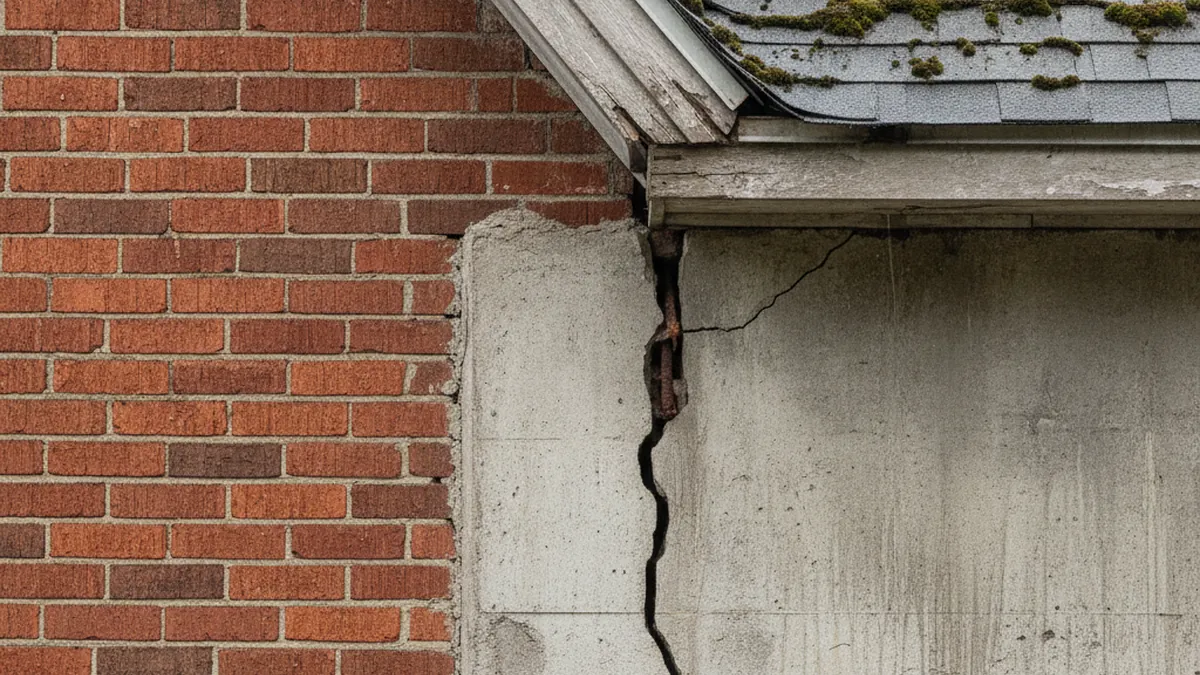
The most striking example remains pyrite. This mineral swells on contact with water and cracks foundations. Repairs often exceed $20,000, and — a daunting detail for any seller — damage can take up to 40 years to appear. A plex sold today in apparently perfect condition can therefore become the subject of a dispute long after you've moved on.
Selling with or without legal warranty: which choice best protects a plex seller?
The seller of a plex is not without options. The law allows a sale "without legal warranty, at the buyer's own risk". This clause transfers the risk of latent defects to the buyer, who accepts the property as is. In the current market, this practice has become widespread: nearly one in two properties now sells without legal warranty.
| Aspect | Sale with legal warranty | Sale without legal warranty |
|---|---|---|
| Risk of latent defect lawsuit | High — you remain liable | Greatly reduced |
| Potential sale price | Generally higher | Sometimes slightly adjusted |
| Buyer pool | Broader | Informed buyers, cash buyers, or specialists |
| Protection against fraud (misrepresentation) | No additional protection | None — the clause does NOT cover fraud |
For an owner of a multiplex on the North Shore who wants to limit their legal exposure, selling without legal warranty is a serious lever. But — and this is critical — this clause has a major loophole that many sellers overlook.
Source: Radio-Canada — "Nearly one in two properties sells without legal warranty"

Does selling "without warranty" fully protect you — or does the risk of fraud remain?
Here is the point every plex seller must understand: the "without legal warranty" clause does NOT protect against fraud. Fraud means deliberate misrepresentation, false declarations, or a known defect that the seller intentionally concealed. If you knew a foundation was leaking and said nothing, no clause will protect you.
The loophole in the "without warranty" clause
Selling "at the buyer's own risk" eliminates the warranty against latent defects, but never erases your obligation of good faith. A seller who conceals a known defect — water infiltration, pyrite, structural problem — can be sued despite the clause. The protection only holds if your transparency is complete.
This is exactly why the seller's disclosure declaration becomes your best insurance. By putting in writing, honestly and completely, everything you know about the condition of your plex, you demonstrate good faith and cut short any accusation of fraud. Our seller's disclosure declaration guide details point by point what to include to protect yourself.
"Without legal warranty" reduces the risk of a lawsuit, but does not cover misrepresentation. The seller's transparency remains the only protection that holds before a judge.
— Principle of good faith, Civil Code of QuebecAnd the risk isn't only financial. Court delays for a latent defect dispute can reach up to 5 years of waiting before a trial is held. Five years of uncertainty, legal and expert fees, for a file that could have been defused by a simple honest declaration upfront.
Source: Radio-Canada (La facture) — court delays in latent defect cases
What steps should you follow to protect yourself as a plex seller on the North Shore?
Selling a plex on the North Shore while limiting your exposure to latent defects comes down to a few concrete habits. Here is the sequence to follow, from most to most useful:
- Fill out a complete and honest seller's disclosure declaration. This is your first line of defence against fraud. Disclose everything: past repairs, water infiltration, cracks, unpermitted work.
- Have the property inspected before listing. A pre-sale inspection lets you know the true condition of your multiplex and allows you to disclose with full knowledge of the facts.
- Evaluate the option of selling without legal warranty. With an informed buyer, this clause greatly reduces your risk of future lawsuits.
- Keep your evidence. Invoices, expert reports, correspondence: anything that demonstrates your good faith will serve you if a dispute arises.
- Consult a notary or lawyer for your specific situation. Every transaction is unique; a professional validates the wording of clauses and your declaration.
Before listing your plex for sale on the North Shore
- Seller's disclosure declaration written rigorously and transparently
- Pre-sale inspection of the income property completed
- Decision made on legal warranty (with or without)
- Notary or lawyer consulted for sensitive clauses
Does a direct sale to a specialized buyer really reduce your latent defect risk?
There is an avenue often overlooked by owners concerned about latent defects: the direct sale to a specialized buyer. When a buyer like ImmoMulti purchases your multiplex, they do so with full knowledge of the property's condition, frequently without legal warranty, assuming the property's state themselves. For you as the seller, this significantly reduces the risk of being sued after the fact.
This approach is particularly relevant for an older or renovation-ready plex on the North Shore, where the risk of non-apparent defects is higher. Rather than exposing the property to the general public and broadening the pool of potential claimants, you deal with a single, informed buyer who takes the property as is. Our page on selling a renovation-ready income property explains how this works in practice.
The other advantage is time. Where a traditional sale can leave the risk of a dispute hanging for years, a direct and well-documented transaction lets you sell your property quickly and move on. The condition remains the same as with any buyer: a transparent declaration that protects you from fraud.
ImmoMulti: Direct Buyer of Multiplexes on the North Shore
Want to sell your plex while limiting your exposure to latent defects? We buy directly, often without legal warranty, without an agent, and without commission. A clear, documented, and confidential transaction. Get an offer within 48 hours.
One final essential reminder: this article presents general principles. Latent defect law is based on the analysis of specific facts. For your transaction, always have your declaration and clauses validated by a notary or lawyer.

