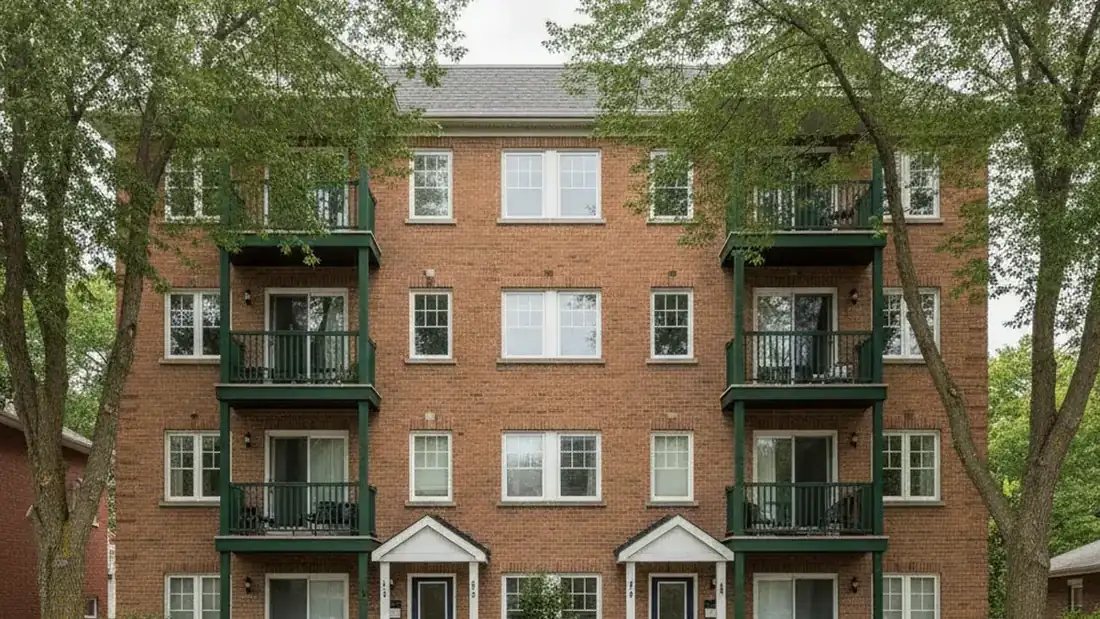
A pocket listing — also called a confidential listing or no-sign sale — is a property for sale that is never advertised publicly: not on Centris, the Quebec MLS, nor on consumer real estate portals. Instead, it is marketed privately to a select network of buyers. For an income property — duplex, triplex, quadruplex, multi-unit — this discretion has real value: no sign, no parade of showings, no anxious tenants. This guide explains exactly what a pocket listing is, how it differs from an exclusive listing and from a public MLS/Centris or FSBO sale, the brokerage context in Quebec, and why plex owners on the North Shore so often turn to the off-market.
What is a pocket listing (confidential listing)?
A pocket listing is a property for sale that the seller — or their broker — chooses not to advertise publicly. The expression evokes a broker keeping the listing "in their pocket" rather than placing it on the shared listing system. In Quebec, you will also hear confidential listing, no-sign sale, or more broadly an off-market sale.
In practice, the property never appears on Centris (the Quebec MLS), nor on consumer sites. It is instead shown in a targeted way to a small circle of potential buyers: known investors, a broker's clients, or specialized direct buyers. Word of mouth replaces the public storefront. For an income property, this is especially common, because the buyers are often identifiable investors and discretion is a genuine asset.
The idea in one sentence
A pocket listing means selling a property with no public storefront: it is shown to a chosen network of buyers rather than posted on Centris. Discretion is total; reach depends on the network.
What is the difference between an exclusive listing and a confidential listing?
The two are often confused, but they are distinct ideas.
An exclusive listing is first of all a brokerage contract: the seller entrusts the property to a single broker, for a set period, granting them the exclusive right to sell. That contract says nothing about the level of advertising: the broker can perfectly well post the property on Centris and market it widely, or instead market it discreetly to their network alone.
The pocket listing, by contrast, describes the level of exposure: no public advertising. It is the most discreet form of marketing. In practice, a pocket listing almost always relies on an exclusive mandate (the broker keeps the listing for their network) or on a direct sale with no broker. Put simply: not every exclusive listing is a pocket listing, but a pocket listing nearly always rests on an exclusive mandate or a direct transaction.
Pocket listing, MLS/Centris and FSBO: what is the difference?

To place the pocket listing, let us compare it with the two other main ways of selling a property in Quebec: a listing on Centris (via a broker) and a FSBO (for sale by owner) sale, the way DuProprio works.
| Sale method | Public advertising | Broker | Exposure |
|---|---|---|---|
| Centris / MLS listing | Yes, maximum | Yes | All buyers and all brokers on the market |
| FSBO (DuProprio) | Yes, public | No (owner sells) | General public, but not the broker network |
| Pocket listing (confidential) | None | Often yes (exclusive mandate) | A restricted network of chosen buyers |
| Direct sale to a buyer | None | No | One targeted buyer who prices an offer |
The key distinction: Centris and FSBO are public (the property is visible to everyone), whereas the pocket listing and direct sale are confidential (only a chosen network sees it). FSBO is public but with no broker; a pocket listing is confidential but often with a broker. So they are not opposites on a single axis.
Pocket listings and brokerage in Quebec: what does the framework (OACIQ) say?
In Quebec, real estate brokerage is governed by the Real Estate Brokerage Act and overseen by the OACIQ (Organisme d'autoréglementation du courtage immobilier du Québec). A broker always acts under a brokerage contract signed with their client and owes them duties: to act in their best interest, to inform them and to advise honestly.
Is a pocket listing allowed? Yes. Nothing requires an owner to advertise their property publicly. In the United States, the National Association of Realtors (NAR) Clear Cooperation Policy frames and restricts pocket listings for member brokers, requiring a listing to be shared on the MLS shortly after any public marketing. Quebec has no identical rule; there is no equivalent obligation to share a listing on Centris. That said, a Quebec broker remains bound by their professional duties to act in the client's interest — including informing them of the trade-off that restricted exposure represents. And an owner who sells on their own, with no broker, does so perfectly legally, outside the OACIQ framework.
General framework for information only. For details on your obligations, consult the OACIQ or a professional.
Why does a seller choose a no-sign sale?

The motives for a confidential sale are concrete, especially for an income property:
Discretion and confidentiality
Some owners simply do not want their circle, neighbours or business partners to know the property is for sale. The financials of a multi-unit — rents, expenses, returns — thus stay confidential, disclosed only to serious buyers who ask for them.
Not disturbing tenants
This is the key motive for a plex. A public listing means a sign, online photos and repeated showings — all signals that worry tenants (fear of repossession, a rent increase, a change of owner). A pocket listing avoids that turmoil: no sign on the lawn, no parade of strangers through the units.
Testing the price quietly
A seller may want to probe the market without committing publicly. If the desired price is not reached, no public trace remains, and the property has not "burned" its exposure.
Avoiding the stale-listing stigma
On Centris, a property listed for a long time accumulates "days on market" and eventually draws suspicion ("what's wrong with it?"). The off-market removes this stigma risk.
Sensitive sales
Estate, separation, financial difficulty, a high-profile property: in these situations, confidentiality often outweighs absolute price maximization.
What is the trade-off of a confidential sale?
A pocket listing is not magic: its main drawback is limited reach. With no public exposure, the property is only seen by buyers in the network used. That can mean:
- Fewer buyers competing, so potentially fewer offers.
- A risk of a slightly lower price than a highly competitive public listing — especially for a sought-after asset.
- Full dependence on the network: the quality of the outcome depends on the breadth and seriousness of the buyer circle approached.
For an income property, this risk is softened by the nature of the asset itself: its value is calculated first on returns (net operating income and cap rate) rather than emotion. An informed investor will pay what the numbers justify, whether they find the property on Centris or in a private network. The fix: know your plex's value before starting a confidential sale, and approach several serious buyers.
What to keep in mind before a pocket listing
- Less exposure can mean fewer offers.
- The outcome depends on the reach of the network used.
- Without public validation, you must value the property beforehand.
- The choice is between theoretical maximum price and discretion, speed, peace of mind.
Why North Shore plex owners favour the off-market
On the North Shore (Laval, Terrebonne, Repentigny, Blainville, Mascouche, Sainte-Thérèse, Saint-Jérôme…), a significant share of multi-unit transactions happen off-market, never posted on Centris. Several reasons explain this:
- Tenants first. On an occupied building, avoiding a sign and public showings protects the landlord-tenant relationship and the occupants' peace of mind.
- Confidentiality of the numbers. Leases, rents and returns stay private, shared only with a serious buyer.
- Speed. A network of already-qualified investor buyers often allows a faster close than a public listing with multiple financing conditions.
- A specialized buyer pool. Multi-unit properties mainly interest investors — a narrow audience the off-market reaches directly.
This is precisely where ImmoMulti operates. If you are exploring a discreet, off-market property sale, it is a well-established path on the North Shore.
A direct sale to a buyer: an alternative to the pocket listing
The classic pocket listing goes through a broker who shows your property discreetly to their network, under an exclusive mandate — and therefore with a commission. But that is not the only off-market path.
A direct sale to a buyer offers the same discretion as a pocket listing — no advertising, no sign, undisturbed tenants — but with no broker and no commission. Instead of entrusting the property to an intermediary, you deal directly with a buyer who prices an offer from your rents, expenses and the condition of the building.
This is exactly the ImmoMulti model: a direct buyer of multi-unit properties on the North Shore — duplex, triplex, quadruplex and income properties. No broker, so CA$0 commission; no public listing; an offer usually made within 48 hours. ImmoMulti is not a broker: it is a buyer acquiring the property for its own account. It is one discreet path among others — to compare freely with a pocket listing via a broker, a Centris listing or an FSBO-style sale.
Pocket listing vs direct sale vs MLS: which to choose?
Here is how these three main paths compare on the criteria that matter to a plex owner.
Pocket listing (via broker)
- No public advertising
- The broker's private network
- Brokerage commission to budget
- Strong discretion, tenants preserved
- Reach depends on the network
Direct sale (buyer)
- No public advertising
- One targeted buyer prices the offer
- CA$0 commission
- Strong discretion, short timeline (48 h)
- A concrete offer to compare
And the Centris/MLS listing? It remains the path of maximum exposure: all buyers and all brokers see the property, which can push the price up through competition — at the cost of lost discretion, disturbed tenants and a commission. There is no "best" path in the absolute: it all depends on the priority you give theoretical maximum price versus discretion, speed and peace of mind. To gauge value before choosing, start by estimating how much your plex is worth on the North Shore, and compare sale methods between broker and direct buyer or via a sale without an agent.
Whether you lean toward a pocket listing via a broker, a Centris listing or a direct sale, the logic is the same for an income property: start from the real value (NOI, cap rate, comparables), choose the level of discretion that suits you, and confirm with a concrete offer. For investors looking to acquire off-market, ImmoMulti also offers off-market deals.
Informational content only. Does not constitute legal, tax or financial advice, nor an opinion on brokerage obligations. The brokerage practices mentioned (OACIQ, NAR Clear Cooperation Policy) are described generally and may change. Consult the OACIQ or a professional for your specific situation.
Frequently Asked Questions — Pocket Listing and Confidential Sale


