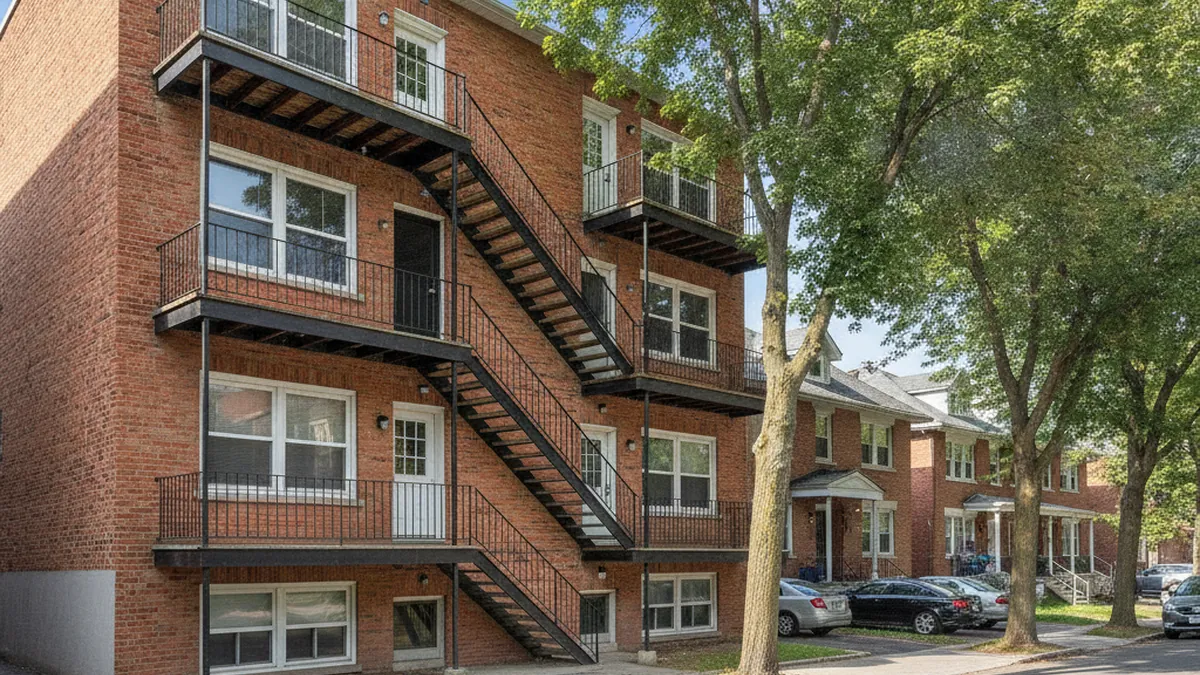
ImmoMulti — direct buyer of income properties on the North Shore — regularly sees owners underestimate what sets the sale of a mixed-use building (housing + commercial unit) apart from that of a purely residential plex. Three differences carry real weight: the commercial portion is subject to GST and QST on sale, while used residential is generally exempt; commercial leases follow rules distinct from those of a residential lease and must be transferred carefully; and the valuation must capitalize two income streams with different risk profiles. Add a narrower buyer pool, and you understand why a mixed-use building rarely sells "like a plex."
How does selling a mixed-use building differ from selling a pure plex?
A purely residential used plex is generally GST/QST exempt, its leases are framed residential leases, and its buyers are numerous. A mixed-use building adds a taxable commercial portion, freely negotiated commercial leases, and a two-use valuation — hence a more complex process and a smaller buyer pool.
Structurally, a mixed-use building resembles a plex: several dwellings, one building, rental income. But the moment a commercial unit is added at street level — a convenience store, a salon, an office, a café — the building shifts into a hybrid tax and legal regime. The seller must deal simultaneously with housing rules and commercial rules.
This duality affects everything: the transaction's taxation, the nature of the leases, the valuation method, and even the type of financing the buyer can obtain. An owner who approaches the sale as if selling a simple triplex on the North Shore risks costly surprises at the notary's table.
Why is the commercial portion subject to GST/QST?
According to Revenu Québec, the sale of a used residential property (not new, no major renovations) is generally GST/QST exempt. The commercial portion is not exempt: its sale is taxable. The price of a mixed-use building must therefore be allocated between the residential part (exempt) and the commercial part (GST 5% + QST 9.975%).

This is the most misunderstood difference. Revenu Québec specifies that the sale of a residential housing property that is not new and has not undergone major renovations is generally exempt from tax. That is why a used plex usually sells without GST/QST.
The commercial part of a mixed-use building does not benefit from this exemption: its supply is taxable. The sale price must therefore be allocated between the value attributable to residential (exempt) and the value attributable to commercial (taxable at 14.975%: GST of 5% and QST of 9.975%).
Good news for structuring the transaction: when the buyer is registered for GST/QST and intends to use the building primarily (more than 50%) in their commercial activities, Revenu Québec indicates that the buyer must remit the GST and QST themselves (self-assessment), no later than the filing date of their return for the period concerned. The seller then does not have to collect tax on the commercial portion.
| Portion of the mixed-use building | GST/QST treatment on sale | Source |
|---|---|---|
| Dwellings (used residential, not majorly renovated) | Generally exempt | Revenu Québec — Sale of residential properties |
| Commercial unit | Taxable (5% GST + 9.975% QST = 14.975%) | Revenu Québec — Taxable vs exempt supplies |
| Registered buyer, commercial use > 50% | Self-assessment by the buyer | Revenu Québec — Purchase/sale of a property |
Sources: Revenu Québec — Sale of residential properties; Revenu Québec — Purchase, sale of a property. GST (5%) and QST (9.975%) rates are the rates in effect. Validate the allocation with a tax advisor or notary.
Watch the price allocation
A poorly documented allocation between residential and commercial portions can trigger a tax reassessment. Have the split established by a professional before signing the deed of sale, and state it clearly in the offer to purchase.
How do you transfer commercial leases to the buyer?
Unlike a residential lease, a commercial lease does not renew automatically: according to Éducaloi, the commercial tenant must normally leave at the end of the lease, unless agreed otherwise. On the sale, the buyer takes the seller's place. A published fixed-term commercial lease with more than 12 months remaining generally cannot be terminated by the new owner.
The commercial lease is very different terrain from housing. Éducaloi notes that a commercial lease can prohibit the tenant from assigning the lease or subletting, and that it does not renew automatically like a residential lease: the commercial tenant must normally vacate at the end of the lease, unless otherwise agreed.
For the seller of a mixed-use building, this has direct consequences. A commercial unit whose lease is nearing its end represents a vacancy risk for the buyer, who will factor it into their price. Conversely, a solid commercial lease, with a comfortable remaining term and a reliable tenant, becomes a selling point.
On the tenant-protection side, Éducaloi indicates that a commercial tenant can publish their lease in the land registry to protect it against a buyer: a published fixed-term lease with more than 12 months remaining generally cannot be terminated by the new owner. The buyer will therefore review the land registry entries as part of their due diligence.
- Remaining term: a long, published commercial lease reassures the buyer (predictable income);
- Assignment clauses: check whether your leases allow or prohibit assignment and subletting;
- Land registry publication: know which leases are published, as it shapes the new owner's rights;
- Use compliance: ensure the commercial use complies with municipal zoning.
How do you value a mixed-use building by capitalizing two uses?
Like any income property: you establish net operating income, then apply an overall capitalization rate (TGA) drawn from comparables. The particularity of mixed-use: residential and commercial rents do not share the same risk profile or duration, which can justify capitalizing the two uses separately.

The value of an income property is determined through capitalization of income. APCIQ's training on the value of an income property addresses precisely the calculation of market value and the overall capitalization rate (TGA) on a comparables basis, with the addition of a negotiation margin.
The challenge of the mixed-use building: residential and commercial income are not equivalent. A commercial rent may be higher per square foot but also more volatile — a commercial vacancy can drag on for months, whereas a dwelling generally re-rents quickly on the North Shore. Savvy buyers therefore often capitalize the two uses separately, with a distinct TGA for each stream.
To quickly estimate your building's potential, you can rely on our yield tools, which calculate net income, the GRM, and the TGA from a few inputs.
Why is the buyer pool smaller?
A pure plex attracts investors and owner-occupants. A mixed-use building requires understanding the commercial lease, commercial vacancy risk, GST/QST taxation, and often a stricter commercial mortgage. Many residential buyers and lenders step back, concentrating demand on seasoned investors.

This is the practical consequence of the two sections above. Selling a purely residential plex means addressing a broad market: rental investors, first-time buyers wanting to live in one unit and rent the others, experienced owners. Selling a mixed-use building means addressing a subset: buyers comfortable with the commercial side.
Financing also plays a role. A building where a significant share of income is commercial often falls under commercial mortgage rules, with stricter down-payment and qualification requirements than residential. Several residential lenders step back, further shrinking the list of solvent buyers.
"A mixed-use building rarely sells as fast as a comparable plex: fewer buyers, more checks, more demanding financing. The prepared seller — leases in order, income documented, tax allocation clear — keeps control of the process."
— ImmoMulti Team, direct buyer of income properties on the North ShoreHow do you allocate the price between the residential and commercial portions?
Allocation means splitting the total sale price between the value attributable to the dwellings (GST/QST exempt) and the value attributable to the commercial unit (taxable at 14.975%). It rests on capitalizing each use's income, floor area, and comparables. A poorly documented allocation is one of the main sources of tax reassessment when selling a mixed-use building.

Once you understand that the commercial portion is taxable and residential generally exempt, a practical question arises: what share of the price goes to commercial? That is the allocation exercise, and it drives both the amount of GST/QST at play and the seller's tax safety. Unlike a purely residential plex where the question never comes up, a mixed-use building demands a clear, quantified, defensible split before the Canada Revenue Agency and Revenu Québec.
There is no single legal formula imposed by law: the allocation must reflect the fair market value of each component. In practice, professionals combine three approaches to reach a credible split.
The three allocation methods
- By income capitalization: isolate the net operating income of the commercial unit, apply a commercial overall capitalization rate (TGA), then do the same for the dwellings with a residential TGA. The sum of the two values gives the split. This is the most rigorous method for an income property.
- By weighted floor area: allocate by the square footage of each use, weighted by value per square foot (a street-level commercial unit is often worth more per square foot than an upper-floor dwelling).
- By comparables: rely on recent sales of comparable commercial units and dwellings on the North Shore to validate the split obtained.
A worked allocation example
Take a mixed-use building in Sainte-Thérèse: four upper-floor dwellings and a street-level commercial unit (a café), sold for $1,200,000. You first establish each use's net income, then capitalize.
| Use | Annual net income | TGA applied | Capitalized value | Share of price |
|---|---|---|---|---|
| 4 dwellings | $54,000 | 6.0% | $900,000 | 75% |
| Commercial unit (café) | $21,000 | 7.0% | $300,000 | 25% |
| Total | $75,000 | — | $1,200,000 | 100% |
Illustrative example for educational purposes. TGAs and incomes vary by building and market; have the allocation established by a chartered appraiser and a tax advisor.
In this example, $300,000 is attributed to commercial. If the buyer is not registered for GST/QST (or does not use the unit more than 50% for commercial activities), the 14.975% tax would apply to that slice, roughly $44,925. If, on the other hand, the buyer is registered and plans predominant commercial use, the self-assessment described above means the seller does not have to collect that tax — hence the value of knowing the buyer's tax status before setting terms.
Note that the commercial TGA here (7.0%) is higher than the residential one (6.0%): the market demands a higher return to offset commercial vacancy risk. Half a point of extra TGA on the commercial side reduces its capitalized value — a negotiating lever the buyer will not fail to use if your commercial lease is short or fragile.
Do not set the allocation at random
Assigning an artificially low share to commercial to reduce the tax can be recharacterized by the tax authorities, with interest and penalties. The allocation must reflect real value and be stated in black and white in the offer to purchase and the notarized deed. A notary and a tax advisor should validate the split before signing.
Beyond GST/QST: capital gains and recapture of depreciation
Selling a mixed-use building also triggers capital gains tax and, often, recapture of the capital cost allowance (CCA). Since the announced increase was cancelled, the capital gains inclusion rate is 50% (canada.ca). CCA recapture, meanwhile, is fully taxable as income. Both affect residential and commercial alike and often weigh more than GST/QST.

GST/QST draws attention because it is specific to mixed-use, but for many sellers it is the capital gains tax and the recapture of depreciation that make the biggest difference to the net cheque. Both mechanisms apply to any income property, plex or mixed-use, but a long-held mixed-use building on the North Shore has often accumulated substantial appreciation and depreciation.
The capital gain
The capital gain is, roughly, the difference between the sale price (net of selling costs) and the adjusted cost base (acquisition cost plus capitalized improvements). Following the federal announcement of March 2025, the Government of Canada kept the inclusion rate at 50%: half the gain is added to your taxable income for the year, taxed at your combined federal-Québec marginal rate.
Recapture of the capital cost allowance (CCA)
If you claimed depreciation on the building over the years to reduce your taxable rental income, the sale can trigger a recapture: the depreciation taken back is added to your income and taxed at 100% (not at 50% like the capital gain). This is a frequent surprise for multi-unit owners who depreciated aggressively for years.
| Item taxable on sale | Inclusion / taxation rate | Applies to |
|---|---|---|
| Capital gain | 50% of the gain taxable | Appreciation of land and building |
| Depreciation recapture (CCA) | 100% (ordinary income) | Building depreciation taken back |
| GST/QST | 14.975% on the commercial portion | Value allocated to the commercial unit |
Sources: Department of Finance Canada; Canada Revenue Agency — Capital Gains (T4037). Each situation differs; consult a tax advisor.
To anticipate the order of magnitude, our capital gains calculator combines the gain and CCA recapture. But for a mixed-use building, the residential/commercial allocation also influences how the gain is split — all the more reason to validate everything with a professional before signing.
"Many mixed-use sellers set their price by the market, then discover at the notary that depreciation recapture eats up tens of thousands of dollars. The tax on a sale is planned before signing, not after."
— ImmoMulti Team, direct buyer of income properties on the North ShoreWhat financing can the buyer of a mixed-use building obtain?
Depending on the share of commercial income, the buyer falls under a residential, commercial, or CMHC-insured mortgage. CMHC's MLI Select product insures a mixed-use building only if the residential portion represents the majority of both floor area and revenue (cmhc-schl.gc.ca). More demanding financing shrinks the number of solvent buyers, which influences your price.

The seller thinks about price; the buyer thinks about financing. On a mixed-use building, these two realities are linked: the harder the financing is to obtain, the smaller the buyer pool and the greater the pressure on price. Understanding the buyer's options means understanding who can actually buy your building on the North Shore.
Three financing regimes by the weight of commercial
The dividing line comes down to the share of income from commercial. A 4-dwelling building with a small street-level unit stays close to residential; a building where commercial generates half the income tips into pure commercial.
| Building profile | Likely loan type | Typical down payment |
|---|---|---|
| Minor commercial portion, residential dominant | Residential multi-unit mortgage (sometimes CMHC-insured) | Lower if insured |
| Balanced mixed-use | Commercial loan or MLI Select depending on eligibility | Intermediate |
| Commercial dominant | Conventional commercial mortgage | Higher, stricter qualification |
General benchmarks; conditions vary by lender, commercial tenant, and property quality. Validate with a mortgage broker specialized in income properties.
CMHC and the mixed-use building
CMHC's MLI Select program from the CMHC can insure a loan on a mixed-use building, but only if the residential portion represents the majority of the floor area and revenue of the property. In other words, a building with dwellings on the upper floors and a shop at street level may be eligible; a predominantly commercial building with a few dwellings generally will not be.
For the seller, this is strategic information: if your mixed-use building keeps a residential dominance, a buyer could aim for CMHC-insured financing, on more advantageous terms, which broadens the buyer pool. Conversely, a building where commercial weighs heavily forces the buyer toward the more demanding conventional commercial mortgage — a brake to watch.
You can estimate various loan scenarios with our financing comparison tool, to understand what a typical buyer might present.
One more reason financing matters to you as the seller: the buyer's lender will order its own valuation, and that appraisal drives how much the buyer can actually borrow. If the lender's appraiser assigns a conservative value to the commercial unit — because the lease is short, the tenant weak, or comparable commercial sales scarce on the North Shore — the buyer may face a financing shortfall and come back to renegotiate. A strong, well-documented commercial lease is therefore not just a valuation argument; it is what keeps the buyer's financing, and your deal, intact through to closing.
What reassures a lender on a mixed-use building
- A solid commercial lease, with a comfortable remaining term and a reliable tenant
- A dominant residential share (floor area and revenue)
- A documented, stable income history
- Zoning and use compliance with no grey areas
Decoding your commercial leases: the clauses that make (or break) the price
The value of a mixed-use building depends largely on the quality of its commercial lease. Lease type (net or gross), remaining term, renewal options, indexation, exclusivity clause, and responsibility for taxes and maintenance: each of these clauses influences the capitalized net income and therefore the price. A savvy buyer will read your leases before making an offer.

On a residential plex, leases resemble each other and are framed by the Tribunal administratif du logement. On a mixed-use building, the commercial lease is a contract freely negotiated between the parties — and its details can shift value by tens of thousands of dollars. Here are the clauses a buyer will examine, and that you should master before going to market.
Net lease, gross lease: who pays what?
In a gross lease, the landlord assumes taxes, insurance, and maintenance; the rent is higher but the net less predictable. In a net lease (or triple net), the commercial tenant pays a share of property taxes, insurance, and operating costs on top of the base rent. A well-drafted net lease stabilizes net operating income — hence capitalized value — and reassures the buyer. Know precisely which one applies to your unit.
Remaining term and renewal options
A commercial lease with several years remaining and a solid tenant is an asset; a lease expiring in six months is a vacancy risk. Renewal options (the tenant's right to extend on predetermined terms) matter too: they add predictability, but can also cap the future rent. Recall that, according to Éducaloi, a commercial lease does not renew automatically like a residential lease.
Indexation, exclusivity, and assignment
- Rent indexation: a lease that provides for an annual increase (index or fixed percentage) protects your income against inflation and supports value.
- Exclusivity clause: some leases guarantee the business exclusivity of its line of activity within the building — useful for the tenant, but a constraint to disclose to the buyer.
- Assignment and subletting: as Éducaloi notes, a commercial lease can prohibit the tenant from assigning or subletting; check what your leases allow.
- Land registry publication: a published fixed-term lease with more than 12 months remaining generally cannot be terminated by the new owner — which protects the tenant and sets the terms for the buyer.
| Commercial lease clause | Effect on the mixed-use building's value |
|---|---|
| Net lease (taxes/insurance/maintenance to tenant) | More predictable net income → value supported |
| Long remaining term, solid tenant | Reduces vacancy risk → price premium |
| Annual rent indexation | Protects against inflation → reassures the buyer |
| Short lease, imminent expiry | Vacancy risk → likely discount |
| Commercial unit vacant at sale | No income → strong downward pressure |
Legal source: Éducaloi — The commercial lease; Éducaloi — Ending a commercial lease. Have your leases reviewed by a legal professional.
Zoning, non-conforming use, and compliance: the diligence the buyer will do
A mixed-use buyer systematically checks that the commercial use is permitted by municipal zoning. A "non-conforming use protected by acquired rights" may continue, but sometimes lapses after a prolonged interruption. A zoning non-compliance discovered mid-sale can sink the transaction or justify a discount. Prepare these documents before going to market.
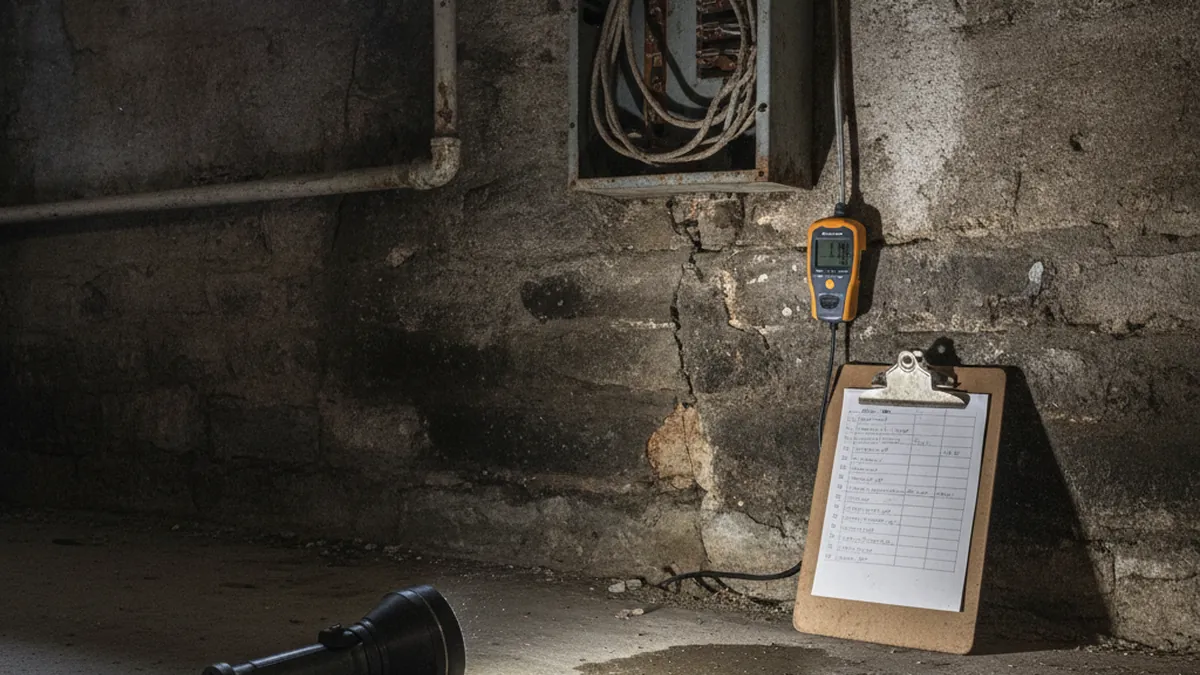
On a residential plex, zoning compliance is rarely an issue: the "housing" use is almost always permitted. On a mixed-use building, everything changes. The commercial use must be expressly authorized by the municipality's zoning by-law — and on the North Shore, use grids vary from one town to the next, even from one artery to another.
Permitted use, non-conforming use, acquired rights
Three situations are possible for your commercial unit:
- Conforming use: the business is expressly permitted by the zoning grid. This is the ideal situation for selling.
- Non-conforming use protected by acquired rights: the use no longer conforms to current zoning, but was legal when established and has continued without interruption. It can generally continue, but municipal rules govern its maintenance — and a prolonged interruption of the use can extinguish those acquired rights.
- Non-conforming use without acquired rights: the worst scenario. The use is illegal and the buyer inherits the problem. This can sink the sale or lead to a steep discount.
The takeaway: a serious buyer will confirm the use status with the municipality before buying. Better to know your situation in advance than to discover it mid-negotiation.
What the buyer will ask the city
- The zoning certificate or a use-compliance letter;
- The grid of permitted uses for the zone;
- The possible existence of acquired rights and their conditions of maintenance;
- Compliance of signage, parking, and access with municipal regulations.
Assembling these items before going to market shortens due diligence and avoids the nasty surprises that scare off an already limited buyer pool.
The zoning grey area is costly
A commercial use tolerated for years is not necessarily compliant. Have the status validated with your municipality before putting your mixed-use building up for sale: a non-compliance revealed during the buyer's diligence weakens your negotiating position and can collapse the transaction.
Seven common mistakes made by mixed-use sellers
The costliest mistakes when selling a mixed-use building: treating the building like a plex, ignoring GST/QST allocation, going to market with a vacant unit or an expiring lease, neglecting zoning compliance, forgetting depreciation recapture, presenting fuzzy financial statements, and overestimating the buyer pool. Each is prevented by preparation.

After seeing many income property files on the North Shore, one observation recurs: the same mistakes repeat among mixed-use sellers. Here they are, with how to avoid them.
- Treating mixed-use like a plex. Setting price and timeline expectations as if it were a residential triplex ignores the commercial portion, the taxation, and the narrower buyer pool. The result: a downward surprise.
- Ignoring GST/QST allocation. Not planning the residential/commercial split delays closing and exposes you to reassessment. Establish it in advance and state it in the offer.
- Going to market with a vacant unit. A vacant commercial unit drops the capitalized value far more than an empty dwelling. If possible, secure a lease before selling.
- Letting the commercial lease expire. A lease nearing its end becomes a vacancy risk for the buyer. A renewal negotiated before the sale can add value.
- Neglecting zoning compliance. A non-compliance discovered during diligence weakens your position. Validate the use status with the municipality.
- Forgetting depreciation recapture. A seller who depreciated heavily may see their net cheque reduced by CCA recapture. Plan the tax before signing.
- Presenting fuzzy financial statements. Without a clear income and expense history, the buyer cannot establish net operating income — and discounts out of caution. A clean file supports the price.
The golden rule for mixed-use sellers
- Document before going to market: leases, income, allocation, zoning
- Know your sale taxation (gain, CCA, GST/QST) in advance
- Target the right buyer: seasoned investor, not a first-time residential buyer
- Have the structure validated by a notary and a tax advisor
Going to market: commercial broker, residential broker, or direct sale?
Three routes are open to the mixed-use seller: a commercial broker (investor network, higher commission), a residential broker (mass-market visibility, but less equipped for commercial), or a direct sale to a specialized buyer (no commission, adapted diligence). The right choice depends on the complexity of your leases, your timeline, and your tolerance for time on market.

Once your file is ready, you still have to choose how to sell. For a mixed-use building, the go-to-market channel matters more than for an ordinary plex, precisely because the buyer pool is limited and the diligence more technical.
| Sale route | Advantages | Limits |
|---|---|---|
| Commercial broker | Investor network, used to commercial leases and mixed-use taxation | Commission, time on market, mandate exclusivity |
| Residential broker | Broad public visibility | Less equipped for commercial; may misposition the building |
| Direct sale (specialized buyer) | No commission, fast offer, diligence adapted to mixed-use, confidentiality | A single buyer; compare the net price offered |
General benchmarks; always compare the net price (after commission and fees) across options. A real estate broker is overseen by the OACIQ.
How to decide
- Complex commercial leases or an atypical building? A commercial broker or a specialized buyer will understand the value better than the mass residential market.
- Tight timeline or need for discretion? A direct sale to a buyer who purchases income properties on the North Shore avoids time on market and commission.
- Want to test the open market? A brokerage mandate broadens visibility, at the cost of a commission and a potentially longer timeline for mixed-use.
Whatever the route, one principle holds: compare the net price you keep in your pocket, not just the listed price. A specialized direct buyer like ImmoMulti can submit an offer with no commission, with diligence designed for the particularities of mixed-use — dwellings, commercial unit, leases, and taxation included.
The offer to purchase for a mixed-use building: clauses to watch
The offer to purchase for a mixed-use building carries clauses absent from a pure plex sale: price allocation for GST/QST, conditions tied to reviewing the commercial leases, verification of zoning and use compliance, and sometimes a price-adjustment clause based on the unit's occupancy. Each protects one party — know what you are signing.

When a buyer moves to an offer, everything plays out in the offer to purchase. For a residential plex, the form is standard. For a mixed-use building, several specific clauses frame the commercial portion and the taxation — and a savvy seller anticipates them rather than enduring them.
The clauses specific to mixed-use
- Price allocation: the offer should specify the split between residential (exempt) and commercial (taxable at 14.975%), as well as the GST/QST treatment and the possible self-assessment by the registered buyer.
- Lease-review condition: the buyer often reserves a period to review the commercial leases (term, assignment, indexation, land registry publication). A ready file shortens this period.
- Zoning and use verification: a condition tied to municipal confirmation of the commercial use's compliance is common. A non-compliance can let the buyer walk away.
- Occupancy-based adjustment clause: if the commercial unit is vacant or its lease uncertain, the buyer may request a price adjustment or an income guarantee.
- Representations and warranties: the seller attests to the accuracy of income, leases, and the absence of litigation — hence the importance of a reliable file.
| Clause | What it protects | Seller's reflex |
|---|---|---|
| GST/QST allocation | Both parties' tax safety | Set it in advance with a tax advisor |
| Commercial lease review | The buyer, against surprises | Provide a complete lease file |
| Zoning compliance | The buyer, against illegal use | Obtain municipal confirmation first |
| Occupancy-based adjustment | The buyer, against commercial vacancy | Secure a lease before listing |
General benchmarks. The offer to purchase is a binding contract; have it reviewed by a notary or legal professional before signing.
The common thread: the more complete your file and the more your leases are in order, the fewer grounds the buyer has to insert unfavourable conditions or negotiate down. Preparation, once again, is your best price lever on the North Shore.
How do you prepare the sale of your mixed-use building on the North Shore?

The best defence against complexity is preparation. Before bringing your mixed-use building to market, assemble a complete file — it speeds up due diligence and reassures an already limited buyer pool.
Your mixed-use sale file
- All leases (commercial and residential) with remaining terms and renewal options
- Income and expense history to establish net operating income
- Price allocation between residential (exempt) and commercial (taxable) portions
- Verification of zoning and commercial use compliance
- Status of land registry entries (published commercial leases)
A practical pre-listing sequence
Preparation is not a single task but a sequence. Tackling it in order avoids backtracking once a buyer is at the table and their diligence clock is running. A workable order for a mixed-use building on the North Shore looks like this:
- Assemble the leases first. Commercial and residential, with remaining terms, renewal options, and land-registry status. This single step drives valuation, financing, and the buyer's confidence.
- Rebuild a clean two-year income and expense history. Separate residential and commercial income so a buyer can capitalize each use. Fuzzy numbers invite a cautious discount.
- Confirm zoning and use compliance with the municipality — in writing — before a buyer does it for you and uses any grey area as leverage.
- Have the price allocation drafted by a tax advisor, so the GST/QST treatment is settled before the offer, not improvised at the notary.
- Model your sale taxation (capital gain plus CCA recapture) so the net cheque holds no surprises.
Only once these five pieces are in hand does it make sense to set an asking price and choose a sale channel. A seller who inverts the order — pricing first, documenting later — often ends up renegotiating downward when the buyer's diligence surfaces a gap. On a mixed-use building, where the buyer pool is already narrow, every avoidable doubt costs money.
On the North Shore, a well-located mixed-use building on a busy artery remains sought after — but it is the organized seller who gets the best price and the shortest timeline. If you prefer to avoid the open market and its time on sale, a specialized direct buyer can submit an offer adapted to the particularities of mixed-use, with no commission.
To go further, see our guide to multiplex yield calculation, and our analysis of the North Shore real estate market in 2026. And if you are considering selling, request a direct offer.
Informational content only. Does not constitute legal or tax advice. Tax rules and rates can change; consult a notary and a tax advisor for advice specific to your building and transaction.


