
ImmoMulti — a direct buyer of multiplex income properties on the North Shore — increasingly sees plex owners tempted to convert a unit into a short-term tourist rental (Airbnb-style). It is legal, but tightly regulated: under the new provisions of Québec's Act respecting tourist accommodation, any owner renting for 31 days or less for remuneration must hold a CITQ registration number, display it in every listing, and respect municipal zoning. Non-compliance exposes a natural person to fines of $2,500 to $50,000. This guide is for the owner who wants to comply — not the tenant who breaks the rules.
Do you need a CITQ registration number to rent your plex on Airbnb in Québec?
Yes. Any short-term rental offer of 31 days or less for remuneration requires a valid CITQ registration number and certificate, regardless of the medium — and regardless of whether it is a principal residence, secondary residence, room or a unit of your plex.
The base rule is simple and broad. According to the Corporation de l'industrie touristique du Québec (CITQ), as soon as you offer accommodation for periods of 31 consecutive days or less for remuneration, you operate a tourist accommodation establishment under the law — and you must hold a valid registration number and certificate.
This obligation makes no distinction by property type: principal residence, secondary residence, cottage, condo, room or a unit of a plex are all covered. For the owner of a duplex or triplex on the North Shore who wants to rent a unit to tourists rather than to a year-round tenant, CITQ registration is therefore the very first step — before publishing any listing.
The certificate issued contains the registration number, the establishment's address and category, the number of units offered, and the issuance and expiry dates. This is the document you will have to transmit to transactional platforms.
Source: CITQ — Registration certificate and CITQ — Registration of cottages, condos and houses for rent.
Where and how must you display the registration number in your listings?
The registration number (and the establishment name where applicable) must be displayed distinctly in all advertising, on all social media and all websites used in connection with the operation — notably in your listings on Airbnb, VRBO or Booking.com. The digital certificate (PDF) must be transmitted to transactional platforms.

Obtaining the number is not enough: you must also display it correctly. The CITQ specifies that you must distinctly display the registration number, and the establishment name where applicable, on all advertising promoting your establishment, on all social media, and on all websites — transactional or not — used in connection with the operation.
In practice, for a plex owner, the number must appear:
- in the listing itself on the platform (Airbnb, VRBO, Booking.com, etc.);
- on any social media post promoting the unit;
- on a personal website or direct booking page, where applicable.
In addition, it is mandatory to transmit the digital registration certificate (PDF) to the transactional platforms on which you wish to display your offer. Without this transmission, the platform is in principle not permitted to publish the listing.
Compliant display checklist for your short-term rental
- CITQ registration number visible in the text of every listing
- Digital certificate (PDF) transmitted to each transactional platform
- Number displayed on social media and any direct booking site
- Certificate valid (not expired, suspended or cancelled)
Source: CITQ — Registration number display guide.
Can municipal zoning prohibit short-term rental of your plex?
Yes. No CITQ registration is possible without the authorization of the municipality concerned. The city determines, through its zoning by-laws, which uses and which types of tourist accommodation establishments it authorizes, limits or regulates on its territory.
This is probably the most underestimated trap for plex owners. Even if you are ready to pay for registration, the CITQ is clear: no registration is possible without the authorization of the municipality concerned. The municipality determines, through its zoning by-laws, which uses and which types of tourist accommodation it authorizes, limits or regulates.
On the North Shore of Montréal — Terrebonne, Mascouche, Blainville, Boisbriand, Saint-Jérôme, Saint-Eustache, Deux-Montagnes — approaches vary from city to city and even neighbourhood to neighbourhood. A residential zone may prohibit short-term rental outright, while a commercial or mixed-use zone might allow it. Before any project, the reflex is to verify your building's zoning with your municipal planning department.
No municipal authorization = no registration possible
If your plex's zoning prohibits tourist accommodation use, the CITQ cannot issue you a number — and any rental would automatically place you in a situation of unregistered operation, subject to a fine. Compliance therefore begins at city hall, not on the platform.
Source: CITQ — Frequently asked questions (role of municipal zoning).
What fines does a non-compliant owner risk?
According to Québec.ca, operating without registration exposes a natural person to a fine of $2,500 to $25,000; posting an offer without a registration number, to $5,000 to $50,000; listing a false, inaccurate or expired number, to $2,500 to $25,000. For a corporation, the amounts are higher.

The penalties are substantial and well documented. According to the Government of Québec, the main fines for a natural person are as follows:
| Infraction | Fine (natural person) |
|---|---|
| Operating without registration | $2,500 to $25,000 |
| Operating despite a refused, suspended or cancelled registration | $5,000 to $50,000 |
| Posting an offer without a registration number | $5,000 to $50,000 |
| Listing a false, inaccurate or expired number | $2,500 to $25,000 |
For a legal person (corporation), these amounts are generally doubled: for example, posting an offer without a registration number exposes a corporation to a fine of $10,000 to $100,000. Enforcement of the law and the issuance of notices fall to Revenu Québec, not the CITQ, which is limited to registration.
These are not theoretical threats. According to Québec.ca, between April 1, 2023 and March 31, 2024, 1,658 infraction notices were issued, 1,184 convictions handed down and $4,997,321 in fines imposed under the Act respecting tourist accommodation.
Source: Québec.ca — results of the application of the Act respecting tourist accommodation.
What obligations do platforms like Airbnb have?
According to Québec.ca, transactional digital platforms cannot post an offer that does not contain the establishment's registration number, and must verify the accuracy of the numbers in their offers. Fines can reach $100,000 for platforms in breach.
The law does not place all responsibility on the owner alone. Transactional digital platforms — Airbnb chief among them — also have strict obligations. According to the Government of Québec, a platform cannot post an offer that does not contain the registration number of the establishment, and it must verify the accuracy of the numbers in its listings — notably that the number actually corresponds to the right address.
In case of breach, fines can reach $100,000 for the platform. This verification is not perfect, however: in 2026, La Presse reported cases of compliant registration numbers being usurped, where listings displayed a valid number that did not match their real address — a sign that fraud exists and that controls are tightening.
"Transactional digital platforms must verify the accuracy of the registration numbers in their accommodation offers and cannot post an offer that does not contain one."
— Summary of the obligations of the Act respecting tourist accommodation, Government of QuébecFor the compliant owner, this is good news: a valid, well-displayed number immediately sets you apart from the illegal listings that platforms now have an obligation to remove.
Source: La Presse — "A compliant number usurped in 13 listings" (June 2, 2026).
Owner who complies vs tenant who cheats: two situations not to confuse
This article addresses the owner who wants to operate the short-term rental and comply (CITQ, zoning, Revenu Québec). That is different from a tenant who sublets your unit on Airbnb without your consent — there, it is the tenant in breach of the lease, and you are not the operator.
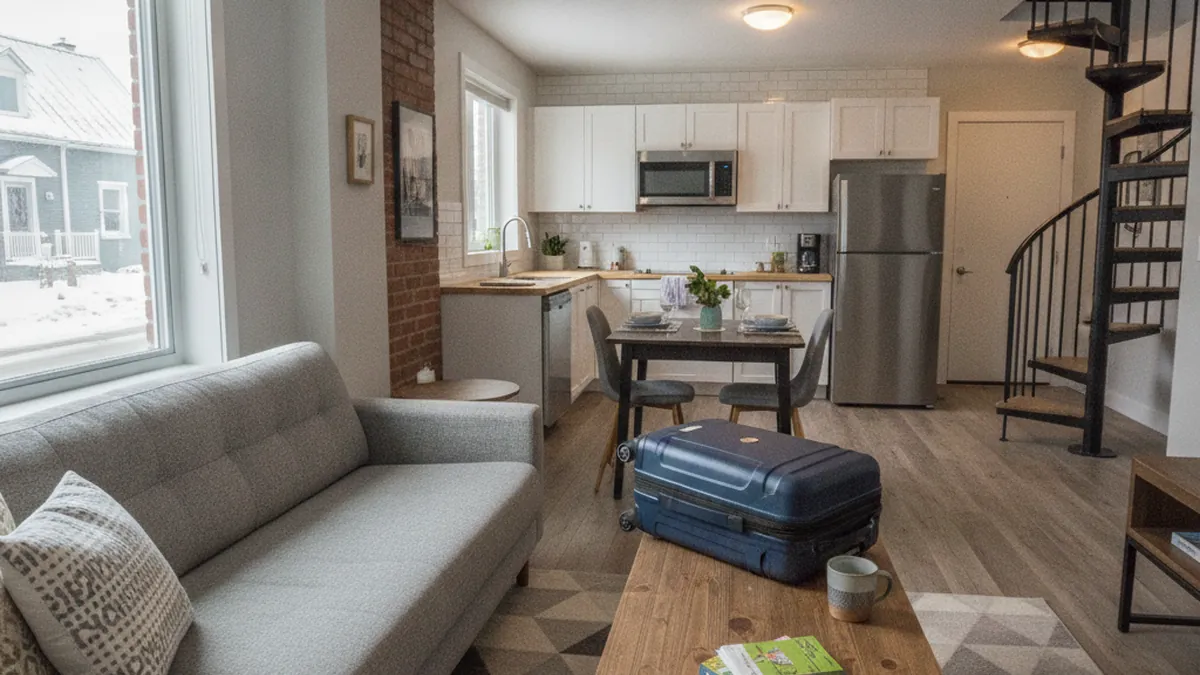
It is essential not to mix two very different legal realities for a multiplex owner:
- The owner who wants to do short-term rental (the subject of this article): you decide to take a unit out of the residential rental market to offer it to tourists. You must comply yourself — CITQ registration, municipal zoning, declarations to Revenu Québec.
- The tenant who sublets on Airbnb without permission: your tenant, without your consent, puts your unit up as a tourist rental. Here, you are not the operator: your tenant is committing a breach of the lease and potentially of the law. As the wronged owner, you have recourse.
This second case — illegal Airbnb subletting by a tenant — is covered in a separate article: Illegal Airbnb in your plex: the owner's recourse. If you are instead the owner-operator, the present guide covers your compliance obligations.
And if you would rather sell than manage compliance?
Short-term rental of a plex unit can generate attractive income, but it adds a layer of management, regulatory risk and taxation. For many North Shore owners, the question becomes: is it better to operate, or to sell the income property as-is? A prudent buyer will verify CITQ compliance and zoning anyway before buying a plex where a unit is in short-term rental.
ImmoMulti: direct buyer of multiplex properties on the North Shore
If managing a short-term rental seems too heavy, we can make you a direct offer for your plex — no broker, no commission, fully confidential. Get a proposal within 48 hours.
Before any decision on the use of your building, have your situation reviewed by a notary and, for the tax side, by an accountant or tax specialist: changing a unit's use can affect GST/QST and the capital gains calculation on sale. Our multiplex yield calculation guide also helps you compare the return of a classic residential rental to that of a tourist operation.
How do you obtain your CITQ registration number, step by step?
The process is done online on the CITQ portal. It requires first validating municipal zoning, choosing the correct establishment category, providing the building's documents and paying the annual fees — $54 for a principal residence establishment and $156 for a general tourist accommodation establishment in 2026.

Many plex owners imagine that "doing Airbnb" comes down to creating a listing and posting photos. The administrative reality is more demanding. Before even thinking about the first booking, you must build a complete file with the CITQ. Here is the logical sequence a multiplex owner should follow.
Step 1 — Validate zoning first
As we saw, no registration is possible without the municipality's authorization. That is the first box to tick: call or write to your city's planning department to confirm, in writing if possible, that "tourist accommodation" use is permitted at the address and in the zone of your building. This confirmation spares you from paying fees for an application that will be refused.
Step 2 — Choose the right establishment category
The CITQ distinguishes several categories, and both the fee and the obligations depend on it. For a plex unit rented furnished to tourists, where it is not your principal residence, you will generally fall under the "general tourist accommodation establishment" category. If you instead rent the unit you live in (principal residence), the category and fee differ.
| Establishment category | 2026 annual fee | Typical case for a plex owner |
|---|---|---|
| Principal residence | $54 | You rent the unit you live in, occasionally |
| Youth tourist accommodation | $131 | Rarely applicable to a residential plex |
| General tourist accommodation | $156 | A plex unit dedicated to tourists, furnished |
Source: CITQ — Registration fees (rates in effect January 1, 2026) and CITQ — Establishment categories.
Step 3 — Gather the building's documents
The application requires precise information on the property: address, number of units offered, category, and attestation that you hold the rights to operate (owner, or owner's authorization). For a principal residence establishment, a separate municipal attestation is required, with a non-refundable processing fee of $75 at filing and, upon the municipality's acceptance, an annual attestation fee of $95. Also prepare identification and, where applicable, your corporation's documents if the building is held by a legal person.
Step 4 — Pay the fees and obtain the certificate
Once the file is accepted, the CITQ issues a certificate bearing your registration number, the address, the category and the number of units. This is the number you must display in every listing, and this certificate (PDF) that you transmit to transactional platforms. Registration renews annually, at the same rate; an expired certificate places you back in a situation of unregistered operation, subject to a fine.
The order to follow for a file without bad surprises
- Confirm municipal zoning in writing before paying anything
- Identify the exact category (general vs principal residence)
- Gather title deeds, ID and corporate documents if applicable
- Pay the annual fees, obtain the certificate, then display the number
- Note the expiry date and plan the annual renewal
Source: CITQ — Opening a file and issuing the registration.
Short-term rental and taxation: lodging tax, GST and QST
Short-term rental triggers three distinct tax regimes: the 3.5% lodging tax on the price of the night, collected by Revenu Québec, plus GST and QST as soon as your taxable supplies exceed $30,000 over twelve months. Below that, you are a small supplier and need not collect GST/QST — but the lodging tax is still due.

Switching from a year-round tenant to tourists does not just change your logistics: it transforms the tax treatment of your income. A classic residential rent is exempt from GST and QST. As soon as the rental becomes short-term (31 days or less), it becomes a taxable supply, with consequences many plex owners discover too late.
The 3.5% lodging tax
According to Revenu Québec, the lodging tax is 3.5% of the price of each night in a tourism region where it applies, each time a unit is rented for more than 6 hours in a 24-hour period. Concretely, for a night billed at $120, the tax is $4.20. The value of parking, breakfast or other services provided with the accommodation must be excluded from the amount on which the 3.5% is calculated.
When you rent through a digital platform such as Airbnb, the platform often collects and remits the lodging tax on your behalf, under an agreement with the government. If you rent directly (personal site, direct booking), the responsibility to collect and remit the lodging tax to Revenu Québec falls to you, on a quarterly basis.
GST and QST: the $30,000 threshold
Short-term rental counts among your taxable supplies. According to Revenu Québec, you must register for the GST and QST files as soon as the total of these supplies exceeds $30,000 in a given calendar quarter or over the four preceding quarters. Below that threshold, you are considered a small supplier: you are not required to collect GST/QST. Note, however, that this threshold is assessed across all your commercial activities, not just this one unit.
| Type of rental | GST/QST | Lodging tax |
|---|---|---|
| Long-term residential lease | Exempt | Not applicable |
| Tourist, under $30,000/year | Not collected (small supplier) | 3.5% of the night |
| Tourist, over $30,000/year | Collected and remitted (registration required) | 3.5% of the night |
The GST/QST trap on resale
Operating a unit as a short-term rental can, in some cases, make the future sale of that unit taxable for GST/QST purposes, whereas the sale of a classic residential income property is generally exempt. This is one of the most costly and least known effects of a change in use. Have your situation reviewed by a tax specialist before converting a unit of your plex.
Sources: Revenu Québec — Registering for the GST and QST files (short-term accommodation) and Revenu Québec — Billing the 3.5% lodging tax.
The change in use: a "deemed sale" that can be costly
Converting a unit to short-term rental can constitute a change in use for tax purposes. According to Revenu Québec, this can trigger a deemed disposition (a presumed sale) of the affected portion, potentially generating a taxable capital gain — even if you sell nothing. This is the most serious blind spot for a plex owner.

From an accounting and tax standpoint, a residential unit rented year-round and a unit offered to tourists are not treated the same way. Moving from one to the other is what is called a change in use. According to Revenu Québec, when you begin renting all or part of your property in a way that changes its nature, a deemed disposition occurs: the tax authority considers that you "sold" the affected portion at its fair market value, then "reacquired" it, which can generate a capital gain (or loss) to report.
Why it matters even without an actual sale
The key word is "deemed": you have not collected a cent, yet the tax can nonetheless become payable on the appreciation accumulated up to the date of the change in use. For a plex bought fifteen years ago and strongly appreciated, the latent gain on the converted unit can be considerable. An owner who converts without knowing sometimes discovers the bill much later, during an audit or the final sale.
Three consequences to anticipate
- Capital gain at the time of change: the portion of the plex that changes use may be deemed disposed of, with a taxable gain calculated on its fair market value.
- Recapture of depreciation: if you had claimed capital cost allowance on that portion, part of it may be "recaptured" and added to your income.
- Modified GST/QST status: as seen above, the taxable nature of the unit can change, with a possible effect on resale.
The reflex to have before converting
Before taking a unit of your plex out of the residential market to offer it to tourists, ask an accountant or tax specialist to quantify the impact of the change in use: latent capital gain, depreciation recapture, tax status. The extra tourist income must offset not only the increased management, but also this one-time tax cost.
To estimate the order of magnitude of a capital gain on a unit of your building, our capital gains calculator gives a first approximation — to be validated afterwards with a professional, since each situation (personal ownership or through a corporation, depreciation history, principal-residence portion) changes the result.
Sources: Revenu Québec — Renting all or part of your property and Revenu Québec — Short-term accommodation.
Principal residence or separate establishment: choosing the right category
The CITQ distinguishes the "principal residence establishment" — the residence you live in and rent occasionally through a single reservation at a time — from the "general tourist accommodation establishment", which covers furnished units rented to tourists where it is not your principal residence. A dedicated unit in your plex almost always falls into this second category.

The category is not just a fee formality: it determines your obligations, the type of bookings allowed and sometimes the applicable municipal regime. According to the CITQ, a principal residence establishment is one where accommodation is offered, through a single reservation at a time, in the operator's principal residence, to one person or a single group of related people, with no meals served on-site. A residence is "principal" if you live there habitually and it is the address you provide to most ministries and agencies.
The typical plex owner case
If you live in a unit of your duplex and rent it occasionally when you are away, you might fall under principal residence. But if you dedicate a separate unit of the plex to short-term rental — a unit you do not live in — you operate a general tourist accommodation establishment, with $156 in fees in 2026 and, often, stricter municipal rules. This is the most common situation for a multiplex owner seeking to maximize a unit's yield.
| Criterion | Principal residence | General accommodation |
|---|---|---|
| You live there | Yes, habitually | No, dedicated unit |
| Simultaneous bookings | One at a time | Depends on the establishment |
| 2026 annual fee | $54 | $156 |
| Specific municipal attestation | Yes ($75 + $95) | Depends on the municipality |
Choosing the wrong category is not trivial: it can invalidate your registration and expose you to the penalty for a "false or inaccurate" number. When in doubt, describe your situation precisely to the CITQ at the time of application.
Source: CITQ — Categories of registered establishments.
Insurance, safety and standards: what short-term rental requires in addition
A standard home or income-property policy generally does not cover the commercial use that short-term rental represents. The owner must review coverage, inform the insurer and comply with applicable safety standards. A loss occurring during an undeclared rental can be denied.
Compliance does not stop at the registration number. By turning a unit of your plex into tourist accommodation, you introduce a use that your insurance and safety standards treat differently from a classic residential lease.
Review your insurance coverage
Most home or income-property insurance policies exclude commercial operation. Renting to tourists is one. Before the first booking:
- explicitly declare the "short-term rental" use to your insurer or broker;
- verify liability coverage in case an occupant is injured;
- confirm protection of goods (furniture, damage caused by travellers);
- ask whether a rider or a separate commercial policy is needed.
A loss — fire, water damage, theft — occurring during a tourist rental your insurer was unaware of can be denied, leaving you alone with the bill. For a plex, where a loss can affect several units and your other tenants, the stakes are major.
Occupant safety and good neighbourliness
Beyond insurance, a well-run tourist unit implies functioning smoke and carbon-monoxide detectors, clear exits and posted instructions. The coming and going of travellers in a plex occupied by other tenants also raises noise and good-neighbour questions: repeated complaints can feed a report to the municipality or Revenu Québec, with the risk of penalty that implies.
"Declaring the tourist use to your insurer is not optional: it is the condition for coverage to apply the day a traveller causes damage or is injured in the unit."
— Compliance reminder, ImmoMulti TeamNorth Shore: why zoning varies from city — and street — to street
On the North Shore of Montréal, each municipality sets its own use rules. The CITQ issues no number without municipal authorization: it is therefore your plex's zoning, not the owner's wish, that decides whether short-term rental is possible. Two neighbouring buildings can be treated differently depending on their zone.
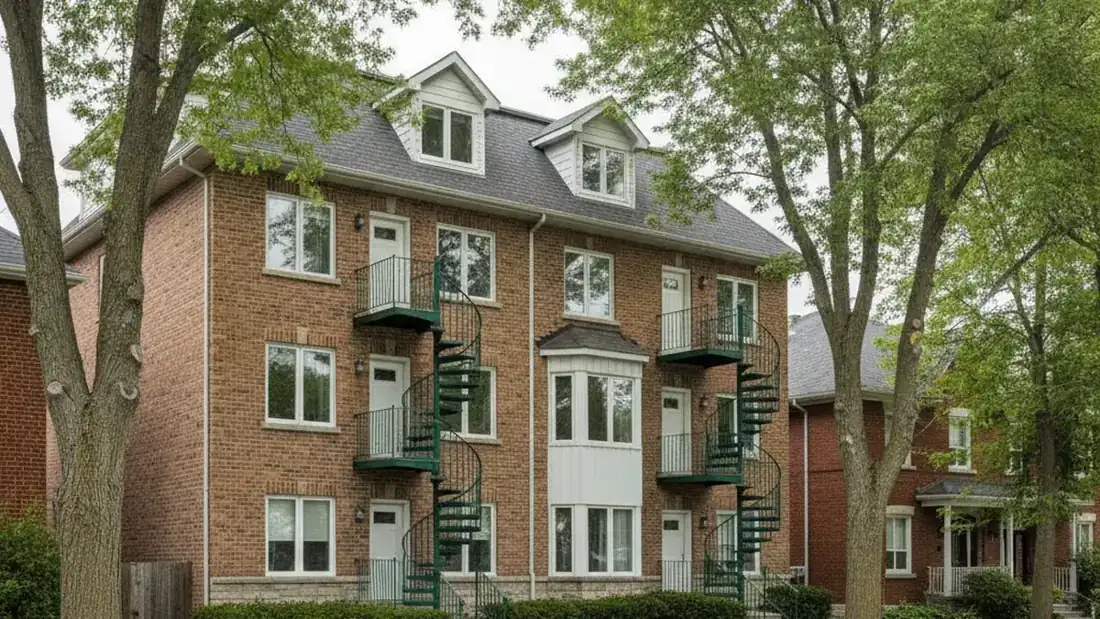
This is the point that traps the most North Shore plex owners. The provincial rule (CITQ, Revenu Québec) is uniform, but the use authorization is hyper-local. According to the CITQ, it is the municipality that determines, through its zoning by-laws, which uses and which types of tourist accommodation establishments it authorizes, limits or regulates — and no registration is possible without that authorization.
What this means in practice
Across a territory like Terrebonne, Mascouche, Blainville, Boisbriand, Saint-Eustache, Sainte-Thérèse, Rosemère, Deux-Montagnes or Saint-Jérôme, approaches differ and they evolve. A single city may:
- allow short-term rental only in certain commercial or mixed-use zones;
- prohibit it in the residential zones where most plexes are located;
- permit it only for a principal residence, not a dedicated unit;
- require a separate municipal permit, in addition to CITQ registration.
The fact that your neighbour already operates a tourist unit proves nothing: their building may be in a different zone, be a tolerated prior case, or simply be in breach. The only reliable source is your city's planning department, consulted for your building's precise address.
Never rely on "what the neighbour does"
Two plexes on the same street can fall under different zones. Before investing in furniture, photos or a listing, obtain written confirmation from planning for your assessment roll number. It is the only proof that will hold up if an inspector or Revenu Québec shows up.
Short-term rental or residential lease: the numbers compared
Short-term rental often shows an impressive gross revenue per night, but after taxes, platform fees, cleaning, compliance and real occupancy, the gap with a good residential lease narrows — and the regulatory risk rises. Here is an illustrative example for a North Shore plex unit.

The figures below are a teaching example, not a yield guarantee: they illustrate the mechanics of the calculation. Each building, sector and occupancy rate changes the result. Take a plex unit that would rent for $1,400 a month on a classic lease, i.e. $16,800 a year, and compare it to a hypothetical tourist operation at $130 a night.
| Item (illustrative example) | Residential lease | Short-term rental |
|---|---|---|
| Gross annual revenue | $16,800 ($1,400/month) | ~$28,500 ($130 × ~60% occupancy) |
| Platform fees | $0 | To deduct (commission) |
| Cleaning and laundry | $0 | Recurring, every stay |
| Furniture, linens, equipment | $0 | Initial investment + wear |
| Insurance | Standard | Higher (commercial use) |
| CITQ registration | $0 | $156/year + process |
| Lodging tax | Not applicable | 3.5% of each night |
| Management / time | Low | High (check-in, communication) |
| Regulatory risk | Low | Fines of $2,500 to $50,000 |
On paper, the gross tourist revenue (~$28,500) dwarfs the residential rent ($16,800). But once you subtract the platform commission, cleaning after every stay, furniture depreciation, higher insurance, the lodging tax and your time, the net gap often shrinks far more than expected — especially off-season, when occupancy drops. On top of that comes a regulatory risk absent from the classic lease: a single fine can wipe out several months of surplus.
The right question is not "how much per night", but "how much net, after risk"
A well-managed residential lease offers predictable income, simple taxation and low risk. Short-term rental can pay more, but only if occupancy is strong, management tight and compliance flawless. Our multiplex yield calculation guide helps you compare both scenarios on your own building.
Common mistakes plex owners make with short-term rental
Most penalties and bad surprises come from a few recurring mistakes: publishing before being registered, forgetting to display the number, ignoring zoning, neglecting taxation and letting the certificate expire. Each is avoidable with a bit of method.

Having seen the full mechanics — registration, display, zoning, taxes, change in use — it is useful to group the most common pitfalls. Here are the ones that come up most often among multiplex owners who get started.
1. Publishing the listing before having the number
This is the classic mistake: creating the listing "to test", with no registration number displayed. Yet posting an offer without a number exposes a natural person to a fine of $5,000 to $50,000. The correct order is immutable: zoning, then registration, then listing.
2. Displaying the number in only one place
The number must appear in every promotion channel: the listing on the platform, social media, a direct booking site. An owner who lists it on Airbnb but forgets it on their Facebook page remains in default.
3. Assuming zoning allows it
Many assume that "since it's my building, I do what I want." False: without municipal authorization, no registration is possible, and operation automatically becomes illegal.
4. Ignoring the tax side of the change in use
Conversion can trigger a deemed sale, a capital gain and a change in GST/QST status. Overlooking it means risking an unexpected tax bill at resale.
5. Letting the certificate expire
Registration renews every year. An expired certificate places you back in a situation of unregistered operation, subject to a fine, often without the owner realizing it.
Anti-mistake checklist for the plex owner
- Municipal zoning confirmed in writing for the exact address
- CITQ number obtained before any listing is published
- Number displayed on all channels, certificate transmitted to platforms
- Insurer informed of the tourist use
- Taxation (lodging tax, GST/QST, change in use) validated by a professional
- Annual renewal date noted in the calendar
Selling a plex with a unit in short-term rental
A unit in short-term rental changes a plex's profile at sale: a different income profile, regulatory risk, tax questions and heightened buyer due diligence. Some sellers choose to sell the building as-is rather than take on ongoing compliance — a decision worth quantifying.

For many North Shore owners, the real question is not "how to operate", but "is it worth it". Short-term rental adds management, risk and tax complexity. Conversely, selling the plex as-is frees up time and crystallizes value. Here is what a buyer will look at if a unit is already in tourist operation.
What the buyer will verify
- CITQ compliance: valid number, non-expired certificate, correct category.
- Zoning: is tourist use actually authorized at this address?
- Real revenue: the occupancy rate and net income, not just the displayed gross.
- Tax status: GST/QST and capital-gain consequences of the change in use.
- Remaining leases: the other units under regulated lease, with their rents.
A clean file — registration in order, zoning confirmed, transparent numbers — reassures the buyer and eases the transaction. A murky file, conversely, invites a discount or scares buyers off. This is why the compliance described in this article is not just a constraint: it is also an asset at resale.
ImmoMulti: a direct offer, no tourist management to take on
If the ongoing compliance of a short-term rental weighs on you, we buy your plex directly, with no broker or commission, and value the building on its real income. Get a proposal within 48 hours.
Before deciding between operating and selling, compare the real net income of short-term rental — after taxes, management and risk — to what a net sale would represent today. For the latter scenario, our capital gains calculator and our multiplex yield guide give a first reading, to be validated with a notary and a tax specialist.
Informational content only. Does not constitute legal or tax advice. Registration thresholds, fines and obligations are subject to change by the Government of Québec, the CITQ and Revenu Québec. Consult a notary, accountant or your municipality for advice specific to your property.


