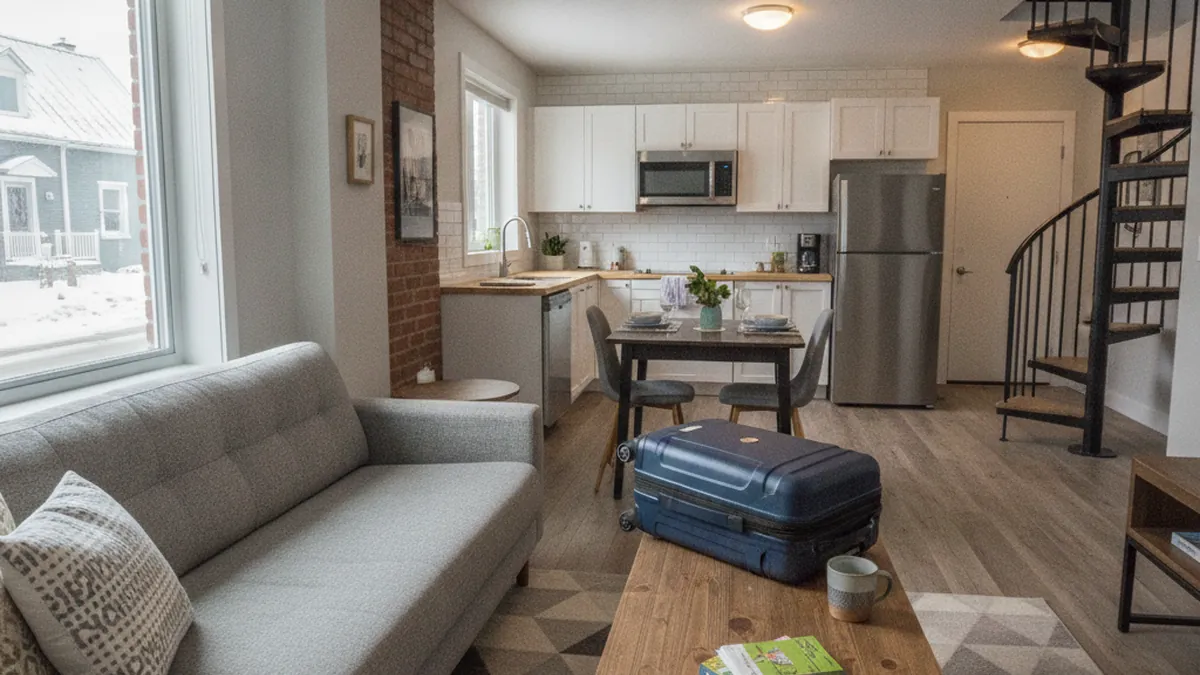
Your tenant is listing your unit on Airbnb without your consent — do you have real remedies, and what are they? The short answer: yes — but they require solid evidence and a precise process. According to CORPIQ, approximately 13,000 member landlords are dealing with tenants who sublet without their knowledge on Airbnb-type platforms. The Civil Code of Quebec requires a landlord's authorization for any sublease — and without a response within 15 days, silence equals consent. That deadline regularly catches North Shore plex owners off guard. ImmoMulti, a direct buyer of income properties on the North Shore, observes that this type of conflict wears down even the most organized landlords. This guide lays out your concrete remedies: from building an evidence file to the Rental Housing Tribunal (TAL), through Revenu Québec — and explains why, for some, a direct sale remains the fastest way out.
How many Quebec landlords are affected by illegal Airbnb subletting?
Illegal tourist subletting is not an isolated incident — it is a structural problem, amplified by the housing crisis. Tenants discover they can generate more income by renting nightly on Airbnb than by paying their monthly rent, and they do so without ever asking their landlord's permission.
The scale of the problem is documented. According to the Corporation des propriétaires immobiliers du Québec, approximately 13,000 of its members are confronted with tenants who sublet their unit without the landlord's knowledge, illegally, on Airbnb-type platforms. For a North Shore plex owner, the problem is not merely a matter of principle: illegal subletting typically means accelerated wear of the unit, complaints from other tenants in the building, insurance risks, and neighbourhood tensions.
Source: La Presse — "Illegal subletting affects thousands of landlords" (CORPIQ)
This dynamic is part of a broader trend. As documented by Le Devoir, some tenants are exploiting the scarcity of housing to turn their lease into a parallel income source — directly at the expense of the landlord and the local rental supply.
What does the Civil Code of Quebec say about the right to sublet a unit?

Before discussing remedies, it is important to understand the legal framework. In Quebec, a tenant does not have the right to sublet freely. The Civil Code of Quebec strictly governs subletting.
In practice, a tenant who wishes to sublet their unit must formally request the landlord's approval. The landlord then has 15 days to refuse, provided they cite serious grounds. If the landlord does not respond within that period, they are deemed to have consented — which is why responding quickly and in writing is essential.
Listing a unit on Airbnb without this authorization is therefore, by definition, illegal subletting. However, the fact that the subletting is illegal is not, on its own, sufficient to automatically terminate the lease. To obtain termination before the Rental Housing Tribunal (TAL), the landlord must prove serious harm and prejudice.
The 15-day deadline trap
If your tenant formally requests permission to sublet and you let 15 days pass without responding, your silence constitutes consent. Always respond in writing, with a date, and keep a copy. For a North Shore income property owner managing multiple leases, a simple scheduling oversight can undermine a future claim.
How to proceed step by step before the TAL for illegal subletting?

Faced with illegal Airbnb subletting in your plex, the recommended approach is progressive. Each step builds the evidence file required for the next.
| Step | Landlord Action | Purpose |
|---|---|---|
| 1. Document | Capture the Airbnb listing, photos, reviews, statements from neighbours and co-tenants in the plex | Build a solid, dated evidence file |
| 2. Send a formal notice | Send a written formal notice demanding that the subletting cease immediately | Formally warn the tenant and create a paper trail |
| 3. File with the TAL | Submit a lease termination application to the Rental Housing Tribunal | Have the competent authority rule on the matter |
| 4. Prove the harm | Demonstrate the serious harm and prejudice caused by the illegal subletting | Obtain termination and potential damages |
| 5. Report (optional) | Report the illegal tourist accommodation activity to Revenu Québec | Add a regulatory and tax lever |
The outcome hinges on step 4. The TAL will not terminate a lease on the basis of a technical illegality alone: it requires demonstration of serious prejudice. This is why a well-constructed evidence file — listings, photos matching your unit, statements from other occupants of the income property — makes all the difference.
What does the Roccabella case say: can a tenant really face $50,000 in damages?
Landlords are not without leverage. Quebec case law has established precedents with heavy consequences for offending tenants.
The most striking case involves the Roccabella towers in downtown Montreal. Tenants who had sublet their apartment to tourists via Airbnb were ordered to pay punitive damages of approximately $50,000. This decision sent a clear signal: illegal tourist subletting can prove very costly for those who engage in it.
"Illegal tourist subletting is not a consequence-free grey zone. When a landlord builds a solid case file, the bill for the offending tenant can reach tens of thousands of dollars."
— ImmoMulti Team, referencing the Roccabella decision from the Quebec Superior CourtFor a plex owner, this precedent is useful on two fronts: it supports a TAL application and it serves as a concrete deterrent argument to present to the tenant in a formal notice. That said, each case is assessed on its own evidence — a ruling of this magnitude is never guaranteed.
Source: Radio-Canada — Roccabella decision, Quebec Superior Court
Can illegal Airbnb subletting also be reported to Revenu Québec in addition to the TAL?

The TAL process addresses the relationship between you and your tenant. But illegal tourist subletting also has a regulatory and tax dimension — and that is where Revenu Québec comes in.
Since 2018, Revenu Québec has held inspection powers over tourist accommodation. Landlords can report the illegal activity of a tenant who is operating their unit as Airbnb-style accommodation without the required authorizations under the Tourist Accommodation Act. This report is complementary to your civil proceedings: while the TAL focuses on lease termination, the regulatory aspect of tourist accommodation falls under Revenu Québec's inspection mandate.
Two parallel remedies to pursue
- TAL: lease termination and damages, upon proof of serious prejudice
- Revenu Québec: report illegal tourist accommodation (inspection powers since 2018)
- Formal notice: written record that supports both proceedings
- Evidence file: listings, photos, statements from occupants of the income property
What does the 2023 Tourist Accommodation Act mean for your plex?

Beyond the lease and the Civil Code, illegal Airbnb subletting now runs up against a reinforced regulatory framework. In June 2023, Quebec's National Assembly passed the Act to combat illegal tourist accommodation, which came into force in stages. For a North Shore plex owner, understanding this law adds another string to your bow: it directly targets the tenant who turns your unit into clandestine tourist lodging.
The basic principle is simple. Any rental of a unit to tourists for 31 days or less constitutes tourist accommodation and requires a registration number issued by the Corporation de l'industrie touristique du Québec (CITQ), along with a notice of compliance with municipal regulations. In other words, a tenant who lists your unit on Airbnb by the night, without this number and without zoning authorization, is operating illegal tourist accommodation — whether or not they obtained your consent as landlord.
The CITQ registration number: the key to compliance
Since the law took effect, rental platforms are required to ensure that each published listing displays a valid registration number. A tenant without this number cannot legally rent short-term. For you, the landlord, this is a valuable clue: a listing with no registration number, or with an obviously misused one, is a strong signal of illegality that you can document and add to your evidence file.
| Offence | Offender | Fine |
|---|---|---|
| Operating illegal tourist accommodation | Individual (e.g., the tenant) | $2,500 to $25,000 |
| Operating illegal tourist accommodation | Any other case (e.g., a company) | $5,000 to $50,000 |
| Publishing an illegal offer or enabling an illegal contract | Rental platform | Up to $100,000 |
Source: Government of Quebec — Offences and fines for tourist accommodation
These amounts do not target the good-faith landlord who is unaware of their tenant's activity: they target whoever operates illegally. This is precisely the argument you, a plex owner, can turn against an offending tenant. A tenant facing a fine of $2,500 to $25,000 has a very concrete incentive to stop subletting the moment they receive a documented formal notice.
Why this regulatory framework works in your favour
- It creates an offence separate from the rental relationship: the tenant is at fault even toward the state.
- It makes tourist subletting financially risky for the tenant (steep fines).
- It gives Revenu Québec a clear inspection mandate, backed by additional resources since 2018.
- It provides an additional serious ground to refuse any tourist subletting request.
Be careful, however: this regulatory framework does not replace your civil remedy before the TAL. A Revenu Québec fine sanctions illegal operation, but it does not terminate the lease and does not compensate you directly. The two aspects — regulatory and civil — complement each other, but each follows its own logic and timeline.
Subletting or lease assignment: what exactly do articles 1870, 1871 and 1873 say?

Many landlords confuse subletting with lease assignment. Yet in the context of illegal Airbnb rentals, the distinction is crucial — and the articles of the Civil Code of Quebec are precise. Knowing them lets you act on the right footing.
Article 1870: the duty to notify and obtain consent
Article 1870 of the Civil Code of Quebec is the starting point. It states that a tenant may sublet all or part of the leased property or assign the lease, but is then required to notify the lessor of their intention, to indicate the name and address of the person to whom they intend to sublet, and to obtain the lessor's consent. A tenant listing your unit on Airbnb does none of this: they do not notify you, name no identifiable subtenant (the tourists change every night) and obtain no consent. The breach of article 1870 is therefore, in most cases, blatant.
Source: Légis Québec — Article 1870 of the Civil Code of Quebec
Article 1871: serious grounds and the 15-day deadline
Article 1871 sets out the mechanics of refusal. The lessor may not refuse consent without a serious reason. When refusing, they must inform the tenant, within 15 days of receiving the notice, of the grounds for refusal. Failing a response within that period, the lessor is deemed to have consented. This is the classic silence trap: if a tenant formally asks to sublet and you let 15 days slip by, the law considers that you said yes. Always respond in writing, dated, citing a serious ground — a planned tourist use is one.
Article 1873: costs and excess profit
Article 1873 governs the costs of subletting. It provides that the tenant is not required to pay any charge other than the reasonable expenses incurred by the lessor to consent to the sublease. Above all, the Code's logic is clear: subletting must not become a lucrative business at the landlord's expense. A tenant pocketing Airbnb revenue well above their rent strays from the spirit of the law, which strengthens your argument of an abusive use of the lease.
| Criterion | Subletting | Lease assignment |
|---|---|---|
| Does the original tenant stay bound? | Yes, they remain responsible to you | No, they are released from their obligations |
| Landlord's consent | Required, refusal on serious grounds (art. 1871) | Refusal possible even without grounds since Bill 31 |
| Effect of a refusal | The sublease does not take place | The lease ends on the proposed date |
| Typical Airbnb scenario | Disguised tourist subletting | Rarely invoked for Airbnb |
A word on Bill 31, passed on February 21, 2024. It substantially changed the rules of lease assignment: a landlord may now refuse an assignment even without serious grounds, but the lease then ends on the date proposed by the tenant, who is released from their obligations. This reform affects assignment, not tourist subletting as such — but it illustrates a trend: the legislature is seeking a new balance between landlords and tenants, and the savvy owner tracks these changes closely.
Source: La Presse — "Bill 31 passed: the scope of lease assignment officially reduced"
Do not confuse the legal grounds
Before the TAL, cite the right article. Illegal tourist subletting falls first under article 1870 (notice and consent not obtained) and under the tenant's duty to use the property as a prudent administrator. Building your application on the wrong basis weakens an otherwise strong case. When in doubt, a notary or a housing-law lawyer is well worth the fee.
How to detect and prove Airbnb subletting in your income property?
A remedy is only as good as its evidence. Before even discussing a formal notice or the TAL, you must detect the activity, then document it methodically. Here are the signals that betray tourist subletting in a plex, and how to build a file that holds up.
Warning signs to watch for
- Unusual foot traffic: different faces every week, rolling suitcases, late-night arrivals and early-morning departures.
- A lockbox installed near the entrance or on a fence, typical of self-service key handovers.
- Online listings: a search on Airbnb, Vrbo or Booking by neighbourhood sometimes surfaces your own unit, recognizable by its photos.
- Traveller reviews mentioning your street, a local landmark or interior details of the unit.
- Atypical consumption: a sudden rise in hot water, heating or garbage, flagged by other occupants of the income property.
- Neighbour complaints: noise, parties, strangers looking for "the door code."
Building a solid evidence file, step by step
Once doubt sets in, the quality of your documentation will determine the outcome. Proceed methodically and, above all, date every item:
- Capture the listing: screenshots of the Airbnb page, including the URL, the nightly rate, the availability calendar and the absence of a CITQ registration number.
- Compare the photos: place the listing images side by side with those of your unit (flooring, countertop, view, light fixtures) to establish the identity of the place.
- Archive the reviews: traveller comments, with their dates, prove the recurrence of the tourist rental.
- Collect statements in writing and signed by the other tenants of the plex or the immediate neighbours.
- Keep a log of observations (dates, times, description of the foot traffic): a record kept over time has strong evidentiary value.
- Preserve your exchanges with the tenant: emails, texts, letters. Any acknowledgment on their part is precious.
What you must NOT do
Never enter the unit without notice or consent to "take photos": the tenant is entitled to the peaceful enjoyment of their home, and evidence obtained illegally may be dismissed. Never cut off electricity, water or heating, and do not change the locks: these acts of "self-help justice" are prohibited and could be turned against you before the TAL. Stay on the ground of legitimate evidence.
Damage, insurance and liability: what are the hidden risks of tourist subletting?
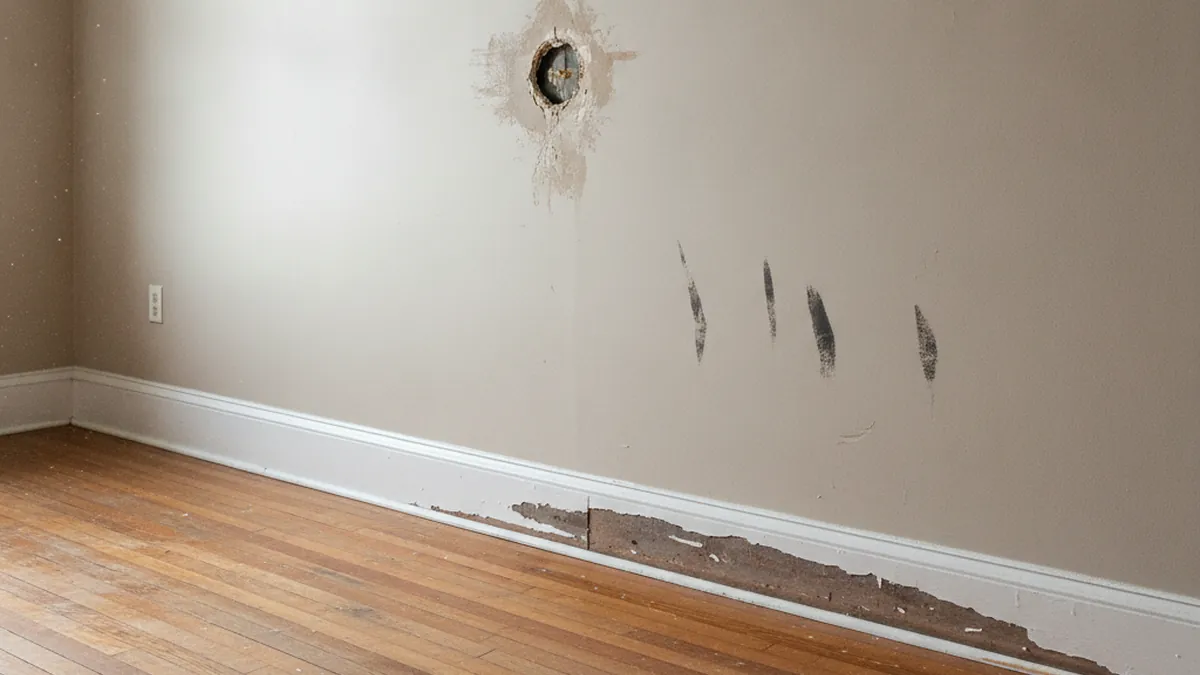
Illegal Airbnb subletting is not merely a matter of legal principle: it exposes your plex to very real material and financial risks. Understanding these risks also helps you quantify the serious prejudice the TAL will require of you — because every documented harm strengthens your termination application.
Accelerated wear of the unit
A unit occupied by a stable household suffers predictable wear. A unit rented by the night sees dozens of occupants pass through each month, none of them attached to the place. Forced locks, damaged furniture, scratched floors, overloaded appliances, abused plumbing: wear accelerates well beyond what the rent collected can offset. For a North Shore plex owner, this deterioration translates into early renovations and lost value.
The gap in insurance coverage
This is the most underestimated risk. An income-property insurance policy covers residential rental use — not a short-term commercial accommodation activity. If a loss occurs while a "tourist" occupies the unit (fire, water damage, theft, injury), the insurer could invoke an undeclared change in risk to reduce or even deny the claim. You, the good-faith landlord, could find yourself exposed because of an activity you never authorized. This is a powerful prejudice argument to document.
Before any loss, confirm your coverage with your broker: the nature of a unit's occupancy can change the terms of your income-property policy.
Liability and the peaceful enjoyment of other tenants
The other occupants of your income property are entitled to peaceful enjoyment of the premises. Late-night parties, strangers in the hallways, insecurity, noise: tourist subletting poisons the entire building. A good-faith tenant may themselves file a complaint against you, the landlord, for disturbance of enjoyment — even though the source of the problem is your offending tenant. It is a vicious circle: the longer the subletting lasts, the more the prejudice spreads across the whole plex.
Quantify each item of prejudice
- Repair and restoration costs beyond normal wear
- Insurance risk: reduced or denied coverage in the event of a loss
- Possible complaints and departures of other tenants in the income property
- Management time and stress, hard to quantify but very real
- Loss of resale value if the building deteriorates
How to write an effective formal notice against illegal subletting?

The formal notice is often the decisive step: well drafted, it resolves part of the cases without ever reaching the TAL. It sends a clear message to the tenant — you know, you are documenting, and you are ready to act. It also creates the paper trail that will support any later proceeding.
What a formal notice must contain
- The identity of the parties: your landlord contact details and the tenant's, with the exact address of the unit in the plex.
- The facts, dated: a precise description of the tourist subletting observed (listing, dates, reviews, foot traffic), without exaggeration or invention.
- The legal basis: a reminder that subletting without consent breaches article 1870 of the Civil Code and that tourist accommodation without a registration number is illegal.
- A clear demand: require the immediate cessation of the subletting and the removal of any listing.
- A deadline reasonable to comply (often a few days), after which you reserve the right to act.
- The stated consequences: a lease-termination application to the TAL, a damages claim, a report to Revenu Québec.
"A firm, factual and dated formal notice is often worth more than a long speech: it proves the landlord's good faith and confronts the offending tenant with their responsibilities."
— ImmoMulti TeamHow to send and keep it
Favour a delivery method that leaves proof of receipt: registered mail, or a formal-notice service with acknowledgment. Keep a signed, dated copy as well as proof of sending. Stay courteous and factual: an aggressive formal notice laced with disproportionate threats can undermine your credibility before the tribunal. If in doubt about the wording, a notary or a lawyer can draft or review the document for a modest cost relative to what is at stake.
Roccabella decoded: why do $37,000 + $16,000 set a precedent?

The Roccabella case is often summed up as "$50,000." The reality is more nuanced — and more instructive for a plex owner. Let's break down the decision, its amounts and its actual scope.
The facts and the exact amount
In the Roccabella towers, in downtown Montreal, units were rented to tourists via Airbnb even though the declaration of co-ownership prohibited it. Justice Christian J. Brossard of the Superior Court concluded that this practice seriously infringed the other co-owners' right to the free and peaceful enjoyment of their property. The result: one unit owner and their tenant were ordered to pay $37,000, and another tenant $16,000 — hence the total of roughly $50,000 in punitive damages. The appeal of this judgment was denied by the Court of Appeal shortly afterward.
Source: Radio-Canada — "The Roccabella, a lesson for those who sublet through Airbnb"
The important nuance: co-ownership vs residential lease
Roccabella arose in a co-ownership context (a declaration of co-ownership prohibiting tourist rental), not a simple residential lease between a plex owner and their tenant. The transposition is therefore not mechanical. What the decision clearly establishes is a principle: illegal tourist rental can trigger heavy punitive damages when it infringes the rights of others. For an income-property owner, this is a powerful deterrent argument to wield, while keeping in mind that your remedy will go first through the TAL and the demonstration of serious prejudice.
What Roccabella does not guarantee
No decision guarantees you $50,000. Punitive damages remain exceptional and require a serious, documented infringement. Before the TAL, the realistic objective is first the termination of the lease and, where applicable, compensation proportionate to the proven prejudice. See Roccabella as a case-law signal, not a fixed scale.
What are the common mistakes landlords make when facing Airbnb subletting?

Faced with anger and a sense of injustice, many landlords react on instinct — and unintentionally weaken their position. Here are the most common mistakes, and how to avoid them.
Pitfalls to avoid at all costs
- Ignoring the 15-day deadline: failing to respond in writing to a subletting request, letting silence count as consent.
- Taking justice into your own hands: changing the locks, cutting essential services, forcibly evicting the tenant. These acts are illegal and can lead to your own conviction.
- Acting without evidence: confronting the tenant or filing with the TAL without a documented file, relying on your word against theirs.
- Skipping the formal notice: going straight to the tribunal deprives your file of a valuable paper trail and a chance at a quick settlement.
- Waiting too long: letting the situation settle in for months while wear and complaints accumulate.
- Choosing the wrong basis: confusing subletting with lease assignment, or citing the wrong article before the TAL.
- Neglecting insurance: failing to notify your insurer of an ongoing tourist use, risking a denied claim.
The right sequence, in short
- Document first, react later — never the other way around.
- Respond in writing and on time to any subletting request.
- A formal notice before any filing with the TAL.
- Stay on legal ground: legitimate evidence, no self-help justice.
- Coolly weigh the time/energy/outcome ratio before committing.
How much does a TAL dispute really cost compared to a direct sale?

Pursuing the TAL has a cost — not only in fees, but in time, lost rent and wear. Let's put numbers on the table with an illustrative, purely educational example, for a North Shore triplex whose unit is being sublet illegally on Airbnb.
| Item | "Pursue the TAL" scenario | "Sell directly" scenario |
|---|---|---|
| Time to resolution | Several months (hearing, decision, enforcement) | A few weeks to the notarized deed |
| Lost rent/time | Under-market rent + management hours | None: property transferred as-is |
| Professional fees | Lawyer/notary, evidence preparation | No broker commission |
| Wear and insurance risk | Keep running during the proceeding | Transferred to the buyer |
| Outcome | Uncertain (termination not guaranteed) | Certain: net price agreed in advance |
| Mental load | High and prolonged | Closed out quickly |
This table does not say you should always sell. For a well-equipped, patient owner with airtight evidence, termination at the TAL remains a legitimate path — and sometimes the most satisfying. But for someone managing a plex from a distance, who has neither the time nor the desire to run a dispute, or whose building already has other problems, the calculus often tips toward a quick exit.
An example of reasoning
Imagine an owner whose triplex already generates a thin return, with one unit sublet on Airbnb, neighbours threatening to leave and an insurance policy up for renewal. Add up the months of proceedings, the below-market rent, the accelerated wear and the stress. Compare that total with receiving a net offer, with no commission and no financing condition, and closing within a few weeks. For many North Shore owners, the question is no longer "can I win?" but "what does it really cost me to carry on?"
To put numbers on this calculation, our multiplex yield calculation guide and our purchase offer calculator help you precisely quantify what your building is worth, dispute included.
When does selling your North Shore plex make more sense than pursuing the TAL?
On paper, the remedies exist. In practice, they demand time, energy, and considerable stress tolerance. A TAL proceeding can drag on for months, require tight evidence, and in some cases result in a refused termination. In the meantime, the tourist foot traffic continues, unit wear accumulates, and the other tenants in your income property grow impatient.
For many North Shore plex owners — in Saint-Jérôme, Terrebonne, Blainville, Mascouche, Boisbriand, or Saint-Eustache — the calculus eventually shifts. When a building becomes a constant source of conflict, attachment gives way to fatigue. The question is no longer "how do I win at the TAL," but "how much time and money am I willing to invest before I turn the page."
Sell quickly, without exposing the conflict on the open market
That is precisely where a fast, direct sale makes all the sense. Listing a plex in conflict on the traditional market, with showings and a broker, puts the rental situation on full display and can drive buyers away. By contrast, selling directly to a specialized buyer allows you to transfer the property as-is, with no public listing, no commission.
ImmoMulti: direct buyer of income properties on the North Shore
If your plex has become a source of disputes — illegal Airbnb subletting, difficult tenants, constant tourist foot traffic — we can submit a direct offer, with no commission and in complete confidentiality. No public listing, no broker, no obligation. Receive a purchase offer in 48 h.
Selling is not the only path forward, and it is not right for everyone. If you are considering taking back control of your unit instead, our guide on owner-occupancy eviction on the North Shore covers that alternative in detail. And before any decision, measuring your property's true profitability remains essential: our multiplex yield calculation guide explains how to assess what your plex is really worth today.


