Insuring an income property is not a matter of ticking one box with your broker. For a plex or multi-unit in Quebec, a sound landlord (rental property) policy combines several coverages — building, liability, loss of rental income, water damage — and hinges on one crucial distinction between replacement cost and actual cash value. This owner-side guide breaks down the essential coverages to carry, the insurance to require from your tenants, and the traps that leave too many owners underinsured.
Why a specific landlord (rental property) policy?
A standard homeowner policy does not cover a rented building. As soon as a unit is occupied by a tenant, you need a landlord (rental property) policy. It covers the building and your property, your liability as an owner and, optionally, your rental income — but never the tenant's belongings or personal liability.
The first mistake is assuming a residential policy "is enough." It is not: insurers clearly distinguish the owner-occupant from the owner-landlord, because the risk differs. The Insurance Bureau of Canada (IBC) explains that a rental-building owner must insure their structure and liability, while each tenant is responsible for insuring their own belongings and personal liability.
In Quebec, insurers and their representatives are regulated by the Autorité des marchés financiers (AMF). The AMF also informs consumers and receives complaints — a useful reflex if you have doubts about a clause or a representative.
1. Building insurance: the foundation
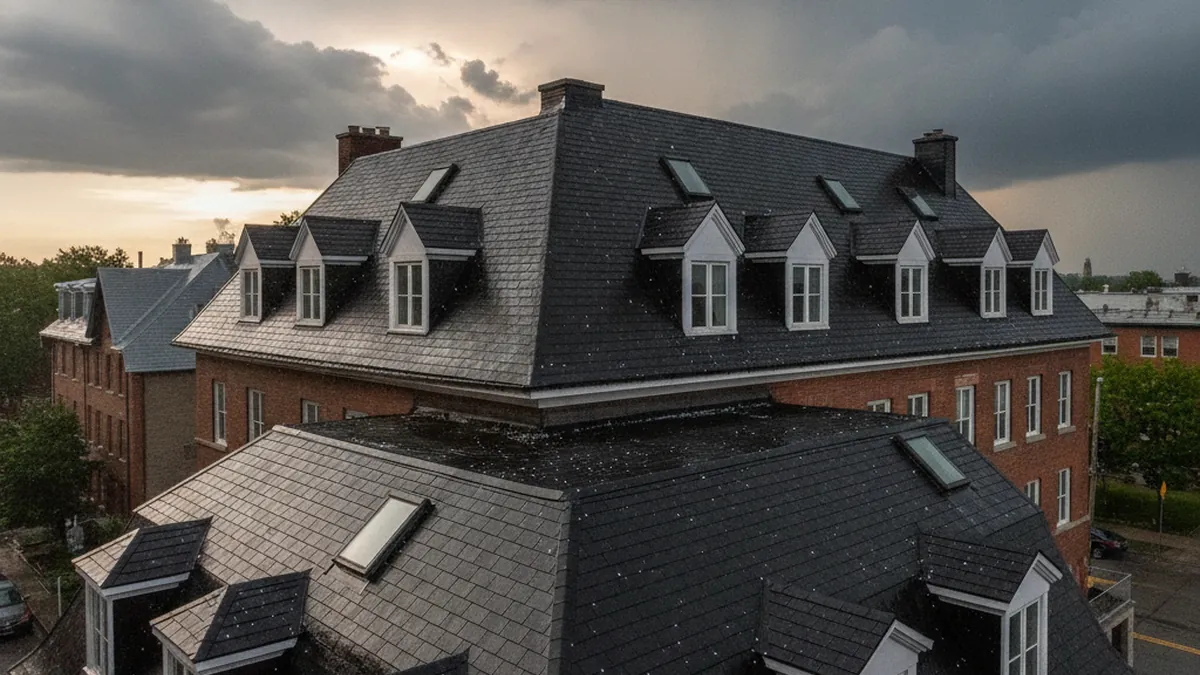
Building coverage pays for physical damage to your property's structure (walls, roof, foundations, systems) and to items you own (supplied appliances, common areas). It's the core of the policy, aimed at sudden and accidental losses: fire, storm, vandalism, certain water damage, depending on the protections chosen.
The insured amount should reflect the rebuilding cost — what it would cost to rebuild the property new today — not the market value or the municipal assessment, which include land and market conditions. Confusing the two is the most common source of underinsurance.
2. Liability coverage
Liability protects you when a third party — tenant, visitor, delivery person, passerby — suffers bodily or material harm you could be held responsible for as an owner. Poorly cleared stairs, a defective railing, falling ice: claims can reach substantial sums, including medical and defence costs.
For a rental building, a liability limit of $1 to $2 million is frequently recommended. Check whether the limit applies per occurrence and in the aggregate, and make sure your building's activities (number of units, presence of a commercial space, short-term rental) are properly declared: an inaccurate declaration can jeopardize a payout.
3. Loss of rental income
If a covered loss makes one or more units uninhabitable, this coverage reimburses the rent you no longer collect during the repair period, up to a limit and duration set in the contract. It's a decisive protection: without it, your income stops while the mortgage, taxes and insurance keep running.
What loss of rental income covers (and doesn't)
- It covers rent lost following an insured loss (fire, covered water damage, etc.).
- It is capped by a dollar limit and an indemnity period (often 12 months): check both.
- It does not cover ordinary vacancy or unpaid rent from a solvent tenant — those are distinct risks.
4. Water damage: the trickiest protection
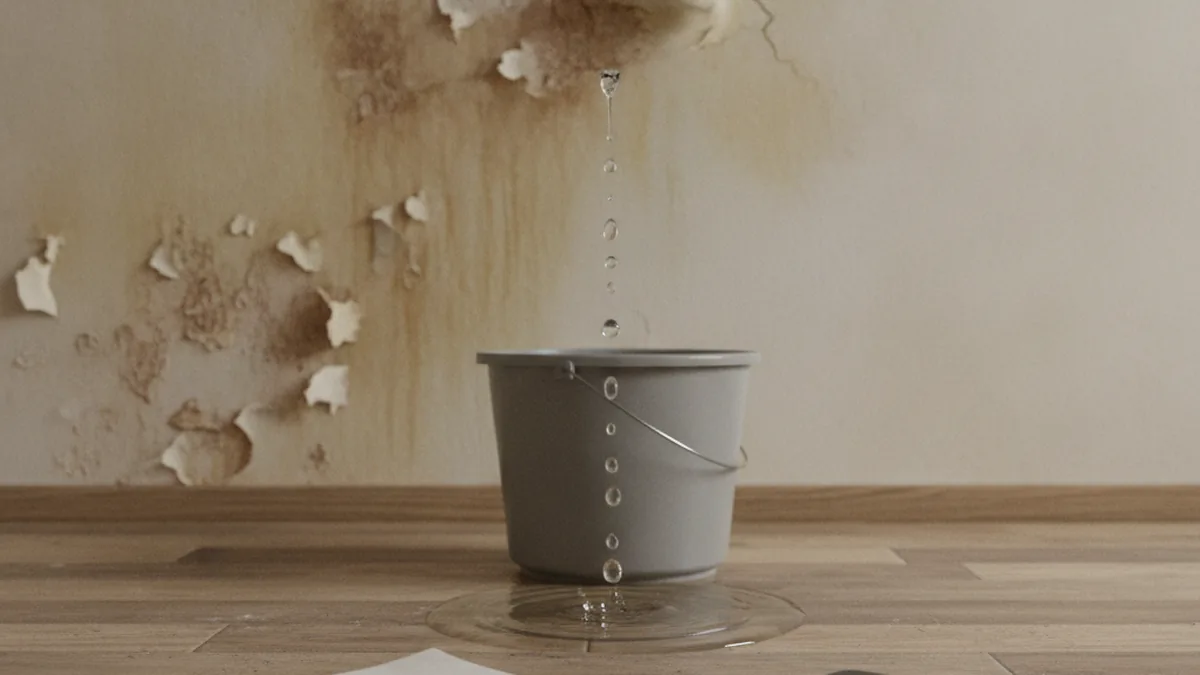
Water damage has become the leading cause of home insurance claims in Canada, according to the Insurance Bureau of Canada. For an income property, it is often split into separate endorsements (seepage, sewer backup, overflow, flood-related damage), each with its own limits and exclusions. You must confirm each component explicitly.
Never assume "water = covered." A policy may include sudden plumbing water damage while excluding sewer backup or roof seepage unless endorsed. The IBC stresses the importance of understanding the exact extent of your water protection, especially amid more frequent climate-related losses. For a plex with a rented basement, the sewer-backup endorsement is often essential.
5. Replacement cost vs actual cash value: the clause that changes everything
This is the most misunderstood distinction — and the most costly at claim time. Replacement cost pays to replace a damaged item with an equivalent new one, with no deduction for wear. Actual cash value (value at the time of loss) deducts depreciation: a 20-year-old roof is paid for its residual value, not for a new roof.
| Criterion | Replacement cost | Actual cash value |
|---|---|---|
| Basis of settlement | Cost to replace new | Cost to replace minus depreciation |
| Impact of an aged item | Paid as new | Reduced payout by age |
| Premium | Higher | Lower |
| Risk to the owner | Low | Gap to absorb yourself |
For an income property, replacement cost is generally the right choice: it avoids having to cover the gap between the payout and the actual rebuilding cost yourself. Beware, however, of the coinsurance clause: if the insured amount is below a set percentage (often 80% or 90%) of the rebuilding cost, the insurer can reduce the payout even for a partial loss. Hence the importance of periodically reassessing the rebuilding cost, especially after renovations.
6. Requiring tenant insurance
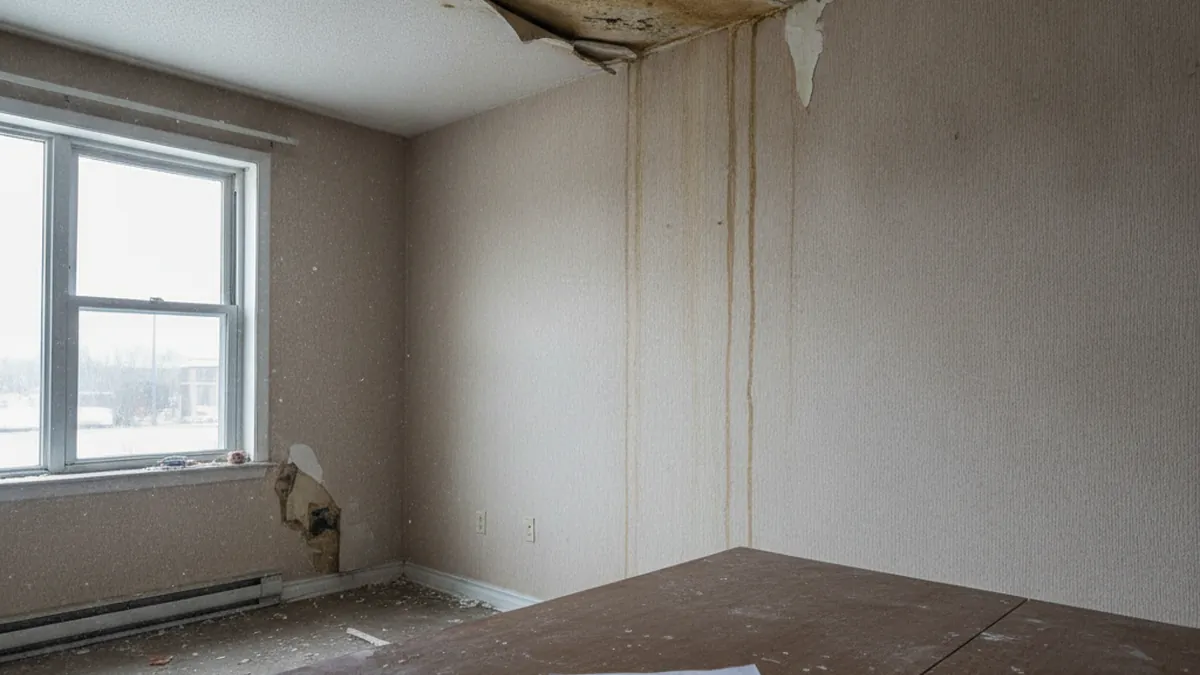
Your landlord policy does not cover your tenants' belongings or their personal liability. If a tenant causes water damage to the unit below, or a fire destroys their furniture, it's their tenant insurance that responds — not yours. That's why it's strongly recommended to include a lease obligation to carry liability and contents insurance, and to require proof at signing and at each renewal.
CORPIQ (the Quebec landlords' corporation) recommends this practice and provides its members with clauses and tools to that end. For a loss-related dispute between owner and tenant, the Administrative Housing Tribunal is the competent body in Quebec.
Setting the right amount: rebuilding cost, not market value
The single question that decides, more than any other, whether your payout will actually cover your loss is the insured amount. A savvy owner-seller knows this figure should reflect neither the price they hope to get for their plex nor the municipal assessment received each year, but rather the cost to rebuild the property new after a total loss. Confusing these three values is by far the most common — and most costly — mistake among multi-unit owners.
Three values you must never confuse
Sale price and municipal assessment both include the land, its location and market conditions. But in a fire, the land does not burn: you don't have to buy it back. Rebuilding cost concerns only the structure — labour, materials, demolition, code upgrades, professional fees. On the North Shore, a plex often sells well above its rebuilding cost because the market prices in location and income. Insuring such a building at market value inflates the premium needlessly; insuring it at the often-lower assessed value exposes you to underinsurance.
| Value | What it measures | Includes land? | Role in insurance |
|---|---|---|---|
| Market value | Likely selling price on the market | Yes | None — not used to set the insured amount |
| Municipal assessment | Basis for property taxes | Yes | None — often out of step with reality |
| Rebuilding cost | Cost to rebuild the structure new today | No | The only valid basis for the insured amount |
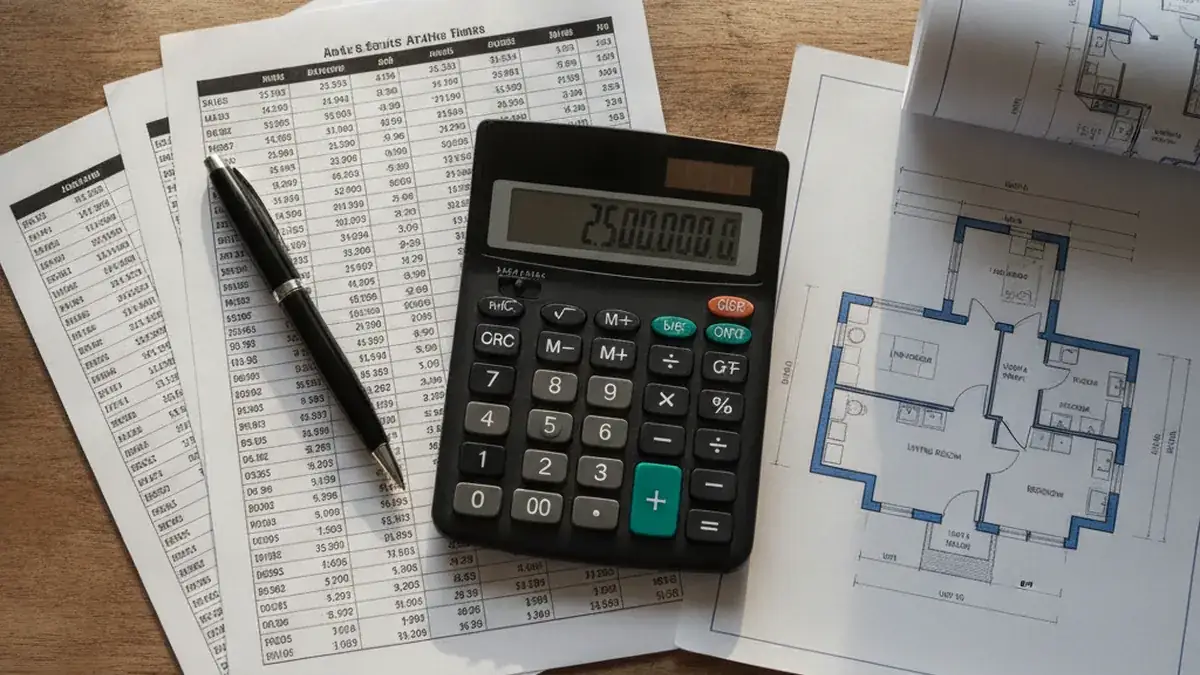
How to estimate rebuilding cost
Three approaches complement each other. The most reliable is a rebuilding-cost appraisal by a chartered appraiser or your insurer's estimating service: it accounts for floor area, finish quality, systems (electrical, plumbing, heating) and current code requirements. The second relies on the estimating software brokers use, fed by cost-per-square-foot benchmarks updated regularly. The third, the roughest, applies a unit cost per square foot — useful for a ballpark, dangerous as your only reference.
An often-overlooked point: construction costs have risen sharply since 2020. The Insurance Bureau of Canada notes that rising material and labour prices mechanically push up rebuilding cost — and therefore the amount to insure. A building correctly insured five years ago may be underinsured by 20% or more today, simply because the cost to rebuild it has increased while the policy went unrevised. Hence the rule: have the rebuilding cost reassessed at each renewal, and systematically after major renovations.
The coinsurance clause, in numbers
The coinsurance clause is what turns underinsurance into a trap. It requires you to insure your building for at least a set percentage — often 80%, 90% or 100% — of its rebuilding cost. If you're below that at the time of loss, the insurer applies a proportional penalty, even for a partial loss. Many owners discover this clause on claim day, when it's too late.
Worked example: the coinsurance penalty
Suppose a triplex whose actual rebuilding cost is $600,000, with a 90% coinsurance clause (a $540,000 requirement). The owner insured it for only $400,000. Water damage causes a $100,000 loss. The insurer calculates: ($400,000 ÷ $540,000) × $100,000 = $74,074, less the deductible. The owner absorbs nearly $26,000 out of pocket for a partial loss — solely because they were underinsured. With a compliant insured amount, they would have recovered the full loss, minus the deductible.
The lesson is direct: aiming for the exact insured amount is not a needless expense — it's the condition for the rest of the policy to work. An owner preparing to sell also has every interest in documenting a recent rebuilding-cost appraisal: it reassures the buyer about the building's insurability and avoids unpleasant surprises when transferring or renewing the policy.
Sources: Insurance Bureau of Canada; Autorité des marchés financiers. Worked example provided for illustration: confirm the exact coinsurance terms with your representative.
Endorsements you shouldn't overlook on a multi-unit
The core of four coverages — building, liability, loss of rental income, water damage — is only the starting point. It's often the endorsements (additional coverages) that make the difference between a paid claim and a denied one. On an income property, several deserve particular attention because they address risks specific to Quebec's plex stock: occupied basements, aging systems, sewer networks under pressure during heavy rain.
Sewer backup and ground water
The sewer backup endorsement covers damage when water backs up through basement drains, toilets or floor drains. For a plex with a basement unit, it's hard to skip: a single backup can ruin floors, partitions and belongings for thousands of dollars. Distinguish it from the overland water endorsement, which covers surface water — torrential rain, snowmelt, an overflowing watercourse — entering at ground level. Both are typically optional, capped and carry their own deductibles.
Equipment breakdown and aging systems
The equipment breakdown endorsement covers the sudden failure of items like the boiler, central heating, air exchanger or electrical controls — losses excluded from the base coverage, which targets external accidental damage, not internal wear. On an older building, this endorsement can prevent a heavy bill in the dead of winter. Conversely, a building with aging systems (fuse-box wiring, lead or galvanized plumbing, an oil tank) may face surcharges, exclusions or an upgrade condition. Declaring the true state of these systems honestly is essential: an omission can jeopardize a payout.
By-law upgrade, oil tank and other useful coverages
- By-law / ordinance coverage (rebuilding to current codes): covers the extra cost imposed by current codes when rebuilding an older structure — a line item that can be significant as the construction code evolves.
- Oil tank: a fuel-tank leak and the resulting soil decontamination can be very expensive; some policies exclude it without a dedicated endorsement.
- Vandalism and malicious acts: relevant for a building with vacant or transitioning units.
- Additional living / relocation expenses: distinct from loss of rental income, they can cover costs tied to restoration when the owner occupies a unit.
Watch out
Never assume a risk is covered because it "seems obvious." Sewer backup, overland water, earthquake, equipment breakdown and oil tank are frequently excluded from the base coverage and added only by endorsement, each with its own limits and deductibles. List your real risks with your representative rather than relying on the policy's general wording.
Premium, deductible and levers to cut your insurance cost
Between two policies, the premium doesn't tell the whole story: a low premium paired with a high deductible or broad exclusions can cost far more on claim day. For a multi-unit owner, understanding how the premium is set — and which levers exist to control it — is part of sound building management, on par with tracking rents or upkeep.
How the insurer sets the premium
The premium reflects estimated risk. Several factors come into play: the building's age and condition, the nature of its systems (roof, heating, electrical, plumbing), the number of units, the presence of a ground-floor commercial space, the loss history of the building and owner, location (proximity to a fire station, flood zone), the insured amount and the level of coverage chosen. A well-maintained building with recent systems and no claim history negotiates markedly better.

The role of the deductible
The deductible is the share of each loss you absorb before the insurer steps in. Raising the deductible lowers the premium: it's a trade-off. For an income property, a higher deductible on frequent but low-cost losses (small water damage) can pay off if you have enough cash reserve to absorb those hits. Beware, though, of separate deductibles: some coverages (water damage, sewer backup, earthquake) carry their own deductible, sometimes expressed as a percentage rather than a fixed amount.
| Choice | Effect on premium | Effect at claim time | Suits you if… |
|---|---|---|---|
| Low deductible | Higher premium | Less out of pocket per claim | Small reserve, frequent losses feared |
| High deductible | Lower premium | More out of pocket per claim | Solid reserve, claiming only large losses |
| Replacement cost | Higher premium | Payout with no depreciation deducted | Most income properties |
| Actual cash value | Lower premium | Reduced payout by age of property | Rarely optimal on a multi-unit |
Concrete levers to reduce the premium
- Modernize at-risk systems: replacing an oil tank, redoing fuse-box wiring, updating plumbing or the roof reduces risk — and often the premium.
- Install prevention devices: a backwater valve against sewer backup, water-leak detectors, alarm and fire-detection systems.
- Bundle your buildings with one insurer or broker for access to better terms.
- Avoid small claims: piling up low-value claims can push the premium up at renewal; reserving insurance for major losses is often more cost-effective long term.
- Review your policy every year with a property and casualty broker, especially after work, to adjust the insured amount and coverages.
A building whose premium keeps climbing despite all these efforts sometimes signals something broader about its returns. When insurance, taxes and repairs erode net income to the point of making operations difficult, some owners choose to evaluate an exit rather than endure repeated increases.
Climate, catastrophes and rising premiums: what 2024 changed
You can't discuss multi-unit insurance in 2026 without discussing climate. The surge in extreme weather events has profoundly changed insurers' risk math — and, in turn, the premium income-property owners pay.
According to the Insurance Bureau of Canada, 2024 was the costliest year in Canadian history for severe-weather insured losses, at roughly $8.5 billion in insured damage. In Quebec, the summer 2024 floods alone accounted for close to $2.5 billion — the most expensive disaster in the province's history.
These figures aren't trivia for a plex owner: they explain why premiums are rising, why insurers are tightening terms on water-related coverages, and why some areas deemed flood-prone are becoming harder to insure. The IBC notes that water damage has become the leading cause of home insurance claims in the country, at roughly $2 billion in claims each year. The trend continued: the bureau still reports, for 2025, severe-weather insured losses exceeding $2.4 billion across Canada.
| Benchmark | Figure | Source |
|---|---|---|
| Severe-weather insured losses, Canada, 2024 | ≈ $8.5B (record year) | Insurance Bureau of Canada |
| Quebec floods, summer 2024 | ≈ $2.5B (most expensive disaster in Quebec history) | Insurance Bureau of Canada |
| Water damage, annual claims in Canada | ≈ $2B/year, #1 cause of home claims | Insurance Bureau of Canada |
For the owner, the takeaway is practical: water-related coverages (sewer backup, overland water) are no longer accessory options but central protections, and prevention — backwater valve, drainage upkeep, stormwater management — becomes a bargaining chip with the insurer as much as a concrete safeguard for the building.
Sources: Insurance Bureau of Canada — 2024, a record year ($8.5B); IBC — 2025 losses; IBC — disasters and water damage.
What to do after a loss: the claim process step by step
A good policy is only worth as much as how you use it on claim day. Many claims are reduced or delayed not because of coverage, but because of process errors: missing proof, late reporting, repairs started before the insurer's approval. Here's the sequence, from a multi-unit owner's point of view.
- Secure the premises and prevent further damage. Your policy requires you to take reasonable steps to limit damage: shut off the water, mop up, tarp a roof, secure the units. Keep the invoices for these emergency measures — they're generally reimbursable.
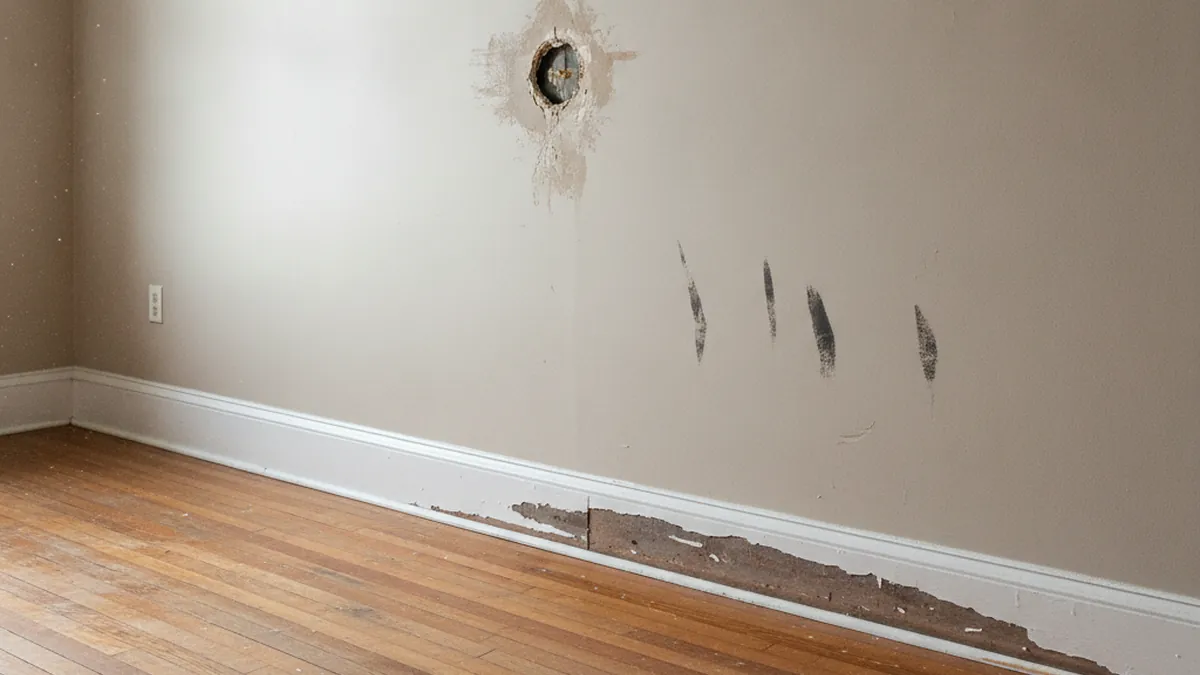
- Document before you clean. Photograph and film all damage, from several angles, before any cleaning or repair. Note the date, time and circumstances. For an income property, also document the impact on each affected unit.
- Report to the insurer promptly. Contact your representative or the claims line as soon as possible. Excessive delay can hurt handling. Note the claim number and your contact's name.
- Don't discard or repair before approval. Keep damaged property until the adjuster has seen it, unless there's a health risk. Don't undertake permanent repairs without the insurer's go-ahead, or you may compromise the assessment.
- Prepare the proof of loss. Gather the damage description, repair estimates, proof of property value and — for loss of rental income — the leases and rent history for the affected units. An up-to-date maintenance file speeds everything up.
- Work with the claims adjuster. The insurer appoints an adjuster to assess the loss. You may also retain an independent (public) adjuster to represent you, for a fee; that's sometimes useful for a large, complex loss.
- Track the settlement. Check that the payout reflects the basis (replacement cost or actual cash value), the applicable deductibles and, where relevant, the lost rents. In case of disagreement, the AMF oversees recourse and the complaint process.
The too-fast-repair trap
By reflex, an owner often wants to restore the unit as fast as possible to re-house the tenant and restore income. But repairing before the adjuster's visit, or discarding damaged property without proof, can reduce the payout or even lead to part of the claim being denied. Secure, document, report — then wait for the go-ahead before permanent work.
For a loss-related dispute with a tenant (say, damage whose origin is contested), the Administrative Housing Tribunal decides. Which is, again, why it pays to have required tenant insurance and to keep a documented file.
Special cases: basement unit, short-term rental, vacant building
The standard landlord policy assumes a building occupied by year-round tenants. The moment you deviate from that model, special rules apply — and ignoring them means risking a denied claim at the worst possible moment.
The basement unit
A finished, rented basement changes the risk profile: greater exposure to sewer backup and seepage, plus compliance questions (ceiling height, exits, egress windows) that can affect insurability. Make sure the basement unit is properly declared and that the sewer-backup endorsement is in place. An undeclared basement unit is an omission that can prove costly.

Short-term rental
Renting a unit short-term (tourist-style) transforms the nature of the risk and often falls outside a standard residential policy. This activity must be declared and generally requires specific coverage or an endorsement; otherwise, a loss occurring during an undeclared short-term rental may not be covered. Distinct regulatory obligations also apply depending on the municipality and provincial regime, which must be checked separately.
The vacant building or one under renovation
A building — or a unit — left unoccupied for an extended period (turnover between tenants, major renovation, estate) presents heightened risk: undetected water damage, freezing, vandalism. Most policies impose specific vacancy conditions or reduce coverage beyond a certain vacancy period. Notify your insurer before an extended vacancy or major work, or a loss might not be covered.
The older or heritage building
A brick plex from the early 20th century, with mouldings, woodwork or original features, raises the question of like-for-like rebuilding cost and code upgrades. By-law upgrade coverage and a careful rebuilding-cost appraisal are especially meaningful here, because rebuilding an older structure to current codes often costs more than an equivalent new build.
The reflex to keep
- Declare every particularity: rented basement, commercial space, short-term rental, vacancy, work.
- Check the endorsement matching each particularity (sewer backup, vacancy, by-law upgrade).
- Document the true state of the building and its systems.
- Notify the insurer before any change of use or occupancy.
Insurance and selling: what the owner-seller should anticipate
Insurance isn't just a matter of day-to-day operations: it also plays a role when selling. An owner preparing to sell an income property has every interest in treating their insurance file as an asset, not as a formality forgotten in a drawer.
Loss history, a scrutinized element
A building's insurability travels partly with it. A property that has piled up several claims — especially repeated water damage — can be harder or costlier for the buyer to insure, which weighs on the transaction. Conversely, a building with no loss history, modernized systems and a recent rebuilding-cost appraisal presents reassuringly. A savvy seller assembles these elements in advance.

Coverage doesn't transfer automatically
At sale, the seller's policy does not "follow" the building: the buyer must take out their own coverage, effective at the transfer of ownership. The seller, meanwhile, keeps theirs until closing at the notary — a building should never go a single day uninsured, especially if occupied. Coordinate the dates with your representative to avoid any coverage gap, then cancel at the right time to recover any unused portion of the premium.
What the buyer will want to see
- A recent rebuilding-cost appraisal and the matching insured amount.
- The loss history and the repairs made following those losses.
- Proof that the critical endorsements (sewer backup in particular) were in place.
- Proof that tenants were insured, in line with their leases.
When premiums, taxes and repairs end up durably eroding a plex's returns, cleanly preparing your file — insurance included — makes for a fast, snag-free sale. That's precisely the kind of situation where a direct offer, with no broker or commission, lets an owner turn the page without piling up showings or conditions.
Common mistakes to avoid
- Insuring to market or assessed value instead of rebuilding cost — the #1 cause of underinsurance.
- Forgetting to declare changes: a new basement unit, short-term rental, a ground-floor commercial space. An inaccurate declaration can void a payout.
- Skipping the sewer-backup endorsement on a building with an occupied basement.
- Not requiring tenant insurance or verifying proof each year.
- Never reviewing the policy after major renovations, which triggers the coinsurance clause.
Sources: Insurance Bureau of Canada; Autorité des marchés financiers (AMF) — Insurance; CORPIQ. Informational content: always confirm your coverages with a certified insurance representative.