ImmoMulti — a direct buyer of multi-unit properties on the North Shore — regularly sees plexes that look profitable on paper, only to choke the day the roof gives out. The remedy has a name: the capital reserve fund, or reserve for major work. In a small rental building, no law forces one on you the way it does in co-ownership — but going without it is playing roulette with your return. This guide explains why to build one, how much to set aside (as a percentage of income and per door), which items to plan for, and how to fold it honestly into your profitability calculation.
Why build a capital reserve fund in a small rental building?
Because a plex suffers the same wear as a condo (roof, windows, heating) with no co-owners to share the bill. The reserve fund smooths these large, spaced-out expenses instead of absorbing them all at once, and protects the building's long-term profitability.
In divided co-ownership, the Civil Code of Quebec requires the syndicate to hold a contingency (reserve) fund and, since 2024, to carry out a reserve fund study to set contributions. The legislator is acknowledging an unavoidable fact: a building ages and its components will be expensive to replace. Yet the owner of a wholly owned duplex, triplex or fourplex faces exactly the same wear — alone, with no legal framework forcing the issue.
That is precisely the trap. Because nothing requires them to provision, many small landlords live from rent cheque to rent cheque and have no reserve the day the roof membrane fails or the furnace dies. According to CMHC (Canada Mortgage and Housing Corporation), planned maintenance almost always costs less than emergency repairs forced on you at the last minute. The reserve fund is the tool that makes that planning possible.
What a reserve fund actually buys you
- Absorb a major job without a line of credit or emergency refinancing.
- Avoid deferring work — and so avoid worsening damage and losing value.
- Show a reassuring maintenance history to a future buyer.
- Calculate a realistic return rather than an optimistic one.
How much to set aside: percentage of income or amount per door?
There is no single magic number: the right provision depends on the age and condition of your building. Still, two prudent benchmarks, widely used in property management, give you a starting point.
1. As a percentage of gross income. A prudent range frequently used for maintenance and replacement sits between 5% and 10% of gross rental income per year. A recent, well-maintained building trends toward the low end; an older building with several components near end of life trends toward the high end.
2. Per door (per unit). Many investors prefer to reserve a fixed amount per unit per year, which forces you to think in terms of the number of units rather than income alone. That is useful when rents are below market and do not reflect the real cost of upkeep.
| Building profile | Indicative provision | Rationale |
|---|---|---|
| Recent plex, new components | Low end (~5% of gross income) | Few replacements in the near term |
| Mid-age plex, maintained | Middle of range (~7-8%) | A few aging items to anticipate |
| Pre-1990 building, components near end of life | High end (~10%+) | Roof, windows, foundation due soon |
Prudent ranges shown for guidance, drawn from recognized accounting practice for rental-building management. The exact amount must rest on your building's real condition. Sources: CMHC, APCHQ, CORPIQ.
Which major-work items should the fund cover?
A reserve fund is not a kitty for small routine repairs (a faucet, a bit of paint): it targets the major, costly and predictable components. Each has a known service life, which lets you estimate when the expense will land. The most structural items in a plex:
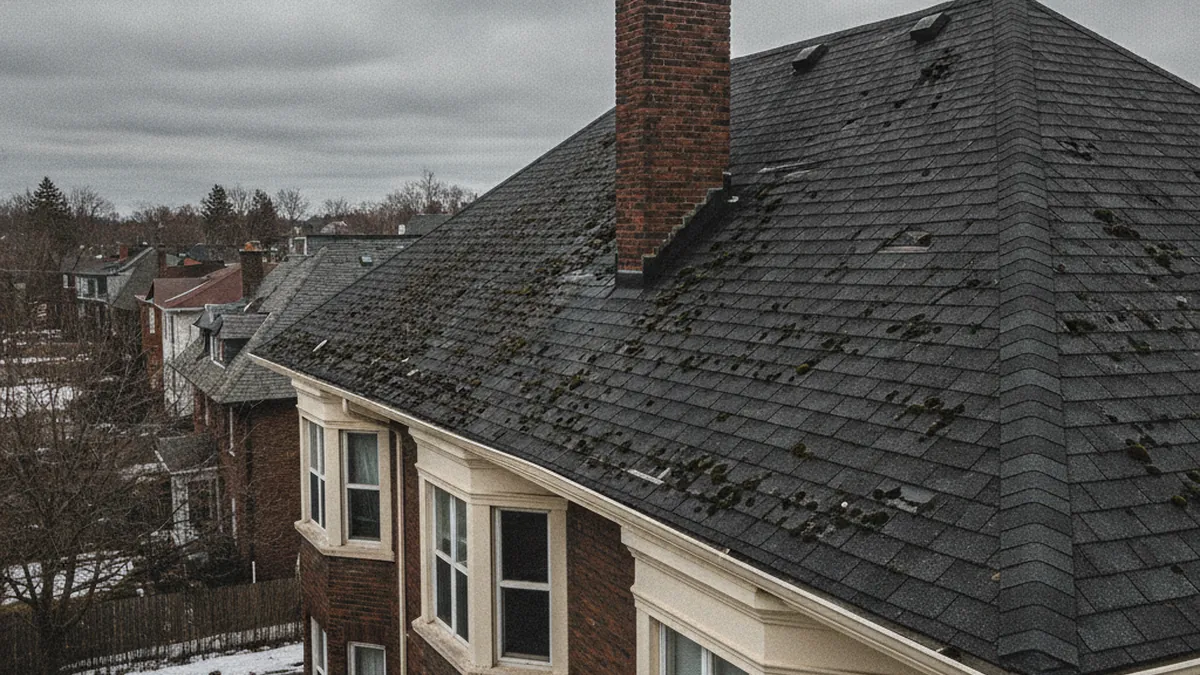
- Roof — elastomer membrane on a flat roof or asphalt shingles on a slope. Asphalt shingles often last 15 to 25 years depending on the product and installation; a well-laid membrane, sometimes longer.
- Windows and doors — replaced in batches, a heavy item in a multi-unit building.
- Heating and hot water — furnace, baseboards, heat pump, water heater: equipment with a limited service life and a costly replacement.
- Plumbing and electrical — electrical entrance, plumbing stacks, possible code upgrades.
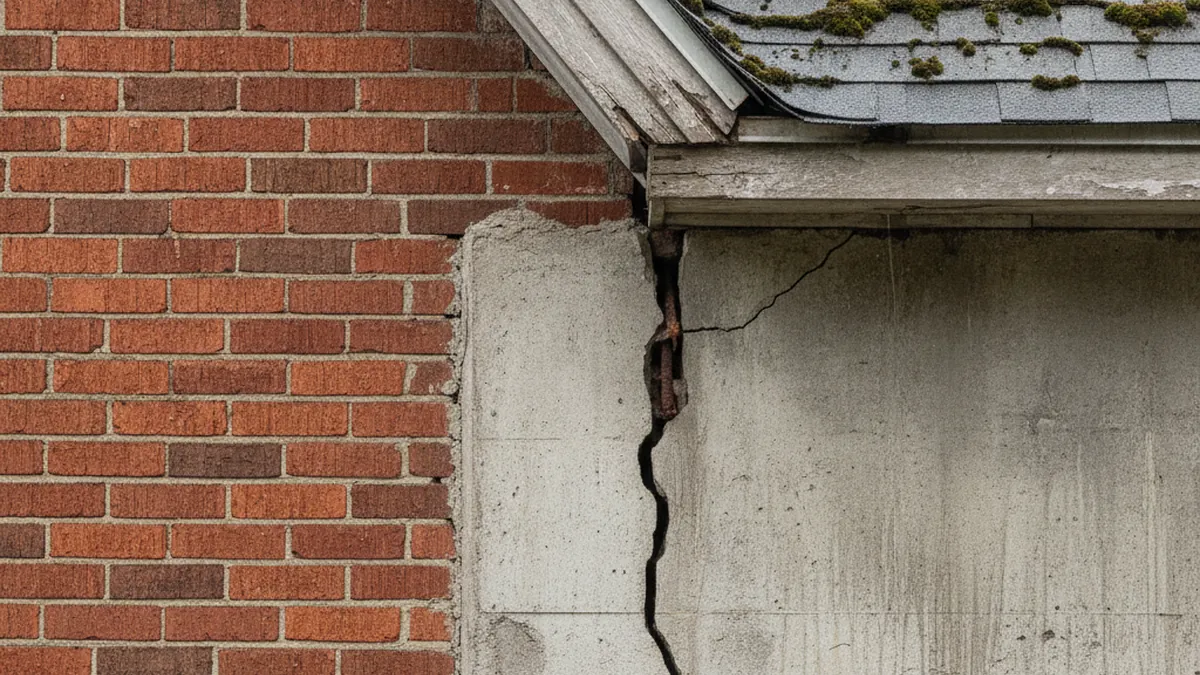
- Envelope and structure — exterior cladding, weeping tile, foundation, balconies and stairs (safety).
According to the APCHQ (Quebec association of construction and housing professionals), planning the replacement of these components along their life cycle avoids both budget surprises and accelerated deterioration of the building. Note that work in a rental building may be subject to construction regulation; for contractor licensing requirements, refer to the Régie du bâtiment du Québec (RBQ).
How to build your reserve fund in 4 steps
The most rigorous method does not start from a percentage but from your actual building. Here is a simple routine to repeat each year.
- Inventory the major components and note the approximate age of each (roof, windows, heating, etc.). A pre-purchase inspection or a maintenance log helps enormously.
- Estimate the replacement cost of each component and its remaining service life. Cost ÷ remaining years = the annual provision to set aside for that item.
- Add up the provisions for all items: that is your target annual contribution. Compare it with the 5-10% of income range to sanity-check the order of magnitude.
- Ring-fence the money in a savings account or a liquid investment separate from the building's operating account, and keep a register of contributions and withdrawals.
Folding the reserve into your plex's profitability calculation
Treat the provision for major work as an operating expense, on par with taxes and insurance, before computing net operating income (NOI). An NOI that ignores the reserve artificially inflates the return and the stated cap rate.
This is the step most rushed buyers skip — and exactly why they overpay. When you subtract a realistic annual provision from your income, your net operating income (NOI) falls, and with it the capitalization rate (cap rate) the building truly delivers. It is uncomfortable but honest: a building that does not generate enough to maintain itself is not as profitable as it looks.
In practice, add a "reserve / major work" line to your income and expense statement. To quickly estimate your NOI and return with that line included, our guide to calculating a multiplex's return walks through the method, and the NOI calculator helps you crunch the numbers. Also check whether programs like energy renovation grants can reduce the cost of certain items.
Service life and replacement cost: the heart of the calculation
A serious reserve fund rests not on intuition but on two figures per component: its useful service life (how many years it lasts) and its replacement cost (what it will take to redo it). Divide the cost by the years remaining and you get the annual provision that item should generate. Repeat for every major component, add them up, and your target contribution stops being a guess.
The service lives below are recognized orders of magnitude used by building inspectors; real wear depends on installation quality, exposure and maintenance. A poorly drained flat roof or south-facing windows will age faster than average.
Indicative useful service lives of a plex's components
| Component | Indicative service life | End-of-life signal |
|---|---|---|
| Asphalt shingles | 15 to 25 years | Granules in the gutters, curling shingles |
| Elastomer membrane (flat roof) | 25 to 30 years | Cracks, blisters, infiltration |
| PVC windows | 20 to 30 years | Condensation between panes, cracked sealant |
| Wood windows | 15 to 30 years | Frame rot, play, drafts |
| Electric water heater | 10 to 15 years | Rust, reduced capacity, leak at the base |
| Electric furnace | 20 to 30 years | Repeated failures, rising consumption |
| Heat pump | 10 to 20 years | Falling efficiency, noisy compressor |
| Vinyl cladding | 20 to 40 years | Fading, cracks, detached sections |
| Plumbing (copper pipe) | 50 years and up | Green corrosion, pressure drop |
Indicative service lives compiled from building-inspection references. They vary with installation, exposure and upkeep. Sources: Habitam (building inspection), La Presse.
Turning a service life into an annual provision
The principle is pure arithmetic. Take a component whose replacement, for illustration, would cost $20,000 and which has 10 years of service life left: the annual provision for that item alone is $2,000 ($20,000 ÷ 10 years). If the same component has only 5 years left, the provision doubles to $4,000 a year — because you have half as much time to accumulate the sum. That is why an older building demands a higher contribution: it is not age itself, it is the time remaining before the expense.
Two nuances are worth keeping in mind. First, construction inflation: the replacement cost ten years out will likely exceed today's cost, so a provision based on the current price tends to be a floor, not a ceiling. Second, salvage value: a replaced heat pump has no residual value, but a partial redo (overlaying a roof rather than tearing it off) can cost less than full replacement and extend service life more cheaply. The calculation is a guide, not a prophecy — revise it each year as you gather real quotes.
The cost ÷ remaining-life rule
- Note the age and condition of each major component.
- Estimate its replacement cost from real quotes, not guesses.
- Divide the cost by the number of years of service life remaining.
- Add up all components: that is your target annual contribution.
- Recompute each year, factoring in cost inflation.
Worked example: building the reserve of a North Shore triplex
Nothing beats a concrete case. Take a fictional triplex in Sainte-Thérèse, on the North Shore, whose rents total $42,000 gross per year. The owner walks through the major components, obtains an order of magnitude for each (the amounts below are illustrative — replace them with your own quotes), and notes the years of service life remaining. Here is the resulting table.

| Component | Estimated replacement cost* | Years remaining | Annual provision |
|---|---|---|---|
| Roof (membrane, flat) | $24,000 | 12 years | $2,000 |
| Windows (12 units, in batches) | $18,000 | 10 years | $1,800 |
| Water heaters (3 units) | $4,500 | 6 years | $750 |
| Heating system | $15,000 | 15 years | $1,000 |
| Balconies and stairs (safety) | $12,000 | 8 years | $1,500 |
| Exterior cladding | $16,000 | 20 years | $800 |
| Total | $89,500 | — | $7,850 / yr |
*Purely illustrative amounts to show the method. Replace them with real quotes from licensed contractors (see the Régie du bâtiment du Québec to verify licences).
The consistency check against the percentage range
The target provision from the component-by-component method comes to $7,850 a year. Let's test it against the percentage benchmarks: $7,850 on $42,000 of gross income is about 18.7% of income. That is well above the prudent 5-to-10% range mentioned earlier — a signal, not an error. This triplex clearly carries several closely spaced end-of-lives (water heaters at 6 years, balconies at 8, windows at 10), which temporarily inflates the provision. Once those items are replaced, the counters reset and the annual contribution drops back toward the low end of the range.
The lesson: when the component method yields a figure well above 10% of income, it is not that the math is wrong, it is that the building carries a latent maintenance backlog. For a buyer, that gap is gold: it quantifies exactly the catch-up to expect and serves as a negotiation lever. For an owner-seller, it is better to know it before a buyer uncovers it at inspection.
Spread or concentrate: smoothing the expense spike
In our example, three items fall due within the next eight years. Without a reserve, the owner would absorb $4,500, then $12,000, then $18,000 in succession — nearly $35,000 over eight years, often at the worst time. With a $7,850 annual provision, they will have set aside about $62,800 over the same period, enough to absorb those three jobs without touching credit. The fund does not shrink the total bill; it smooths the timing so it stops threatening cash flow.
Takeaways from the example
- The component method gives a defensible figure, not a hunch.
- A provision well above 10% reveals a maintenance backlog, not a math error.
- The fund does not lower the bill — it spreads the shock.
- Recompute after each major job: the counters reset to zero.
Reserve, credit line or refinancing: three ways to pay for major work
The reserve fund is not the only way to finance a major replacement — it is simply the cheapest and least stressful. When the reserve is empty, two fallback options remain, but each has a price. Understanding the three side by side helps explain why provisioning ahead almost always beats improvising.

| Financing mode | Real cost | Speed | Risk |
|---|---|---|---|
| Reserve fund | No interest; the money was already set aside | Immediate | Low: the only discipline is to contribute |
| Line of credit | Variable-rate interest, often high | Fast | Medium: debt piles up if poorly managed |
| Mortgage refinancing | Interest over the term + fees (appraisal, notary) | Slow (weeks) | High: burdens debt service for years |
Why the reserve almost always wins
The difference is not only the interest rate. Financing a roof by borrowing means paying twice: once for materials and labour, a second time in interest over years. The reserve fund turns that forced expense into planned savings: you "pay" ahead, at your own pace, without ever enriching a lender. Over a building's life cycle, the cumulative gap runs into thousands of dollars.
There is a legitimate exception. When an urgent replacement lands while the reserve is still young and insufficient, a line of credit can serve as a temporary bridge — provided you repay it quickly with the following contributions. The mistake is not borrowing once in a genuine emergency; it is making it a way of life, where every major job becomes a new slice of debt.
The repeat-refinancing trap
Refinancing the mortgage for every major job can feel painless because the payment barely rises. But each refinancing lengthens the debt, adds fees and pushes back the payoff date. After two or three cycles, the building carries a debt service that eats the very profitability the reserve fund would have preserved.
Combining the reserve with a safety margin
The most robust strategy does not pit the three tools against each other: it ranks them. The reserve fund covers planned replacements; an unused line of credit stays in reserve for the unexpected event that exceeds the fund (a major water leak, say); refinancing remains the last resort, reserved for transformations that genuinely raise the building's value. That way credit becomes a safety net, not the main source of financing for routine work.
Tax: current expense or capital expense?
One stubborn confusion deserves to be cleared up: putting money into a reserve fund has, in itself, no tax effect. It is not an expense, it is savings not yet spent. The tax moment comes later, when you actually carry out the work — and there, everything depends on the nature of the expense. Revenu Québec draws a line between two broad categories that are treated very differently.

The current expense: deductible immediately
According to Revenu Québec, a current expense aims to keep a property in its existing condition or restore it to its original state, without improving its value or performance beyond its initial design. These expenses are generally 100% deductible from your rental income in the year they are incurred. Repairing a damaged roof section, replacing a failed water heater with an equivalent, repainting a unit: all typical current expenses.
The capital expense: amortized over several years
Conversely, a capital expense serves to acquire a property, add to it or lastingly improve it, raising its value or extending its useful life beyond the original. It is not immediately deductible: it is added to the capital cost of the property and may give rise to a capital cost allowance (depreciation) spread over time. Replacing all the windows with a markedly superior model, or redoing a kitchen, typically falls under capital expense.
| Criterion | Current expense | Capital expense |
|---|---|---|
| Purpose | Restore to condition | Improve / extend useful life |
| Effect on value | Returns to original state | Raises the value |
| Tax treatment | 100% deductible in the year | Capitalized, amortized (CCA) |
| Example | Fix a leak, repaint | Redo a kitchen, add on |
Distinction set by Revenu Québec. The line between the two can be subtle; a single job may mix both. Sources: Revenu Québec — current expenses, Revenu Québec — capital expenses.
Why this distinction touches your reserve
How an expense is classified completely changes the tax saving: a current expense delivers immediate relief, while a capital expense dilutes it over many years through depreciation. Since your reserve fund mostly finances large replacements, a share of that work may be capitalized rather than deducted at once. Plan for it, and confirm each case with an accountant or Revenu Québec — the line is known to be delicate.
The reserve fund as a selling point
From an owner-seller's point of view, a well-kept reserve fund is not just sound management: it is a selling asset. When it comes time to sell your plex, the buyer is trying to price a risk — that of hidden major work. A clear reserve history, with recently replaced and documented components, defuses exactly that worry and supports your price.
What the savvy buyer sees
An experienced buyer — or a direct buyer like ImmoMulti — does not just look at the rents. They assess the building's real condition and fold the maintenance catch-up into their offer. Two buildings with identical rents are not worth the same price if one shows a recent roof, windows and heating and the other an empty maintenance log. The reserve and its history convert your good management into dollars on the sale price.
"Planned maintenance almost always costs less than emergency repairs." That principle, echoed by CMHC, holds at resale too: a maintained building sells faster and for more.
Document to convince
A fund's value as an argument rests on its traceability. Keep the invoices for replacements, the quotes, the dates and the warranties. A complete maintenance file turns an abstract discussion ("the building is in good shape, trust me") into evidence verifiable at inspection. Conversely, the absence of documentation lets the buyer imagine the worst and negotiate down. If you are considering selling, our guide on the impact of deferred maintenance on the sale price shows concretely how inspection translates upkeep — or its absence — into dollars.
Your plex is well maintained? Have it valuedImmoMulti submits a direct offer within 48 hours on North Shore multi-unit properties — no broker, no commission. →Special cases and exceptions
The general rule — provision 5 to 10% of income, or compute component by component — covers most plexes. But some situations call for tailored treatment. Here are the main ones.

The new or recently renovated building
On a new building, the temptation is to provision nothing: everything is under warranty and nothing seems likely to fail for a long time. That is a trap. The components will all age together, and in 15 to 25 years several will reach end of life almost simultaneously. Starting to contribute early, even modestly, avoids the grouped shock. The provision may aim for the low end of the range, but it should never be zero.
The building held in undivided co-ownership
When several people own a building in undivided co-ownership (as opposed to the divided co-ownership of condos), no law imposes a reserve fund, but the indivision agreement can — and should — provide for mandatory contributions to a common reserve. Without a clear clause, a reluctant co-owner can block an urgent replacement. Framing the reserve in the agreement, ideally with a notary, avoids deadlocks on the day the work is needed.
The larger building (6 units and up)
Beyond five units, a building often shifts into another financing and management category. The components are more numerous and costly, but pooling across several units makes it easier to build a solid reserve. A technical building study, similar to the reserve fund study mandatory in divided co-ownership since 2024, becomes a worthwhile investment to calibrate contributions precisely.
The heritage or atypical building
An older building, stone cladding, a complex roof or heritage elements fall outside standard service lives and often cost more to restore than to replace. For these buildings, the provision should rest on the advice of a professional familiar with older construction, not on generic ranges. Better to over-provision than to underestimate a specialized restoration.
Common mistakes to avoid
- Only provisioning "when there's money left." The reserve must be a planned expense, not an optional surplus.
- Mixing reserve and operating account. Without a separate account, the money gets spent elsewhere and the reserve exists only on paper.
- Leaving the reserve out of the purchase math. Buying on an NOI with no provision means overpaying.
- Underestimating invisible components. Weeping tile, foundation, plumbing stacks: the most expensive ones aren't visible to the naked eye.
- Deferring indefinitely. Deferred maintenance shows up at inspection and lowers the sale price; it never disappears, it gets worse.
Disclaimer
This guide is provided for information only. The ranges cited are prudent benchmarks and replace neither a professional assessment of your building's condition nor an accountant's advice on the tax treatment of your expenses. Always confirm the applicable regulatory requirements with the relevant authorities (RBQ, Revenu Québec).


