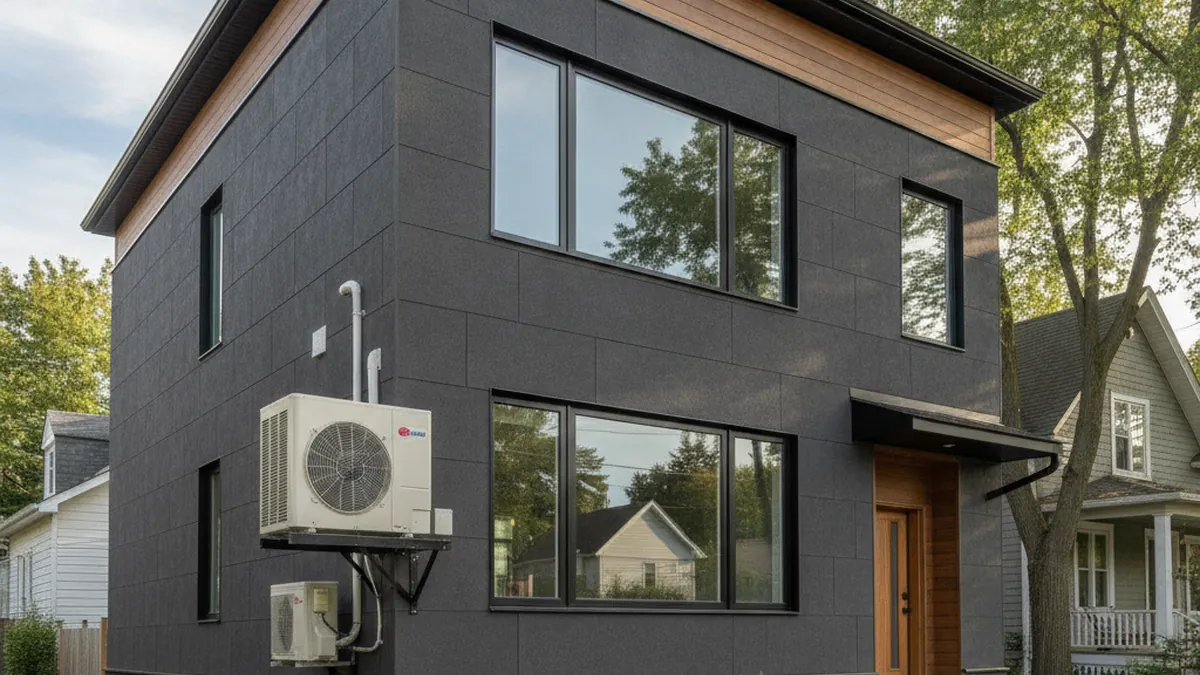
On the North Shore, renovating a plex or income property is often profitable — provided you know what assistance is available. ImmoMulti, a direct buyer of income properties on the North Shore, observes that two programs are particularly underused: LogisVert from Hydro-Québec offers financial assistance of up to $6,700 depending on the eligible equipment installed, with an enhanced benefit starting June 15, 2026, and up to 40% savings on winter heating costs. Rénoclimat, from the Quebec government, multiplies the insulation grant based on the number of units — a triplex can therefore receive three times the assistance of a single-family home. Both programs can be stacked on distinct work items. This practical guide explains the exact amounts, the eligibility criteria for duplexes, triplexes, and fourplexes, how the stacking mechanics work, and the concrete steps to ensure your North Shore income property takes full advantage of the available grants in 2026.
Why can energy grants make a difference for your North Shore plex?
Heating represents a major share of operating costs for income properties on the North Shore. Energy grants reduce both the upfront renovation cost and the recurring energy bill — directly improving NOI. For a triplex, a properly stacked LogisVert + Rénoclimat strategy can reduce the net cost of energy improvements by several thousand dollars, making the project profitable rather than indefinitely postponed.
Any plex owner on the North Shore knows the reality: between rising construction costs, property taxes, and insurance premiums, every compressed expense line matters. Heating represents a major share of operating costs for an income property — and that is precisely where energy grants come in. By funding insulation, windows, or a heat pump, they reduce both the upfront renovation cost and the recurring energy bill.
Our article on how more than one in four plexes in Quebec is not profitable named these programs without detailing them. That is the purpose of this guide: to explain concretely how much you can receive, who is eligible, and how to stack the grants. For a duplex, triplex, or fourplex owner on the North Shore, making proper use of LogisVert and Rénoclimat can be the difference between a profitable renovation project and one postponed indefinitely.
What is LogisVert from Hydro-Québec and how do you get up to $6,700 for your plex?
LogisVert is Hydro-Québec's energy efficiency grant for residential buildings of up to 19 units. For an eligible heat pump or efficient equipment installation, it provides up to $6,700 and up to 40% savings on winter heating costs. The enhanced benefit applies to installations completed on or after June 15, 2026.

LogisVert is Hydro-Québec's financial assistance program for energy efficiency in residential buildings. For plex and income property owners, it is one of the most accessible grants, as it is triggered at the time of eligible equipment installation.
- Amount: financial assistance of up to $6,700, with the amount varying based on the eligible equipment installed (heat pump, geothermal, etc.).
- Savings: up to 40% on winter heating costs, a gain that flows directly to NOI.
- Eligibility: residential buildings with up to 19 units, as well as individual apartments in buildings with 20 or more units.
- Enhanced benefit: for installations completed on or after June 15, 2026.
In practice, a fourplex owner on the North Shore who installs an eligible heat pump can target this grant while reducing their winter heating bill. The eligibility structure — up to 19 units for the whole building, or per apartment beyond that — covers the vast majority of income properties in the region.
Source: Hydro-Québec — LogisVert Program
How does Rénoclimat multiply its assistance based on the number of units in your income property?
Rénoclimat multiplies its insulation grant by the number of units in the building. For a triplex, this means up to triple the single-family grant amount for insulation work. The full-building energy assessment is required, and the mechanical systems grant is calculated per appliance (one per unit maximum).

Rénoclimat is the Quebec government's program for energy efficiency renovations. It covers owners of single-family homes, but also duplexes, triplexes, and small income properties — making it a powerful lever for plex owners on the North Shore.
The calculation logic clearly favours multi-unit buildings:
- The insulation grant is multiplied by the number of units in the building.
- The energy assessment must cover the entire building.
- The grant for mechanical systems is calculated based on the number of appliances, with a maximum of one appliance per unit.
In other words, for a triplex, the insulation grant can be multiplied by three compared to an equivalent single-family home, making it a particularly compelling lever for income property owners.
The $40,000 federal interest-free loan is no longer available
The Canada Greener Homes Loan (a federal interest-free loan of up to $40,000) was a separate program from Rénoclimat. It is no longer accepting new applications: its funds are fully committed. Do not include this loan in your financing plan for energy efficiency renovations on a North Shore plex or income property in 2026.
New stream to watch: Rénoclimat – Adaptation
A Rénoclimat – Adaptation stream, dedicated to flood adaptation work, will be available starting October 1, 2026. For plex owners in at-risk North Shore sectors, this stream may support building adaptation projects. Check the exact conditions on Quebec.ca as the effective date approaches.
Sources: Québec.ca — Rénoclimat, multiplex grant and Québec.ca — Rénoclimat, eligibility criteria
LogisVert or Rénoclimat: which applies to your work and for how much?
LogisVert covers efficient heating equipment (heat pumps, geothermal) for buildings of up to 19 units — up to $6,700 per building. Rénoclimat covers insulation and mechanical systems (max. one appliance per unit) and requires a full-building energy assessment. They do not fund the same work items, so both can apply to the same property on distinct work.
The two programs do not overlap: they fund different types of work. This comparison table helps income property owners see which program applies to which work items.
| Criterion | LogisVert (Hydro-Québec) | Rénoclimat (Government of Quebec) |
|---|---|---|
| Who | Residential buildings ≤ 19 units; apartments in buildings with 20+ units | Owners of single-family homes, duplexes, triplexes, and small income properties |
| What | Installation of efficient equipment (e.g. heat pump), energy efficiency | Insulation, mechanical systems; full-building energy assessment required |
| How much | Up to $6,700 depending on equipment; up to 40% savings on winter heating | Insulation grant multiplied by number of units |
| Note | Enhanced benefit from June 15, 2026 | Adaptation stream (floods) from October 1, 2026 |
Can you combine LogisVert and Rénoclimat on the same income property?
Yes — as long as each grant funds a different work item. A North Shore plex owner can claim LogisVert for a heat pump installation (up to $6,700) and Rénoclimat for wall/roof insulation (grant multiplied per unit) in the same project. The golden rule: clearly separate work items in each application so no expense is funded twice.
This is where the strategy pays off. You can apply to multiple programs for distinct types of work. Stacking is allowed as long as each grant funds a different work item.
Stacking example for a North Shore plex
- Wall and roof insulation funded through Rénoclimat (grant multiplied by number of units)
- Efficient heat pump funded through LogisVert (up to $6,700 depending on equipment)
- Result: reduced net cost and up to 40% savings on winter heating
The golden rule: clearly separate work items in each application so no program funds the same expense twice. A project structured this way on a North Shore triplex or fourplex can reduce the actual net cost of an energy efficiency renovation by several thousand dollars.
"A well-insulated plex means lower heating costs, a more stable NOI — and a resale value that follows. Grants are not an accounting footnote: they change the project equation."
— ImmoMulti TeamWhat are the concrete steps to apply for an energy grant on your North Shore plex?
Five steps: (1) identify and classify your work items under LogisVert vs. Rénoclimat; (2) commission a full-building energy assessment from a certified Rénoclimat advisor; (3) verify LogisVert eligibility (≤19 units for the whole building); (4) plan your timeline — target June 15, 2026+ for the enhanced LogisVert benefit; (5) submit one application per program for distinct items with no duplication.
Here is how to approach an application in an orderly way, intelligently stacking the two active programs:
- 1. Identify the work: insulation, windows, heat pump, or other heating equipment. Classify each item under the most advantageous program.
- 2. Have the entire building assessed: Rénoclimat requires an energy assessment covering the whole income property, carried out by a certified advisor.
- 3. Verify LogisVert eligibility: your building must have no more than 19 units to be eligible as a whole building; beyond that, the grant applies per apartment.
- 4. Plan your timeline: target installations on or after June 15, 2026 for the LogisVert enhanced benefit, and monitor the Rénoclimat – Adaptation stream from October 1, 2026 if your area is exposed to flood risk.
- 5. Stack the grants: submit one application per program for distinct work items, with no duplication.
ImmoMulti: direct buyer of income properties on the North Shore
If, despite the grants, your plex or income property is no longer performing as expected, we can submit a direct offer — no commission, fully confidential. No public listing, no broker, no obligation. Receive a proposal within 48 h.
To go further, our North Shore plex insurance guide covers another key expense line to master, and our off-market deals page is for owners who prefer to sell discreetly. Used properly, energy grants remain one of the few levers that simultaneously reduce renovation costs and recurring operating expenses on your income property.
What does an energy-efficiency renovation really cost, and what's left to pay after grants?
The gross cost of an energy project on a North Shore plex depends on the work items — insulation, windows, heat pump — but it's the NET cost after grants that matters: that is the figure to compare against the yield gain, never the contractor's initial invoice.
The first reasoning mistake a plex owner makes is treating the contractor's quote as if it were the final cost. It isn't. Between the grant collected, the lasting drop in the heating bill and the effect on net income, the real economic cost of a project is often well below the sticker price. Thinking in terms of net cost after assistance completely changes the decision to proceed or not on a North Shore income property.
Break the project into work items
An energy-efficiency renovation is never one monolithic block: it's a sum of independent items, each tied to the program that funds it best. Separating those items right in the quote is what lets you maximize the stacking of LogisVert and Rénoclimat. Here's how a project on a duplex, triplex or fourplex is typically structured.
| Work item | Most relevant program | Type of assistance |
|---|---|---|
| Cold-climate wall-mounted heat pump | LogisVert (Hydro-Québec) | Amount based on equipment; multi-unit bonus from June 15, 2026 |
| Insulating the roof, walls or foundation | Rénoclimat (Quebec) | Assistance multiplied by the number of units |
| ENERGY STAR doors and windows | Rénoclimat | $150 per eligible opening |
| Caulking / air sealing | Rénoclimat | Between $400 and $800 |
| Replacing oil/propane heating | Chauffez vert / ÉcoPerformance | See the "other assistance" section below |
Sources: Québec.ca — Rénoclimat insulation grant and Hydro-Québec — LogisVert residential
Think in net cost, not gross cost
Consider a simplified illustration (real amounts depend on your building and the applicable rate schedules). Suppose a triplex owner undertakes a project combining insulation and a heat pump. They pay the contractor, then collect the Rénoclimat insulation grant — multiplied by their three units — and the LogisVert grant for the heat pump. The net cost to compare against the yield gain is the total quote minus the sum of those two grants. It's that figure, not the starting invoice, that belongs in the profitability calculation.
A second, quieter but lasting effect adds to this net cost: the drop in the heating bill. Every dollar of heating saved each winter is a dollar that stays in the income property's net operating income, year after year. Over a multi-year holding period, that recurring saving can exceed the one-time grant itself. It's precisely to model both effects together — grant collected and recurring saving — that our renovation calculator compares net cost after grants to expected yield.
The right reflex before signing a quote
- Ask the contractor for a quote itemized by work item (insulation, windows, heat pump separated)
- Tie each item to the program that funds it
- Subtract the estimated grants to get the real net cost
- Add the expected annual heating saving to the profitability calculation
The heat pump in a plex: sizing, the LogisVert bonus and energy-insecurity zones
For eligible buildings, Hydro-Québec boosts the wall-mounted heat pump grant at $100 per 1,000 BTU/h at −8 °C — an amount that can reach $220 per 1,000 BTU/h in designated energy-insecurity zones — for installations completed on or after June 15, 2026.

The heat pump is often the best assistance-to-yield ratio in an energy project, because it works where a plex owner's wallet bleeds most in winter: heating. Hydro-Québec has spelled out the mechanics of its multi-unit bonus, and understanding how the grant is calculated helps you choose the right appliance.
Assistance calculated by capacity, not by flat rate
Unlike a fixed amount, the LogisVert bonus for eligible units is calculated based on the appliance's capacity: $100 per 1,000 BTU/h measured at −8 °C. In practice, the more powerful and cold-climate-suited the heat pump, the higher the grant. For a building located in a designated energy-insecurity zone identified by Hydro-Québec, an additional $100 per 1,000 BTU/h applies, bringing the grant to $220 per 1,000 BTU/h at −8 °C for the purchase and installation of an ENERGY STAR certified wall-mounted heat pump designed for cold climates.
Source: Hydro-Québec — LogisVert bonus financing for multi-unit dwellings
The conditions to check before installing
The multi-unit bonus is not automatic. According to Hydro-Québec, for the buildings concerned, the building must have a primary electric heating system, be equipped with one electricity meter per unit, and the installed appliance must be an ENERGY STAR certified wall-mounted heat pump designed for cold climates. The bonus targets installations completed on or after June 15, 2026. A North Shore owner therefore has every reason to check these criteria — and whether their sector falls within an energy-insecurity zone — before ordering equipment.
- Primary electric heating: the heat pump supports an existing electric system.
- One meter per unit: a key condition for the multi-unit buildings targeted by the bonus.
- ENERGY STAR cold-climate appliance: only recognized models qualify; Hydro-Québec publishes the list of eligible heat pumps.
- Installation date: aim for June 15, 2026 or later to benefit from the bonus.
Sizing it right for a plex
Because the grant is calculated per BTU, appliance sizing isn't just a comfort question: it directly affects the amount received and the saving achieved. An undersized heat pump won't cover peak-cold heating needs and will leave the electric baseboards to take over; an oversized one costs more to buy without a proportional gain. For a plex, the exercise is to have an installer assess the real needs of each unit, then choose the ENERGY STAR cold-climate model that covers the load while maximizing the BTUs eligible for assistance. It's a case where the right technical choice and the right financial choice converge.
Careful: the heat pump goes through LogisVert, not Rénoclimat
According to Québec.ca, the installation, replacement or repair of an air conditioner, an air-source heat pump or a geothermal system is not eligible for Rénoclimat. It is LogisVert from Hydro-Québec that funds the heat pump. This split is good news for stacking: insulation via Rénoclimat, heat pump via LogisVert, with no double-dipping.
Source: Québec.ca — Rénoclimat mechanical systems grant
Insulation, windows and envelope: which Rénoclimat amounts for your income property?
Rénoclimat funds envelope improvements: insulating the roof, walls, foundation or an exposed floor; replacing ENERGY STAR doors and windows ($150 per opening); and caulking ($400 to $800). For insulation, you must cover at least 20% of the targeted surface to qualify.
Where LogisVert targets equipment, Rénoclimat targets the building envelope — everything that keeps heat from escaping. For an older plex on the North Shore, often built before modern insulation standards, this is frequently where the assistance-to-saving ratio is highest. But you need to know the thresholds and amounts.
Insulation: the 20% threshold
According to Québec.ca, improving the insulation of the roof assembly, foundation, exterior walls or an exposed floor may qualify for assistance, and the amount depends on the insulation-level improvement achieved. Two surface conditions frame eligibility:
- You must add insulation to at least 20% of the total roof-assembly area to qualify for assistance on that item.
- You must add insulation to at least 20% of the total foundation-wall area (excluding shared walls) for that item.
This 20% rule prevents claims for marginal touch-ups: the grant rewards a real improvement in thermal performance. For a semi-detached house or a corner unit in a row house, the assistance for insulating exterior walls, basement walls or crawl-space walls is 75% of the indicated amount — a nuance that affects some attached plex buildings on the North Shore.
Source: Québec.ca — Rénoclimat insulation grant
Doors, windows and air sealing
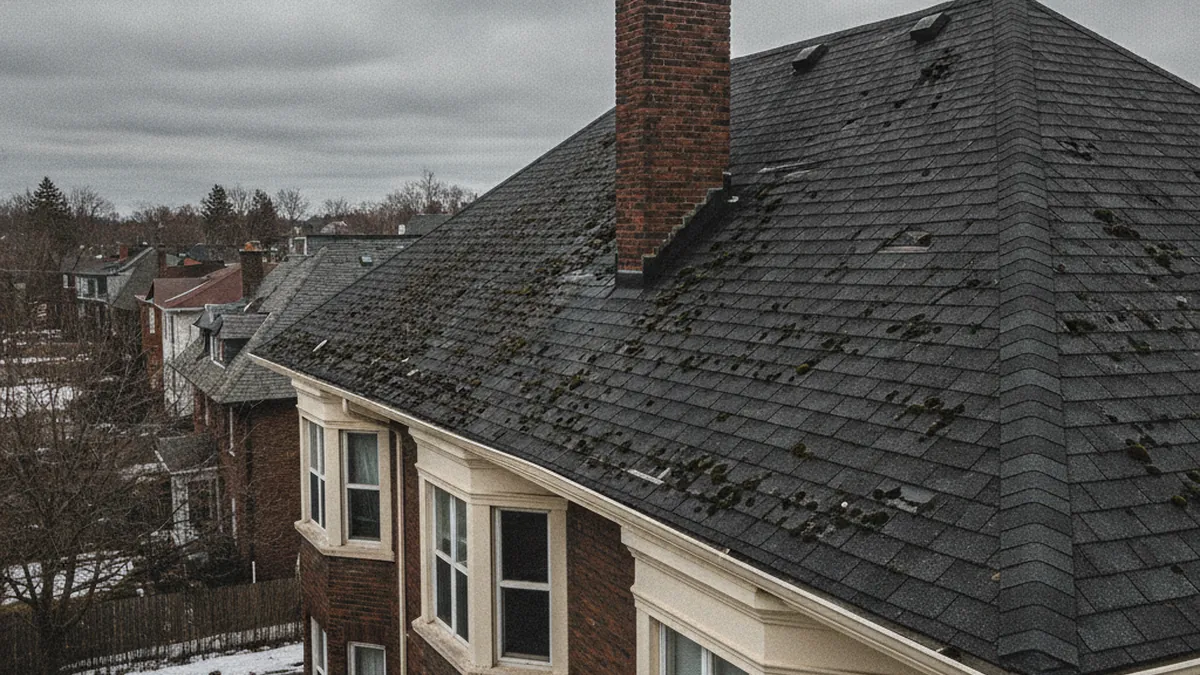
Beyond insulation, two often-overlooked items improve an income property's airtightness:
- ENERGY STAR doors and windows: replacing a door or window with an ENERGY STAR certified model may qualify for $150 per eligible opening. On a multi-unit building with many windows, the total adds up.
- Caulking and air sealing: sealing areas prone to air leaks may qualify for assistance between $400 and $800.
These amounts illustrate a principle: Rénoclimat rewards measurable improvement in energy performance, item by item. The mandatory initial energy assessment exists precisely to document the pre-work state and quantify the post-work gain. On an older plex, it's often the original windows and the air leaks around openings that weigh most heavily on the heating bill.
Recommended priority order on an older plex
- Do the whole-building energy assessment (it conditions the Rénoclimat grant)
- Seal air leaks (caulking): low cost, immediate comfort effect
- Strengthen insulation on the most heat-losing items (roof often first)
- Replace the most worn openings with ENERGY STAR models
- Install the heat pump via LogisVert once the envelope is tightened
Rénoclimat's "per-unit" calculation: what does it give on a triplex or fourplex?
Rénoclimat multiplies the insulation grant by the number of units in the building: for equivalent work, a triplex receives roughly three times a house's grant, and a fourplex roughly four times. The assessment must cover the whole building, and the mechanical grant is capped at one appliance per unit.

This is the mechanism that makes Rénoclimat so attractive for plex owners: the insulation grant isn't capped at a single amount per building — it's multiplied by the number of units. A North Shore income property owner therefore enjoys a leverage effect a single-family homeowner does not.
The multiplication logic
The principle is simple to state: for equivalent quality of work, a duplex's insulation grant is multiplied by two, a triplex's by three, a fourplex's by four, relative to a single-unit home. The energy assessment must cover the entire building, and the mechanical-systems grant is calculated by the number of appliances, with a maximum of one appliance per unit. This architecture mechanically favors multi-unit buildings.
| Building type | Insulation grant multiplier | Mechanical grant (cap) |
|---|---|---|
| Single-family home | × 1 | 1 appliance |
| Duplex | × 2 | up to 2 appliances |
| Triplex | × 3 | up to 3 appliances |
| Fourplex | × 4 | up to 4 appliances |
Source: Québec.ca — Rénoclimat multi-unit buildings grant
Illustrative example on a triplex
Imagine a North Shore triplex owner who insulates the roof and foundation walls of their building — covering well beyond the 20% threshold required per item. Where a single-family home would receive a base grant for the same work, the triplex sees that grant multiplied by three. Add the replacement of several windows with ENERGY STAR models at $150 each, then an efficient heat pump funded separately by LogisVert, and the total grants collected can markedly reduce the project's net cost. Exact amounts depend on the applicable rate schedules and the energy assessment; the takeaway is that the number of units works in your favor.
That's also why a fourplex often has the best profile: four times the insulation grant, up to four eligible mechanical appliances, and a LogisVert heat pump on top. For an owner planning to hold and then sell, every dollar of grant collected and every dollar of heating saved flows into net income — and therefore into value. Our financing comparison tool and our renovation calculator help integrate these amounts into a coherent plan.
Chauffez vert, ÉcoPerformance and other assistance: what still applies in 2026?
The Chauffez vert program (converting oil or propane heating to electricity) no longer accepts applications as of March 31, 2026. For large buildings of four storeys and more, the ÉcoPerformance program takes over, with assistance of up to $100,000 per measure.

LogisVert and Rénoclimat form the core of the toolkit for plex owners, but a savvy owner keeps an eye on the neighbouring programs — especially since some are closing while others target specific buildings. Sorting them out avoids building a financing plan on assistance that no longer exists.
Chauffez vert: the window has closed
The Chauffez vert program covered converting a central oil or propane heating system to electricity. According to Québec.ca, the financial assistance for this conversion is no longer available as of March 31, 2026: the work had to be completed and the application submitted before that date, and no application received after March 31, 2026 is accepted. Eligible work included removing the oil or propane tank, fully dismantling the fuel furnace or boiler, and installing a new electricity-based system. Houses, duplexes, triplexes and residential buildings were eligible; in a multi-unit residence, the system had to heat at least one unit.
Source: Québec.ca — Chauffez vert (removal of an oil or propane heating system)
ÉcoPerformance: for larger buildings
For residential buildings of four storeys and more, it's not Chauffez vert but the ÉcoPerformance program that applies to conversion projects. This program targets larger buildings and offers assistance of up to $100,000 per measure, with a maximum of $250,000 per site annually. Most North Shore plex buildings — duplex to fourplex, low-rise — fall under the residential programs (LogisVert, Rénoclimat) rather than ÉcoPerformance, but an owner of a larger building should look into it.
Source: Québec.ca — Chauffez vert, about the program
| Program | Target | Status in 2026 |
|---|---|---|
| LogisVert (Hydro-Québec) | Buildings ≤ 19 units; per apartment beyond | Active, bonus from June 15, 2026 |
| Rénoclimat (Quebec) | Houses, duplexes, triplexes, small multiplexes | Active; Adaptation stream from October 1, 2026 |
| Chauffez vert (Quebec) | Oil/propane → electricity conversion | Closed to applications since March 31, 2026 |
| ÉcoPerformance (Quebec) | Buildings of 4 storeys and more | Active, up to $100,000 per measure |
Beyond these provincial programs, some North Shore municipalities and RCMs occasionally offer incentives (rain barrels, trees, charging stations). These change often and remain modest next to LogisVert and Rénoclimat; it's worth checking your city's website, but not making it the backbone of your plan.
What mistakes do plex owners most often make with energy grants?
The costliest mistakes: starting work before the required energy assessment, double-dipping items between programs, forgetting that the heat pump goes through LogisVert and not Rénoclimat, and counting on closed programs like Chauffez vert or the old $40,000 federal loan.

Grants aren't lost only through lack of information: they're mostly lost through sequencing or routing errors. Here are the mistakes we see most often among plex and income property owners on the North Shore, and how to avoid them.
1. Starting work before the assessment
Rénoclimat requires an energy assessment of the entire building by a certified advisor. Starting work before this assessment can compromise eligibility, because the grant depends on comparing the "before" and "after" states. The rule: assess first, then do the work.
2. Double-dipping items between programs
Stacking LogisVert + Rénoclimat is allowed, but only on distinct work items. Trying to fund the same expense (the same appliance, the same wall) in two programs leads to rejection. The fix: itemize the quote and tie each item to a single program.
3. Choosing the wrong program for the heat pump
As seen above, the air-source heat pump goes through LogisVert, not Rénoclimat, which expressly excludes this type of appliance. Filing the heat pump in the wrong application wastes time — and sometimes the grant.
4. Building a plan on assistance that no longer exists
Two grants often wrongly cited in 2026: the Canada Greener Homes Loan (federal interest-free loan up to $40,000), which no longer accepts new applications, and Chauffez vert, closed since March 31, 2026. A financing plan resting on either collapses at application time.
5. Ignoring thresholds and dates
The 20% surface threshold for insulation, the June 15, 2026 date for the LogisVert bonus, the opening of the Adaptation stream on October 1, 2026: these boundaries change the math. A project planned a few weeks too early can miss a bonus.
The most expensive mistake: giving up out of ignorance
The worst mistake is applying for nothing, unaware that your plex is eligible. Duplexes, triplexes and fourplexes on the North Shore are fully covered by LogisVert and Rénoclimat. Leaving these grants on the table means paying full price for work that could have been subsidized — and needlessly inflating the building's operating costs.
How does subsidized work translate into net income and resale value?
By lowering the heating bill, subsidized work raises net operating income (NOI). Because a multiplex's value is calculated by capitalizing that NOI, every dollar of expense saved translates — at a constant cap rate — into several dollars of additional value.

For an owner eyeing resale, the ultimate question isn't "what does the project cost" but "what does it change about my income property's value." And energy grants act precisely on the lever that determines that value: net operating income.
The capitalization mechanism
The economic value of an income property is calculated by dividing net operating income (NOI) by the capitalization rate (cap rate). In other words, durably cutting an expense — such as the heating bill thanks to a heat pump and better insulation — raises NOI, and that increase is then "multiplied" by the capitalization effect. It's the principle our cap rate calculator details: at a constant rate, a recurring expense saving is worth far more than its annual amount once converted into value.
Let's illustrate the reasoning for teaching purposes. If subsidized work removes a recurring heating expense from a plex's budget, that saving is added to NOI each year. Capitalizing this higher NOI at the market rate lifts the building's value by a multiple of the annual saving. The exact figure depends on the cap rate applicable to your North Shore sector and on your real numbers — hence the value of modeling your own case rather than relying on a general rule.
Two effects on value, not one
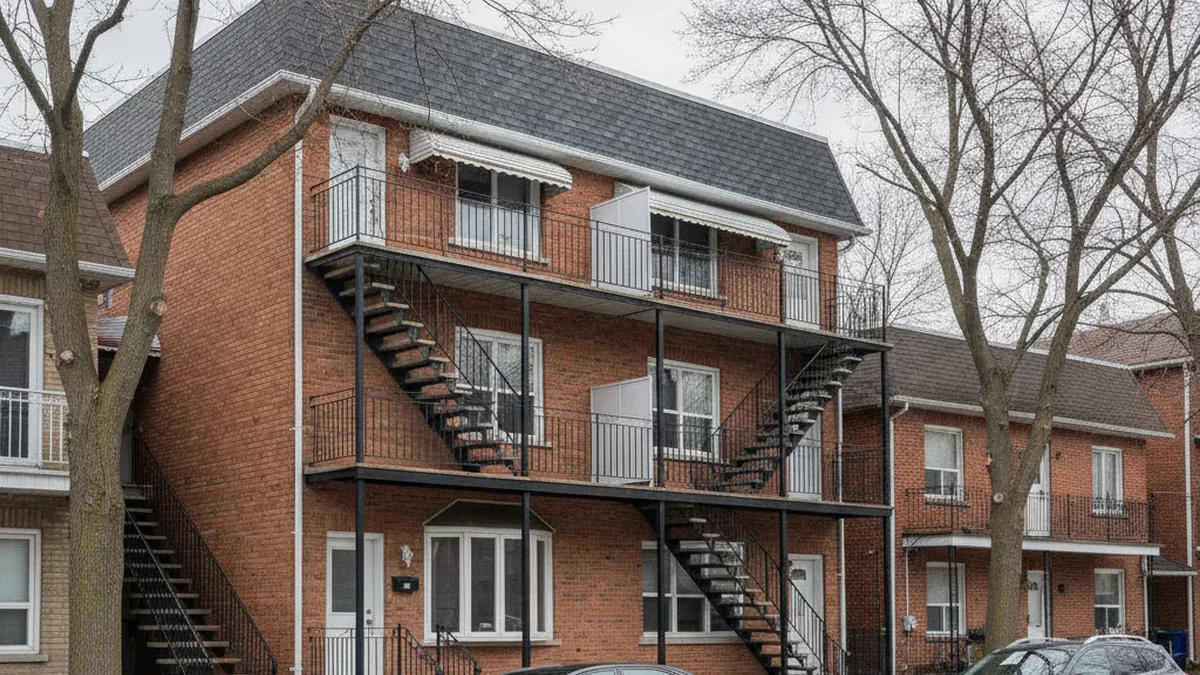
Subsidized work improves an income property's value through two distinct channels:
- Net income: less heating to pay, so a higher NOI, so a higher capitalized value.
- Building condition: a well-insulated plex with a recent heat pump and new windows presents in better overall condition — a concrete argument with a buyer and a more favorable inspection.
A word on rents: in Quebec, certain major renovations may, within the rent-fixing method of the Administrative Housing Tribunal, be factored in through the amortization of capital expenditures over their useful life. The exact scope of any adjustment depends on the official method and your situation; our guide to the 2026 TAL method details this mechanism. The seller's view remains the same, though: it's first and foremost the drop in expenses, capitalized, that supports value.
"The seller who presents a plex with controlled expenses — optimized heating, a tightened envelope — is selling a more solid net income. And a more solid net income, at a constant cap rate, means a higher value."
— ImmoMulti TeamThis is where the loop between grant and resale closes: assistance reduces the cost of the work, the work reduces expenses, lower expenses lift net income, and net income supports value. For a North Shore owner weighing renovate versus sell, quantifying this full chain — net cost after assistance, annual saving, effect on value — is the best way to decide with eyes open. And if the verdict leans toward selling, ImmoMulti can make a direct offer on your income property, grants completed or not.


