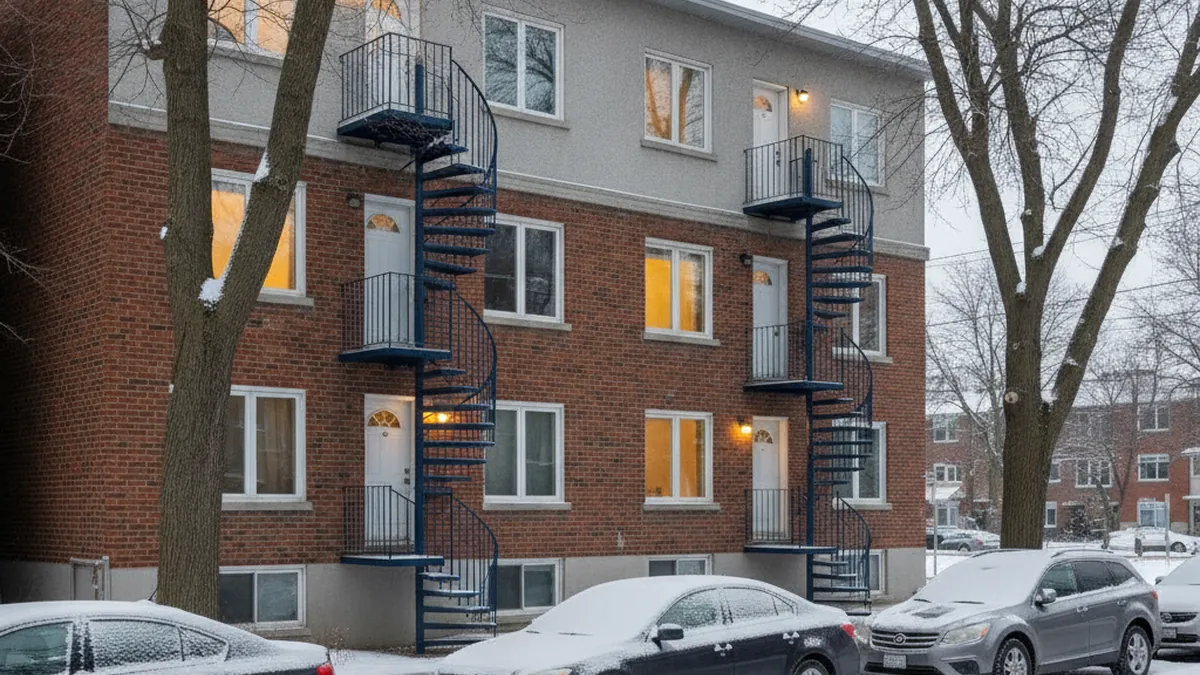
ImmoMulti — a direct buyer of multi-unit properties on the North Shore — tells every seller the same thing: selling a plex with active leases erases no lease. In Quebec, leases follow the building, not the owner. On closing day, the buyer inherits your tenants, your rents, your pending notices and any lingering disputes. Your obligations as a seller therefore go well beyond signing the deed: you must hand over a complete rental file, properly prorate prepaid rent, settle the deposit question and disclose every pending notice. This guide walks through each of these seller-side obligations, with the right sources.
Does the sale end the leases on my plex?
No. Under article 1937 of the Civil Code of Quebec, selling the building does not end the lease. The new owner becomes the landlord by operation of law and remains bound by the existing leases, on the same terms. Leases follow the building, not the person of the seller.
This is the starting point for any sale of an occupied income property. The Civil Code of Quebec is explicit: the voluntary or forced alienation of the leased property does not, of itself, terminate the lease. In other words, a tenant in place cannot be removed simply because you are selling. The buyer picks up the lease exactly where you leave it: same rent, same clauses, same term.
The direct consequence for you: you cannot guarantee the buyer "vacant on possession" units simply because a sale is approaching. Delivering a vacant unit requires a genuine voluntary departure, a repossession or an eviction validated before the sale — otherwise you expose yourself to remedies. Many owners therefore choose to sell the building occupied, with clear leases. On this point, your mix of tenants and rents weighs directly on the price: we explain it in our article on how your tenants change the value of your plex at sale.
Source: Civil Code of Quebec, art. 1937 (LégisQuébec); Administrative Housing Tribunal (TAL).
What documents must I hand over to the buyer?
The seller must hand over a complete rental file: each signed lease and its schedules, the TAT schedule showing the lowest rent in the last 12 months, the history of increases and notices, the rent-account status (arrears, agreements), tenant contact details and any pending notice or TAT file. The offer to purchase usually provides for this hand-over before closing.
Since the buyer becomes the landlord, they need everything that governs the relationship with each tenant. A well-assembled file is not just a courtesy: it drives the price, reduces the buyer's conditions and prevents last-minute stalls. Here is what a seller should gather early:
- The signed leases for each unit, with all schedules and the building rules if any.
- The TAT lease schedule showing the lowest rent paid over the previous 12 months (required at renewal, useful to the buyer).
- The history of rent increases and notices sent, to demonstrate compliance with the TAT.
- The rent-account status: rents up to date, arrears, payment agreements, cheques or transfers.
- Tenant contact details and recent proof of payment.
- Any pending notice (repossession, non-renewal, major work) and any open TAT file.
Why a complete file protects you
- It justifies your declared income — a plex's value rests on it.
- It limits price-reduction requests and conditional clauses.
- It shields you from a claim of misrepresentation after the sale.
Who keeps the rent for the month the building is sold?
The current month's rent is prorated to the closing date on the statement of adjustments prepared by the notary. The seller keeps the portion before the sale; the buyer is credited the portion covering the days from the sale date onward, since they will be the landlord for that period.
In Quebec, rent is payable in advance: the tenant generally pays on the first day of the term (often the 1st of the month). Closing day therefore almost always falls in the middle of a month already collected. The notary splits it: the fraction of days you owned the building is yours, the fraction the buyer owns it is credited to them. This is one of the standard lines of the costs and adjustments at closing, alongside taxes and fuel in the tank.
| Situation | Treatment at closing | Effect for the seller |
|---|---|---|
| Month's rent already collected | Prorated to the sale date | Buyer is credited for the days after closing |
| Unpaid rent for the month | To clarify: seller's account, adjustment possible | Document it to avoid a post-sale dispute |
| First term prepaid (new lease) | Tracked and transferred by the period covered | Prorated like prepaid rent |
Do I have to transfer tenant deposits to the buyer?
Normally, no: in Quebec, a landlord may only require the first rental term. Security deposits, key deposits and last-month deposits are prohibited. There is therefore usually no deposit to transfer to the buyer, unlike in other provinces.
This is a major difference from elsewhere in Canada, where security deposits are common. In Quebec, the law prohibits a landlord from requiring any sum other than the first rent payment. If, despite this, you hold a sum a tenant paid you as a "deposit", it is not a transferable asset: it should be returned or regularized before the sale, never presented to the buyer as an amount to take over. We detail this framework in our article on security deposits and rent advances banned in Quebec.
Absolutely avoid
Do not "transfer" an illegal deposit to the buyer by presenting it as a file asset: you would be passing on both an irregular sum and the risk attached to it. Regularize the situation before closing.
Do I have to notify tenants and pass on pending notices?
You do not need the tenants' permission to sell. However, the tenant is entitled to know the identity and address of the new landlord in order to know whom to pay, and you must disclose to the buyer any pending notice (repossession, non-renewal, work) and any TAT dispute, since they follow the building.
Selling an occupied building does not require the tenants' consent. But two practical obligations remain. First, the tenant must know whom to pay rent to after the sale: information on the new landlord is passed on, usually at closing or shortly after. Second, while the building is listed, you must respect the tenant's rights regarding visits of the unit, framed by the Civil Code (reasonable notice, suitable hours).
Beware of notices already given. Notices strictly tied to the lease (increase, non-renewal for a lease-based ground, work) follow the building. But repossession of a dwelling is a personal right: a repossession notice you gave for your own benefit generally cannot serve the buyer. Every pending notice must be disclosed, because it changes what the buyer is purchasing. For the required deadlines and forms, see our guide on mandatory tenant notices and legal deadlines in Quebec.
Sell your occupied plex, hassle-freeDirect offer within 48 hours, leases in place accepted, no broker or commission. →What is the full legal framework that binds you when selling occupied?
Selling a leased building in Quebec is governed by the Civil Code: article 1937 makes the lease binding on the buyer, articles 1930 to 1935 protect the tenant during and after the sale, and articles 1957 to 1970 govern repossession and eviction. The buyer becomes the landlord "by operation of law": they sign no new lease, they inherit yours as they stand.
Many owners think a sale "resets the counter" on leases. It doesn't, and that misconception is the number-one source of friction at closing. The principle is the binding nature of the lease: the lease is a right that burdens the building, a bit like a servitude, and it transfers with it. The table below sums up the provisions every plex seller on the North Shore should know before signing an offer to purchase.

| Provision | What it provides | Effect for the seller |
|---|---|---|
| Art. 1937 C.C.Q. | Alienation of the leased property does not end the lease; the buyer becomes landlord. | You cannot deliver the building "empty" merely by selling. |
| Art. 1930 C.C.Q. | A tenant can only be forced to leave in cases provided by law. | You cannot "dismiss" a tenant to make the sale easier. |
| Art. 1931 C.C.Q. | Right to visit the unit (24-hour notice, suitable hours). | Frames your buyer visits while the building is listed. |
| Art. 1895 C.C.Q. | Hand-over of the written lease and schedule (lowest rent in 12 months). | Documents the buyer will require to assess income. |
| Art. 1957-1970 C.C.Q. | Repossession and eviction for subdivision, enlargement, change of use. | The only legal paths to free a unit before the sale. |
"Landlord by operation of law": what it changes in practice
The phrase "by operation of law" means no formality is needed for the buyer to become landlord: they become so automatically when the deed of sale is signed at the notary. The tenant signs nothing, no new lease is created, and the existing lease continues on its current terms until its expiry, then renews under the usual rules. For you, the seller, three practical consequences:
- No rent renegotiation at the sale. The rent written in the lease is what the buyer inherits. You cannot "adjust" rents to market on the eve of closing; only the TAT's annual renewal procedure allows that.
- The lease clauses carry over. Pet clause, parking, non-smoking, sublet: everything written in the lease keeps applying. A poorly drafted lease transfers with its flaws.
- Pending proceedings carry over too. An open file at the Administrative Housing Tribunal (TAT) — non-payment, a contested increase — continues, but it is the buyer who inherits it as the new landlord. Hence the importance of full disclosure.
You must distinguish the sale of the building (which carries the lease by the effect of article 1937) from the assignment of the lease (which is an act of the tenant, not the owner). Selling your plex does not "assign" the leases: it carries them with the building. We detail assignment and sublet cases below.
Sources: Civil Code of Quebec, art. 1930, 1931, 1937, 1957-1970 (LégisQuébec); Administrative Housing Tribunal.
What does the timeline of an occupied plex sale look like, step by step?
An occupied plex sale follows a fairly stable sequence: prepare the lease file, set the price from documented income, receive an offer, let the conditions period pass (inspection, financing, lease review), then sign at the notary, who prorates rents and taxes. Unit visits and the hand-over of the rental file are the two most sensitive steps on the tenant side.
Selling an income property is not selling a house. Value rests on income, visits involve third parties (your tenants), and closing carries adjustments specific to rentals. Here is the typical timeline, from the owner-seller's side.

| Step | What the seller does | "Lease" watch-point |
|---|---|---|
| 1. Preparation | Gather leases, schedules, rent history and notices. | An incomplete file scares off serious buyers. |
| 2. Price | Set value from normalized net income, cap rate and GRM. | Below-market rents depress the price (see examples). |
| 3. Listing | Market the building; organize visits. | 24-hour notice to tenants, suitable hours (art. 1931). |
| 4. Offer / promise | Receive and negotiate the offer to purchase. | Lease hand-over and rent-warranty clauses. |
| 5. Conditions | Inspection, financing, lease review by the buyer. | The buyer validates your declared income lease by lease. |
| 6. Closing | Signing of the deed at the notary. | Rent and tax proration on the statement of adjustments. |
| 7. Post-sale | Pass on the new landlord's identity to the tenant. | The tenant must know whom to pay rent to. |
Unit visits: the step that goes wrong most often
This is where most complaints arise. The tenant does not have to consent to the sale, but keeps peaceful enjoyment of their home. The Civil Code frames visits: the landlord must give 24 hours' notice before showing a unit, and the visit must take place at suitable hours (in practice, between 9 a.m. and 9 p.m.). Nor can you multiply visits to the point of harassing the tenant. An irritated tenant who refuses access or "decorates" the visit with grievances can slow a sale; an informed, respected tenant makes it easier.
Preparing visits without upsetting your tenants
- Give early written notice; propose time slots, don't force them.
- Group visits to limit disruption (open houses by appointment).
- Remind tenants the lease continues: they have nothing to fear from the sale.
- A direct buyer like ImmoMulti cuts the number of visits to nearly zero.
Selling to a direct buyer of multi-unit properties shortens this timeline: no public listing, few or no repeated visits, and a lease review done in one pass. For sellers who want to avoid the back-and-forth, it is often the most discreet route for tenants.
Sources: Civil Code of Quebec, art. 1931 (right of visit); Administrative Housing Tribunal.
Which offer-to-purchase clauses touch your leases?
An offer to purchase for an occupied plex contains rental-specific clauses: the complete hand-over of the lease file before closing, the seller's declarations on rents and the absence of disputes, a lease-review condition for the buyer, the proration of rents and taxes, and sometimes a warranty on the accuracy of income. These clauses protect the buyer, but they protect you too if you are transparent.
On an income property, the offer to purchase goes well beyond price and date. It organizes the transfer of the leases and the verification of income. Understanding these clauses keeps you from promising the impossible and exposing yourself to a lawsuit after the sale.

The rental clauses to know
- Lease file hand-over. The seller undertakes to provide, within a set deadline, all leases, schedules, notices and the rent status. It is often a suspensive condition: without a compliant file, the buyer can walk away.
- Seller's declarations and warranties. You declare that the stated rents are accurate, that there is no secret arrangement (discounts, unwritten free months), and that no dispute is hidden. A false declaration can ground a price reduction or a lawsuit.
- Lease-review condition. The buyer reserves a period to read each lease and validate the income. A gap between the listing sheet and the real leases undermines trust — and the price.
- Proration (adjustments). The offer refers to the notary's statement of adjustments for prepaid rent, taxes and fuel in the tank.
- "Occupied" possession. The offer states the building is sold occupied, on the leases in force — not "vacant". Promising vacancy without a legal basis is a trap.
The "optimistic income" trap
Inflating income on the listing sheet (projected rents, a unit "easy to bring to market") backfires as soon as the leases are reviewed: the buyer sees the gap, renegotiates down or walks away. Declare the real rents, backed by the leases and the TAT schedule.
Inspecting an occupied building
The pre-purchase inspection of an occupied plex requires the tenants' cooperation: the inspector must access each unit. The seller organizes this access while respecting the 24-hour notice. A building where certain units cannot be visited worries the buyer and stretches out the inspection condition. Preparing tenants — explaining the schedule, being flexible — speeds up this step and reassures the buyer about the building's real condition.
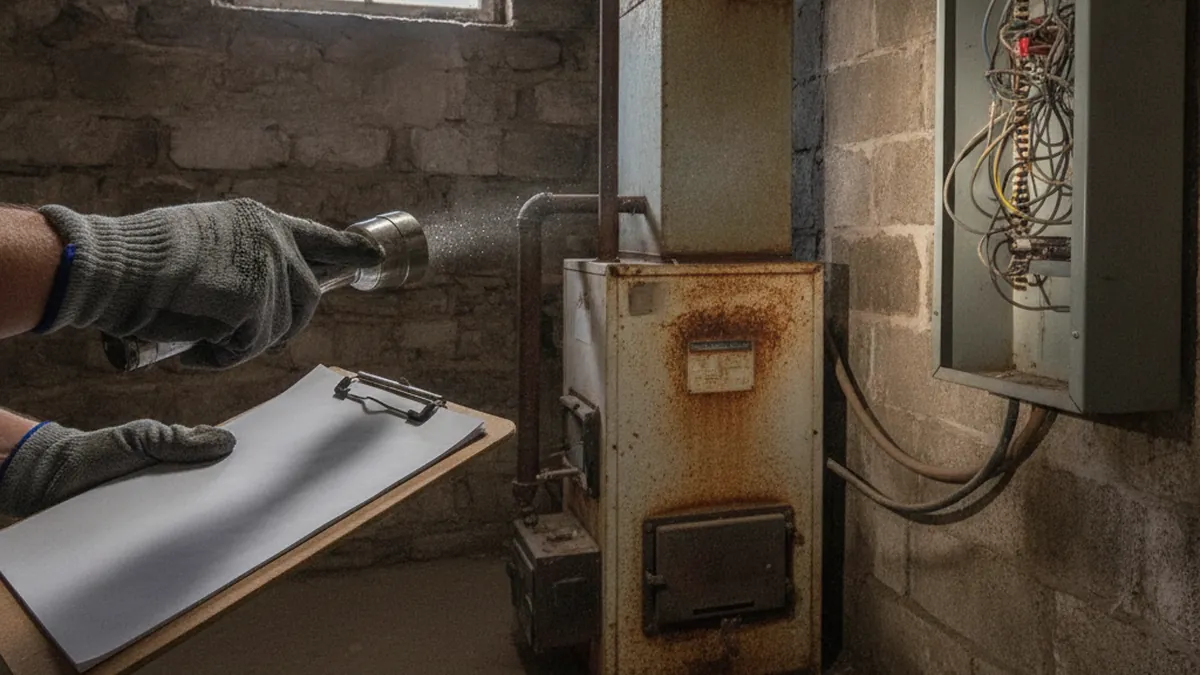
The upside of a well-drafted offer: once the conditions are lifted, the sale moves fast and surprises are rare. That is the value of an honest file from the outset.
Sources: OACIQ — the offer to purchase; Administrative Housing Tribunal.
Repossession, eviction and vacant units: what can you do before the sale?
You can only free a unit before the sale through a genuine voluntary departure, a repossession for your own benefit (or a close relative's) or an eviction for subdivision, enlargement or change of use validated under the TAT's rules. For a lease of more than six months, the repossession or eviction notice must be given at least six months before the lease ends. A repossession you give for yourself generally cannot serve the buyer.
This is the most delicate topic in any occupied sale. Many sellers dream of delivering vacant units — an "empty" building sometimes sells for more to certain owner-occupier buyers. But the legal paths are narrow, framed by the Civil Code and watched by the TAT.

| Lease duration | Notice period (repossession / eviction) | Tenant's reply |
|---|---|---|
| Fixed-term lease over 6 months | At least 6 months before the lease ends | 1 month to reply; silence = refusal |
| Lease of 6 months or less | At least 1 month before the lease ends | 1 month to reply; silence = refusal |
| Lease of indeterminate term | 6 months before the repossession or eviction date | 1 month to reply; silence = refusal |
Three key points for the seller. First, repossession of a dwelling is a personal right: it serves to house the landlord themselves or a relative defined by law (spouse, ascendant, descendant, or another relative for whom they are the main support). An investor buying to rent cannot invoke repossession; a repossession notice you give for yourself does not "transfer" to the buyer. Second, eviction (subdivide, substantially enlarge, or change the unit's use) follows its own rules and indemnities. Third, if the tenant refuses and you press on, it is for the TAT to decide, which takes time — often several months — and is never guaranteed.
Bad-faith repossession or eviction: the risk
Using a repossession or eviction as a pretext to empty the building and sell it "vacant" exposes you to damages, including punitive damages, if bad faith is established at the TAT. A tenant evicted in bad faith can claim compensation. Never base a promise of vacancy on a repossession you do not genuinely intend to exercise.

The simplest solution: sell occupied
Faced with these constraints, many sellers conclude it is faster, safer and often just as profitable to sell the building occupied, with clear, well-documented leases, to a buyer who specifically wants rented units. You avoid the TAT's delays, the risk of remedies and the stress of uncertain vacancy. That is exactly ImmoMulti's profile: we buy occupied multi-unit properties, leases in place, without requiring you to empty the building.
Sources: Civil Code of Quebec, art. 1960 (notice periods); TAT — repossession of a dwelling; Éducaloi — repossession of a dwelling.
Two worked examples: prorated rent at closing and below-market rents
At closing, the rent already collected is prorated by days: if you sell on the 15th of a 30-day month, you keep half and the buyer is credited the other half. On the price side, below-market rents lower net income, hence the capitalized value: at a 5% cap rate, every $1,000 of missing annual net income cuts about $20,000 from value.
Nothing clarifies these obligations better than numbers. Here are two calculations every multi-unit seller should be able to redo. The amounts are illustrative — always validate your case with the notary and, if needed, a chartered appraiser.

Example 1 — Prorating rent at closing
You are selling a 5-unit building. July rents, collected on the 1st, total $6,250 (5 × $1,250). Closing is on July 16. July has 31 days; you own it from the 1st to the 15th (15 days), the buyer from the 16th (16 days).
| Item | Calculation | Amount |
|---|---|---|
| July rents collected | 5 × $1,250 | $6,250.00 |
| Seller's share (Jul 1–15) | $6,250 × 15/31 | $3,024.19 |
| Buyer's share (Jul 16–31) | $6,250 × 16/31 | $3,225.81 |
| Credit to the buyer on the deed | You collected, they occupy the month's end | $3,225.81 |
Since you already collected the $6,250, the notary credits $3,225.81 to the buyer in the final settlement: it is their share of the days they will "own". If, conversely, a July rent were unpaid at closing, it is not prorated as a receipt: it is documented separately, since it is a debt to be clarified between the parties.
Example 2 — The impact of below-market rents on your price
Here the active leases bear directly on value. An income-property buyer capitalizes net operating income (NOI): Value ≈ NOI ÷ cap rate. If your rents are below market, the current NOI is lower, so value is lower — even if the "potential" is high.

| Scenario (5 units) | Avg. rent | Gross income/yr | NOI (55%) | Value at 5% cap |
|---|---|---|---|---|
| Current rents (below market) | $1,250/mo | $75,000 | $41,250 | $825,000 |
| Market rents | $1,500/mo | $90,000 | $49,500 | $990,000 |
| Gap | +$250/mo | +$15,000 | +$8,250 | +$165,000 |
The gap is striking: $250 of missing rent per unit translates into about $165,000 less value at a 5% cap rate. But remember the starting principle: you cannot raise rents to market on the eve of the sale, since leases follow the building and only the TAT-framed annual renewal allows increases. The strategic consequence: either you sell at the documented current NOI, or you legally "normalize" your rents over several cycles before selling. That is why the lease file and the increase history weigh so heavily on the final price.
What an income-property buyer remembers
- They pay for documented, durable income, not theoretical potential.
- Clear leases, up-to-date rents and compliant increases support your price.
- A deeply below-market rent is a slow "catch-up": the buyer discounts it in their offer.
To estimate your own building, our cap rate calculator and our GRM calculator reproduce exactly this capitalization logic.
Note: cap rate and NOI are income-capitalization benchmarks; the ratios depend on each building. Consult a chartered appraiser (OEAQ) for a formal value.
Special cases: lease assignment, sublet, verbal lease and roomers
Beyond the standard written lease, several situations complicate an occupied sale: lease assignment and sublet (tenant's rights, not the seller's), verbal leases (valid but hard to prove), furnished or room rentals, and low-rent leases. Each must be disclosed and documented, since the buyer inherits it as it stands.
A "clean" file is not always simple. Here are the cases that come up most often and what they change for the seller.

| Case | What to know | To do before the sale |
|---|---|---|
| Lease assignment | The tenant transfers all rights to a third party; the landlord cannot refuse without serious cause. | Document the assignment and the tenant actually in place. |
| Sublet | The original tenant stays liable; a subtenant occupies. | Identify who occupies and who is bound by the lease. |
| Verbal lease | Valid in Quebec, but the landlord must provide a writing; rent and terms harder to prove. | Reconstitute the terms in writing, proof of payment. |
| Furnished / rooms | Furniture is part of the lease; the inventory matters. | Draw up the inventory of rented furniture. |
| Low-rent / programs | Leases subject to special rules and agreements. | Disclose the agreements and the bodies involved. |
Assignment and sublet: don't confuse them with the sale
Lease assignment and sublet are acts of the tenant. They have nothing to do with you selling the building. But they affect your file: after an assignment, it is no longer the original tenant who occupies, and the buyer must know who is really bound by the lease. If a sublet is in progress, the main tenant remains liable to the landlord, but a third party occupies the premises. Disclose these situations: a buyer who later discovers that "the tenant on the lease" is not the one living in the unit will feel misled.
The verbal lease: valid but fragile to document
In Quebec, a verbal lease is perfectly valid. The landlord must, however, provide the tenant with a writing setting out the mandatory particulars. For a sale, a verbal lease is a handicap: without a document, the buyer struggles to verify the rent, term and conditions. Before selling, put in writing what can be, and rely on the payment history and any written communication. A "provable" rent beats an "asserted" one.
Sources: TAT — lease assignment and sublet; Éducaloi — the residential lease.
How does the tax on the sale add to your obligations?
Selling a plex generally triggers a capital gain and a recapture of the depreciation (CCA) already claimed. Since the announced increase was cancelled, the capital-gains inclusion rate remains 50% (one half taxable). The CCA recapture, in turn, is added to fully taxable income. These calculations are separate from your obligations to tenants, but they determine your net proceeds — consult a tax specialist.
Leases are not a seller's only obligations: the sale has tax consequences that influence your decision to sell occupied or not, and at what net price. Here are the broad lines, to validate with a professional.

- Capital gain. This is the difference between the sale price (net of costs) and the adjusted cost base. The inclusion rate for individuals stays at 50%: after the confirmed cancellation of the federal increase, the CRA administers the one-half rate on gains realized. So only half the gain is added to your taxable income.
- Recapture of depreciation (CCA). If you claimed depreciation on the building over the years, the sale can "recapture" those deductions: the recaptured amount is added to your income, fully taxable (not at the capital-gains rate).
- Price allocation. The split between land and building (and furniture, if any) affects the recapture and the gain. It is a technical point to discuss with your accountant.
- Residence and occupied unit. If you lived in one of the units, a portion may be treated differently. Selling occupied does not change these tax rules, but it can change the price and therefore the gain.
Don't estimate your tax "by thumb"
CCA recapture surprises many sellers: a building depreciated for years can generate a significant tax bill in the year of the sale, on top of the capital gain. Have a tax specialist prepare a projection before accepting an offer — the net proceeds, not the headline price, are what count.
For an order of magnitude, our capital gains calculator illustrates the combined effect of the gain and the recapture. It does not replace a tax specialist's advice, but it helps frame the discussion.
Sources: CRA — capital gains; Revenu Québec — capital gains. The inclusion rate remains 50% after the cancellation of the increase. Consult a tax specialist for your case.
How do you build a lease file that supports your price?
A "ready-to-sell" lease file gathers, for each unit: the signed lease and its schedules, the TAT rent schedule, the history of increases and notices, the payment status, the inventory of rented furniture if any, and the list of disputes or open TAT files. This file speeds up closing, reduces the buyer's conditions and defends your price, since a plex's value rests on proven income.
A seller's best price lever is not negotiation: it is the quality of the file. An income-property buyer pays for certainty. The more documented your income, the less they discount, and the better your price holds.

The checklist, unit by unit
- The signed lease and all its schedules (building rules, special clauses, amendments).
- The TAT rent schedule (lowest rent in the last 12 months), provided at renewal.
- The history of increases and increase notices, with proof of delivery.
- The payment status: rents up to date, arrears, agreements, payment method.
- Up-to-date contact details for each tenant.
- Pending notices (repossession, non-renewal, work) and any open TAT file.
- The furniture inventory for furnished units or rooms.
- Operating expenses (taxes, insurance, energy, maintenance) to establish the NOI.
"The value of an income property is proven by its leases and its financial statements, not by its promises. A complete rental file is a seller's best price argument."
— Income-capitalization appraisal principle
A well-built file works on two levels: it reassures (the buyer sees real, compliant income) and it protects (you cannot be accused of hiding a rent, a notice or a dispute). It is the opposite of misrepresentation. To go further on the effect of tenants and rents on the price, see our dedicated article on the impact of your tenants on the value of your plex.
Sources: TAT — mandatory particulars and notices; Civil Code of Quebec, art. 1895.
What are the common seller mistakes?
Most disputes after the sale of an occupied plex come from obligations neglected upstream. The most common:
- Promising vacant units without a legal basis, forgetting that leases follow the building.
- Handing over an incomplete lease file or undocumented rents, which drives the price down or multiplies conditions.
- Hiding a TAT dispute or a pending notice from the buyer — a misrepresentation with heavy consequences.
- Believing you must "return" a security deposit to the buyer, when such deposits are illegal in Quebec.
- Ignoring the tenants' right to visits while the building is listed, a source of tension and complaints.
- Trying to raise rents to market at the last minute, forgetting that increases only happen through the TAT-framed annual renewal, not on the eve of a sale.
- Underestimating the tax bill, especially the recapture of depreciation, and reading the headline price instead of the net proceeds.
A rigorous rental file and honest disclosure are your best allies. They speed up closing, secure your price and protect you after the sale. In practice, the sellers who close fastest are the ones who treat the lease file as the product being sold: real rents, clear notices, documented history. That is precisely the file a direct buyer of occupied multi-unit properties wants to see, and it is what lets you sell your plex with active leases on your own terms rather than the buyer's.
