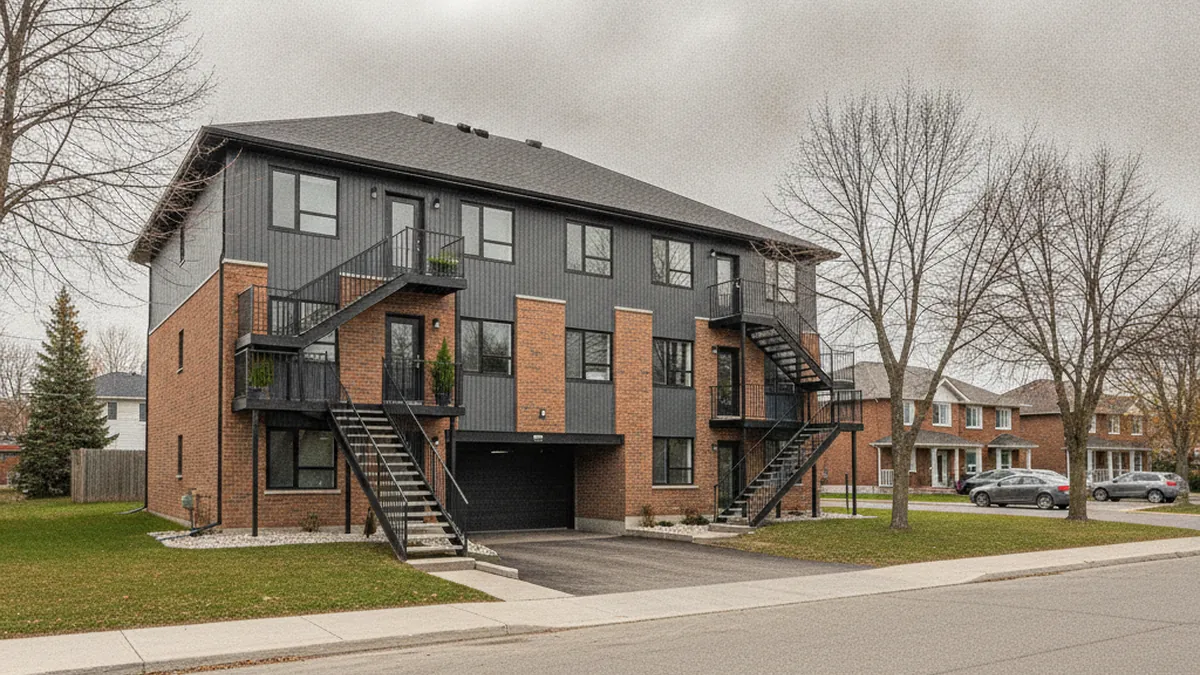
In Boisbriand, the welcome tax exceeds the regional average as soon as the value reaches $500,000: 2.5% between $500,000 and $800,000, then 3% above $800,000. On a $2,000,000 income property, these municipal brackets bring the bill to approximately $49,110, paid by the buyer after the notarial deed. Below $500,000, the provincial scale applies (0.5% / 1.0% / 1.5%). Boisbriand stands out with its intermediate 2.5% bracket that most neighbouring cities do not apply. This guide details the full calculation, presents the bracket-by-bracket worked example and covers the annual property taxes to integrate in your profitability analysis. Amounts are indicative (2026): validate with the City of Boisbriand and the assessment roll before signing.
What is the welcome tax and who pays it in Boisbriand?
The welcome tax (land transfer tax) is paid by the buyer — not the seller. The City of Boisbriand sends the invoice after the deed of sale is registered; the amount is due in a single payment, typically within 30 days.
The "welcome tax" is the popular name for the land transfer tax. Every Quebec municipality — including Boisbriand — collects this tax when a property changes hands. It applies to all types of property: house, condo, duplex, triplex and income property.
Three key points to remember:
- The buyer pays, not the seller.
- It is a one-time payment, required once, after the deed of sale is signed.
- It is calculated on the tax base: the highest amount among the price paid, the consideration stipulated in the deed, and the market value (usually the municipal assessment).
For an income property, the sale price almost always serves as the base, since it typically exceeds the assessment roll value. For the general mechanics and a calculator, see our dedicated welcome tax page.
How to calculate the welcome tax in Boisbriand (2026 scale)

The land transfer tax is progressive: the tax base is divided into brackets, each with its own rate, similar to income tax. Boisbriand starts from the provincial scale (thresholds indexed annually), then adds its own upper municipal brackets above $500,000. Here is the scale in effect in Boisbriand for 2026.
| Tax base bracket | Rate (2026) |
|---|---|
| $0 to $62,900 | 0.5% |
| $62,900.01 to $315,000 | 1.0% |
| $315,000.01 to $500,000 | 1.5% |
| $500,000.01 to $800,000 | 2.5% (Boisbriand municipal bracket) |
| Above $800,000 | 3.0% (Boisbriand municipal bracket) |
Source: brackets set by the Act Respecting Duties on Transfers of Immovables (CQLR c D-15.1) and the City of Boisbriand by-law.
Unlike a city that caps at 1.5%, Boisbriand has exercised the authority provided by the Act Respecting Municipal Taxation and adopted two upper brackets: 2.5% between $500,000 and $800,000, then 3% above $800,000. For an income property whose value often exceeds these thresholds, this is the element that most affects the bill.
Check before signing
The thresholds for the first two brackets ($62,900 and $315,000) are indexed annually and may differ slightly from this table for the current year. The municipal brackets (2.5% and 3%) stem from Boisbriand's by-law. Confirm the 2026 rates and thresholds with the City of Boisbriand, and have the exact calculation validated by your notary at the time of the deed.
How much does the welcome tax cost on a $2,000,000 property in Boisbriand?
On a $2,000,000 income property, Boisbriand's 2026 scale produces approximately $49,110 in land transfer tax — the two municipal brackets (2.5% + 3%) alone account for $43,500 of that amount, making Boisbriand one of the costlier North Shore municipalities for buyers.
Take an income property with a tax base of $2,000,000. We apply Boisbriand's 2026 scale bracket by bracket, including the municipal brackets:
- Bracket 1 — 0.5% × $62,900 = $314.50
- Bracket 2 — 1.0% × ($315,000 − $62,900) = 1.0% × $252,100 = $2,521.00
- Bracket 3 — 1.5% × ($500,000 − $315,000) = 1.5% × $185,000 = $2,775.00
- Bracket 4 — 2.5% × ($800,000 − $500,000) = 2.5% × $300,000 = $7,500.00
- Bracket 5 — 3.0% × ($2,000,000 − $800,000) = 3.0% × $1,200,000 = $36,000.00
Total land transfer tax: approximately $49,110 ($49,110.50). This is an amount the buyer must budget on top of the purchase price, down payment and notary fees. The two municipal brackets (2.5% and 3%) alone add $43,500 to the calculation: on an income property, they dominate the bill, which is why they must be quantified before finalizing a financial plan.
On the valuation side, do not forget that an income property's price rests on its numbers. Before committing to an offer, measure the yield with our cap rate calculator and validate the price with the purchase offer calculator or the GRM calculator.
What property and municipal taxes apply in Boisbriand?
In addition to the one-time welcome tax, Boisbriand levies annual property taxes on the assessment roll value plus service charges; a new 2026-2028 assessment roll increased residential values approximately 23.9%, though the City adjusted rates to limit the impact on tax bills.
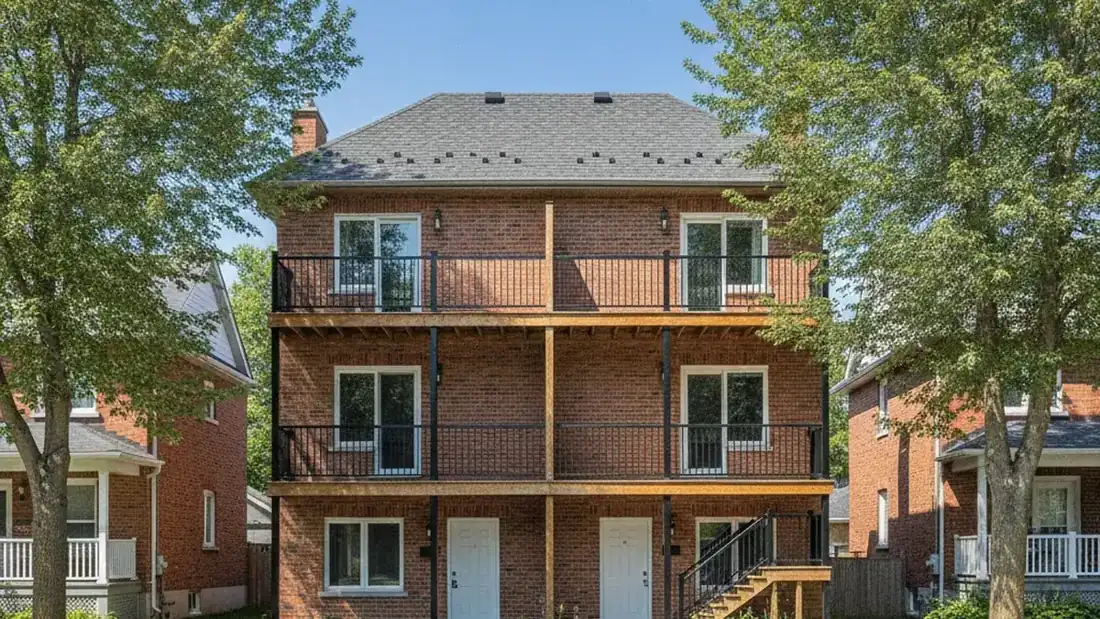
The welcome tax is one-time; property taxes recur every year. They fund municipal services and are calculated on the value in the assessment roll, multiplied by the rate set in the City's annual budget. Added to this are the school tax (collected by the school service centre) and, depending on the property, service charges (water, waste management, etc.).
Some benchmarks for Boisbriand, drawn from the 2026 budget (indicative):
- The City adopted its 2026 budget with an average tax bill increase of approximately 2.75% for an average-value residence.
- A new 2026-2028 assessment roll came into effect; the value of the residential category increased significantly (approximately 23.9% on average according to the City). An increase in the roll value does not translate dollar-for-dollar into a tax increase, because the City adjusts its rates accordingly.
- The 2026 tax bill has due dates (the first set for early March). The exact terms appear on the notice sent by the City.
Since an income property is generally assessed higher than a single-family home, its property tax bill is proportionally larger: always include it in the profitability calculation. To do so, start from the actual assessment roll value rather than an estimate. To structure all your numbers, see our resources for property owners.
Where to find your exact figures
Your property's assessed value appears in Boisbriand's assessment roll, and the 2026 rates are published by the City with its budget. These two official sources take precedence over any estimate, including those in this guide.
What land transfer tax exemptions exist in Boisbriand?
Exemptions cover transfers between married or civil union spouses, direct-line family transfers (parent-child), eligible corporate reorganizations, and cases where the tax base is below $5,000 — conditions are strict and technical, so always have your notary confirm eligibility before assuming an exemption applies.
Certain transfers are exempt from land transfer tax under the Act Respecting Municipal Taxation. The most common cases:
- Transfer between spouses who are married or in a civil union (and, under conditions, common-law partners depending on applicable rules).
- Transfer between close relatives in the direct line (for example from a parent to a child), under certain conditions.
- Transfer to a closely related corporation or eligible corporate reorganization, according to specific criteria.
- Tax base below $5,000.
These exemptions are technical and conditional: a misinterpretation can be costly. For an income property held in a corporation or transferred in a family context, have eligibility validated by your notary. If the transfer is part of estate planning, our guide on real estate inheritance provides useful insights.
What is the impact of the welcome tax on the seller and buyer in Boisbriand?
The buyer legally bears the welcome tax (~$49,110 on a $2M property), but it indirectly affects sellers: buyers factor this cost into their offer price and net yield calculation, which is why understanding Boisbriand's above-average municipal brackets helps sellers set realistic expectations.
The welcome tax is legally the buyer's responsibility — but it still affects the transaction on both sides:
- For the buyer: it is a real acquisition cost to budget from the offer stage, just like notary fees. On a $2,000,000 property, we are talking tens of thousands of dollars. Overlooking it distorts the net yield.
- For the seller: you do not pay the land transfer tax, but an informed buyer factors it into their offer price. Knowing the amount helps you anticipate objections and justify your price.
Remember that the seller is mainly concerned with capital gains tax and CCA recapture — two mechanisms distinct from the land transfer tax. If you are considering selling in Boisbriand, our guide selling an income property in Boisbriand details the steps, timelines and numbers. To compare with the rest of the province, see also our article on the welcome tax in Quebec.
In summary
In Boisbriand, the buyer of an income property pays a progressive land transfer tax (indicative 2026 provincial scale), plus annual property taxes based on the assessment roll. Before pricing a transaction, confirm the rates and thresholds with the City and have the exact calculation validated by your notary. On the value side, always start from the property's actual income.