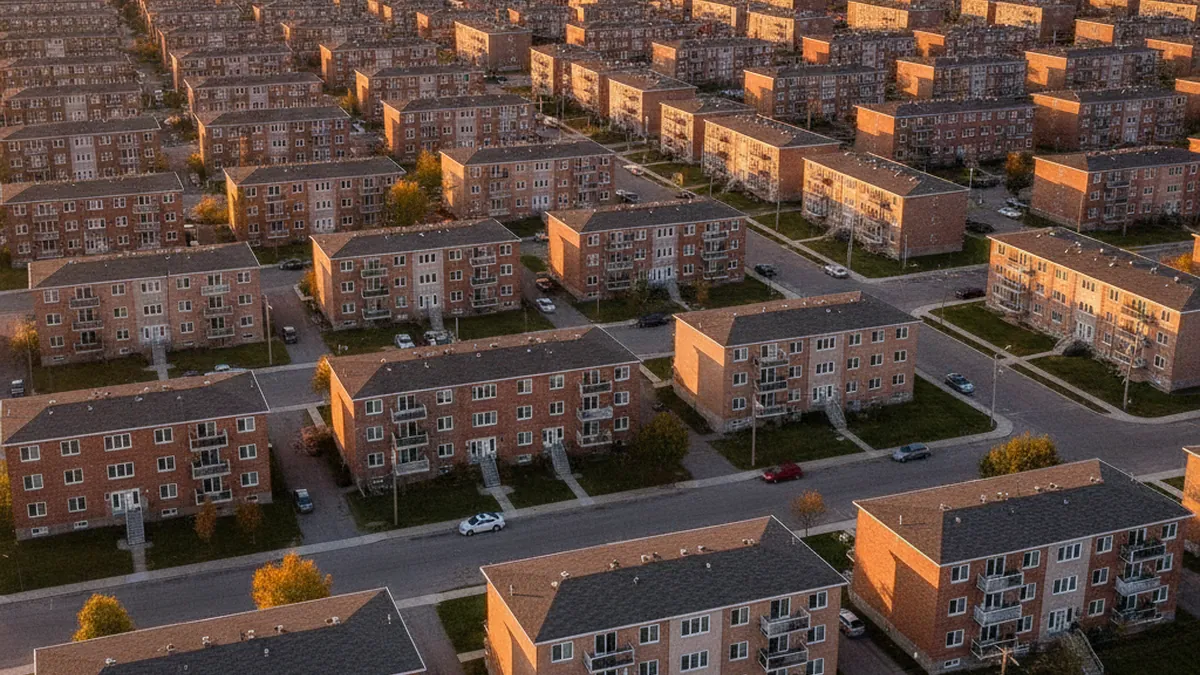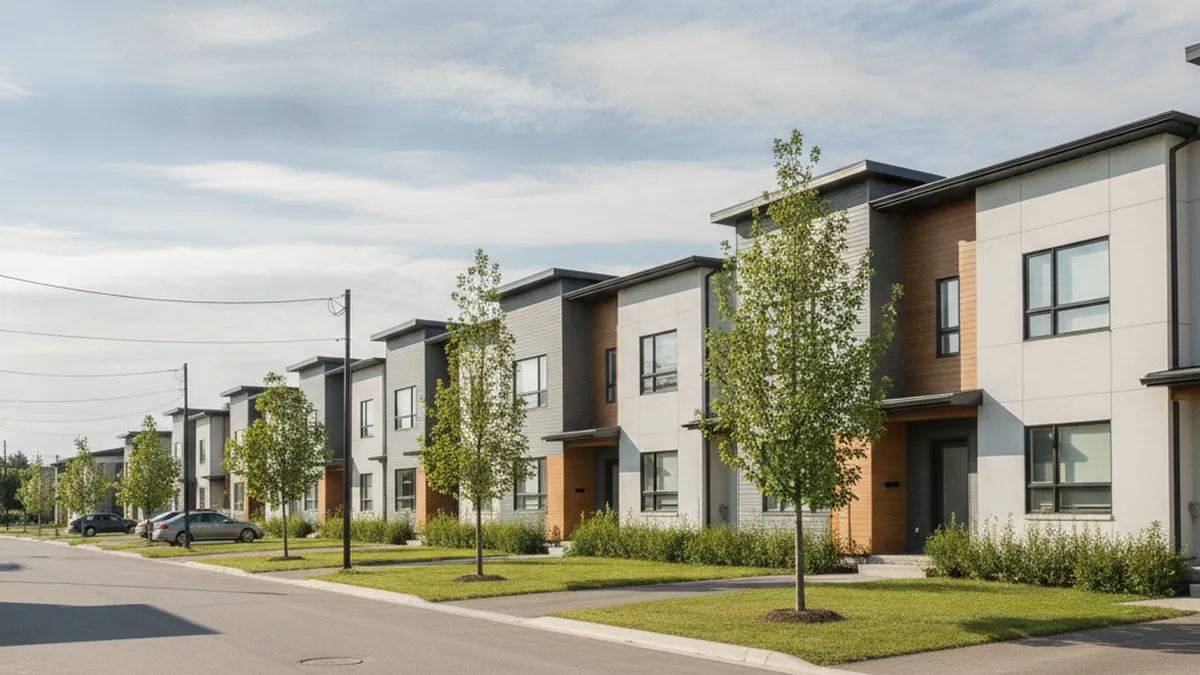
ImmoMulti — a direct buyer of multiplex properties on the North Shore — analyzes the data published by La Presse on : over six months, barely more than 26,000 housing units were started in Québec, for a projected pace of about 57,000 units in 2026. Yet Canada Mortgage and Housing Corporation (CMHC) estimates that 100,000 homes a year for ten years would be needed to restore pre-pandemic affordability. The structural deficit is 43,000 units per year. For owners of a plex, duplex, triplex or multiplex on the North Shore, that figure is not just a macroeconomic statistic: it is the fundamental reason rental demand in your area stays strong — and why your income property holds its value in 2026.
57,000 vs 100,000: understanding Québec's annual housing deficit
Barely more than 26,000 housing units were started in Québec during the first six months of 2026, for a projected annual pace of 57,000 units. CMHC's target is 100,000 homes a year for ten years — a deficit of 43,000 units per year that Québec deepens further every year.
Québec seemed to be getting off to a good start in 2026: falling interest rates and government programs were supposed to revive residential construction. Yet, according to the data analyzed by La Presse on July 18, 2026, the rebound falls short: if the trend of the first six months holds, 2026 will be "a very good year" with some 57,000 housing starts — but still far from what is needed.
That "what is needed" is the target CMHC has set: 100,000 new homes a year for ten years to hope to restore the affordability the Québec market showed before the pandemic. At 57,000 units, Québec builds only 57% of what is required. The gap of 43,000 units a year accumulates, worsening the already-present shortage every year.
| Indicator | 2026 value | Context |
|---|---|---|
| H1 2026 housing starts (Québec) | ~26,000 units | +2% vs H1 2025 |
| Projected annual pace 2026 | ~57,000 units | Per La Presse, July 18, 2026 |
| CMHC target to restore affordability | 100,000 units/year | Over 10 years (national target) |
| Annual structural deficit | ~43,000 units/year | 57,000 vs 100,000 |
| Share intended for rental | 85% of housing starts | Reflects pressure on the rental market |
Source: La Presse — "Construction domiciliaire : Toujours loin du compte" (July 18, 2026), based on data from Canada Mortgage and Housing Corporation (CMHC).
"Being an owner or a tenant should be a choice. Right now, it's an inevitability."
— La Presse, July 18, 2026, on the context of Québec's housing crisisThis imbalance between supply and demand is far from trivial for owners of plexes and multiplexes on the North Shore. When the market is short 43,000 homes a year, rental demand stays structurally strong — and existing income properties draw a direct advantage from it.
North Shore and Laval: a region where construction is slowing even more
While Montréal posts a 61% rise in housing starts, the Laval region — the entry corridor to the North Shore — saw its own fall by 30% in 2026. This contrast means the north of the Montréal CMA, which includes the North Shore (Terrebonne, Mascouche, Blainville, Saint-Jérôme and surrounding areas), receives fewer new homes than the provincial figures might suggest.
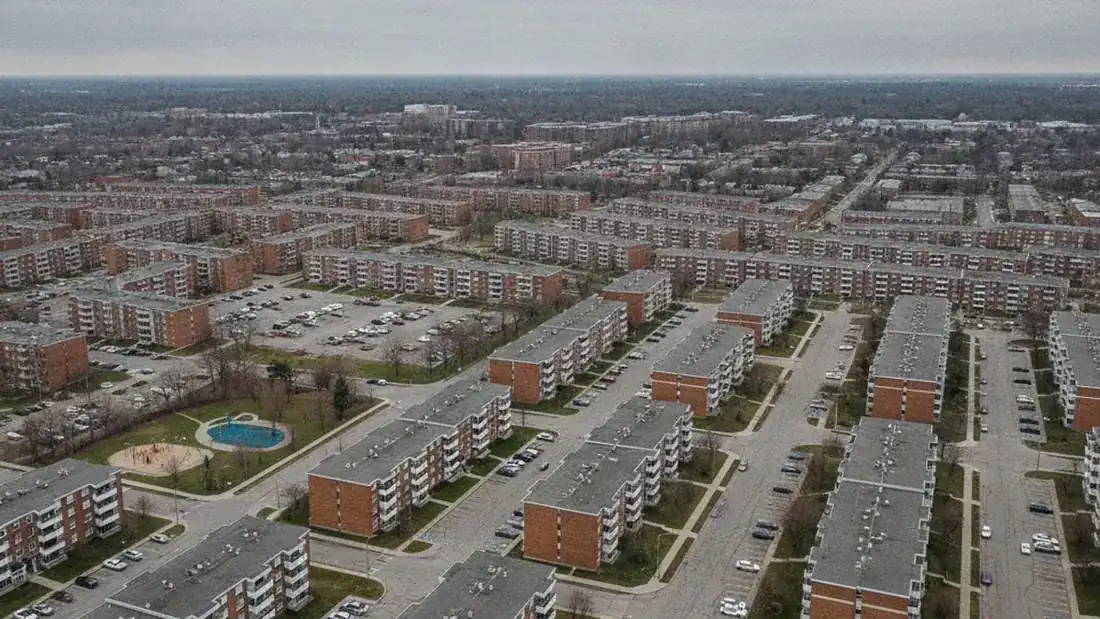
The data published by La Presse reveals a striking regional disparity. While Montréal saw a spectacular 61% jump in housing starts, the picture is very different in the Laval region: housing starts there fell by 30%. Laval is the corridor between the island of Montréal and the North Shore proper (Terrebonne, Mascouche, Blainville, Boisbriand, Saint-Jérôme, Saint-Eustache, Deux-Montagnes, Mirabel).
For owners of a plex on the North Shore, this regional reality matters: new rental supply is not flooding into your area. Construction projects are concentrating in Montréal, where economies of scale are easier to achieve. Existing multiplexes on the North Shore therefore face weaker competitive pressure from new rental construction.
The North Shore's population growth — fueled by families leaving Montréal for more affordable rents and better school infrastructure — continues, while the construction of new housing does not keep the same pace as in the city. This local imbalance strengthens the value of every plex and income property already in place in the region.
85% rental: a powerful trend that still doesn't saturate demand
In 2026, 85% of housing units started in Québec are intended for rental. Despite this concentration on rental, the overall volume remains well below the target of 100,000 units a year. Rental demand on the North Shore is nowhere near being met in the short term.
The fact that 85% of housing starts are rental units reflects developers' appetite for that segment. But this enthusiasm is not enough to close the deficit: even by concentrating nearly all production on rentals, Québec reaches only 57% of its annual target.
Moreover, this new rental construction is not evenly distributed. It concentrates in dense urban markets, where land cost is absorbed by density and economies of scale. On the North Shore — characterized by a more diffuse residential fabric of duplexes, triplexes and quadruplexes — large new rental apartment projects are fewer. Existing plexes there occupy a niche that new construction fills only with difficulty.
What this means for North Shore plex owners
- Rental demand in your area stays strong — your units find takers
- Tenants stay longer when they have no affordable alternatives
- Turnover (and therefore vacancy costs) stays low
- Rent increases allowed by the TAL can be applied with less friction
- Investors looking for income properties on the North Shore compete for a limited stock
The shortage and the value of your plex or multiplex on the North Shore
The value of an income property is directly tied to its net operating income (NOI). When the shortage keeps the occupancy rate high, NOI rises — and with it, the multiplex's market value. In 2026, the plex market in Québec remains clearly favorable to sellers, according to the APCIQ (July 14, 2026).

The value of a plex or multiplex is calculated mainly from its net operating income (NOI), divided by the capitalization rate (cap rate) prevailing in the market. The formula is simple:
Value = NOI ÷ Cap rate
When the housing shortage keeps occupancy rates high and reduces losses from vacant units, NOI improves. If the market cap rate stays stable — as it tends to when market conditions favor sellers — the property's value increases mechanically.
The Québec Professional Association of Real Estate Brokers (APCIQ) confirms this in its second-quarter 2026 data: the plex segment shows market conditions clearly favorable to sellers. The provincial median plex price rose 2% in Q2 2026. This favorable context stems largely from the structural scarcity of supply — a scarcity the construction data confirm.
For an owner of a multiplex on the North Shore considering a sale, this context matters: your property is in demand, investor-buyers are active, and the housing shortage supports rents and therefore the profitability of your asset.
APCIQ source: APCIQ — Québec's real estate market confirms a gradual rebalancing in the second quarter (July 14, 2026)
Selling your plex now: a decision informed by the data
Amid a persistent structural shortage, selling your North Shore plex in 2026 is not running from a problem — it is capitalizing on a favorable market window. Today's conditions (strong demand, short supply, seller's market) rarely converge this clearly.
Selling an income property on the North Shore is often a long-term decision, driven by retirement, estate planning, management fatigue, or simply the opportunity to reallocate well-invested capital. The question is not only whether the market is good — it is understanding why it is good, and how long that window will stay open.
The 2026 data answer that question. Québec's housing shortage is structural — not cyclical. It won't resolve in one year or two. With a deficit of 43,000 homes a year and a construction pace that grows only 2% over last year, the catch-up will take many years. During that time, existing plexes and multiplexes on the North Shore remain scarce assets in a market where demand exceeds supply.
Caution: a shortage doesn't last forever
Current conditions favor sellers, but they can shift if governments speed up permits, change zoning rules, or roll out new construction-support programs. Selling in a favorable market maximizes your exit capital. Waiting always carries a risk of a downturn.
ImmoMulti is a direct buyer of multiplexes on the North Shore. We buy plexes, duplexes, triplexes, quadruplexes and larger income properties in Terrebonne, Mascouche, Blainville, Boisbriand, Saint-Jérôme, Saint-Eustache, Deux-Montagnes, Mirabel and surrounding municipalities. Our process: a direct offer within 48 hours, no broker, no commission, no obligation.
If you are considering selling a property with difficult tenants, or simply want a fair price without the delays of a traditional listing, our team can submit an offer based on real market data — including this structural-shortage context that supports your asset.
Vacancy rate: the concrete thermometer of the shortage on the North Shore
The construction deficit shows up directly in the rental vacancy rate. According to CMHC's Rental Market Report, the vacancy rate in Laval stood at 3.4% and on the island of Montréal it rose from 2.0% to 3.1% in one year — while staying below the 3% balance threshold in the affordable-rent segments. For a North Shore plex owner, a low vacancy rate means fewer empty units, fewer losses and a more stable net operating income.

When we talk about a housing shortage, the most tangible indicator for an owner is not the number of housing starts — it is the vacancy rate. That is the percentage of rental units that are vacant and offered for rent in a given market. CMHC considers a market "balanced" around 3%: below that, the market favors owners (few available units, strong competition among tenants); above it, it favors tenants (more choice, downward pressure on rents).
What CMHC's latest figures say
The CMHC Rental Market Report shows a slight loosening, but a market that stays tight in the greater Montréal area. On the island of Montréal, the vacancy rate rose from 2.0% to 3.1% in one year; in Laval — the gateway to the North Shore — it stands at 3.4%. Crucially, this loosening is concentrated in the high end. In the highest rent bracket, the vacancy rate climbs to 4.5%, whereas it falls to 0.8% in the most affordable bracket. In other words, new, expensive units rent more slowly, but affordable units — precisely the niche of existing plexes on the North Shore — remain extremely sought after.
| Market | Vacancy rate | Average rent | Annual rent increase |
|---|---|---|---|
| Island of Montréal | 3.1% (vs 2.0% a year earlier) | ~$1,283 | +11.9% |
| Laval | 3.4% | ~$1,347 | +8.3% |
| CMHC balance threshold | 3.0% | — | — |
| Affordable-rent segment | ~0.8% | — | — |
Source: CMHC — Rental Market Report; data relayed by the Association des propriétaires du Québec (APQ).
Why a low vacancy rate protects your plex
A low vacancy rate is not a statistical abstraction: it translates into concrete dollars in your income property's financial statements. Here are the mechanisms at work for an owner of a multiplex on the North Shore:
- Fewer losses on vacant units. Every month a unit stays empty is a month of lost rent. In a market at 0.8% vacancy, a 4½ often re-rents within days; in a market at 5%, vacancy can last weeks.
- Lower turnover costs. Paint, cleaning, ads, showings, credit checks: every tenant change is costly. Low vacancy goes hand in hand with greater tenant stability.
- Negotiating power at re-rental. When demand exceeds supply, a vacated unit can be re-rented at market price — often higher than the previous tenant's rent, especially if they had occupied the unit for years.
- Tenant selection. With several candidates for the same unit, the owner picks the strongest file, reducing the risk of future non-payment.
A worked example: the real cost of one point of vacancy
Take a North Shore sixplex where each unit rents for $1,300 a month, i.e. a gross potential income of $93,600 a year (6 × $1,300 × 12). Let's compare two market scenarios:
| Scenario | Vacancy rate applied | Annual vacancy loss | Effective income |
|---|---|---|---|
| Shortage market | 1% | ~$936 | $92,664 |
| Loose market | 5% | ~$4,680 | $88,920 |
| Gap | 4 points | ~$3,744/year | — |
This gap of $3,744 in annual income may seem modest, but recall the valuation formula: Value = NOI ÷ Cap rate. At a 5.5% cap rate, that extra $3,744 of income represents a value difference of about $68,000 ($3,744 ÷ 0.055) on the property's price. So the shortage not only supports your income — it directly supports the sale price you can hope for. That is the whole difference between selling in a tight market and selling in a saturated one. (Illustrative figures for example only; your actual situation depends on your rents, expenses and the cap rate in your area.)

Key points on the vacancy rate
- Below 3%, the market structurally favors owners
- The affordable segment (that of existing plexes) is the tightest, under 1% in some brackets
- Every point of vacancy avoided protects both your income and your resale value
- The North Shore, less affected by new rental-tower deliveries, keeps a tight market
Demographics and immigration: why rental demand doesn't weaken on the North Shore
The shortage is not only a supply issue: demand keeps growing too. The Lanaudière and Laurentides regions — which cover much of the North Shore (Terrebonne, Mascouche, Blainville, Saint-Jérôme, Mirabel) — are among those with the strongest population growth in Québec. This sustained demographic growth feeds a housing demand that local construction fails to match.
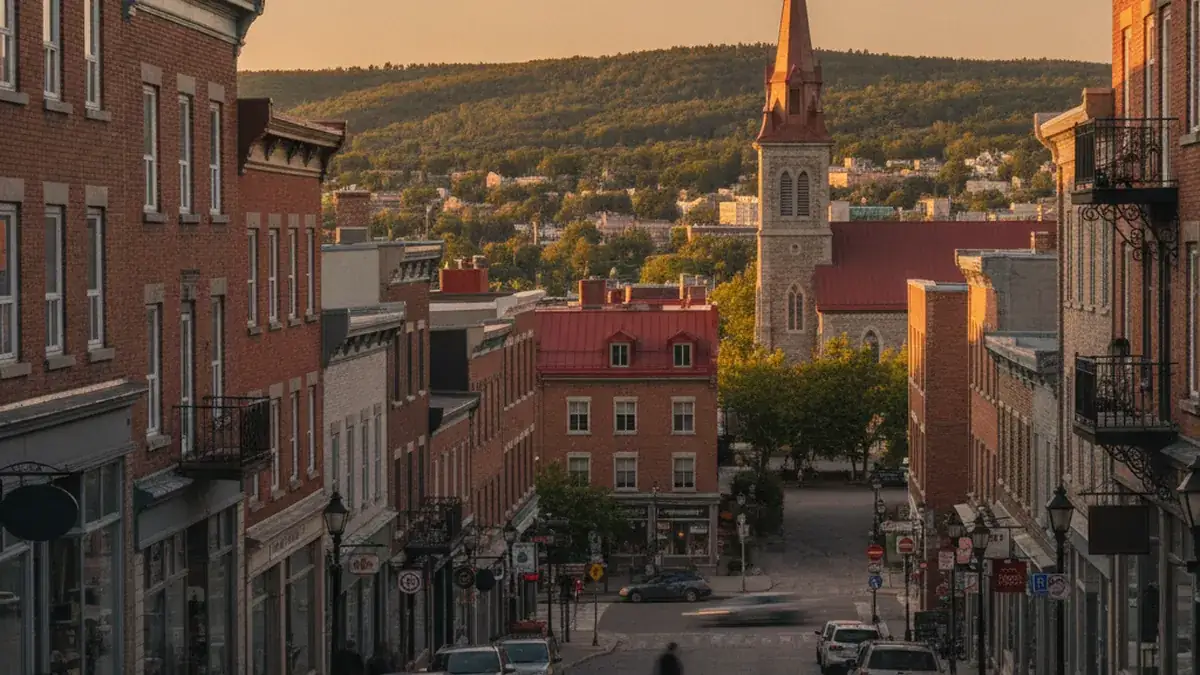
A housing shortage is the product of a two-term equation: supply (the homes built) and demand (the households to house). The previous sections showed that supply remains well below target. Now let's look at the second term: demographic demand on the North Shore. And the picture is unequivocal: the population of Montréal's northern crowns keeps growing.
The northern crown among Québec's growth engines
According to the demographic report published by the Institut de la statistique du Québec, the regions of Lanaudière, Laurentides and Chaudière-Appalaches are those where the population grew most in 2024-2025. Now Lanaudière encompasses Terrebonne, Mascouche and Repentigny, while the Laurentides cover Saint-Jérôme, Blainville, Mirabel and Saint-Eustache — the very heart of the North Shore. These territories benefit from a twofold movement: the arrival of new households from the island of Montréal, drawn by more affordable properties, and the formation of new households among the already-established population.
At the municipal level, the city of Terrebonne had about 122,000 residents, a rise of roughly 5.7% over five years according to the City's sociodemographic profile. This growth is not matched by a parallel explosion of rental construction: the North Shore densifies mainly through single-family homes and small collectives, leaving existing plexes and multiplexes to absorb a large share of rental demand.
Sources: Institut de la statistique du Québec — Regional demographic fact sheets 2025; Government of Québec — Regional demographic report.
The geographic deconcentration of immigration toward the crowns
A deeper phenomenon further amplifies this dynamic: the geographic deconcentration of immigration. The Institut de la statistique du Québec notes that the share of admitted permanent residents settling in the Montréal region fell from about 75% twenty years ago to 45% more recently. A growing proportion of newcomers — and of already-settled households seeking more space — is heading toward the crowns, including the North Shore. These households need housing, and many start with rental before moving into ownership.
What demographics mean for your income property
For an owner of a North Shore plex, the demographic reading reinforces the construction reading. Here is the logic in three steps:
- Demand rises: more households settle on the North Shore each year.
- Supply stagnates: local rental construction doesn't keep pace, as shown by the 30% drop in Laval housing starts and the concentration of large projects in Montréal.
- Pressure shifts onto the existing stock: your units, already built and often more affordable than new construction, become all the more sought after.
This conjunction — rising demographic demand, constrained supply — is precisely what distinguishes a "structural" shortage from a passing slowdown. It doesn't depend on an interest-rate cycle or an atypical year; it rests on heavy population trends that take years to reverse. For the value of your multiplex, that is a solid foundation.
"The Lanaudière and Laurentides regions are among those where the population grew most."
— Based on the regional demographic report, Institut de la statistique du QuébecFrom shortage to income: how the deficit translates into your plex's NOI
The shortage acts on your property's value through net operating income (NOI). By reducing vacancy, supporting re-rental rents and stabilizing tenants, it lifts NOI — and because a multiplex's value is calculated from NOI, it directly supports the price. Here, step by step and with figures, is how that mechanism works.

Many owners value their property "per square foot" or "per unit," by comparison with neighborhood sales. Those benchmarks are useful, but the professional valuation of an income property rests above all on its ability to generate operating profit. Understanding NOI means understanding how the shortage turns into value.
Step 1 — Establish the effective gross income
You start from the gross potential income (all units rented at market price, 12 months out of 12), from which you subtract a vacancy and bad-debt allowance. This is where the shortage comes in first: in a tight market, you apply a low allowance (often 1 to 3%); in a soft market, you raise it (4 to 6%). A lower allowance means a higher effective income.
Step 2 — Subtract operating expenses
You then remove normalized expenses: municipal and school taxes, insurance, common-area energy, maintenance and repairs, janitorial, management, and a reserve for major maintenance. The result is the net operating income (NOI). Note: the mortgage payment is not part of NOI — it is a financing expense, specific to each buyer, not an operating expense of the property.
Step 3 — Capitalize the NOI
You divide the NOI by the area's capitalization rate (cap rate) to obtain the value. That's the well-known formula: Value = NOI ÷ Cap rate. A higher NOI, at a constant cap rate, mechanically yields a higher value.
Effective gross income − Expenses = NOI • Value = NOI ÷ Cap rate
A full example: a North Shore triplex in two markets
Imagine a triplex in Terrebonne with three units rented at $1,250 a month, i.e. a gross potential income of $45,000 a year. Normalized operating expenses come to $15,000. Let's compare a shortage context (2% vacancy) with a loose context (6% vacancy):
| Item | Shortage market (2% vacancy) | Loose market (6% vacancy) |
|---|---|---|
| Gross potential income | $45,000 | $45,000 |
| Less: vacancy and bad debt | −$900 | −$2,700 |
| Effective gross income | $44,100 | $42,300 |
| Less: operating expenses | −$15,000 | −$15,000 |
| Net operating income (NOI) | $29,100 | $27,300 |
| Value at a 5.5% cap rate | ≈ $529,000 | ≈ $496,000 |
With identical expenses, the shortage's effect on vacancy alone raises the estimated value from $496,000 to $529,000 — a gap of about $33,000. And this calculation doesn't even account for the shortage's second effect: re-rental power. If scarcity lets you re-rent each vacated unit for $100 more a month, that's $3,600 in extra annual gross income, i.e. — at 5.5% — nearly $65,000 more in value once the units are realigned to the market. (Illustrative example; actual figures depend on your rents, your expenses and the cap rate applicable to your property.)

Caution: below-market rents = hidden value… and fragile
Many long-time owners rent well below market because they never pushed increases. In a shortage market, that gap represents real value potential — but it only materializes over successive re-rentals and the increases allowed by the TAL, which takes time. A savvy buyer will factor it in. Documenting your leases and rent history well is essential to have that potential recognized in the sale price.
The North Shore area by area: where the shortage supports your plex most
The North Shore is not a homogeneous market. From Terrebonne to Mirabel, through Blainville, Saint-Jérôme and Deux-Montagnes, each area combines population growth, land scarcity and low rental construction in its own way. Understanding your micro-market helps place the value of your income property.

The "North Shore" refers to all the crowns located north of the Mille Îles and Prairies rivers, spread mainly between the Lanaudière and Laurentides regions. Each city has its profile, but all share the same common denominator in 2026: sustained housing demand and rental construction that fails to keep up.
Terrebonne and Mascouche (Les Moulins RCM)
The demographic heart of the Lanaudière North Shore, Terrebonne and Mascouche form a fast-growing hub with a large stock of duplexes, triplexes and small collectives. Proximity to Highway 25 and the commuter train has accelerated the arrival of families leaving the island of Montréal. Plexes there are sought after both by local investors and by owner-occupants who want to house themselves while collecting rent.
Blainville, Boisbriand, Sainte-Thérèse and Rosemère (Basses-Laurentides crown)
This densely populated corridor along Highway 15 combines mature areas and recent developments. Multiplexes there are prized because of the strong employment base and quality of services. The scarcity of buildable land limits new supply, which protects the value of existing properties.
Saint-Jérôme and the gateway to the Laurentides
The central city of the Laurentides, Saint-Jérôme plays the role of a regional hub for employment, health and education. Its rental market is active and its plex stock is often more affordable than elsewhere on the crown, making it a particularly tight area in terms of vacancy.
Saint-Eustache, Deux-Montagnes and Mirabel (Deux-Montagnes RCM and surroundings)
West of the North Shore, this area benefits from the extension of the transit network and continuous residential growth, notably in Mirabel, one of the fastest-growing municipalities in the region. Income properties there enjoy demand fueled by young households.
| Area | Region | Plex stock profile | Demand driver |
|---|---|---|---|
| Terrebonne / Mascouche | Lanaudière | Duplexes, triplexes, small collectives | Family exodus from Montréal, transit |
| Blainville / Boisbriand / Ste-Thérèse | Laurentides | Mature and recent multiplexes | Jobs, services, land scarcity |
| Saint-Jérôme | Laurentides | More affordable plexes | Regional hub, tight rental market |
| St-Eustache / Deux-Montagnes / Mirabel | Laurentides | Growing stock | Young households, residential development |
Whatever your area, the logic is the same: where the population grows and rental construction stays limited, a well-kept plex or multiplex is a scarce asset. ImmoMulti buys across all these cities, and our valuation incorporates the specifics of each North Shore micro-market.
Common mistakes made by owner-sellers in a shortage market
A favorable market doesn't guarantee an optimal sale. Plex owners often leave value on the table through lack of preparation: poorly documented rents, inflated expenses, misreading the cap rate, or a rushed sale. Here are the most common pitfalls — and how to avoid them.

The shortage supports your property's value, but it is no substitute for good preparation. Here are the mistakes we see most often among North Shore owner-sellers, and how to correct them.
Mistake 1 — Not documenting your rents and history
The value of an income property rests on its income. Without up-to-date leases, a rent schedule, or a collection history, the buyer prudently applies the most conservative assumptions — which drives the price down. Gather your leases, renewal notices, rent register and payment proofs before any move.
Mistake 2 — Confusing potential income with actual income
Posting an optimistic "potential income" without proof convinces no serious buyer. Conversely, if your rents are below market, you must document that gap so it is recognized as upside potential rather than ignored. Rigor, in both directions, protects your price.
Mistake 3 — Misestimating operating expenses
Underestimating your expenses artificially inflates the posted NOI and triggers downward price adjustments during due diligence. Overestimating them needlessly reduces the value. Present normalized, realistic expenses: taxes, insurance, energy, maintenance, reserve, management.
Mistake 4 — Applying the wrong cap rate
A cap rate that's too low overvalues the property and scares buyers off; one that's too high gives it away. The right rate depends on the area, the building's condition, the unit types and financing conditions. When in doubt, rely on recent comparable sales and a reliable calculator.
Mistake 5 — Selling in a hurry
A rushed sale (divorce, estate, management burnout) puts the seller in a weak position. Even in a shortage market, a poorly prepared property sold in haste trades below its value. If time is short, a direct sale to a professional buyer secures a fair, fast price without a fire sale.
Mistake 6 — Overlooking the rental climate at the time of sale
Vacant units at the time of sale, unresolved TAL disputes or incomplete leases send a bad signal. A well-rented, dispute-free property sells better, especially in a shortage market where the buyer values income stability.
The savvy seller's checklist
- Up-to-date leases, rent schedule and collection history
- Normalized income and expense statements for the last 2-3 years
- Documentation of the gap between current rents and market rents
- Taxes, insurance and major-maintenance invoices gathered
- No pending TAL disputes, or a clear file on those in progress
- Value estimate based on NOI and a realistic area cap rate
Sell now or wait: what the shortage changes in the calculation
The shortage supports value today, but it won't last forever. Deciding to sell in 2026 or to wait comes down to weighing a very real seller's market against the uncertainty of a supply catch-up, rising taxes and regulatory change. Here's how to structure that decision.

The "sell now or wait" question has no universal answer — it depends on your personal, tax and estate situation. But the shortage brings objective elements to inform the choice. Here are the two theses, honestly presented.
The "sell now" thesis
- Confirmed seller's market. APCIQ data place the plex segment in seller-favorable conditions, with median prices rising.
- Shortage that supports rents. Low vacancy and strong demographic demand keep your NOI — and therefore your price — high.
- Active buyers. Investors seek scarce income properties on the North Shore and are willing to pay for stability.
- Crystallizing a gain. Selling at the peak of a favorable cycle secures your capital rather than betting on what comes next.
The "wait" thesis
- Rents still below market. If your rents are very low, waiting for a few re-rentals can raise the NOI — but it takes years and isn't guaranteed.
- Hope of additional appreciation. As long as the shortage persists, prices could keep rising — but a market never rises in a straight line.
- Tax considerations. The timing of the sale affects the capital gain and depreciation recapture; a tax specialist can help you optimize the year of disposition.
| Factor | Favors "sell now" | Favors "wait" |
|---|---|---|
| Market conditions | Confirmed current seller's market | Betting on an uncertain future rise |
| Your rent levels | Already close to market | Well below market, to be realigned |
| Management burden | Heavy or exhausting management | Calm, profitable management |
| Estate horizon | Need for liquidity or to simplify | Long-term holding without pressure |
| Regulatory risk | Sensitive to zoning/tax changes | High tolerance for uncertainty |

The real risk of waiting is not only that prices fall: it is that the conditions change. A speeding-up of permits, a zoning reform to densify, new construction-support programs, or a sharp rise in municipal taxes and insurance premiums can change the equation. As our callout above notes, a shortage doesn't last forever. Selling in a favorable market maximizes your exit capital; waiting carries a risk of a downturn that no one can quantify in advance.
"Québec's real estate market confirms a gradual rebalancing in the second quarter."
— APCIQ, press release of July 14, 2026Key definitions: speaking the language of your multiplex's valuation
To value your plex well in a shortage context, you need to master a few concepts: vacancy rate, net operating income (NOI), capitalization rate (cap rate), gross rent multiplier (GRM) and structural deficit. Here is a clear glossary, with what each means concretely for an owner-seller.

Professional buyers and appraisers use precise vocabulary. Knowing it puts you on an equal footing during negotiation and helps you understand why the shortage supports your price.
Vacancy rate
The percentage of rental units that are vacant and offered on the market. Below the 3% balance threshold set by CMHC, the market favors owners. It is the most direct indicator of the shortage: the lower it is, the more easily and expensively your property rents.
Net operating income (NOI)
The building's operating profit: effective gross income minus operating expenses (taxes, insurance, energy, maintenance, management, reserve), before mortgage financing. It is the central measure of profitability and the starting point of any income-approach valuation.
Capitalization rate (cap rate)
The ratio of NOI to value: cap rate = NOI ÷ value. Conversely, Value = NOI ÷ cap rate. A lower cap rate corresponds to a higher value for the same NOI — it reflects market confidence and the asset's scarcity. In a shortage market, cap rates tend to stay tight.
Gross rent multiplier (GRM)
A valuation shortcut: price ÷ gross income. Faster than the cap rate but less precise, because it ignores expenses. Useful for quickly comparing similar buildings in the same area.
Vacancy and bad-debt allowance
The percentage deducted from gross potential income to account for empty units and unpaid rents. The shortage allows a low allowance, which raises the effective income and therefore the value.
Structural housing deficit
The persistent gap between the homes built and those needed. In Québec, this deficit is on the order of 43,000 units a year (57,000 built vs 100,000 required per the CMHC target). "Structural" means it rests on heavy trends and does not resolve in one or two years.
| Term | Formula / benchmark | What the shortage changes |
|---|---|---|
| Vacancy rate | Balance at 3% | Pushes it down → owners' market |
| NOI | Effective income − expenses | Supports it via less vacancy |
| Cap rate | Value = NOI ÷ cap rate | Keeps it tight → higher value |
| GRM | Price ÷ gross income | Tends to rise in a tight market |
| Vacancy allowance | 1-6% of gross income | Reduces it → higher effective income |
Steps to value and sell your plex in a shortage market
Selling an income property on the North Shore in 2026 follows a logical path: gather your documents, normalize your financial statements, estimate value from NOI, choose your sale method, then negotiate and close before a notary. Here is the step-by-step journey, with the points where the shortage works in your favor.

A structured process keeps you from leaving value on the table and puts you in a strong position, even in an already-favorable market. Here are the six steps.
Step 1 — Gather the documentation
Current leases, rent schedule and history, income and expense statements, municipal and school tax accounts, insurance policies, major-work invoices, certificate of location. This file is the foundation of any credible valuation.
Step 2 — Normalize the financial statements
Remove exceptional items and personal expenses, add the missing items (maintenance reserve, management at fair value), and apply a realistic vacancy allowance. You obtain a normalized NOI that stands up before a buyer.
Step 3 — Estimate the value
Apply the income approach: Value = NOI ÷ area cap rate. Cross-check with the GRM and with recent comparable plex sales on the North Shore. This is where the shortage materializes: low vacancy and a tight cap rate push value upward.
Step 4 — Choose the sale method
Three main routes: traditional listing with a broker (maximum visibility, but commission and delays), sale without an intermediary, or a direct sale to a professional buyer like ImmoMulti (fast offer, no broker or commission, discretion). The right choice depends on your need for speed, discretion and simplicity.
Step 5 — Negotiate and accept an offer
A serious offer rests on your real numbers. In a shortage market, your negotiating power is reinforced by the asset's scarcity and investor demand. Check the conditions (financing, inspection, timelines) as much as the headline price.
Step 6 — Close before a notary
In Québec, the sale of a property is closed by notarial deed. The notary verifies title, makes the adjustments (taxes, rents, tenant deposits) and registers the transfer. Plan for the tax impact — capital gain and depreciation recapture — and consult a tax specialist for your specific situation.
| Step | Objective | Where the shortage helps |
|---|---|---|
| 1. Documentation | Solid income proof | Sustained rents, little vacancy to explain |
| 2. Normalization | Defensible NOI | Low vacancy allowance justifiable |
| 3. Valuation | Income-based value | Tight cap rate, high NOI |
| 4. Sale method | Maximize net proceeds | Strong buyer demand |
| 5. Negotiation | Fair price | Scarcity = negotiating leverage |
| 6. Notary | Secure transfer | — |

At every step, the structural housing shortage works in your favor: it supports your income, reduces your losses and strengthens buyer appetite for a scarce asset. What remains is turning that market advantage into a concrete price — and that is precisely where our team comes in, with a direct offer based on the real data of your property and your area.