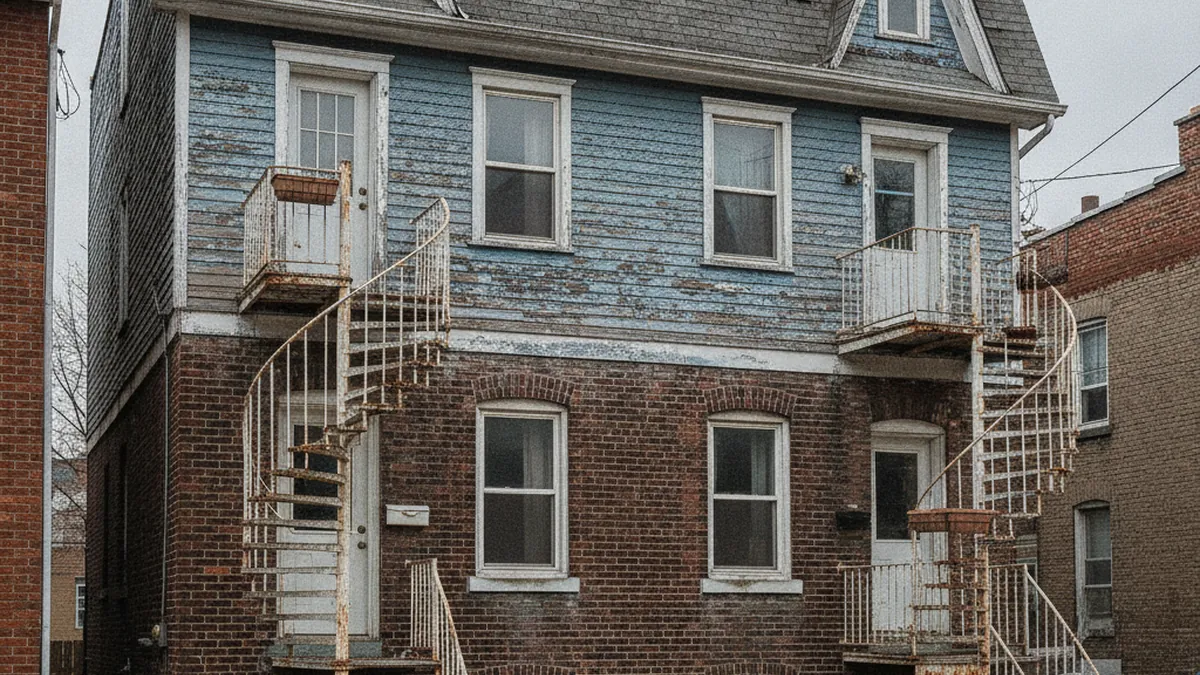
Want to sell an income property as-is — with no repairs, no renovation, or even without living in the region? It is possible, and even common. "As-is" means selling the multi-unit building in its current condition: you do not redo the roof, you do not fix the water damage, you do not renovate the units. Three situations come up constantly: a building with defects or damage, a building needing renovation, and a distance sale when the owner no longer lives in the area. Crucial point: in Québec, selling as-is never allows you to hide a defect. The legal warranty of quality and the obligation to disclose known defects still apply. This guide explains who buys as-is, how each of the three cases works, and how to structure the transaction cleanly with your notary.
Quick answer
Selling a property "as-is" = selling it in its current condition, with no work. The buyer who accepts that is not the conventionally financed buyer (who requires a "clean" building), but a direct value-add buyer like ImmoMulti, who discounts the repairs in the price and buys anyway. In Québec you never hide a known defect: selling as-is means disclosing the defects and adjusting the price, or selling without the legal warranty "at the buyer's own risk" through a clause framed by a notary. ImmoMulti buys as-is, with disclosed defects, and delivers an offer within 48 h.
What does it mean to sell a property "as-is"?
Selling "as-is" means selling the property in its current condition, without repairing, renovating or remediating it before the transaction. It is not hiding the defects: it is selling with full knowledge, by adjusting the price or framing the warranty. The seller stops investing in a building they want to leave and transfers it to a buyer who takes on the work.
Many owners confuse "as-is" with "hide the problem". They are opposites. Selling as-is means openly acknowledging the building's condition — work to be done, damage, known defects — and selling despite that condition, to a buyer who accepts it. It is a stance of transparency, not concealment.
The appeal is simple: you save the time, money and stress of renovations. Redoing a roof, remediating water damage, modernizing outdated wiring or refurbishing units represents months of work and tens of thousands of dollars — often on a building you want to let go of. Selling as-is transfers that burden to the buyer.
Who buys an income property as-is?
A direct value-add investor buyer, like ImmoMulti, buys as-is. The conventionally financed buyer almost always requires a "clean", financeable building: as soon as an inspector flags a foundation, water damage or non-compliant wiring, the bank refuses the loan and the sale collapses.
This is the heart of the matter. A private buyer financing their purchase through the bank needs a building in good condition: the lender requires a "clean", compliant and insurable property. A building with major repairs, a municipal work order or water damage then becomes impossible to finance — the bank blocks it, and the building stays "unsellable" on the traditional market for months.
The direct value-add buyer works differently. They buy in cash or with financing already confirmed, they price the work themselves, and they hold the building long term to reposition it. Their business is precisely to acquire buildings with potential and bring them back to value. To understand the different buyer profiles and which one pays best for a difficult building, see our page who to sell an income property to on the North Shore.
| Building situation | Conventionally financed buyer | Direct value-add buyer (ImmoMulti) |
|---|---|---|
| Known defects, damage, non-compliant | Refuses or requires fixes before purchase | Buys as-is, discounts the work in the offer |
| Building needing renovation | Often refused by the bank (not financeable) | Buys on the after-repair potential |
| Out-of-region owner | Requires showings, prep, availability on site | Everything done remotely, coordinated by the notary |
Case 1 — Selling a building with defects or damage (roof, foundation, water damage)
A building with known defects or damage (end-of-life roof, foundation cracks, water damage, mould, knob-and-tube wiring) sells to a direct buyer who discounts the cost of the work in the offer and buys anyway. You disclose what you know, the buyer factors it in once, and the sale does not stall on a financing refusal.
A roof to redo, a cracked foundation, a failing weeping tile, old or recent water damage, mould, an undersized electrical entrance or outdated wiring: all defects that make the traditional buyer back away and block their bank. For an owner-operator, these are simply lines in a renovation budget.
In practice, you send what you know about the building's condition. The buyer prices the work and factors it in once in their offer. There is no "bid high then cut": since the condition is already accounted for up front, the accepted price is the price paid at the notary, with no renegotiation after the technical walk-through. It is the opposite of the flipper scenario of inflating an offer only to cut it by $100,000 at inspection.
The defect question is also a legal one. To understand the legal warranty, fraud (dol) and the "without legal warranty" clause in detail, see our dedicated article: latent defects and legal warranty: protecting the seller of a plex. We return to it below.
Case 2 — Selling a building needing renovation without doing the work
You can sell a building needing renovation without doing a single job: you sell the potential. The owner-operator assesses what the building will be worth once repositioned (rents at market, units renovated) and makes you an offer based on that potential, less the cost of the work they will take on themselves.
A building needing renovation is not a worthless building — it is a building whose value is partly "asleep". Dated units, rents frozen below market, original kitchens and bathrooms, management that has become burdensome: all of this weighs on the price today, but represents potential tomorrow. A buyer who holds the building for 10 to 20 years pays for that potential, not just the current condition.
You, the seller, have nothing to do: no renovating, no raising rents, no emptying units, no resolving the situation before selling. You transfer the building as-is, tenants and leases in place, and the buyer takes over the repositioning. This is exactly the subject of our full page sell an income property as-is or needing renovation, which details why a long-term investor often pays more than a flipper for this type of building.
Case 3 — Selling a rental property from a distance, when you no longer live in the region
You can sell a rental property without living in the region: everything is done remotely. You send the documents by email, the buyer travels there for the technical walk-through, and signing the deed happens at the notary — often by power of attorney or by technology-based notarial act — without you having to return in person.
An owner can end up far from their building for all sorts of reasons: a move to another city, retirement abroad, an estate managed from outside Québec, or simply a building bought long ago in an area they have since left. Managing a multi-unit building from a distance quickly becomes burdensome, and selling it the traditional way — showings to coordinate, a building to prepare, round trips — is even more so.
A direct sale solves this. You provide the leases, the revenue and expenses for the past 12 months and what you know about the condition, all by email. The buyer assesses the property, travels there for the technical walk-through, and sends you an offer. Signing happens at the notary remotely, by power of attorney or technology-based notarial act, and the funds are paid to you without you having to travel. Coordination with the notary and the tenants in place is handled by the buyer.
The legal framework: legal warranty and disclosure of defects in Québec
In Québec, the legal warranty of quality (art. 1726 C.C.Q.) and the obligation to disclose known defects apply, even when selling as-is. You do not hide a defect. Selling as-is means either disclosing the defects and adjusting the price, or selling "without legal warranty, at the buyer's own risk" through a clause that should be framed by a notary.
The legal warranty of quality automatically protects the buyer against serious, non-apparent defects existing at the time of sale — even if they surface years later. It applies without being written into the deed. In parallel, the seller has a duty of good faith: they must disclose the defects they know about. Deliberately concealing a known defect constitutes fraud (dol).
The law does allow selling "without legal warranty, at the buyer's own risk". This clause transfers the risk of latent defects to the buyer — hence its appeal for a building in poor condition. But beware the flaw: the "without legal warranty" clause does not protect against fraud. If you hid a known defect, you can be sued despite the clause.
"As-is" is never a licence to hide a defect
Neither an "as-is" sale nor a "without legal warranty" clause allows you to conceal a defect you know about. The only protection that holds up before a judge is an honest and complete seller's declaration, coupled with a warranty clause drafted by a professional. Disclose everything: infiltrations, cracks, water damage, unpermitted work.
Selling as-is done right means disclosing more, not less. Transparency protects the seller; concealment exposes them.
— Principle of good faith, Civil Code of QuébecIn practice, selling as-is to an informed buyer is safer than exposing the building to the general public: you deal with a single buyer who takes the building with full knowledge, often without the legal warranty, which reduces the pool of potential lawsuits. The condition remains the same: disclose everything. Always have the warranty clause framed by your notary, who will tailor it to your specific situation.
Selling as-is to ImmoMulti: disclosed defects, offer within 48 h
ImmoMulti is a direct buyer of multi-unit properties on the North Shore, in the Laurentides and Greater Montréal. We buy as-is — disclosed defects, buildings needing renovation, out-of-region owners — and deliver a firm offer within 48 h, with no commission and no renegotiation after the technical walk-through.
Our business is to acquire income properties with potential and bring them back to value. A building with defects, damage or major repairs does not make us back away: we price the work, factor it into the offer, and take on the repositioning. You repair nothing, you clean nothing, and you do not have to prepare the building.
The process is simple: you send us the basic information and what you know about the condition, we deliver an offer within 48 h, and closing at the notary happens in 30 to 45 days — or later depending on your preference. Whether your building is hard to finance, in difficulty or in an area you have left, the sale remains possible. See also sell an income property fast and sell an income property in financial difficulty.
Selling as-is to ImmoMulti — what you do not have to do
- No renovation, no repairs, no cleanup
- No open-house showings, no sign: a discreet transaction
- Known defects disclosed, factored into the offer once
- Distance sale possible, coordinated with the notary
- Firm offer within 48 h, no commission, no renegotiation
One last essential reminder: this article presents general principles for information purposes and does not constitute legal advice. Latent-defect law and the drafting of a warranty clause depend on the analysis of specific facts. For your transaction, always have the warranty clause and your declaration validated by a notary.