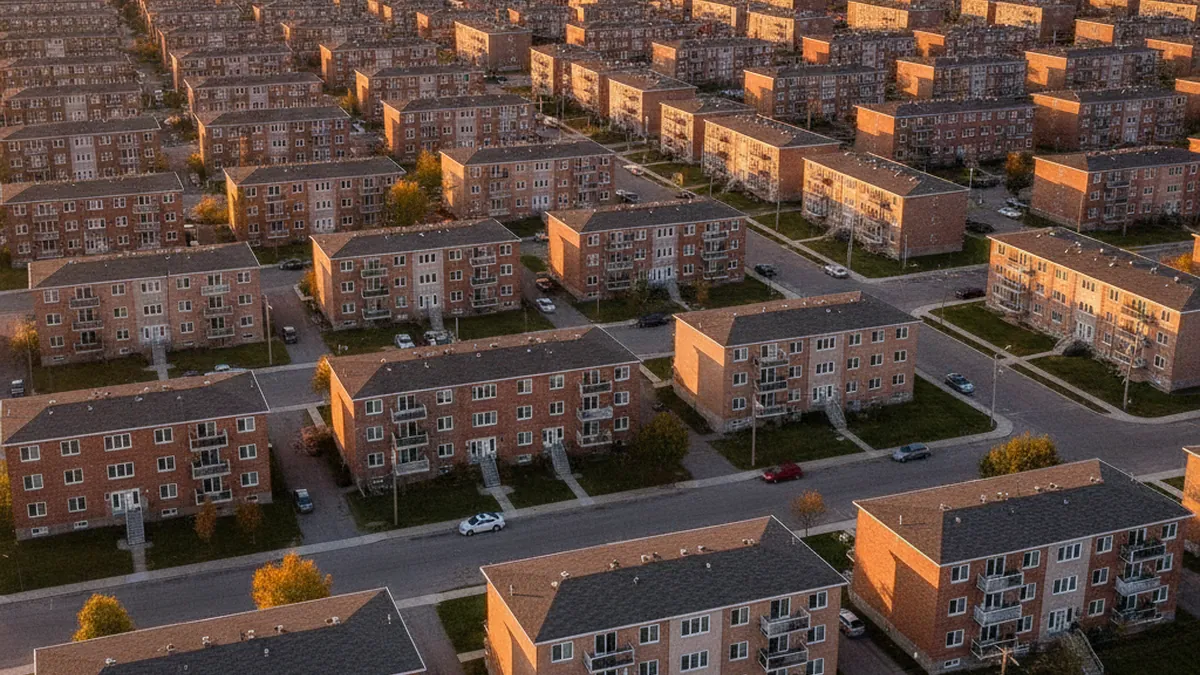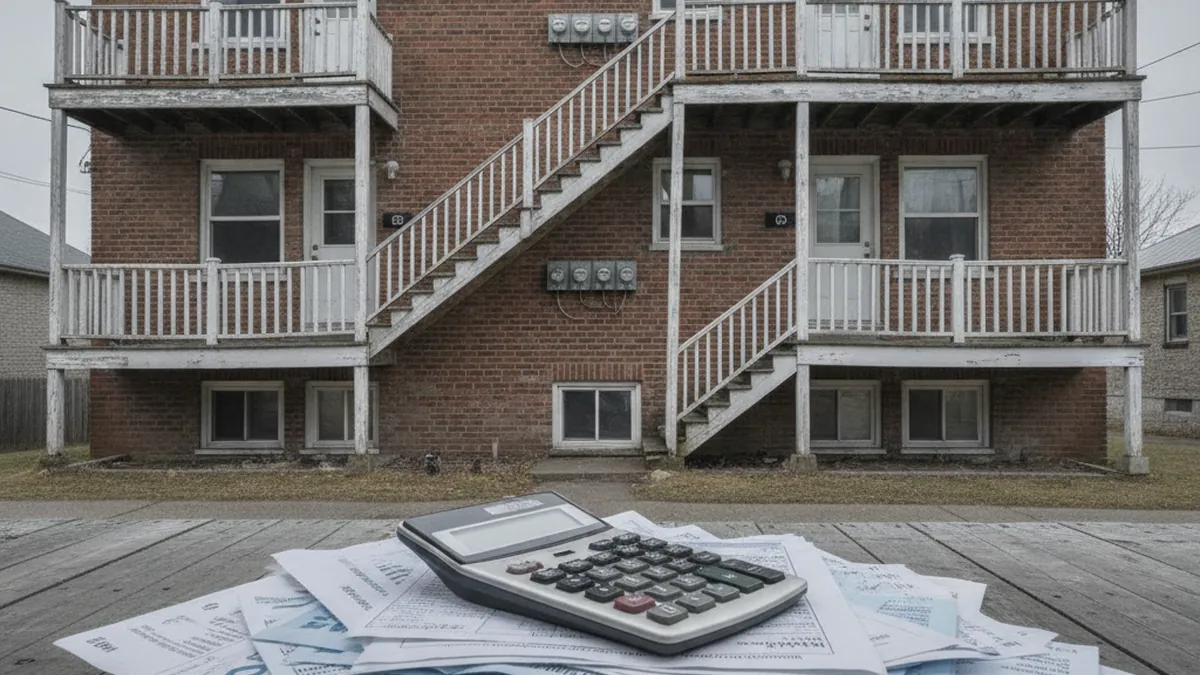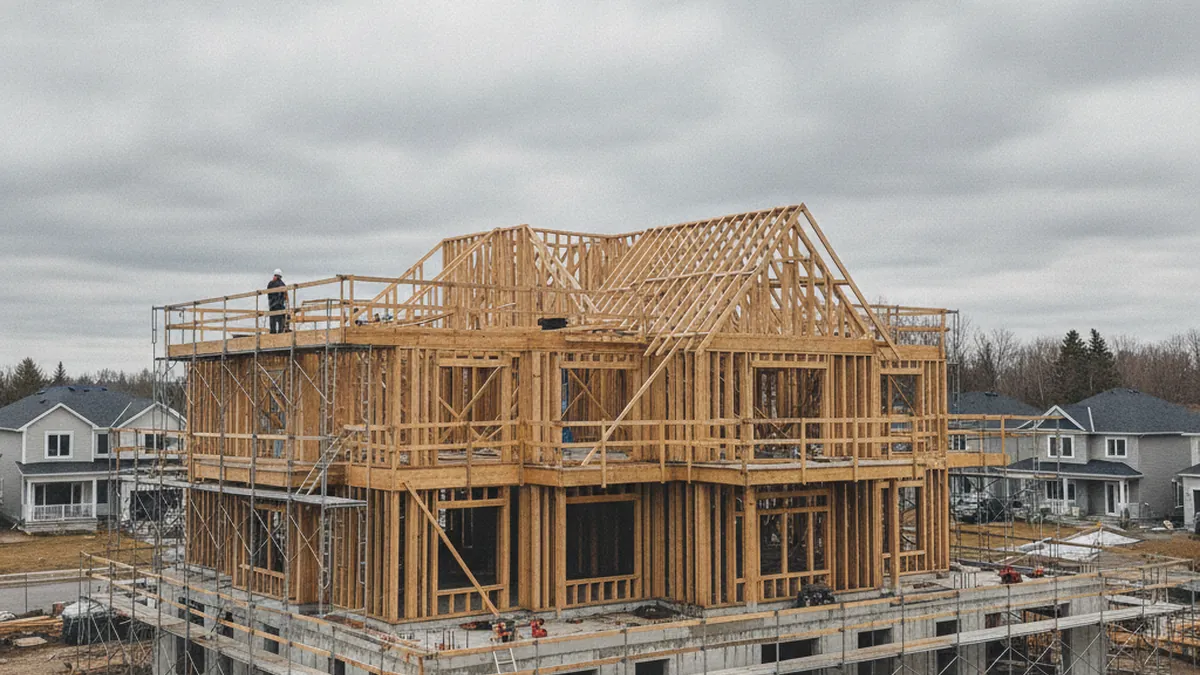
ImmoMulti — direct buyer of multi-unit buildings on the North Shore — analyzes the data CMHC has just released this July 16, 2026: in the Montréal census metropolitan area (CMA), actual June 2026 housing starts jumped 10% compared to June 2025, driven by sustained activity in multi-unit buildings. At the same time, active plex listings rose 11% in the second quarter (QPAREB, July 14, 2026). Combined, these two signals sketch a precise scenario for plex owners on the North Shore: investor demand remains strong, prices are still rising, but competition from new rental stock is on its way. Here is how to read this data to make an informed decision about your income property.
What do the official CMHC data say for June 2026?
The national seasonally adjusted annual rate fell 6% in June (238,971 units, versus 253,083 in May). The six-month trend reached 248,123 units, down 2.8%. But the Montréal CMA is the exception: 3,005 actual housing starts in June (+10% over June 2025), driven by multi-unit buildings. The province of Québec posted 4,763 units in June (–2% year over year) and 26,324 units year to date (+2% vs 2025).
CMHC (Canada Mortgage and Housing Corporation) released its monthly housing starts data for June 2026 on this July 16, 2026. Nationally, the trend is one of slowdown: the seasonally adjusted annual pace fell 6% from May to June, going from 253,083 to 238,971 units. The six-month moving average dropped to 248,123 units, a decline of 2.8%.
This national deceleration is partly explained by tighter construction financing conditions and by developers' caution in the face of a more selective residential market. Completions, however, rose 8.4% in June, a sign that earlier projects are being finished — and that new rental units will soon be available on the market.
| Indicator | June 2026 | Change |
|---|---|---|
| Canada — seasonally adjusted annual rate | 238,971 units | –6% vs May 2026 |
| Canada — 6-month trend | 248,123 units | –2.8% vs May 2026 |
| Montréal CMA — actual housing starts | 3,005 units | +10% vs June 2025 |
| Québec (province) — actual housing starts | 4,763 units | –2% vs June 2025 |
| Québec — cumulative Jan.–June 2026 | 26,324 units | +2% vs 2025 |
Source: CMHC — Housing starts and residential construction data for June 2026 (July 16, 2026)
Why does the 10% increase in Montréal concern North Shore plex owners?
The Montréal CMA encompasses the northern ring, which includes part of the North Shore. Multi-unit housing starts in this area feed the future rental supply of all of Greater Montréal. A plex started today will be delivered in 2027–2028, creating direct competition for the in-place rents in your triplexes and quadruplexes.
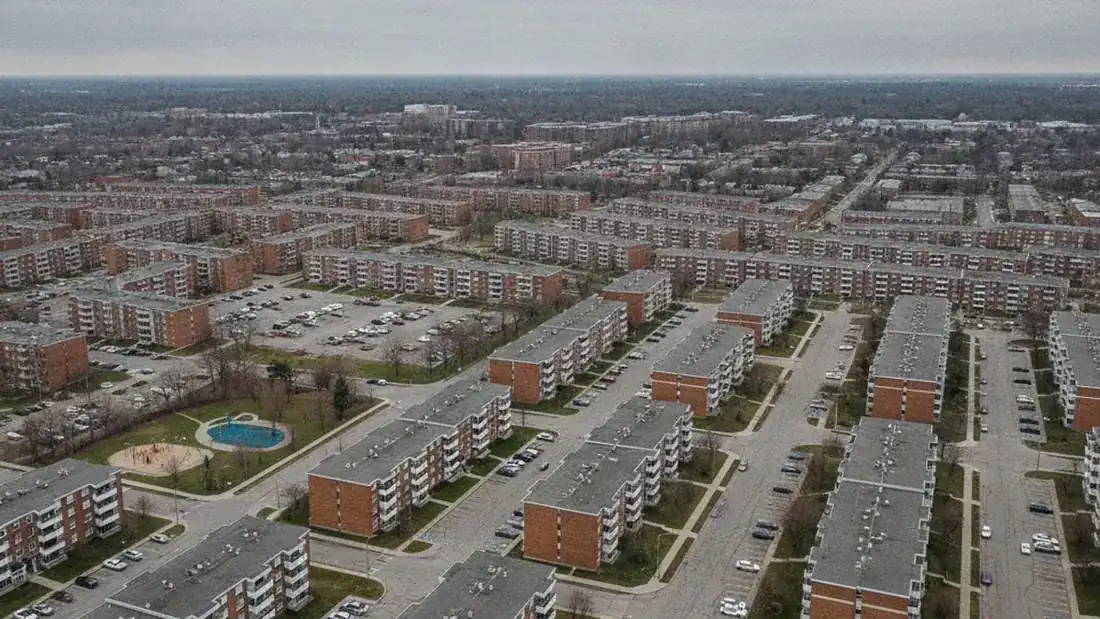
The 10% increase in housing starts in the Montréal CMA — specifically driven by multi-unit buildings — is not an abstract figure. It reflects a concrete reality: developers and builders are betting on persistent rental demand across Greater Montréal, of which the North Shore is a part. These projects started in June 2026 will be operational between 2027 and 2028, adding new, modern and energy-efficient units to a market that is already busier on the supply side.
For the owner of a plex in Terrebonne, Mascouche, Blainville, Boisbriand, Saint-Jérôme or Saint-Eustache, this data creates a two-stage dynamic: in the short term, rental demand remains strong and investors are actively seeking to acquire income-generating multi-unit buildings; in the medium term (2027–2028), the arrival of new stock could put pressure on capitalization rates (cap rates), which would mechanically flow through to the resale value of existing buildings.
"Housing starts in the Montréal CMA rose 10% in June compared with the same period last year, thanks to strong activity in multi-unit buildings."
— CMHC, Housing starts and residential construction data for June 2026, published July 16, 2026It is also worth noting that national completions climbed 8.4% in June — which means units started in earlier cycles are now reaching the rental market. In the rapidly urbanizing areas of the North Shore, notably Terrebonne and Mascouche, which have seen fast expansion, this flow of new units can gradually rebalance a rental market that was until now almost entirely composed of older plexes.
What is the state of the North Shore plex market in Q2 2026 according to QPAREB?
In the second quarter of 2026, plexes remain the most resilient real estate asset in Québec. The provincial median price reaches $690,000 (+2%) and $874,000 in the Montréal CMA (+5%). Active plex listings rose 11%, but prices did not fall — a sign that investor demand is absorbing the additional supply.

According to the QPAREB quarterly report published on July 14, 2026, the plex market in Québec shows remarkable resilience despite a more cautious general context. The 27,296 residential sales concluded in Q2 2026 are down 5% from Q2 2025, but the multi-unit segment maintains seller-favourable conditions.
- Provincial median price: $690,000 (+2% year over year) — prices rise even in a rebalancing market
- Montréal CMA median price: $874,000 (+5% year over year) — the metropolis pulls prices up
- Active plex listings: +11% province-wide — more supply, but demand absorbs it
- Market conditions: still favourable to sellers for plexes and multi-unit buildings
What these figures reveal for plex owners on the North Shore: institutional and private-investor demand remains strong. Even as overall sales decline, well-positioned multi-unit buildings — well rented, well maintained, in high-demand areas like Terrebonne, Blainville or Boisbriand — are selling at rising prices. The North Shore has historically benefited from a lower price per door than Montréal, which makes it a preferred target for investors seeking a better yield-to-price ratio.
Why investors still target North Shore plexes
- More accessible price per door than in the Montréal CMA ($874k)
- Established rental income and tenants in place: immediate yield
- Higher cap rate than in dense urban zones = superior return
- CMHC MLI Select financing accessible for 5 units and up
- Proximity to major highways (A-15, A-19, A-25, A-640): rental appeal
The strategic window: sell your North Shore plex before the new stock arrives
The two signals of the day — the rise in Montréal multi-unit housing starts (+10%) and the rise in plex listings for sale (+11%) — converge toward the same conclusion for multi-unit owners on the North Shore: the window to sell on optimal terms is open, but it is narrowing. This context is part of a structural housing shortage in Québec — 57,000 units built per year versus 100,000 required — which keeps demand strong for existing plexes despite the rise in construction.
Here is the mechanism to understand. The new units started in June 2026 will be delivered in 18 to 30 months, that is, between late 2027 and early 2028. When these new, modern and energy-efficient units reach the rental market, they will exert downward pressure on the rents of aging units — particularly in the North Shore areas where the construction of new buildings is active. Rents under pressure mean a declining net operating income (NOI), and a declining NOI mechanically lowers the value of a plex calculated by capitalization (price = NOI ÷ cap rate).
Buyer-investors know this. Those who know their market will anticipate this compression by adjusting their purchase offers from 2027 onward. That is precisely why selling in 2026 — while current rental income is the main valuation criterion — is a strategic decision that more and more owners of plexes on the North Shore are seriously considering.
What your North Shore plex has that new builds don't

Faced with competition from new multi-unit buildings, your existing plex on the North Shore holds advantages that new construction cannot offer a buyer-investor:
| Criterion | Your existing plex | New multi-unit building |
|---|---|---|
| Rental income | Established, documented history | Yet to be built (initial vacancy risk) |
| Lease in place | Yes — tenants and rents known | No — must find tenants |
| Price per door | Lower than new builds in the same area | 20–35% premium for new construction |
| Unit size | Often larger (pre-1990) | Trend toward micro-units (≤ 1,000 sq ft) |
| CMHC financing | Accessible (MLI Select, 5+ units) | Accessible but setup delays |
| Time to generate yield | Immediate upon closing | 6–18 months (construction + leasing) |
The CMHC itself warned in July 2026 against the proliferation of micro-units: 63% of new 2-bedroom units in Laval are 1,000 sq ft or less. Your older plexes on the North Shore, with their spacious 850 to 1,200 sq ft units, meet precisely what family tenants are looking for — and what new construction offers less and less of. This is a concrete competitive advantage to capitalize on in your sale price.
Watch out: the rise in plex listings (+11%) works against you if you wait
A growing supply of plexes for sale gives buyers more choice and can lengthen selling times. Selling while conditions remain favourable to sellers is more advantageous than selling in a rebalanced market where buyers negotiate more aggressively.
What North Shore plex owners should take away today
The data released today by CMHC and two days ago by QPAREB paint a nuanced but directional picture for multi-unit owners on the North Shore:
- The plex market remains favourable to sellers: rising prices (+2 to +5%), advantageous conditions, active investors
- Future competition is on its way: +10% in Montréal multi-unit housing starts in June, delivery expected 2027–2028
- The supply of plexes for sale is rising: +11% active listings in Q2 — more choice for buyers means less leverage for sellers over time
- Acting in 2026 lets you sell while current rental income still dictates value, before the new stock weighs on cap rates
If you own a duplex, a triplex, a quadruplex or a multi-unit building on the North Shore — Terrebonne, Mascouche, Blainville, Boisbriand, Saint-Jérôme, Saint-Eustache or Deux-Montagnes — and you are considering a sale, current conditions are among the best available in several years. ImmoMulti submits a firm purchase offer within 48 hours, with no broker, no commission and no prior work.
To quickly estimate the yield your buyer is calculating — and therefore what they are willing to pay — use our multiplex yield guide. And if you want to understand longer-term market trends, see our analysis of the North Shore market in 2026.