
ImmoMulti — a direct buyer of North Shore multiplexes — helps plex owners deal with an empty unit every week. A vacant unit is not just about missing rent: it exposes your insurance policy, keeps your fixed costs at 100%, and mechanically lowers the market value of your income property. CORPIQ identifies vacancy management as one of the most underestimated financial challenges facing Québec's small landlords. This practical guide helps you understand what is really at stake and decide quickly: re-rent, or sell your plex on the North Shore?
The real shortfall of an empty unit in your plex
Every month without a tenant, you lose the rent AND you absorb 100% of the unit's costs. On the North Shore, the monthly shortfall of a vacant unit in a triplex can easily exceed $1,500 once you add the uncollected rent and the share of fixed costs allocated to that unit.
Many plex owners calculate their vacancy loss purely in terms of uncollected rent. That is a common mistake. The reality is heavier: even without a tenant, the mortgage, property taxes, insurance premium and minimal upkeep of the unit continue. The only item that disappears is the income.
| Item | Normal situation (with tenant) | Vacant unit |
|---|---|---|
| Unit income | Monthly rent collected | $0 — income at zero |
| Mortgage payment | Covered by the rent | You pay it alone |
| Property taxes (prorated) | Covered by the rent | You pay them alone |
| Insurance premium (prorated) | Covered by the rent | Covered by you + vacancy-clause risk |
| Routine maintenance | Covered by the rent | Still required (legal obligation) |
| Net cash flow | Positive | In deficit — a direct hit to your cash flow |
The impact on the market value of your multiplex is also direct. Under the income approach to valuation (the capitalization rate, or cap rate), the value of a North Shore plex is calculated from its real gross or net income. An empty unit reduces that effective income, which lowers the value perceived by any buyer or chartered appraiser. In other words: every month of vacancy not only costs you, it also erodes the equity you have built.
To quantify the exact impact of the vacancy on your building, use the ImmoMulti deal analyzer, which factors effective income (rent actually collected) into its cap-rate and estimated-value calculation.
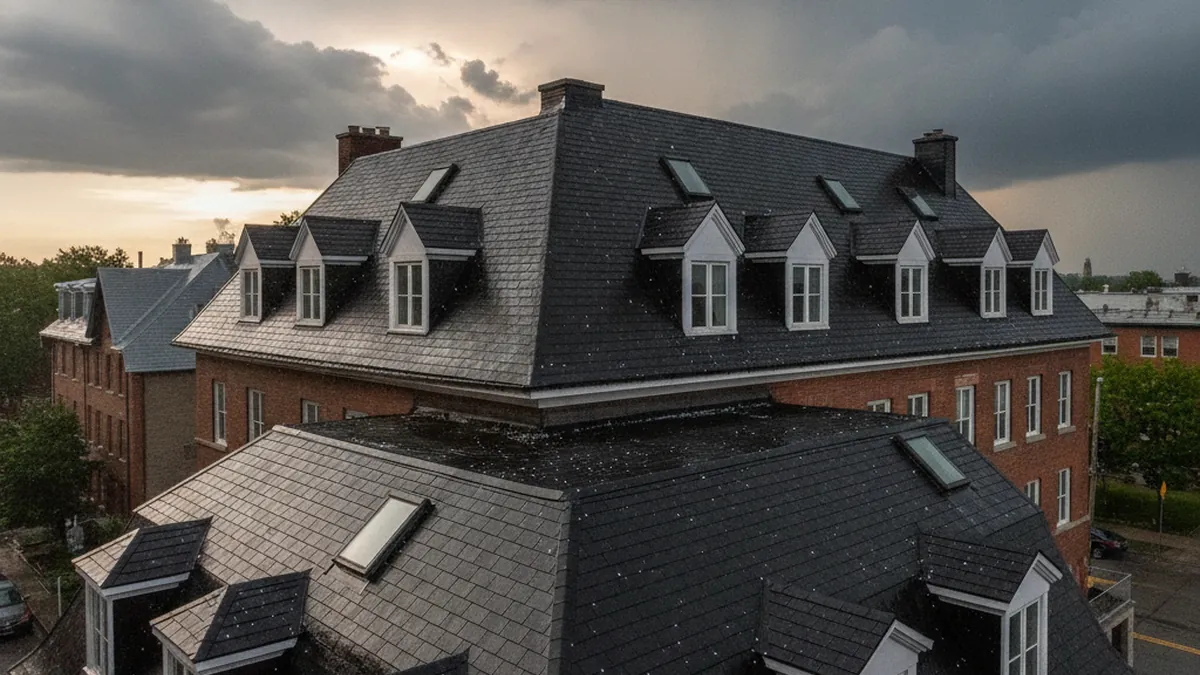
Building insurance during an extended vacancy: the 30-day trap
Most income-property insurance policies include a vacancy clause requiring the owner to notify their insurer as soon as the unit has been unoccupied for roughly 30 consecutive days. Omitting this notice can lead to a claim being denied in the event of water damage, vandalism or fire.
"Most commercial insurance policies require formal notice after 30 days of vacancy, and failing to do so could lead to a claim being rejected in the event of water damage or vandalism."
— CORPIQ, vacancy management guide, April 2026This risk is one of the least understood among plex owners on the North Shore. A freezing pipe, water damage caused by an upstairs tenant, a window broken by vandalism: if your unit had officially been vacant for more than 30 days without you notifying your insurance broker, your claim can be denied — or subject to an increased deductible.
In practice, once notice is given, your insurer can:
- Impose additional conditions (regular visits to the unit, keeping the heat on, draining the pipes)
- Raise the premium to cover the vacancy risk
- Exclude certain perils (vandalism, water) if the conditions are not met
Immediate action if your unit is vacant
If a unit in your North Shore plex has been unoccupied for more than 30 days, contact your insurance broker without delay to declare the vacancy and obtain the conditions applicable to your policy. Do not assume your coverage stays the same.
To learn more about the optimal insurance coverage for your income property on the North Shore, read our article North Shore plex insurance 2026: premiums rising and how to prepare.
The fixed costs that pile up with no tenant
One of the most painful realities of a vacancy is that your income property does not change its financial behaviour: it keeps generating expenses at full speed, even without earning you a single dollar of rent. Here are the items that never stop:
- Mortgage payments — principal and interest continue every month, whether there is a tenant or not.
- Municipal and school property taxes — calculated annually on the value of your entire plex, they are owed regardless of the occupancy rate.
- Building insurance premium — maintained (and potentially increased once the vacancy is declared).
- Heating and water if included in common charges — the unit must stay above freezing to prevent burst pipes.
- Mandatory minimal upkeep — the Civil Code of Québec requires the landlord to keep the dwelling in good repair, even between two leases. A unit left neglected can worsen the damage and expose you to liability.
The upkeep obligation does not end when the lease ends
The Civil Code of Québec provides that the landlord must deliver and maintain the dwelling in good condition, whether it is occupied or not. Neglecting the upkeep of a vacant unit can lead to worsening damage that is costly to fix before the next rental — and potentially to liability if a third party is injured.
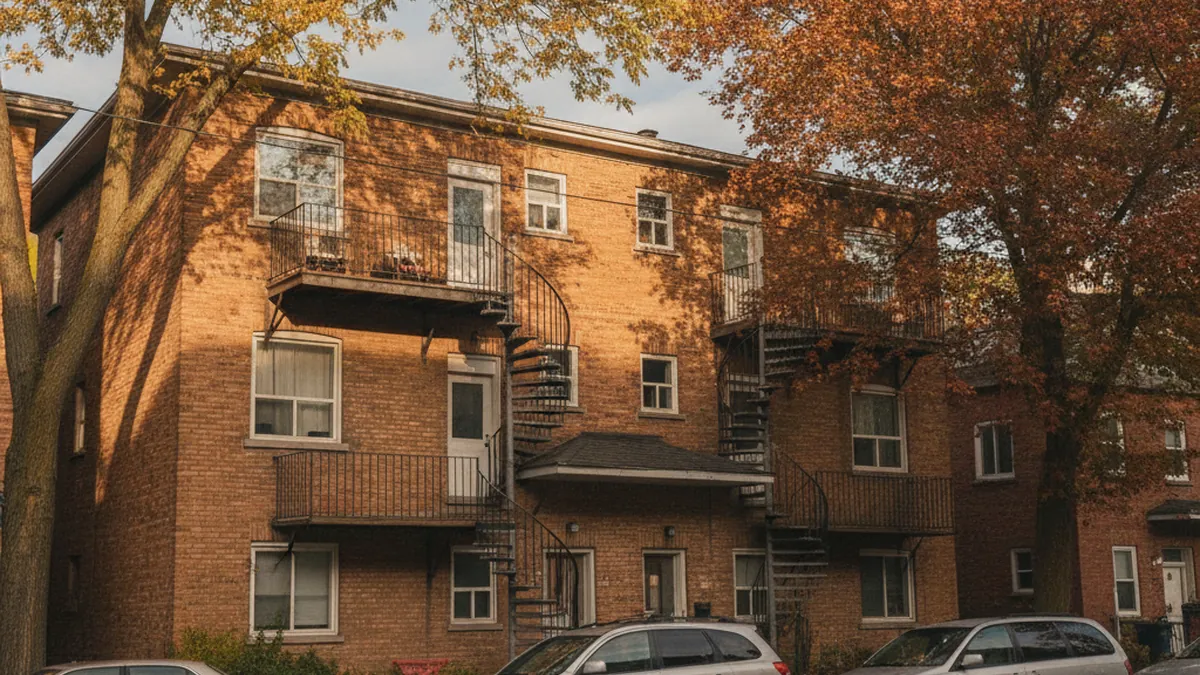
On the North Shore — Terrebonne, Mascouche, Blainville, Saint-Jérôme, Mirabel, Deux-Montagnes, Boisbriand, Saint-Eustache, Rosemère — many multiplex owners have seen their financial position deteriorate quickly after a few months of extended vacancy with no clear action plan. The pressure of fixed costs leaves no room for indefinite waiting.

Re-rent or sell your North Shore plex: how to decide
The general rule: re-rent if the vacancy is one-off and the unit is ready to occupy; sell if the vacancy is chronic, if major work is needed before re-renting, or if your other tenants are adding to the financial pressure.
Signs to re-rent
- The tenant's departure was normal (end of lease, moving) with no conflict
- The unit is clean, functional and needs only minor work (paint, cleaning)
- Your North Shore plex is well located and rental demand in the area is strong
- You have the financial capacity to absorb a few weeks of vacancy without pressure
Signs to sell
- The vacancy keeps recurring in the same unit (structural problem, difficult location, condition of the building)
- Major repairs are needed before you can re-rent at a fair price on the North Shore
- Other tenants in place cause problems or are in a non-payment situation
- Your overall cash flow has been negative for several months
- You want to recover your capital for other projects without further delay
In this last case, ImmoMulti buys plexes and multiplexes across the entire North Shore in any condition — vacant units, tenants in place, renovations needed — with no conditions, and an offer within 48 hours. You do not have to wait for every unit to be fully occupied to get a fair price.
Civil Code and Revenu Québec: what applies to your vacant plex
During a vacancy, you can generally keep deducting your rental expenses on form TP-128-V if the unit is available for rent. You can also freely set the rent for a new lease (subject to the section F clause if the unit was occupied within the last 12 months).
What Revenu Québec allows during a vacancy
According to Revenu Québec, expenses related to a rental property are deductible even during a vacancy period, provided the unit is available for rent and you are actively looking for a new tenant. This includes:
- Mortgage interest on the relevant portion of the plex
- Property taxes proportional to the vacant unit
- The insurance premium (prorated)
- Advertising and listing costs to find a tenant
- Routine repairs and maintenance
These expenses are reported on form TP-128-V (Income and Expenses Respecting the Rental of Immovable Property) for Revenu Québec, and on form T776 for the Canada Revenue Agency. If the unit is withdrawn from the rental market for personal use or deliberately left empty, deductibility is reduced or eliminated.
Setting the rent for a new lease: the section F rule
When you find a new tenant for your North Shore plex, you are free to set the initial rent at the amount of your choosing — with one important nuance. If the unit was occupied within the 12 months preceding the new lease, the incoming tenant has the right, within 10 days of signing, to ask the Administrative Housing Tribunal (TAL) for a rent review via section F of the standard lease. If the vacancy lasts more than 12 months or the unit has never been rented, this right of review does not apply.
The Québec Charter of Human Rights and Freedoms prohibits refusing a rental candidate on the basis of sex, origin, marital or family status, disability, or source of income (including social assistance benefits). The permitted selection criteria are financial and behavioural: solvency, rental history, references — verifiable through tools such as CORPIQ's ProprioEnquête.
Sources: Revenu Québec — Rental income and expenses · Administrative Housing Tribunal (TAL)
Calculating the exact monthly cost of a vacancy in your plex
The true cost of a vacant unit is calculated by adding the uncollected rent AND the share of fixed costs the empty unit no longer offsets. For a North Shore triplex with an average rent around $1,200, the real loss of one month of vacancy often exceeds $1,700 once the share of the mortgage, taxes and insurance is added to the missing rent.
Too many plex owners reduce their vacancy loss to the missing rent alone. It is a systematic underestimate. To make an informed decision — re-rent quickly, invest in work, or sell your income property — you first have to put a real number on the cost, month by month. Here is the method we apply at ImmoMulti when we assess a multiplex on the North Shore.
The real vacancy-cost formula
The monthly cost of a vacant unit breaks down into four layers:
- The uncollected gross rent — the income the unit would generate if it were rented at market price.
- The unit's share of fixed costs — the fraction of the mortgage, property taxes, insurance and common services attributable to that unit, which is no longer "paid" by a tenant.
- Turnover and re-rental costs — paint, cleaning, repairs, advertising, candidate screening, amortized over the term of the next lease.
- Opportunity cost and risk — the vacancy-related insurance surcharge, possible deterioration of the empty unit, and the impact on resale value.
The quick rule: rent + 30 to 45% of costs
For a first order of magnitude, add the uncollected monthly rent and about 30 to 45% of that rent to represent the unit's share of fixed costs. This approximation reflects the typical expense structure of a small North Shore plex. A unit at $1,200 therefore "costs," while empty, on the order of $1,550 to $1,750 per month — even before counting the cost of getting it back in shape.
Worked example: a triplex in Terrebonne
Take a fictional but representative triplex in Terrebonne, where one of the three units becomes empty on July 1. Here is the breakdown of one month of vacancy cost for that unit:
| Item | Calculation | Monthly cost |
|---|---|---|
| Uncollected rent | Market rent of the unit | $1,200 |
| Mortgage share | 1/3 of a $2,400 monthly payment | $800 |
| Property tax share | 1/3 of $6,000/year ÷ 12 | $167 |
| Insurance share | 1/3 of $3,000/year ÷ 12 | $83 |
| Above-freezing heating + base electricity | Minimal upkeep of the empty unit | $60 |
| Real cost of one month of vacancy | Total | ≈ $2,310 |
In this illustrative example, the owner does not lose $1,200 a month but nearly double once the share of costs is included. Over three months of vacancy — hardly an exceptional timeframe when work is needed — the real bill approaches $7,000, not counting the cost of getting the unit back in shape. It is precisely this calculation that tips many owners toward a sale when a vacancy drags on.

To project this cost onto your own plex and compare the "re-rent" scenario with the "sell" scenario, the ImmoMulti deal analyzer factors in the effective income actually collected and gives you a value estimate that accounts for the vacancy. The figures above are provided for illustration; your real amounts depend on your financing, your assessment roll and your insurance policy.
The 2026 North Shore rental market: what the vacancy is telling you
According to CMHC, the Montréal region's vacancy rate rose to 2.1% in 2024, then to about 2.9% in 2025, approaching the 3% balance threshold. A loosening market means a vacant unit in your plex re-rents more slowly than two years ago — a signal to factor into your decision to re-rent or sell.
For several years, the housing shortage on the North Shore masked the true cost of vacancy: a unit that came free found a taker within days. That is no longer automatically the case. Data from the Montréal Metropolitan Community (based on CMHC figures) show the vacancy rate climbing to 2.1% in 2024, a movement that continued in 2025. For a plex owner, that changes the calculus.
| Indicator (Montréal region) | Recent trend | What it means for your plex |
|---|---|---|
| 2024 vacancy rate | 2.1% (rising) | Re-rental slower than in 2022-2023 |
| 2025 vacancy rate | ≈ 2.9% (close to balance) | Less tight market; expensive or to-renovate units stay empty longer |
| Balance threshold | ≈ 3% | Beyond it, the balance of power shifts toward tenants |
In practice, a loosening market lengthens the average re-rental time and rewards well-prepared, correctly-advertised units. A vacant unit that needs work, or whose asking rent exceeds area comparables (Terrebonne, Mascouche, Blainville, Saint-Jérôme, Boisbriand, Saint-Eustache), risks staying empty longer — and therefore costing more, per the calculation in the previous section.
Why this matters for your decision
- A longer re-rental time mechanically increases the total cost of the vacancy
- Buyers and appraisers factor the area's vacancy rate into their risk analysis
- A fully-rented plex stands out more in a market where vacancy is rising
Source: Observatoire du Grand Montréal (CMM), based on the CMHC Rental Market Report.
Shortening the re-rental time for your plex: the step-by-step procedure
Every week of vacancy avoided is money kept. Efficiently re-renting a unit in your North Shore plex follows a precise order: prepare the unit, set the right rent, advertise widely, screen candidates rigorously, then sign a TAL-compliant lease. Here is the concrete procedure to follow.
If you choose to re-rent rather than sell your plex, speed of execution becomes your main financial lever. A vacant unit re-rented in three weeks rather than three months easily saves $4,000 to $5,000, per the real-cost calculation presented above. Here is the procedure that experienced multiplex managers follow on the North Shore.
Step 1 — Prepare the unit before you even advertise it
A clean, move-in-ready unit rents faster and at a better price. Before any showing:
- Full cleaning, including appliances, bathroom and windows
- Fresh paint in the main rooms (the item with the best cost/impact ratio)
- Repair of small visible defects: handles, silicone seals, light fixtures, outlets
- Verify that the heating, plumbing and smoke detectors work
Step 2 — Set the right rent based on comparables
A rent set too high is the leading cause of a vacancy that drags on. Compare with similar units actually advertised in your area — a 2-bedroom in Terrebonne does not rent at the same price as in Rosemère. Review active listings on Kijiji, Facebook Marketplace and the TAL portal to calibrate your price. Reminder: if the unit was occupied within the last 12 months, section F of the lease governs the increase (see the section on the legal framework).
Step 3 — Advertise widely and quickly
Multiply the free channels: Kijiji, Facebook Marketplace, local North Shore group Marketplaces, and the TAL listing portal. Good bright photos, an honest description (area, floor, parking, proximity to services and transit) and a precise area location speed up inquiries.

Step 4 — Screen candidates methodically
A bad tenant costs more than a vacancy. Systematically check:
- Ability to pay (income, job stability)
- Rental history and references from previous landlords
- The file via a tool like CORPIQ's ProprioEnquête
Note: the Québec Charter of Human Rights and Freedoms prohibits refusing a candidate on the basis of origin, sex, family status, disability or source of income (including social assistance). Your criteria must stay financial and behavioural.
Step 5 — Sign a compliant lease and document the condition
Use the mandatory TAL lease, complete section F if the unit was occupied within the last 12 months, and document the unit's condition at move-in (dated photos, signed condition report). This rigour protects you in the event of a dispute and eases a possible future sale, where clear leases reassure the buyer.
When the procedure fails anyway
If, after preparing the unit, adjusting the rent and advertising widely, your unit stays vacant for several months — or if the only candidates are risky — it often signals a deeper problem: difficult location, condition of the building, or a rent capped below the profitability threshold. In that case, prolonging the vacancy only piles up losses. Evaluating a sale of your plex becomes a rational option.
Protecting a vacant unit in winter on the North Shore
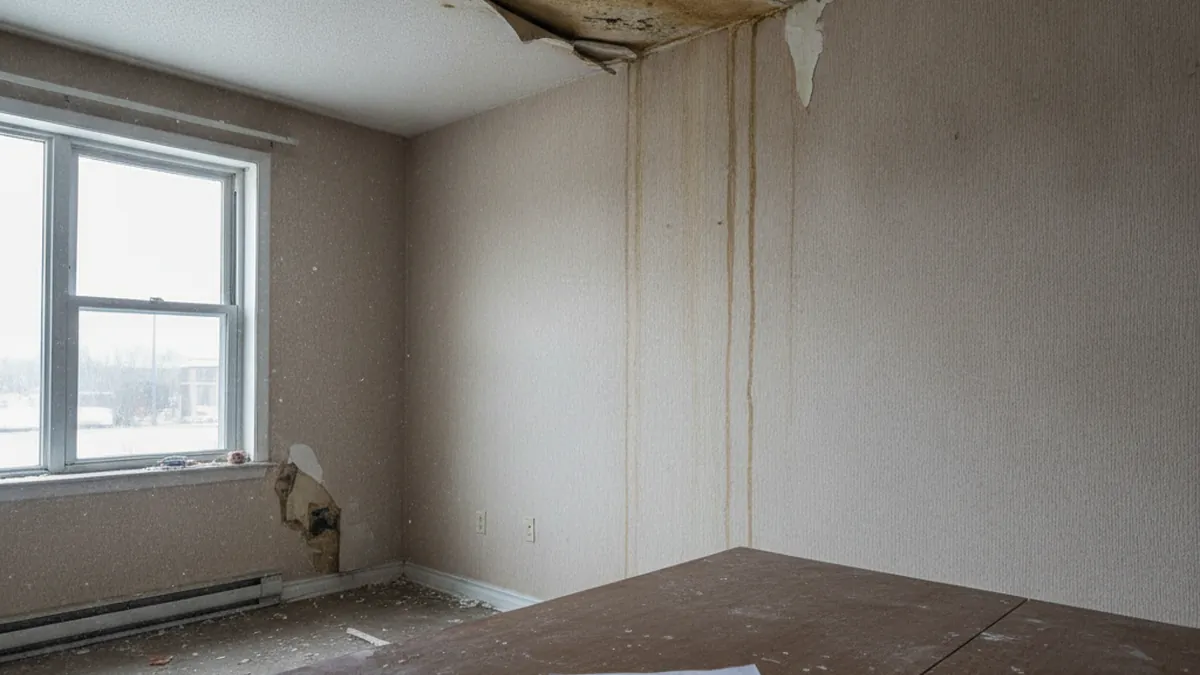
The Québec winter turns a vacant unit into a major risk: a pipe that freezes and bursts can cause thousands of dollars in water damage — and if a vacancy of more than 30 days was not declared to the insurer, the claim can be denied. Keeping the heat on, monitoring the unit and draining the plumbing are essential measures.
On the North Shore, a unit unoccupied during the cold months demands particular vigilance. The cold does not "pause" your plex: it adds risks. Here are the essential precautions for a vacant unit in winter.
Keep the unit above freezing
- Never completely shut off the heat. At a minimum, maintain a temperature that protects the pipes (generally around 15°C). Saving on heating an empty unit can cost ten times more in damage.
- Consider shutting off and draining the water supply to the unit if it stays empty for a long time, to eliminate the risk of frozen pipes.
- Leave cabinet doors open under sinks so warm air circulates around the plumbing.
Monitor and document
Many insurance policies require regular visits to a vacant unit. Stop by at least once a week, check for leaks, infiltration or breakage, and keep a written record of your visits. This documentation demonstrates your diligence and supports a potential claim.
The direct link to your insurance
Remember the vacancy clause: beyond roughly 30 days of vacancy, your insurer must be notified. In winter, failure to meet the imposed conditions (heat maintained, visits, draining) can on its own justify denying a claim for water damage or a burst pipe. The combination "vacant unit + winter + insurer not notified" is one of the most costly scenarios for a plex owner.
Quantifying the impact of a vacancy on resale value: a detailed cap-rate example
A plex's value is calculated mainly from its net operating income divided by the capitalization rate (cap rate). Because a vacant unit reduces effective income, it mechanically lowers the estimated value. At a 6% cap rate, each $1,200 of monthly rent lost subtracts about $240,000 of theoretical value — which is why it matters to resolve the vacancy before a sale.
The income approach to valuation is the one serious buyers and chartered appraisers favour for a multiplex. The principle is simple: Value = Net Operating Income (NOI) ÷ cap rate. NOI is the effective income (rents actually collected) minus operating expenses, excluding financing. The cap rate (also called the capitalization rate) is the return the market requires for a comparable building in the area.
Why an empty unit lowers the value
A savvy buyer does not pay for theoretical income: they pay for the real income the building generates. A vacant unit reduces effective income, therefore NOI, therefore the calculated value. Some buyers also apply a risk discount when the vacancy appears structural or recurring, because it raises the fear of a location, condition or management problem.
Worked example: a North Shore triplex
Take our triplex again, with an average rent of $1,200 per unit and a market cap rate of 6% for the area. Here is the effect of a vacant unit on the estimated value (a simplified example for illustration):
| Scenario | Annual gross income | Approximate NOI | Value (NOI ÷ 6%) |
|---|---|---|---|
| 3 units rented | $43,200 | ≈ $28,000 | ≈ $467,000 |
| 1 unit vacant | $28,800 | ≈ $18,000 | ≈ $300,000 |
| Difference | −$14,400/year | −$10,000 | ≈ −$167,000 |
These amounts are illustrative and deliberately rounded — your real figures depend on your rents, your expenses and the effective cap rate of your area. But the order of magnitude is telling: a single empty unit can melt away the perceived value by tens, even hundreds of thousands of dollars under the income approach. That is why it is almost always preferable to sell a fully-rented plex — or to clearly demonstrate that the vacancy is temporary and already being resolved.
Two levers to protect value before a sale
- Re-rent the unit at the right price before going to market, to present complete effective income
- Document the temporary nature of the vacancy (departure date, active listings, candidates) to limit the risk discount applied by the buyer

To estimate the effect of the vacancy on your own building's value, the ImmoMulti cap rate calculator and the deal analyzer let you compare a "fully rented" scenario with a "with vacancy" scenario in minutes.
Common owner mistakes when facing a vacant unit
The most costly mistakes when facing a vacancy are: not notifying your insurer after 30 days, underestimating the real cost by counting only the rent, shutting off the heat in winter, insisting on a rent that is too high, and neglecting the upkeep of the empty unit. Each one can turn a manageable vacancy into a major loss.
After helping many plex owners on the North Shore, we see the same traps come back. Knowing them is already half the battle in avoiding them.
| Common mistake | Consequence | The right reflex |
|---|---|---|
| Not notifying the insurer after 30 days | Claim denied in the event of a loss | Contact your broker in the first month of vacancy |
| Counting only the lost rent | Decision made on a cost underestimated by half | Calculate rent + share of fixed costs |
| Shutting off the heat in winter | Frozen and burst pipes, water damage | Keep above freezing + drain if vacancy is long |
| Insisting on a rent that is too high | Vacancy that drags on, cumulative losses | Align the rent with area comparables |
| Neglecting the upkeep of the empty unit | Deterioration, liability, turnaround costs | Meet the Civil Code upkeep obligation |
| Waiting indefinitely for "the right tenant" | Cash flow deteriorating month after month | Set a cut-off date before considering a sale |
The Civil Code of Québec requires the landlord to deliver and maintain the dwelling in good repair (art. 1854 and 1864): this obligation does not lapse during a vacancy. A unit left neglected can worsen the damage, expose you to liability and complicate both the re-rental and the sale.
The most costly mistake: prolonged inaction
The classic trap is to "wait one more month" over and over, without ever setting a limit. Yet each month of vacancy adds its full real cost (rent + costs), with no guarantee of resolution. Set yourself a clear threshold — for example two or three months — beyond which you seriously evaluate selling your plex rather than continuing to absorb the losses.
Sources: CORPIQ — Managing an unoccupied unit · Civil Code of Québec, art. 1854 and 1864.
Selling your plex with a vacant unit: how to proceed
Selling a plex with a vacant unit is entirely possible. Depending on your goal, you can present the vacancy as an opportunity (unit available immediately, uncapped rent) or opt for a fast direct sale to a buyer who buys in any condition. The key is to document the situation and choose the path that fits your timeline.
Contrary to a common belief, a vacant unit does not prevent you from selling your plex — it simply changes the strategy. Two main paths are open to you.
Path 1 — Present the vacancy as an asset
For some buyers, an empty unit is an advantage: they can occupy it themselves, renovate it, or set a new rent without being constrained by an existing lease (subject to the section F clause if the unit was recently occupied). In that case:
- Highlight the unit's income potential (achievable market rent)
- Present a clean, move-in-ready unit
- Provide area rent comparables to substantiate the potential
Path 2 — The fast direct sale
If the vacancy comes with work to do, other problematic tenants, or cash flow under pressure, a direct sale to a specialized buyer is often the most efficient solution. ImmoMulti buys plexes and multiplexes across the entire North Shore in any condition — vacant units, units to renovate, tenants in place — with no financing condition, no broker and no commission, and an offer within 48 hours.
| Criterion | Traditional sale (broker) | Direct sale (ImmoMulti) |
|---|---|---|
| Vacant unit | Can reduce interest and price | Accepted as-is, no staging penalty |
| Work needed | To be done before going to market | Purchase in current condition |
| Timeline | Variable, often several months | Offer within 48 h |
| Commission | Generally 4 to 5% | No commission |

Whichever path you choose, gather your documents in advance: leases in force, rent history, operating expenses, assessment roll, maintenance invoices and the details of the vacancy (departure date, re-rental efforts). A clear file speeds up the transaction and protects your price. To concretely compare the net amount in your pocket under each scenario, use ImmoMulti's purchase offer calculator.