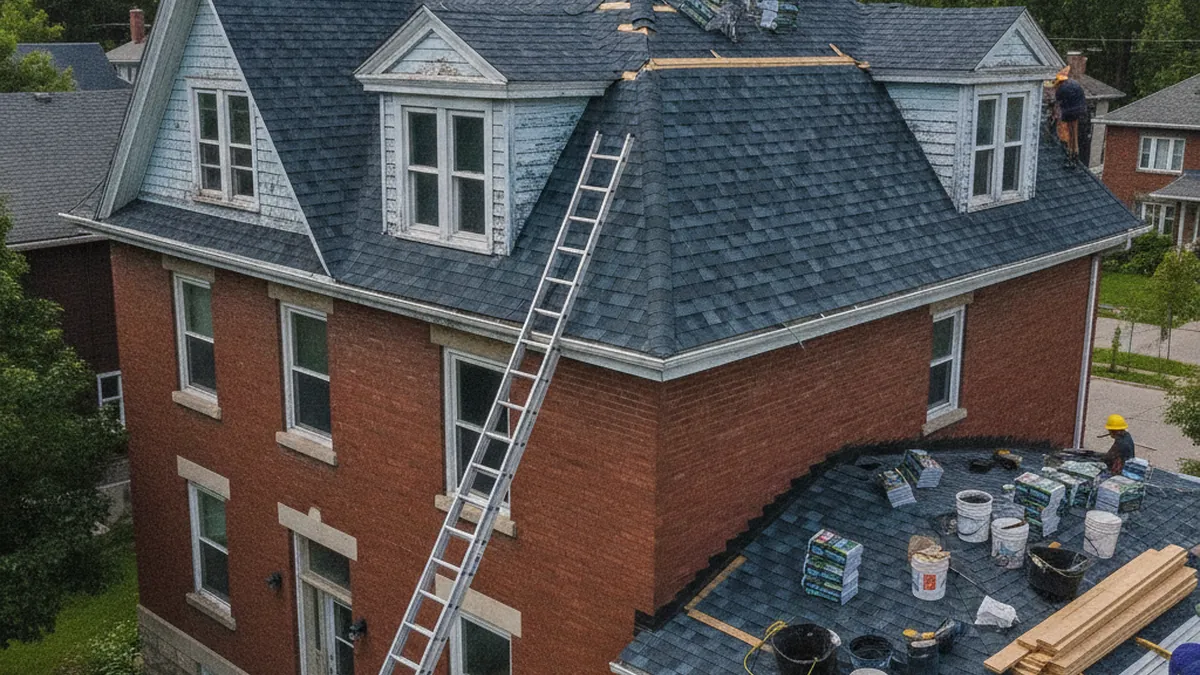
ImmoMulti — a direct buyer of multi-unit properties on the North Shore — tracks construction-regulation developments that directly affect your decisions as an owner. According to La Presse (June 9, 2026), delays in issuing construction permits have become a concrete obstacle to Quebec's ability to build and renovate — with an increase of 135% between 2017 and 2024 in the major cities and waits reaching 222 days for a 4-to-11-unit building. For a plex owner on the North Shore considering work before selling, this reality profoundly changes the calculation.
Why Have Construction Permit Delays Doubled in 7 Years for Multi-Unit Buildings in Quebec?
Delays rose 135% between 2017 and 2024 in Quebec's major cities (Montreal, Laval, Quebec City). Multi-unit buildings are disproportionately affected: where a single-family home waits 63 days, a 4-to-11-unit building can wait 222 days to obtain its permit. This asymmetry discourages value-adding renovations before resale.
This is not a perception: the reality of construction permit delays in Quebec is documented and concerning. According to the organizations representing real estate developers, multi-unit property owners and construction firms, reported by La Presse on June 9, 2026, delays in issuing construction permits have more than doubled since 2017 — a 135% increase in 7 years in the cities of Montreal, Laval and Quebec City.
The gap between building types is particularly striking. As an example, in Quebec City:
| Building type | Permit issuance delay (Quebec City, 2024) | Trend since 2017 |
|---|---|---|
| Single-family home | 63 days | Rising |
| 4-to-11 unit building | 222 days (7+ months) | More than doubled |
| Major cities (Montreal, Laval, Quebec City) | +135% vs. 2017 | Continued rise |
For an owner of a triplex or multi-unit building on the North Shore — in Terrebonne, Mascouche, Blainville, Boisbriand, Saint-Jérôme or Deux-Montagnes — these delays are not an abstraction. They represent the time during which your project stays on hold while costs keep piling up.
Source: La Presse — "Construction de logements : les délais 'sont devenus un frein concret'" (June 9, 2026)
What Actually Happens During 222 Days of Waiting for Your Plex?
While you wait for a permit for your multi-unit building, you keep paying: mortgage interest, property taxes, insurance premiums, administrative fees. For a North Shore plex worth CA$600,000, that potentially represents CA$12,000 to CA$18,000 in carrying costs over 7 months of waiting — before the work even begins.

The wait for a construction permit is never "free." During this period, the plex owner bears all the building's carrying costs without extracting any additional value from the pending project:
- Mortgage interest: on a CA$400,000 balance at a 5.5% rate, each month of waiting costs roughly CA$1,833 in interest.
- Monthly property taxes: for a triplex on the North Shore, count on CA$500 to CA$900 per month depending on the city.
- Insurance premiums: coverage of the building continues throughout the work — and some insurers apply surcharges for buildings under construction.
- Administrative and follow-up costs: quotes, meetings with contractors, plan revisions, correspondence with the municipality — hours that are worth money.
The calculation few owners do before starting work
For a North Shore plex valued at CA$600,000, waiting 222 days (7.4 months) for a permit can generate CA$13,000 to CA$18,000 in carrying costs (mortgage + taxes + insurance) — before the work even begins. These costs must be added to the renovation budget to assess the real return on investment.
This reality applies particularly to projects that require a permit: adding a housing unit, converting a garage into an accessory dwelling, extending an annex, modifying the structure. Many North Shore multi-unit buildings built in the 1970s-1990s present this kind of potential — but realizing it before a sale carries risks that many underestimate.
Construction Costs +58%: The Financial Context That Changes the Entire Renovation Calculation
Combined with permit delays, construction costs have jumped 58% since 2018. A renovation project that cost CA$80,000 in 2018 now costs about CA$126,000. On the North Shore, this inflation hits plex owners who want to maximize their sale price through work but watch their margins erode before they even begin.
The cost of renovation and construction work has risen steadily since 2018. According to data reported by La Presse (June 9, 2026), construction costs have risen 58% since 2018 — well above general inflation. This figure is consistent with the CORPIQ/Aviseo portrait, which documented a 49% increase between 2017 and 2025.
"Delays in issuing construction permits, which have sometimes doubled since 2017, are bogging down real estate builders. Combined with rising construction costs (+58% since 2018), these delays are becoming a threat to the completion of projects."
— La Presse, June 9, 2026, citing the organizations representing Quebec's multi-unit property owners and real estate developersFor an owner of a plex or multi-unit building on the North Shore considering work before selling, this double effect — delays doubled + costs up 58% — creates a difficult equation. A major renovation project that seemed profitable 5 years ago may today generate less added value than its actual cost, once financing, waiting times and worksite surprises are factored in.
Renovating Before Selling Your North Shore Plex: The Scenarios Where It Pays Off (and Those Where It Doesn't)
The profitability of a renovation before the sale depends on the type of work. Small permit-free jobs (paint, floor coverings, fixtures) often have a good return. Major projects requiring a permit (enlargement, adding a unit) carry high risk due to delays and cost overruns. On the North Shore, the multi-unit market remains active — selling now can be more profitable than waiting.

Not all work is created equal — and not all of it requires a permit. Here is how to distinguish projects worth doing before a sale from those that risk costing you more than they return:
Permit-free work: possible good return, minimal delay
- Interior and exterior painting — improves presentation, manageable cost
- Floor covering replacement (hardwood, ceramic, vinyl)
- Updating light fixtures, faucets and door handles
- Recaulking and resealing of weatherproofing joints
- Deep cleaning and clearing out — often the best return per dollar invested
Permit-required work: high risk to weigh carefully
- Adding a housing unit: permit mandatory, 90 to 222 day delay, costs +58%
- Building enlargement: permit mandatory, high risk of structural surprises
- Converting an accessory dwelling: zoning permit required, complex compliance
- Modifying the load-bearing structure: multiple inspections, additional delays
The rule of thumb for plex owners on the North Shore
- If the project can be done without a permit → assess case by case
- If the project requires a permit → precisely calculate the net return including waiting costs
- If the net return is uncertain → selling without major work may be more advantageous
- If the market is active → don't wait: favourable conditions don't last
To dig deeper into the question of return on investment for work before the sale, see our detailed guide on deferred maintenance and its impact on a plex's sale price.
Selling Your North Shore Plex As-Is: 4 Concrete Advantages in 2026
Selling your multi-unit building without major work offers real advantages: no permit delays, no unexpected cost overruns, immediate liquidity, and the chance to recover your capital while the market is still favourable. ImmoMulti buys plexes and multi-unit properties across the North Shore, as-is, with an offer in 48 h.
Faced with permit delays that have more than doubled and construction costs that have risen 58% in 8 years, selling your plex or multi-unit building on the North Shore in its current condition offers four advantages that owners often underestimate:
- 1. Zero permit delay. You don't have to wait 3 to 7 months for the municipality to process your file. The sale can close in a few weeks.
- 2. No risk of cost overrun. Renovation worksites almost systematically generate surprises — especially in North Shore plexes built before the 1990s. These surprises can wipe out the entire expected surplus.
- 3. Capital recovered immediately. Instead of tying up CA$100,000 to CA$200,000 in work for 12 to 18 months, you recover your capital and can redeploy it according to your current priorities.
- 4. You sell the potential. A savvy buyer will value the enlargement or optimization potential of your building in their purchase offer — without you having to bear the risk and delays of realizing it yourself.
Construction permit delays affect owners in Terrebonne, Mascouche, Blainville, Boisbriand, Saint-Jérôme, Saint-Eustache and Deux-Montagnes as much as owners in the greater metropolitan area. To understand why a building may struggle to find a buyer even without work, see our analysis of the reasons your plex isn't selling.
ImmoMulti: direct buyer of multi-unit properties on the North Shore — as-is
Whether your income property needs work, has a permit in progress, tenants in place or management challenges, ImmoMulti can submit a direct offer in 48 hours — no broker, no commission, no mass showings, no obligation. Get your confidential assessment.
For those who first want to assess the current value of their multi-unit building before deciding, our guide on calculating the yield of a multi-unit property explains how buyers analyze your building's cap rate and GRM — including the renovation potential in their final valuation.
How to Obtain a Construction Permit for a Plex: The Step-by-Step Procedure
Obtaining a construction permit for a multi-unit building in Quebec follows a six-step path: checking the zoning, preparing the plans, filing the application, review by the urban planning department, issuance of the permit, then inspections during the worksite. For a project affecting the structure or adding a unit, count on 2 to 6 months depending on the city — and sometimes more when discretionary mechanisms (minor variance, site plan review) are added to the file.
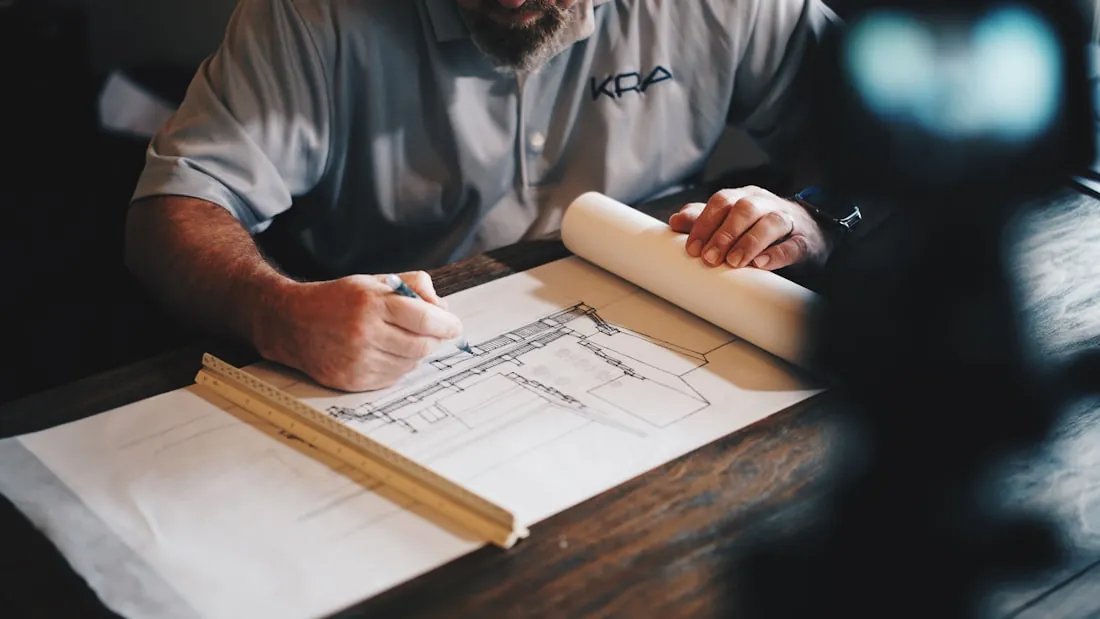
Many plex owners on the North Shore discover the permit process only after signing a contract with a contractor — just as the worksite is supposed to start. That is the reverse of the order to follow. Here is the real path, as it plays out in most Quebec municipalities.
Step 1 — Check the zoning and permitted use
First, you must confirm that the project is allowed by the city's zoning by-law. Adding a housing unit, for example, is only possible if the zoning grid permits the intended density. This check is done at the urban planning department (or online in some cities). It is also at this stage that you discover whether the project requires a minor variance or an approval under a site planning and architectural integration (PIIA) by-law — two mechanisms that add weeks, or even months, to the schedule.
Step 2 — Distinguish the municipal permit from an RBQ work declaration
Not all work falls under the same regime. The municipal construction permit covers major work that changes the structure, use or value of the building. For minor work that does not require a permit, a work declaration to the Régie du bâtiment du Québec (RBQ) may be required. According to the RBQ, when the work does not require a permit, the declaration must be transmitted no later than the 20th day of the month following the start of the work. It is up to the contractor or owner-builder to first check with the municipality whether a permit is required.
Step 3 — Prepare the plans and documents
For a multi-unit building, the city generally requires scale plans, a location certificate, a description of materials, sometimes an engineer's or architect's attestation for structural modifications, and proof of the contractor's RBQ licence. An incomplete file is the leading cause of delay: each back-and-forth with the municipal analyst can add several weeks.
Steps 4 to 6 — Review, issuance and inspections
- Review by the urban planning department: this is where the longest delays sit. The official checks compliance with zoning, the Construction Code and municipal by-laws.
- Issuance of the permit: once the file is deemed compliant and the permit fees paid, the city issues the permit. Work cannot legally begin before then.
- Inspections during the worksite: depending on the project, one or more inspector visits are required (foundation, structure, plumbing, electrical, finishing). Each inspection must be scheduled — an availability delay is added to the worksite itself.
| Step | Who acts | Indicative delay |
|---|---|---|
| Zoning check | Owner + planning dept. | A few days to 2 weeks |
| Minor variance / PIIA (if required) | Committee + municipal council | 1 to 3 months |
| Preparation of plans | Owner + professionals | 2 to 8 weeks |
| Review of the application | Urban planning department | 2 to 6 months (sometimes more) |
| Worksite inspections | Municipal inspector | Spread over the entire duration of the work |
Permit/declaration regime: Régie du bâtiment du Québec — Work declaration. Indicative delays; each North Shore municipality applies its own rules.
The "permit in progress" trap when you sell
A permit that has been filed but not issued has no guaranteed value for a buyer: it can be refused, require costly modifications or drag on beyond the closing date. A plex put up for sale with a permit file "under review" often negotiates worse than a building sold simply with its documented potential, without a regulatory commitment hanging over it.
Delays and Steps, Municipality by Municipality on the North Shore
There is no single delay on the North Shore: each city — Terrebonne, Mascouche, Blainville, Boisbriand, Sainte-Thérèse, Saint-Jérôme, Saint-Eustache, Deux-Montagnes — runs its own urban planning department, its own zoning grids and its own file volumes. An independent study published in June 2026 confirms that, across Quebec, obtaining a permit varies from two to six months, with some files exceeding 500 days due to the increased use of discretionary mechanisms.

The most publicized provincial figures (Montreal, Laval, Quebec City) tell only part of the story. For a plex owner in Terrebonne or Saint-Jérôme, what matters is their city's delay, for their type of project. An independent study by the firm Volume Dix, published in June 2026 by the ACQ, APCHQ, CORPIQ and IDU, concludes that processing delays have increased in the majority of Quebec cities despite relatively stable application volumes — a sign that the bottleneck is administrative, not merely cyclical.
What makes the delay vary from one city to another
- File volume: a fast-growing city (Mirabel, Blainville, Mascouche) processes more applications with sometimes limited staff.
- The use of discretionary mechanisms: PIIA, minor variances and conditional uses go through committees that meet only once a month.
- The complexity of the building stock: an old plex in Sainte-Thérèse may raise compliance issues that a recent building does not.
- The digitization of the service: cities offering online filing and file tracking reduce administrative back-and-forth.
| Local factor | Effect on the delay | What it changes for your project |
|---|---|---|
| Compliant zoning, simple project | Shortest delay | "Over-the-counter" permit possible in some cities |
| Minor variance required | +1 to 3 months | Referral to the planning advisory committee (CCU) and council |
| Subject to a PIIA | +1 to 3 months | Architectural review and council approval |
| Adding a unit / change of use | Longest delay | In-depth review, sometimes public consultation |
The right questions to ask your urban planning department
- "Is my project compliant with the zoning, or does it require a variance?"
- "Is it subject to a PIIA or a conditional use?"
- "What is the current average delay for a multi-unit file like mine?"
- "What documents would make my file complete on the first submission?"
A concrete illustration: two owners in neighbouring North Shore towns each want to add a basement unit to a triplex. The first owner's project is fully compliant with the zoning grid — no variance, no PIIA — and their city offers online filing. Their permit is issued in about two months. The second owner's identical project falls just outside a setback standard, triggering a minor variance that must go to the planning advisory committee and then to council. Same building, same work, but the second file takes closer to five or six months before a single wall is opened. The building itself did not decide the timeline; the regulatory path did.
The answer to these four questions gives you, in a single meeting, a realistic estimate of the schedule — far more reliable than a provincial average. And if the answer is "4 to 6 months before the first hammer swing," that is precisely the moment to honestly compare the two paths: renovate, or sell as-is to a direct buyer of multi-unit properties on the North Shore.
Source: ACQ-APCHQ-CORPIQ-IDU release / Volume Dix study (June 2026) — delays of 2 to 6 months, some files exceeding 500 days.
The 7 Mistakes Plex Owners Make When Renovating Before Selling
The most costly mistakes before a sale are not technical: they are mistakes of sequence and calculation. Launching work without a permit in hand, underestimating the carrying costs during the wait, over-renovating for a market that won't pay the difference, forgetting the recapture of depreciation on resale — each can wipe out the entire expected gain on a North Shore multi-unit building.

After hundreds of conversations with owners of multi-unit buildings on the North Shore, the same mistakes come back. Knowing them in advance means avoiding turning a "profitable on paper" project into a net loss.
1. Signing with a contractor before having the permit
This is mistake number one. A signed contract commits deposits and locks in a schedule, but the permit itself can take months or be refused. You then end up paying to wait — or scaling the project back after already spending.
2. Forgetting to cost the carrying charges during the wait
Mortgage, property taxes, insurance: these charges run throughout the permit and the worksite. On a CA$600,000 plex, that easily amounts to several thousand dollars a month that add no value to the building. This cost must be added to the work budget before calculating a return.
3. Over-renovating for the neighbourhood
A high-end kitchen in a triplex in a modest-rent area is not recovered on resale: the buyer of an income property pays for a yield, not for luxury finishes. Quality must match the actual rental positioning of the area, not the owner's taste.
4. Confusing the cost of work with added value
Spending CA$50,000 does not automatically create CA$50,000 of value. For an income property, value depends mostly on the effect of the work on net income and on the cap rate. Work that does not raise rents or reduce expenses adds little to market value.
5. Ignoring depreciation recapture and capital gains
A higher sale price thanks to the work can trigger a heavier tax bill (recapture of capital cost allowance, capital gains). The gross "surplus" obtained through renovation shrinks once tax is calculated. A capital gains calculation before deciding avoids nasty surprises — and consulting a tax specialist is strongly recommended.
6. Renovating an occupied unit without planning the reality of the leases
Major work in an occupied unit raises issues with tenants in place and with the schedule. Emptying a unit, coordinating access, managing surprises: all factors that stretch the worksite well beyond the initial estimate.
7. Waiting for "the right moment" in the market while tying up your capital
While a renovation project sleeps waiting for a permit, the market moves. Today's favourable conditions — buyer appetite, rates, the North Shore's dynamics — are not guaranteed in 12 or 18 months. Tying up CA$100,000 to CA$200,000 for a year also means giving up what that capital could have produced elsewhere.
The counter-list: what savvy owners do
- They get a delay estimate from the planning department before signing anything
- They cost the carrying charges into the total budget
- They compare the "as-is" price to a direct offer before launching work
- They have the tax impact validated by a professional
Three Numbers-Driven Scenarios: Renovate Your Plex or Sell It As-Is?
The best choice is revealed by the numbers, not by intuition. Comparing the net return of a permitted renovation project (including delays and carrying costs) with that of an immediate sale, three profiles emerge: the profitable small refresh, the major renovation with uncertain return, and the added unit that — once the waiting costs are counted — often returns less than a direct sale.

The figures below are illustrative examples meant to demonstrate the calculation method. They constitute neither a valuation nor financial advice: every building, every North Shore area and every tax situation is different.
Scenario A — The permit-free refresh
A triplex owner invests CA$15,000 in paint, floor coverings and fixtures. No permit required, work done in 3 weeks between two tenancies. The improved presentation supports the sale value and attracts more buyers. Additional carrying costs: negligible.
| Item | Amount |
|---|---|
| Cost of work | CA$15,000 |
| Carrying costs (3 weeks) | ≈ CA$1,500 |
| Delay before going to market | ≈ 1 month |
| Verdict | Often profitable — low risk, short delay |
This kind of targeted work remains the most reliable before a sale: little risk, no dependence on a permit, reasonable return on presentation.
Scenario B — The major permitted renovation
The same owner instead considers redoing two bathrooms, the roof and the electrical, with a permit. Budget: CA$90,000. Permit obtained in 4 months, 3-month worksite. Total: 7 months during which the building does not sell.
| Item | Amount |
|---|---|
| Cost of work | CA$90,000 |
| Carrying costs (7 months, CA$600,000 building) | CA$13,000 to CA$18,000 |
| Contingency margin (10–20%) | CA$9,000 to CA$18,000 |
| Real total cost | ≈ CA$112,000 to CA$126,000 |
| Verdict | Uncertain return — the added value must exceed CA$120,000 just to break even |
For this project to win, the market must pay more than CA$120,000 in net added value — before tax. In many North Shore areas, that is far from assured, especially with construction costs up 58% since 2018.
Scenario C — Adding a housing unit
The owner wants to convert a large basement into a 4th unit. This project requires a permit, possibly a zoning variance, and structural work. Realistic delay: 6 to 12 months before the unit generates any income.
| Item | Amount |
|---|---|
| Cost of work (structure + finishing) | CA$120,000 to CA$180,000 |
| Carrying + financing costs (9–12 months) | CA$18,000 to CA$30,000 |
| Regulatory risk | High (possible refusal, variance, PIIA) |
| Verdict | Profitable only if the building is kept long-term; rarely optimal right before a sale |
Adding a unit can create a lot of value — but for an owner who keeps the building and collects the income for years. Done solely to sell, the calculation often flips: delays and risk wipe out the gain. This is exactly the profile where selling the potential to a buyer who will realize the addition is most advantageous for the seller.
"Each month of delay translates into thousands of dollars in additional costs per unit, sometimes compromising the feasibility of otherwise necessary projects."
— Volume Dix study for the ACQ, APCHQ, CORPIQ and IDU, June 2026Special Cases, Exceptions and Files That Go Off the Rails
Some projects escape the classic permit regime — an RBQ work declaration, like-for-like maintenance, emergency repairs — while others get bogged down in discretionary mechanisms that can push a file beyond 500 days. Knowing these exceptions helps you avoid both requesting an unnecessary permit and underestimating a project that in fact requires far more than a simple form.
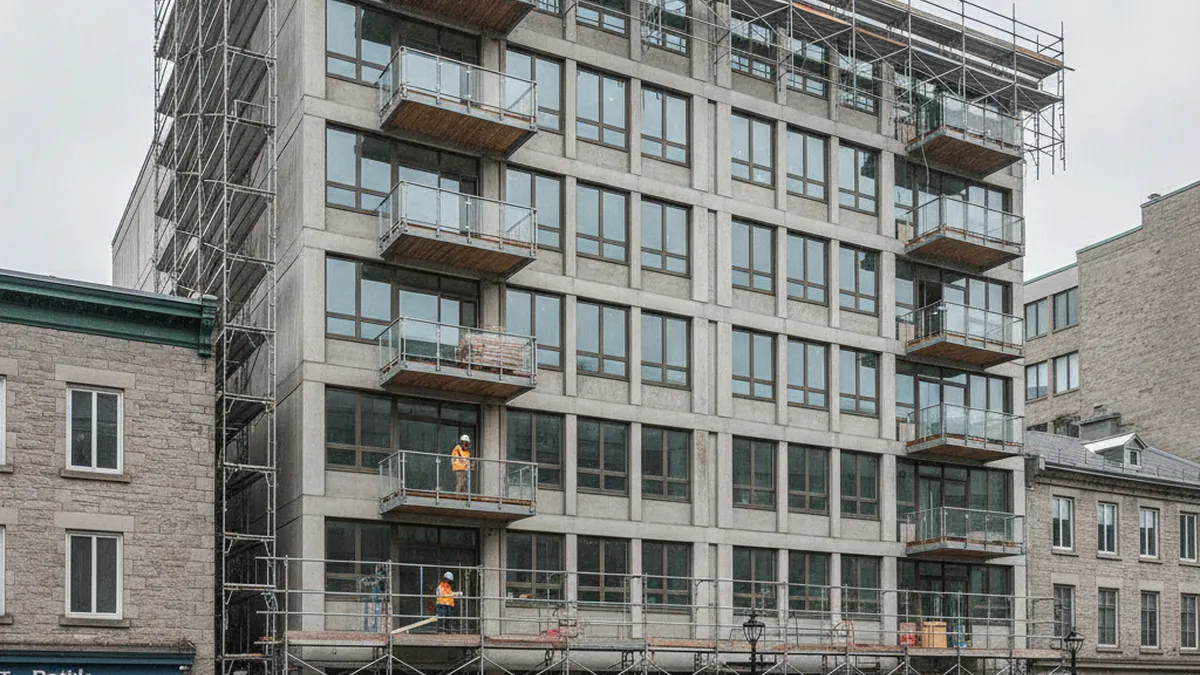
Like-for-like work and maintenance: often permit-free
Replacing elements like-for-like — windows of the same dimensions, identical exterior cladding, a roof redone without structural modification — falls in several cities under the work declaration rather than the full permit. According to the RBQ, the construction permit covers major work that changes the structure or value of the building, while the work declaration frames certain minor projects. Beware, however: "like-for-like" has a precise meaning. Enlarging an opening, changing a roof pitch or altering the frame tips the project into the permit regime.
Emergency repairs and safety
A major leak, a structural failure or a safety issue may require immediate intervention. Most municipalities provide mechanisms to regularize these situations, but the rule remains: as soon as the work goes beyond simple restoration, permit compliance must be checked. Never assume that an "emergency" exempts you from all authorization.
Heritage buildings and subject areas
A plex located in an area of heritage value or in a zone subject to a PIIA is subject to additional scrutiny. Even modest exterior work (colour, materials, fenestration) may have to go through a committee. These files are among the longest — and the most unpredictable.
When a file exceeds 500 days
The June 2026 study points to a specific phenomenon: the increased use of discretionary mechanisms (variances, conditional uses, committee approvals) stretches some files beyond 500 days. It is not the most technically complex projects that drag the most, but those that accumulate layers of administrative approval. For an owner in a hurry to sell, this is the scenario to identify early: if your project requires a variance or goes to committee, the schedule can slip out of your control completely.
| Project type | Likely regime | Delay risk level |
|---|---|---|
| Paint, floors, fixtures | No permit | Low |
| Like-for-like windows / roof | Work declaration (depending on city) | Low to moderate |
| Major overhaul (plumbing, electrical, structure) | Construction permit | Moderate to high |
| Adding a unit / change of use | Permit + possible variance | High |
| Heritage building / PIIA area | Permit + committee approval | Very high |
Permit/declaration regime: RBQ — Work declaration. Files > 500 days: Volume Dix study (June 2026).
The practical takeaway is to classify your project honestly before you spend a dollar. If it lives comfortably in the first two rows of the table above, the permit dimension is minor and work before a sale can make sense. The moment your project touches the last two rows — adding a unit, changing the use, or sitting in a heritage or PIIA area — you are no longer dealing with a simple timeline but with a discretionary process whose duration you do not control. That is the exact point at which many North Shore owners conclude that selling the potential is worth more, net, than chasing it.
Delays, Refinancing and Insurance: The Domino Effect on Your Net Worth
Permit delays weigh not only on the worksite: they also affect financing and insurance. A building under prolonged work can complicate a refinancing, trigger construction-insurance surcharges, and delay the release of equity. Understanding this domino effect helps you decide between waiting for a project to finish and selling now to recover and redeploy your capital.

Financing a building under construction
A lender assesses an income property based on its stabilized net income. A plex with one unit emptied for work, or with an unfinished unit-addition project, does not yet show that income. As a result, a refinancing launched during the worksite can yield an appraised value below the intended potential — the opposite of the desired effect. Often, you have to wait for stabilization (work finished, units rented) for the value to materialize, which further prolongs the capital tie-up.
Insurance during the work
Coverage of a building under major renovation differs from that of an occupied, stable building. Some insurers require a "builder's risk" policy or apply special conditions, especially for structural projects or vacant units. These adjustments add to the carrying costs already mentioned — and run for the entire duration of the permit and the worksite.

How a savvy buyer values the potential
This is the point many sellers underestimate: an experienced buyer of multi-unit properties already pays for a building's potential, without requiring the seller to have done the work. They factor into their offer the value of a possible unit addition, rent optimization or a future overhaul — because they will then bear the permit delays and the worksite risk. In other words, by selling as-is, you transfer the regulatory burden to someone whose profession it is, while still capturing part of the potential's value in the price.
| Issue | Renovate then sell / refinance | Sell as-is now |
|---|---|---|
| Permit delay | 2 to 6 months (sometimes > 500 days) | None |
| Carrying costs during the wait | High and cumulative | Eliminated at closing |
| Risk of cost overruns | Borne by the owner | Transferred to the buyer |
| Release of capital | Deferred by 6 to 18 months | Immediate |
| Value of the potential | Realized after work (and tax) | Captured in the offer price |
A worked example: what "sell as-is" really transfers
Consider a North Shore triplex worth about CA$600,000 with a realistic potential to add a fourth unit. The owner faces two roads. On the first, they lead the unit-addition project themselves: 4 to 6 months for the permit (possibly a variance), a 6-to-9-month worksite, CA$120,000 to CA$180,000 in work, plus CA$18,000 to CA$30,000 in carrying and financing costs during the wait. If all goes well and the market cooperates, the finished four-unit building might command a higher price — but only after 12 to 18 months of tied-up capital, worksite risk, and a heavier tax bill on the larger gain.
On the second road, they sell now to a buyer who values the unit-addition potential in the offer. The buyer, not the seller, then carries the permit delay, the cost-overrun risk and the construction management. The seller closes in weeks, recovers their capital immediately, and can redeploy it while the market is still favourable. The difference between the two roads is rarely the headline sale price — it is everything hidden underneath it: time, risk, financing, insurance and tax.
This is why, for owners who intend to exit rather than hold for years, transferring the potential usually beats realizing it. The work of the permit, the worksite and the regulatory approvals is precisely the work a professional buyer is equipped to absorb — and is willing to pay for in advance.
The question to ask yourself before launching any worksite
"Does the expected net added value — after work, after carrying costs, after surprises and after tax — really exceed what a direct buyer would offer me today for the same building with its potential?" If the answer isn't a clear, numbers-backed yes, selling as-is is probably the most rational option. To dig deeper into this kind of decision, see our guide on selling or refinancing your plex in 2026.


