ImmoMulti — a direct buyer of plexes and multiplexes on the North Shore — breaks down a news item that reshuffles the deck for selling owners: CMHC now forecasts a decline in home sales and prices in 2026, a revision to its outlook reported by La Presse on July 22, 2026. Meanwhile, construction is slowing: roughly 2,600 rental units were started in Québec in the first half of 2026, a 3% drop year over year. Two forces pull in opposite directions. In the short term, prices that could soften. In the long term, a supply of housing that stays structurally short and props up the value of existing buildings. For the owner of a North Shore plex, the question turns concrete: is it better to sell now or wait? This article lays out both sides, plainly. This is not personalized financial advice.
What does CMHC's new 2026 forecast actually say?
CMHC revised its outlook and now expects a decline in home sales and prices in 2026 (La Presse, July 22, 2026). It is a short-term adjustment tied to softer demand and economic uncertainty, not a structural collapse. The underlying imbalance between housing supply and demand remains intact.
The starting point of this story is a shift in tone. After several months of talk about a gradual recovery, Canada Mortgage and Housing Corporation (CMHC) changed its forecast: it now expects home sales and prices to fall in 2026. For a plex owner who was weighing whether to list, that signal changes how the timing reads.
Yet the forecast should be read for what it is. It is a cyclical adjustment: slower transactions, prices that could plateau or dip in the short term, in an environment of economic uncertainty and constrained purchasing power. It is not a diagnosis of oversupply — quite the opposite. Québec remains marked by a structural shortage, and it is precisely this tension between the short and long term that makes the decision to sell subtler than it looks.
For a North Shore multiplex owner, the distinction is critical. An income property is not valued like a single-family home: its worth depends mainly on its net income and on the capitalization rate (cap rate) buyers require, far more than on the residential median price of any given year. A forecast of falling residential prices therefore does not mechanically, identically, hit the value of a well-rented plex.
How is construction slowing while the housing crisis persists?
About 2,600 rental units were started in Québec in the first half of 2026, a 3% drop year over year according to CMHC. Despite the dip, it is still the third-best year for rental housing starts since the early 1990s. More housing is becoming available, but it is not more affordable.
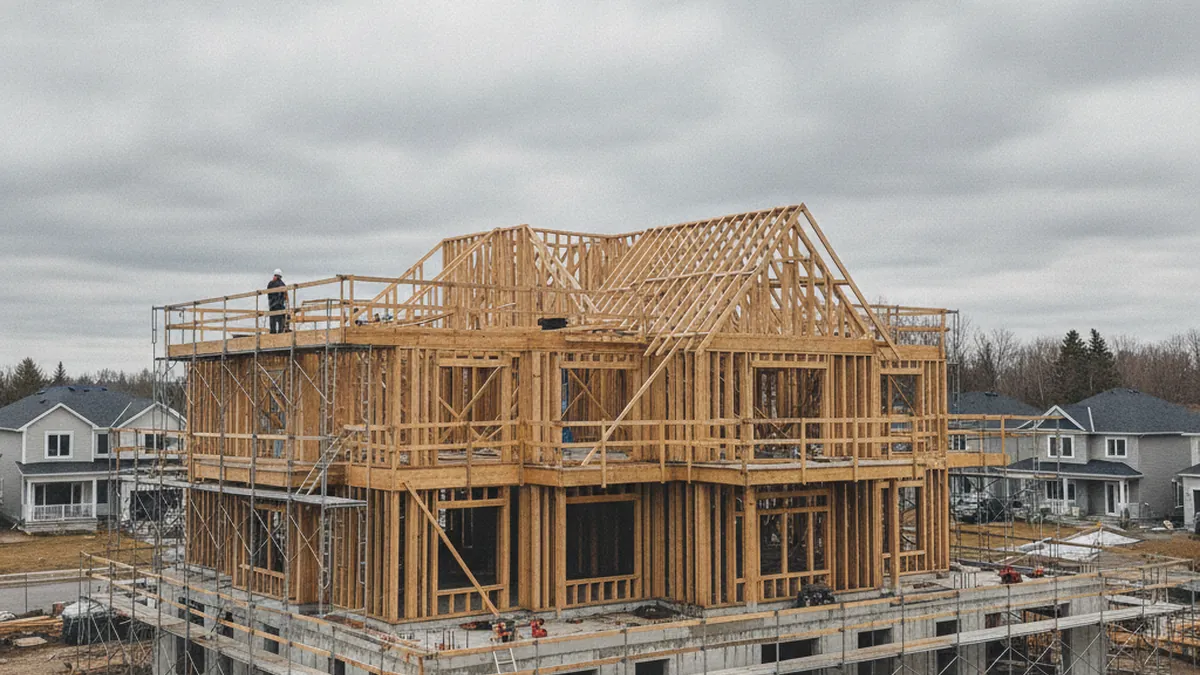
The second piece of the puzzle is construction. According to CMHC data reported by Radio-Canada, roughly 2,600 rental units were started in Québec in the first half of 2026 — a drop of about 3% versus the same period in 2025. The trend runs against the urgency: just as Québec needs to build more, it is building slightly less.
That decline deserves an important nuance. CMHC notes it is still the third-best year for rental housing starts since the early 1990s. The pace of rental construction remains historically high — rental has taken over from condos in several markets. In Montréal in 2025, more than 80% of new residential construction was rental housing. The problem is not the absence of construction: it is that it falls short of closing the accumulated deficit.
The most consequential point for a selling owner is this: according to CMHC, more rental housing is becoming available, but it is not more affordable. The agency estimates that the pace of construction would need to accelerate to bring affordability back to 2019 levels. In other words, supply is rising, but not fast enough to ease the pressure on rents and on the value of existing buildings.
The underlying paradox
We are building at a historically strong pace, and yet housing is not becoming more affordable. That is the sign of a deep imbalance between supply and demand. For the holder of an existing North Shore plex, this persistent scarcity is a factor that supports value over the medium and long term — even if residential prices soften in the short term.
This strained context does not play out in statistics alone. It also fuels real social pressure. Demonstrations for the right to housing have brought together many organizations — the COLOC Coalition alone groups roughly 120 organizations — calling for action on rising rents and the scarcity of accessible housing. This political dimension weighs on rental regulation, a parameter every multiplex owner must factor into their thinking.
Sources: Radio-Canada — rental housing starts down in Québec; Radio-Canada — demonstrations for the right to housing. For the full picture of the shortage, see our article Housing shortage in Québec 2026 and your North Shore plex.
Why isn't the North Shore hit the same way as the rest of Québec?
Housing starts vary enormously by region: Montréal about +61%, Saguenay +132%, but Laval −30%, Trois-Rivières −16% and Québec City −12%. For the North Shore, a steep drop like Laval's means less new rental supply ahead — a factor that protects the value of plexes already in place.
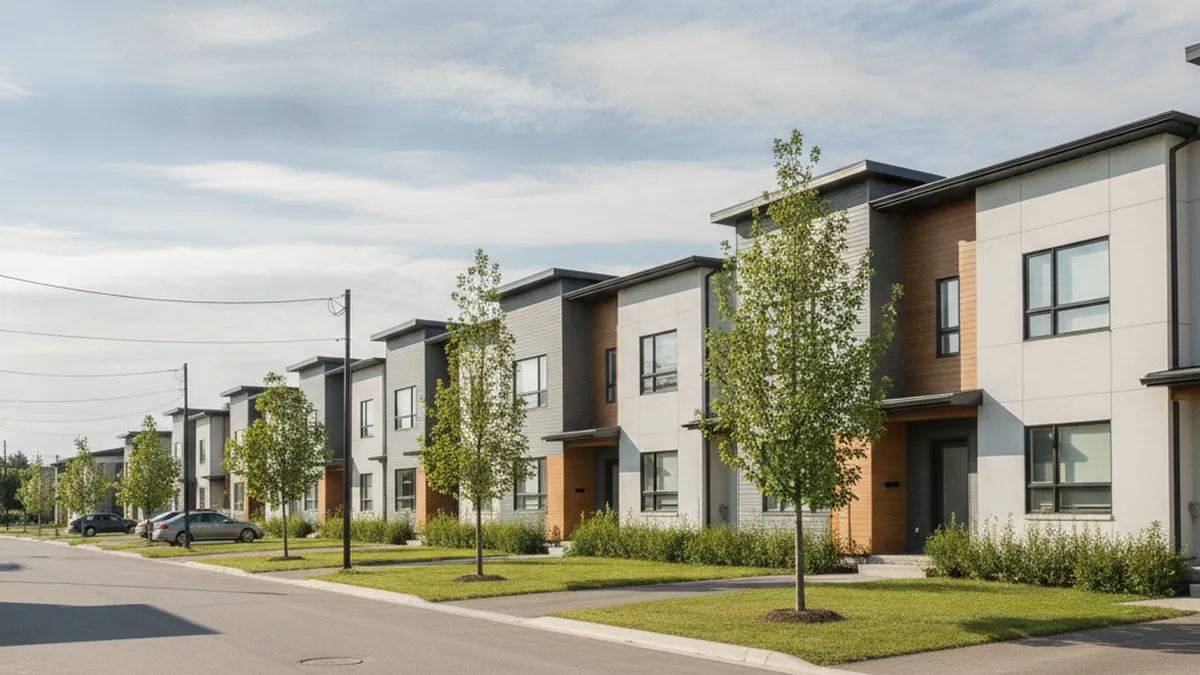
The provincial average hides enormous gaps. CMHC data reveals sharp regional disparities in housing starts. Where some markets accelerate, others — including several hubs of the Greater Montréal area — fall clearly.
| Market | Change in housing starts | Reading for a plex seller |
|---|---|---|
| Montréal | ≈ +61% | New supply rising sharply, mostly rental |
| Saguenay | ≈ +132% | Catch-up in a small market |
| Laval | ≈ −30% | Less new supply: supports value of existing plexes |
| Trois-Rivières | ≈ −16% | Construction slowdown |
| Québec City | ≈ −12% | Starts pulling back |
For a North Shore of Montréal owner, the number to remember is Laval: about −30%. Laval is the gateway to the North Shore and a barometer for the area. When rental construction there falls by a third, it means a large share of the expected new supply will not materialize any time soon. And fewer new units reaching the market means less competition for the plexes, triplexes and multiplexes already standing in Laval, Terrebonne, Mascouche, Blainville, Boisbriand, Saint-Jérôme, Saint-Eustache and Deux-Montagnes.
This dynamic sits at the heart of the "wait" argument. A well-located income property on the North Shore, in an area where new supply is thinning out, enjoys a favourable fundamental: rental demand keeps rising while new construction lags. That is exactly the kind of imbalance that, historically, supports rents and the value of existing buildings. To dig deeper, see our analysis of 2026 housing starts and their effect on the North Shore plex.
Short term vs long term: the selling owner's paradox
In the short term, CMHC expects softer prices and falling sales in 2026. In the long term, insufficient construction — especially where supply is falling, as in Laval — supports scarcity and the value of existing plexes. The seller has to arbitrate between today's certainty and tomorrow's potential.

This is the crux of the decision. The two developments — a forecast price drop and a construction pullback — pull in opposite directions once translated into a selling strategy.
What the short term says
If CMHC is right and prices soften in 2026, a building sold in the first half of the year could fetch more than one sold later into a weaker market. Slower sales also mean longer timelines and bargaining power shifting toward buyers. For an owner who wants certainty — crystallizing a gain, funding a project, settling an estate, reducing exposure to an energy-inefficient or renovation-heavy building — the short term argues for acting without dragging on too long.
What the long term says
Conversely, the durable housing shortage is a structural tailwind. As long as construction does not accelerate enough to bring affordability back to 2019 levels, the pressure on rents and on the value of existing multiplexes remains. On the North Shore, where Laval is down 30%, that reasoning is even stronger: less new concrete today means an even tighter supply tomorrow. An owner who does not need to sell and whose plex is profitable can reasonably choose to wait.
More rental housing is becoming available in Québec, but it is not more affordable; construction would need to accelerate to bring affordability back to 2019 levels.
— Summary of CMHC's findings, as reported by Radio-Canada, July 2026It is also worth separating two ideas that often get blurred: the price you could get today and the income the building produces while you hold it. Waiting is not free — but for a profitable plex, the carrying period is not dead time either. Rent keeps coming in, the mortgage balance keeps shrinking, and on the North Shore market rents tend to keep drifting upward. That is very different from holding a vacant lot or a speculative asset that pays nothing while you wait for a rebound. A selling owner should weigh not just the forecast on prices, but the cash flow the plex generates in the meantime.
The tension between these two readings cannot be settled by a universal rule. It is settled by your horizon and your constraints. A seller who needs liquidity in 2026 does not live in the same world as one who can hold the building for another ten years.
Sell now or wait? Both sides, factually
Sell now: secures capital ahead of an anticipated softer-price period, removes rental and regulatory risk, simplifies an estate or a refinancing. Wait: bets on the durable housing shortage and on falling new supply (Laval −30%) to support value. Neither is "the right choice" in the abstract.
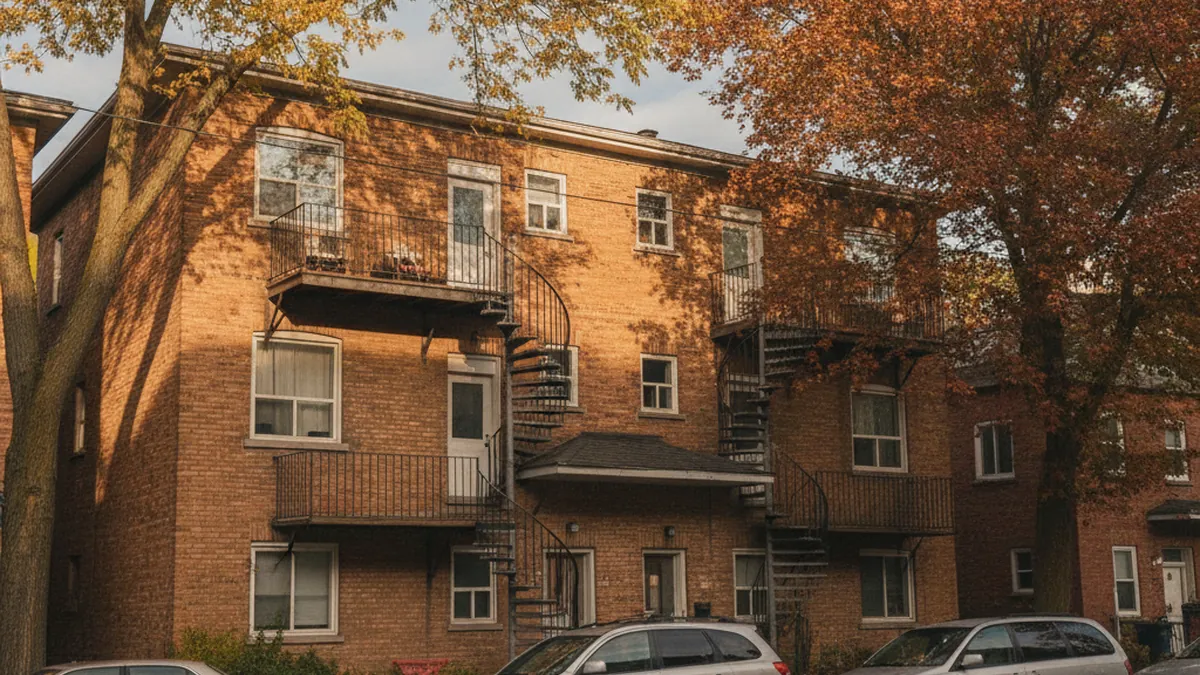
Let us put the two positions side by side, without favouring either one.
| Arguments to SELL now | Arguments to WAIT |
|---|---|
| CMHC forecasts falling prices in 2026: selling early can avoid a softer market. | The housing shortage persists; the value of existing plexes stays supported over the medium term. |
| Slower sales lengthen timelines and weaken the seller's bargaining power later. | Falling starts in Laval (−30%) limit competing new supply on the North Shore. |
| Crystallizing a gain, funding a project or settling an estate requires certainty. | A well-rented plex generates stable income: no pressure to sell at a trough. |
| Avoiding future costs: renovations, tax increases, energy requirements, property management. | Housing is not becoming more affordable; market rents tend to keep rising. |
| Reducing exposure to an evolving rental regulatory framework. | Waiting for a possible price rebound once the cyclical trough passes. |
One fact bears repeating: the value of an income property does not track the residential price index exactly. It depends on net income and the cap rate. A plex whose rents have fallen behind the market holds latent value that headline prices do not reflect. Conversely, a building that needs renovation, is energy-inefficient, or already has rents at the ceiling offers less room — and in that case, a price-drop forecast can strengthen the argument to sell before the situation worsens.
Our column on why the North Shore plex holds up against the sales slowdown shows well why the multiplex behaves differently from residential in a cooling market. And on the regulatory side, the place of the right to housing in the Charter and its effects for plex owners is worth watching closely.
Three questions to ask before deciding
- Do you need the liquidity in the short term (a project, an estate, debt reduction)?
- Is your plex profitable and well rented, or does it need work and a rent reset?
- What is your horizon: do you want to hold for another 5 to 10 years, or exit within 12 months?
How to decide for your North Shore plex?
First, ground your building's value in its net income and cap rate, not in headline prices. Then weigh that value against your horizon and liquidity needs. A profitable, pressure-free plex can wait; a renovation-heavy building or a situation that demands certainty leans toward selling. This is not financial advice — consult a professional.
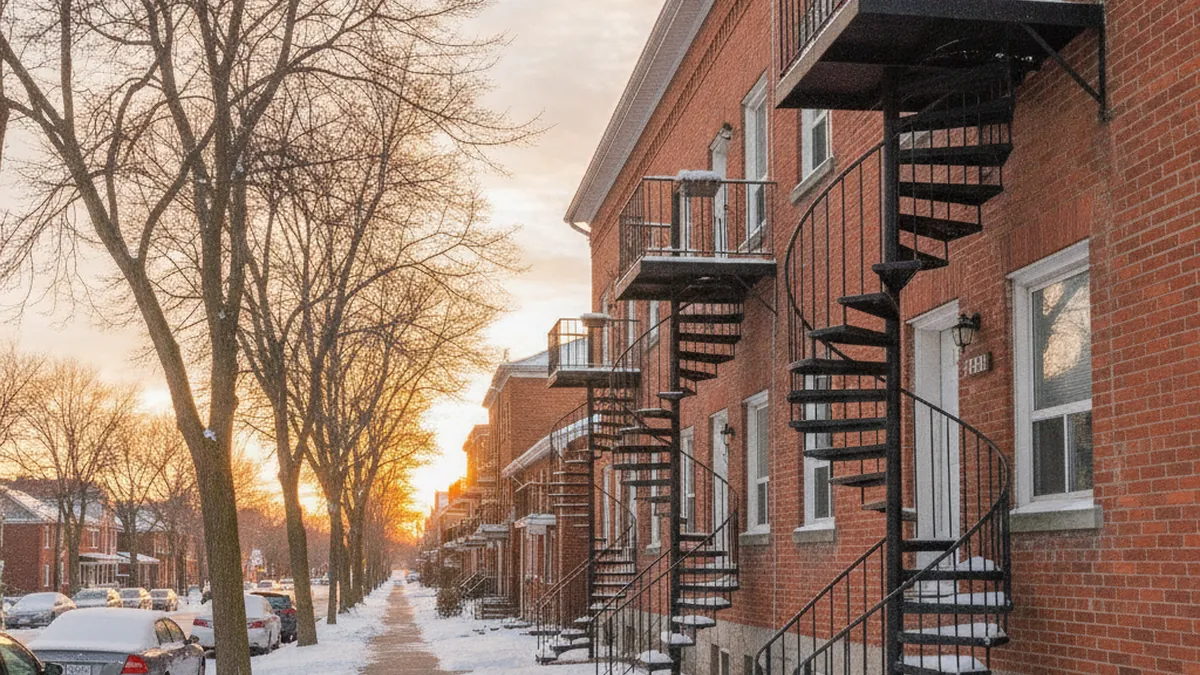
There is no single right answer, and no one can give it in your place from a headline. The decision to sell or keep a plex on the North Shore is built in three steps.
1. Ground the value. Before anything else, move past impressions and put numbers on it. An income property's value rests on its net operating income and on the cap rate buyers demand in your area. A well-rented plex with documented expenses holds solid value even if residential prices decline. An yield and cap-rate guide gives you a rational baseline rather than an emotional one.
2. Cross-check with your situation. CMHC's forecast is context, not an instruction. If you have no need to sell, your building is profitable and you believe in the durable housing shortage on the North Shore, patience is defensible. If, on the other hand, you must settle an estate, fund a project, exit a renovation-heavy building or cut your exposure, acting within a reasonable window — before a possibly softer market — is equally defensible.
3. Choose the right sales channel. If you lean toward selling, a cooling market also changes how you sell. Where timelines lengthen and buyers negotiate harder, a direct sale with no broker and no commission can preserve your net proceeds and shorten the process. ImmoMulti buys plexes and multiplexes across the North Shore and makes an offer within 48 hours, with no public listing and no obligation.
ImmoMulti: direct buyer of North Shore plexes
In a market where CMHC anticipates softer prices, knowing your income property's real value has never been more useful. We make a direct, confidential offer, with no commission and no broker. Get a proposal within 48 hours.
Disclaimer. This article presents a market context (July 2026) based on CMHC forecasts and reporting from La Presse and Radio-Canada. It does not constitute personalized financial, tax or legal advice. The decision to sell or keep a plex depends on your particular situation: consult a tax advisor, financial planner or notary before acting.
Informational content only. Market forecasts can change and guarantee no outcome. Does not constitute tax, financial or legal advice.