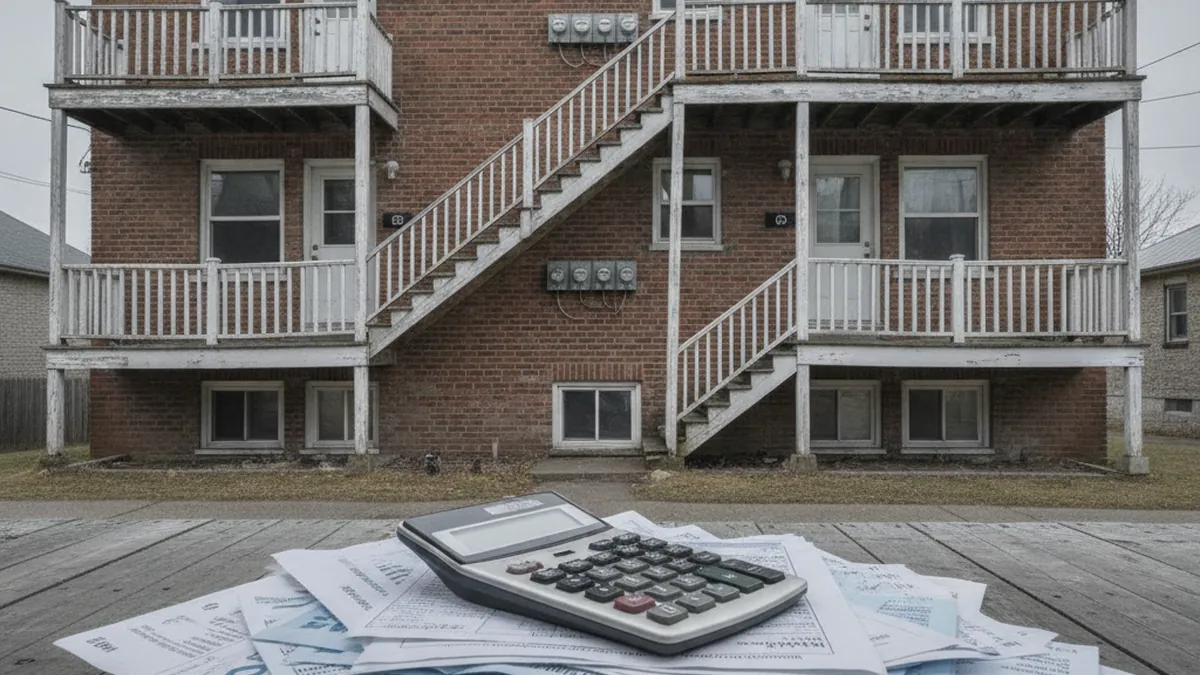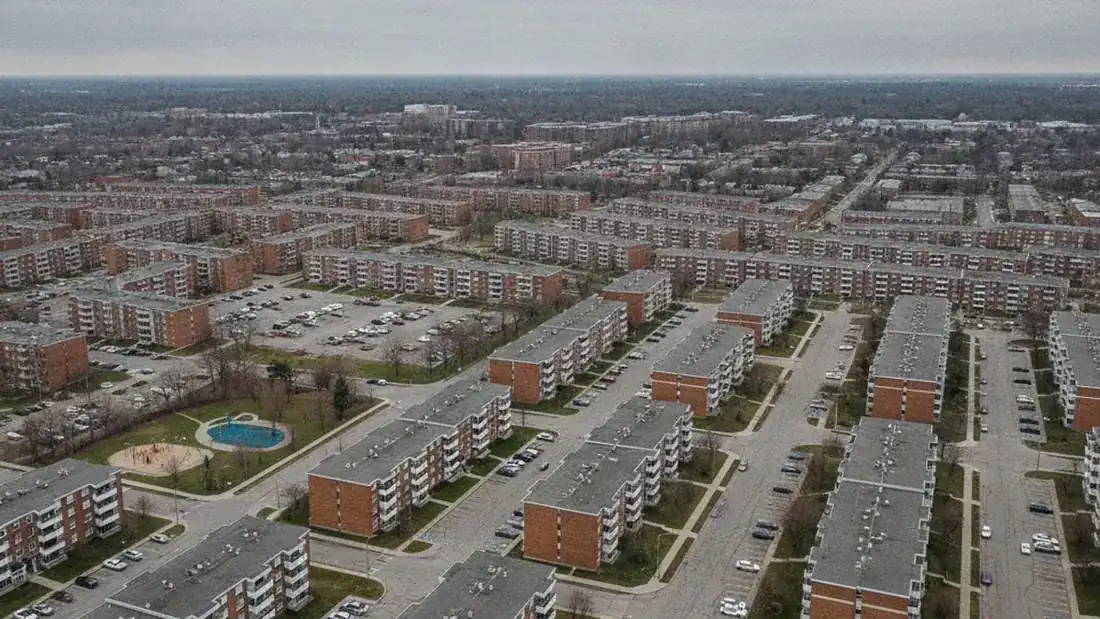
ImmoMulti — direct buyer of multi-unit properties on the North Shore — breaks down for you the mid-year 2026 rental market update published by Canada Mortgage and Housing Corporation (CMHC). The central finding is counter-intuitive: while overall rental supply is rising, it is the expensive new buildings that struggle to lease up, while older, affordable plexes — typical of Montreal's North Shore — keep posting solid occupancy rates. If you own a duplex, triplex or multi-unit in Terrebonne, Blainville, Laval, Mascouche, Saint-Jérôme or Repentigny, this report has direct implications for the value of your income property.
What does CMHC reveal about the Canadian rental market in mid-2026?
CMHC confirms in its mid-2026 update that new rental housing (post-2020), often at high rents, shows the highest vacancy rates. By contrast, older stabilized buildings and family-sized units (2 bedrooms and more) maintain tight market conditions that favour landlords.
Each year, CMHC publishes a mid-year rental market update that takes stock of the state of rental housing across Canada. The 2026 edition reveals a two-speed reality that every owner of plexes and multi-unit properties on the North Shore should understand.
On one side, rental residential construction has been very active in recent years — particularly in Montreal, where rental apartment starts hit record highs. The result: a wave of new units on the market, often at high monthly prices to recoup recent construction costs.
On the other side, demand for these new units does not always keep pace. CMHC clearly identifies that the highest vacancy rates are concentrated in buildings built after 2020, especially near post-secondary institutions where student demand has softened. This gap between new supply and actual demand puts pressure on the asking rents for new housing — without spilling over into the market for older plexes.
Source: CMHC — Mid-Year Rental Market Update 2026
Two rental markets side by side: new towers vs older affordable plexes
To fully understand what the CMHC data means for your plex on the North Shore, you have to distinguish between two categories of rental assets that now move in very different dynamics.
| Characteristic | New rental complex (post-2020) | Older affordable plex (North Shore) |
|---|---|---|
| Vacancy rate mid-2026 | High — identified by CMHC as the most affected segment | Low — tight market conditions (CMHC) |
| Average monthly rent | High (reflects recent construction costs) | Moderate — often framed by the TAT method |
| Unit size | Often small units (studio, 1 bdrm) | Families: 3½, 4½, 5½ and larger |
| Tenant stability | High turnover, frequent vacancy | Long-term tenants, less turnover |
| Impact on the owner's NOI | Vacancy risk weighing on income | More stable and predictable NOI |
This table illustrates a structural advantage held by owners of older multi-unit properties on the North Shore: their buildings match exactly the profile CMHC identifies as the most resistant to rising vacancy. Families looking for a reasonably priced 4½ in Terrebonne or Blainville do not have the new luxury apartment building in downtown Montreal as an alternative — these are two markets that barely compete with one another.
Why your North Shore plex comes out ahead in 2026

The North Shore of Montreal — Terrebonne, Mascouche, Blainville, Boisbriand, Saint-Jérôme, Saint-Eustache, Deux-Montagnes, Repentigny, Laval — has several factors that shield it from the vacancy wave hitting certain densified urban markets.
First factor: little large-scale new rental construction. Unlike the Plateau-Mont-Royal, downtown Montreal or certain sectors of Laval-des-Rapides, the North Shore has not seen many new rental towers emerge in recent years. Most of the new residential stock there has taken the form of single-family homes, condominiums and small private projects — not 100- to 300-unit complexes that could saturate the existing rental supply.
Second factor: family demographics. The North Shore is a region with a high density of families with children. These households need space — 3½, 4½, 5½ units — and they appreciate the more affordable prices of older plexes. This tenant profile matches exactly the family-sized units that CMHC identifies as the least affected by rising vacancy.
Third factor: rent controls work in your favour here. Your long-term tenants pay rents anchored in the TAT method — which may look like a disadvantage for the owner, but which actually creates great occupancy stability. These tenants do not easily leave an affordable unit they hold at a 2018 or 2020 market price. This low turnover is a major asset for keeping your occupancy rate at 100%.
What it means for your North Shore plex
- Low vacancy rate = stable net operating income
- Long-term tenants = fewer re-leasing costs
- Family units = the most resilient profile per CMHC mid-2026
- Little new rental competition in suburban sectors
Source: CMHC — Mid-Year Rental Market Update 2026
North Shore plexes: the QPREB numbers for the second quarter of 2026
The mid-2026 data does not come only from CMHC. The Quebec Professional Association of Real Estate Brokers (QPREB) released its second-quarter 2026 statistics, which confirm the persistent strength of the plex market in the Montreal metropolitan area, of which the North Shore is a part.
“The plex segment continued to show strong momentum in the second quarter of 2026, with market conditions that remain clearly favourable to sellers.”
— QPREB, Press release — Residential Market Statistics, Q2 2026 (July 2026)The highlights of the QPREB Q2 2026 report for owners of plexes and multi-unit properties on the North Shore:
- 28 days: average time to sell a plex in the Montreal area — a figure that confirms buyer demand is still active.
- +11%: rise in plex supply in Quebec in Q2 2026 versus Q2 2025 — more owners are listing their building, but selling times stay short.
- -5%: slight drop in plex transactions in the Montreal CMA — a market that is normalizing rather than collapsing.
This data shows a market that is gradually rebalancing — supply is rising, but demand remains strong enough for plexes to sell quickly. For an owner of a multi-unit property on the North Shore considering a sale, this 28-day window represents a favourable context worth seizing before the rebalancing goes further.
How the mid-2026 rental market shapes the value of your plex

The link between the rental market and resale value is direct and mechanical. The value of an income property — whether expressed as a cap rate (capitalization rate) or a GRM (gross rent multiplier) — rests entirely on its net operating income (NOI). And NOI depends on two variables: rental income and the occupancy rate.
Here is how the 2026 rental situation translates concretely into value for your plex on the North Shore:
| Scenario | Occupancy rate | Annual NOI (example triplex 3 × $1,200/month) | Estimated value (cap rate 5.5%) |
|---|---|---|---|
| Fully rented plex (North Shore profile) | 100% | ~$28,800 gross → ~$18,000 NOI | ~$327,000 |
| One unit vacant 2 months/year | 94% | ~$27,000 gross → ~$16,500 NOI | ~$300,000 |
| One unit vacant 4 months/year | 89% | ~$25,600 gross → ~$15,200 NOI | ~$277,000 |
This simplified table illustrates a key principle: two months of vacancy on a single unit can cut the resale value of your triplex by $25,000 to $30,000. In the mid-2026 rental environment described by CMHC, the older affordable plexes of the North Shore are precisely the type of asset least exposed to this vacancy risk.
To estimate the current value of your plex on the North Shore based on the market's cap rate and GRM, use our free tool:
Is now the right time to sell your multi-unit on the North Shore?
The mid-2026 picture drawn by CMHC and QPREB points to a single conclusion: owners of older, well-rented plexes on the North Shore are in a position of strength — for now. But several signals deserve attention.
- Supply is rising: +11% more plexes listed for sale in Quebec in Q2 2026. More owners are selling, which gradually dilutes the sellers' advantage.
- Fixed rates are climbing: up from 3.84% in June 2025 to 4.04% in June 2026, fixed mortgage rates reduce investors' purchasing power — and therefore the price they can offer for your plex.
- The gradual rebalancing continues: QPREB describes the market as a “gradual rebalancing,” which means the window of clearly seller-favourable conditions is slowly narrowing.
Warning signal for owners who wait
Every quarter in which plex supply rises and fixed rates climb is one quarter less in your favourable window. If your plan to sell is within the next 12 to 24 months, the mid-2026 data argues for not waiting any longer.
If you own a duplex, triplex, quadruplex or multi-unit on the North Shore and want to know its resale value in the current context, ImmoMulti makes you a direct offer within 48 hours, with no broker and no commission. We buy income properties fast on the North Shore — even with tenants in place, even if your building needs work. For owners facing more complex situations, see also our guide on selling a building with difficult tenants.
Sources: CMHC — Mid-2026 Rental Market Update · QPREB — Q2 2026 Statistics